

 Trade W
Introduction: Why ADRs Are Essential for Global Investors
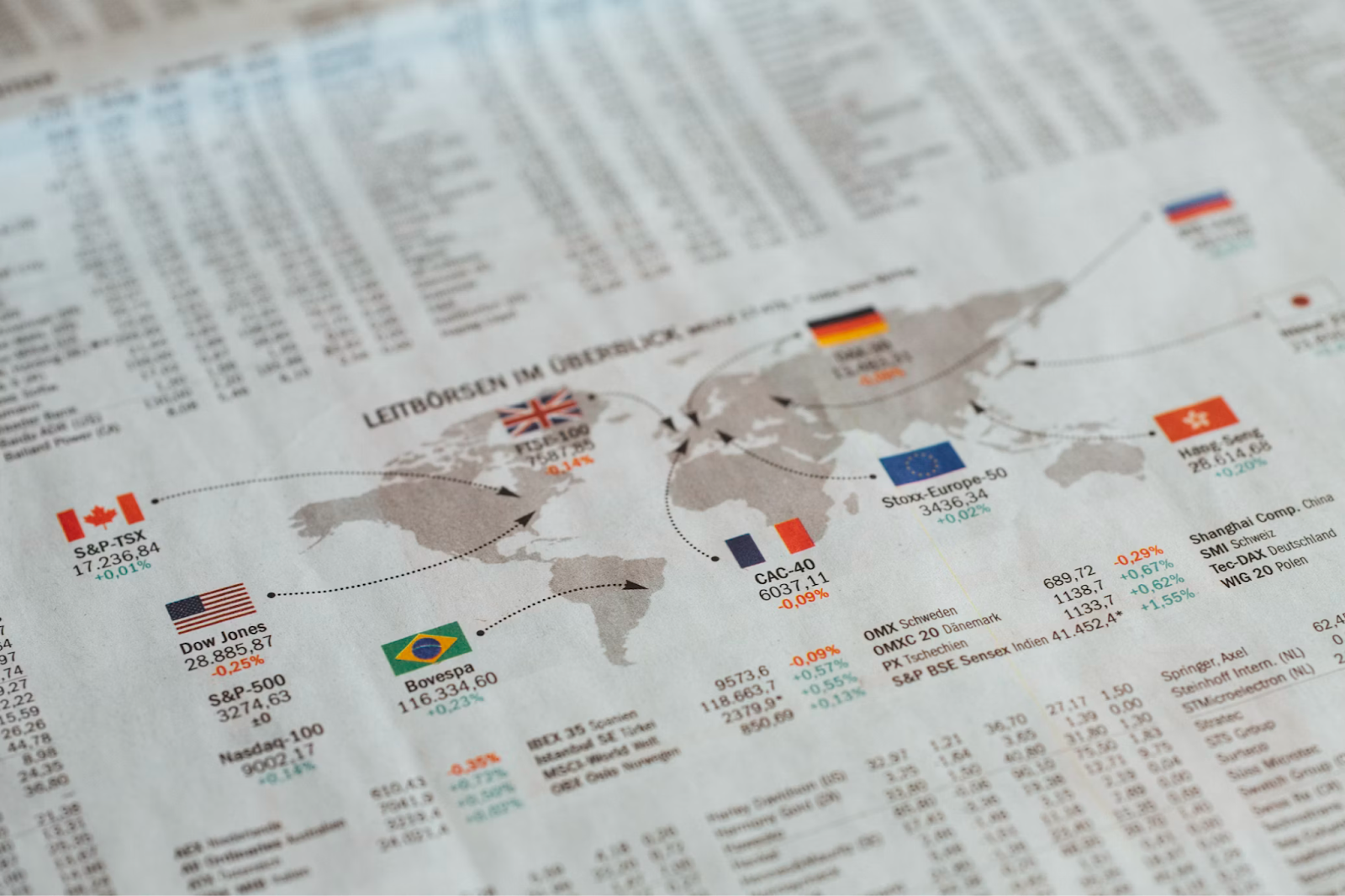
An American Depository Receipt (ADR) is a type of sticker that represents foreign company shares traded on U.S. exchanges. This means American investors can easily buy foreign stocks on familiar U.S. exchanges, such as the NYSE or NASDAQ, without using international brokers or currencies.
To explain how ADRs work, think about checking out books from another school's library. You don't need to go to the school or buy a membership to check out a book. The librarian arranges to have books from that school, and you get to check out that book just like any other. The books still belong to the other school, but you will have access to it.
For instance, the Swiss food company Nestlé trades on the New York Stock Exchange under ticker NSRGY, and Toyota trades under ticker TM. When you buy shares of these companies using the ADR, you are simply investing in these international companies while buying on the U.S. market.
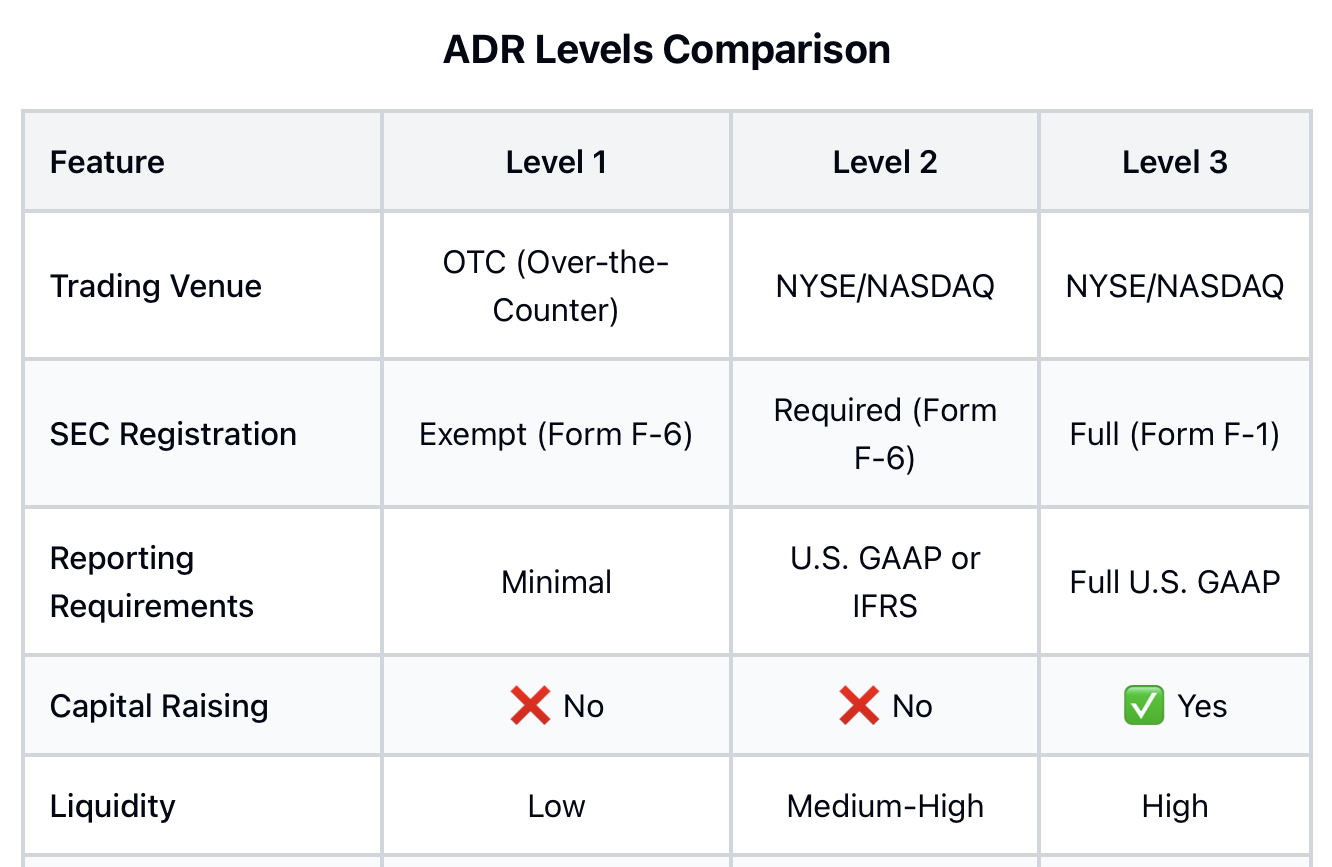
ADRs come in three levels with different disclosure rules and U.S. listing markets, and liquidity. Level 1 ADRs trade on the over the counter market with very little reporting. Level 2 ADRs trade on a large exchange with stronger reporting requirements. Level 3 ADRs will meet the most stringent requirements and allow companies to raise capital in the U.S.
This arrangement connects U.S. investors to worldwide businesses and has become an indispensable means of investing internationally. Understanding ADRs is important for any investor whether you're constructing a diversified portfolio or accessing international investments.
How ADRs Work: Mechanism and Creation Explained
The process of creating an ADR is quite simple and done in an orderly fashion. A foreign company has a U.S. bank act as a fiduciary on behalf of American investors to take custody of the foreign shares and issue ADRs to American investors.
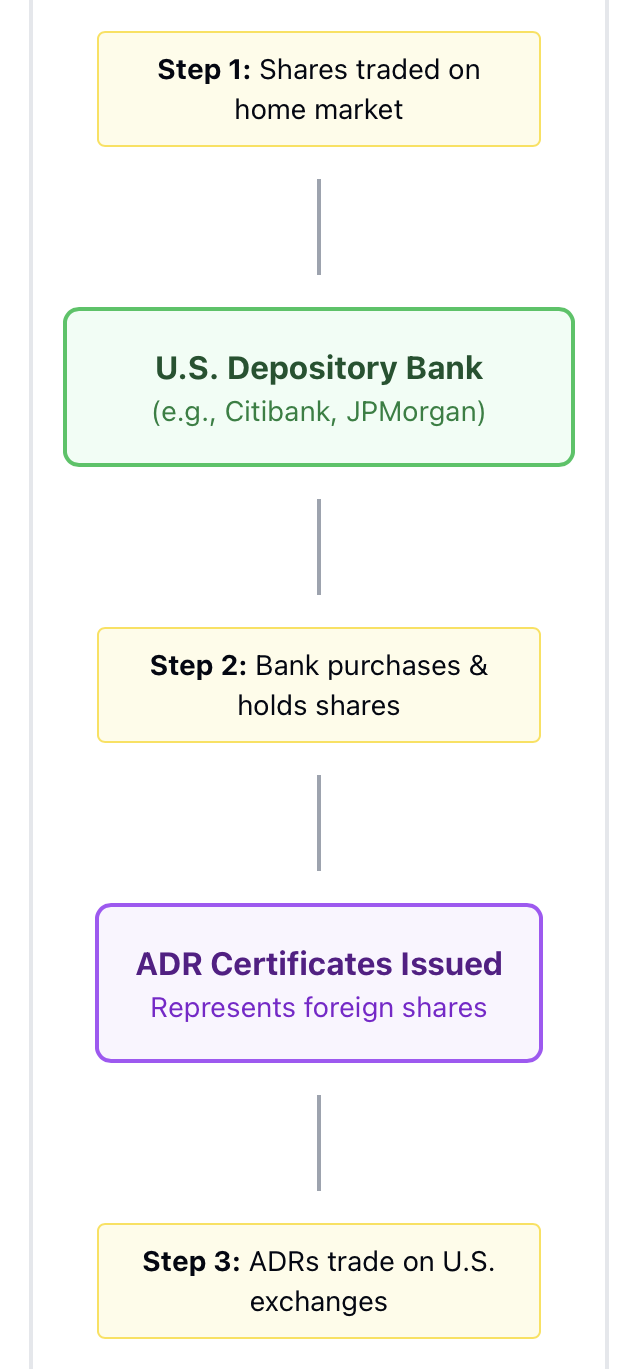
Here’s how it works. The U.S. bank, known as a depository bank, buys shares of the foreign company in its own market, takes custody of the shares and, in return, issues ADR certificates that represent those shares to American investors that buy the ADRs on U.S. exchanges.
It is similar to depositing your books at a library. You deliver your books to the library, they issue you a library card, and then others can borrow your books by using the library card, and you are still the owner. The library manages the borrowing, while you own the books.
Take Infosys, the Indian technology company, as an example. Citibank custodies Infosys in India and issues ADRs that trade on the NYSE under ticker INFY. If Infosys declares dividends in Indian rupees, Citibank would convert the dividends into U.S. dollars and pay the ADR holders.
The depository bank holds an important role beyond simply holding the shares. A depository bank pays shareholders their dividends, manages corporate actions, and provides voting rights to ADR holders. Voting rights may be limited for ADR holders in comparison to a direct shareholder; nevertheless, ADR holders do have a say about running of the company.
ADRs are also regulated under the U.S. Securities and Exchange Commission, providing an additional level of transparency and protections for investors. Regulatory oversight of ADRs helps build confidence for American investors investing in foreign companies through ADRs.
The ratio of ADRs to the underlying shares can vary. Sometimes one ADR will represent one foreign share; however, in some instances, the ratio is different from one to one. One ADR may represent five underlying foreign shares, or even a fraction of a share, depending on how the bank makes the offering.
ADR Types and Differences: Level 1, 2, 3 Explained
There are various types of ADRs. Comprehending the three tiers of ADRs guides you in selecting the one right for you.
Level 1 ADRs are the most rudimentary type of ADR. Level 1 ADRS trades over-the-counter instead of trading on the major exchanges. Machinery of disclosure is minimal on foreign issuers, and therefore Level 1 ADRs are often lower liquidity instruments. Think about it like reading a book in the corner of a public library - you're allowed to read the book, but there are limitations.
Level 2 ADRs elevate your investment experience. They trade on the big U.S. exchanges, NASDAQ or NYSE, and a foreign company must comply with U.S. GAAP accounting rules and make periodic financial disclosures to remain listed. With a better standard of disclosure and a listing on a U.S. exchange, Level 2 ADRs also provide better liquidity and more institutional investors.
Level 3 ADRs are the highest bar. These ADRs allow foreign companies to raise capital in conjunction with U.S. market participants. Foreign companies must completely comply with SEC rules and make disclosures that resemble U.S. company disclosure. This drives higher levels of institutional investment and represents the highest level of liquidity for an investor.
Alibaba's American depositary receipt (ADR) is a Level 3 ADR on the NYSE, under the symbol BABA. When Alibaba was publicly listed in 2014, capital was raised directly from investors in the United States through this structure. This enabled American investors to participate in both the IPO and subsequent offerings, which they would not have the ability to do so in other lower-level ADRs.
To further understand how these structures may be used, we can examine Nestlé which has both Level 1 and Level 2 ADRs listed. The Level 1 ADRs trade on OTC (over-the-counter) and provide less liquidity for investors than the Level 2 ADR which trades on the NYSE. Likely, Level 2 ADR is easier for most investors to access than Level 1.
Each level of ADR will have tradeoffs. Level 1 ADRs are the lowest cost for companies but provide less liquidity for investors than other levels. Level 3 ADRs provide the maximum liquidity in addition to requiring high levels of compliance costs. Ultimately, which level you choose will depend on your individual investment objectives, liquidity preferences, and comfort with disclosure.
ADR vs Local Shares: Key Differences Every Investor Must Know
While ADRs allow you to invest in foreign companies, they differ enough from direct investment in companies listed on the home market.
The first difference is the currency. ADRs are traded in U.S. dollars and on American exchanges during U.S. market hours. Local shares are traded in the local currency and on the local market hours. For instance, if you buy Toyota's ADR, you are using dollars to trade. If you buy Toyota shares while in Tokyo, you are using Japanese yen to trade.
Dividends work differently also. If you hold an ADR, the depository bank converts the foreign currency into U.S. dollars before paying the dividend to you. This creates another layer of currency risk, and foreign withholding taxes may apply as well. Local shareholders will receive their dividend in local currency and may also be subject to their own taxes.
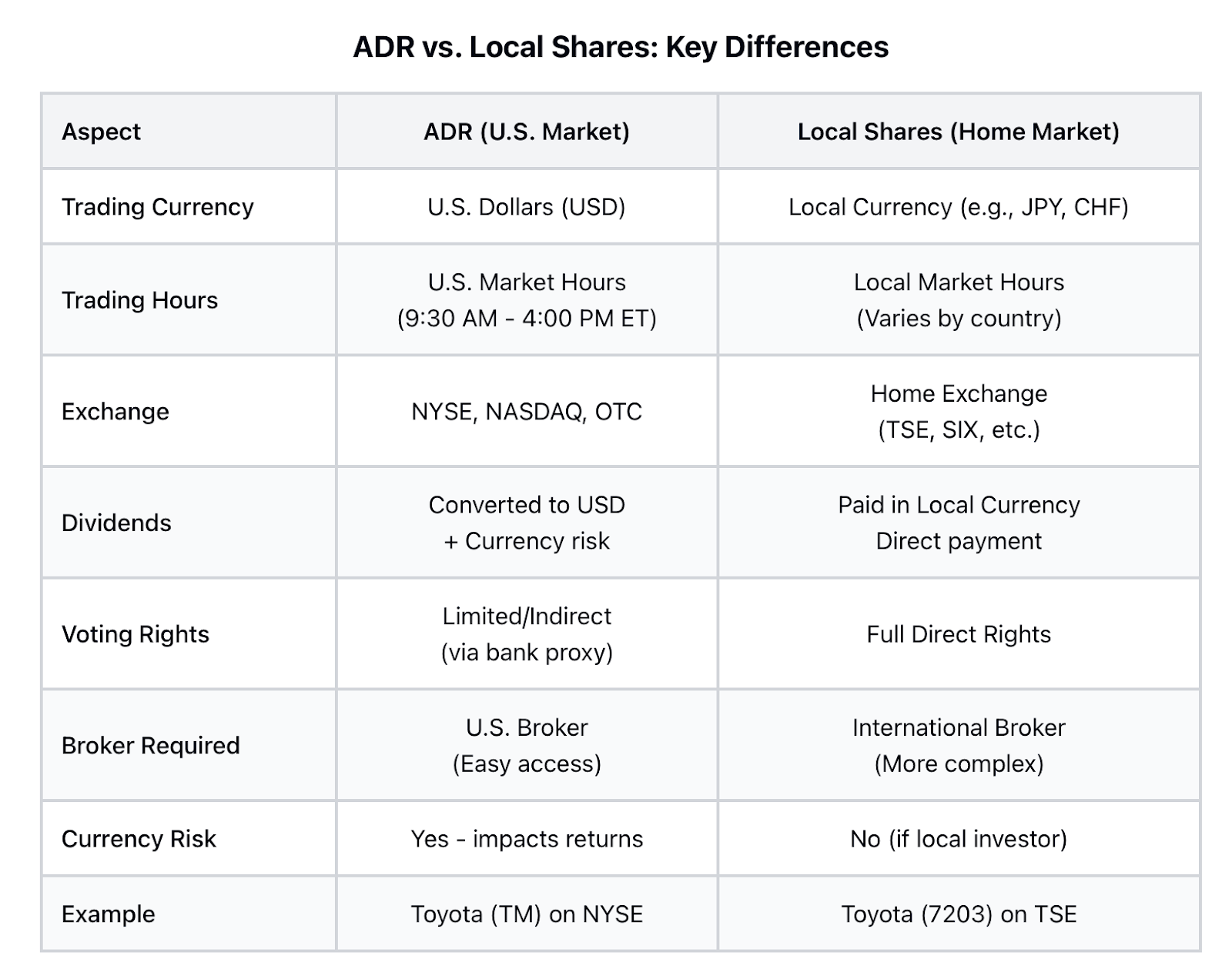
Voting rights is another difference. When you hold ADRs, you will likely have limited or indirect voting rights. The depository bank will likely vote for you in the case of proxy voting, or offer you an avenue to vote or provide instructions on how to vote. Local shareholders in the home market have full voting rights, and can participate directly in shareholder meetings.
Think of it as borrowing versus buying a book. If you "borrow," it's just for you to read but you don't have full rights of ownership. If you "buy," it's yours to keep, write in, and lend to a friend.
Toyota is a real market example. Its ADR ratio trades on the NYSE as ticker TM. The local shares trade on the Tokyo Stock Exchange as ticker 7203; if the yen rises relative to the dollar, the returns of ADR holders will be different than the returns other (local) shareholders would have, despite both groups holding the same security and the yen price being the same.
A similar yet different example can be seen in Nestlé's ADR versus its shares on the Swiss SIX exchange. The currency, changing between the Swiss franc relative to the U.S. dollar, will signify a different return profile for holders of the ADR as opposed to those who hold shares on the SIX exchange.
The comparison of whether you should choose an ADR or local shares boils down to what is important to you. The ADR route offers benefits of ease of ownership, a dollar-denominated transaction, and exposure to the U.S. listed market, while the local share option offers ownership of the security proportions of the company directly, exposure to the local stock market, and getting rid of the depository bank as an intermediary.
How ADRs Affect Portfolios and Risk Management
ADRs are effective vehicles for international diversification but have risks that must be managed.
By adding ADRs to your portfolio, you gain access to a non-US company and market without the hassle of a foreign brokerage account. You can invest in a European consumer goods business, Asian technology, or Latin American resources, all inside your US brokerage account. Geographic diversification can help mitigate portfolio risk and take advantage of growth in global economies.
The main risk that ADR investors must manage is currency risk. Even if the foreign company is performing well, a negative conversion due to currency fluctuation may offset those returns. For example, say an investor bought an ADR for a European company. They see the value of that ADR increase, but if the euro decreases in value compared to the dollar, then when the ADR is converted back to USD, the value is less.
Try to picture this example: you split your allowance into cash in two different currencies. Imagine you did not spend any of your allowance for a month. When you went to spend it, the exchange rate had changed and now you found out that the value of the cash you had was less. You would realize a loss of purchasing power even though both funds may have been unchanged. The same logic applies to an ADR.
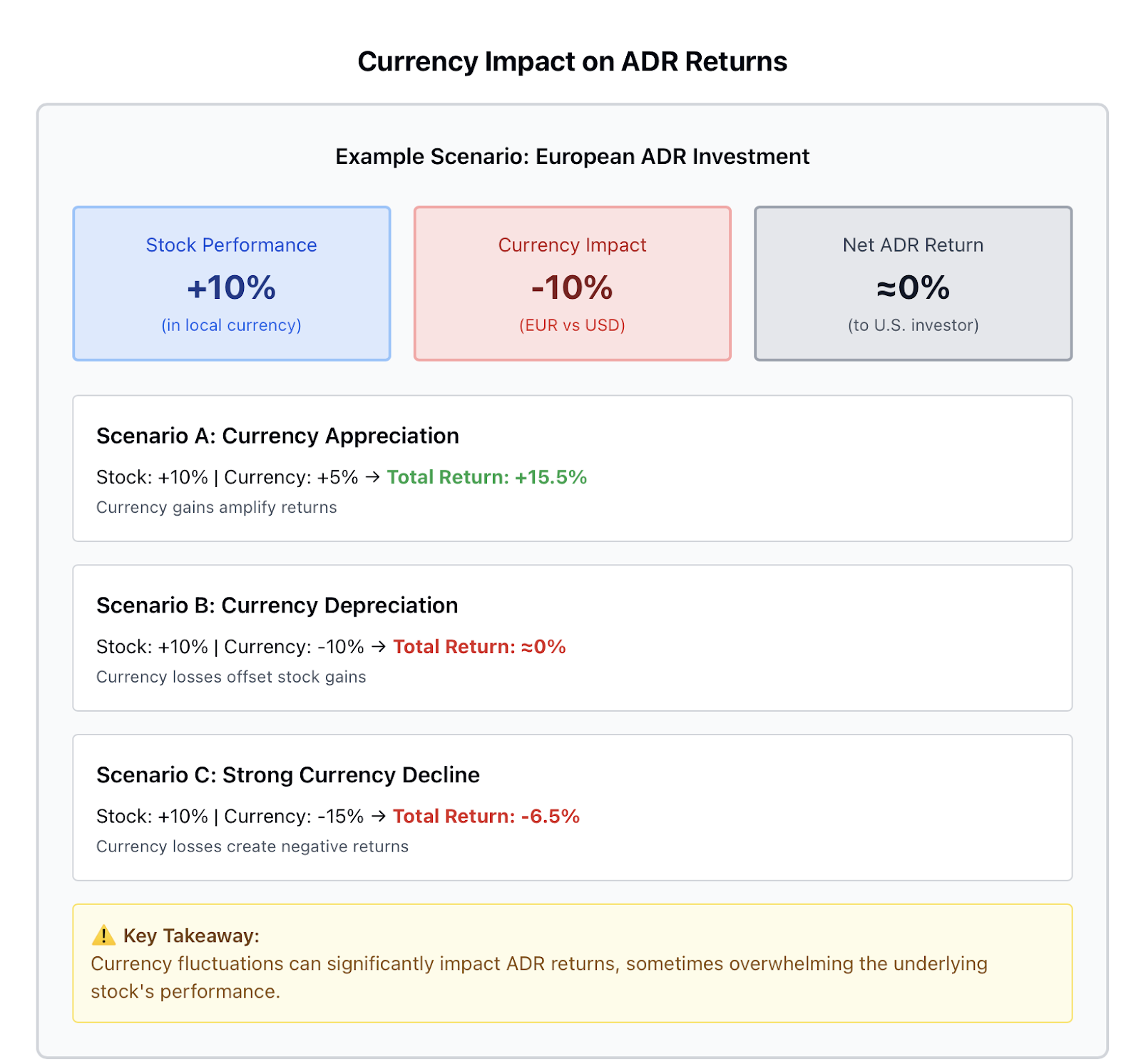
Let’s consider an example that applies the logic of time value of money to an investment theme. A fund holds the ADR for Toyota. The fund has to consider how the USD/JPY exchange rate is performing in order to report return to US investors. Using our previous example, if the price of Toyota's stock expanded to 10% in value in yen, but then the value of the yen depreciated by 10% against the USD, the ADR may not present any return or only 1% in value.
The risk of liquidity varies widely at all ADR levels. Usually, Level 3 ADRs on significant exchanges trade in high volume and at tight spreads. Daily volume may be lower, and spreads wider on Level 1 OTC ADRs, which may challenge a trader's ability to buy and sell securities at ideal prices.
Exchange-traded funds that track many ADRs face similar challenges across their entire portfolios. Fund managers must assess their portfolio for currency exposure, liquidity across holdings, and the effect of dividends in different currencies on returns.
Risk management strategies may help address these issues. Some investors employ currency hedging to mitigate the effect of movements in the value of currency. Other investors focus on highly liquid Level 2 and Level 3 ADRs to ensure the ability to trade when they need to. In general, the broader investors diversify across countries and currencies, the lower the impact of the value movement of any one currency.
Understanding all of these factors into account when assessing whether and how to incorporate ADRs into your portfolio addresses important category specific risks. The advantages of diversifying globally are important but only possible if an investor appropriately considers and addresses the risk.
How to Trade and Analyze ADRs on Platforms Like Tradewill
To trade ADRs well, you should be familiar with how to search for, analyze, and execute trades on modern platforms.
Most trading platforms, like Tradewill, keep the searching for ADRs process simple. You can find ADRs by their ticker symbol, company name, or browse ADRs by country or sector. The trading platform will then show you key information, including the current price, historic performances, dividend history, and volume of shares trading.
Think of your equivalent experience of shopping on an e-commerce site! You search products that you want to purchase, check for each product's key specifications, read reviews, and check history of price changes. Trading platforms work in the same way, serving as a source of all information you need to evaluate an ADR.
As an example, if you were analyzing Ali Baba's ADR on Tradewill, you would see a ticker for BABA, price quotes for the current price, price chart for historic performance, and dividend information. Additionally, the platform will show you volume trading, which gives you an idea of liquidity, and it may even show you examples of analyst ratings on the company and other news impacting the likelihood of buying or selling this company ADR.
Lastly, using additional technical analysis tools can guide you to understand price trends and give good entry points for purchasing a stock. Moving averages show you the stock's general price direction. The Relative Strength Index or RSI, will give you an indication of whether an ADR is overbought or sold. Support and Resistance levels will help you identify key price points that the stock could reverse direction.
As an illustration, if the price of Nestlé's ADR approaches a significant historical support level, the volume is increasing, and the RSI shows a positive divergence, technical traders may consider this a buying opportunity.
Before you trade, be sure that you are selecting the correct ADR of the company you are researching. Some companies or foreign stocks have more than one ADR, and the ADRs may have different ratios or levels. Be sure to verify the conversion ratio between ADRs and the underlying shares, as this will determine how dividends or other corporate actions flow to your holdings.
Also, monitor the liquidity of the ADR; review daily average trading volume and the bid and ask spreads. Wider bid-ask spreads imply that you will pay more to enter and exit positions. There may also be fees associated with any ADR holdings; some banks that act as depository banks charge annual custody fees associated with ADR holdings.
If the ADR you are watching has significant price movements compared to the underlying stock in the home market, it could signal an arbitrage opportunity, or it could mean that there could be issues with the ADR structure.
By understanding the tools and strategies, you can give yourself a better chance to not only make trades but also achieve the desired results with your investments.
Real-World ADR Case Studies Every Investor Should See
Analyzing actual ADR examples helps make the theory relevant and practical for investors.
Case Study 1: Nestlé ADR
The Nestlé ADR, NSRGY, provides an insight into European consumer goods. Over the past 10 years, its ADR has delivered a steady stream of dividend income and moderate capital appreciation. When the Swiss franc has appreciated versus the dollar, the Nestlé ADR investor has benefited from the currency appreciation on top of the ADR's stock performance.
Nestlé's predictable business model and consistent dividend payments generally make its ADR appealing to investors with a focus on income. Price action often reflects Flat performance, as well as EUR/USD or CHF/USD currency pair movements, if the ADR is held in USD. Reviewing historical price action charts demonstrates how the currency moves have served to amplify or reduce returns.
Case Study 2: Alibaba ADR
The IPO of Alibaba in 2014, as a Level 3 ADR, was one of the largest public offerings in history to date. Buying a stock under the ticker symbol BABA offered U.S. investors access to investors, as a Chinese e-commerce company. Initially excited, the price reached over $120, before the price settled down into the promise of stability.
The ADR saw turbulent swings having been affected by regulatory changes in China, trade tensions between the United States and China, and concerns over variable interest entity structures. In 2024 and early 2025, added regulatory scrutiny and macroeconomic developments presented risks and opportunities for investors.
This case shows that ADRs listed by companies and emerging markets encounter political and regulatory challenges unique to their normal; moreover, guilty currency movements between the yuan and dollar magnified the complexity of returns.
Case Study 3: Toyota ADR vs Tokyo Listing
As a reminder of how much currency drives the difference in returns to comparable shares, a comparison of the ADR relative to the local shares of Toyota on the Tokyo exchange illustrates this point. In recent years, the yen was severely devalued as the yen has weak functions compared to the dollar, notwithstanding the fact that rates of return by both the ADR and the Tokyo share were ultimately similar.
During the time the yen was weak against the dollar the ADR outperformed auto company shares when measured in dollar terms even though the auto company's underlying business did well. Conversely when the value of the yen strengthened the ADR performed not as well.
This case study illustrates why it is very important to understand the impact of currency on returns when investing in ADRs. A fund manager managing a portfolio of ADRs will monetize currency exposure when analyzing the outlook for each currency in relation to the fundamentals of each company.
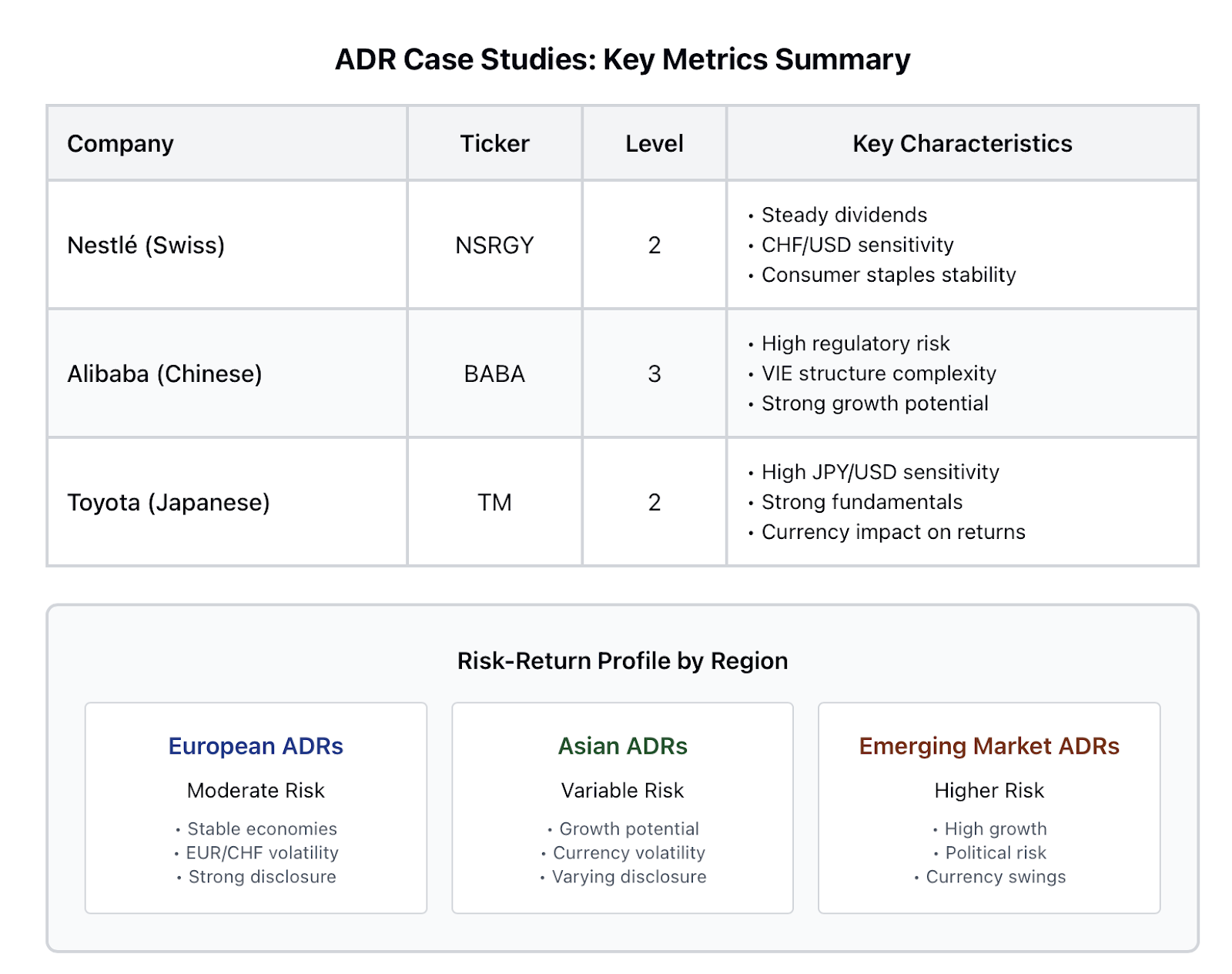
Ultimately, these real life examples show that successfully investing in ADR shares requires an understanding of the underlying business along with the currency dynamics that can impact the returns. You'll want to take into context price charts, past dividends, and the trend of the currency to have a complete analysis of the ADR.
Common Mistakes to Avoid, and Tips for Successful ADR Investing
Understanding that even experienced investors make mistakes with their investing is one thing, but understanding common mistakes to avoid with ADR investing can help produce a better investment outcome.
Ignoring Currency Risk
Currency exposure is often only an afterthought after an investor and analyst review the stock's price movement. When an ADR returns such as a dividend is quoted in what currency it trades, it includes both the stock's return in the currency relative to the USD, as well as the movement of that currency relative to the USD. Therefore, ignoring currency can ultimately contribute to unforeseen losses, or missed investment opportunities.
It is important to always know the currency that the underlying stock trades in, along with knowing the trend of that currency relative to the USD. Currency effects can overwhelm stock fundamentals during extreme periods of currency volatility.
Not Knowing the ADR Level and Liquidity
Investing in a Level 1 OTC ADR expecting the same liquidity as what the Level 3 exchange listed ADR offers, leads to much dissatisfaction among experienced and novice investors. Level 1 and Level 2 type ADRs to a lesser extent have much wider bid-ask spreads and much less volume, which can create additional costs to enter and exit trades designed to invest in an ADR in the first place.
Prior to making an investment, you should verify the ADR's level, listing venue, and average daily volume. Most retail investors had better liquidity and narrowly defined spreads when dealing with Level 2 and Level 3 ADRs on national exchanges.
Confusion Related to Dividends and Taxes
DR shareholder distributions generally incur a foreign withholding tax before the payment reaches the investment account. The depository bank withholds the tax and converts the remainder to dollars. This results in lower than expected dividends which may be a surprise to some investors. Additionally, sometimes foreign taxes are not claimed on the U.S. tax return.
Investors should consider the tax implications before investing, and keep track of any foreign taxes that have been withheld as they may be applicable for credits or deductions. Investors should consult a tax advisor for complicated situations, especially when dealing with multiple foreign countries.
Disregarding Fees
Some ADRs do have annual custody fees and these fees can be subtracted from dividend payments, or be deducted directly from your account at the bank. Typically, these fees are just cents per share; however, over time they can add up and reduce returns.
Be sure to check the ADR's fee structure before investing. You should also consider these fees when estimating your expected return, and consider whether the fees still make the ADR a better choice than international ETFs or direct shares of foreign companies.
Focusing on Price Alone and Neglecting Other Factors
A high school-aged child may notice a company's stock price is increasing in value and quickly decides to buy the stock without considering other factors. More experienced and professional investors understand that the price is just one factor in the decision-making process. Investors understand that it takes more than price to place investment decision-making properly; factors like liquidity, volume, currency trends, the regulatory environment, and the fundamental nature of the company are all essential.
An example of this includes a fund that misjudges the liquidity of an ADR, in which case an investor may find it challenging to exit that position under stress in the market even when the fundamental analysis performed was sound. The point of these notes is to build a complete picture of an ADR investment before actually investing.
Investment Checklist For the ADR Investor
Prior to purchasing an ADR, an investor should verify liquidity by looking at volume and the spread, as well as currency exposure and particular currency trends. The investor should also review the dividend policy, associated fees, ADR level, and disclosure obligations before looking at company fundamentals and geopolitical risks associated with the home country.
Using a checklist can help eliminate many of the common mistakes and improve the ADR investment process for you and the investor.
Conclusion: Start Investing in ADRs Wisely
ADRs provide American investors with a simple portal to global investing, eliminating the hassle of foreign brokerages. They can provide exposure to international companies with growth potential outside of the United States. Understanding the different ADR levels in order to make educated decisions that fit your appetite for liquidity and public activity will be helpful. Level 1 ADRs work well if you don’t require liquidity and you can be patient. Level 2 (and Level 3) ADRs provide you with the liquidity and level of public disclosures most investors desire.
Be mindful that ADRs are structured to yield dividends based on the performance of the underlying company, combined with the associated currency performance variables. The depository bank will convert the dividends from the foreign currency to US dollars and may also provide limited voting rights. The different structure of ADRs in comparison to direct ownership of foreign shares, is, in part, what differentiates them.
You should have an understanding of the currency and liquidity risks associated with your investment. Keep an eye on the Exchange Rates that are favorable or unfavorable to your ADR holdings to help you consider your options. When evaluating ADRs, select them based on your anticipated holding time frame, desirable liquidity, and volatility. Be aware of potential fees and tax implications before making investment decisions.
Wanting to be diversified, wanting exposure to growth potential in emerging markets and/or companies, or wanting to have any sort of exposure to a foreign company, are all great reasons to consider purchasing ADRs. An ADR allows you to have an exposure to the companies you want to purchase and still trade through your US brokerage account, with a US dollar accounting for trading.
The practical examples of Nestlé, Alibaba, and Toyota illustrate the performance of ADRs in a spectrum of industries, geographic areas, and market conditions. These lessons can help you formulate your own actionable strategies regarding your investing. You can avoid potential pitfalls such as currency risk, fees, and ADR-type misinterpretation while generating better investment outcomes. Utilize the checklist tool to help provide a framework for evaluating each ADR investment opportunity.
Ready to plot your next investment course? Open a Tradewill account today to review ADR investment opportunities for optimizing your exposure to the global market. Utilize this unique investment form while being able to invest in the U.S. market, and reduce barriers to investing internationally.
Disclaimer: The content of the blog does not represent any position of Trade W, does not serve as any trading-related decision advice, and does not endorse any third-party.