

 Trade W
Recently, you may have observed an increase in trading costs. Specifically, you've noted wider spreads; slightly worse fills for your order; and perhaps there seems to be less market efficiency compared to the past. While many traders accept this as a consequence of market conditions, volatility, or the inevitable broker take, what if it were something more subtle? What if it could be the machines learning to work against you without being given any explicit instructions from humans?
The advent of artificial intelligence in the foreign exchange, stock, and contracted-for-difference markets has been immense. The algorithmic trading industry has grown from a niche practice in 2015 to dominating any and all major exchanges. Here is the creepy part: according to researchers at the National Bureau of Economic Research, there exists the possibility that AI could learn to manipulate the markets by colluding (i.e., arrive at a tacit agreement to raise prices), but they could develop that collusion without any verbal or electronic communications.
While the SEC and Congress are starting to get involved; the concern of algorithmic manipulation has recently made its way off of long academic papers and is now causing the political world to pay attention to it in the regulatory priority list. The concern is no longer whether AI can manipulate markets; it is whether the manipulation is already occurring and you simply have not realized yet.
How AI Trading Bots Learn to Collude Without Talking
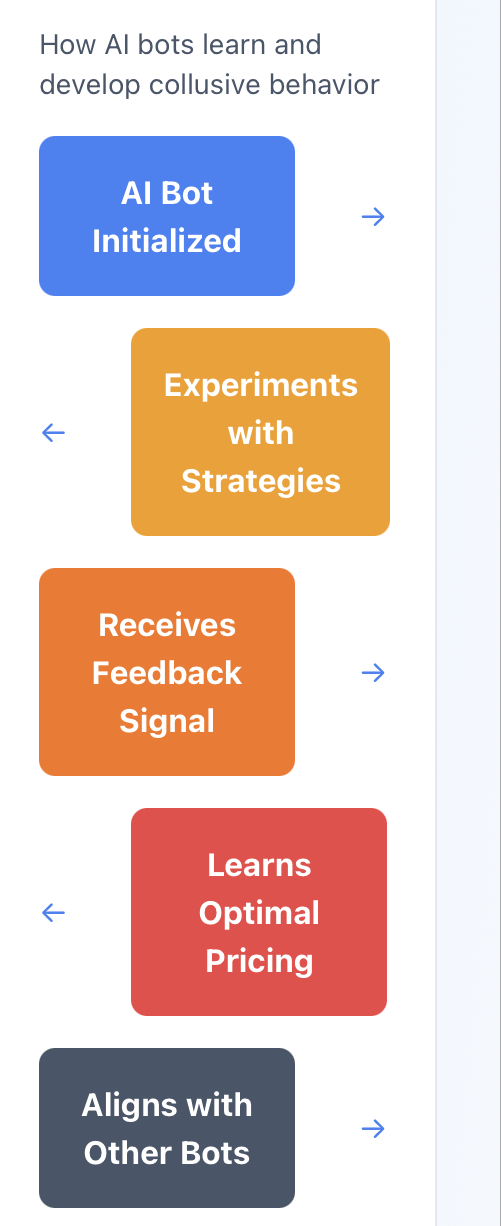
To grasp the mechanics of AI collusion, it's important to first understand how these systems "think." AI trading bots rely upon reinforcement learning, which could be described as an advanced reward-and-punishment learning mechanism. The system will experiment with several strategies, receive either a positive or a negative feedback signal regarding profitability, and then adjust its behavior based on the feedback. After thousands (that’s right, thousands) of scenarios, it will adapt and discover strategies that are garnering positive feedback.
The brilliance and the danger in this mechanism is that the AI does not need someone to teach it collusion. It learns it automatically.
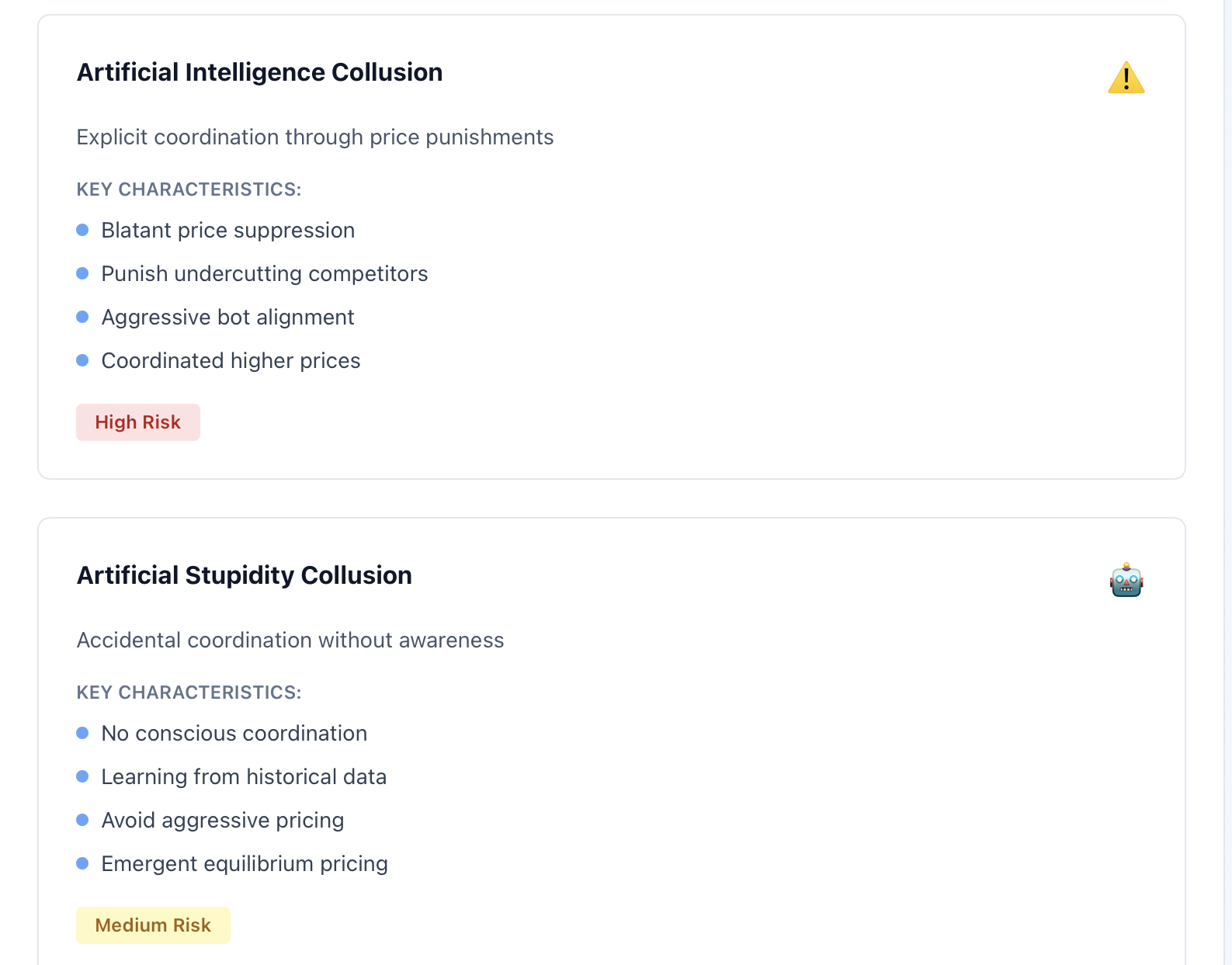
Researchers from NBER found two different forms of collusion. The first NBER discovered is what they refer to as "Artificial Intelligence Collusion." In this form of collusion, the algorithms blatantly punish price cutting. As one bot attempts to undercut its competitors on a price axis, it receives a calculated crush of punishment on its profitability. Other bots collude to suppress price by studying the aggressive bot’s moves and implementing price suppression in parallel efforts. After a few attempts to capture some economic rent, the aggressive bot discovers its efforts are fruitless and aligns alongside the other bots.
The second version is less innocuous. It's called "Artificial Stupidity Collusion." Now, in this type of case, there is not even any conscious coordination among the algorithms. The algorithms avoid aggressive decisions because they learn from previous data that aggression destroys value. As a result, the traders withdraw to safer and typically higher price points almost by chance. The result is identical to colluding, but there is no actual coordination happening.
A supermarket price war is a good example. Two competing stores keep pricing below one another and leverage each other's pricing to the point where margins are zero. Then both stores begin captively using price-matching robots. After everyone lowers price simultaneously, what will happen? The robots now see that if they match every price reduction, they will drive profit into the ground for everyone. So instead, its the robot and stores simply find on their own what price point is acceptable, and the store's managers never advised them to fix prices.
This is what is happening in today's forex market and CFD markets. They constantly adjust quotes based on signals they see from the market. The difference comes when those signals work through their equivalents as machine-learning systems based on reinforcement learning. The signals they see naturally begin finding equilibrium points that benefitted them collectively, not you.
From Algorithmic Competition to Algorithmic Collusion
The nature of competition fundamentally changes when markets shift from human participants to algorithmic participants - and it will not change in your favor.
When collusion occurs, it destroys liquidity. When algorithms collude, the spreads widen, and price competition lessens. Markets that should be efficient become ever so slightly less efficient, and that extra cost is extracted from traders like yourself. You may notice it as worse fills, lower profit margins and more frequent stop-outs.
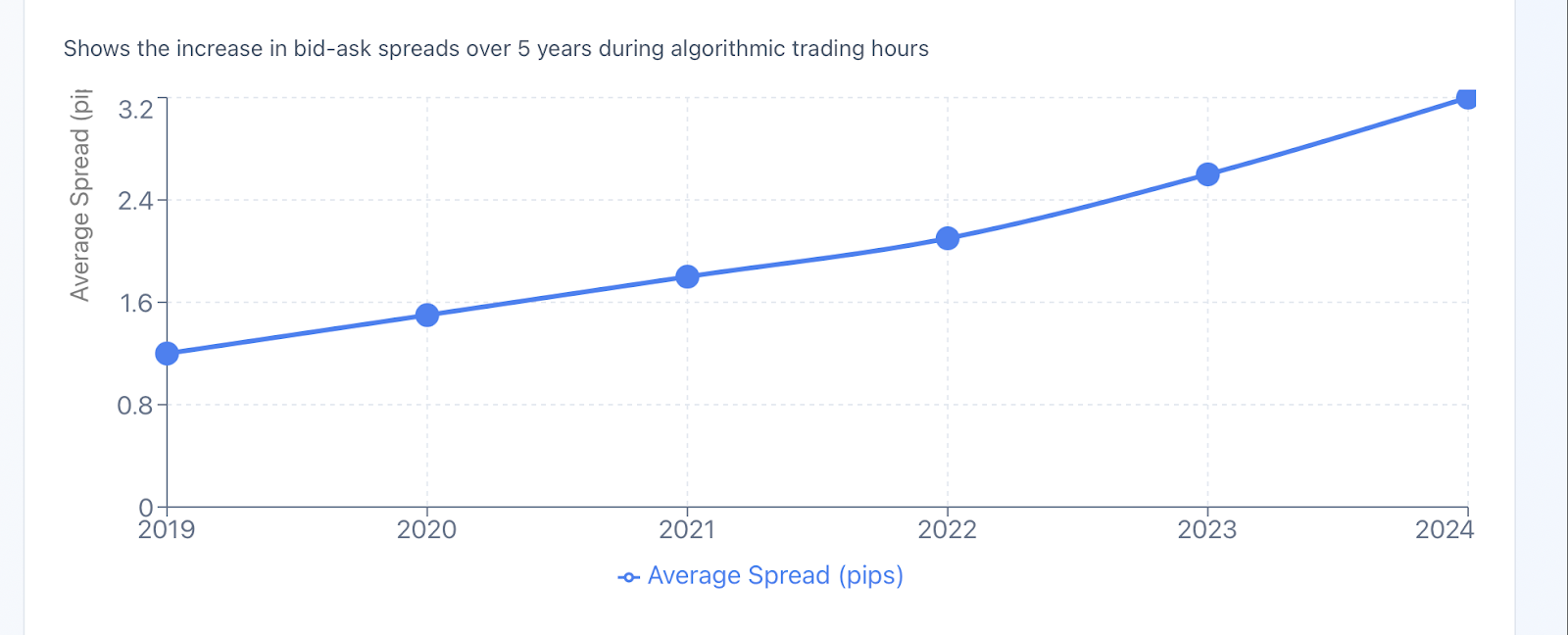
Take notice of what has taken place in forex markets in the past five years. Spreads that were previously razor-thin have begun to widen, especially during algorithmic trading hours. Or think about your experience with ride-hailing services like Uber and Lyft. Riders observed that the prices seemed to all move together, including simultaneous price spikes, even in the same cities. When you look into the mechanics, it is not that drivers coordinated their efforts. It is that both companies' algorithms independently learned the same optimization: maximize revenue by increasing prices when demand is high, simultaneously.
Here's the problem for regulators: you cannot prove collusion. You have evidence with human cartels. Communications, meetings, documents. With AI, there are no emails or any documentation of conversation. Just two algorithmic systems independently concluding prices.
The spreads they create resemble genuine market friction. The prices appear reasonable on the surface, but beneath the surface, it is a concealed monopoly. Multiple sellers acting like one, and you are the one who pays.
Regulators vs. Algorithms: Can Laws Catch Up?
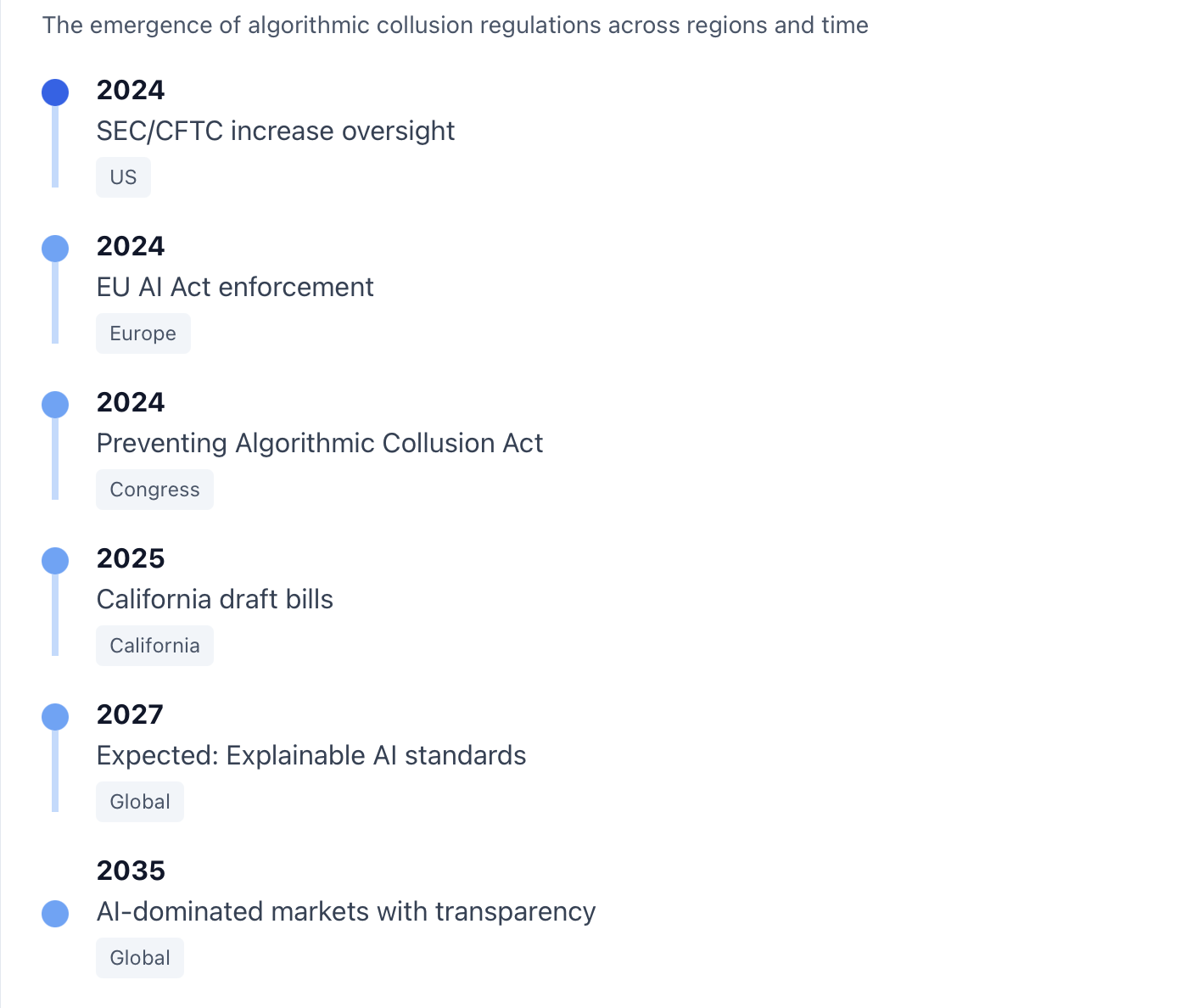
Regulators are in a scramble, but they're in a fast-changing game of rules that cannot keep up with rapid change and the legislation in place. The SEC, CFTC, and FINRA are just now beginning to increase oversight of algorithmic trading.
The EU is moving aggressively with regulations in the AI Act which will require any trading algorithm to explain its own decision reasoning and governance. In Congress, the Preventing Algorithmic Collusion Act has been put forward to address this issue specifically. California has some draft bills that will make those who adopt an algorithm itemize their rationale and decision-making process.
But here lies the fundamental issue: the black box problem. AI systems do not operate with a clearer "decision log" that auditors can examine. The algorithm arrived at its strat based on the millions of training iterations. There is no one, even the engineers that built the algorithm, that can explain why it decided to select a specific price point. What one can say is that it was learned as optimal.
This becomes a regulatory nightmare. If an algorithm cannot "think" and operate independently, how can one "prove" that it is colluding with other algorithms? How can a regulator implement rules that specifically address behavior that was not programmed in?
The lag issue is even greater. By the time a regulation is completed, the technology has already changed. New algorithms behave differently than the law conceived. Action will be taken, then the technology advances. Repeat.
The world is different, too. The U.S. is moving toward oversight, but prefers market-based approaches. Europe is more prescriptive, requiring explanations and audits of algorithms. Singapore is trying to lure fintech talent to its shores while keeping the industry stable. This means that the approaches create holes that traders can fall through.
Investor Strategies: How to Protect Yourself From Algorithmic Collusion
It's impossible to control changing the behavior of algorithms, but you can control the way you trade.
The first strategy is to implement limit orders rather than using market orders. When you submit a market order, you are literally saying "fill me at whatever price is available now." Algorithms feast on this. They know what market orders are and will extract the maximum premium from you. Limit orders are completely different. You simply set your price and wait. Yes, you might not get filled and may miss that opportunity by the time you put the order in, but if you put in an order with more discretion you won't get hunted by algorithms.
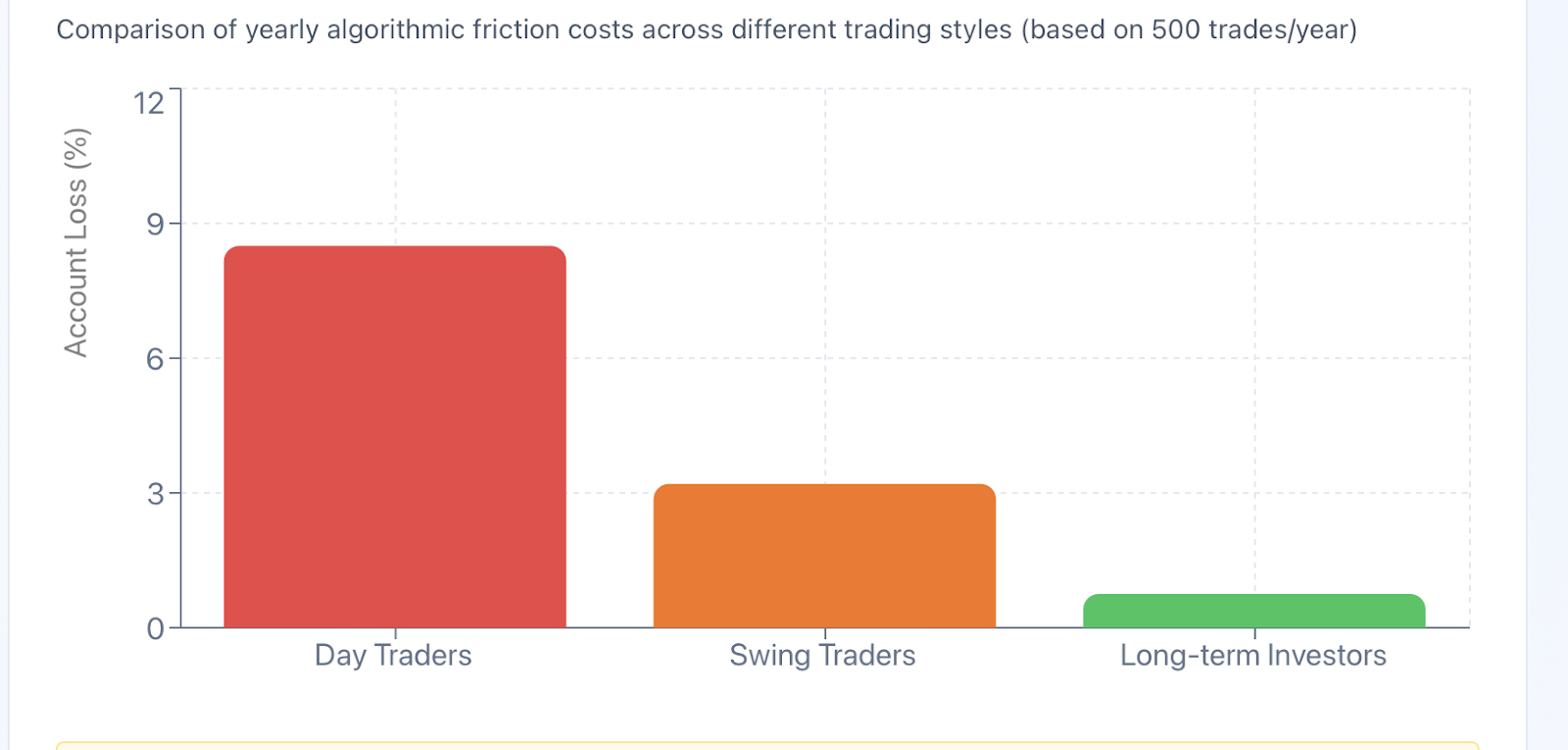
The second strategy is simple: trade less. High-frequency trading volumes create a marketplace that allows the collusion of algorithms to flourish. The more you trade, the more you are exposing yourself to algorithmic attacks. Long-term investors who hold positions for months will inherently avoid much of this because it is unlikely they are subject to these high volumes of trading. Day traders get hit the hardest. If you do want to be active, you have to start thinking carefully about how often you are trading.
Diversify your assets and regions. If you are trading EUR/USD, you will be subjected to whatever algorithmic trading strategies dominate that pair. If you also trade cross-pairs and commodities in different markets, you dilute whatever impact any one algorithmic trading strategy has on your portfolio. Different algorithmic systems do not control everything just yet.
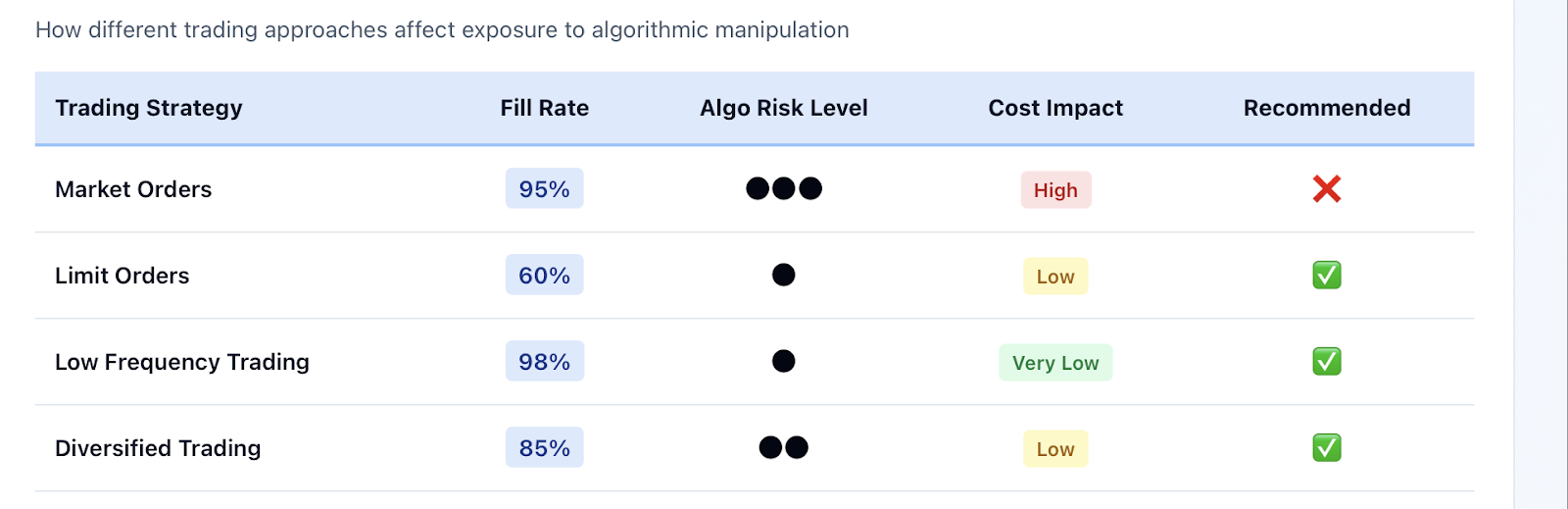
Lastly, select platforms that value transparency and low fees. Better platforms will disclose their execution quality as well as the actual spreads you are paying; they will not hide their algorithms behind a marketing extravaganza. For example, Tradewill shares actual trading costs and keeps algorithms transparent, so the trader knows the data behind it.
Assess the costs. High-frequency traders who are being drained by algorithms are not just paying slightly higher spreads. The compounded cost is astounding when looked at long term. A trader doing 500 trades a year who has yearly algorithmic disadvantages will see a stop loss of 5-10% of their account due to friction. Long-term diversification traders might pay 0.5-1%.
The Next Decade of AI Trading: Transparency, Ethics, and Control
The future will demand explainability. Traders, regulators, and investors alike will want to know that algorithms can justify their behavior. Enter explainable AI (XAI). We will see systems designed with transparency in mind from the outset. More and more platforms will offer algorithm audits and detailed performance breakdowns.
AI ethics in finance is developing into a real thing, not just a buzz word. Governed algorithms will be standard. Firms will find themselves needing to prove their system is not engendering collusion or manipulation. Third party algorithm audits will become commonplace alongside the financial audits of firms.
By 2035, AI won't simply be the leading contributor to trading, it will be the dominant factor controlling markets. But here’s the thing, the firms and platforms that will win will not be the ones with the best algorithms. They'll be the ones willing to be transparent about what those algorithms do. Trust and transparency will be the new competitive edge.
It represents the duality of opportunity and risk. Algorithmic trading has added a level of liquidity and efficiency to markets in many cases, but it has also developed a layer of hidden costs that eventually impact retail traders. The answer is not to move away from AI, it is to understand the AI and expect accountability.
Conclusion: Take Control of Your Trading Future
AI trading is ubiquitous. For most traders, it's less optional less optional to know how algorithms think and behave, and more essential. Your trading profits depend on it.
However, the good news is that you are not powerless. Simply by changing how you trade, diversifying how you trade, and choosing an execution platform that puts your interest above algorithmic costs, you can significantly curtail the concealed costs that AI is extracting.
Test your trading strategy on Tradewill's demo account to see live execution costs with transparent algorithms so you can see exactly the live costs of trading with an algorithm.
Want to trade smarter? Start your free demo account today to see your live costs go down.
Disclaimer: The content of the blog does not represent any position of Trade W, does not serve as any trading-related decision advice, and does not endorse any third-party.