

 Trade W

Until recently, very few investment options for projects in emerging markets have generated the same level of discussion and debate as investments in an Argentina ETF. Investing in these types of options allows an investor a direct way to invest in one of South America's most unstable yet potentially profitable economic regions. Before diving into this area of the financial world, it is important to understand the factors driving these investments and how well they correlate with your own risk profile.
What Are Argentina ETFs and Why Should You Care?
Exchange-traded funds (ETFs) combine various stocks into one tradable package. Think of them as a pre-made basket of investments that trade on stock exchanges, similarly to individual stocks. They are attractive because they are easy to use, offer instant diversification, transparency in price, and you can buy and sell ETFs at any time the stock market is open.
Argentina ETF funds focus on companies either registered in Argentina or that have significant operations in Argentina. The best-known fund in this category is the Global X MSCI Argentina ETF (ARGT) that tracks the performance of the Argentine equity market. The funds are attractive because of Argentina's economy, which experiences dramatic swings due to extreme inflation, currency instability, and frequent changes in government. These factors create volatility in Argentina's stock market, which generates great opportunities for investors who seek meaningful returns but puts tremendous pressure on conservative investors who fear losing money in such fluctuating markets.
Argentina's economy resembles a thriller novel where inflation has consistently exceeded 100 per cent annually in recent years. In addition, the Argentine peso is subject to unpredictable fluctuations against the U.S. dollar. The key industries within Argentina consist of oil and gas (energy), agriculture (soybeans, wheat), technology (e-commerce), and financial services. With the diversity of key industries, opportunities exist throughout many sectors. However, extreme risk exists when the environment is less than positive.
ARGT fund performance over the past five years demonstrates the above points, with significant positive and negative monthly price changes. While market sentiment improved in 2023 as a direct result of the implementation of new economic policies, the fund experienced more than a 50 per cent price gain during that year. However, earlier years also saw price decreases of over 30 per cent when political uncertainty created fear in many investors. This is not a buy-and-forget investment; this requires the diligence of investors and the ability to maintain conviction during the down periods.
For beginning investors, think of an Argentina ETF as a basket of different stocks within Argentina. Instead of researching multiple companies, an investor can invest in one fund that contains many stocks; however, if a company contained in that basket is one that the investor dislikes, that is too bad, as that stock is included.
The natural appeal of investing in emerging markets, such as Argentina, is the high-growth potential these markets provide compared to developed markets. When everything is operating smoothly in Argentina, investment gains can be extraordinary. Conversely, if all does not go as planned, losses will occur very quickly. To be a successful investor within an emerging market, an investor must understand how to find a balance between the risk and reward of investing.
MercadoLibre and YPF: The Heavy Hitters Driving Performance
When you look at an Argentina ETF's holdings list, the same two names keep coming up time and again - MercadoLibre and YPF. These two companies have such a high level of influence over returns that they often dictate to some degree what the returns of the ETF will be.
MercadoLibre is often, if not always, considered to be the king of E-commerce in Latin America. It is comparable to Amazon in the region, but it also provides finance-related services to its customers through its Mercado Pago service. MercadoLibre derives revenue from the fees it charges for retailers in its marketplace, as well as from the logistics and payment processing services it offers, and the advertising it sells on its site.
As Latin America continues to see rapid growth in online shopping, revenues will continue to rise at an explosive rate for MercadoLibre. The stock trades on the NASDAQ with the ticker symbol "MELI", so it is highly visible to U.S. investors.
MercadoLibre generally represents between 20 - 25% of an Argentina ETF's total holdings if you look at a typical fund such as ARGT. This concentration of holdings in MercadoLibre means that whenever the MercadoLibre stock trades higher, the entire ETF benefits from that increase; however, when there is a sell-off in the MercadoLibre stock, the entire fund will be affected negatively. Investors who own an Argentina ETF will be watching closely for MercadoLibre's quarterly earnings reports. These earnings reports are "must-watch" events for anyone who holds this position.
YPF is a different animal altogether. YPF is the Argentine government's state-controlled energy company; therefore, its profitability depends almost entirely on the price of oil and gas in the international commodities market, as well as on the policies of the Argentine government. When the price of oil goes up, YPF becomes more profitable; conversely, when the Argentine government imposes price controls or export restrictions, YPF then suffers as a result.
Across the holdings of typical Argentina ETFs, YPF typically represents 10 - 15%. YPF generally represents value potential and dividend potential, rather than growth potential, and attracts investors who are speculating on a recovery of the energy sector in Argentina. YPF trades at a much lower valuation compared to MercadoLibre; however, YPF has numerous challenges, including those related to government interference, operational challenges and changes in the pricing of oil and gas.
Ultimately, these two companies illustrate the fact that there are a variety of investments represented in Argentina ETFs. There are multiple growth drivers and multiple risk factors in Argentina ETFs as well. When the two sectors perform successfully, there can be outstanding returns. However, when the two sectors perform divergently, the ETF will usually exhibit mixed performance in terms of returns; therefore, the extremes of both performances will generally become diminished.
As of Q2 2025, the percentage breakdown of the ARGT portfolio reflects that Mercado Libre represented 23% of the portfolio and YPF represented 12%. The rest of the portfolio (65%) is broken down into financial institutions, utilities, consumer goods and minor tech companies.
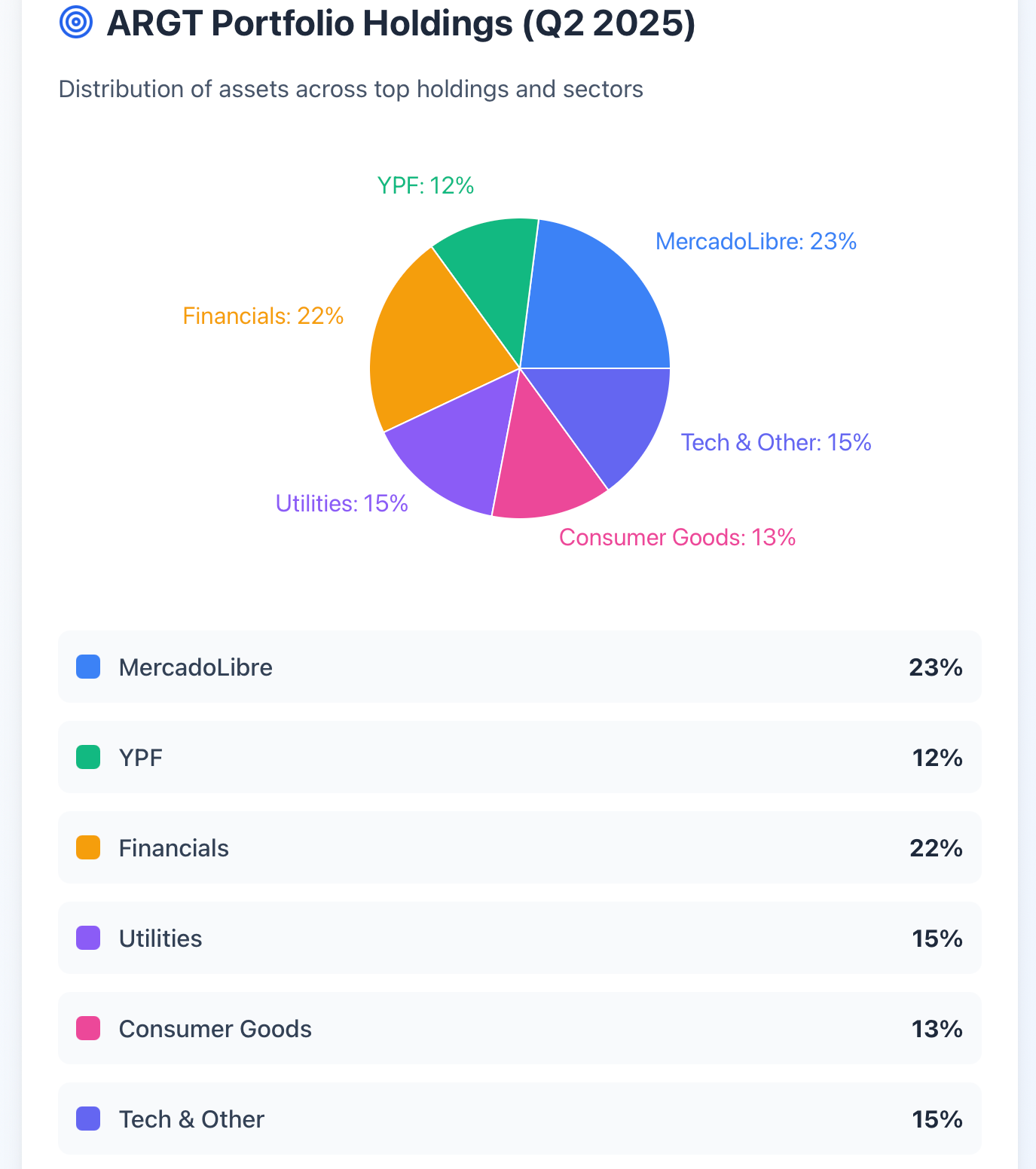
This portfolio inventory means that no one company will likely dominate the ETF to the point where it produces the entire return outcome of the ETF. However, the portfolio does still have a rather high concentration in both MercadoLibre and YPF, so both companies will continue to have a high degree of influence over the ETF's performance.
If you want to understand how the Argentina ETF will perform with regard to impending market news, understanding the core positions of an ETF is important. Understanding that MercadoLibre's earnings report beat estimates will probably be a positive sign for the ETF and increase its market price.
Conversely, if oil prices fall off sharply, you should probably expect weakness induced by YPF. Therefore, intelligent investors will also most likely track these two companies separately to help them understand the reason why the ETF's price may move in certain directions before it happens.
Industry Allocation: Where Your Money Actually Goes
Evaluating sector breakdowns provides insight into how an investor’s money is allocated to respective industries over time. Sector allocations represent a key driver of returns and volatility, so how an investor allocates capital to each sector is very important—it may have a much greater impact on their overall return than investors realise.
Consumer discretionary represents the largest segment at 25-30%, and the largest player is Mercado Libre (MELI). This sector has great growth potential, but also fluctuates greatly depending on economic conditions. Discretionary spending tends to rise when consumers feel optimistic about the economy, while recessions and high inflation result in large drops in discretionary spending.
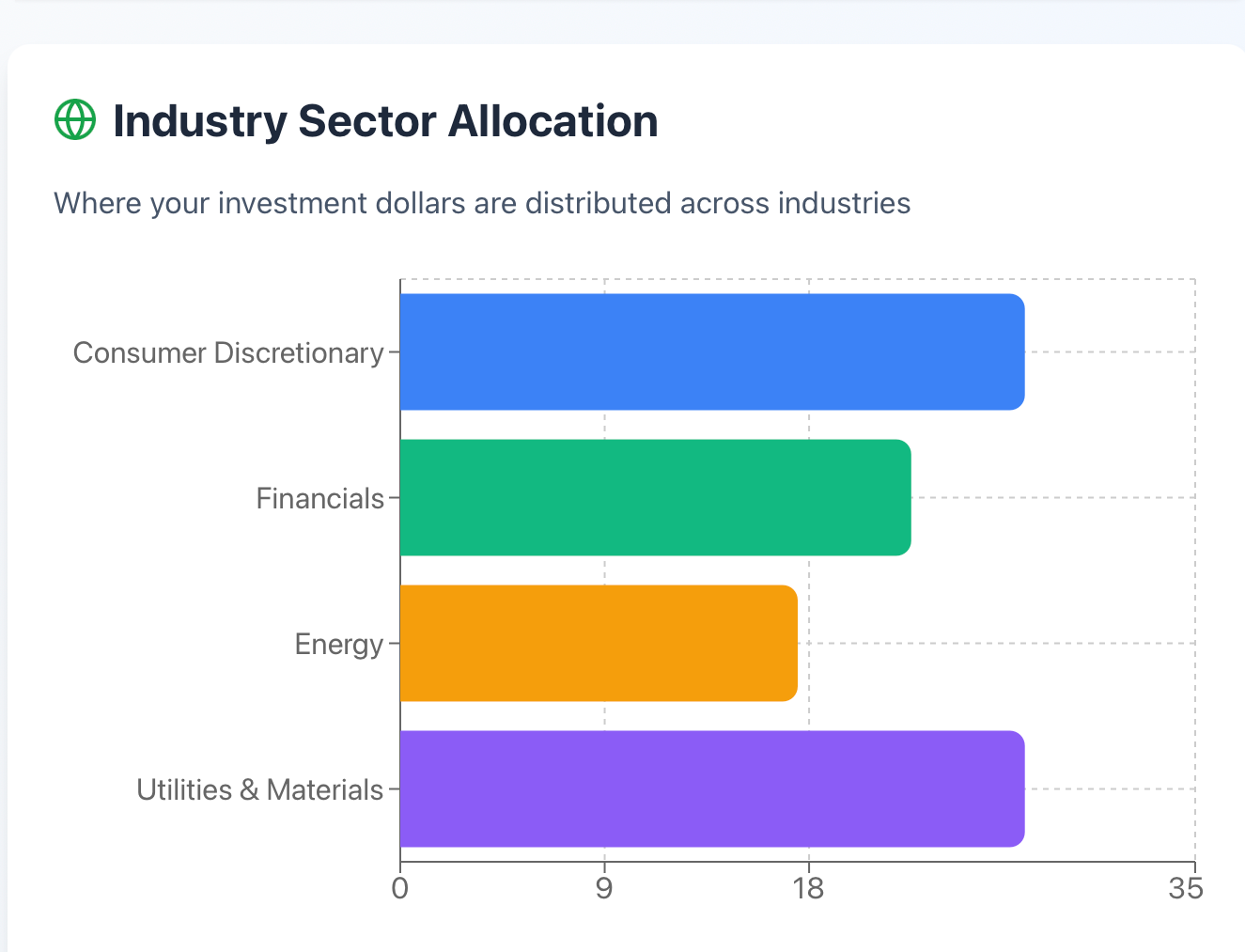
Energy represents 15-20% of the Argentina ETF, with YPF leading the way. Energy performance is linked to oil and gas prices, both globally and from Argentina (why energy can provide portfolio stability during commodity booms, but may lag when prices fall).
Financials account for roughly 20-25% of the Argentina ETF through banks and insurance companies. Financial institutions may receive the benefit of an economy that’s growing, but will also be at risk during currency crises. Financial institutions’ profitability is largely impacted by interest rate changes from the central bank.
Electricity, materials, and various other sectors round out the remaining 25-30% of the Argentina ETF. This diverse allocation across multiple industries can reduce an investor’s risk related to any single sector. For example, if the energy sector underperforms, then perhaps the financials will outperform; alternatively, if the technology sector is selling off, then perhaps the electricity sector will be more stable.
Investors should consider their allocation to reflect the same concept that an ice cream sundae presents. A sundae with a large portion of chocolate is a bet that consumers will have an overwhelming preference for chocolate; however, a sundae that contains a variety of toppings will provide a mix of flavours that may appeal to all different consumers and reduce the risk of having only one type of topping.
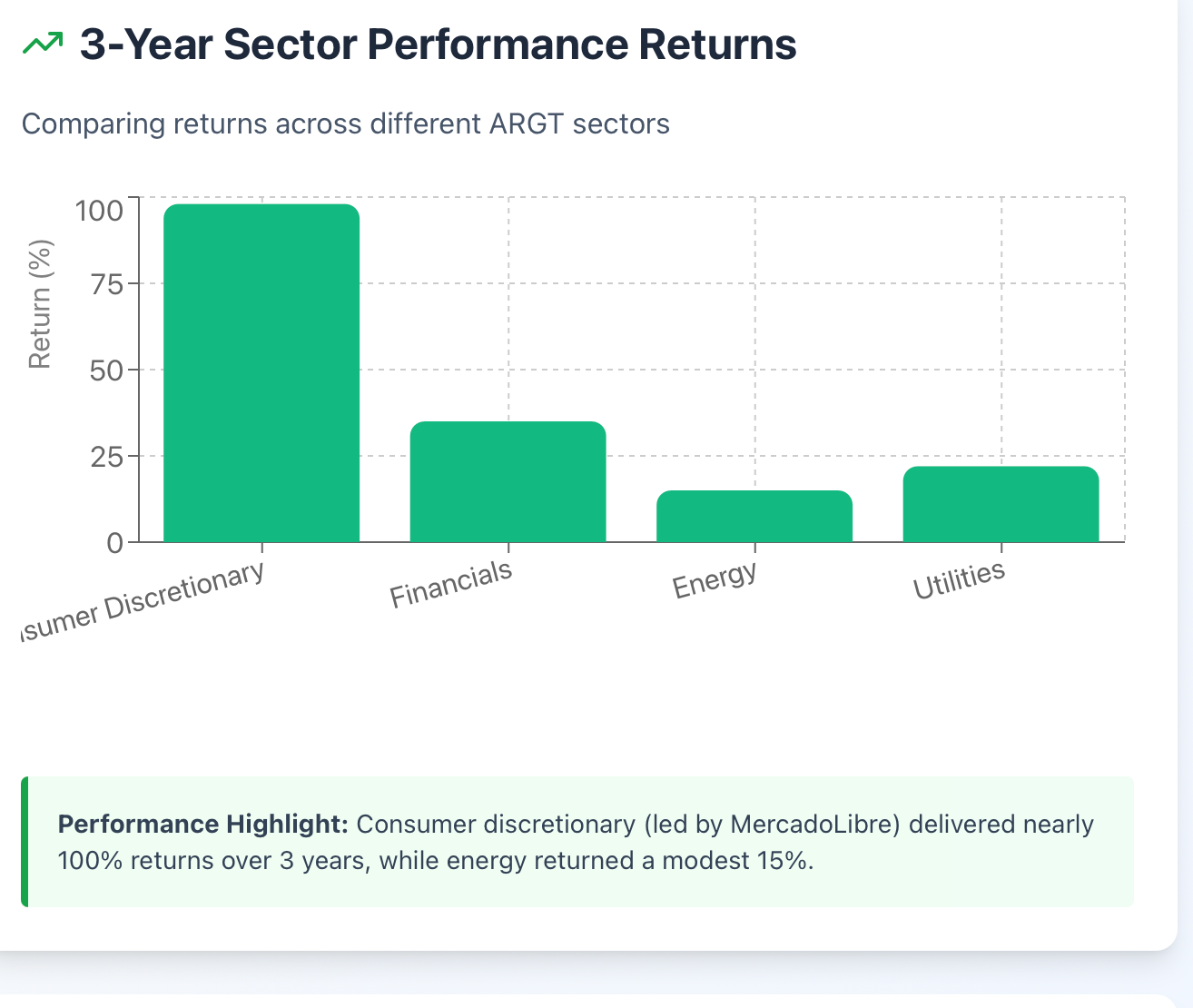
Over the last three years, the sector performance of ARGT has been highly variable. Consumer discretionary has provided near 100% returns (driven by MELI), while the energy sector has provided modest returns of around 15%. These differing returns demonstrate the importance of sector allocation, the primary determinant of an investor’s return will be the investor’s allocation to each sector of the ETF.
Understanding industry allocation should guide investors in forming a strategy for their investments. If the investor believes that the technology sector in Argentina will perform better than energy, then that investor may want to augment their Argentina ETF with technology-based investments; conversely, the investor may want to hedge against their belief in the recovery of the energy sector through energy-focused funds. While the ETF provides base exposure to all sectors, it allows for customisation around the ETF to meet the needs of investors.
The main takeaway? You are not only purchasing Argentine stocks; you are purchasing a specific blend of sectors with different risk-return profiles. Investors must understand why their respective funds have allocated their assets into certain sectors. Understanding why fund managers are weighted toward different sectors will help investors avoid situations where unexpected performances arise due to unexpected industry developments.
Currency Chaos, Inflation Hell, and Political Drama: Real Talk on Risk
If you are considering investing in an Argentina ETF, you will encounter a large amount of risk. The risks include currency devaluations, triple-digit inflation and erratic government policies regarding business operations. The biggest exposure is currency risk.
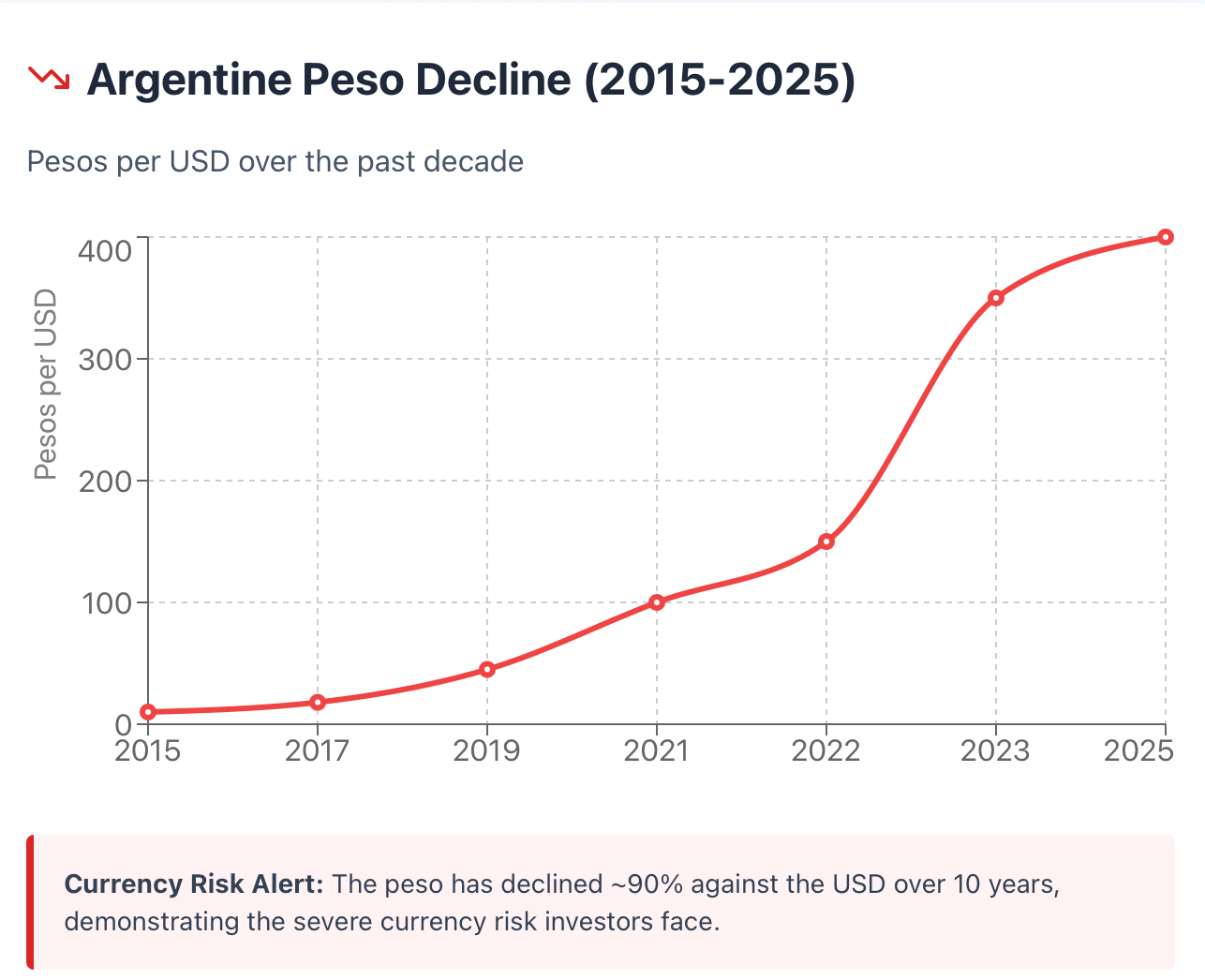
Over the past ten years, the Argentine peso has fallen by approximately 90% against the US dollar. You are exposed to this currency risk when you hold an Argentina ETF because you have ownership of the underlying companies within that fund. Even if one of those companies is a great performer within Argentina, the depreciation of the peso will wipe out any gains when you convert those pesos back into dollars.
Between 2022 and 2023, the peso dropped from approximately 100 to 350 pesos per US dollar. The extreme price volatility of ARGT's price chart during this time frame reflects how quickly the market reacted to the anticipated destruction of the currency. In one month, ARGT may have gone up by 15%, while in the following month's time it could have gone down by 20%. This is not some theoretical risk; it is the documented and extremely upsetting reality of owning an Argentina ETF.
Along with currency risk, inflation creates an additional layer of issues with the currency. Argentina's inflation continues to exceed 200% year after year. Due to high inflation, people have less purchasing power and therefore reduced demand for products, leaving businesses operating in "survival mode."
This creates a great deal of uncertainty in a high-inflation economy, and the stock market does not like uncertainty. Therefore, stock values decline, since investors are demanding a higher return on their investment because of the additional risk associated with high inflation.
Investors can relate to currency risk regarding how they would feel if, while travelling outside the United States, they lost half of their money changing currencies. That stomach-churning feeling is how currency risk affects holdings in an Argentina ETF. You may hold investments in many great companies in Argentina, but if the value of the peso drops, then your investment return expressed in US dollars will be reduced.
Lastly, the political risk component of owning an Argentina ETF is very real. The Argentine government regularly intervenes in the economy by placing price controls on utilities, imposing export taxes on agriculture, and enforcing currency restrictions to prevent capital flight. As the government makes changes to its policies, the value of stocks will drop as the investing community reassesses profitability for the affected companies.
This was demonstrated in the 2023 Argentine presidential election when ARGT had large swings in value as polling changed. ARGT increased approximately 50% in value over the three months following the pro-business presidential candidate. An investor's performance and rate of return will be more directly affected by these political outcomes than that of a U.S. or European stock.
Ultimately, it is imperative to use discipline when managing all of the risks associated with owning an Argentina ETF. Diversifying across multiple emerging markets will help to reduce exposure to specific shocks related to Argentina by providing a larger pool of emerging market equities.
Managing position size by maintaining small holdings of Argentina ETFs compared to the total portfolio value will help reduce the possibility of total loss of that portion of the portfolio due to the worst-case scenario. An investor should also regularly review and rebalance their portfolio to avoid having outsized holdings in any one specific sector or equity that exceeds the investor's peace of mind and comfort level.
Building Your Position: Strategies That Actually Work
Now that you're sold on investing in Argentina ETFs, what's next? The last thing you want to do is buy random shares at times when you feel bullish and then be let down by your bad timing! To invest successfully in emerging markets, you need to be strategic.
Dollar-cost averaging (DCA) allows you to mitigate the extreme volatility of Argentina's stock market. Rather than investing a large amount of money into ARGT at once and hoping for a quick return, you invest a fixed amount on a fixed schedule. For example, let's say you invest $500 per month.
When prices are lower, you are accumulating shares, and when prices are higher, you are investing less. Therefore, your cost average per share is averaged out over time, and emotion is taken out of investment decisions regarding when to invest.
The following example illustrates the benefits of using DCA to invest in ARGT. If you made monthly investments of $500 from January 2024 to January 2025, you would have accumulated $6,000 in total investment, which equates to several share prices, ranging from $35 - $55.
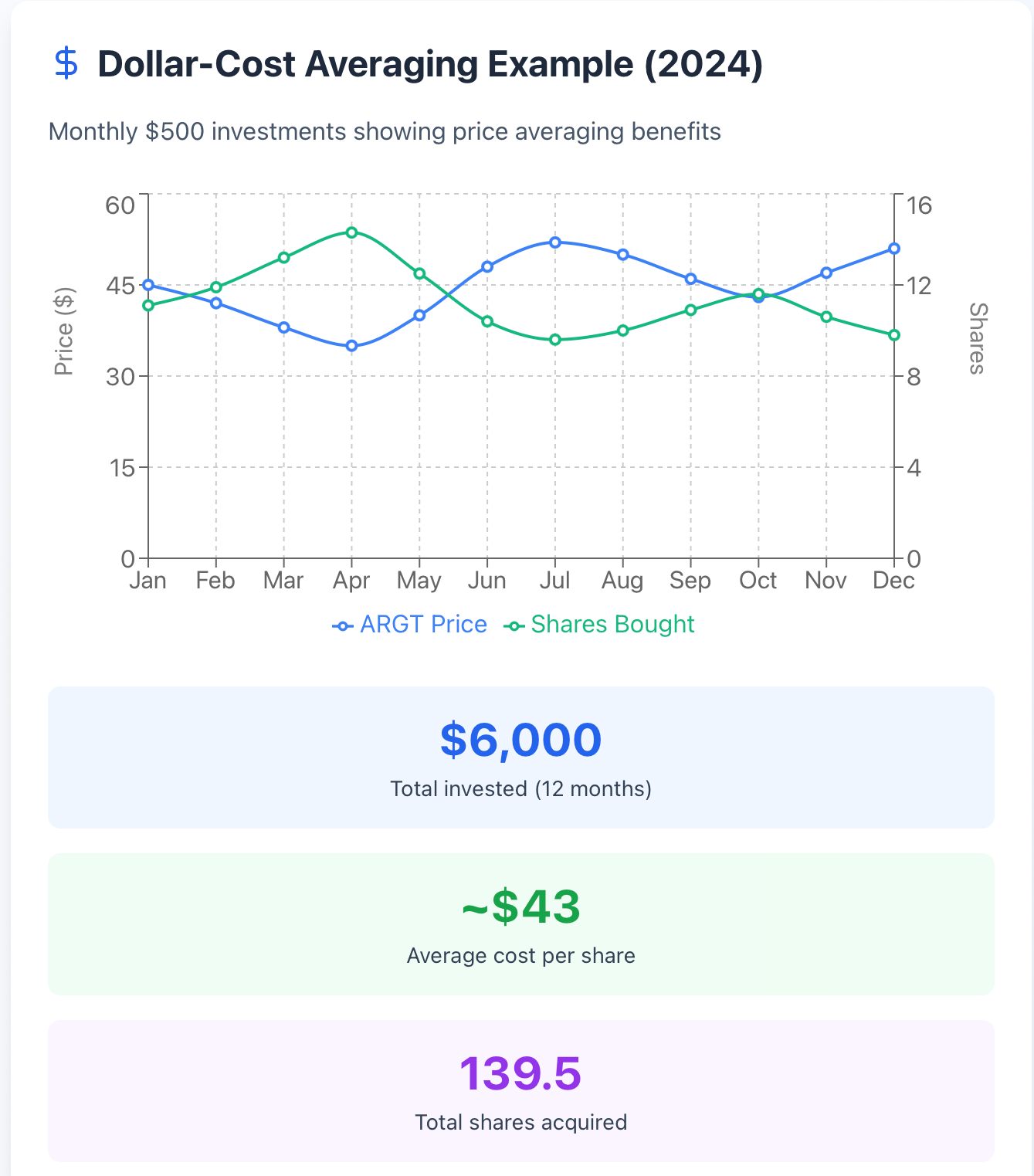
By averaging your share price cost around $43, you would have had a better overall cost per share compared to making a large lump sum investment at any given time throughout that same timeframe. For instance, if the ETF was trading at $50 when you had built an average cost of shares at $43, you would have made a decent profit without having to time the market perfectly.
Think of DCA as having a regular job where you earn pocket change each week. Some weeks you may have some leftover change to put aside, others you may have nothing to set aside, but the habit of saving over time builds wealth gradually, similar to building up your positions when you invest in ARGT through DCA and allows you to have exposure to investments where there is uncertainty.
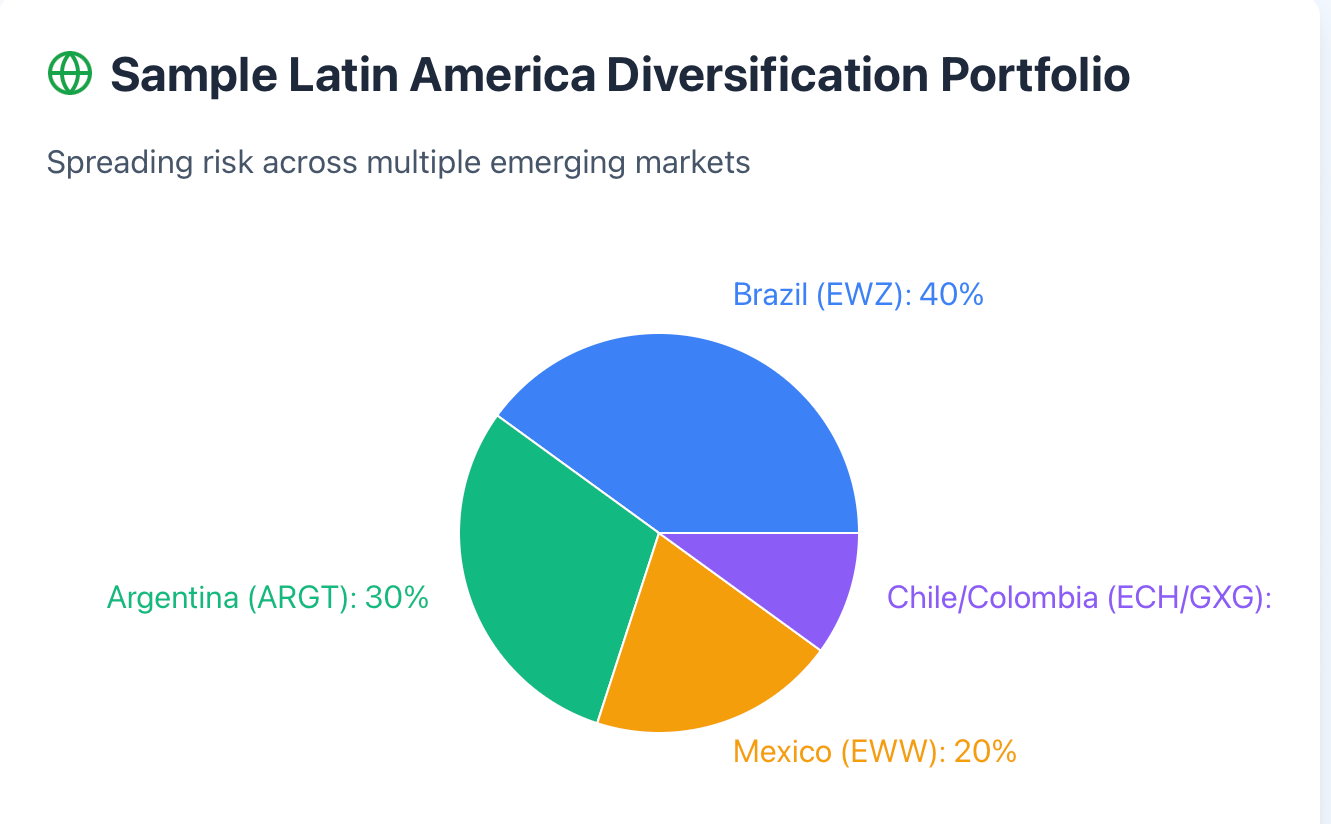
Geographic diversification is also a very effective way to reduce country-specific risk. For example, if you decided to invest in Brazilian ETFs (EWZ) as well as Mexican ETFs (EWW) in addition to the ARGT ETF, you can now spread your investments across all of Latin America and developing economies in general. If Argentina's economy is struggling and Brazil's economy is thriving, your overall portfolio balance should moderate the loss incurred on Argentina.
For example, an average diversified Latin American Portfolio may consist of 40% Brazil ETF (EWZ), 30% Argentina ETF (ARGT), 20% Mexico ETF (EWW), 10% Chile or Colombia ETF, as an example. This combination of ETFs gives you access to the growth of the entire Latin American region while not putting your complete return from investing in just one country at risk.
Long-term investing is more profitable for most investors than short-term trading because of the extreme volatility of emerging markets. When you ride out the tough times, you recover from your losses.
Those who have held on to their shares of ARGT throughout the multiple crises that Argentina has had since 2018 have benefited greatly by not having sold at the bottom of the market, and not being able to capture the rebounds that occurred afterwards. Conversely, those who sold at the bottom locked in their losses and missed out on being able to capture the subsequent rebounds.
That being said, short-term trading may work for you if you are monitoring your investments closely daily, as well as keeping track of all economic indicators and government policy announcements, as well as using technical analysis to track your investments. If you have the time, knowledge and discipline needed to do this, short-term trading may work well for you. However, for most average investors, investing for the long term in ARGT is preferable.
Choosing which brokerage firm to use for trading your ARGT ETF is not as crucial to your overall investment success as some people may believe. Most of the major online brokerages (Fidelity, Schwab, TD Ameritrade) have very low fees associated with trading Argentina ETFs relative to their competitors.
As a result, focus on finding ETFs that charge low expense ratios, for example. On average, ARGT charges around 0.60% annually in expenses; therefore, focusing on an overall lower expense ratio when investing in an ETF is more important than which broker you choose.
A successful investment strategy combines all four of these factors: systematic, regular investments, diversification across many countries, a long-term investment perspective and finally, risk management through position sizing. Start with small amounts and build over time based on your investment goals and objectives. Since Argentina has a lot to offer you as an investor, you need to be able to survive through the inevitable volatility.
Why ARGT Dominates Global Emerging Market Conversations
In any discussion regarding emerging market ETFs, the Argentina ETF will be raised to an immediate level of prominence in the Emerging Market ETF marketplace. ARGT receives disproportionate attention compared to Argentina's actual size compared to other Emerging Markets around the world. What is attractive to global investors about this relatively small country?
The reason is that, as with all volatile markets (Argentina will have huge volatility), this is an opportunity for financial gain if the volatility is timed correctly. Therefore, volatility offers greater opportunities than a stable market. Boring, stable markets do not offer the same opportunities (i.e., upside) as volatile ones; therefore, volatility will generate higher profit outcomes to traders, while the stability of a stable market offers limited profit.
The interest level of the ARGT is raised due to the exposure to MercadoLibre, Latin America's top tech success story. MercadoLibre offers growth investors worldwide a new, high-prospect opportunity. Many ARGT investors buy it because it offers exposure to MercadoLibre and assume that they are diversifying their holdings by holding the remainder of the ETF.
The fund's growth in net assets under management is illustrated by net inflows to the ARGT in 2025 of greater than $300 million, as investors were anticipating that the recent and future expected reforms being implemented within Argentina would provide the opportunity for the economy of Argentina to flourish, which subsequently greatly increased the liquidity of the ARGT. The ARGT is more liquid than most Emerging Market ETFs; therefore, it is more attractive for investors.
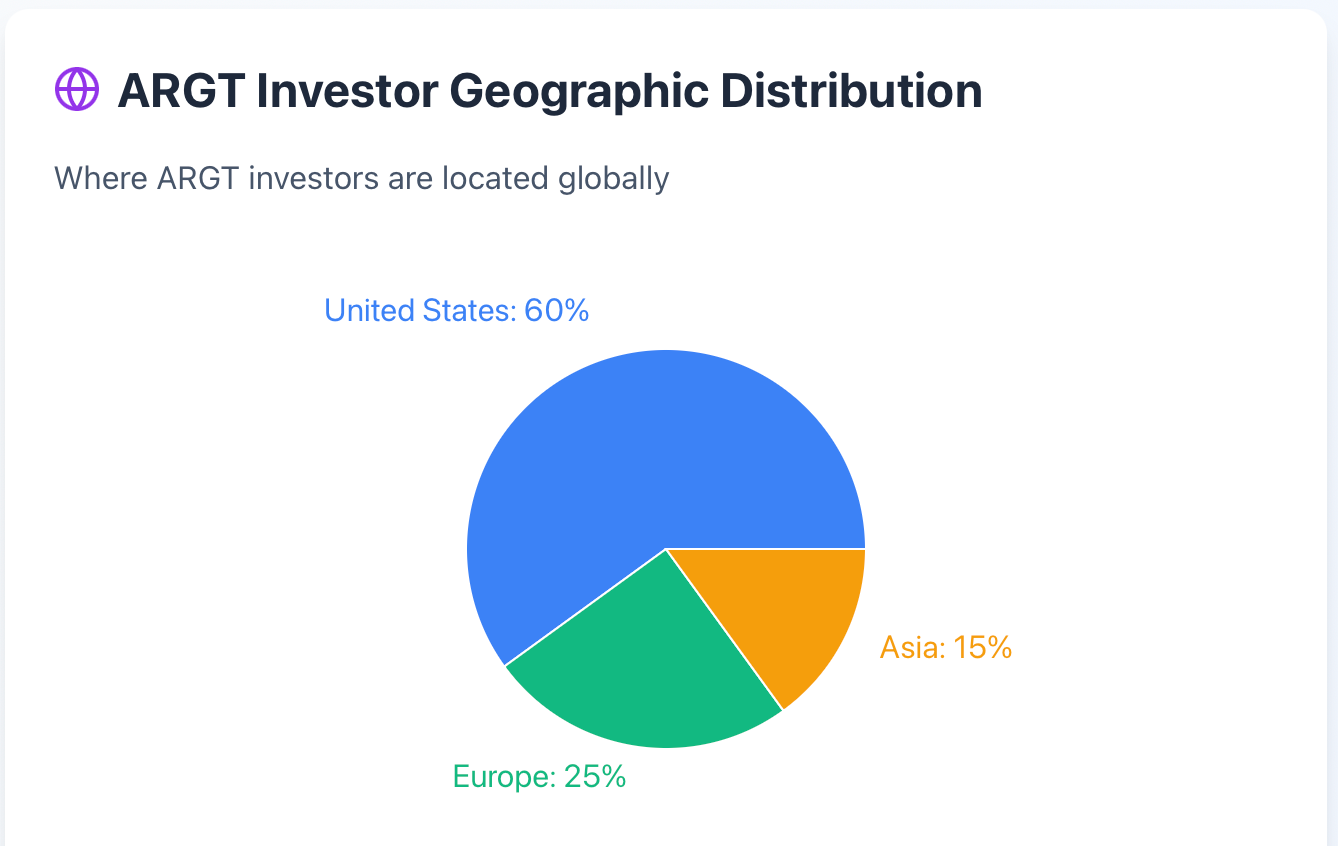
The breakdown of the distribution of ARGT's investors illustrates the significant concentration of ARGT investors from the United States, which represents 60% of the total Fund's investors, followed by European investors (25%) and Asian investors (15%). The NASDAQ listing for ARGT offers the easiest access for U.S. Retail Investors looking for exposure to an Emerging Market, as an exchange offers a platform for U.S. investors to trade in Emerging Markets without having to navigate through foreign exchanges.
Additionally, investors might describe ARGT as a "star player" in Emerging Market ETF investing, as it is viewed not necessarily as the largest or most significant economy; however, it is the most "exciting" to watch. This excitement is driven by its volatile nature, therefore analogous to a volatile growth stock, rather than a dividend-paying or stable performer.
In addition to the issuer and the investors, the contrarian viewpoint of many sophisticated investors to focus on markets that are in a down cycle is also attractive. Many sophisticated investors target down markets as it is believed that pessimism regarding the down market creates the best opportunity for value. The contrarian view toward Argentina's down cycle is "value hunters" who are speculators who believe that there will be a return to normal representation through the improvement in the fundamentals of the economy and government.
The increased concentration of investors leads to more market participants, creating a more stable and liquid trading environment for investors. More investors following ARGT translates to more research and analysis, and greater trading activity and liquidity. This concentration and activity will attract interest to the ARGT from new investors, as they will have access to the liquidity of ARGT to buy and sell their positions.
In conclusion, ARGT has established itself as the ETF of choice for investing in Argentina, based upon the price volatility of the underlying equity MercadoLibre, the growth potential of the underlying company and, therefore, the potential for a significant return, accessibility of the investment to international investors, and the contrarian view of the overall market.
Ready to capture Argentina's next surge? Open your Tradewill account today and start building your emerging market portfolio with tools designed for active ETF traders.
Disclaimer: The content of the blog does not represent any position of Trade W, does not serve as any trading-related decision advice, and does not endorse any third-party.