
 Trade W
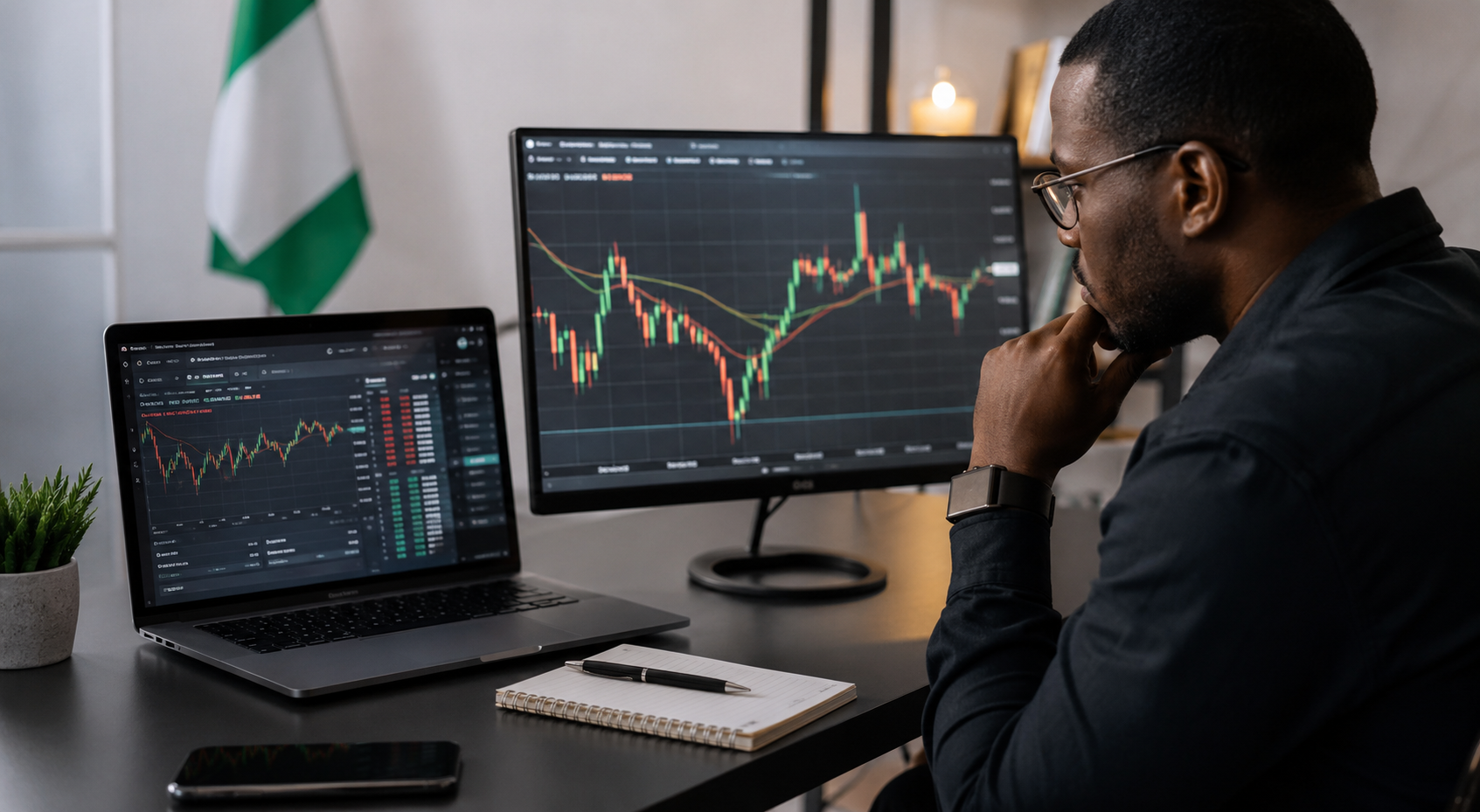
An ideal Forex broker for Nigeria would comply with international mandates and regulations and allows individuals located in Nigeria to transact in Naira, while reassuring clients with a good track record of making timely payouts.
Additionally, Nigerian residents do not have a governmental organisation to rely on for the purpose of evaluating Forex broker regulations. Thus, a broker's regulatory status, track record, and reputational standing are extremely important compared to many other countries in the world.
If you are seeking a Forex broker, use a couple of things as benchmarks. That is, look for the broker's regulatory agency in the official registration and not just on its website. Have an understanding of how the broker handles deposits and when the deposits will be credited to your account. Nothing will cause your profit margins to decrease more than foreign exchange conversion markups or slow payments.
Finally, take special notice of scams in the Nigerian market, as many of them are presented as account managers or managed accounts. The reality is that many retail traders lose money trading in financial derivative markets, and the regulatory involvement of a broker has no effect on how the financial markets behave.
A seasoned trader in Lagos who has lost money trading Forex will not give a tremendous amount of priority to the cost of trading but will prefer brokers that have a Tier 1 regulatory body or a proven history of regulatory compliance. On the contrary, a first-time trader will typically prefer to select a broker that has minimal obstacles in the way of funding an account, learning through a demo account, and withdrawing funds in a timely manner.
Both sets of buying instincts are good. They just have different priorities.
Choosing a broker in Nigeria comes down to trust and withdrawals
Nigeria's retail forex market is one of Africa’s largest, and its size itself can create both opportunities and challenges for those trading in this market. The naira’s volatile nature, along with funding constraints associated with the CBN, can affect every aspect of the trading experience, but traders in the UK or Australia do not encounter these issues. For example, the same broker could be perfect for a trader in Europe but would cause many headaches for someone attempting to transfer funds from a Nigerian bank account.
Therefore, simply looking at typical criteria for comparing brokers, such as spreads, platforms, and account minimums, may not help you find the right broker. First, identify your needs. For example, do you want to deposit in naira? Do you need to withdraw quickly because you are an active trader? Are you new enough that avoiding a scam is the most important criterion? Once you clarify your requirements, you can compare brokers based on those factors.
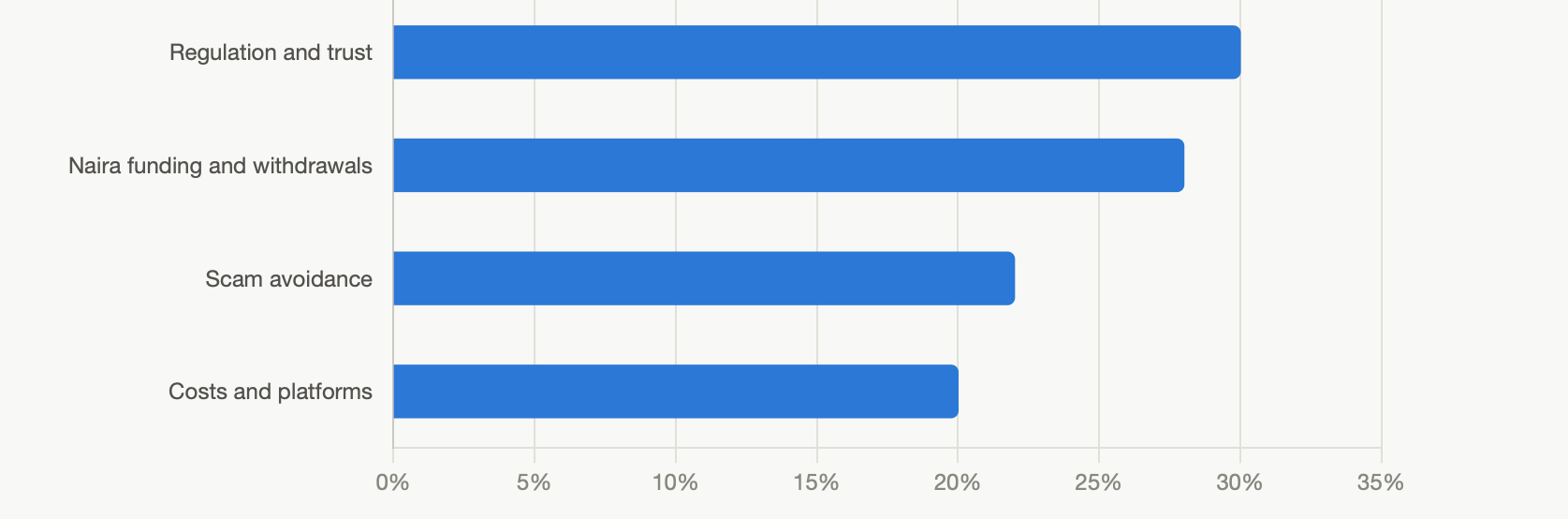
The graphic above summarises how much emphasis Nigerian traders generally place on each of these factors when selecting a broker based on conversations in forums and broker reviews. Traders place greater weight on regulation and trust than on any other criterion, and the next most important criterion is having access to funding in naira. While cost and platform characteristics also matter to traders, they only help determine a tiebreaker, not how brokerages are initially ranked.
Is forex trading legal in Nigeria? Who actually regulates it
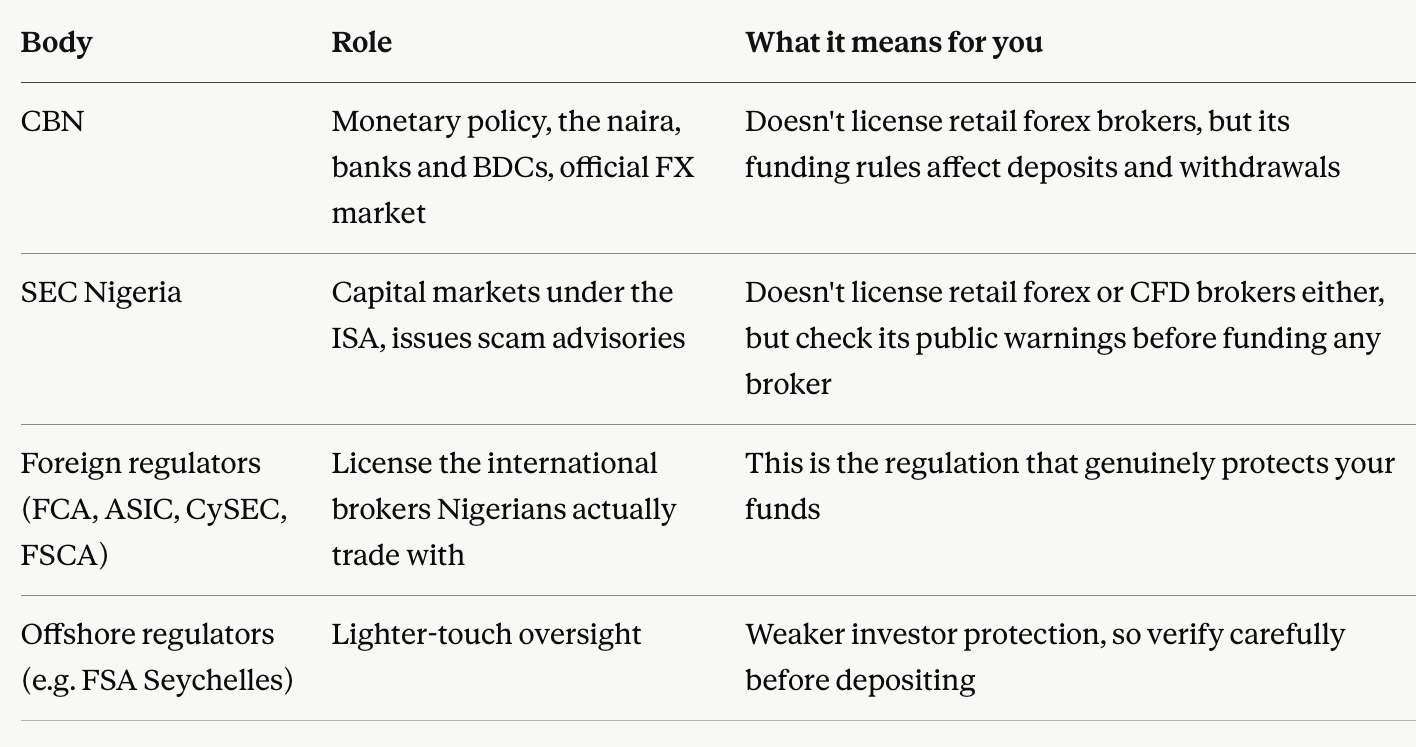
Forex trading using your personal funds is legal in Nigeria. Many traders get confused about the regulatory framework. The Central Bank of Nigeria (CBN) is in charge of economic policy, the value of the naira, the functioning of commercial banks, and the official foreign exchange market. It does not regulate or license retail forex brokers or CFD brokers in Nigeria, and it never has. The Securities and Exchange Commission of Nigeria regulates the capital markets under the Investments and Securities Act and issues public announcements warning against unlicensed investment schemes, but it does not license retail forex brokers either.
This difference is important to note because you will see many brokers or broker representatives claiming to be regulated by the CBN. This is false because there is no such thing as a retail forex license issued by the CBN. Anyone who makes this false claim demonstrates that they either do not understand the regulatory framework or are intentionally misleading you about the existence of such a license. Either way, you should treat it as a red flag when selecting a broker.
Additionally, just because the CBN does not issue retail forex licenses does not mean that Nigerian citizens cannot trade forex using regulated foreign brokers. Many Nigerian residents work with international brokers that are regulated and licensed by reputable regulatory authorities, including the UK's FCA, Australia's ASIC, Cyprus' CySEC, and South Africa's FSCA. Some brokers choose to operate under offshore regulatory authorities that are not as rigorous as these Tier 1 regulators, for example, the FSA in Seychelles, and therefore provide less protection to investors than brokers operating under a Tier 1 license.
Furthermore, CBN policy may also indirectly limit your funding options. For example, there may be limits on how much naira you can spend using a bank card internationally. This has led many Nigerian forex traders to use local bank transfers or fintech services instead of using their cards to fund accounts. Since these funding methods change regularly, it is best to learn the current options available before committing to a specific broker.
With respect to taxes, income earned from forex trading is generally taxable in Nigeria and should be reported by Nigerian citizens to the FIRS. However, the specific application of tax depends on your individual circumstances and the current tax treatment. I am not providing tax advice, but I recommend confirming your tax position with a qualified professional before making any assumptions.
If you want a deeper look at how monetary authorities shape currency markets more broadly, it's worth reading through our guide on central bank roles in forex trading, which covers how policy decisions ripple into pricing.
How to verify a broker and steer clear of scams
This section provides greater security for your funds than any withdrawal delay comparison you may have done. The absence of a local licensing system in Nigeria has created many opportunities for fake forex investment schemes to prosper. Therefore, it is worthwhile to memorise the steps in this process, as they are repeated frequently.
To get started, always check the broker's website to find the company's name and license number provided by the regulator. Once you have this information, go directly to the website of the respective regulator to verify that the broker is indeed listed. Do not rely on a screenshot or badge image. Use the sites mentioned, FCA Register, ASIC Connect, CySEC Register, and FSCA’s public list, and search for the company’s name as well as its license number. Verify that both details match exactly. Make sure you know which legal entity will actually hold your account, as some brokers route clients from different regions through different regulated entities that may provide different levels of protection.
After this is done, check SEC Nigeria's advisory page to see if it has issued any warnings concerning that specific company. Read recent trader reviews to see if there have been any reports of withdrawal problems or delays, because that is usually when you know there is a problem with the company. If you are approached by someone asking to manage your account, guaranteeing a fixed or minimum return every month, or pressuring you to make a deposit immediately, you should walk away. These are all common signs of Ponzi-style schemes disguised as forex trading companies, and they appear throughout the Nigerian market.
Here is a list of items you can use to perform a quick verification:
-
Verify the regulator's name and license number using its official registry. Do not accept the broker's own claim.
-
Identify which legal entity will be holding your account and what type of protection you will receive as a result.
-
Check whether any warnings have been issued on the SEC Nigeria website concerning that specific company.
-
Read trader reviews that focus primarily on withdrawal history, not just deposit experiences.
-
Test a small withdrawal before deciding to make a larger deposit.
-
Do not allow anyone to manage your account if they guarantee profits.
If you follow these steps and test a small withdrawal before making a larger deposit, you will greatly reduce the risk of being scammed later. It might take a little extra time, but you will learn almost everything you need to know about whether that broker is likely to pay you when it matters. An additional resource to help traders identify manipulative tactics commonly used in trading can be found in our article on forex trading signals and how to avoid being scammed.
Naira funding and withdrawals: the factor that often decides it
Nigeria represents the biggest divergence from the general best broker criteria. Major international brokers that work with naira (NGN) currently offer the option to deposit and withdraw directly in naira, and some also offer naira denominated base accounts, which can provide significant savings on conversion fees that would otherwise be incurred when moving money between currencies. Brokers that do not provide naira denominated base accounts usually keep everything in either US dollars (USD) or euros (EUR), and any time you fund your account from naira into those currencies, there is an additional markup associated with the foreign exchange conversion, which is often overlooked when you are only paying attention to the base spread.
How brokers allow customers to fund accounts can be broken down into a few general categories: local bank transfers, fintech applications, credit or debit cards, with limitations imposed by the CBN, and, in some cases, direct crypto on-ramp services to your brokerage account. The speed at which brokers process withdrawals also varies based on both the broker and the withdrawal method chosen and can range from instant to several days, depending on these two primary factors. Brokers that provide slow or unreliable withdrawal processes consistently receive negative reviews from their customers, and even small conversion markups can compound over a full trading year and have a significant impact.
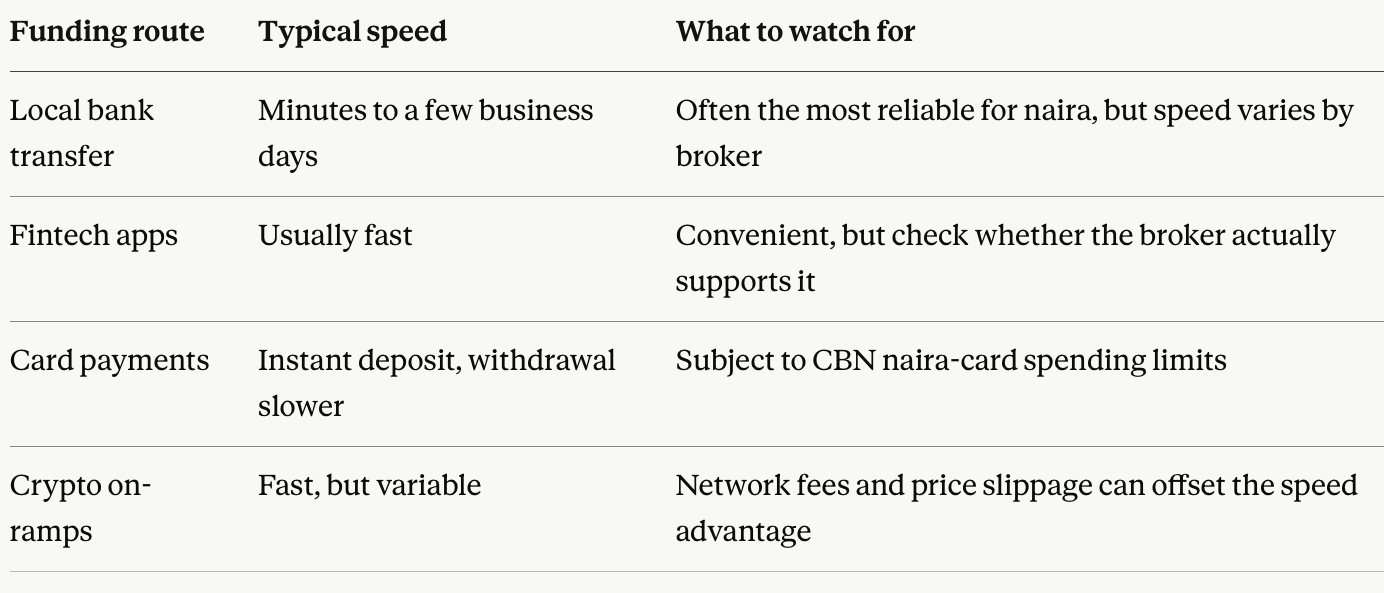
Check with your broker for all funding and withdrawal details before making any significant deposit because those details can change, and the cost of using outdated information can be very high. A trader who checks whether they are being charged for converting between currencies on deposits and withdrawals, as well as compares the spot rates with the advertised spreads, will have a much better understanding of how much it really costs to trade through a broker.
What else to compare: regulation tier, costs, platforms, accounts
Once both trust and naira funding are handled, everything else you need to compare a platform becomes familiar. The regulation tier is still important because it serves as a baseline. For example, a Tier 1 regulatory authority, such as the FCA, ASIC, or a comparable regulator, will generally provide more secure segregation of client funds and negative balance protection than an offshore-only regulator. After determining what type of regulatory agency your broker belongs to, you should look at total trading costs rather than only headline spreads. With raw or ECN accounts, you can expect spreads that are close to 0 pips, plus commissions of approximately $3 to $3.50 per lot per side, making them suitable for active traders who trade frequently or in high volumes. Standard accounts usually have wider spreads and no separate commissions, making them a simpler choice for traders who do not trade large volumes.
The quality of execution speed and slippage cannot usually be determined by looking only at a website, but demo testing and trader reviews can provide insight into these areas. The type of platform is also important. Currently, the two dominant trading platforms are MT4 and MT5, with some brokers developing proprietary applications or platforms for a more modern experience. A trader should also check whether the broker offers micro or cent accounts for very small position sizes or swap-free Islamic accounts, if applicable. There is a wide range of minimum deposit requirements, from as little as $5 to $50 on some platforms to $100 or more on others, and leverage limits differ widely. High leverage amplifies both profits and losses.
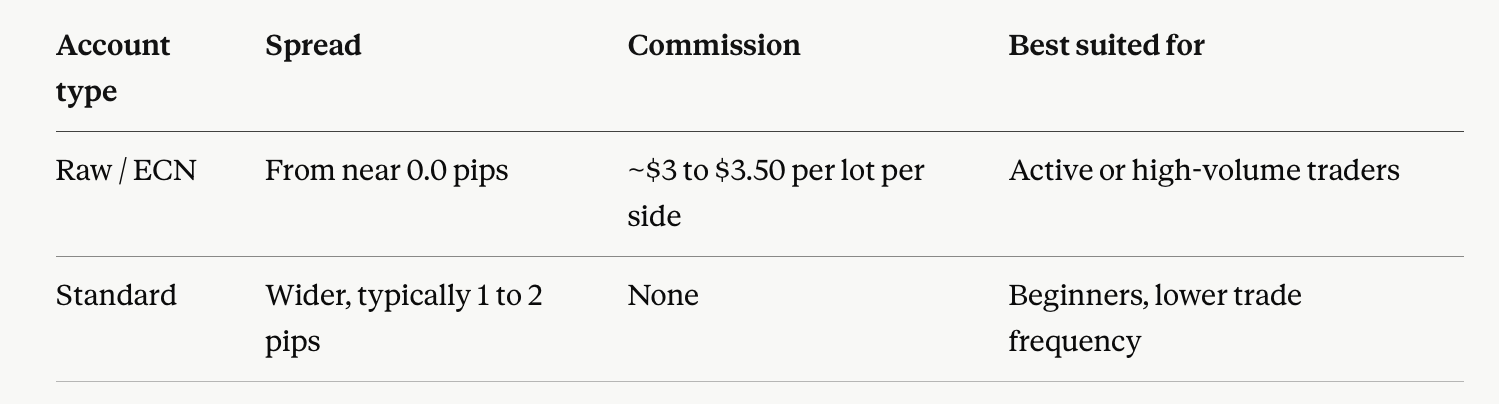
It cannot be emphasized enough that you must not make your decision to move forward based on a bonus. It is not a sign of security, nor does it provide any information about whether you will be able to withdraw your funds. To see how both spreads and commission charges accumulate over time, take a look at our breakdown of the forex bid-ask spread, where we go into greater detail. Our guide on margin requirements and their importance will also help you determine the correct amount of leverage to use before placing any trades.
Tradewill's position in the Nigerian trading market
Tradewill is based in Seychelles, which means that it does not have oversight from the FCA or other major financial regulators such as ASIC or CySEC. It also has no license from the CBN because no such license exists. This distinction is worth considering against your own risk tolerance before opening an account because scepticism surrounding scams in this market is very high.
In terms of the platform, Tradewill provides forex trading, gold trading, and CFD trading using MetaTrader 4 and a proprietary app powered by TradingView charts. Note, however, that MT5 is not currently offered. The minimum deposit amount is relatively low, and Tradewill permits scalping and expert advisors while claiming to execute trades in approximately 0.04 seconds.
Nigeria is not on its list of countries whose clients are restricted from accessing Tradewill. However, Tradewill also does not provide social or copy trading services. What Tradewill cannot confirm is whether clients can deposit or withdraw naira, whether an NGN account is available, or whether clients can make transactions using fast local bank transfer routes in Nigeria. These issues are significant considerations for the average Nigerian trader. Therefore, it is a good idea to check with Tradewill support or its funding page before proceeding with any transactions.
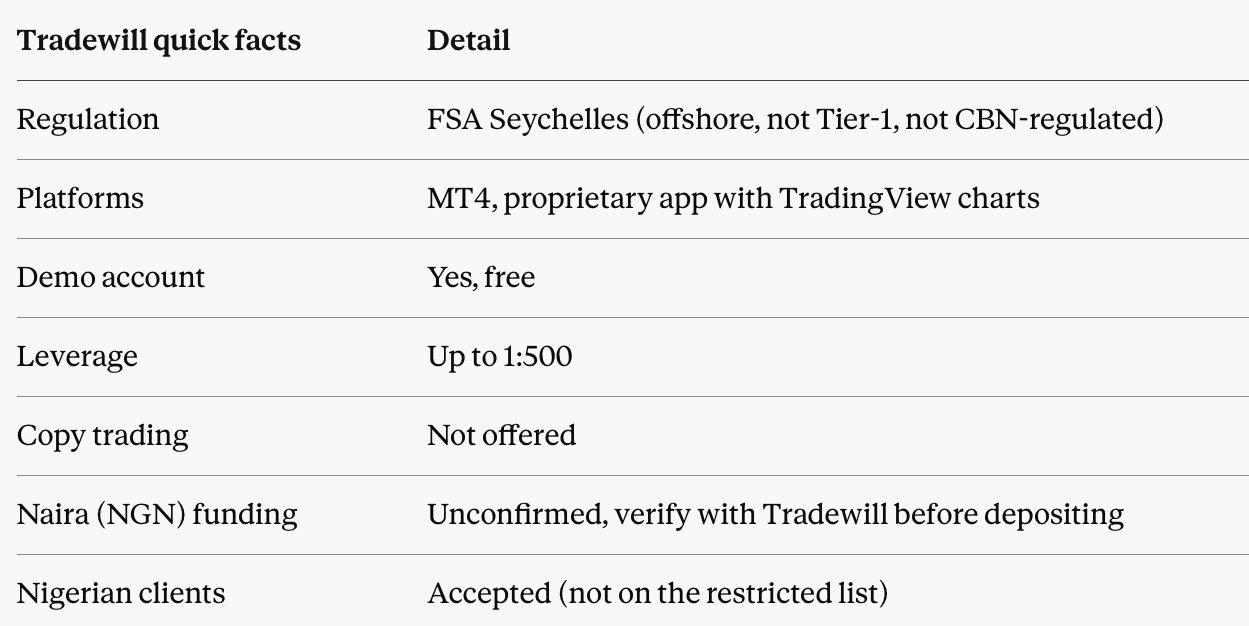
The safest way to assess Tradewill against a Tier 1 regulated option is by using a demo account. You can test the speed of trade execution, become familiar with the mobile app, and verify all funding and withdrawal details before depositing your first dollar into a real trading account.
If you currently trade with automated trading strategies on MT4 or would like to learn more about trading with automated software, commonly referred to as algorithmic trading, our comprehensive guide to technical automation and expert advisors provides all the information you need to set it up properly. Also, if you want to become familiar with properly calculating and managing your risk of loss before using your live account, we recommend consulting our breakeven point and risk analysis guides as good follow-up resources.
Frequently asked questions
Which forex broker is best in Nigeria?
There's no single best broker for everyone. The best forex broker in Nigeria is a safe, internationally regulated broker that accepts Nigerian clients, supports reliable naira withdrawals, and has a clean payout record. Verify the regulator and test on a demo before committing.
Is forex trading legal in Nigeria?
Yes, individuals can legally trade forex with their own capital. There's no local license for retail forex brokers, since neither the CBN nor SEC issues one, so Nigerian traders rely on internationally regulated brokers instead.
Which forex broker is CBN-regulated?
None of them. The Central Bank of Nigeria doesn't license retail forex brokers, so any claim of "CBN regulation" is misleading. Look instead for licensing from top-tier authorities like the FCA, ASIC, CySEC, or FSCA, and confirm it on the official register.
Can I trade and withdraw in naira?
Yes, with some brokers. Several international brokers support naira deposits and withdrawals, and a few offer NGN base-currency accounts that cut down on conversion costs. Others hold funds in USD or EUR and convert at the point of funding, so check this detail before opening an account.
How can I verify if a broker is actually regulated?
Find the regulator's name and license number on the broker's website, then search it directly on the regulator's official register, such as the FCA Register or ASIC Connect. Confirm the company name and number match, and check which entity will hold your account.
What's the difference between Raw and Standard accounts?
Raw or ECN accounts carry very tight spreads plus a per-lot commission, which suits active traders. Standard accounts have wider spreads with no separate commission, which can be simpler for beginners. Calculate the all-in cost for your typical trade size to see which actually works out cheaper.
Is Tradewill a good broker for Nigerian traders?
Tradewill offers forex and CFD trading through MT4 and a proprietary app, a free demo, and low minimum deposits, and it accepts Nigerian clients. It's offshore-regulated through the FSA Seychelles rather than Tier-1, so confirm its naira funding and withdrawal terms and test it on demo first.
Choosing your Nigerian forex broker
The order in which you do things is more important than the features for you as an individual. Before anything else, you should complete the following steps: first, verify international regulation; next, verify naira withdrawal reliability; third, verify existing funding support; fourth, compare total costs to headline spreads; fifth, search for a clean record free of withdrawal complaints; sixth, test on a demo account before risking your own funds.
As an example, in Nigeria, the best broker is not one with the most bonuses or the best-looking app, it is one that is fully regulated, can be funded and withdrawn from reliably, and has been independently verified by you, not just trusted on face value.
This article does not constitute financial advice or tax advice. Trading spot FX and CFDs on margin is associated with risk; most retail customers lose money on a regular basis, so be very cautious when dealing with people guaranteeing steady profits or those who say they will be trading on your behalf.
Open a free Tradewill demo and run the naira-funding question past support before you fund anything for real. Verifying it yourself takes ten minutes and saves you from finding out the hard way.
Disclaimer: The content of the blog does not represent any position of Trade W, does not serve as any trading-related decision advice, and does not endorse any third-party.