
 Trade W

The retail forex market in South Africa has seen rapid development. Traders are opening an increasing number of accounts, while brokers are chasing more of the market; as a result, both traders and brokers will probably be losing money at the same time. The broker to use is not only a platform choice; the broker you choose will determine your cost, risk and whether your funds will be protected in the event of failure of the trade market.
This guide will provide clarity to the confusion around the market. It will cover aspects of regulation, trading conditions, broker comparison charts, as well as a practical framework with which to select the right broker for your needs. No extra stuff.
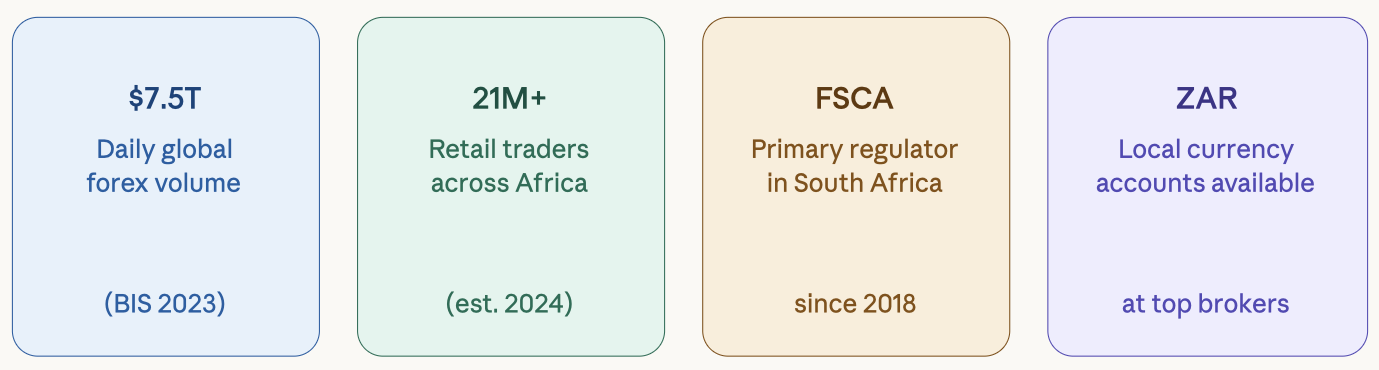
What Are the Best Forex Brokers in South Africa?
Forex brokers based in South Africa act as intermediaries that connect retail forex traders to the global currency exchange market. By using trading platforms such as MT4 and MT5, you can trade currency pairs, as well as commodities including gold and several types of indices. These forex brokers offer leverage, execute trades, and maintain deposited customer funds while executing trades for customers.
All of the best forex brokers in South Africa are regulated by FSCA, charge competitive spreads, have transparent fee structures and offer trading services to suit all types of traders, whether they are new to trading or trading through automated systems. There is no "best" forex broker for everyone; however, there is a best forex broker for you as a trader. You can use this guide to locate your best forex broker.
What is Forex Regulation in South Africa, and What is the Role of the FSCA?
The Financial Sector Conduct Authority (FSCA) is the regulatory authority that is responsible for the regulation of Forex brokers in South Africa. The FSCA succeeded the Financial Services Board (FSB) in 2022 and now regulates all forex brokers based in South Africa. If your forex broker is not licensed by FSCA, then your funds cannot be protected by the South African legal system.
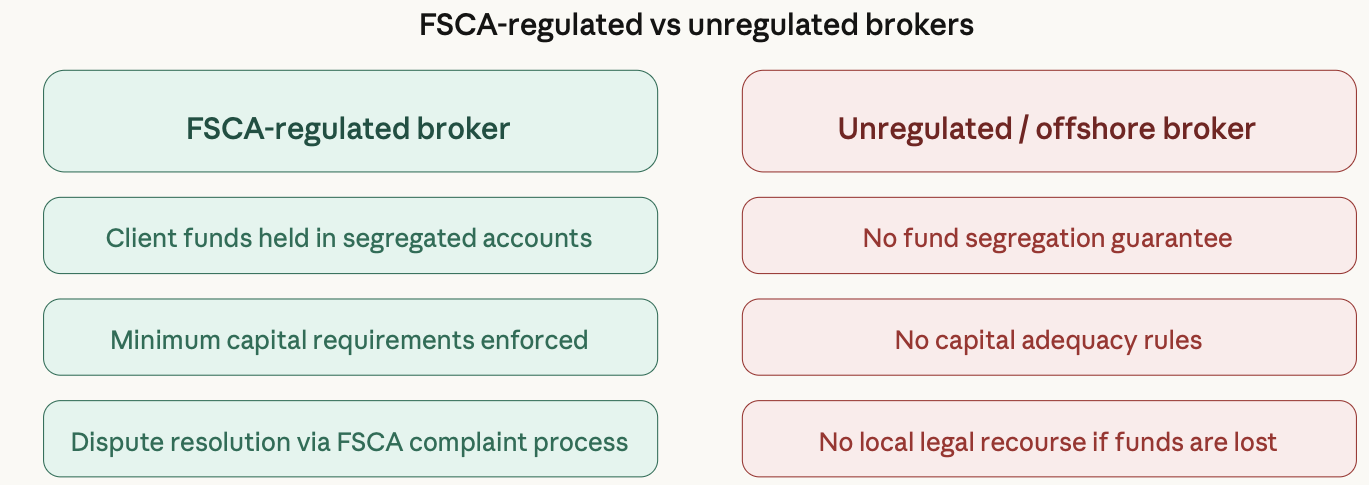
Brokers regulated by the FSCA must comply with many regulatory requirements. This includes maintaining the necessary capital to sufficiently fund their operational expenses and ensuring sufficient funds are available to meet the demands of the clients. They must also separate client funds from operational funds and provide transparency in reporting.
You can verify if any broker is licensed by checking their FSB registration number on the FSCA website.
The risks that you face when trading with unregulated brokers who operate offshore are not mere speculation; they are very real. If a broker fails and/or denies you access to your funds or manipulates the spread, you may have no means of legal recourse here in South Africa.
Trading Conditions That Actually Matter
Regulation should be viewed as a tool in trading to obtain your goals. In order to trade successfully, you need to know the conditions that will enable you to do so. For example, a difference of only 0.1 pips in the spread on the euro vs. the U.S. dollar may not seem like much, but over a long period of changing EUR/USD prices through compounding could add up to very large amounts of money.
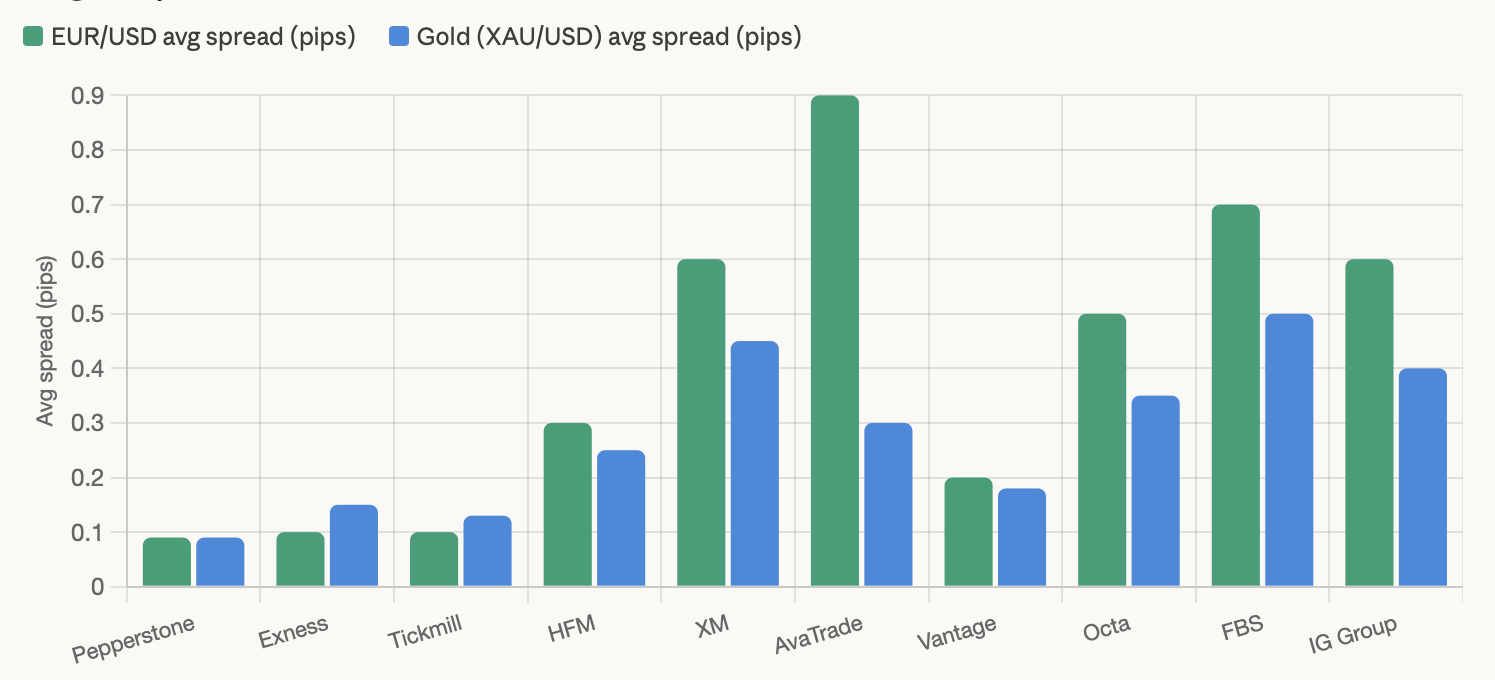
In addition to spreads, you should also consider:
How your orders will be executed. ECNs send your order straight to liquidity providers, resulting in little to no conflicts of interest. This usually leads to lower spreads and a small commission only. STPs route orders without a dealing desk. Market makers create an inherent conflict of interest when they take the other side of your trade.
ECN and STP are typically preferred by those who trade frequently. Zero-commission accounts with market makers are most rewarding for those looking to trade infrequently or those with limited funds.
Leverage is another consideration. The FSCA allows brokerages to provide leverage up to 1:500 for major pairs; however, many brokers limit retail customer leverage to 1:200 or lower. Higher leverage carries greater risk; for example, should a major pair trade decrease by 0.50% when you have a 1:200 leverage, you would lose 100% of your account. Before leveraging, ensure you understand the effect this would have on your trading account.
Swap fees can also be costly. If you hold positions overnight, you may incur or receive rolling interest from the transaction based on the difference in interest rates for the two currencies traded. If you do hold positions overnight in these currency pairs or exotic currencies, check to see what would be charged or received for carrying these trades.
Some brokers permit scalping and the use of expert advisors (EAs), so if you trade with a strategy that requires you to use automation or trade quickly, find brokerages that specifically allow those methods.
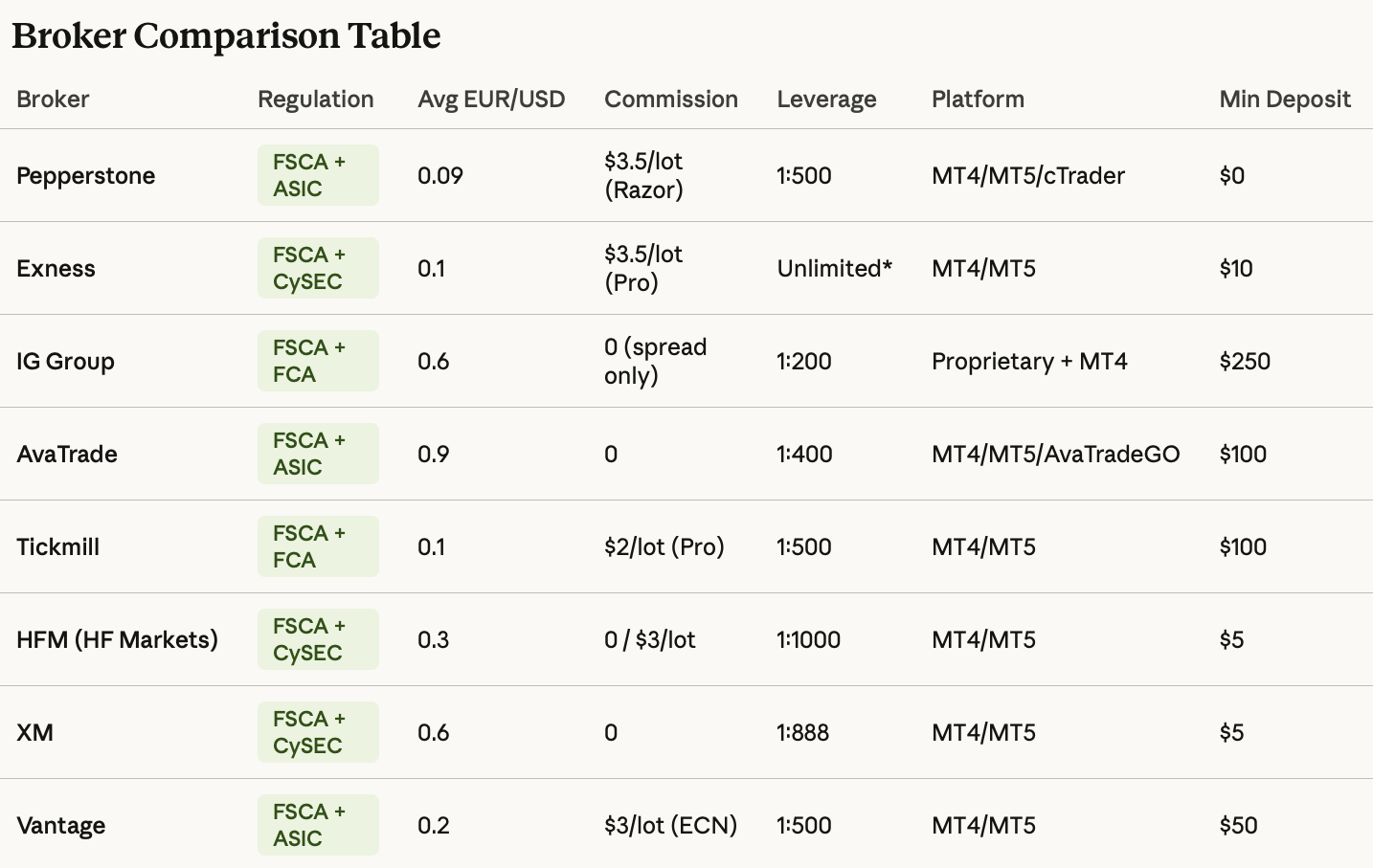
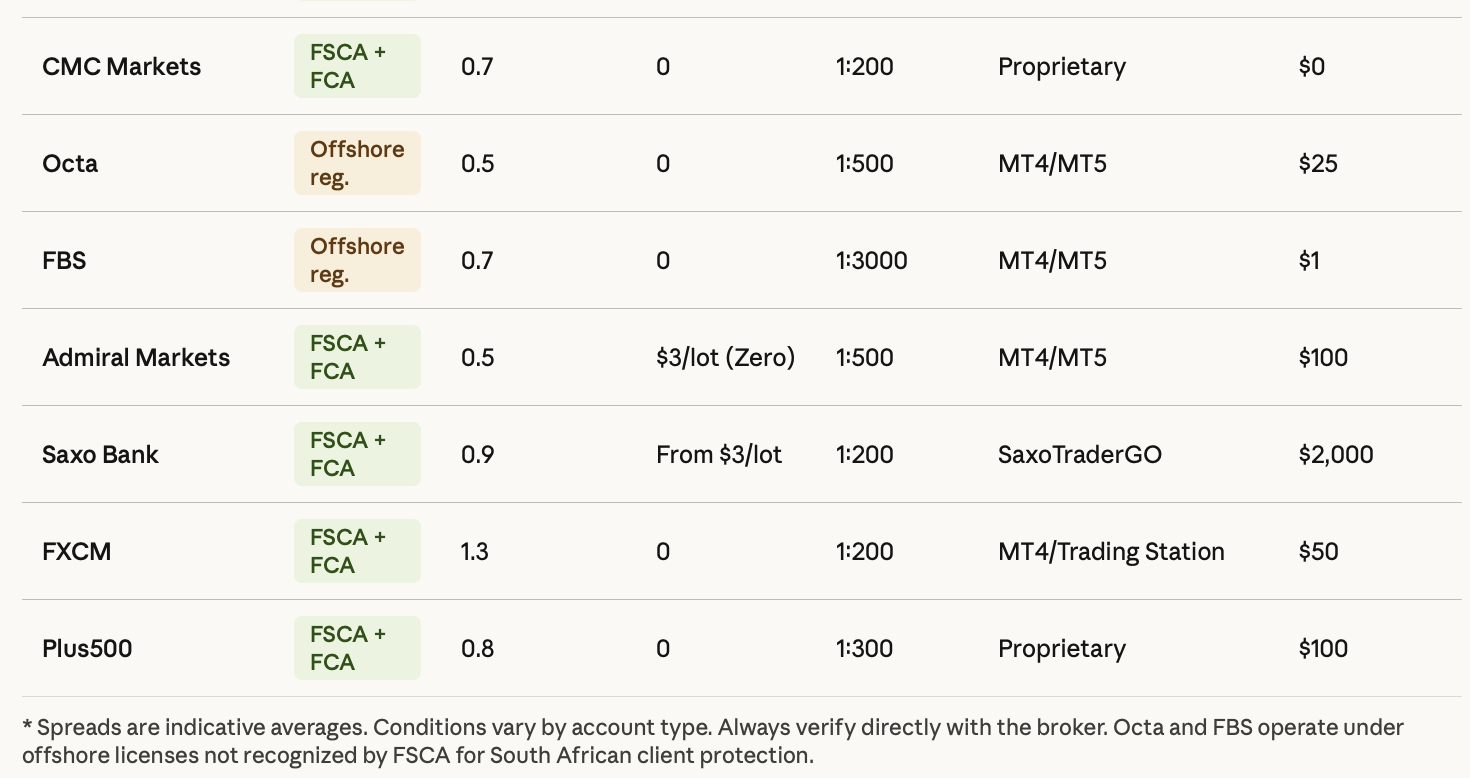
First, line up your trading categories from the Best For column of the above table. From this page, you can filter by the following: Regulation status, spread, and minimum deposit.
Don't make findings on who to go with by the broker's popularity; simply because they have a positive reputation does not guarantee that they are the best broker to fit your trading methods.
How to Choose the Right Broker: A Step-by-Step Framework
Every trader has a broker that is not the right one for you to use. You can, however, use this framework in order to filter the different brokers available in South Africa by narrowing down which one will fit your situation.
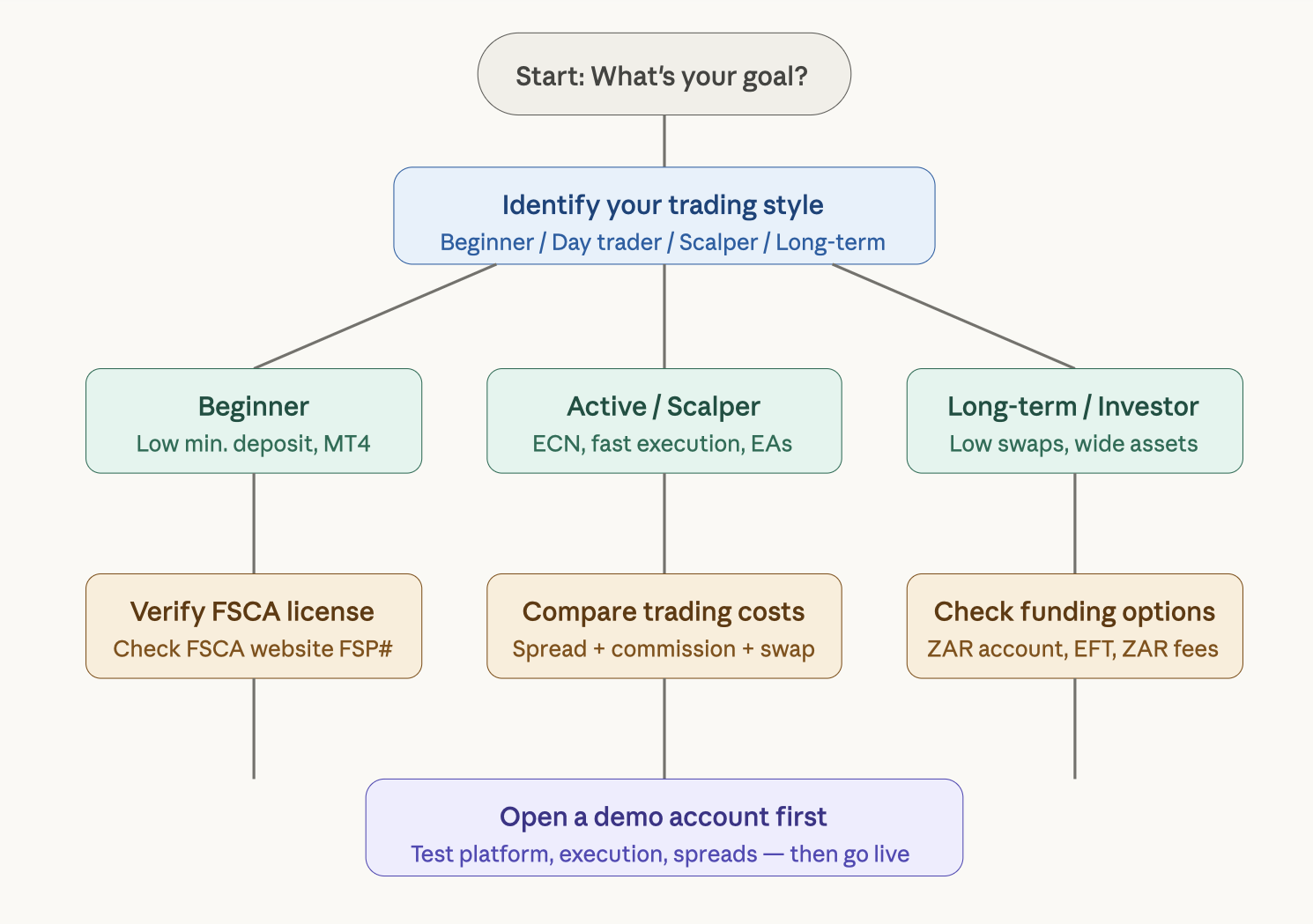
Identify your trading style before selecting a broker. Beginners require a low minimum deposit and have access to good educational resources as well as user-friendly platforms.
For a scalper, raw ECN spreads are preferred, fast execution is essential, and expert advisor support is advantageous. Swap fees and the variety of asset classes are more important to a long-term trader than tick spread differences.
Ensure that your broker holds FSCA licensing. Do not consider brokers that are not FSCA regulated, and be careful of both the number of offshore brokers advertising in South Africa and the ways that they provide no local protection for their customers.
Establish the true costs of trading. An account with no commission often has a wider spread than an account that charges a $3/lot for ECN commissions and has a 0.1 pip spread.
Banking in South African Rands also eliminates the costs associated with converting currencies when you put money into or take money out of your account.
Most regulated brokers offer demo trading accounts. It is recommended that you trade on a demo account before opening an account with a broker. You will have an opportunity to test the platform, observe how spreads may change during major news events and verify that they will execute trades in accordance with their advertisements.
Frequently Asked Questions
Is forex trading legal in South Africa? Yes. Forex trading is fully legal in South Africa. Traders must comply with South African Reserve Bank (SARB) exchange control regulations and use an FSCA-licensed broker.
What is the FSCA regulation? The FSCA (Financial Sector Conduct Authority) is South Africa's financial regulator. It licenses and supervises forex brokers operating in the country and enforces rules around client fund protection and fair trading practices.
Which broker has the lowest spreads in South Africa? Pepperstone and Exness both offer EUR/USD spreads starting around 0.09–0.1 pips on their ECN/Razor accounts, making them the most competitive for raw-spread trading.
Can beginners trade forex in South Africa? Absolutely. Brokers like HFM, XM, and Exness have minimum deposits as low as $5–$10, offer demo accounts, and include educational content. Start with a demo account before trading real money.
What leverage is allowed in South Africa? The FSCA permits leverage up to 1:500 for major currency pairs. Some brokers offer higher leverage under offshore entities — be aware that this carries substantially higher risk.
Are forex brokers safe in South Africa? FSCA-regulated brokers are required to keep client funds in segregated accounts, maintain capital reserves, and submit to regular audits. This makes them significantly safer than unregulated alternatives.
What is the best forex broker in South Africa? There's no universal answer. Pepperstone is the strongest pick for experienced and active traders. Exness works well across all experience levels. IG Group suits beginners who want a solid, heavily regulated environment.
Ready to trade smarter? Compare live spreads, FSCA broker ratings, and account types side-by-side at TradeWill.com — built specifically for South African traders who don't want to guess.
Disclaimer: The content of the blog does not represent any position of Trade W, does not serve as any trading-related decision advice, and does not endorse any third-party.