

 Trade W
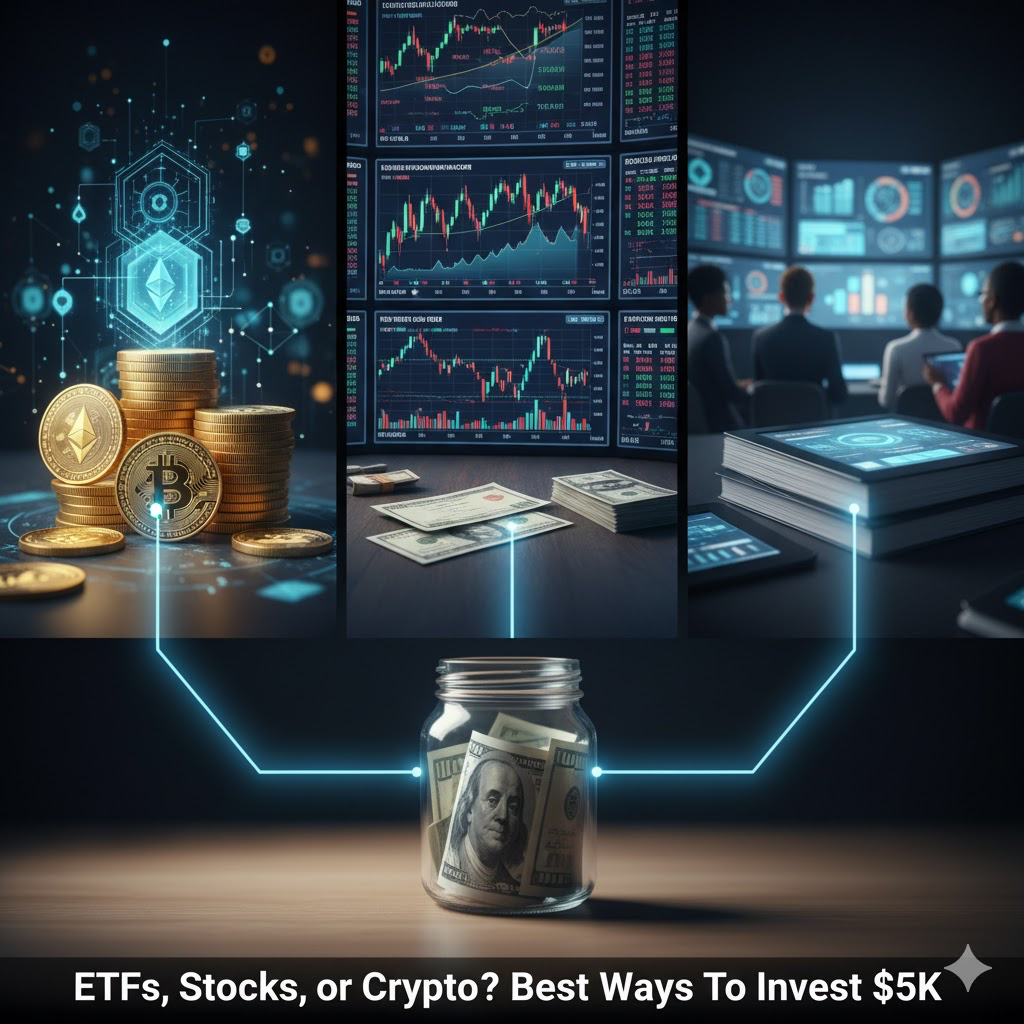
You've got $5,000 itching to be invested and wonder where it belongs. Should you use it to invest in ETFs for nice, steady returns? Individual stocks that could send your account tumbling or skyrocketing in a flash? Or cryptocurrencies that could literally make you rich or leave you broke overnight?
This is not an easy question to answer, and to be honest, it really depends. It depends on your profile as an investor, how risk-tolerant your are, and what your investment objectives really are. Let's evaluate each option to help you make the right decision for your unique situation.
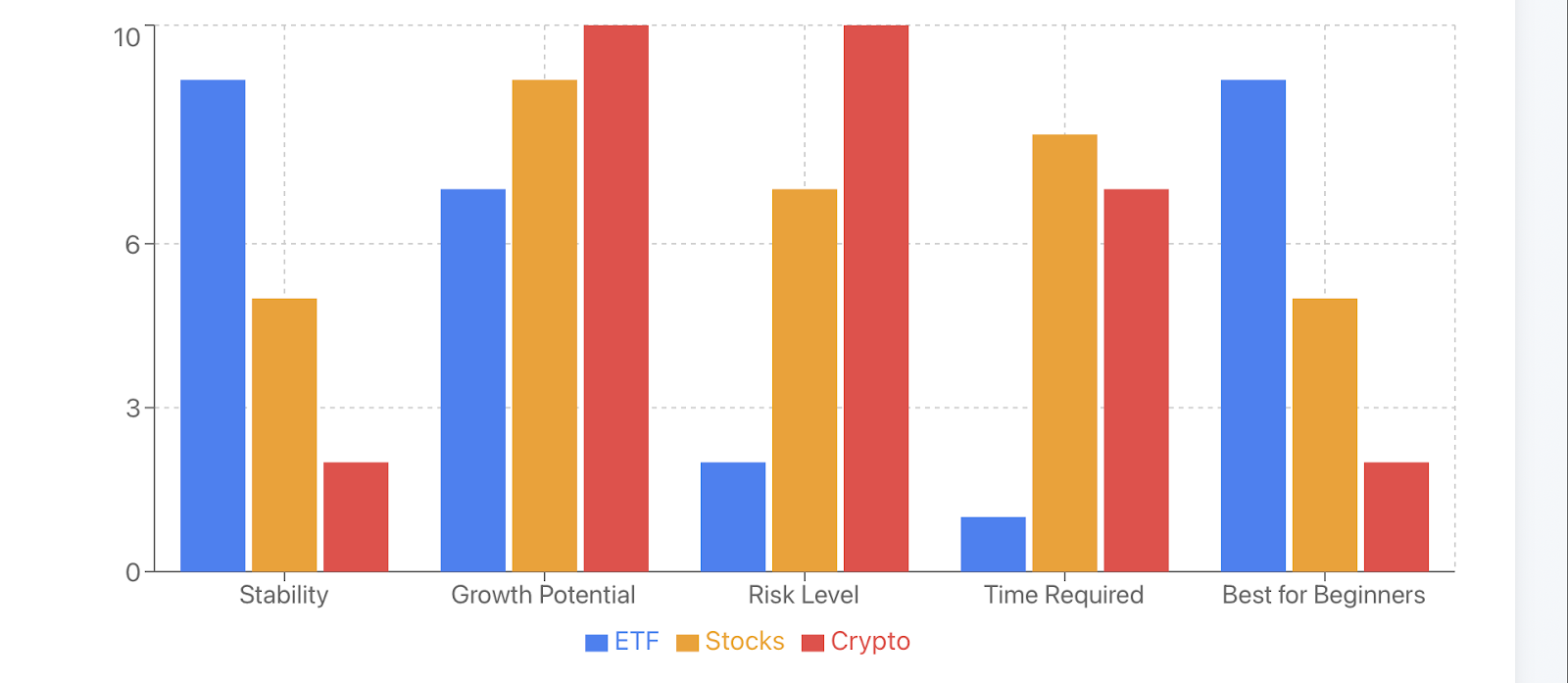
ETFs: The Smart Play for Building Wealth Steadily
ETFs (exchange-traded funds) are essentially baskets of stocks, bonds, or other securities pooled together. You acquire a single share in an ETF, and by doing so, you own a piece of many separate companies/assets, at times, several hundred.
This is why people love ETFs: diversification is automatic. If one of the companies contained in your ETF goes bankrupt, it's almost an afterthought since you own 40 or 50 other assets. The security is worth something.
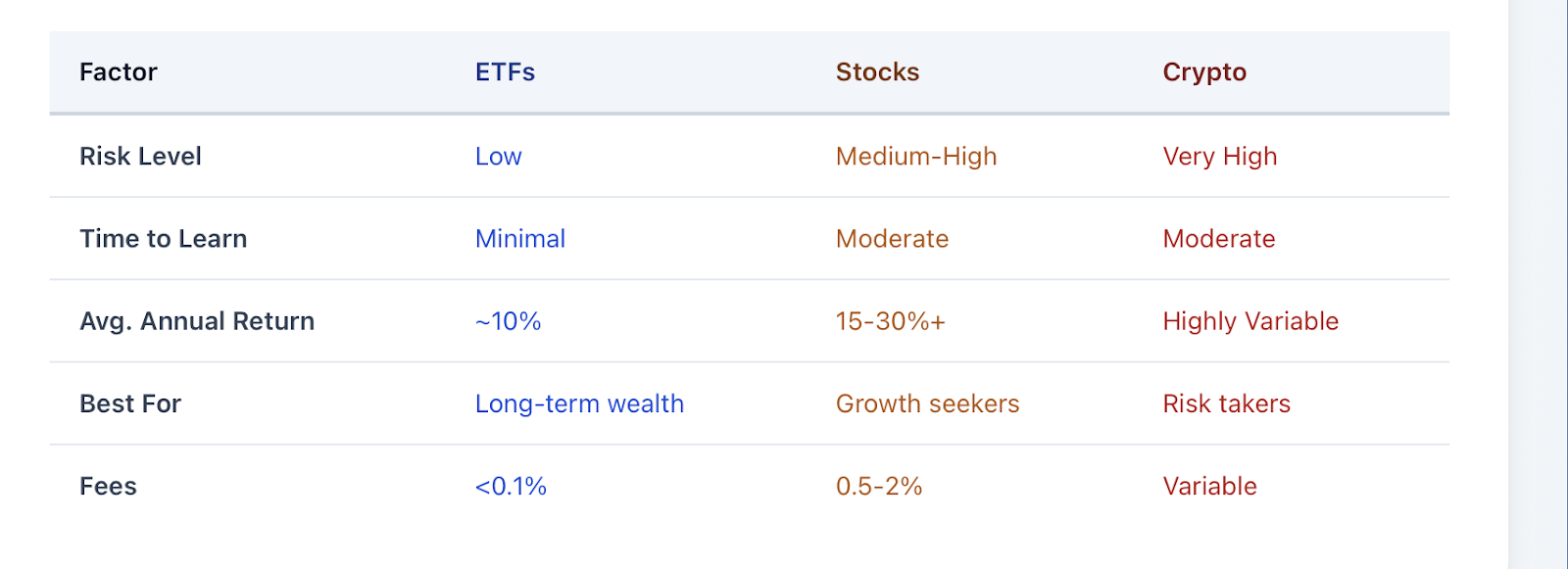
That is backed up by the historical rise of broad market ETF like the S&P 500 - which has achieved approximately 10% annual returns on average over the long term. Not terribly interesting, but more importantly, consistent. ETFs usually have very low fees (less than 0.1% of your investment each year), so more of your money can go to work, as opposed to managing your money in a regular fund.
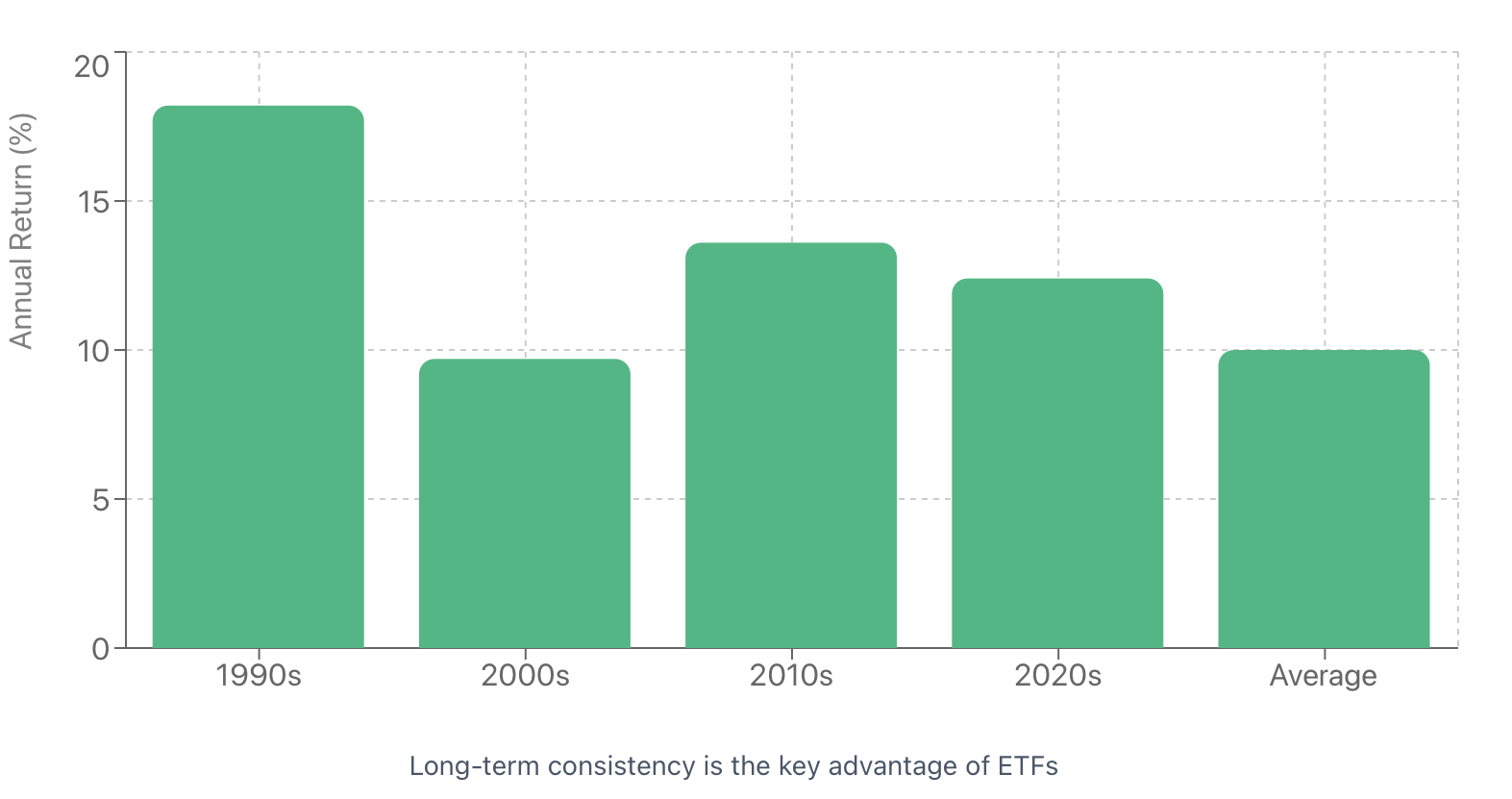
ETFs are most beneficial if you want to initiate an investment and not worry about it after that. They are made for people who are trying to build their wealth over a period of 10, 20, or 30 years. You will not get rich quickly (though you won't get broke quickly either).
Stocks: The Thrill and the Risk
Investing in individual stocks is a whole different beast. You are making a bet on a specific company. When Apple excels, your stock appreciates. When they report horrible earnings, your stock depreciates. Sometimes, it drops ridiculously.
This is where the real thrill lives. Some stocks can double, triple, or higher. Companies in tech, renewable energy, or AI have made serious wealth for investors who invested early enough in the correct ones. However, we must flip it to the other side as they can crash just as quickly.
Investing in stocks is a lot of work and potential stress. You have to research companies, understand financials, and keep up with news. It is not like you can buy stocks and forget about them for five years. You need a strategy. Are you playing in the growth stocks which can experience volatility for acceptable future profits, or are you a value investors who buy a safer stock with slower future growth expectations?
The real key is in position sizing and managing risk. NEVER, put all $5,000 into one stock. Use a stop-loss order to auto-sell when your stock decreases past a predetermined point. This will keep a bad investment from snowballing into a disaster.
Stocks are appropriate for individual investors who have time to learn about the market, have an appetite for volatility, and have the discipline to stick to the plan when things get messy.
Crypto: The Wild West
Cryptocurrency is nothing like stocks or ETFs. Bitcoin and Ethereum trade 365 days a year, can be driven by emotion as much as fundamentals, and can swing 10, 20, or even 50 percent in a week. Maybe even in 1 day.
That is the potential for upside. A few cents to thousands of dollars for bitcoin. Investors in Ethereum saw similar results. Newer tokens might provide wildly rapid price increases. People that have a high risk tolerance for the lost capital can provide life-changing returns in the crypto space.
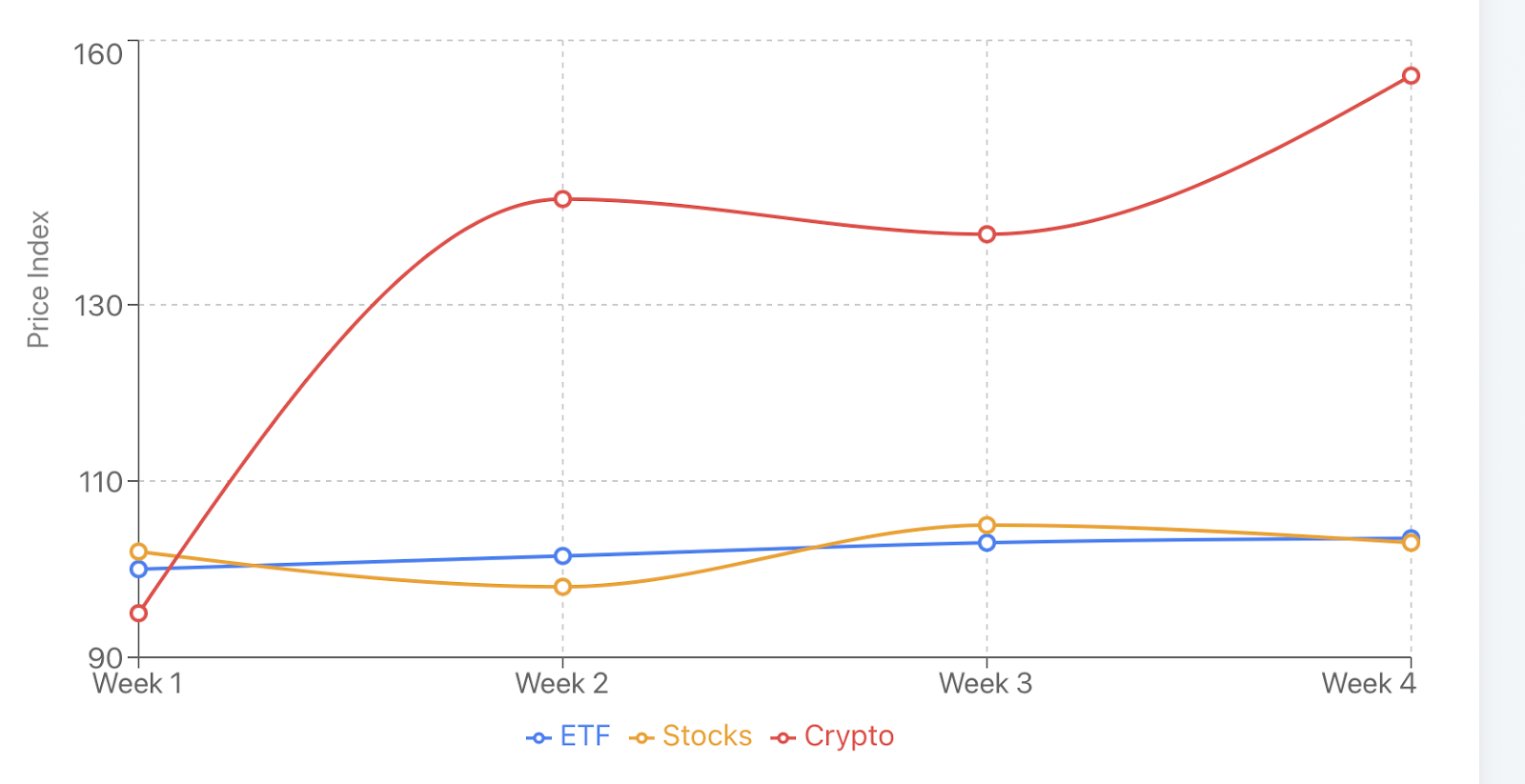
But the negative potential is just as extreme; regulatory crackdowns can lead to prices dropping to near zero overnight. Security issues and hacks can literally wipe crypto holdings to zero. And to be honest, there are scams and pump and dump schemes in the crypto space, largely as a result of the FOMO mentality.
If you choose to venture into crypto with some of your $5K investment, consider it risk capital. Only invest what you can truly afford to lose. Bitcoin and Ethereum are deemed "safer" than newer projects, but anything that doesn't have grounding is "safe" in the world of crypto.
Creating your own portfolio
Here's the thing, you don't have to choose one of the above. The majority of successful investors will allocate their capital over different asset classes.
A good example of a $5K portfolio may look something like: $3,000 (= 60%) in ETFs for your more stable investment, $1,500 (= 30%) in individual stocks to grow, and $500 (= 10%) in crypto to speculate that you will lose.
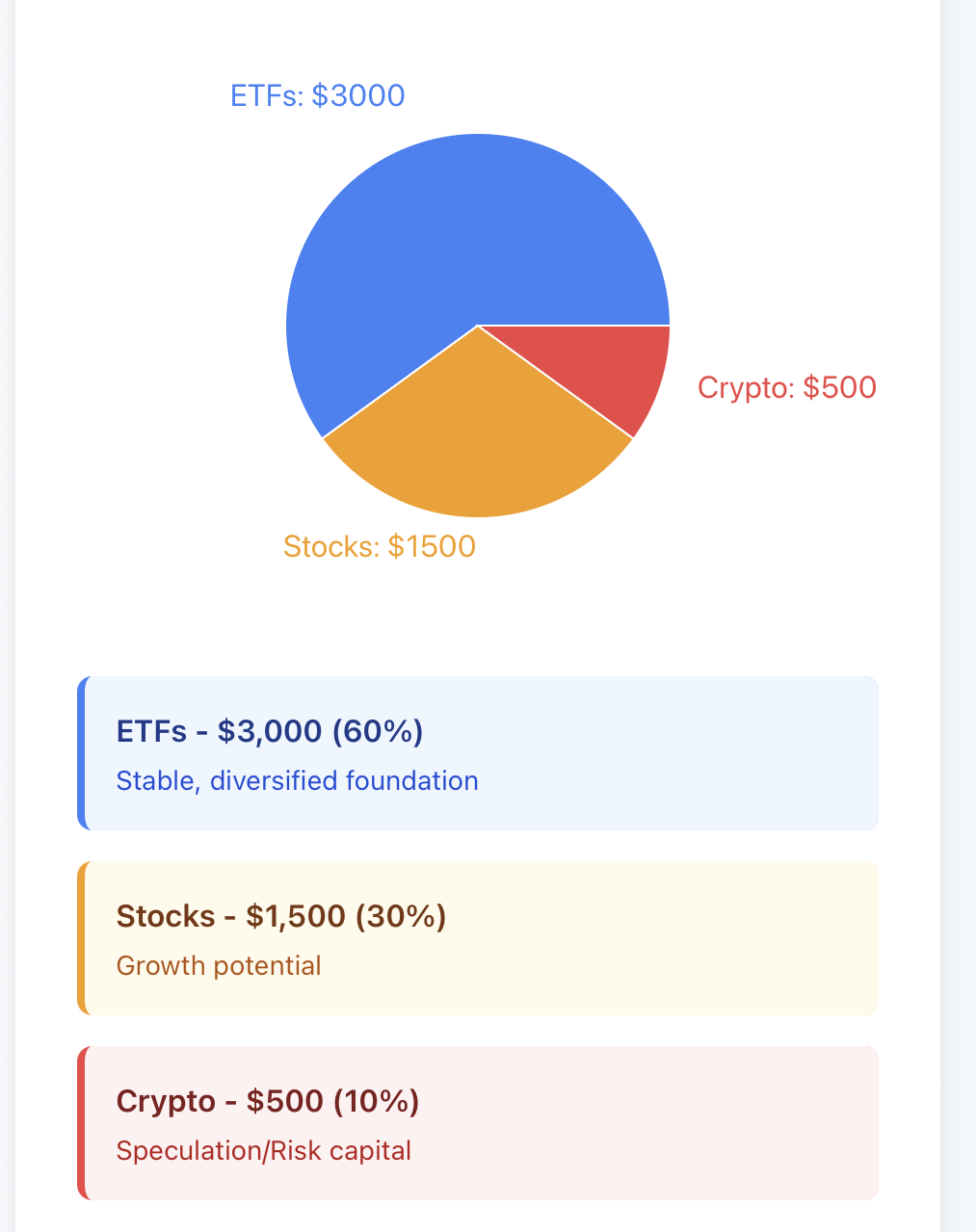
This way you gain diversification without putting all of your money on one bet.
Now the ratios matter depending on your own unique situation. If you have a lower risk tolerance or are new to investing, perhaps you push a higher ratio of capital to the ETFs. For example, if you are younger or more willing to risk capital, the ratio could be 50% in Stocks, 30% in ETFs, and 20% in Crypto.
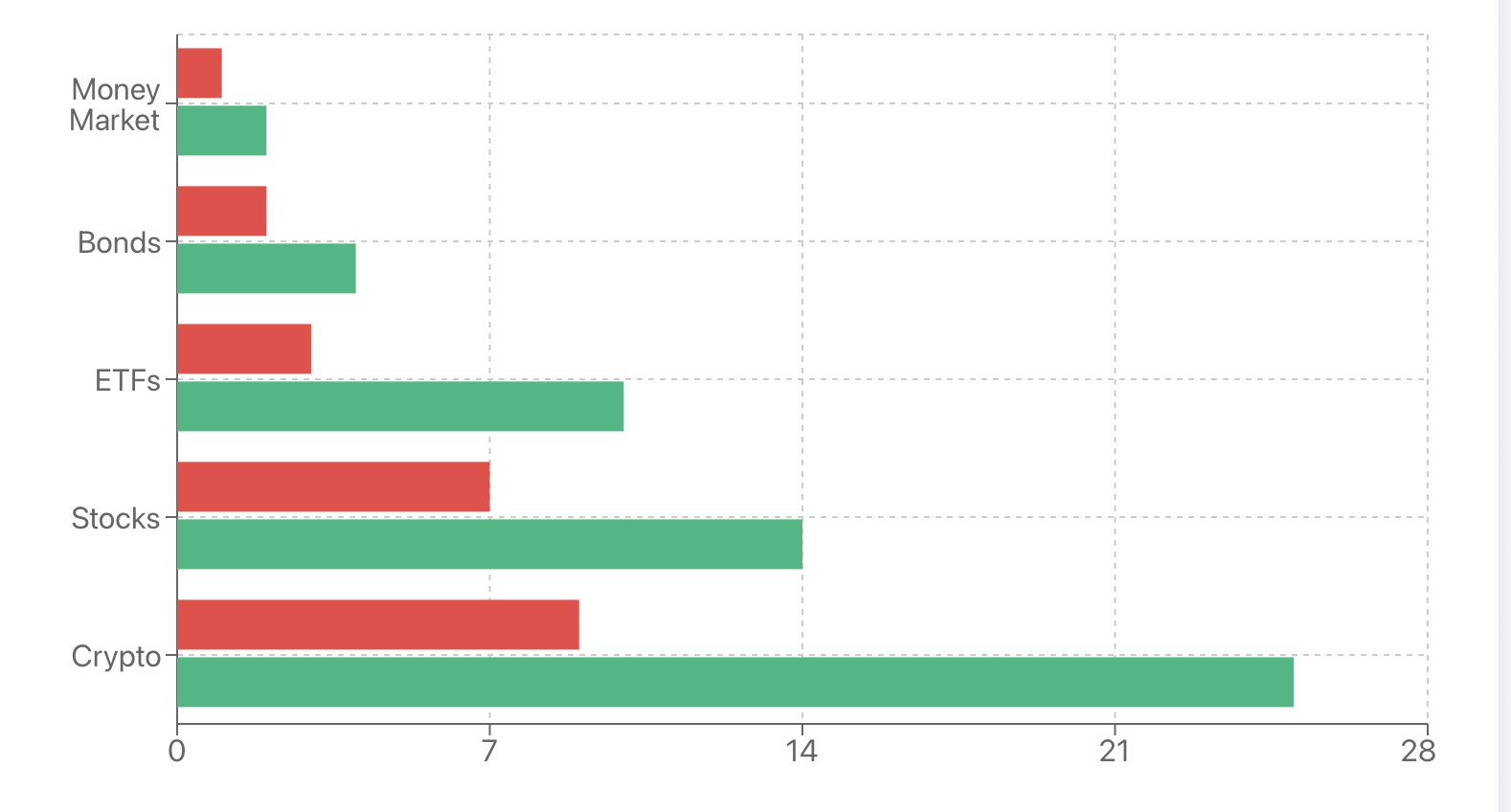
Whatever ratio you go with, own it. When you rebalance your portfolio once a year, don't sell low when the market is down. Don't let emotion set in on the fear of missing out when one of the asset classes is running up.
The Psychology Piece (Which Actually Matters)
Here's where the vast majority of investors struggle: neither due to a bad plan, nor being the dumbest investors in the room, but because they allow their emotions to override their logic and make decisions based solely on feelings.
Fear causes them to sell at the absolute worst time, while greed causes them to chase returns and invest at the height of the market. Herd mentality takes them to a cliff, where whatever the crowd is doing still looks better than a decision, even though the crowd may be headed off a cliff.
Most of the people have "wealthy investors" don't tend to be the smartest or most gifted person there, when it comes to investing. They have discipline. They have a plan, follow the plan, and don't let the short-term noise of the market shake their belief.
You need to challenge yourself with some tough questions before you spend a single dollar. How are you going to feel if your investment drops 20%? Are you going to panic and sell all your investments, or are you going to suck it up? If you are the person that knows you are going to panic and sell, then crypto is probably not for you right now. There is no shame if this is the case you just do not know your limits. This shows wisdom.
What's Coming Next in Investing
The world of investing is changing. Artificial intelligence is altering how the market functions. The prevalence of ESG (environmental, social, and governance) investing is increasing, and blockchain technology is developing new applications in finance.
These trends yield possibilities. A tech-focused ETF would meet the current demand for AI. The movement away from fossil fuels towards renewable stocks is also closely aligned with the macro trend of climate change. Emerging blockchain platforms may become the future financial infrastructure.
Being aware of trends doesn’t mean to go after the next shiny object. It means you know where the market is moving over the longer-term horizon and position yourself to participate.
Taking Action
You have the information. You have the risk-return tradeoffs in place. You’ve established that ETFs deliver stability, stocks provide growth, and crypto provides speculation. You also know that typically the investor with the best returns is one who builds a diversified portfolio and rides those positions, good or bad.
Stop overthinking it. Open a trading account and buy your first position at a small percentage of the total $5K. You don’t have to deploy $5K all at once. Build positions over time, learn as you invest, and then change strategies as you learn. That’s how you start investing.
Ready to put your $5K to work? Head to Tradewill, test your strategy in a demo account, and start building your portfolio without the pressure. Real trading begins when you're ready.
Disclaimer: The content of the blog does not represent any position of Trade W, does not serve as any trading-related decision advice, and does not endorse any third-party.