

 Trade W

The public market's removal of Blizzard stock collection is drawing this stock era to an end for all gamers. Activision Blizzard (ATVI) will stop appearing on trading screens worldwide after its acquisition by Microsoft in 2023 for $69 billion, yet the investment strategy for gaming has not ended. It has changed to continue with new business avenues.
If you purchased ATVI shares or CFDs, you're currently searching for the next great asset in the gaming industry. Fortunately, with the acquisition and business model changing to continue capturing advancements in gaming, there are currently more efficient avenues to participate in the advances occurring in gaming. This document provides a rundown of the past developments, what to pay attention to, and where your time and money can be the most effective moving forward.
Blizzard Stock Before Delisting: Why ATVI Was a Core Gaming Investment
Before the purchase of Activision Blizzard stocks by Microsoft, the company was regarded as one of the most secure investments within the gaming industry. Activision Blizzard is much more than an average publisher within the gaming industry; it is a "monetisation machine" of epic proportions that consists of many of the largest gaming franchises in history across a broad range of media.
The Activision Blizzard Empire
Activision Blizzard emerged as a major player when Activision merged with Vivendi Games (Blizzard Entertainment), allowing it to build a catalogue of gaming franchises unmatched by any of its competitors. World of Warcraft, for instance, generates approximately $1 billion annually from subscriptions alone. Call of Duty has consistently ranked as the best-selling console game, and Overwatch created the hero shooter genre. Each of their franchises (e.g., Diablo, Candy Crush, and Hearthstone) is a unique revenue-generating opportunity for the company.
The simplicity of Activision Blizzard's business model was its biggest strength. Unlike traditional video game publishers that generate profit from a one-time sale of a single game, Activision Blizzard earns their profits from ongoing or recurring sales. World of Warcraft generated predictable monthly revenue through its subscription model, while Call of Duty's annual release schedule and seasonal Battle Pass encouraged customer spending.
Finally, King Digital acquired the Candy Crush franchise for $5.9 billion in 2016 and leveraged its extensive experience and expertise in mobile gaming to turn the Candy Crush franchise into a microtransaction revenue-generating machine.
As of 2023, Activision Blizzard's revenues are almost equally distributed across three different income sources: premium video game sales, in-game purchases, and subscriptions. As a result of diversifying their revenue streams, Blizzard stock is protected from the boom-and-bust cycles that have historically troubled companies like Ubisoft and Take-Two Interactive.
The Numbers That Mattered
For the fiscal year ending in 2022, Activision Blizzard generated $7.5 billion in revenue and continued to have operating margins over 30%. This is an exceptional performance by any entertainment company, especially during a time when the industry was shifting from physical to digital sales of video games.
Activision Blizzard generated more than $3 billion in annual free cash flow; therefore, management has sufficient funds available to develop new franchises, acquire studios, and return cash to shareholders via stock buybacks.
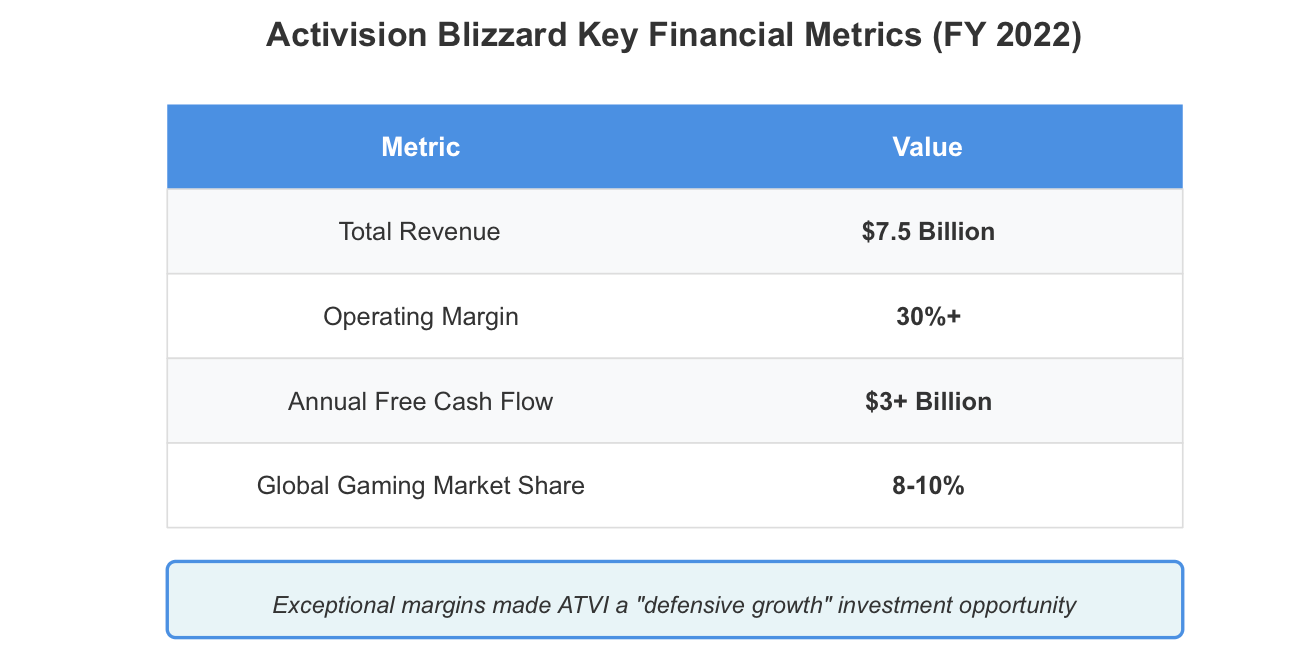
Activision Blizzard was viewed by institutions as a "defensive growth" investment opportunity, in other words, an investment to gain exposure to the rapidly growing video gaming industry, yet not be as vulnerable as companies operating within the "pure-play" mobile space, or have the "hit-or-miss" success experienced by other companies, such as Ubisoft and Take-Two Digital, that heavily rely on each new release being successful. For example, following Electronic Arts' disastrous launch of a game, Blizzard was hardly affected because of its recurring revenue model. Therefore, Blizzard's quarterly revenue is expected to be very predictable.
Market Position and Competitive Landscape
At its peak, Activision Blizzard generated approximately 8% to 10% of the total revenues of the global gaming market. While it was close to matching Electronic Arts' revenues, it generated more revenue than Take-Two Interactive from video games. The only two companies larger than Activision Blizzard in terms of the total video game market globally are Tencent and Sony. However, both have the advantage of superior distribution platforms compared to Blizzard (Tencent's WeChat and Sony's PlayStation System).
Activision Blizzard's competitive advantage comes from its ability to leverage its intellectual property (IP) and the attribute of network utilisation, impacting future sales. As an example, once a customer invests hundreds of hours playing World of Warcraft or obtains a high rank with Call of Duty, the customer will likely remain loyal to Activision Blizzard and not switch to a competing franchise or video game. This creates a very loyal customer base and provides greater revenue stability.
To illustrate this point further, Blizzard operates similarly to a theme park with multiple attractions (video games). If one attraction is closed and cannot be visited, customers still purchase tickets to utilise the remaining attractions that they find attractive. Each of the franchises reinforces the others, and all of Blizzard's properties connect via their Battle.net Platform.
Why ATVI Was Different
The majority of video game companies that have publicly traded shares on stock exchanges act as 'momentum' companies - rapidly increasing in value due to positive revenue reports and sharply declining due to negative revenue reports. Whereas most video game companies are viewed as a form of entertainment, the financial markets viewed Activision Blizzard more as a consumer staples company selling entertainment. Because of Blizzard's longer-term subscriber-based business model that includes a steady amount of paid subscribers each month, financial analysts could forecast future revenues for a period as long as three years in advance with a reasonable degree of certainty.
This increased level of predictability made ATVI an important investment for both mutual funds focused on growth and for ETFs that tracked the gaming industry. As a result of this demand from institutional investors seeking exposure to the video game industry, Activision Blizzard stock was the only constant among all the other stocks in the MSCI Global Entertainment Index that needed to meet its gaming industry exposure requirement. Furthermore, Activision Blizzard stock has had a beta (volatility relative to the overall stock market) well below 1.0 and, therefore, experienced significantly less dramatic changes in price compared to the prices of other tech stocks during both market rallies and sell-offs.
As the primary reason why Activision Blizzard was such an appealing acquisition target by Microsoft, it was the very stability of its business model and consistent stream of compounding cash flow that provided Microsoft with the capital to develop their Xbox Game Pass subscription service and support investors' expectations for Microsoft to transition its business model to include subscriptions as part of its overall business model.
Microsoft's $69 Billion Blizzard Acquisition: What Investors Should Really Understand
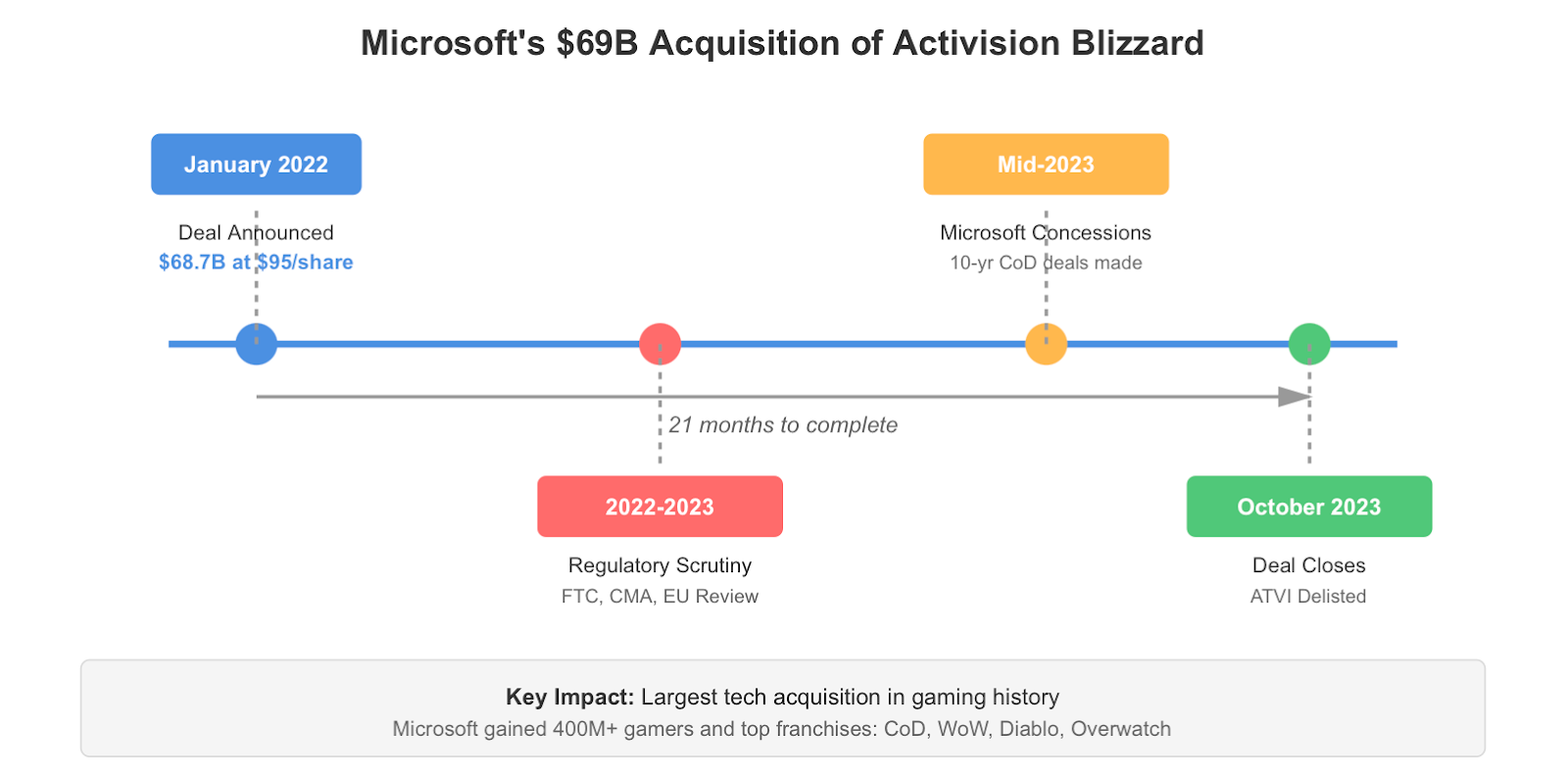
The gaming industry held its breath when Xbox revealed plans to purchase Activision BlizzardIn January 2022, when Xbox announced the acquisition of Activision Blizzard for $68.7 billion and for $95 per share, the gaming industry held its breath. As of that time, it was the largest acquisition in the video game sector, and also one of the largest technology acquisitions.
Xbox's Strategic Reasons for the Acquisition
Blizzard's stock purchase is not just a short-term investment; it's a long-term strategy to change the way we play video games. Xbox has been in a competitive position against Sony with regard to selling consoles for the last two years; however, selling hardware systems alone won't close their revenue gap. Therefore, they needed to develop a new business model, and the creation of Game Pass represents that.
Game Pass provides unlimited access to hundreds of video games for a monthly fee. The economic justification for Game Pass is the total ownership of all content within the user's library. To provide Game Pass with enough value before acquiring Activision, Microsoft needed a minimum of three major first-party studios (Halo, Forza, and Gears of War), with the addition of many third-party video games. With this acquisition of Activision's library, Microsoft now has access to many blockbuster franchises, including Call of Duty, World of Warcraft, Diablo, and Overwatch. As a result, Microsoft is creating the potential for Game Pass to become the premier video game subscription service.
The Regulatory Gauntlet
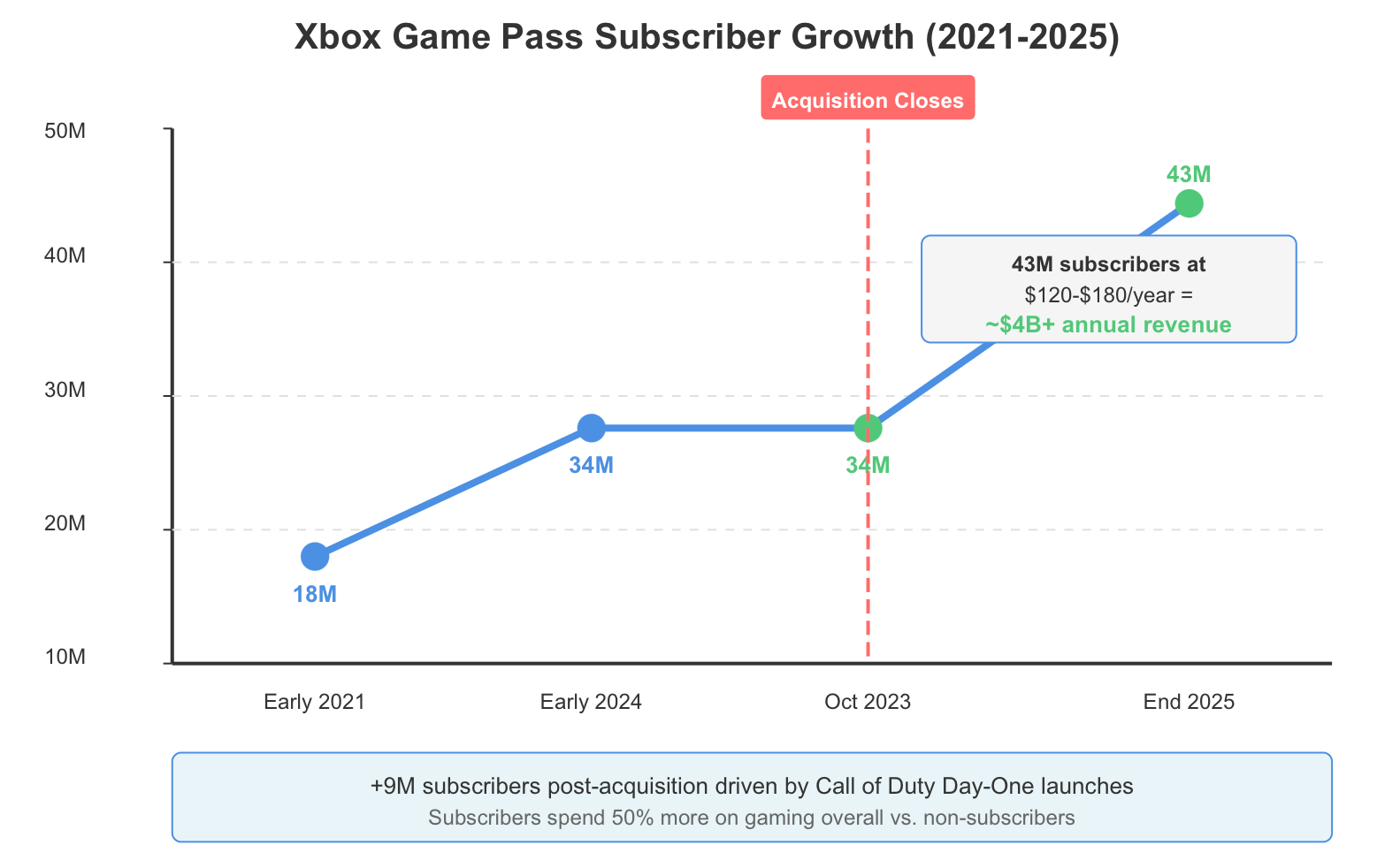
As evidenced by the statistics, Microsoft's Game Pass subscriber base has significantly increased, with the number of subscribers growing from 18 million in early 2021, and continuing to grow to over 34 million subscribers in early 2024. Each subscriber contributes approximately $120-$180 annually, depending on which tier they subscribe to, giving Microsoft between $4 billion in recurring annual revenue, as long as the library continues to expand. In addition to significantly increasing the value of Game Pass due to the additional game content added to the service, Activision's franchises will enable Microsoft to convert a larger number of casual gamers to long-term subscribers.
Microsoft made concessions: Took Microsoft approximately 21 months to close this $69 billion deal with Activision Blizzard, due to significant scrutiny by the regulatory bodies like UK’s Competition and Markets Authority, blocking the deal primarily due to antitrust concerns arising for cloud gaming, along with a lawsuit from the FTC trying to stop them, and the European commission insisting Microsoft produce some behavioural commitments before approval.
To secure approval, Microsoft established a number of commitments, including 10-year licensing agreements with Sony and Nintendo for Call of Duty® on competing platforms, along with cloud gaming rights granted to Ubisoft for their platforms, as well as a commitment not to restrict Activision's titles to Xbox only. Following this, approval was granted in October 2023, and Activision Blizzard ceased to publicly trade as a standalone company.
What Microsoft Obtained
From a financial standpoint, Microsoft purchased a source of revenue and profit through the acquisition of these franchises; however, the true value to Microsoft is derived from three important factors that will assist with the long-term gradual growth of the business as they become dominant in their industry:
IP ownership: Control of the franchises across 400 million+ gamers worldwide. This creates a larger gaming install base than many countries have for their population.
Live-service expertise: Activision Blizzard has mastered how to keep consumers engaged and paying long after they initially purchase. Consequently, the knowledge and expertise that existed at Activision Blizzard are now part of Microsoft's entire gaming division.
Content moat: The streaming wars of the past few years educated most companies that have a technology offering that exclusive content is essential to entice users to subscribe to their platform. What film created the need for Disney+? What show created a need for HBO Max? With respect to Game Pass, just how critical is it to have a library of games that cannot be found anywhere else? Microsoft has now acquired that library.
To summarise this, Microsoft did not acquire a video game company but instead a platform for subscription growth. As additional titles like Call of Duty launch their first day on Game Pass, they will serve to entice PlayStation owners into switching to Xbox. Each World of Warcraft player is also a potential Azure cloud services customer through Microsoft's larger ecosystem.
The Impact on MSFT Stock
Immediately after the announcement of the acquisition, Microsoft's stock price barely changed, as investors had concerns related to regulatory risks associated with the deal and questioned the $69 billion price paid by Microsoft to acquire Activision Blizzard. Fast-forward two years from the acquisition, and there is now greater clarity on the strategic reason for acquiring Activision. Microsoft now generates in excess of $21 billion in annual revenue within its Gaming Division, comparable to Windows within Microsoft.
In addition, the acquisition of Activision Blizzard adds significant weight to Microsoft's changes to its revenue model from Microsoft for the past 35+ years. Wall Street investors reward stable, recurring revenue. Software licensing is the old Microsoft. Subscription-based services (Azure, Office 365, Game Pass) are the new Microsoft. With the acquisition of Activision, Microsoft demonstrates further movement toward that new business model.
In conclusion, the acquisition of Activision has truly enhanced the value proposition for Microsoft (MSFT) shares as an all-inclusive platform business that offers multiple revenue-generating growth drivers. When one invests in Microsoft today, they are investing in the following growth categories: Enterprise Cloud, Productivity Software, AI Infrastructure and one of the largest gaming operations worldwide!
Blizzard Stock Delisting: What Changed for Retail and CFD Traders
As of October 2023, following the announcement of the Microsoft purchase, the trading activity in Blizzard stock was virtually non-existent. The ATVI ticker symbols disappeared from all major exchanges, including the New York Stock Exchange (NYSE), as of that date. Depending on how an individual investor accessed or traded in that stock had a significant impact on the way their trades ultimately settled.
Two Types of Exposure, Two Different Outcomes
Individual investors who held ATVI shares in a standard brokerage account had experienced a fairly straightforward transaction by receiving $95 in cash per share. This resulted in an uncomplicated exit from the position held in ATVI. The conversion from a position held in ATVI to cash within the brokerage account. The only tax implications on the proceeds from the transaction would depend on an individual's cost basis and the length of time for holding the shares.
CFD traders had a much more extensive and complicated issue as it pertained to the settlement of their open CFD positions at the time Blizzard was delisted from all major exchanges. A CFD contract does not give the customer ownership of the underlying stock. Rather, CFDs are derivative instruments whose value is based on the pricing movements of the underlying stock. Therefore, CFD providers had to settle all open CFD positions when Blizzard was no longer listed as an exchange-traded security.
Most CFD providers closed all open ATVI positions based on the acquisition price. However, the mechanics used to do so were determined at the discretion of the CFD providers. Some CFD providers were forced to liquidate open ATVI CFD positions due to the impending delisting date. Other CFD providers converted open ATVI CFD contracts into Microsoft CFD contracts, adjusting the contract size according to the size of the deal.
The Liquidity Shift
The level of liquidity and trading volume for Blizzard stock before its delisting was very high, with 10-15 million shares trading in a single day within the stock's tight bid/ask spread. The liquidity in this stock provided opportunities for active traders to take advantage of earnings surprises, results of a new game launch, or sector rotation. When Activision Blizzard went public, Microsoft didn’t acquire these trading opportunities.
You can buy or trade Microsoft stock; however, gaming accounts for less than 10% of Microsoft's $3 trillion dollar valuation; therefore, even a blockbuster Call of Duty release will barely have an impact on the stock price level of Microsoft as a whole. Microsoft now has less "pure play" exposure to gaming as it relates to the stock that was provided by Blizzard before its acquisition.
Where Traders Went After
There was no exit of "smart money" from gaming; only an interim redistribution. Investors increased their volume on Electronic Arts stock by 15-20% in the months after ATVI was no longer listed, as EA stock was the closest publicly traded gaming company to ATVI for trading. Take Two Interactive, Ubisoft, and even gaming "small cap" companies such as Embracer Group also absorbed some of the investor influx. Exchange Traded Funds (ETFs) in the gaming industry (such as ESPO, HERO) have also seen inflows, as investors opted for a diversified approach to exposure versus a concentrated position.
From a CFD trader's perspective, the ATVI delisting highlighted both flexibility and risk in derivative trading. The flexibility: the ability to immediately pivot to a different, similar gaming stock without having to wait for settlement. The risk: corporate actions sometimes have forced the closure of positions at times that did not align with the trader's strategy.
What Investors Have Lost and Gained
The loss is clear: a highly liquid, predictable, and gaming-focused source of trading income, with various gaming franchises providing established business operations and consistent cash flows. No alternative can provide the exact mix of risk/reward attributes and exposure to gaming associated with Blizzard stock.
But investors have also gained something as well. The acquisition has caused investors to look at the gaming sector from a more comprehensive point of view. Investing in ATVI was a comfortable way to gain exposure in gaming; thus, it allowed for less-than-optimal portfolio optimisation, as some comfort may have led towards decision-making based solely on the ATVI stock. Without ATVI being the default public gaming store, the investors now have to evaluate their competitors with more scrutiny, weigh their geographic proximity (Western vs. Asian) and evaluate gaming on mobile/cross-play/PC platforms with more analytical insight.
Section 4: Two Years After the Blizzard Deal: How Much Value Did It Add to MSFT Stock?
In early 2026, it has now been over two years since Microsoft's acquisition of Activision was fully realised. At that time, analysts expressed scepticism about the deal but have since come around to at least acknowledging that Microsoft has accomplished some of its strategic goals for the acquisition. That being said, did the deal create any measurable shareholder value?
How the Revenue was Impacted
Microsoft's Gaming segment had $25.3 billion of revenue in FY 2025, up from approximately $15.4 billion before acquiring Activision. The increase of approximately $10 billion in revenue is almost perfectly correlated to Activision's standalone business and indicates there was very little revenue synergy created during the first two years after acquiring it. Microsoft did not overestimate the expectations regarding revenue synergies created by the acquisition. Rather, as stated in the company's acquisition rationale documents, it focused on long-term positioning instead of on immediate cross-selling opportunities.
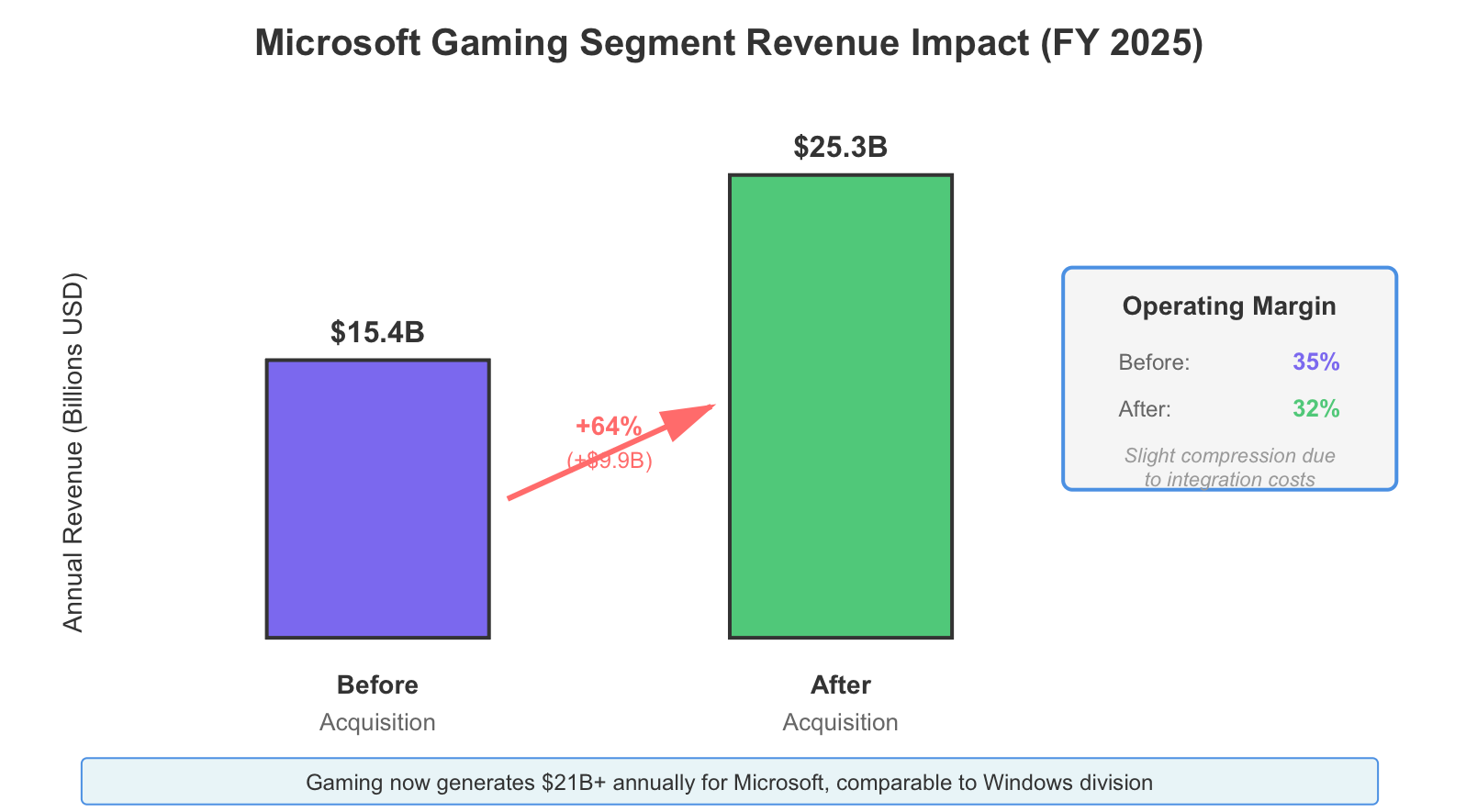
Operating margins in the Gaming segment declined slightly (from 35% to 32%) as Microsoft was absorbing Activision's cost structure and continued to invest in developing content for the segment. The slight decline in operating margin should be considered a very small price to pay for nearly doubling the size of the Gaming segment and adding several irreplaceable intellectual property (IP) assets.
Game Pass Growth Trajectory
The true value of the acquisition is reflected in the subscriber metrics for Game Pass. Game Pass reached approximately 43 million subscribers by the end of 2025, up from roughly 34 million as of the transaction closing date. The Day-One launch of Call of Duty: Modern Warfare III exclusively on Game Pass resulted in the highest quarterly subscriber growth for Game Pass.
Additionally, the inclusion of Activision's mobile games into Game Pass Ultimate has greatly expanded Microsoft's ability to address the Casual Gaming demographic, to which, over the previous years of operations, the company has struggled to successfully penetrate. Game Pass subscribers are likely to spend much more than non-subscribers when looking at overall gaming (i.e., through add-ons, microtransactions, and third-party purchases); some analysts estimate up to 50% more than non-subscribers would typically do. This "halo effect" validates ongoing investments in content and also suggests the possibility of higher prices later on.
Stock Valuation Response
Since Microsoft announced its acquisition of Activision Blizzard in January 2022, Microsoft's stock price has increased approximately 45%, which has outperformed the 28% gain in S&P 500 stocks since the acquisition was announced. Because of its diversified business, it is difficult to isolate the specific timing and contribution of gaming to the overall company performance; however, gaming is consistently noted by equity analysts as a positive contributor to Microsoft's maintaining a premium valuation multiple.
Currently, Microsoft trades at approximately 32x forward earnings, which is a multiple typically reserved for high-growth software-as-a-service (SaaS) companies. Due to Microsoft's Diversified Model and Expansion into Gaming, the valuation is supported by gaming because it provides examples of how Microsoft (and gaming as a whole) has been able to successfully provide its target market with consumer products. Specifically, by acquiring Activision Blizzard, Microsoft demonstrated it has the capacity to successfully integrate large-scale acquisitions; this proof point decreases execution risk for any future acquisitions.
The Bigger Picture
Two years is not long enough to predict future M&A success. The real value of Microsoft owning Activision will come when both companies leverage the IP from Activision's portfolio across various platforms (such as Cloud Gaming and Mobile Devices) while simultaneously pursuing new technologies (such as Augmented Reality/Virtual Reality).
For example, by moving Call of Duty into the Cloud Gaming space, it eliminates some of the traditional barriers to entry regarding hardware capability/access. The forthcoming release of World of Warcraft Mobile provides gamers with access to one of the highest-grossing PC franchises on their mobile device. These types of projects take time to develop, however, and offer the best opportunities for creating long-term shareholder value.
Today, Microsoft did not buy Activision Blizzard to boost its 2024 Turnover by 10%. This acquisition enabled Microsoft to acquire the optionality to lead in the Future of Interactive Entertainment. As the gaming industry continues to shift to a streaming business model that offers players the ability to play with friends on virtually any device, the most crucial component for Microsoft's long-term success will not be the hardware that it sells, but rather the exclusive rights attached to the games that the company publishes. Today, Microsoft ranks among only three gaming companies (along with Sony and Tencent) that have the scale and IP required to dominate the future of Interactive Entertainment.
For MSFT shareholders, the Activision acquisition added a factor that is compounded over years, not quarters. This adds another pillar of growth to the company's value justifies why institutional investors will invest in Microsoft at its current premium valuation.
After Blizzard: Top Global Gaming Stocks to Watch in 2026
With Blizzard stock now essentially gone, the need for investors to diversify theirInstead of focusing on franchise titles being released every year, Take-Two invests in very large tentpole products released every five to seven years: GTA, Red Dead, NBA Live, etc. When these products are released, they sell so many units that it is hard to quantify what they mean financially. For example, GTA V was released in 2013 and has generated more than $8 billion in sales since then. This makes it the best-selling entertainment product ever.
Electronic Arts (EA): The Closest Comparable
The upcoming GTA VI, set for release in 2026, is essentially a test of the Take-Two investment thesis. Analysts estimate revenue of $3 billion in the first year of sales for GTA VI. If this number holds, then Take-Two stock will be revalued with a much higher multiple. Conversely, if there is a letdown in sales from GTA VI or if it is delayed again, then the stock of Take-Two will drop dramatically. This binary outcome makes the fundamental difference between the stock of Take-Two and the steady predictability of the stocks of Blizzard, for example.
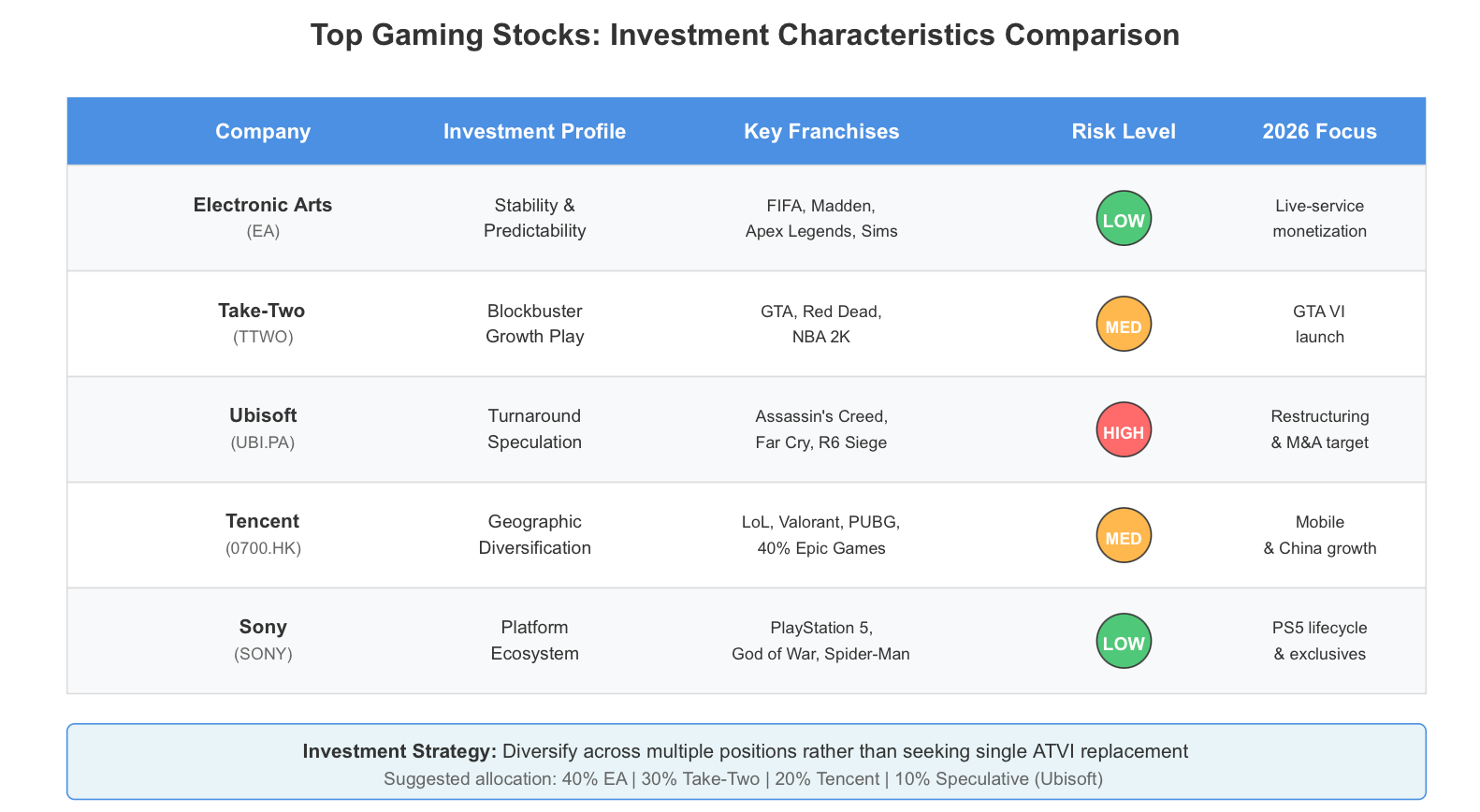
For aggressive investors willing to accept a volatile investment, they have the potential to benefit from something that Electronic Arts (EA) is unable to offer. On the other hand, those who value predictability with Activision will not see this stock as a suitable substitute.
Ubisoft (UBI.PA): A Turnaround Investment
Ubisoft is at a critical juncture. The company has tremendous intellectual property in franchises like Assassin's Creed, Far Cry, and Rainbow Six, but has historically had difficulties executing on those franchises. Their stock performance over the last three years has been dismal because of delays and poor launches of their franchises.
As a result, there is potential upside for investors who believe in the ability of management to implement a successful plan for restructuring Ubisoft. As a result, management is shifting focus toward their most successful IP; they are heavily investing in the potential for live-service revenue models, and they are also exploring licensing partnerships to generate revenue for their IP without the associated development risks of creating games. Additionally, the potential for acquisition interest from private equity and strategic buyers is also likely to serve as a premium for driving the value of UBI.
A bullish case for UBI would see a successfully restructured Ubisoft trading at 15 to 20 times earnings in a two-year window from today, equating to a doubling of the value from current levels. Conversely, the bearish case for UBI would rest with management's inability to successfully execute, continued deterioration of their franchises, and further declines in the stock price over the next few years. This is a "high conviction" bet as opposed to a core holding.
Tencent (0700.HK): The Diversification Player
Tencent is the world's largest gaming company, but they have an entirely different approach than the vast majority of Western gaming publishers. Tencent owns Fortnite outright through its 40% stake in Epic Games, owns League of Legends and Valorant outright through Riot Games, and has made a number of strategic investments across dozens of studios worldwide. The company has the added benefit of earning significant revenue from the rapidly growing mobile gaming space in China.
Diversification is one of Tencent's primary advantages. Tencent's diverse portfolio prevents it from becoming overly reliant on any one franchise or region. If there is a decrease in PC gaming, then gaming through mobile devices benefits from increased revenue. Likewise, if there is a slowdown of revenue from Western markets, then revenue from China compensates for it. The diversified portfolio provides significantly less risk for Tencent than the vast majority of gaming companies that are single-product-focused.
A potential disadvantage for Tencent is regulatory risk. Actions taken by the government of China can have unpredictable impacts on Tencent's domestic operations, as was seen during the crackdown on gaming in China in 2021. International investors in Tencent will need to understand and be comfortable with geopolitics and emerging market risks, which are significantly different from what existed for investors in Blizzard stocks.
Sony (SONY): The Platform Player
Sony has exposure to the gaming market through hardware sold under the PlayStation brand, through first-party exclusive gaming titles, and through subscriptions to PlayStation Plus. Sony's strategy differs from Microsoft's in that Sony leverages its games to sell PlayStation hardware rather than utilising hardware to sell gaming software.
The investment case for Sony is based on the trajectory of the PlayStation 5's lifecycle and whether Sony can continue to maintain its dominance over other gaming platforms, namely, Microsoft's Xbox and Nintendo's Switch. Since the revenue generated from the sale of gaming hardware compresses profitability margins compared to pure-play publishers, this means that Sony's profitability will always be somewhat lower than that of pure-play publishers. However, the value of the long-term lock-in created by the ecosystem afforded by the PlayStation lineup justifies Sony's business investment in games.
Investors looking for gaming exposure as part of a larger diversified electronics conglomerate should clearly consider Sony as a viable investment. However, those investors looking for the pure-play potential of gaming should look elsewhere, since Sony's business model dilutes the total gaming investment.
Building a Post-ATVI Gaming Portfolio
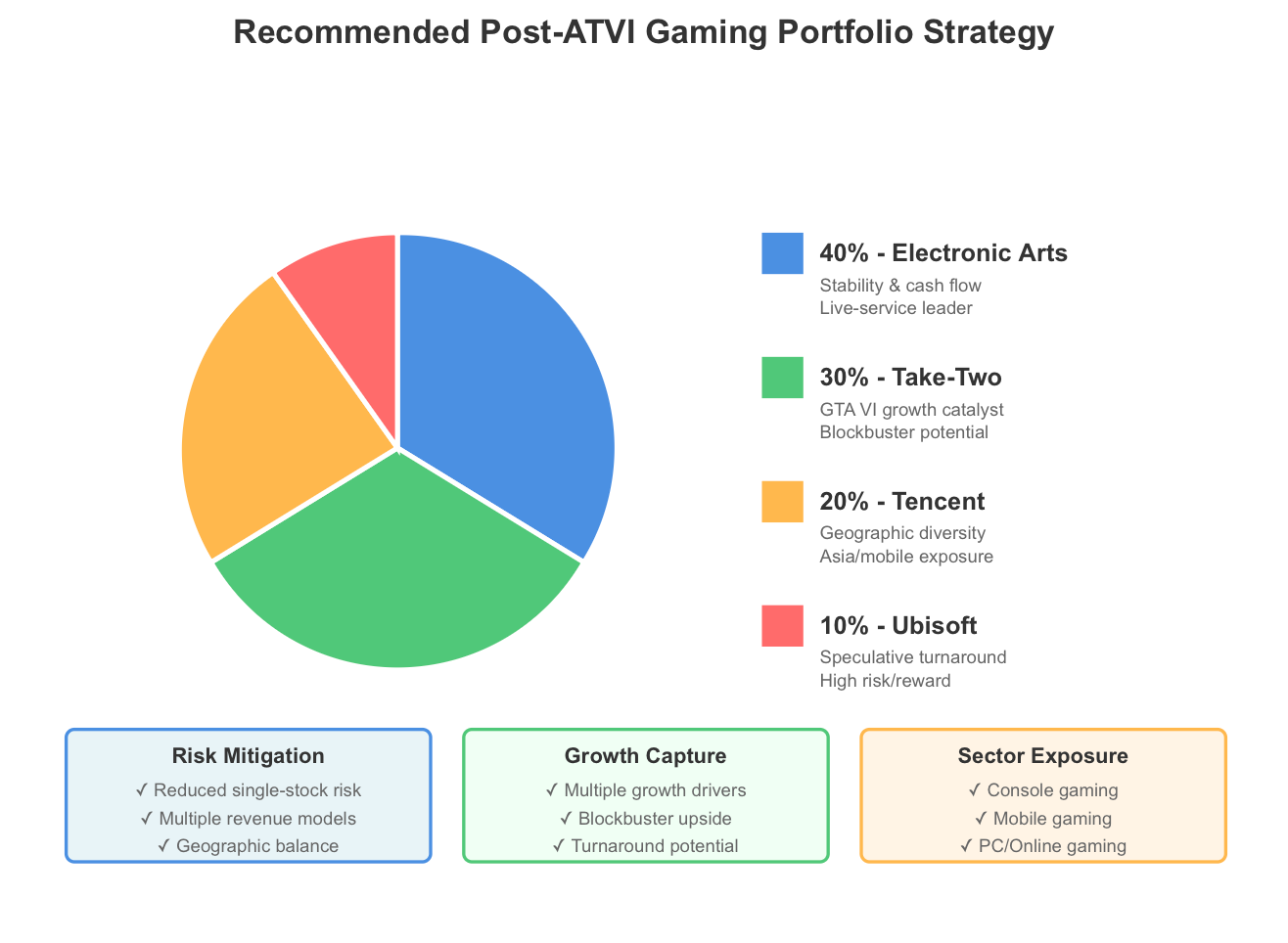
The smartest approach combines multiple positions rather than trying to find a single Blizzard stock replacement. A balanced portfolio might allocate:
-
40% to EA for stability and cash flow
-
30% to Take-Two for growth exposure to GTA VI
-
20% to Tencent for geographic diversification
-
10% to a speculative turnaround play like Ubisoft
Having a portfolio diversified in this manner allows for both reduced single-stock risk as well as the opportunity to benefit from the strengths associated with each of the aforementioned companies. Therefore, a diversified portfolio enables investors to access the entire gaming industry versus just one company's stock.
Trading the Gaming Sector After ATVI: CFD and Derivatives Strategies
Although Blizzard stock may have disappeared, active investors in the gaming industry can still find many different ways to profit from a volatile gaming space. CFDs and other types of derivative contracts provide active investors in the gaming sector with a level of flexibility that traditional stocks cannot offer, as they are affected by cyclical product releases and seasonal revenue spikes.
Why CFD Trading Should Be an Option In The Gaming Industry
The stock price of gaming companies is typically based on factors such as earnings releases, pre-order sales, player engagement ratings and regulatory actions. These types of events create short-term volatility that can be exploited by CFD traders through the use of leverage as well as the ability to profit from both rising and falling stock prices.
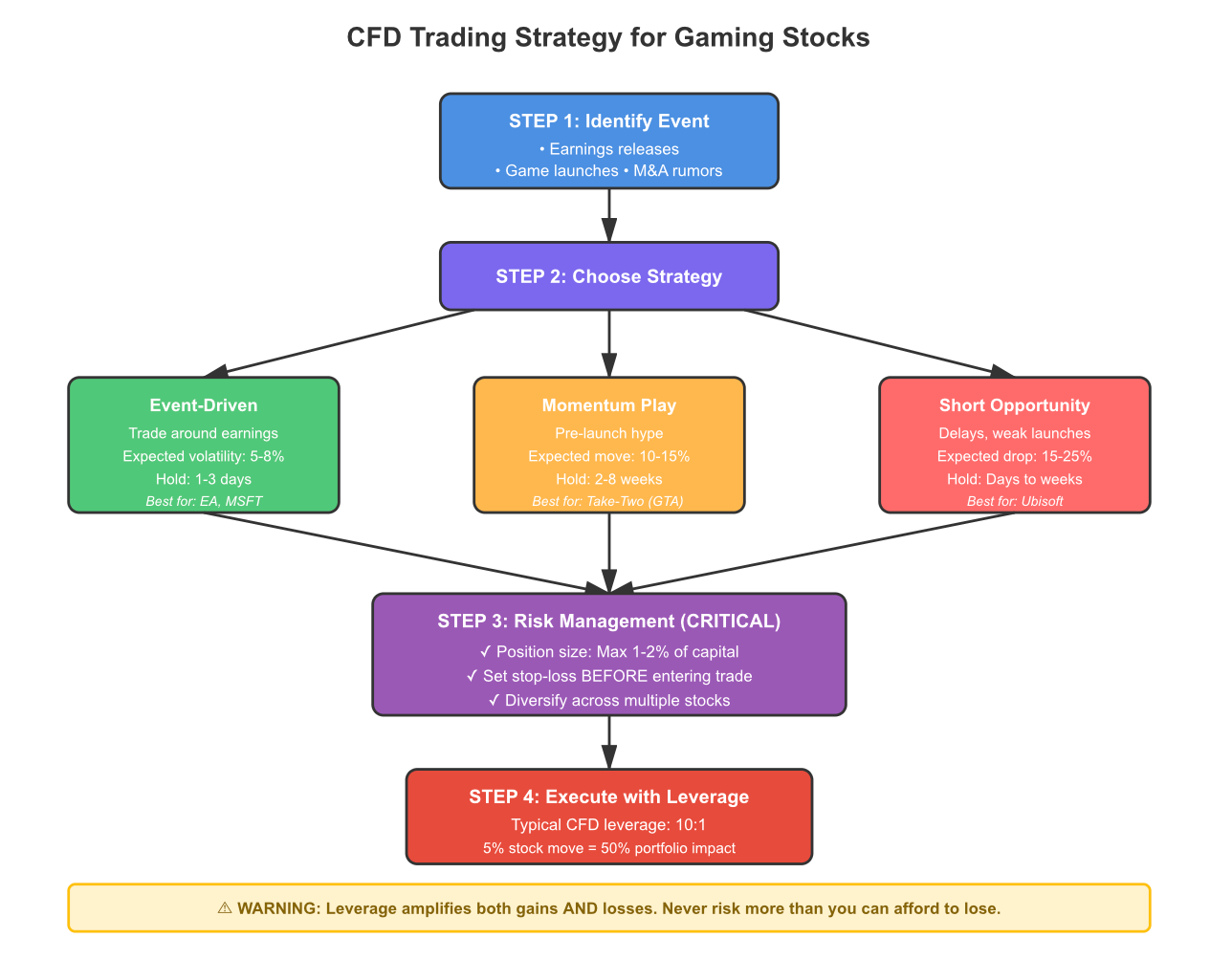
For example, Electronic Arts' stock has a history of moving between 5-8% in either direction within 24 hours of its earnings release. A CFD trader, with the ability to use 10:1 leverage, can turn this 5-8% movement into a 50-80% profit based on the investment amount. Therefore, short-term volatility that can be detrimental to a buy-and-hold investor can create an opportunity for an active trader who can anticipate these events.
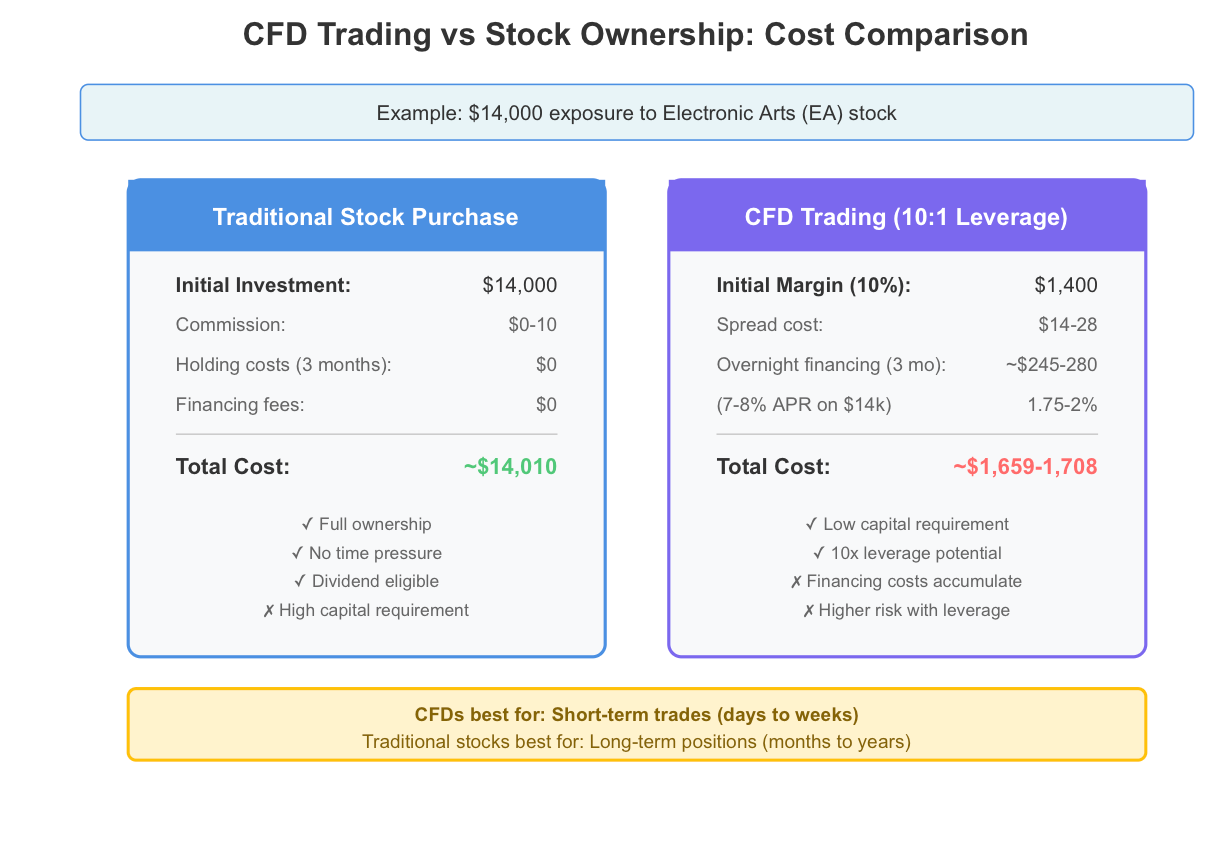
There are various aspects to CFD trading that make it very simple to understand. Rather than purchasing 100 shares of EA at $140 per share ($14,000 total investment), you open a CFD position, which gives you exposure to $14,000 of value for only a margin amount of $1,400 (or about 10:1 leverage). If EA rises to $150, you will receive the entire $1,000 gain for the $1,400 of exposure. Conversely, if EA drops to $130, you will lose $1,000 for the same $1,400.
Thus, the concept of risk management is essential to be successful as a CFD trader. Strategic Event Driven Trading:
Events in the Gaming Sector frequently occur with similar repeatable patterns, which set up a very specific way to trade.
Many options traders pay a higher premium due to the expected volatility that typically occurs around earnings releases; however, CFD traders may also take advantage of the volatility by gauging the expected direction of the market if they have an accurate read on the earnings results.
New video game launches, on the other hand, also create speculative momentum as companies promote their products and begin leaking information to the public as pre-order data and initial reviews begin to circulate weeks in advance of launch. For example, Take-Two Interactive Software historically sees a 10 to 15% increase in its stock price in the few months leading up to the release of new editions of Grand Theft Auto (GTA).
The stock price of video game company Ubisoft spiked 18% in a single trading session in July 2017 after Bloomberg reported that private equity firms were interested in buying Ubisoft. This type of acquisition rumour can create a price increase of 20-30% overnight, and CFD traders who follow this pattern in gaming (M&A) activities can position themselves accordingly by taking very small speculative positions.
Short Seller Opportunities:
One of the primary advantages of CFD trading is that it provides easy access to short selling. When a company in the Gaming Sector faces setbacks (i.e., delay of a video game launch, weak initial sales of a new title, regulatory issues), CFDs make it easy to short the stock by simply selling it, versus purchasing it. This was the case with Ubisoft, which has provided numerous opportunities to short their stock over the previous two years due to repeated delays and disappointing performance metrics. CFD traders could profit from all of these drops by taking advantage of this unique access to shorting without the time and labour of borrowing stocks or having to meet minimum account balances to short stocks through traditional means.
Tactical Risk Management:
The use of financial leverage by CFD traders increases their potential to earn money by 10:1, but this same leverage also increases a trader's risk of losing money by 10:1. Therefore, professional CFD traders tend to place significant focus on risk management using the following guidelines:
Position Sizing: Do not risk more than 1-2% of your trading capital in a single trade. Even if you have a 10:1 leverage ratio, if you take a significant adverse move against you (a 10% loss in this example), you will lose your entire position.
Set and Follow Stop Loss Orders: Set a stop loss in advance and strictly adhere to it at all times. Gaming stocks often gap in price by 15-20% in reaction to unexpected news or developments, so without stop loss orders in place, a single bad trade could cost you your entire account.
Diversification: Don't limit your exposure to only one stock or even one sector. There is a high degree of correlation amongst the gaming sector, so if one company or the sector sells off it will likely cause a decline in the entire sector.
Comparing the Cost of CFD Trading to Stock Ownership:
CFD trading can sometimes appear to be less expensive than stock ownership. For example, many online brokers do not charge commission on trades and instead charge a spread. Additionally, CFD traders also incur overnight financing fees. While overnight financing fees do not apply to trades held for only a short period of time (i.e., around earnings announcements or new product launches), they can add up when you hold a CFD position for more than a few weeks.
Most CFD brokers charge an overnight financing rate that is equivalent to an annual percentage rate (APR) of approximately 7-8%. Therefore, considering that finance on a CFD position held for three months would cost the trader approximately 1.75-2.00% in financing fees, CFD traders should always compare their costs for CFD trading with traditional stock ownership and establish which method will produce a better return based on how long they plan to hold the CFD position versus purchasing the stock outright.
The Bottom Line on Active Trading
CFDs & Derivatives Weren’t Discontinued With The Loss Of The Blizzard Stock. CFDs and other derivatives have not disappeared with the delisting of Blizzard. The instruments remain, volatility continues, and opportunity still exists. What has changed is how traders will choose to focus on in the future. Electronic Arts (EA), Take-Two Interactive Software and even Microsoft Corporation (Microsoft) are three major video game company stocks that provide active trading opportunities based on their price action and liquidity. The same principles for trading ATVI continue to apply, risk management, event-driven timing and Technical Analysis and now need to be applied to different ticker symbols.
For traders who were aware of the factors that made Blizzard stock a good candidate for trading, i.e., attractive liquidity, predictable event schedule, and clear fundamentals driving the stock, those same characteristics have now also transferred to almost every other stock within the video game industry. The opportunity has not gone away; it has simply become more fragmented among various stocks and companies.
Conclusion: Gaming Investment Strategies in a Post-ATVI World
While Blizzard stock is no longer a public company and has closed the doors on one specific investment opportunity for the gaming sector, it does not mean that there are no longer investment opportunities for the gaming sector; on the contrary, the gaming sector is still a compelling growth industry. Therefore, the strategic question is not whether or not to invest in gaming; rather, it is about how to now gain exposure to gaming since the most straightforward way is off the table.
In terms of long-term investment opportunities, for most investors, the answer would likely include a portfolio construction approach that consists of multiple gaming companies rather than concentrating on one individual company. When combining the stability of EA, potential blockbuster appeal of Take-Two and diversification provided by Tencent across many geographies, there is an opportunity to gain significantly greater exposure to the overall gaming industry than any one company could ever give an investor.
Furthermore, with the addition of Microsoft’s relationship with Activision and, additionally, Sony as a leading console manufacturer, the investor has essentially recreated their investment in the entire gaming sector.
For those who trade actively, rather than being lost, the opportunity has transitioned over to other stocks. The same patterns of volatility associated with events driving the shares of Blizzard are now occurring with stocks such as EA, Take-Two, etc. Traders can take advantage of these same trading opportunities by using derivative products such as CFDs and options, so long as the trader is disciplined about implementing effective risk management strategies.
The profitable investor was not the one who held on to ATVI stock without any thought about the company’s future; rather, the successful trader understood how the company made its profits, recognised value during a temporary correction, and entered into position sizes based on the principles of diversification. Today, these same principles still apply; they merely require investors to utilise multiple instruments, rather than exclusively trade one stock.
There is no doubt that gaming is here for the long haul! The share of interactive entertainment continues to increase as more and more people wean away from the passive consumption of content (i.e. TV, films, etc). Additionally, with the advent of cloud technology, there are no longer the limitations of hardware restrictions holding back these individuals, and the introduction of mobile platforms will vastly increase the size of the addressable market.
The same secular market dynamics that supported Blizzard will continue to support gaming overall, and therefore, the investment thesis remains similar. However, there have been some changes regarding the implementation of this investment strategy.
Want to begin trading gaming stocks with advanced CFD strategies? TradeWill offers you competitive spreads on stocks such as EA, Take-Two, Microsoft and over 200 other global companies with up to 20:1 leverage! Start your account today!
Disclaimer: The content of the blog does not represent any position of Trade W, does not serve as any trading-related decision advice, and does not endorse any third-party.