

 Trade W
What is Margin in CFD Trading?
If you've ever wondered what is margin in CFD trading, you're not alone. Many new traders are surprised to find out that margin isn’t a fee or cost. It’s actually a collateral deposit that your broker needs from you to open a leveraged position.
In CFD margin trading, you don’t need the full amount of capital to control a large trade. Instead, you only need a small portion of the trade’s total value, known as the initial margin. This makes margin a really useful tool, but it can also come with big risks if you’re not careful.
Let’s say you have $1,000 in your trading account. With 10:1 leverage, you can open a position worth $10,000. That $1,000 acts as your CFD margin, which is collateral that the broker holds.
This is why margin in CFD trading is so important: it lets you amplify gains, but also increases exposure to losses.
Table 1 - Margin Trading Comparison Table
Key Margin Terms You Should Know:
-
Equity: Your total account value, including unrealised profits/losses.
-
Used Margin: Margin currently being used in open trades.
-
Free Margin: Available funds to open new trades.
-
Margin Level: Ratio of equity to used margin (usually displayed as a %). Critical for avoiding a margin call.
Types of Margin in CFD Trading
When it comes to CFD trading margin requirements, understanding the different types of margin is critical. Here’s a quick rundown:
Initial Margin
This is the minimum deposit you need to open a new position, and it’s based on a percentage of the trade’s full value, depending on what kind of asset you’re dealing with and your broker’s rules.
Maintenance Margin
This is the minimum account balance you have to keep to keep your positions open. If your equity drops below this level because of bad price changes, your broker will send you a margin call.
Variation Margin & Margin Call Process
If your account's margin falls below what the broker requires (usually 100%), you’ll get a margin call. This means you need to either add more funds or close some positions to get back to the required margin level, or else the broker might automatically close your positions.
Table 2 - Types of Margin Table
How Margin and Leverage Work Together
Margin and leverage in CFD trading are two sides of the same coin. When you trade with leverage, you’re borrowing money to increase what you can invest. Margin is simply the portion of capital you must contribute.
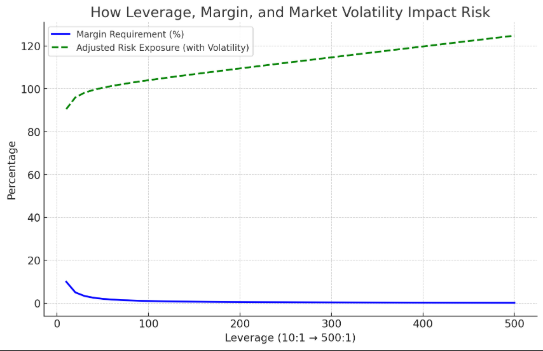
Formula ⇨ Required Margin = 1 / Leverage
For example, if a broker offers 100:1 leverage, you only need a 1% margin to open the position.
While leverage increases profit potential, it can also increase your losses. This makes it essential to understand the relationship between margin and leverage before entering trades.
Global Leverage Caps:
-
Europe (ESMA): Max 30:1 for major forex pairs
-
USA: Max 50:1 (regulated brokers)
-
Australia: Max 30:1 (ASIC-regulated)
-
Offshore Brokers: Up to 500:1 (with higher risk)
Example:
If you have $1,000 and use 100:1 leverage to control a $100,000 trade, and the market moves just 1% against you, that’s a $1,000 loss, which means basically wiping out your whole account.
How to Calculate Margin in a CFD Trade?
Understanding how to calculate margin in CFD trades gives you control over your positions and risk.
Basic Formula ⇨ Required Margin = Trade Size × Margin %
Margin percentages vary by asset class and broker:
-
Forex CFDs: ~3.3%
-
Gold CFDs: ~5%
-
Stock CFDs: Up to 20%
Example Calculation:
You buy 1 lot of EUR/USD valued at $100,000 with 30:1 leverage:
-
Required Margin = 100,000 ÷ 30 = $3,333.33
Table 3 - CFD Margin Calculation Table
Common Risks of Using Margin in CFD Trading
While trading on margin offers greater exposure, it also brings more risk. A lot of new traders don’t realize how fast losses can pile up, especially when they’re using high leverage.
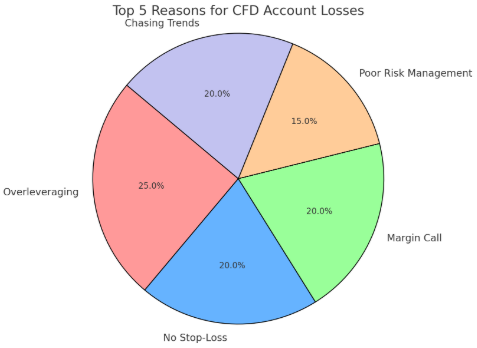
Major Margin Risks in CFD Trading:
-
Overleveraging: This can boost your profits and losses. Just a small move in the market can wipe out your account.
-
Margin Calls & Liquidation: If your equity drops below the maintenance margin, your broker may issue a margin call or forcibly close your trades.
-
Market Volatility: Big news events, like job reports or central bank announcements, can cause prices to swing wildly and unexpected margin depletion.
-
Negative Balance Risk: If you don’t have negative balance protection, you might end up owing money to your broker.
For example, if gold suddenly drops 2% during an inflation report, a trader using 50:1 leverage without a stop-loss could lose their entire margin in seconds, leading to a margin call.
Margin Requirements by CFD Broker
Not all brokers have the same rules about margin, so it’s important to check the CFD broker margin requirements before you trade.
Broker Margin Rules by Region:
-
EU (ESMA): Max 30:1 leverage on major forex pairs.
-
UK (FCA): Same as the EU, with strict capital requirements in CFD.
-
Australia (ASIC): 30:1 cap on forex, lower for commodities.
-
Offshore brokers: Often offer up to 500:1 leverage, but with higher risk and less protection.
Table 4 - CFD Broker Margin Comparison Table
Best Practices for Managing Margin Effectively
To keep your account safe, here are some of the best margin practices for CFD traders. Solid risk management is your safety net.
Top Margin Management Tips
-
Keep margin level above 150% to avoid margin calls.
-
Use stop-loss orders on every trade.
-
Don’t use your full free margin—leave room for market swings.
-
Check your account daily, especially during high-volatility periods.
-
Avoid trading during major news events if you lack experience.
-
Use demo accounts to test high-margin strategies risk-free.
For example, a trader risking only 10% of their capital per trade with 10:1 leverage can manage their losses better and avoid forced closures.
Conclusion: Use Margin Wisely and Strategically
Margin is not “free money.” It’s a powerful tool that can help or hurt you, depending on how disciplined and knowledgeable you are. Here's what you should remember when trading with margin: always calculate your CFD margin requirements before opening any position, and make sure you clearly understand the difference between margin and leverage.
Most importantly, avoid the temptation of overleveraging while continuously monitoring your margin level to prevent unexpected liquidations. For better trade planning, utilize analytical platforms like TradingView and your broker's margin calculators to assess risks accurately before executing trades. By following these fundamental practices, you'll maintain better control over your trading capital while using margin responsibly.
Ready to apply smarter margin strategies?
Test them risk-free with a demo account before you go live.
Master margin risk management and turn knowledge into confidence.
Stay updated: Subscribe to receive weekly trading tips, broker reviews, and more insights on CFD margin trading, risk control, and market timing.
Disclaimer: The content of the blog does not represent any position of Trade W, does not serve as any trading-related decision advice, and does not endorse any third-party.