

 Trade W
1. Introduction: Why Understanding These Terms Is Crucial for CFD Success
Entering the realm of CFD (Contract for Difference) trading can be daunting, especially when faced with the often-unfamiliar terms of "pips," "lots," and "leverage." These are not just words—they are some of the key components that will determine your success or failure when trading. Numerous beginners embark on a career in CFD trading with little or no knowledge of these components. Certainly there are many that suffer huge losses they could have easily avoided.
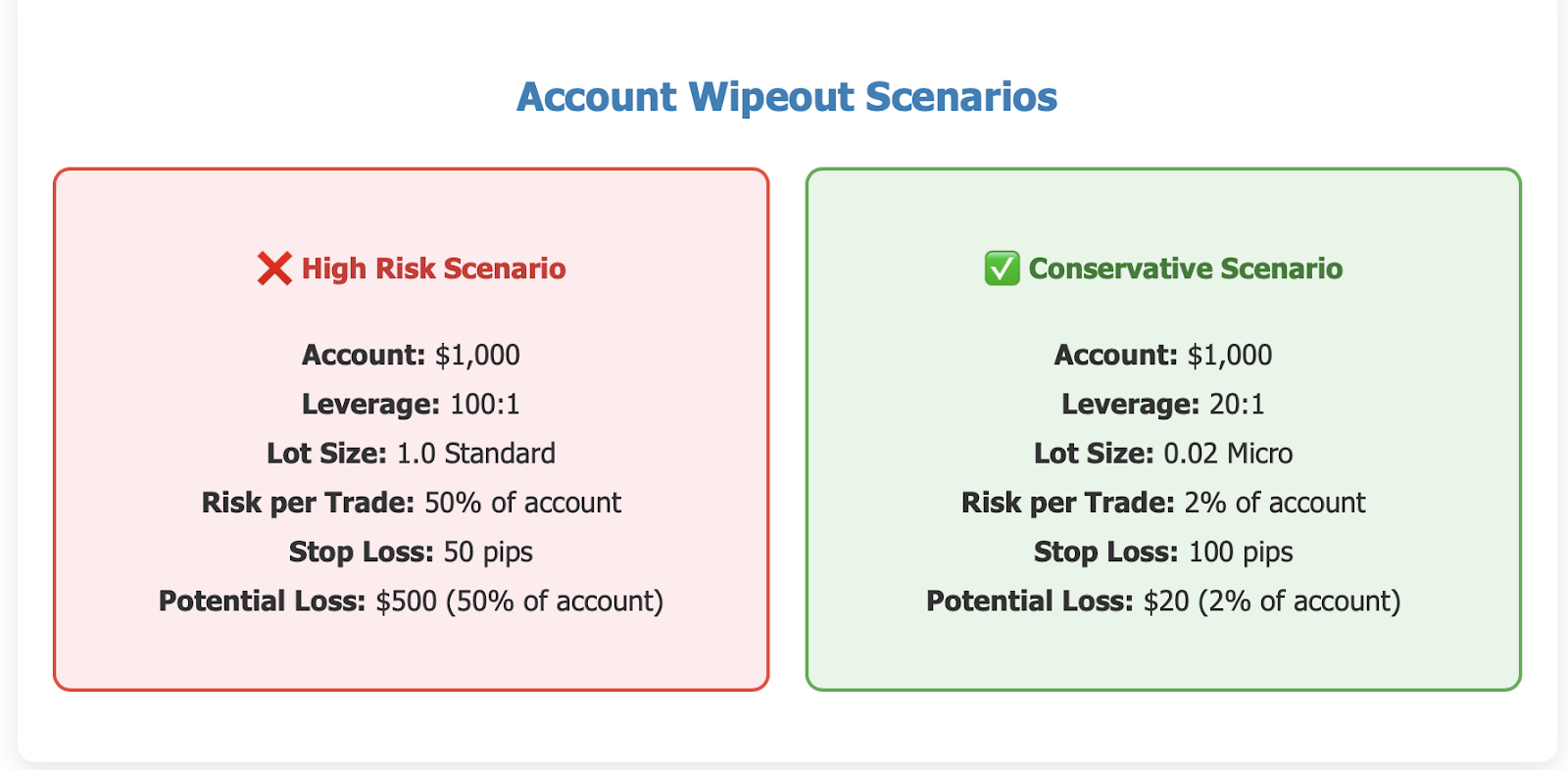
Consider the following example: A new trader believes they risk $100 in a trade, but because they did not fully understand the implications of leverage and lot sizes, they actually risk $1,000.
When the market moves against them by 50 pips, their account is wiped out. This is not an unusual story, but rather it is an everyday occurrence in the CFD markets.
Use a demo account to begin practising the calculations of pips, lots, and leverage without risking real money. Most brokers allow you to practice unlimited demo trading in real conditions for a time of your choosing.
2. What is a Pip? The Foundation of Profit and Loss
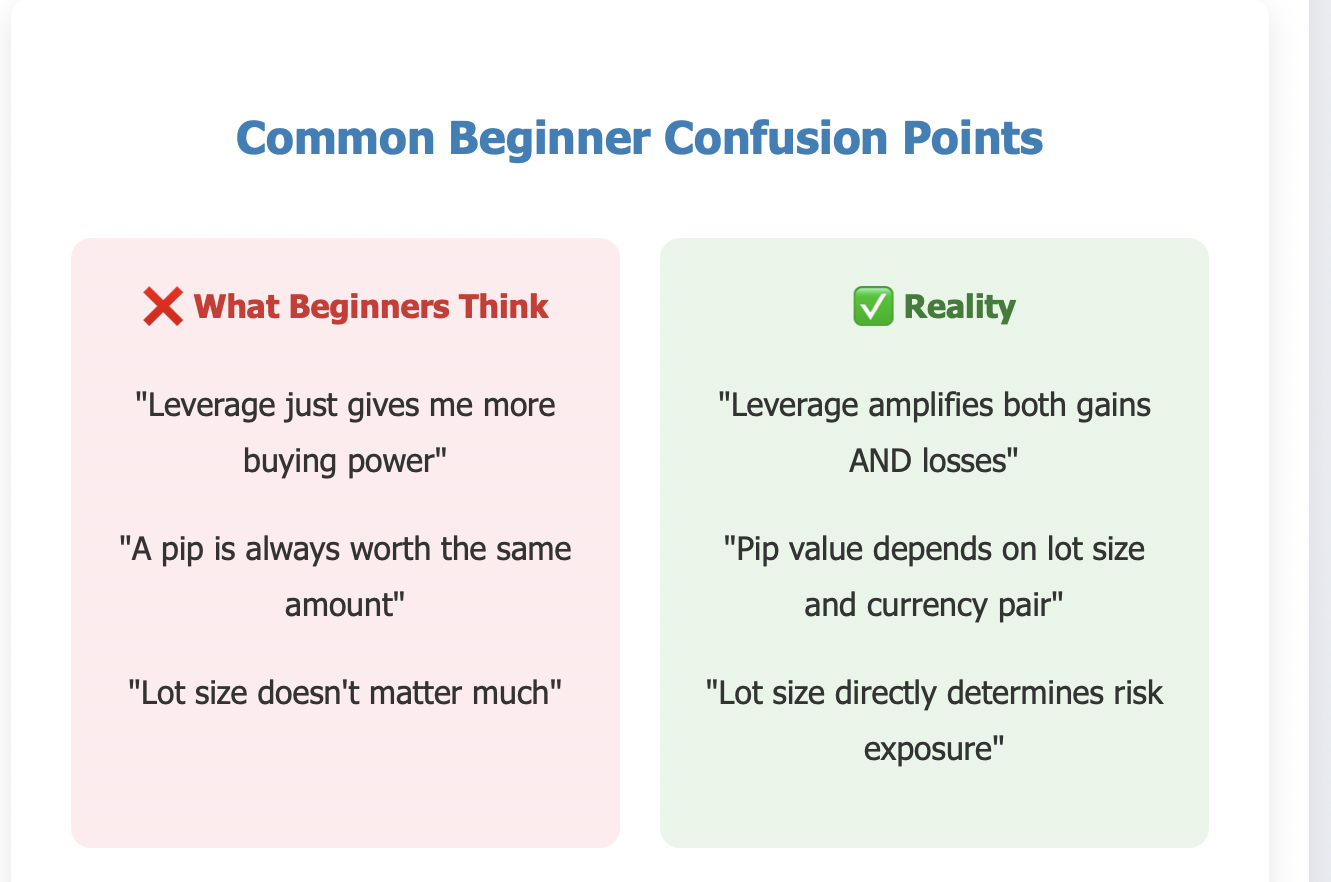
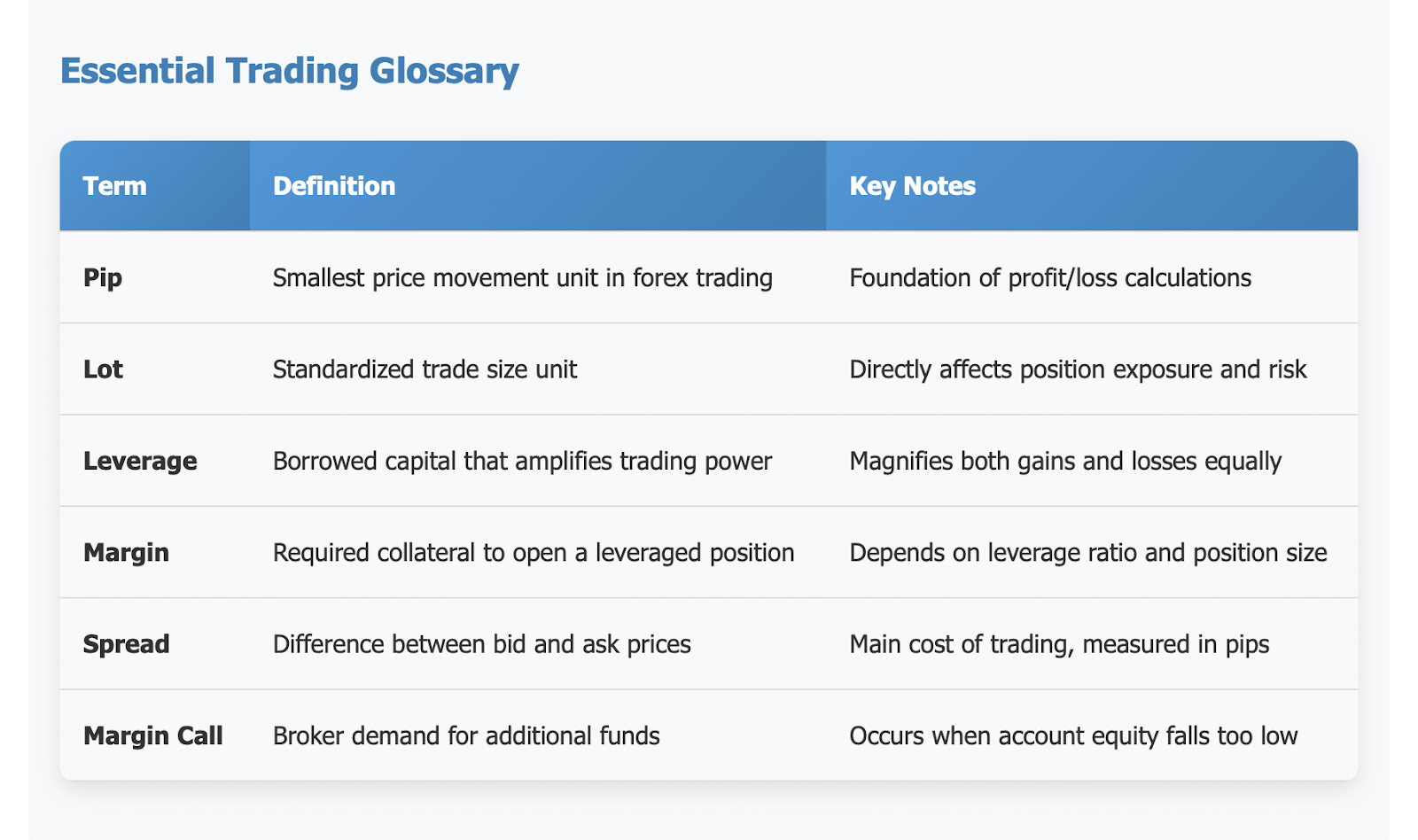
A "pip" means "Percentage in Point" or "Price Interest Point"; it refers to the smallest standardized unit of price movement in forex and CFD trading. In simple terms, you can think of pips as the ruler we use to measure market movements. For most currency pairs a pip is the fourth decimal place (0.0001), and for Japanese Yen pairs, it is the second decimal place (0.01).
Understanding pip values is important, because they measure price fluctuations, which directly link to your profits and losses. If EUR/USD moved from 1.1020 to 1.1025 that would represent a 5-pip movement. But what does that translate to in money? That depends on your lot size; and that brings us to our next important topic.
Tip : Utilise a pip calculator to estimate pip values for various currency pairs and lot sizes quickly. Many trading platforms come with a calculator pre-installed. However, you can also find many free ones online.
Read more: CFD Trading Exposed: Are Trade W’s Competitive Fees Worth the Risk?
3. What is a Lot? Controlling Your Trade Size and Risk
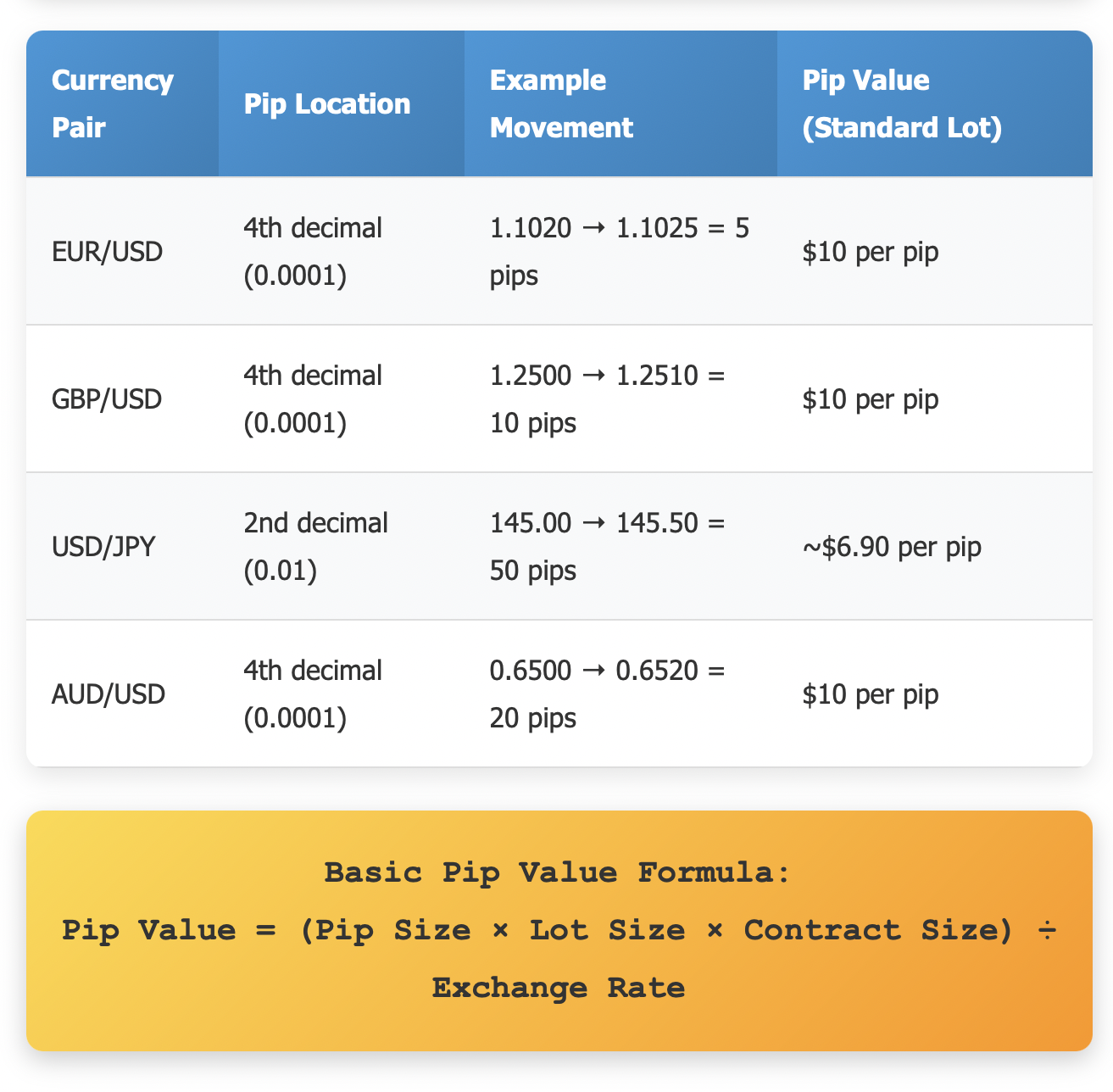
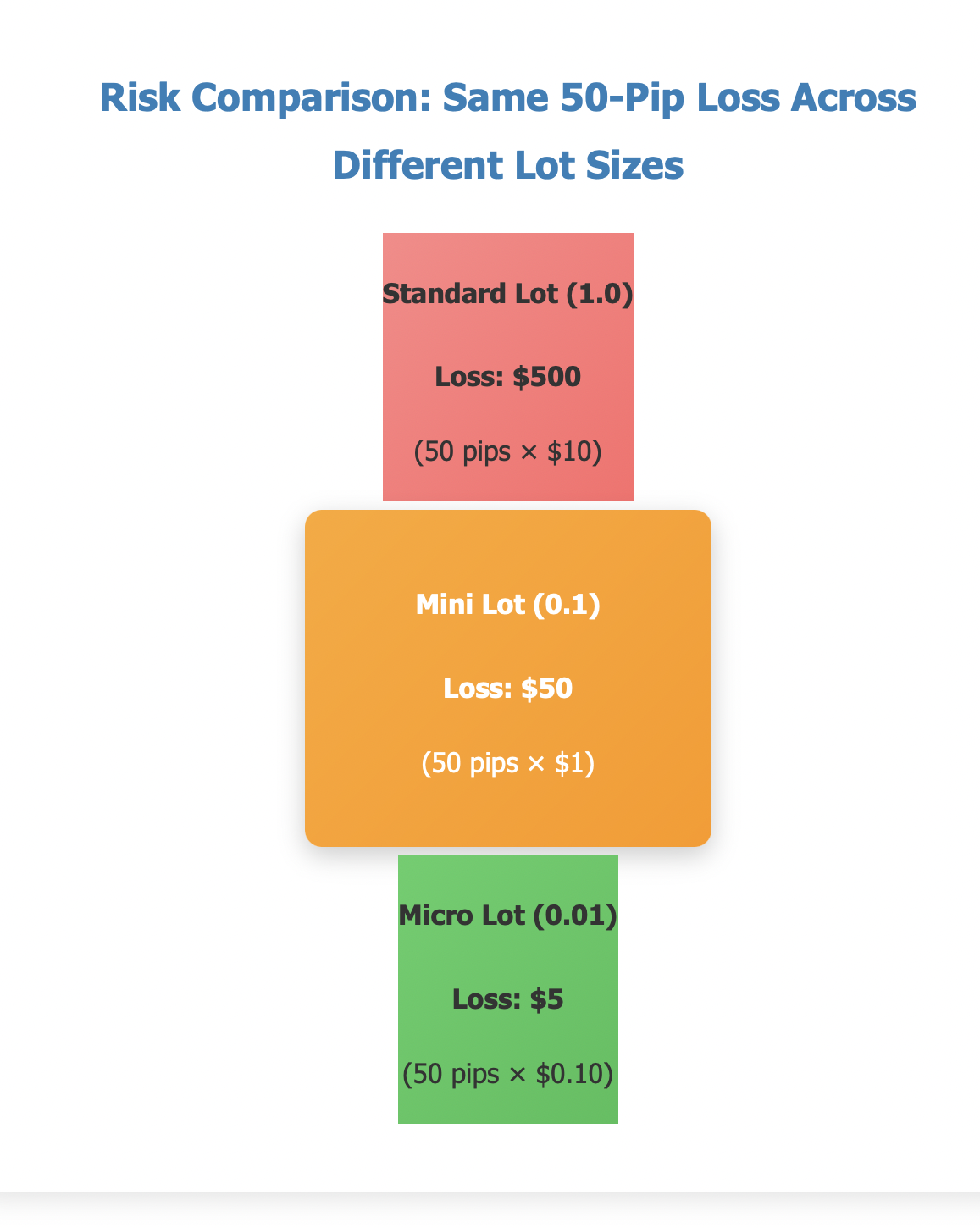
In the case of CFD trading, a "lot" is part of a standardized unit that expresses how big your trade is. Think of it like your trade has volume settings, like a sound system. If you increase your music's volume, you make it loud. While blasting music may not increase your profits, it may disturb your neighbor. Increasing your lot sizes is no different. The more you make your lot, the more profits and more losses you can incur.
The beauty of different lot sizes is that you can control your risk exposure with precision. If a beginner holds $1,000 and is trading the same lot size as an experienced trader with $100,000, they are not thinking clearly. The scalability of a lot system can provide a structure to doubling down.
Tip:When starting, always use your micro lots (0.01). This will help you learn price action and market behavior while limiting your capital risk. You can always increase your lot size as you become more competent and confident.
4. What is Leverage? The Double-Edged Sword
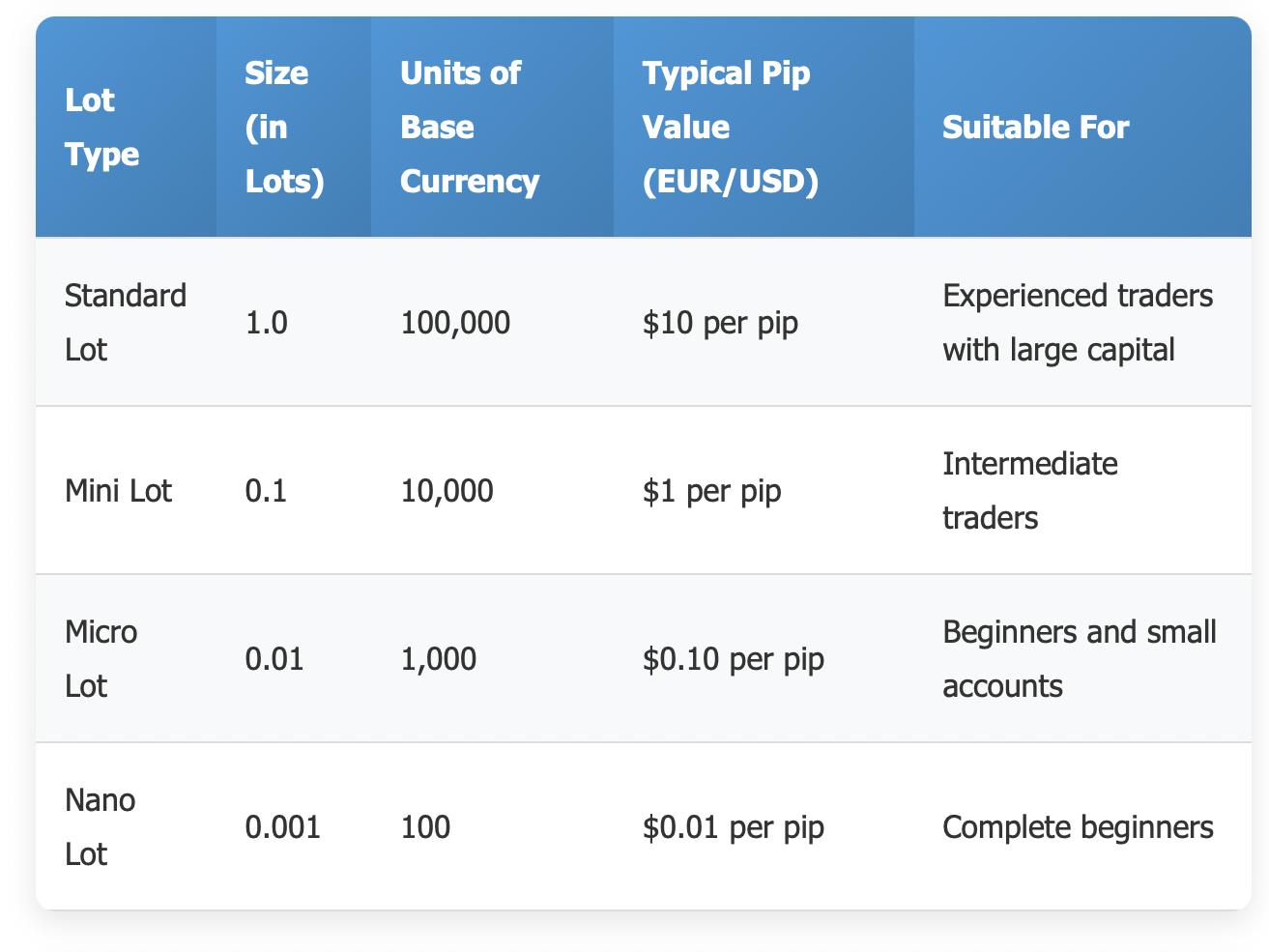
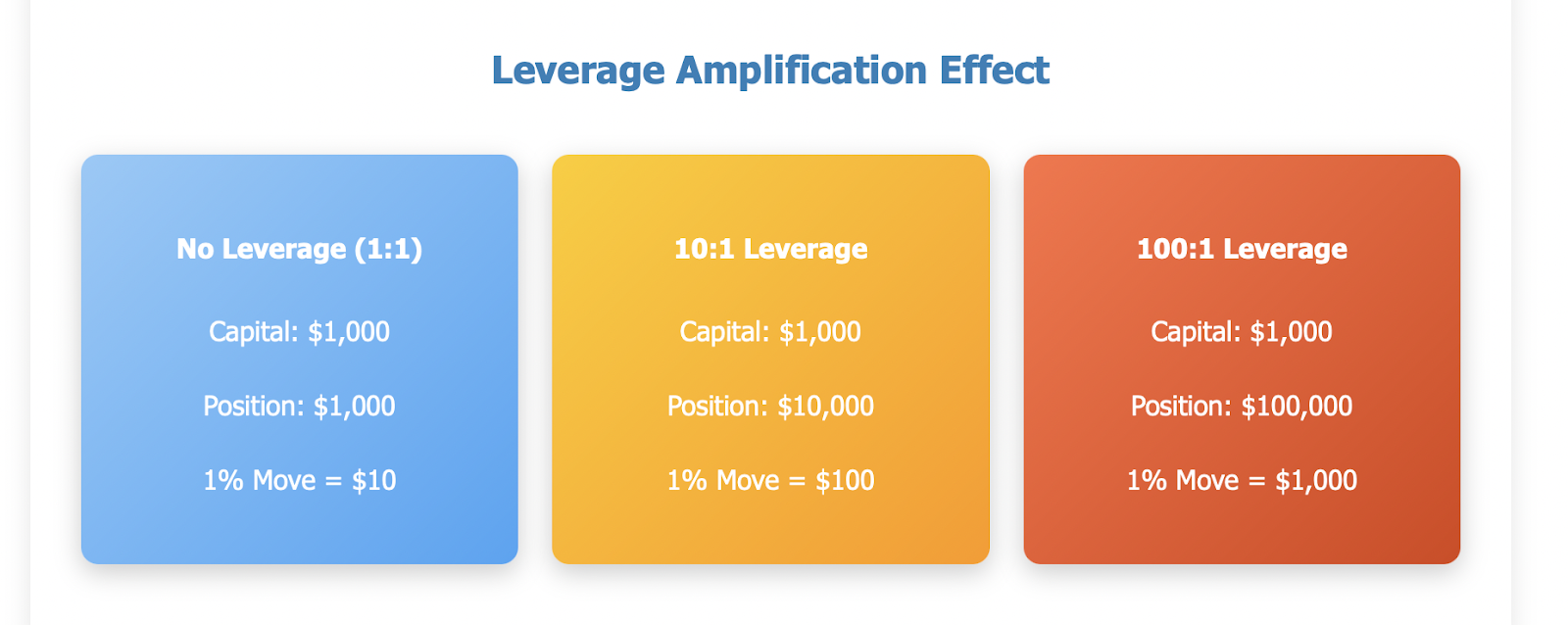
Leverage is likely the most complicated topic in CFD trading. Leveraging is a financial tool that enables you to control a much larger position than your actual trading capital would normally allow. Let’s say you have 1:100 leverage. That means your $1,000 position would give you the ability to control a $100,000 position.
Sounds incredible, right? Well, there’s a caveat: for every dollar of profit that leverage can bring, it can also amplify your losses.
Leverage is like a financial magnifying lens; everything gets bigger, good and bad. For example, let’s say the market moved 1%. With 100:1 leverage, your 1% loss or gain would be 100% of your starting capital, either made or lost. This is exactly why regulators around the world are now limiting leverage for investors, retail traders in particular.
High leverage accounts for 70-80% of the reasons why retail CFD traders lose money. The fantasy of a quick gain often overshadows the reality of a quick loss.
Tip: Using maximum available leverage is never a good approach, especially if you're new to trading. Start with low leverage (1:10 or 1:20) and only go to higher levels as you become more knowledgeable and are producing consistent profits.
5. How Pip, Lot, and Leverage Work Together: The Complete Framework
Now we come to the important part; realising how the three parameters work together to affect each other and ultimately your trading. The three parameters are not independent of each other; they are a connected set of variables, and if you change anything in the system, then you will change the overall risk and reward parameter.
Now, let's turn our attention to the complete formula for calculation of profit and loss:
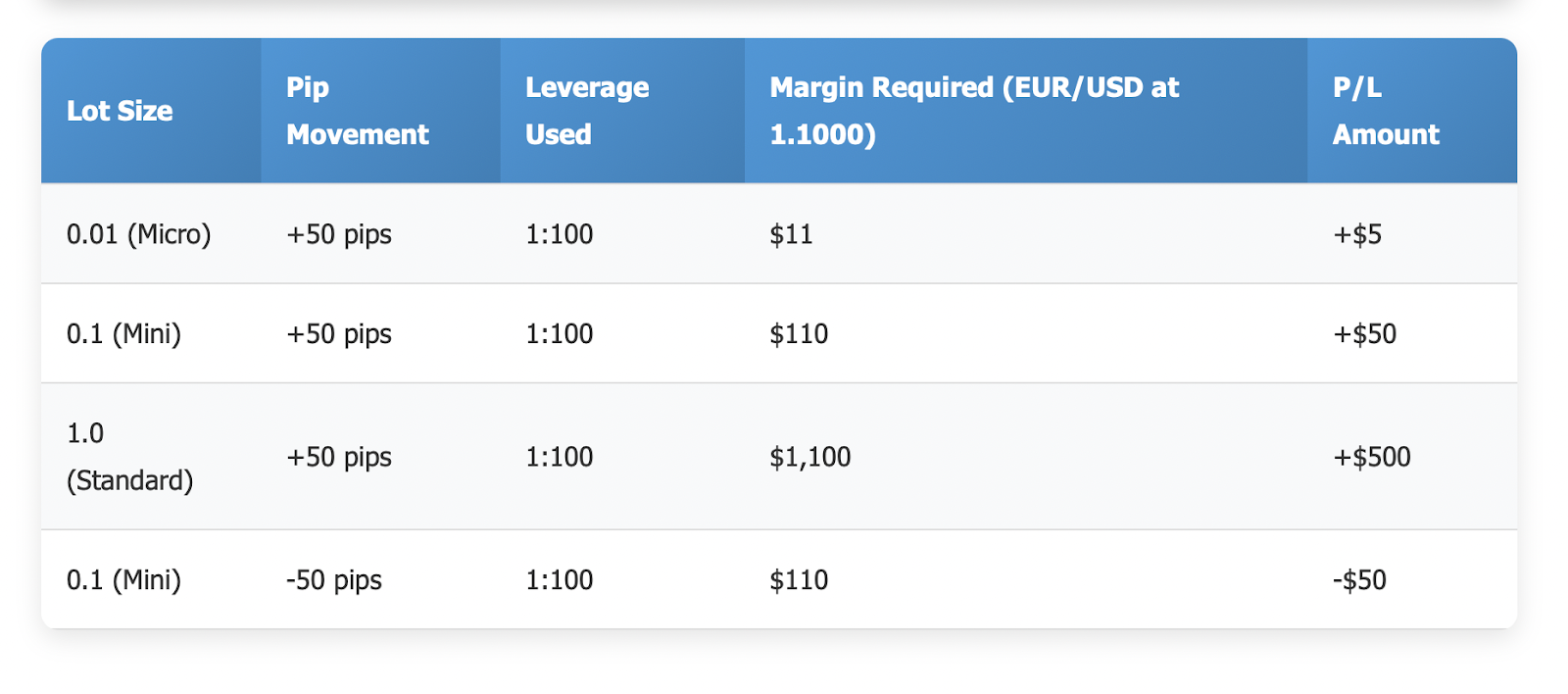
Profit/Loss = (Pip Movement) × (Pip Value per Lot) × (Number of Lots)
Keep in mind: Leverage determines how much capital you control, lot size determines how much capital you expose yourself to, and pips determine how high or low the market had moved that now has a monetary gain or loss attached to it.
So before you do a trade, calculate three items: the pip value, the total dollar risk amount and the reward to risk ratio. Don't do a trade without knowing these amounts.
Read more: A Comprehensive Guide to Getting Started in Stock Trading for Beginners
6. Common Mistakes Beginners Make
Understanding these concepts in an academic or theoretical way is one thing; executing these concepts correctly in live trading is quite another. Below are some of the most catastrophic errors that new traders make that can unwittingly lead to total account depletion:
Error #1: Treating Pips as a Fixed Dollar Amount
Many traders will assume that 10 pips means the same dollar amount no matter what currency pair and the lot size. This misunderstanding leads to poor position sizing and unintended losses.
Error #2: Wasting the Daily Limit for Beginners of Over-leverage by Trading Large Lot Sizes
The deadly combination of high leverage for inexperienced traders and trading in large lot sizes. An inexperienced trader with 100:1 leverage, trading in a standard lot, can wipe out an entire account with a 100-pip adverse movement.
Error #3: Not Understanding Differences Between Currency Pairs
Currency pairs do not all behave the same. Even the JPY pairs have different pip values and exotic pairs often have wider spreads and can be more volatile than ordinary pairs.
The most lethal of errors is the emotional error of making an emotional decision after experiencing a loss. Doubling down with higher leverage or larger lot sizes with hopes of recovering quickly, will usually result in even more significant losses.
Implement a strict rule: Whatever you need to put in place, make it a strict rule to NEVER risk more than 1-2% of your total account balance on any one trade.
If new traders are limited to risking 1-2% of an account balance with this rule alone it will limit and prevent a majority of account wipeouts, regardless of leverage or lot size.
7. Real Case Study: A Complete EUR/USD Trade Breakdown
Let's take a total trade example to see how all three concepts work in real life:
Trade Setup
Currency Pair: EUR/USD
Account Balance: $5,000
Risk Tolerance: 2% per trade ($100)
Entry Price: 1.1000
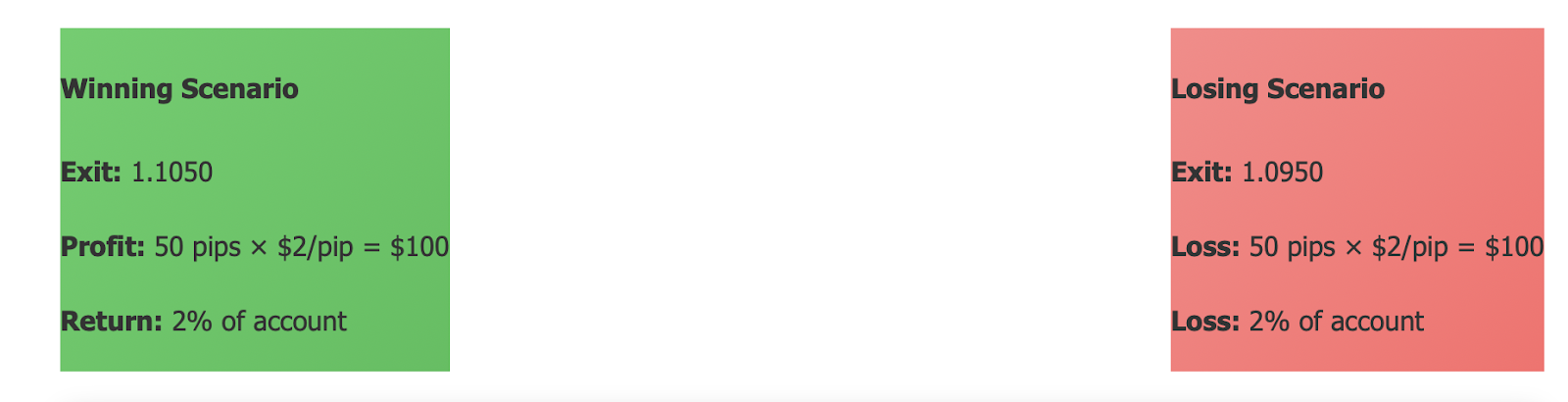
Target Price: 1.1050 (50 pips profit)
Stop Loss: 1.0950 (50 pips loss)
Leverage Available: 1:50
Step 1: Calculate Position Size
For this position, we risked $100 and wanted a 50 pip stop loss.
So let's get the lot size:
Position Size = Risk Amount ÷ (Stop Loss in Pips × Pip Value)
Position Size = $100 ÷ (50 pips × $1 per pip for mini lot)
Position Size = 0.2 lots (2 mini lots)
Step 2: Calculate Margin Required
Using 1:50 leverage with 0.2 lots:
Margin = (0.2 × 100,000 × 1.1000) ÷ 50 = $440
Step 3: Trade Outcomes
Tip: Always calculate your position size based on your stop loss distance and risk tolerance, not on how much leverage is available or how large a position you can afford.
8. Frequently Asked Questions
Q: What is the difference between a pip and a point?
A: A pip is the regular unit for forex price movements (which is usually 0.0001). A point can mean multiple things as it concerns different instruments. If you are trading an index, a point could be 1.0. Some brokers use pip and point interchangeably for forex.
Q: How much is 1 pip worth per lot?
A: A pip is worth $10 per lot for major USD pairs (EUR/USD, GBP/USD), $1 per mini lot, and $0.10 per micro lot. The pip amount is generally different for JPY pairs because of the 2-decimal pricing.
Q: Is high leverage better?
A: Not necessarily! High leverages give you the potential for higher profits, but they also give you the potential for higher losses. Ideally, use a moderate leverage that matches your experience level and risk tolerance level. Most traders that are consistently profitable use lower leverage amounts than the amount offered by most brokers.
Q: What lot size do beginners use?
A: Beginners should use micro lot (0.01) or nano lot (0.001) when they first start out to limit their risk while they learn how to trade. From there, you can increase your lot sizes when your experience and profitability become consistent.
Tip:Use a trading journal to keep track of how different lot sizes and levels of leverage impact your trading psychology and results. You will be able to use this data to identify your optimal risk parameters.
9. Advanced Risk Management Strategies
Having understood the basics of pips, lots, and leverage, let's see how professional traders apply them in order to manage risk successfully:
The 1% Rule in Action
Most professional traders only risk 1-2% of their account balance per trade. Here is how to apply the 1% rule using our three concepts:
Position Size = (Account Balance × Risk %) ÷ (Stop Loss Distance × Pip Value)
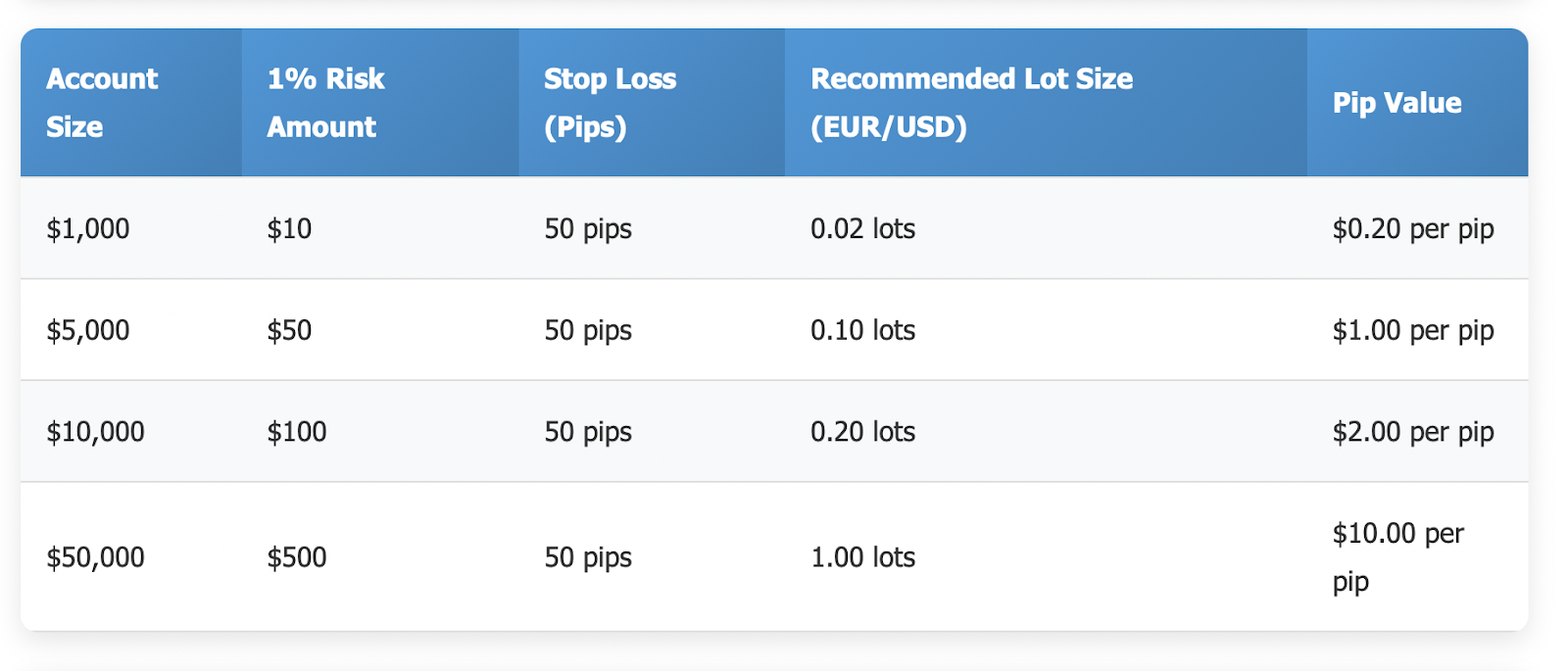
Tip: Use commonly found position sizing calculators on trading platforms. These calculators calculate the lot size based on your account size, risk percentage and stop loss distance.
Scaling Into Positions
More sophisticated traders often scale into positions in different lot sizes, rather than open one large position they might open a smaller lot and add more if the trade goes the right way:
Progressive Position Scaling Example
Initial Entry: 0.05 lots at 1.1000
Add Position 1: 0.05 lots at 1.1020 (+20 pips)
Add Position 2: 0.10 lots at 1.1040 (+40 pips)
Total Position: 0.20 lots with average entry at 1.1027
10. Technology Tools for Pip, Lot, and Leverage Management
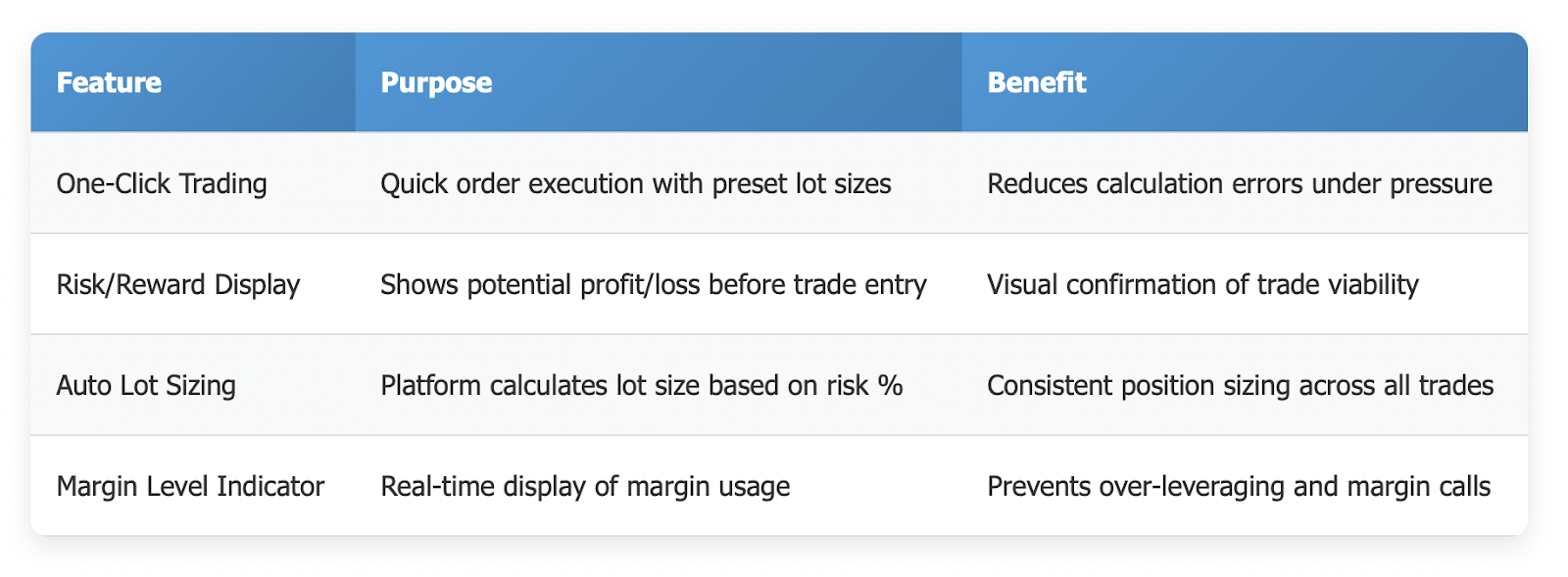
Modern trading platforms come with a lot of functionality to assist you in properly managing the above:
Essential Calculator Tools
-
Pip Calculator – determines pip values for varying currency pairs and lot sizes.
-
Position Size Calculator – determines the appropriate lot size for the risk parameters you choose.
-
Margin Calculator – gives the margin that is needed for different leverage ratios.
-
Profit/Loss Calculator – predicts possible outcomes before executing trades.
Tip: Most brokers of repute will offer these calculators for free on their websites. Use these calculators religiously before you initiate any trade to protect yourself from expensive miscalculations.
Must read: How AI and Automation Are Transforming CFD Trading: The Future Is Now
Platform Features to Look For
11. Psychology of Pip, Lot, and Leverage Decisions
Learning these concepts on a theoretical level is only half the challenge. The psychological component of utilising them correctly under pressure is equally as important:
Common Psychological Traps
“Revenge Trading” - After a loss, ramping up lot size or leverage in an attempt to “get back” the lost money quickly. This often leads to even larger losses and account ruination due to the emotional response.
Lottery Ticket Mentality: Leverage maximum allowable size factors in the hopes of scoring a “big win.” This mentality treats trading like gambling, not investing.
Analysis Paralysis: Over-analysing every pip and lot size decision during each trading opportunity until no trading opportunity can be acted on. Finding the appropriate balance between preparation and execution is ideal.
Tip:Taking your introduction further, construct a pre-trade checklist that includes pip value calculations, lot size, and leverage confirmation. Adhere to your to-do list as strictly as you do your trading rules to eliminate emotionally driven decisions during highly volatile market conditions.
Building Discipline
A professional trader has strict rules around three concepts:
-
Maximum Leverage Rule: Never use leverage greater than the predetermined leverage for any type of market condition
-
Position Size Consistency: Always use the same risk percentage every time when calculating position size
-
Pip Risk Limits: Set a maximum pip distance for your stop losses based on account size.
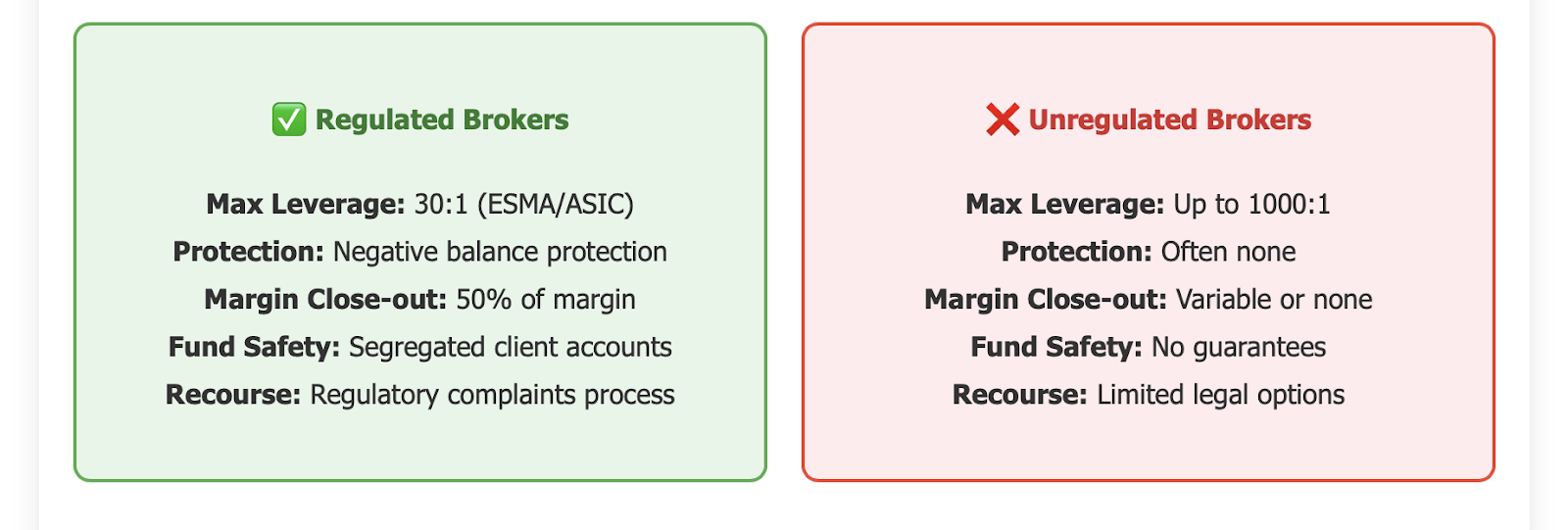
12. Regulatory Considerations and Broker Selection
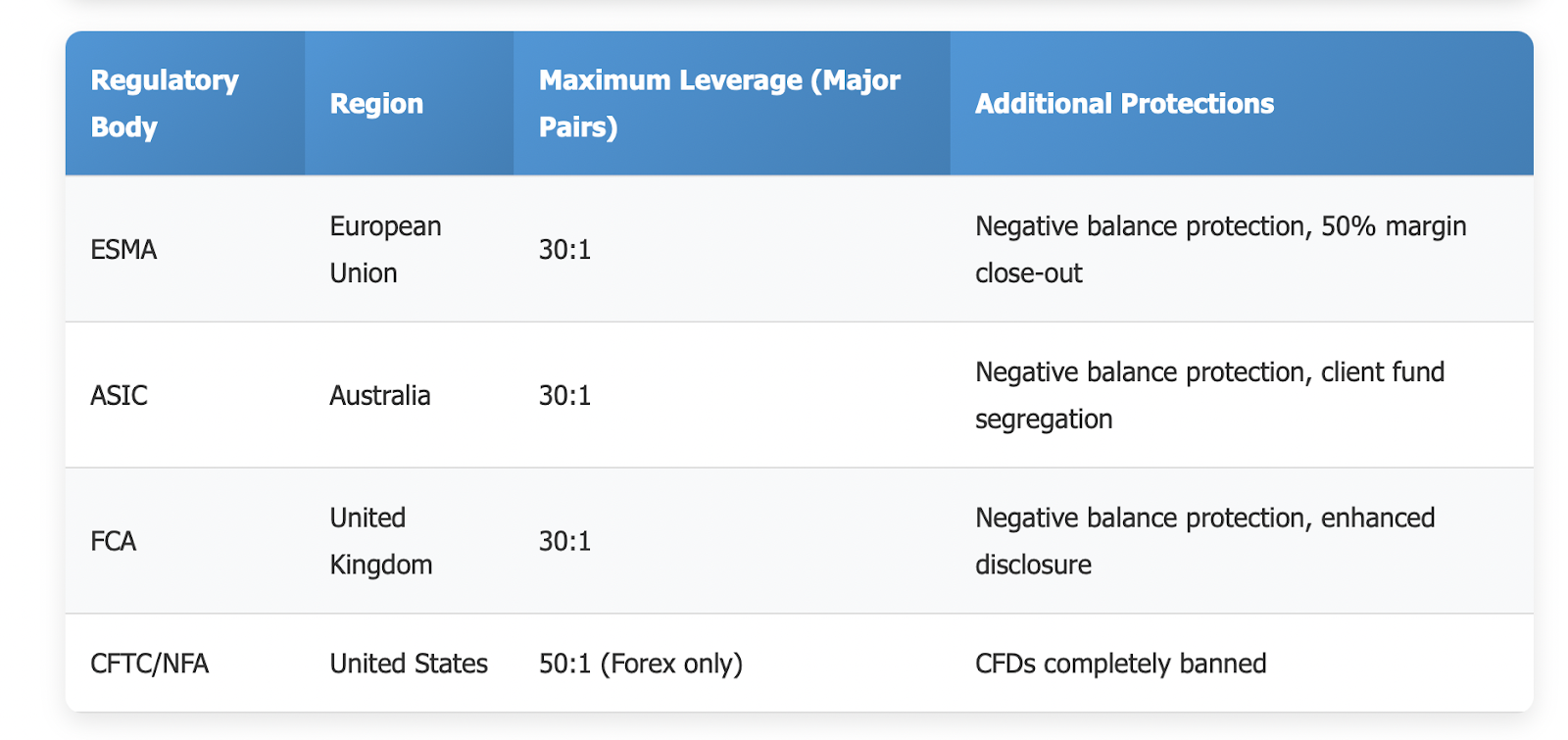
How you use leverage and what protections you enjoy from your broker are related:
Broker Comparison: Regulated vs Unregulated
Tip: Also, always check the regulatory status of your broker before you deposit your funds. Verify with the appropriate regulators ie ESMA, ASIC, FCA, CySEC to confirm legitimacy and levels of protection.
Conclusion: Your Path to CFD Trading Mastery
Knowing what pips, lots, and leverage mean is only one part of mastering them; the other part is developing the discipline to use them correctly, effectively, and responsibly. Each of these concepts is a core part of the foundation of every successful CFD trading model.
Keep these big ideas in mind:
Pips are how you'll measure what you are actually making or losing—know your pip values prior to trading
Lots are how you'll control your exposure to the market—start small, add exposure over time
Leverage amplifies everything—use it wisely, cautiously, and conservatively particularly when beginning
The road to becoming a consistently profitable CFD trader is one that takes time, education, and disciplined implementations of risk management principles. Don't rush the process; the markets will always be there, your capital won't be there for long if you don't take care of it.
Tip:Create a rule to review and verify that you understand every calculation included in this guide prior to placing your next trade. Knowledge not utilized is useless; applied knowledge accompanied with discipline is powerful.
Ready to Apply What You've Learned?
Don't risk it for real money until you absorb these ideas. With these core components, you can begin your journey:
Start Your Trading Journey with TradeWill
-
Risk-Free Demo Account - Practice pip, lot, and leverage calculations with $100,000 virtual funds
-
Built-in Calculators - Pip, position size, and margin calculators integrated into the platform
-
Educational Resources - Comprehensive guides and webinars on risk management
-
Regulated & Secure - ESMA-compliant with negative balance protection
-
Flexible Lot Sizes - Trade from 0.001 lots to minimize risk while learning
Tip:70-80% of retail CFD traders lose money! Don't be one of those statistics—master the fundamentals first, trade responsibly and only risk money you can afford to lose.
Disclaimer: The content of the blog does not represent any position of Trade W, does not serve as any trading-related decision advice, and does not endorse any third-party.