

 Trade W

The foreign exchange market is an enormous financial arena processing approximately 7.5 trillion dollars of trading volume each day, and it is currently the largest global market in terms of daily volume. Inside this vast market, there are thousands of competing online forex brokerage firms vying for your funds, trust, and business. Unfortunately, many of these brokers will never earn your confidence.
When you make a mistake and select the wrong broker, you will be forced to pay higher spreads or experience slower-than-expected execution speeds. In addition, your funds may be deposited into an illegal platform that manipulates prices against you or will put your funds up for withdrawal based on an exceedingly bureaucratic process.
Lastly, some brokers will simply take your deposit and leave the market without warning. These examples are not simply the worst possible case scenario; they represent real outcomes that occur every year for traders who do not perform due diligence before choosing a broker.
This comprehensive guide will explain everything necessary to consider when researching and evaluating online forex brokerage firms in 2026, including understanding the regulatory framework for brokers and the structure that protects client funds, as well as identifying red flags that may indicate a broker is unsafe or untrustworthy.
What Are Online Forex Trading Brokers, and What Do They Actually Do?
Online forex trading brokers connect professional traders and individual traders with the forex market. Without a broker, a trader has no way to get into the interbank forex market, which is open only to large financial institutions. In this sense, e-forex brokers provide traders with access to a trading platform, execute their orders, were involved in providing leverage and facilitate traders' investments by supplying liquidity.
What most traders do not see is that the brokers are also acting as custodians of funds deposited by traders. This is the most significant reason why the difference between regulated and unregulated brokers has significant financial implications; When a broker holds a trader's funds, a broker's ability to prevent the loss of those funds will depend on the regulatory nature in which it is located, along with its financial status, and internal controls.
Brokers in the marketplace today are organised into 3 basic structural forms. Understanding how each structural form operates provides traders with the ability to understand how pricing transparency and conflict of interest can impact their investments.
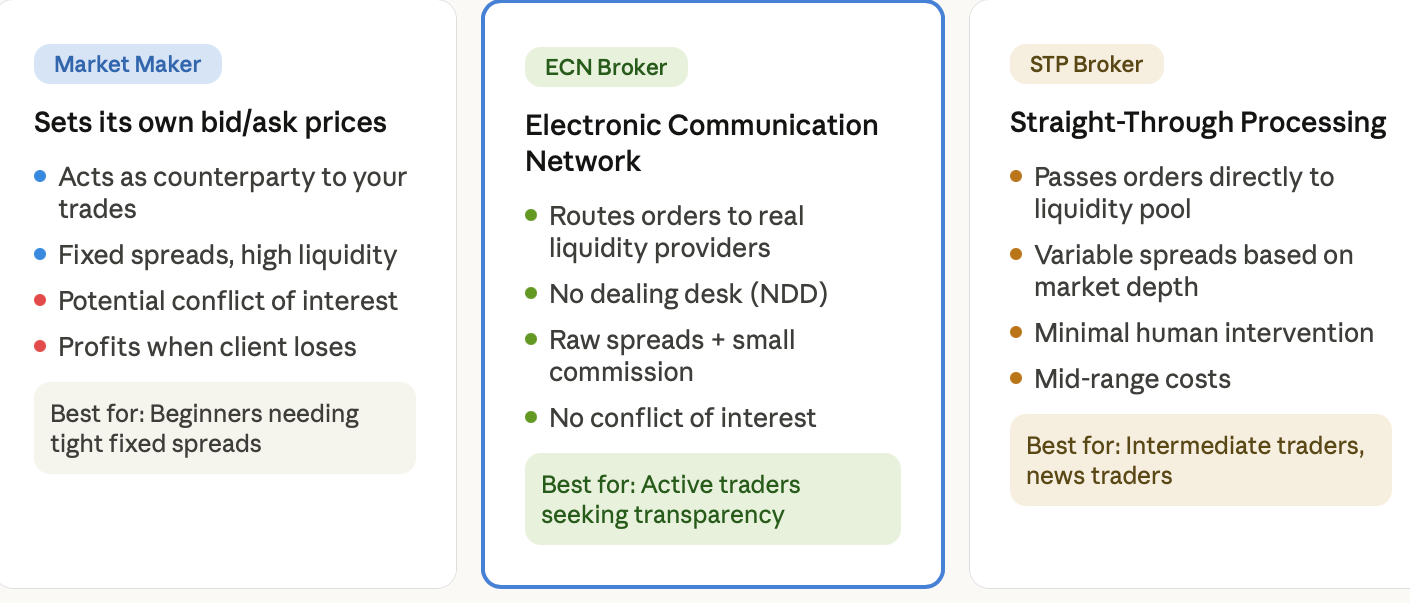
While no broker type is inherently fraudulent, all broker types can serve a legitimate purpose in the marketplace. When broker types operate without the appropriate regulatory oversight, it creates the possibility that the conflict of interest can go from being a theoretical issue to being a tangible risk to your financial well-being.
Why Regulation Is the Single Most Important Factor in Broker Selection
Regulators do not allow brokers to use regulation as a 'marketing badge' to create an image of being a legitimate business. Instead, they have established a legal framework that defines capital requirements, operational standards, conduct rules and ongoing audit obligations for brokers regulated by them.
Brokers regulated by a top-tier regulator therefore have the authority to investigate client complaints, revoke a broker's licence and enforce penalties against unregulated brokers to recover funds for clients.
There are major differences in what the law enforces in terms of a client's rights when working with regulated versus unregulated brokers, and the ability to go after a regulated broker is very different.
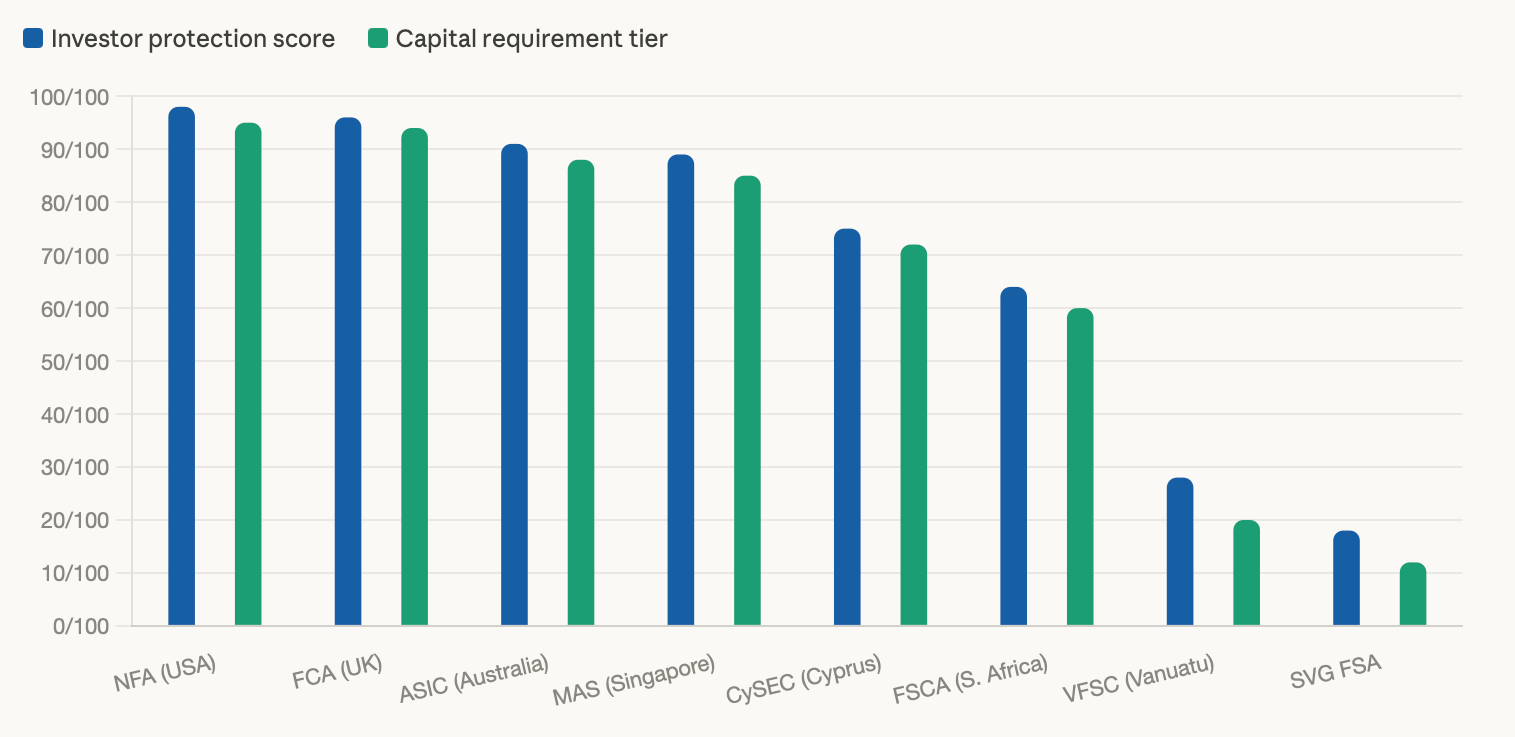
The graph above showcases the huge difference between highly regulated markets such as the NFA in America and the FCA in the U.K., versus lowly regulated markets like Vanuatu's VFSC and the SVG FSA. Brokers operating in these offshore regions typically have little or no capital requirement and obligations in regard to protecting investors.
These low barriers to entry are what attract brokers to operate outside of regulated jurisdictions, as they would not be able to do so under more stringent regulations set forth by other regulators.
The following outlines the main regulations governing brokers set forth by the major regulatory agencies. The FCA has stringent requirements in relation to the maintenance of client segregated accounts, the Financial Services Compensation Scheme (FSCS) for up to £85,000 per individual client, and minimum levels of capital, as well as periodic financial audits.
ASIC imposes some of the same regulations as the FCA, as well as additional restrictions, such as maximum leverage limitations on retail clients. NFA is subject to regulatory compliance under the CFTC and imposes a maximum level of retail forex leverage to major currency pairs of 50:1, thus making it one of the most heavily-regulated jurisdictions in the world. CySEC has similar but slightly less comprehensive regulatory standards than those imposed by the FCA and ASIC under the EU's MiFID II directive.
Segregated Accounts: The Structural Guarantee That Protects Your Funds
Regulations govern companies, and as a result, they are legally accountable for their actions. However, the way in which they protect your money daily is with the use of segregated accounts. It is important for every retail trader to understand how segregated account structures work, even if you are a new trader.
When your broker has segregated accounts, it means that your deposited funds will be kept in an account that is not part of the broker's operational accounts. Therefore, the broker cannot utilise your deposited funds for employee wages, to offset any losses from trades that the broker made, to pay its debts, or for any other operational costs associated with running their business. This allows you to maintain ownership of your funds in a legally identifiable manner, rather than simply being an entry on the broker's financial records.
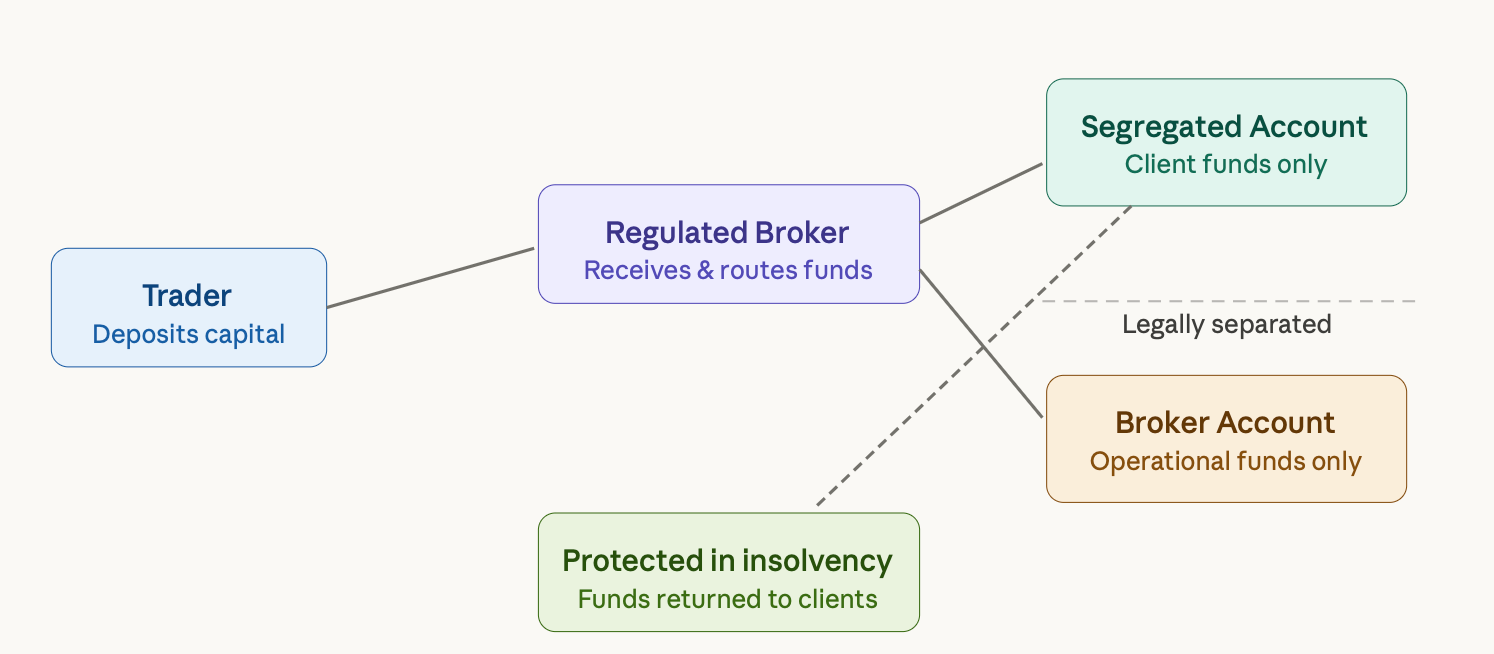
This practical structure demonstrates the worst possible outcome. If a broker goes bankrupt, all segregated client funds will be returned through the bankruptcy proceedings after identifying them as client property. If client funds are not segregated, then the deposit becomes an unsecured claim against the broker's estate, and you will be treated as one of many creditors with no assurance of receiving reimbursement.
Top-tier regulatory agencies not only recommend that clients use a segregated account; they have established laws requiring companies to do so when issuing licenses to their firms. Brokers that cannot prove their client fund segregation will be considered high risk.
The Real Risks of Unregulated Online Forex Trading Brokers
There is an ongoing lack of reporting about the extent of damage resulting from unregulated brokers, in part because of shame experienced by some victims and in part because there are so many brokers operating on multiple regulatory levels that enforcement can often take too long and not happen at all.
Risks associated with unregulated brokers, however, are not mere abstractions. Instead, they can be classified into several distinct categories that have been widely researched and documented.
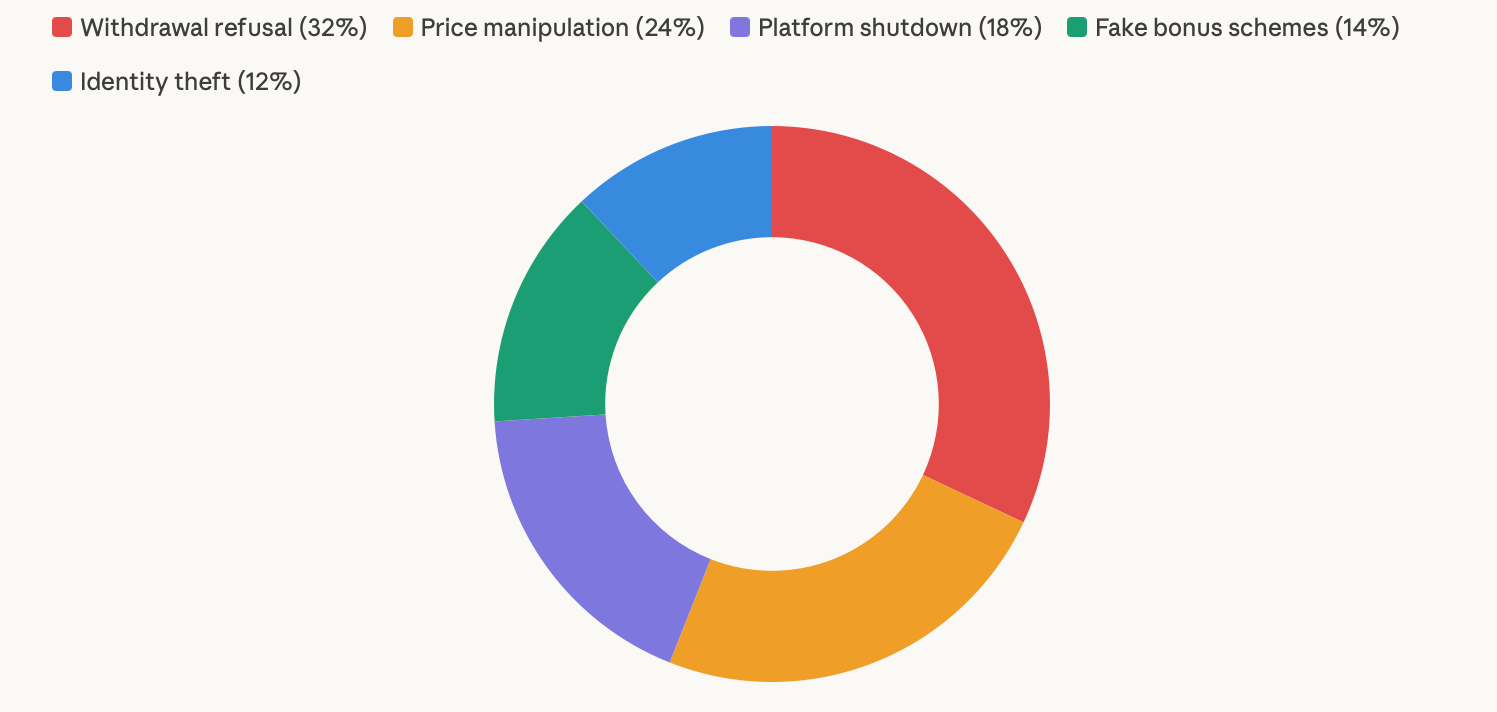
Unregulated broker withdrawal refusals have been reported to be the primary issue of fraud complaints associated with these brokers. Many platforms will use multiple tactics to prevent or delay withdrawal requests, such as requesting unnecessary documentation, applying hidden bonus conditions that restrict access to money, and ignoring client withdrawal requests once submitted.
Another form of fraud is price manipulation. Although less obvious than withdrawal refusals, price manipulation is equally detrimental. For example, an unregulated broker may alter the prices displayed on the trading platform to create false signals to trigger stop-loss orders, artificially increase the spread during periods of heightened volatility, and prejudice clients through order execution, ensuring they receive worse prices than expected. In addition, since there is no regulatory authority overseeing price feeds, clients have no recourse against price manipulation.
Shutdowns are the most severe outcome of working with unregulated brokers. These events typically affect clients who select brokers based on aggressive marketing tactics, rather than verifying a broker's regulatory status.
Warning signs that indicate a broker represents an imminent danger to traders include the absence of a verifiable regulatory registration, lack of clear fund segregation information, pressure tactics (e.g., minimum deposit requirements, time-sensitive bonus offers), customer support unable to answer simple compliance questions, and company addresses located in a jurisdiction with no or limited financial oversight.
How to Choose the Safest Online Forex Trading Brokers in 2026
To evaluate an online brokerage, you need to look at several levels of legitimacy, not just one indicator of legitimacy. Anyone who wishes to operate illegally has the ability to create a professional-looking website with good branding within a matter of hours.
What cannot be created so easily is the legitimate regulatory registration and verified historical performance records, as well as the discloseable cost structure associated with their services that will stand up to fundamental analysis.
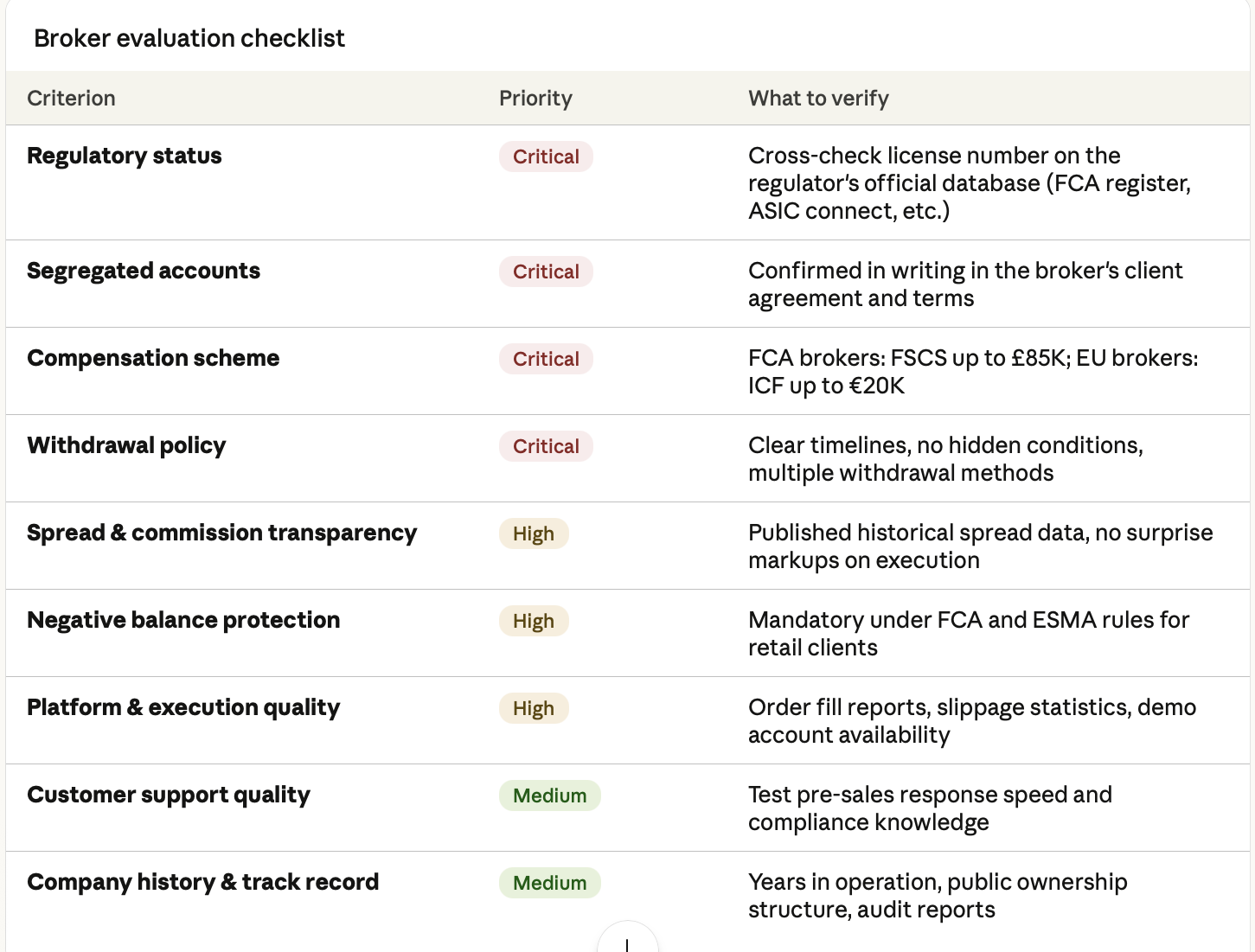
It takes less than five minutes to verify a broker's regulatory status, and it should be the first place you check. Every major regulator publishes a searchable public database where brokers' license numbers can be accredited as valid, up-to-date, and free of disciplinary action.
The FCA register is available at register.fca.org.uk; ASIC publishes its profession register at asic.gov.au; and the NFA publishes their BASIC database at nfa.futures.org. If a broker gives you a license number that cannot be found in one of the official databases or tells you it is "in the process of regulation," you need to treat that broker as a definite non-starter.
After checking for regulatory status, the next step is to read the actual client agreement to ensure that the client agreement contains: an express statement that client funds will be held in segregated accounts; details of the compensation scheme under which clients will be covered; and the specific conditions under which client withdrawals can occur.
If the browser makes it difficult to find the client agreement or if the content of the agreement contradicts the content of the marketing materials, then that broker should not be given any client deposits.
Global Comparison of Forex Broker Regulations
The regulatory environment varies dramatically across different regions, and that variation has direct consequences for the protections available to traders depending on where their broker is licensed.
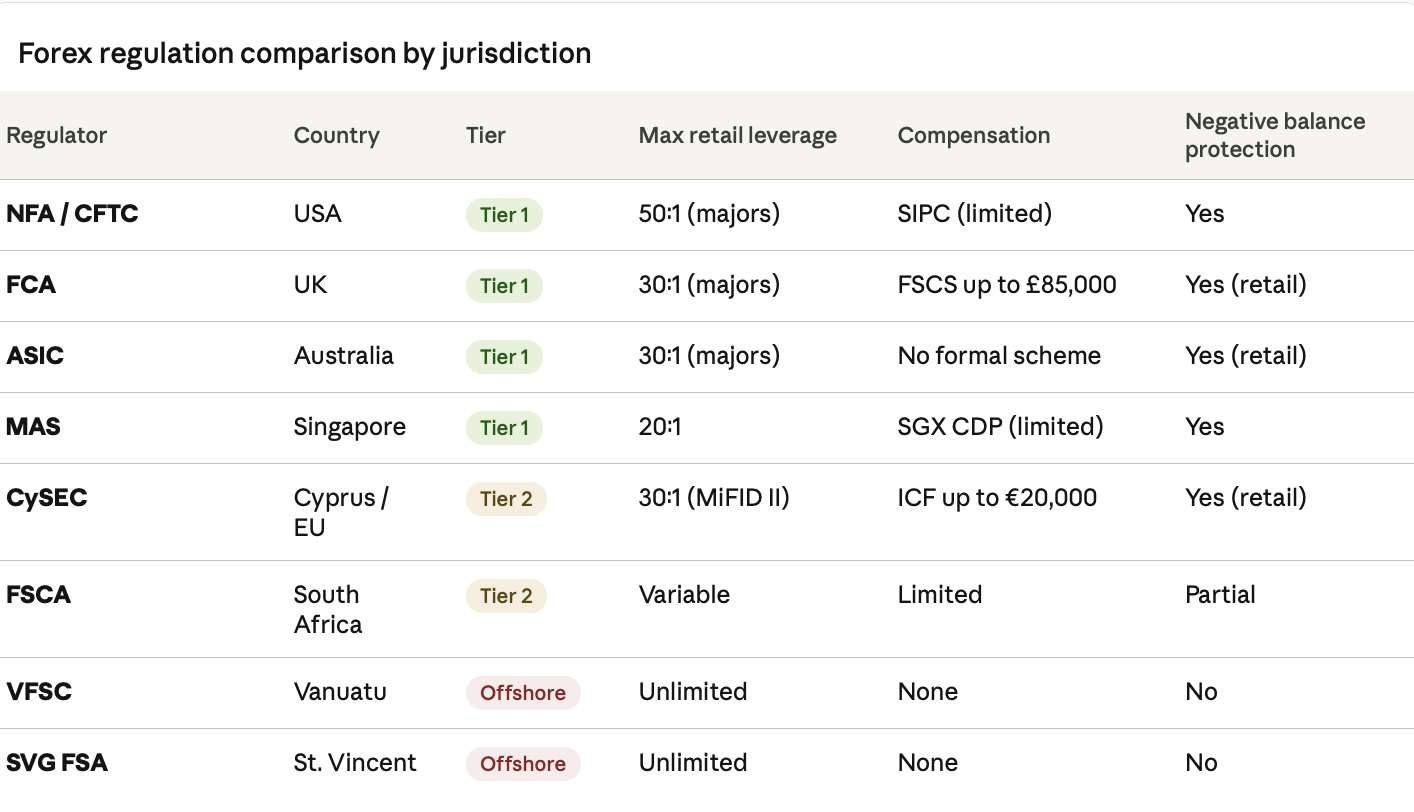
This comparison indicates a clear pattern that exists across all jurisdictions: as the level of regulation becomes stricter, there will also be an increase in the level of protection for all investors and a decrease in the chances of experiencing fraud.
The leverage limits that many traders perceive as restrictions are primarily intended to protect retail clients from catastrophic losses due to high levels of leverage, a problem that regulators in the U.S., U.K., E.U., and Australia were addressing when they first introduced these caps.
Furthermore, the operational flexibility that brokers enjoy in jurisdictions like Vanuatu and St. Vincent and the Grenadines is why many brokers who do not or cannot comply with Tier 1 standards operate there. For traders, offshore registrations without a compensation scheme and unlimited leverage are a clear indication that protection against broker misconduct is virtually nonexistent.
TradeWill's Commitment to Security, Compliance, and Trader Protection
TradeWill views that a trading platform's reliability depends on its governing structure as well as the policies that govern it. Therefore, TradeWill adheres to the same high standards demanded by the world's most stringent regulatory authorities for every aspect of its operations, from the segregated structure of your funds from the company's operating funds to the transparent nature of its fee and execution policies.
The way that TradeWill ensures the safety of the funds deposited by customers is by utilising a segregated account for each customer, maintained at banks that are regulated by governmental authorities.
Hence, you are assured that your deposited funds are never co-mingled with TradeWill's operating funds. Furthermore, the way that TradeWill manages risk is via continuous operation, as it applies real-time automated monitoring of the positions taken by clients and the company's exposure.
TradeWill has built its technology around order execution integrity, meaning all orders are executed based upon the best available market price, without any manipulation of the price feeds by the company.
Moreover, TradeWill regularly reviews its compliance framework with regard to the evolving regulatory landscape to ensure that its policies will remain ahead of all applicable regulations, thereby providing reassurance to our clients.
For traders evaluating trading platforms in 2026, TradeWill subscribes to the belief that safety and trading performance will not be mutually exclusive. By providing a platform that safely holds your funds, honestly executes your trades, and operates transparently, you can confidently trade without fear.
Frequently Asked Questions
What are online forex trading brokers? Online forex trading brokers are regulated financial intermediaries that provide retail and institutional traders with access to the global foreign exchange market through trading platforms, order execution services, leverage facilities, and liquidity sourcing.
How do I verify that a forex broker is properly regulated? Visit the official database of the regulator the broker claims to be registered with, such as the FCA register, ASIC's professional register, or the NFA's BASIC database, and search for the broker's exact legal entity name or license number. A legitimate registration will show the license as active and in good standing.
What is a segregated account, and why does it matter for my funds? A segregated account is a legally separate bank account where your deposited funds are held distinct from the broker's own operational capital. It matters because it ensures your money remains protected even if the broker faces financial difficulties or insolvency.
Are all online forex trading brokers safe to use? No. Brokers regulated by top-tier authorities like the FCA, ASIC, NFA, or MAS operate under strict compliance frameworks that provide meaningful investor protections. Brokers operating without reputable regulation, or from offshore jurisdictions with minimal oversight, present substantially higher risks, including withdrawal refusal, price manipulation, and platform abandonment.
What are the safest forex brokers in 2026? The safest brokers are those holding active licenses from Tier 1 regulators, maintaining verified segregated client accounts, offering negative balance protection to retail clients, and providing transparent fee and execution data. Verifying each of these factors independently, rather than relying on broker self-reporting, is the only reliable approach to confirming safety.
Ready to trade on a platform built around your security, not around cutting corners? Visit TradeWill.com and explore what regulated, transparent forex trading actually looks like in practice, because your capital deserves a broker that earns its place in your trading stack.
Disclaimer: The content of the blog does not represent any position of Trade W, does not serve as any trading-related decision advice, and does not endorse any third-party.