
 Trade W

In the past few years, the way people trade has drastically shifted. No longer do you need to spend countless hours evaluating charts, looking at the market, or having years of experience before you can start investing successfully. Nowadays, automated trading platforms have simplified things so anybody with a couple of clicks of a mouse can access the same types of strategies professional traders use.
But not all types of automated trading are equal. You may hear terms like "copy trading," "social trading," and "mirror trading." While all three sounds similar, they each function differently and attract various investor types. If you select the wrong method for your personal style, you may find yourself frustrated. If you select the right method for your style, then you can expect much smoother results as you build your portfolio.
So what’s the difference between the three? More importantly, which one fits your goals, risk tolerance, and hands-on preference? Let’s take a closer look at each.
Copy Trading is similar to having a chef cook using your kitchen and your ingredients. Social Trading is more of a group activity where members share their experiences and ideas on how to prepare dishes. Mirror Trading creates a kitchen for you in which everything that comes out is a product of award-winning recipes being followed precisely by the robot.
You want to get the most delicious meal that results from using these automated ways of cooking (trading). Regardless of how they each achieve their goal or outcome, these methods differ massively.
The biggest advantage of automated trading is that it gives individuals access to sophisticated strategies that, only ten years ago, were available only to institutional investors and those with lots of money.
In April 2011, eToro hosted its first million active users. Today, the vast majority of trades executed on the eToro platform are copy trading. This makes the barrier to entry into trading lower than ever before. However, this does not mean you should dive into any automated trading method without understanding the differences between them.
Each style of automated trading has its own control vs. learning curve vs. potential return ratio. Understanding these differences is critical prior to investing your hard-earned money into one of these types of automated trading systems.
Copy Trading Explained: How It Works and Why It Matters
Copy trading is the easiest of all three options when it comes to trading; that is, you find a great trader that you're comfortable with, connect your account to his, and watch as all of their trades are mirrored in real time on your account. For example, if they purchase 100 shares of Apple stock, you will buy a set portion based on your account size. When they sell, you sell.
In terms of how copy trading works, the process is fairly simple, and most of the tedious work is automated through the platforms that allow for copy trading. Once a certain amount of your investment portfolio has been allocated for copy trading, then that platform will handle all of the synchronisation between your copy trading account and the account of the trader you wish to copy.
For instance, if the trader has an account balance of $100,000 and puts 10% of that balance into a forex market position, then when you allocate a portion of your account (for example, $5,000) to copy trade a forex market, your copy trade will also allocate 10% in forex on a proportional basis based on your account balance.
The benefits of copy trading are obvious. For those who are inexperienced in trading, copy trading is the perfect way to get started. You don't have to understand technical analysis, fundamental analysis, or what half of the indicators are telling you. You are hiring a trader to trade for you, but without the typical fee structure associated with hiring a traditional trader. The majority of copy trading platforms are free to use, with the majority of traders earning their income based on the bid/ask spread and performance-based incentives.
Consider Jane. She is a marketing professional with no trading experience, but has about $3,000 that she wants to invest. For her, it would take several months of learning candlestick chart patterns to figure out where she should invest her money. Instead, she finds a trader on her trading platform with a long-term record of trading and produces an average of 12% annual return with moderate drawdowns. After allocating her $3,000 to copy trade, Jane starts to see the same success with the same trading patterns as the trader she chose to copy.
That said, copy trading is not an automatic win. You are still subject to the same degree of risk associated with the financial markets. If the trader you have chosen to copy has an awful month of trading, then you will also have an awful month of trading. If they make extreme bets that do not produce positive results, then you are liable to receive the same results as a result of copy trading. While the copy trading platforms have lowered the barriers for entry and eliminated the majority of the difficulty associated with becoming a trader, that does not prevent the natural volatility of the financial markets.
As such, you must choose the right trader to copy. The best traders are those who have a long-term ability to consistently generate profits, as well as engage in reasonable risk management activities such as reviewing their maximum drawdowns. Even though a trader has historically produced 100% returns, you should not automatically invest in them, especially if they trade with an aggressive risk profile, i.e., excessively high amounts of leverage.
It is essential to note that no trader can guarantee that your copy trading results will match their past trading results. Traders can have a particular strategy that works well in a bull market, but that same strategy may not work as well when the trading market enters a bear market, thus it is very important to stay engaged with your trader (i.e., constantly checking their trading results and performance), and if you notice that they aren't trading as effectively, it is a good time to consider switching your copy trader.
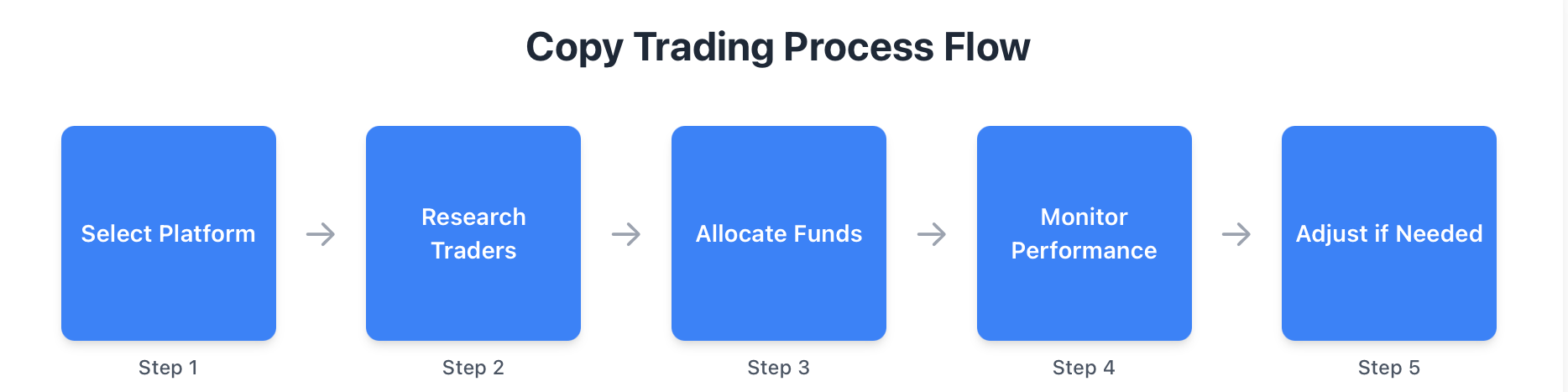
Copy trading is a good fit for those who want to utilise an individual trader's investment strategy without becoming an investor themselves. It is passive in nature, has low entry barriers, can be educational to those who pay attention to how the trader they are copying is making trades, but it is important not to forget that the market can always change and you should always stay on top of your copy trading activity.
Social Trading: Learning, Sharing, and Investing Together
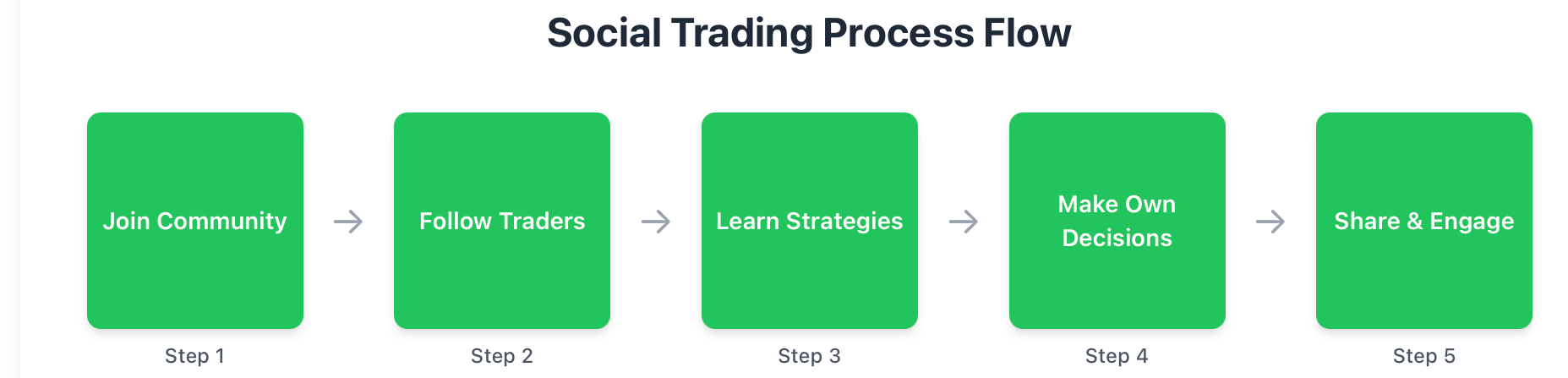
Social trading is the next step up from copy trading, offering a community of traders that shares ideas, strategies, and market insight. Instead of simply copying someone else's trade, you can join an online community all about trading. Members share analysis of their positions, thoughts about whether gold’s going to run up again, and even links to articles that explain the reasons they believe that.
Transparency is the primary differentiator of social trading. For example, if you're a Gold trader who uses Zulutrade, you'll be able to view live trades executed by other traders, their commentary and their historical performance. Many have a long history of making accurate predictions and a detailed breakdown of their plan of attack, while others may post quick updates regarding trades they are setting up.
For example, Alex (a college student interested in Gold trading) was able to learn about trading via social trading. He followed some accomplished Gold traders, read through their thoughts on markets, viewed their trade timing, and gained an awareness of some of the factors that lead to price movement. After about 3 months of studying these traders, he began trading based on what he learned, not by duplicating them, but instead by utilising elements of their strategies to produce his own unique trading style.
There is a significant difference between social trading and copy trading. You do not simply copy trades of other traders. Instead, you are collecting information, building your education, and making your own trading decisions. Therefore, if you see that five different traders you respect are taking a long position in EUR/USD, it is likely to help you to formulate your own market analysis; however, the final decision is yours.
In addition to transparency, social trading sites offer the opportunity to engage with like-minded traders in the community. For example, you can "like" a trader's post, leave comments, and send messages to them asking questions about their strategy or discussing the direction of markets. Many social trading platforms have leaderboards, which display which traders performed best over a set period of time, creating both motivation and competition for traders to be at the top of their game.
However, while social proof does help identify successful traders, many people have become successful by utilising their good looks or good marketing skills to gain massive followings, despite those traders achieving mediocre performance in their trading programs. You must dig deeper into performance numbers.
Social trading requires more work than copy trading, but it is ultimately more beneficial for you to learn and to develop your own trading style. If building passive income is your objective, social trading is likely not for you, as the concept is designed to be participatory in nature.
The real value of social trading comes from using community resources combined with your own research and trading style to build your knowledge, therefore creating a broader range of insight. Do not blindly follow other traders into an overcrowded trade; this is how you will experience some of the highest losses in your trading career.
Mirror Trading: Fully Automated Strategy Execution
The concept of mirror trading is similar to automated trading in that it allows you to replicate whole algorithmic trading systems rather than track and follow the activity of individual traders. The majority of these systems are created by professional trading institutions or quantitative analysts and are made available to retail investors via different trading platforms.
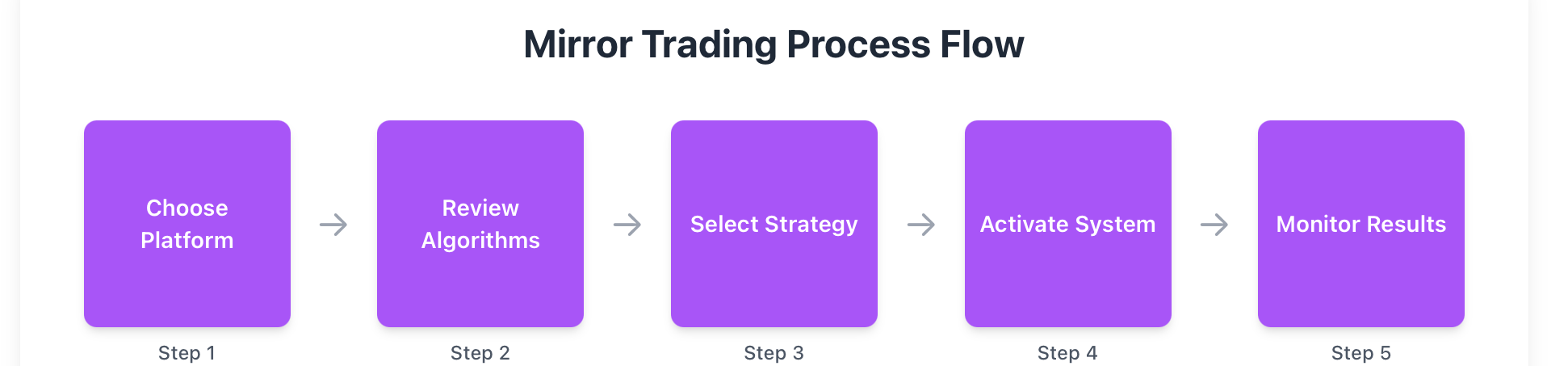
How it works: the retail trader can look for available trading systems, review their historical performance and risk metrics and then choose a strategy that fits within their investment goals. Once a trader chooses a strategy, that strategy will then automatically perform trades on behalf of that trader based on the logic programmed into the strategy. This is a completely algorithmic approach; there is no involvement from any human trader.
Transparency regarding the historical performance of a mirror trading platform is another significant advantage of using mirror trading. In contrast to black box hedge fund companies, which often do not divulge any detailed historical performance information, the majority of mirror trading platforms provide comprehensive historical performance data, including how the strategy has performed under varying market conditions, the maximum drawdowns of a strategy and how frequently a strategy trades.
As an example of a trader using mirror trading, let me tell you about a software engineer named Sam. Sam had limited time for trading; however, he had become interested in using mirror trading for currency trading. Sam found a mean-reversion strategy that had demonstrated solid returns consistently over three years. The mean reversion strategy provided an average monthly return of 3-5% and had a maximum drawdown of less than 15%.
Sam invested $10,000 into the strategy and activated the strategy to allow it to perform trades on Sam's account for him. For approximately six months, Sam's account had been growing steadily without him ever having to look at the market or make decisions regarding market activity.
Mirror trading is an appealing option for busy people. Mirror trading can be considered a form of professional-grade investment and allows investors to diversify their investment portfolio without having to rely on a specific trader's judgment and decision-making. Rather, the algorithm works according to a pre-defined set of rules and does not take into account any emotional or personal influences.
The downside of a trading automated system, however, is that a strategy that has performed very well for three years can fail to continue to perform in the future simply because of a change in the market environment.
For example, a strategy that performed well when there was low volatility may not continue to perform well during periods of high volatility. A strategy that has performed well may have relied upon certain correlations among data sets that no longer exist. As with any other trading system, past performance should not be the only criterion for evaluating the effectiveness of an algorithmic trading system.
Investors also need to be aware of the potential for curve fitting with algorithmic trading systems. Curve fitting occurs when a strategy has been "tweaked" or adjusted based upon a set of historically available data points to show favourable backtesting results. The end result is that the investor may believe the algorithm will perform well, only to find that live trading actually results in catastrophic losses. To put it another way, the investor is essentially building a test to which they already know the answers; however, that specific algorithm has never been tested in the real financial markets.
When selecting an algorithmic trading strategy, it is essential to investigate all aspects that pertain to the strategy's effectiveness prior to placing any capital at risk with any of these strategies. The following are some items to consider when selecting an algorithmic trading strategy: a longer track record of performance, reasonable return expectations and the strategy's underlying logic.
Additionally, it is essential to understand the type of market conditions that the strategy will require to perform effectively. Diversifying across a number of different strategies will help reduce reliance upon any single trading strategy.
Mirror trading will appeal to investors who prefer a high degree of automation and are comfortable making decisions based on algorithmic logic, rather than making investment decisions themselves. Mirror trading is primarily about locating robust trading systems to automate trading on behalf of individuals. Therefore, do not simply activate a trading system and forget about it; it is important to regularly monitor all activated systems.
Comparing Automated Trading Modes: Pros, Cons, and Investor Fit
Below, we will take an in-depth look at what sets each approach apart.
Copy trading: The Copy Trading approach is semi-automated, but it does require choices on behalf of the User regarding which trader to copy trades from.
Social trading: The Social Trading approach allows for manual trades but does offer community support in making the decisions regarding when to buy and sell a certain security or set of securities, using the wisdom of the crowd.
Mirror trading: The Mirror Trading approach uses computer algorithms to automatically execute trades for you based upon a pre-determined trading strategy. This trading strategy may include pre-built risk management parameters that are evaluated by the automated trading algorithms.
Who should use what?
If you're risk-averse and want exposure to trading without much hassle, copy trading is a good option. Look for conservative traders with solid track records and minimal drawdowns. You won’t get rich overnight, but you can sleep well knowing that someone else is managing your investments.
If you're aggressive and willing to learn, social trading is an excellent tool for developing your trading skills. Becoming a part of the community, testing ideas, and developing your skills in small trades will help you improve over time. Your returns will vary based on how quickly you learn.
If you are somewhere in between and value steady returns rather than high-stakes risks, mirror trading could be a good fit for you. Identify multiple strategies with moderate return targets and reasonable risk profiles, and diversify your investments among several different algorithms to soften performance fluctuations.
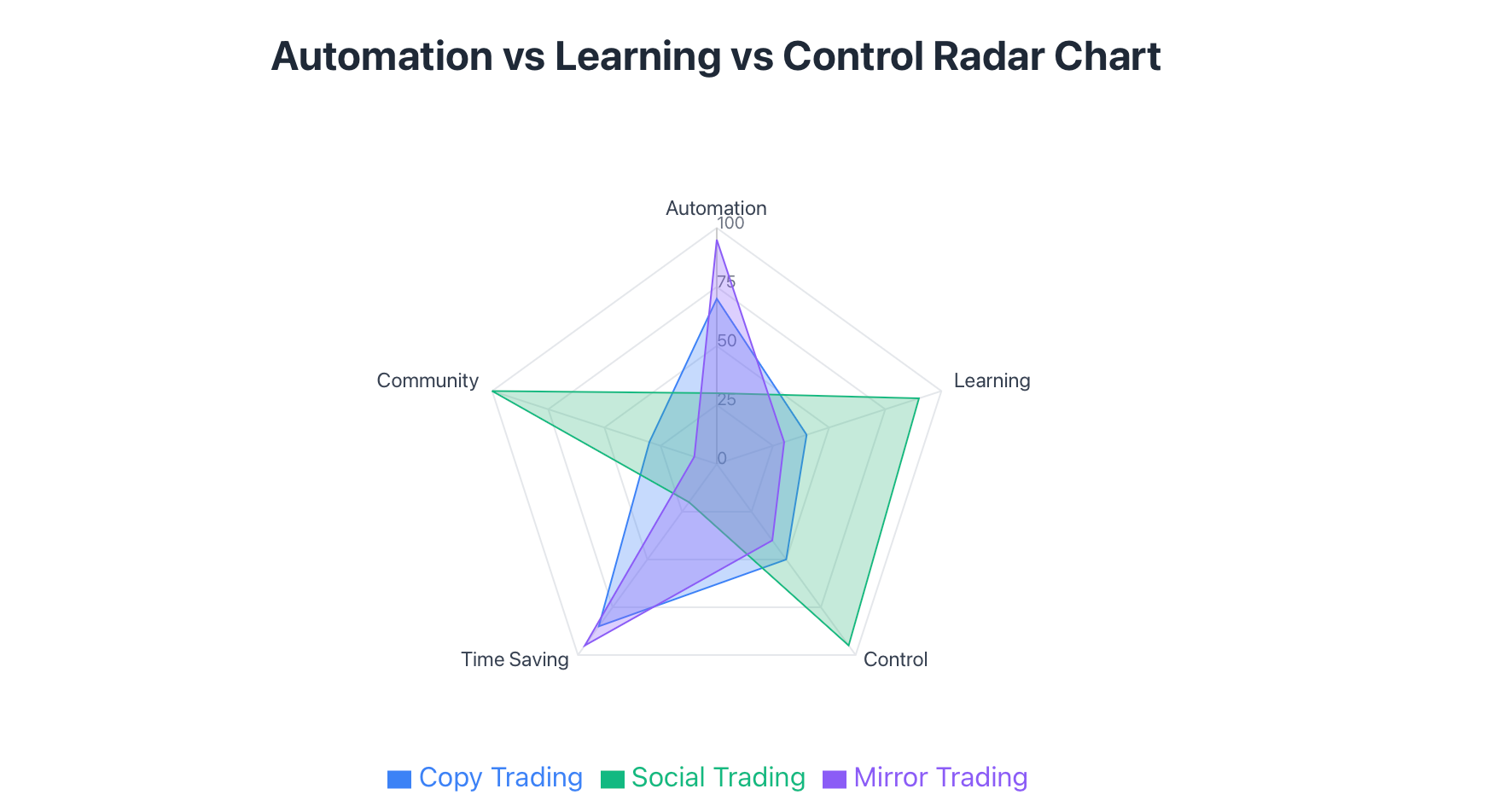
The data on platforms supports this. For example, eToro indicates that copy trading is especially popular among new and passive investors; ZuluTrade has more features aimed at engaging users; and MT5 offers more algorithmic tools for users interested in systematic approaches.
There is no one right way to trade; there are too many variables involved, including your investment goals, the amount of time you have available to dedicate to trading, your overall risk tolerance, and how much you would like to learn to become more proficient in your investing. In fact, some users may combine all three methods, using copy trading as their core investment vehicle while using social trading to learn, and then using mirror trading as a way to take a more algorithmic approach to investing.
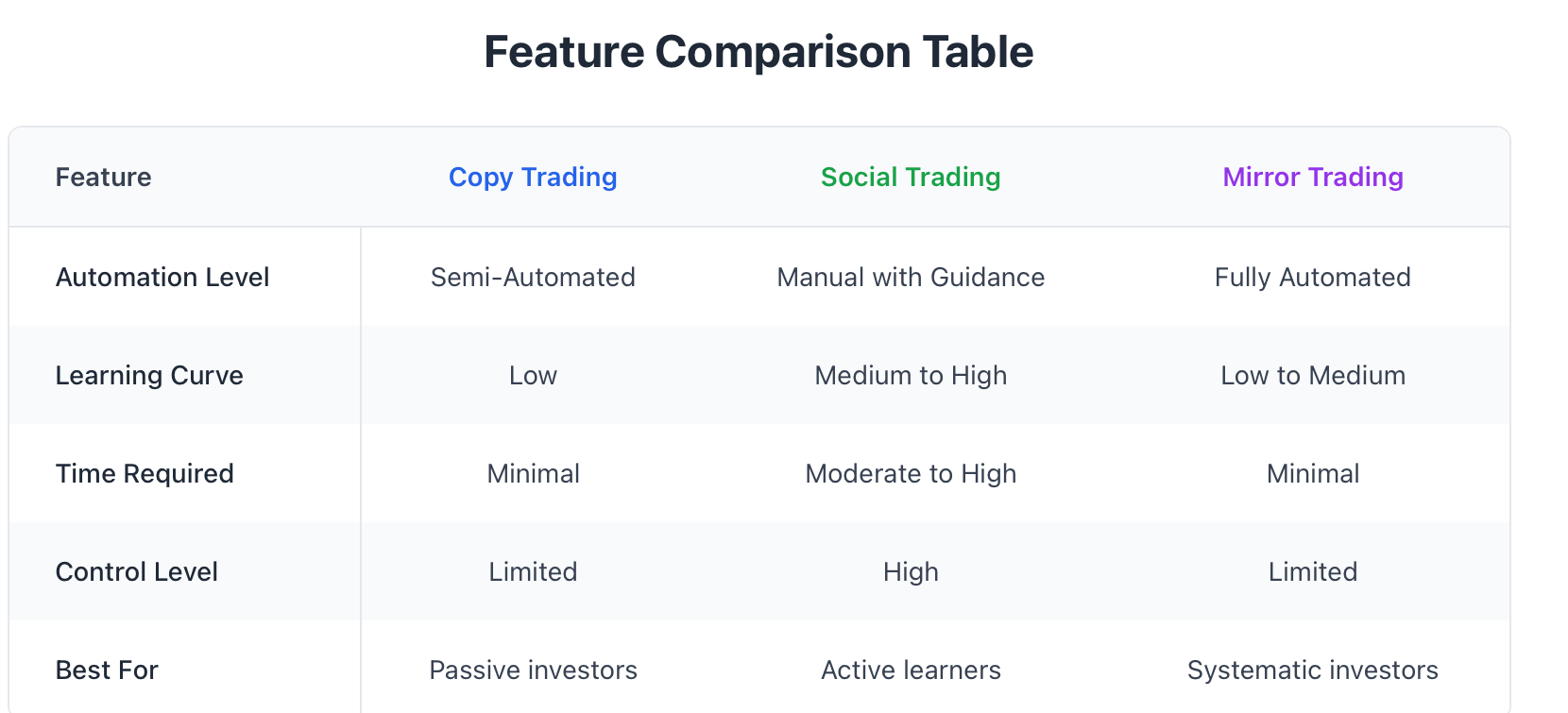
The most important thing is to be honest with yourself when determining which way to approach trading. For example, if you want to learn to trade, don't choose copy trading; if you can't devote time to being involved with the trading community, don't choose social trading; and if you are not comfortable with making trading decisions based on algorithms, don't choose mirror trading.
How to Start Copy Trading and Social Trading Safely
Picking a platform to invest in copy trading can make or break a new trader. Think carefully about where you are putting your money and what type of performance you can expect from it.
1. Selecting A Regulated And Reputable Platform
Selecting a reputable platform is the most important decision you will make. The best Platforms are those that are regulated by recognised financial authorities and those that have shown consistent performance through user reviews.
2. Evaluating the performance
It’s not enough to look only at total returns when evaluating performance. To have an accurate picture of total investments, one must consider both maximum drawdowns and win rates of trades, as well as average trade profit amounts. Further still, you should also assess how a trader or trading strategy performed during times of high volatility in the transaction environment. Many traders operate solely within the Bull Market environment, so it is important to hold them accountable to proven performance through various other market environments.
3. Start Small
Although you may have $50,000 to invest, it is wise to begin with a much smaller amount, usually around $5,000 or less, as you will learn how the platform works and adjust to the inherent risk and volatility associated with trading. This will allow you to get familiar with the way the platform works and understand what risk you are willing to take when using the copy trade method.
4. Diversifying your allocation
Please do not allocate all of your funds to one trader or one trading strategy, but rather divide the allocation over three or four different traders with different trading styles or strategies (i.e. 1 Conservative Trader, 1 Moderate Trader, 1 Aggressive Trader or three to four diverse trading strategies with diverse markets) to minimise your risk of loss.
5. Staying engaged with your investments
It is very important to remain engaged with your investments. Create a reference point for your investment allocations that is relatively simple to perform. You may create a weekly 15-minute performance check, read updated news from those you are following and ensure that nothing materially changed. Further, review all performance vs expectations once a month, quarterly, and make sure that the current distribution of your investment still meets your goals of meeting or beating your allocation targets.
When Copy Trading, seek traders with a minimum trading history of one-year and responsible use of leverage, generally an acceptable range of 2-5:1 is much safer than using 20:1. Also, check if their trading strategy fits with your acceptable level of risk. Determine the frequency of the traders' trades. If they barely trade, then it probably isn't worth the amount of your capital they might tie up.
When commission trading, focus on continuing to educate yourself before committing large amounts of capital to the markets. Check out experienced traders, read their analysis, and paper trade until you show some consistency before moving on to actually trading with real money.
When mirror trading, validate that you understand the basis of the logic behind a trader's strategy. If you cannot see through the traders' reasoning as to why the algorithm will work, you probably shouldn't be using it. You'll want to ensure that the backtesting was not performed on the same data that was used for optimisation. Moreover, you should only take the trade once you can see that the forward trading results have been tested and show that the strategy works in real-time trading situations.
For instance, Mike wanted to find a safer way to Copy Trade, so he took extra time. With a $15,000 account, he put $5,000 into three different Copy Traders that had varying styles. The first trader's trading style was Forex trading with conservative monthly goals of around 5%.
The next trader focused on Index trading, a more moderate risk; the last trader was a commodities-based trader who had a higher risk tolerance but produced good long-term performance. At the end of the three months, the Forex trader had made a profit of 4%, the Index trader had lost 2%, and the Commodity trader was up 8%. Therefore, Mike is ahead overall and has not been significantly impacted by any one position.
Remember to never invest money that you cannot afford to lose. Where possible, use stop losses on a per-account basis or in a loss-finding capacity. Also, do not chase losses by increasing your position sizes. Finally, under no circumstances should you borrow money to Copy Trade from anyone.
Key Takeaways and Your Next Move
With copy trading, you can tap into the experience of capable professional traders without having to know anything about the markets yourself. This method works if you have selected quality traders and managed all related risk effectively.
With social trading, investment occurs in a community environment wherein one learns from others while making one's own decisions about what or how to invest. This method requires greater involvement but provides more opportunity for growth through the understanding of market operations.
The greatest level of automation offered by mirror trading is through the use of algorithms that automatically execute trades for you without your need for human involvement. This method is great if you are looking for systematic strategies and/or if you are comfortable with utilising technology in your investment decisions.
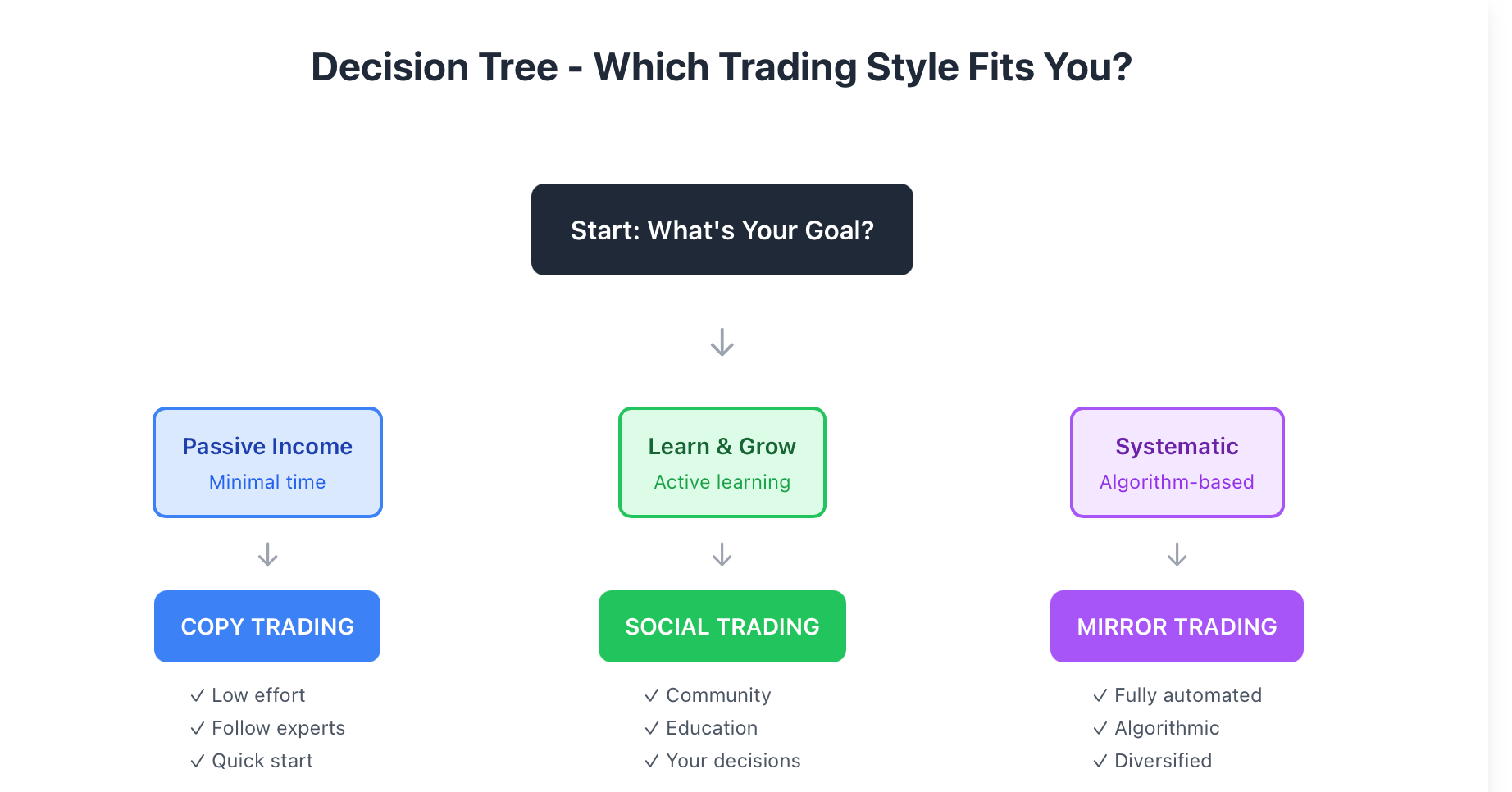
In evaluating the three methodologies, it is important to review the advantages and disadvantages of each methodology. Copy trading is simple but reliant on a trader’s judgment. Social Trading teaches skill development but requires time and involvement. Mirror Trading requires little involvement, but relies greatly on the quality of the algorithms and the continued favourability of market conditions.
The most effective route is to align the methodology of trading with your own personal circumstances. Take an honest appraisal of your risk tolerance, the amount of time available to educate yourself, and what it is you wish to accomplish through trading. If you are wanting to learn and can invest time, then social trading may be the best option for you; if you feel comfortable selecting good traders and want a simple approach, then you may want to use copy trading; and, if you are more comfortable with using systematic trading methods and trust algorithmic methods, then you would most likely want to explore mirror trading.
Ready to explore which automated trading style fits your goals? Head to Tradewill and test copy trading, social trading, and mirror trading features with our demo accounts. See which approach clicks for you before committing real capital.
Disclaimer: The content of the blog does not represent any position of Trade W, does not serve as any trading-related decision advice, and does not endorse any third-party.