

 Trade W

Why Cotton Futures Matter More Than Ever
Cotton futures aren't just about fabric and textiles. They're a window into global economic health, climate patterns, and supply chain resilience. When you trade cotton futures, you're essentially betting on how well farmers in Texas can manage droughts, whether Brazilian currency will strengthen, and if shipping costs from India will spike.
Think of cotton as a commodity that touches everything. A drought in the US South doesn't just affect farmers. It ripples through clothing manufacturers in Bangladesh, retail chains in Europe, and ultimately your portfolio. During 2020-2021, exactly this happened. Severe drought conditions reduced US cotton production by nearly 15%, and ICE Cotton #2 futures jumped more than 15% in just a few months. Traders who saw it coming made significant profits. Those who didn't felt the pain.
Cotton futures serve two main purposes: hedging and speculation. Textile manufacturers use them to lock in prices months ahead, protecting their margins from sudden spikes. Traders and funds, on the other hand, speculate on price movements driven by weather forecasts, political events, or currency swings. This mix of commercial hedgers and speculators creates a dynamic market where prices can move fast.
The next five years promise to be particularly volatile. Climate change is making weather patterns less predictable. Global supply chains remain fragile after recent disruptions. Currency markets are experiencing unprecedented shifts. For traders willing to understand these forces, cotton futures offer real opportunities. But you need to know what drives prices and how to read the signals before they become obvious to everyone else.
Understanding Cotton Futures Contracts
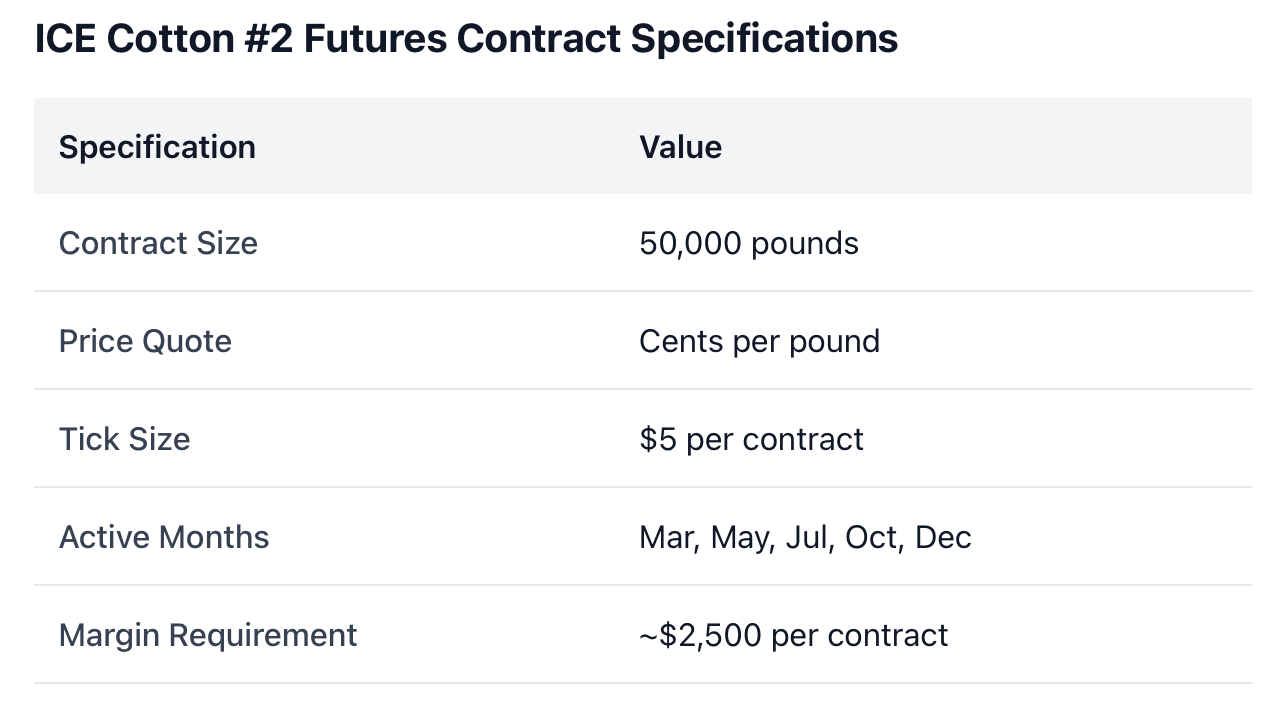
Let's take a look at specifically what you're actually trading. ICE Cotton #2 futures are the global benchmark representing US Upland Cotton. Each individual contract is for 50,000 pounds of cotton and the prices are quoted in cents per pound. The minimum movement in price (a tick) is worth $5 for each contract. The months for which contracts are available run from March to December; the most active months of trading are March, May, July, October and December.
Not all cotton is created equal. The majority (approximately 90%) of cotton produced in the world is Upland Cotton, which is the basis of ICE futures. While Pima Cotton (also known as Extra Long Staple) is a superior quality cotton, it represents a smaller portion of the market than Upland Cotton. There are five primary drivers of price. The first category is Supply and Demand. When textile producers around the world increase the production of textiles, that means there is more demand for cotton; therefore, prices rise to accompany the increase in demand. Climate and natural disasters are the second category of price drivers. There are certain climatic conditions needed for the successful growth of cotton; they include temperatures between 60-95 degrees Fahrenheit, moderate amounts of rainfall, and relatively flat terrain below an elevation of 1,500 meters. If any of these parameters are exceeded, yield can decrease dramatically.
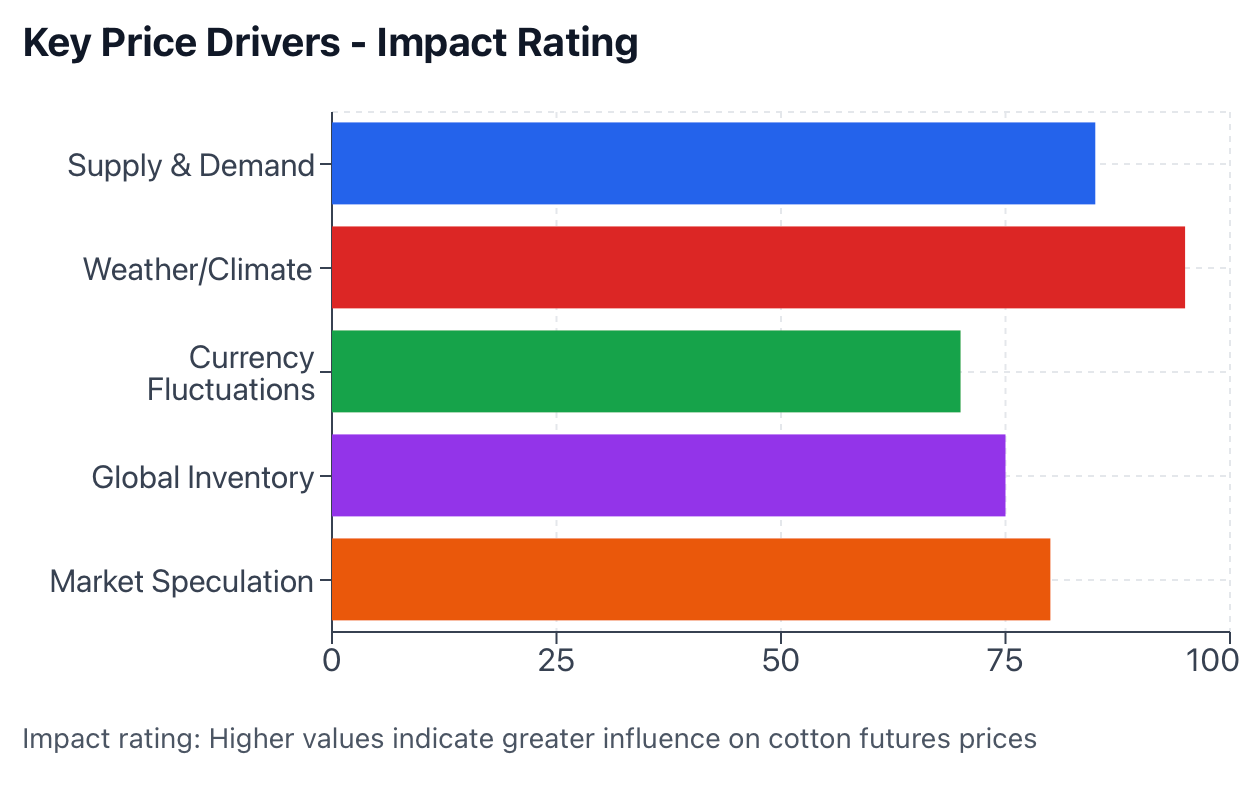
The impact of currency fluctuations is greater than many traders think. Cotton is priced in US dollars, so if the US dollar gets stronger, US cotton will be more expensive for foreign buyers and they will buy less cotton. Conversely, if the currency of another country, such as Brazil, becomes weaker, Brazilian exports will be cheaper and therefore more competitive.
Another key factor is the global inventory levels. Prices will be pressured lower by higher inventory levels and higher by lower inventory levels. Each of the factors discussed above is compounded by market speculation. For example, hedge funds can dramatically influence prices by taking large long positions when droughts are being predicted.
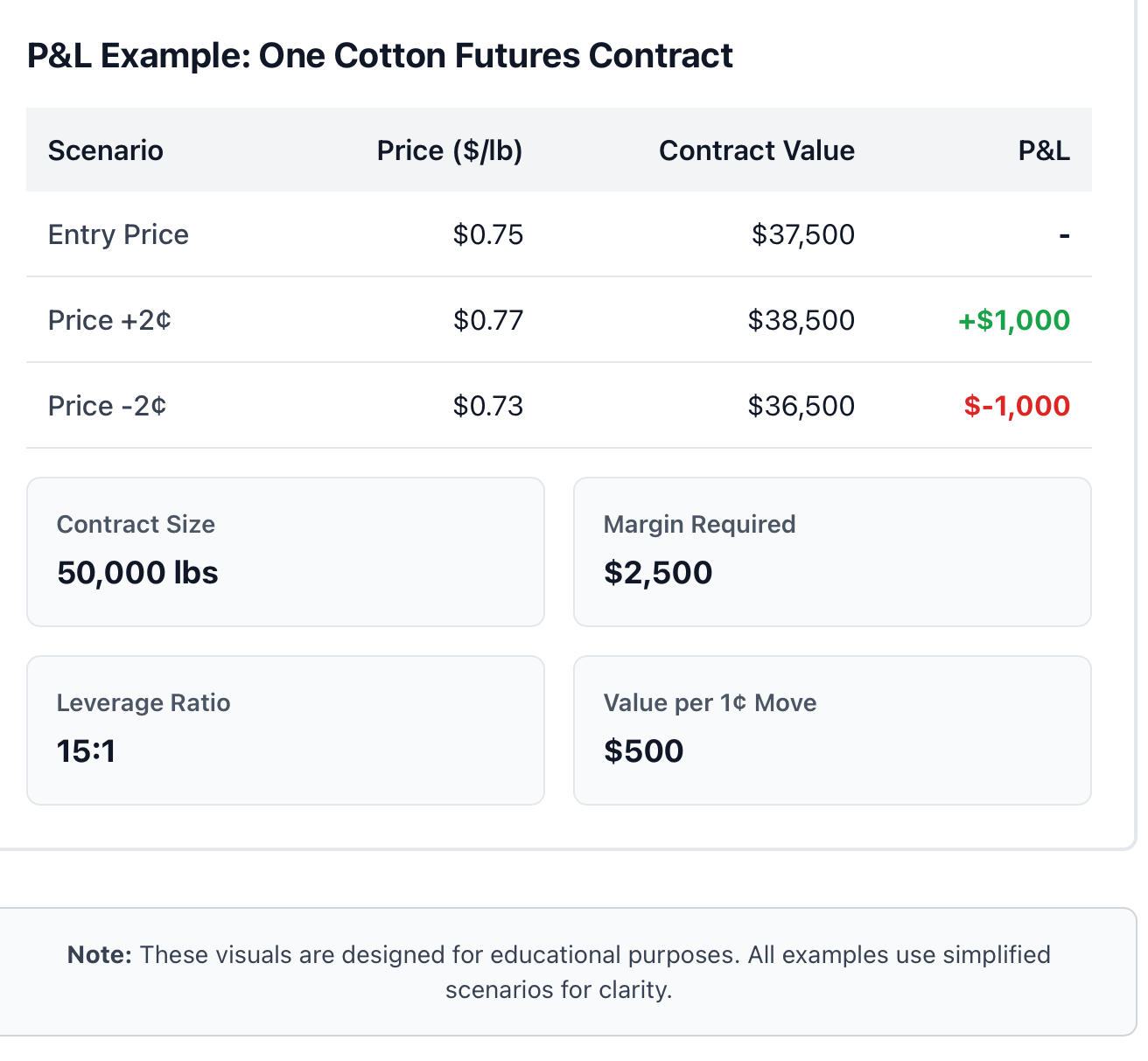
To illustrate, if you sell one March cotton contract at $0.75/pound at a notional value of $37,500 (50,000 pounds). If the price increases to $0.77, you have earned $1,000 in total. However, if the price decreases to $0.73, you will incur a total loss of $1,000. When you use margin to trade cotton, the margin requirements are approximately $2,500 for every contract. This means you are controlling $37,500 of cotton with only $2,500. This can be both advantageous and disadvantageous when trading.
Professional traders closely monitor weather forecasts for key agricultural areas. Severe weather may affect crop production and significantly influence the global economy before crop damage becomes known. Being able to identify potential market movement gives you an insight as to where to expect the price to head, rather than just being reactive to the actual price movement.
Supply Chain Vulnerabilities Cause Price Volatility
Cotton moves from the farm to stripper, to warehouse, to port, to manufacturer, and finally to consumer. Each step of this process has the potential to create volatility if something disrupts or interrupts this supply chain process.
Delays at ports are among the most common disruptions. In 2021, when longshoremen at Santos went on strike, Brazilian cotton exporters were prevented from shipping cotton to their customers for weeks. Buyers were forced to look elsewhere for cotton, and futures prices increased by 8% within a ten-day period. There are many other similar circumstances in which the monsoon season in India has caused significant disruptions at Indian ports and subsequently decreased the volume of cotton exported from India, which created increased price volatility.
Transport is another factor complicating matters. Between 2020 and 2023, the transportation fee associated with sending a shipping container from Brazil to Asia has been very erratic, sometimes increasing as much as 200% to 300% in just a few months.
Since the large percentage of the price consumers pay for cotton goes towards final delivery, fluctuations in shipping will directly affect cotton futures. Rising transportation costs lead to reduced ordering from importers, resulting in lower prices. Conversely, when shipping costs return to normal, pent-up demand may result in rising prices.
Labor strikes can create sudden supply shortages. An example of this is when Colombia experienced significant strikes on transportation in 2021, causing a complete disruption of exports for several weeks. While Colombia is not a significant producer of cotton, this event highlighted how a country that produces only a small percentage of the world's cotton can quickly affect the price of that commodity due to a relatively short-term interruption in supply caused by political unrest. Traders who were able to predict how long the strike would last took advantage of the spike in price that occurred when supply was interrupted.
Weather can also affect shipping beyond damaging crops. Flooding can create road conditions that are impassable for farmers trying to deliver their cotton to processing plants, while hurricanes can close down ports. Additionally, even the likelihood of dangerous weather can cause preemptive shutdowns of shipping routes and subsequent delays in delivery. Logistics issues due to weather and other forces often do not get as much attention as issues related to production, but they can have a major influence on cotton prices.
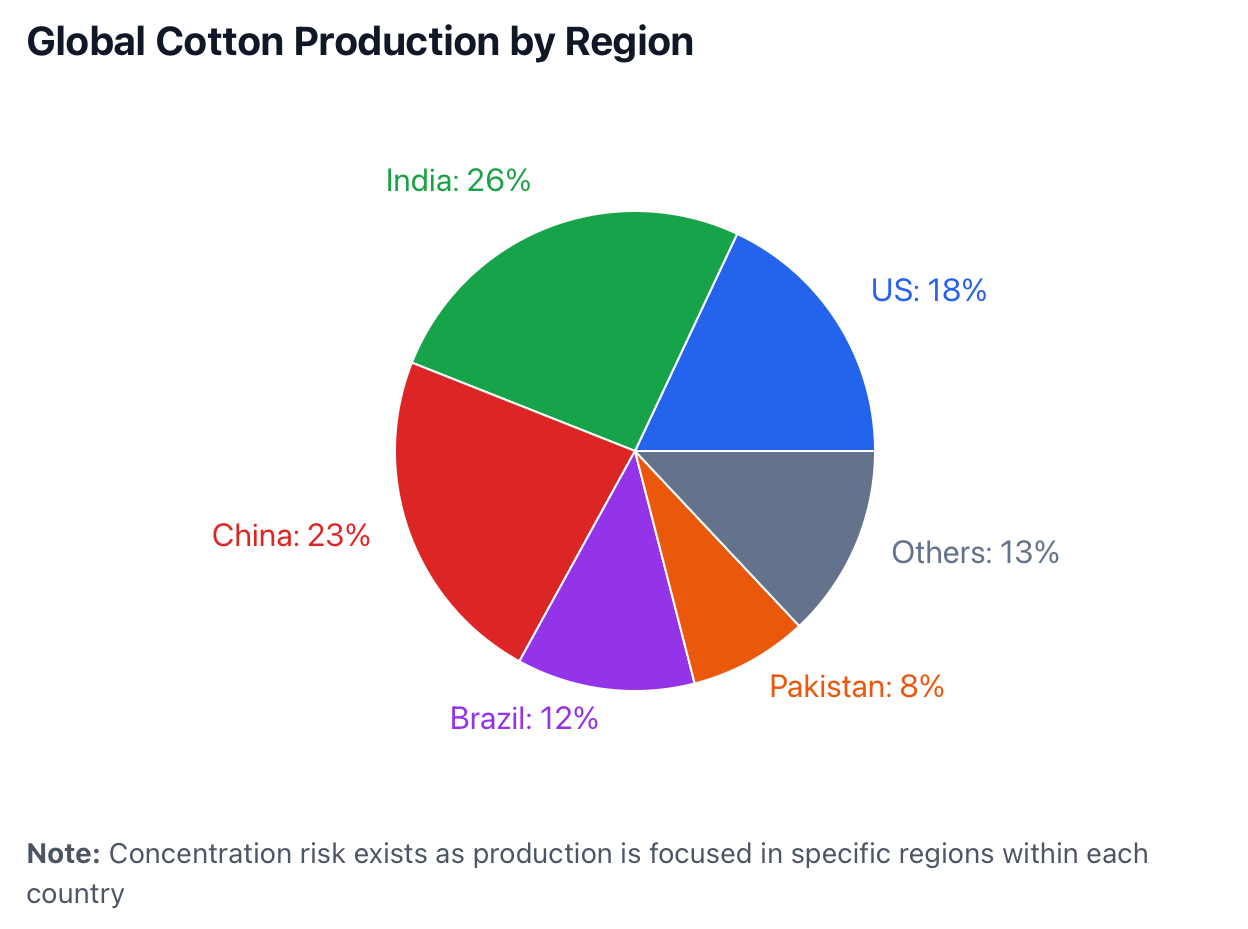
The area-specific concentration of cotton production increases supply chain risk. In the U.S., cotton is primarily produced in Texas, Southeastern states, and California. Brazil is focused on producing cotton in Mato Grosso, while India has its cotton belt in Gujarat, Maharashtra, and Telangana. If bad weather or issues with shipping logistics occur in one of these concentrated areas, there won't be many alternative sources to cover the losses from an impacted producer quickly.
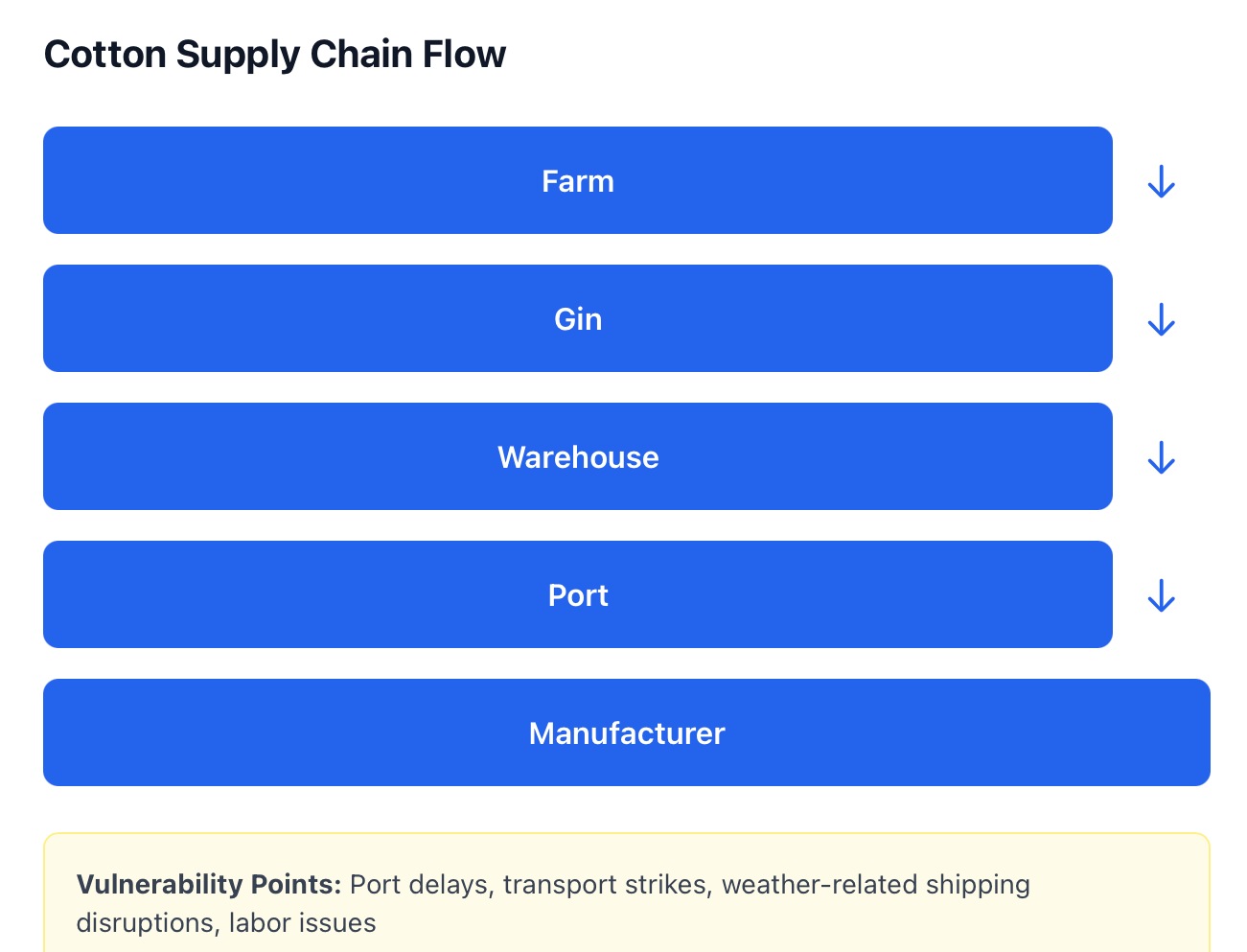
Smart traders keep tabs on shipping data, port activity reports, and labor negotiations in the countries that export cotton. These reports are sometimes not reported on as widely as the headlines would suggest, but they do provide information that could be important when predicting whether cotton prices may move prior to the greater market reflecting the change.
Climate: The Biggest Wild Card
There is a strong link between weather and cotton production. On the one hand, too much rain can cause young cotton plants to drown. On the other hand, if there is not enough, the cotton plants will abort their seeds prematurely. An unexpected frost could wipe out entire cotton fields. Additionally, extreme heat during flowering could reduce cotton yields significantly. Due to this high sensitivity of cotton to climate, weather is the main factor for traders of cotton futures to be aware of.
Cotton is particularly vulnerable to droughts. For example, during the 2021-2022 growing season, a major drought hit the southern U.S., including Texas and Oklahoma, leading to a production drop of 15% lower than anticipated and rising futures prices, as traders began to realise the extent of the devastation. Those who entered the market early based on soil moisture data and weather forecasts prior to the drought took home enormous profits.
Flooding presents a very different set of challenges. In general, cotton relies on water. However, flooding can leach essential nutrients from the soil and promote the development of diseases within the crop. Chronic flooding is an annual occurrence for many farmers in India during the monsoon season and significantly impacts millions of acres of cotton. Moreover, timing is critical. Early flooding allows for replanting, while later flooding may destroy the entire crop, thereby creating an immediate increase in price.
When frost does occur it is rare but very disruptive to agriculture. The unseasonable frost occurrence during the month of July 2021 caused damage to coffee and sugarcane producers in Brazil. Cotton was also affected, although not as severely, but it also highlighted to cotton traders how drastically variable weather conditions can be throughout a growing season. Producers who produce cotton at higher elevations or higher latitudes have greater risk of weather occurrences like frost than those producers who grow cotton in traditional cotton growing areas.
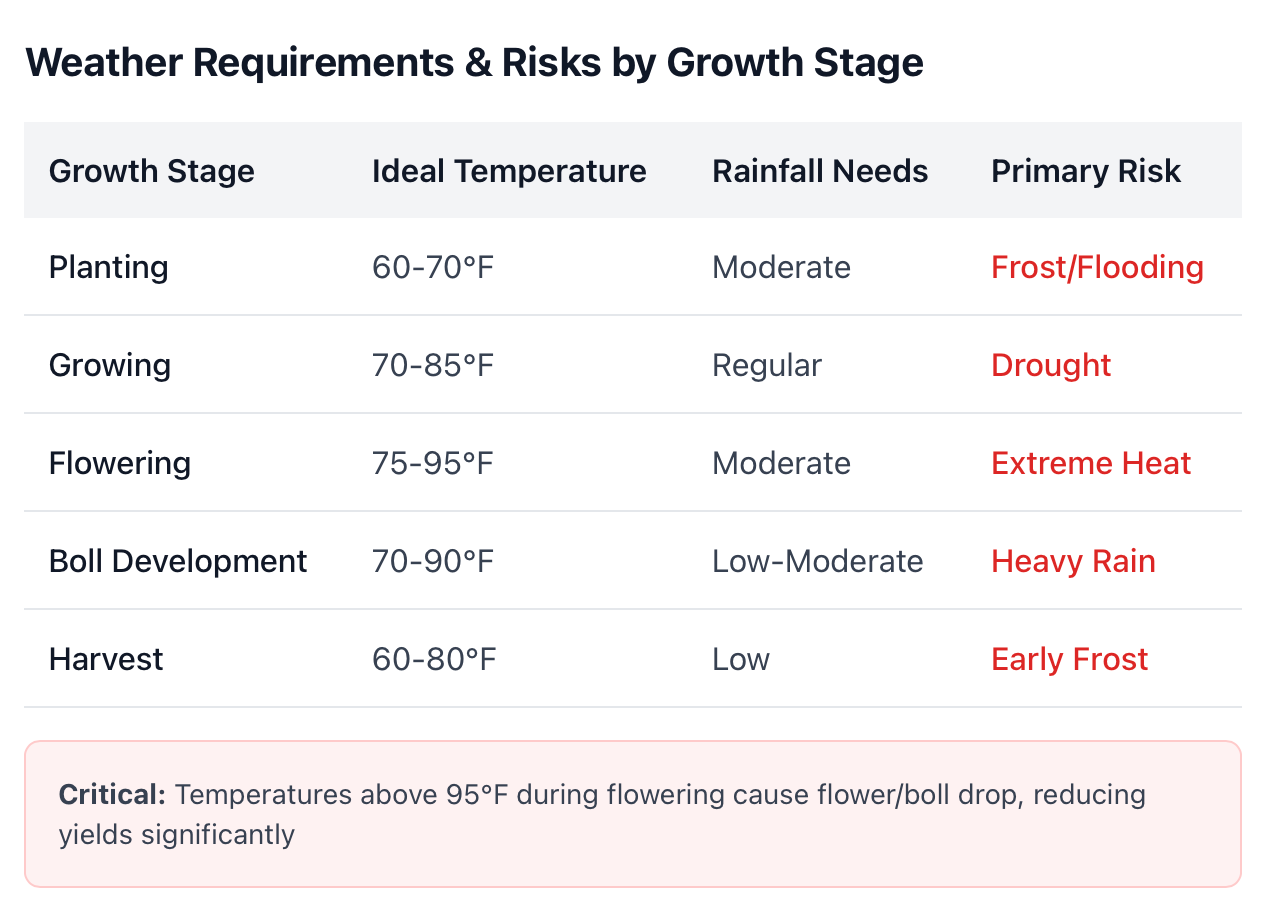
Critical stages of hot summer weather are the periods that inflict the most damage to a growing cotton crop. Cotton flowers are particularly sensitive to temperatures above 95 degrees F. When cotton plants experience prolonged heat during the flowering stage, they will drop either their flowers or small bolls. The result is a reduced yield potential for cotton. When traders see prolonged high temperatures within the growing areas of cotton they will usually anticipate an eventual price increase.
A savvy cotton trader must also pay attention to La Niña and El Niño patterns which can have a long-term impact on climate. La Niña brings above average rainfall to the southern US while El Niño brings drier conditions to the southern US. If a trader knows the general phase of either phenomenon and its expected strength, then that trader can prepare themselves for weather-related price movement months ahead of time.
Quality is also an important factor in cotton production. Price changes due to uncertain quality can occur when crop yields are reasonable but weather-related stress has caused the quality of the cotton produced to decline. Textile companies usually pay higher prices for cotton with longer and stronger fibers. Because weather damage to cotton often decreases fiber quality, buyers cannot always be sure that they've received cotton that will meet their specifications. This uncertainty creates price fluctuations.
Agronomists who invest time in learning about cotton will have a competitive advantage. By having an understanding of how soil moisture content, growing degree days, and average rainfall patterns will affect cotton's final yield, you will be able to read and understand weather data before it becomes available through USDA Reports. Price movements have generally occurred by that time.
Currency Effects on Global Cotton Trade
The strength or weakness of the US dollar has a complex effect on the cotton markets. Since cotton futures contracts are denominated in US dollars, currency fluctuations affect the supply and demand for cotton across borders. A strong dollar makes US cotton more expensive to foreign buyers. This can result in decreased export demand for US cotton. Conversely, a weak dollar makes US cotton more competitively priced on a global basis.
Movements of the Brazilian real are particularly important. Brazil is the second-largest cotton exporter in the world, and the exchange rate of the real against the US dollar directly affects the export economics of Brazilian farmers. When the real depreciates against the US dollar, Brazilian farmers receive more of their local currency for each dollar of cotton they export. This incentivizes Brazilian farmers to increase production and exports, which, in turn, increases the global supply of cotton and depresses prices. The volatility of the real between 2020 and 2022 provided many trading opportunities as the currency fluctuated between 20% and 30% against the US dollar.
Fluctuations in the Indian rupee also matter, but the way in which the rupee affects Indian exports is different from Brazil. In India, the rupee is both a major producer and consumer of cotton, which makes the effects of currency fluctuations more complex. Although a weak rupee makes Indian exports less expensive, India also often restricts its cotton exports to maintain a stable domestic supply. However, tracking the movement of the Indian rupee will provide insight into the likely availability of cotton exports from India and should be included in any comprehensive analysis of cotton futures.
There is a high correlation between changes in the value of currencies relative to one another and changes in price of cotton, but the relationship is not perfect yet high enough that it can be utilized for trading.
Statistical analysis from data collected over the years 2020 through 2022 has shown a negative correlation between the US dollar to Brazilian real (BRL) exchange rate and ICE Cotton Futures prices. Specifically, when the Brazilian real depreciated against the US dollar, cotton prices tended to decrease in value in relation to each other within several weeks as due to an increase in competing Brazilian cotton exports.
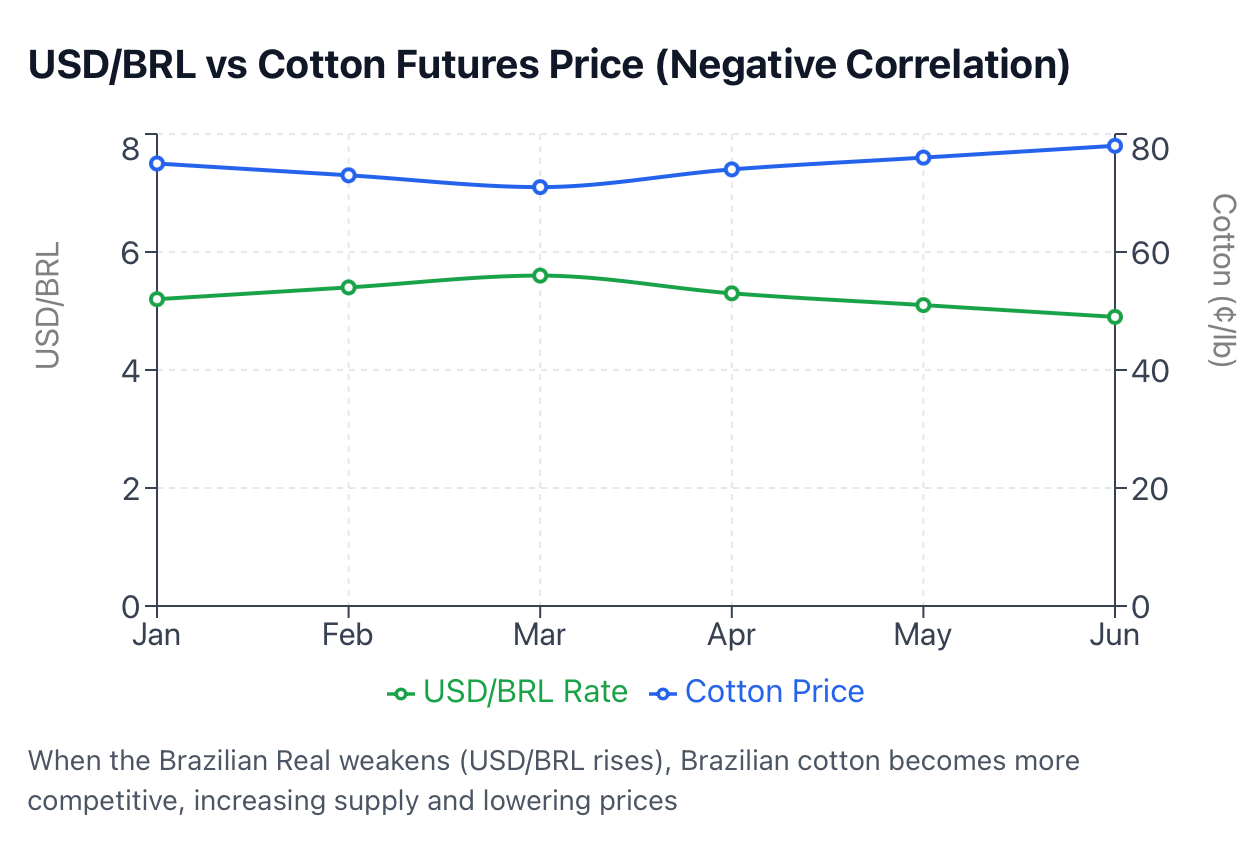
Changes in interest rates are the primary drivers of currency movements. This also provides another point of reference for traders to monitor. For example, when Brazil's central bank began aggressively increasing its interest rates in an effort to manage inflation in 2021-2022, the Brazilian real appreciated temporarily against the US dollar. This temporary strength of the Brazilian real made Brazilian cotton exports less competitive and allowed for a concurrent increase of global cotton prices.
Traders who understood this correlation were able to forecast price action based on changes in central bank policy rather than waiting and reacting to export data.
Producers and merchants hedging against currency fluctuations will also impact futures market prices. Exporters (such as Brazilian exporters) will often hedge their dollar exposure in currency markets. However, the timing and volume of these hedges will also have a direct influence on the price of ICE Cotton futures. Often, large-scale hedging programs will appear as odd trading patterns in the futures market, which can serve as early indicators to traders who pay attention.
You must always be aware of the currency market in order to effectively trade cotton futures. By setting up currency alerts for major fluctuations in the Brazilian Real, Indian Rupee and the Dollar Index, traders will have opportunities to keep ahead of the curve as cotton futures are often lagged by these price movements.
Political Risk and Trade Disruptions
Several events have shown that political events can override fundamental supply/demand analysis. Events such as trade policy changes, export taxes/restrictions, labor issues and political instability will all have different effects on cotton futures pricing.
In relation to this is export taxation which is one of the most immediate and clear examples of political intervention. Export taxes are implemented by countries in order to try to ensure that domestic textile manufacturers have enough supply at a reasonable price when there are shortages. On several occasions in the past, India has imposed export taxes when there was a shortage of domestic supply.
These restrictions on exports resulted in an immediate drop in supply available in the global marketplace, which has resulted in higher prices. Traders who watch the interrelationship between domestic Indian cotton prices and the prices of international cotton can anticipate the imposition of export restrictions in advance.
Labor strikes negatively impact supply chains and can do so even if crop production remains unaffected. The labor strike actions by the transportation sector in Colombia in 2021 illustrates how quickly labor strikes can affect exports of commodities from a particular country. Colombia is not a large cotton-exporting country; however, similar labor strikes occurring in Brazil, India, or the United States would significantly cause a much larger disruption to supply chain flows of cotton to/from those countries.
As a result, cotton traders must always keep track of labor relations, particularly when the greatest potential for strikes exists, which is during contract negotiations.
Another layer of political risk is created due to the cross-border trade policies in place between major cotton exporting and importing countries. Since tariffs and/or restrictions regarding the importation of agricultural commodities, including cotton, can sometimes be used for political purposes, US-China trade tensions have periodically caused disruptions to cotton flows from one country to another, subsequently causing cotton supply chains and prices to shift in response. These shifts can take time to develop, but as these new supply chains are created, they put sustained downward pressure on cotton prices.
Traders do not typically acknowledge the amount of impact that political stability in cotton-producing countries can have on cotton prices. Brazil's presidential election in 2022 created a tremendous amount of uncertainty regarding agricultural and economic policy. Some institutional investors reduced their commodity exposure prior to the election in order to avoid any potential negative impact caused by either the election or the results of the elections on future cotton supply/demand issues.
Consequently, the actions that were taken by institutional investors prior to the election affected the cotton futures price, even though the election did not have direct effect on cotton supply or demand issues.
Cotton markets can be affected by sanctions and geopolitical tensions through disruption of trade flow via restrictions on payment methods, shipping routes, etc., but it is not common for cotton itself to be placed under sanctions. Therefore, monitoring global geopolitical tensions is paramount to determining how those geopolitical risks may impact cotton supply chains prior to being fully integrated into the market price of cotton.
One of the many challenges of being aware of political risk is that they are often unpredictable or unable to be fully quantified by traders. However, as traders maintain awareness of significant political events within major cotton production and consumption, it benefits them to adjust their positions or purchase options to mitigate potential losses when high levels of political risk are present.
In order to gain maximum benefit from these political shocks, it is essential to maintain the right position prior to the shock occurring, as these shocks tend to cause temporary fluctuations in price until the time of maximum uncertainty has passed.
Speculation Amplifies Everything
While hedge funds, commodity trading advisors and other types of speculative traders do not directly create base supply and demand for cotton, they are able to create larger price swings on futures contracts caused by changes in base supply and demand than what would have happened without speculation. Understanding the overall speculative position will allow traders to ascertain the likelihood of an extension or reversal in pricing trends.
Each week, COT provides a report that contains information about the total amount of speculative positions held on cotton futures by different types of traders. A large net long position held by "managed money" typically indicates that the market is thinking it will continue to rise. Excessively large speculative potential positions can be indicative of "overly crowded" positions that can lead to price reversals if the fundamental demand and/or supply do not meet the traders’ expectations.
In 2021-2022, due to severe drought conditions across large portions of the United States, there was a significant increase in the amount of net long positions being held by "managed" money (hedge funds) due to deteriorating weather conditions. This speculative position created a situation wherein the price rally in cotton futures occurred at a greater rate than what would have otherwise been expected due to damage. Eventually, as weather improved somewhat and some funds took profits, this resulted in a significant dip in price even though the supply side of the cotton market remained extremely tight.
Speculators tend to act very quickly, often more quickly than commercial hedgers, on the basis of news and forecasts. For example, if weather forecast models show that the likelihood of droughts is rising, speculators will buy long positions prior to any confirmation of potential crop loss or damage. Therefore, the prices will typically rise in advance of the release of the official crop report.
Traders who pay attention to speculative positioning as well as to fundamentals may have the ability to identify instances where prices have "over-corrected" (or gone up too quickly) and have the potential for a reversal.
There is also a two-way street between speculators and commercial hedgers as discussed above. If speculators hold a large net short position and receive positive information regarding the market, they will often rush to buy contracts back and begin to buy, resulting in "short covering rallies" for that reason. Short covering rallies can be quite explosive; however, they often lack the strength to sustain them unless some improvement has occurred in the fundamentals.
Another thing that attracts speculative interest is volatility itself. When cotton futures have either a sustained upward moving trend or increased volatility, there are likely to be many more participants investing capital in the market. Therefore, that additional participation will increase the magnitude of price swings and create a positive feedback loop. Conversely, when cotton futures trade within a narrow price range over a long period of time, there are likely to be very few speculative investors, which typically yields low liquidity in the market.
The COT Report is just one of many pieces of information that professional traders consider in their analysis. It does not act alone as a timing signal and can only be used in combination with Technical Analysis and Fundamental Analysis to help determine if a trend is likely to continue or reverse. One of the primary benefits of using the COT Report is that it shows how speculative capital will generally exaggerate the price movements created by fundamentals in both directions. This creates both risks and opportunities for traders.
Risk Management, Protecting Your Capital
Without proper risk management, trading Cotton Futures could be dangerous. Futures contracts provide a lot of leverage, meaning small changes in price create large gains or losses in relation to margin. The best traders find ways to manage risk systematically and survive through volatility.
Stop Losses are the basic tool for managing risk. Establish how much you are willing to lose on each trade prior to entering it, and then place a stop loss order at this level. This level can be determined by how much risk you are tolerating or your trading strategy, but having the discipline to get out of trades before they reach catastrophic levels is crucial.
Similar to stop-loss orders, position sizing should also be emphasized in your trading strategy. A position size should not exceed 1%-2% of your total trading account size (i.e., if you have a $50,000 trading account, your maximum risk per position will be between $500 and $1,000). The actual calculation of position size will vary based on where you are placing your stop-loss order. For example, if you are willing to stop out of the trade with a loss of 5%, you would be able to take a larger position than if you placed your stop at a loss of 2%. This way, even if you take a series of losses, you will not experience a devastating blow to your trading account.
The key to monitoring several key indicators will alert you to changing market conditions. Some of the indicators you should pay close attention to include weather forecasts for major producing regions, foreign currency movements (especially with the Brazilian and Indian currencies), USDA reports on crop growing conditions, and COT speculative positioning. When you see multiple indicators that are all indicating caution, you should either decrease your position size or eliminate your positions before hitting your stop-loss.
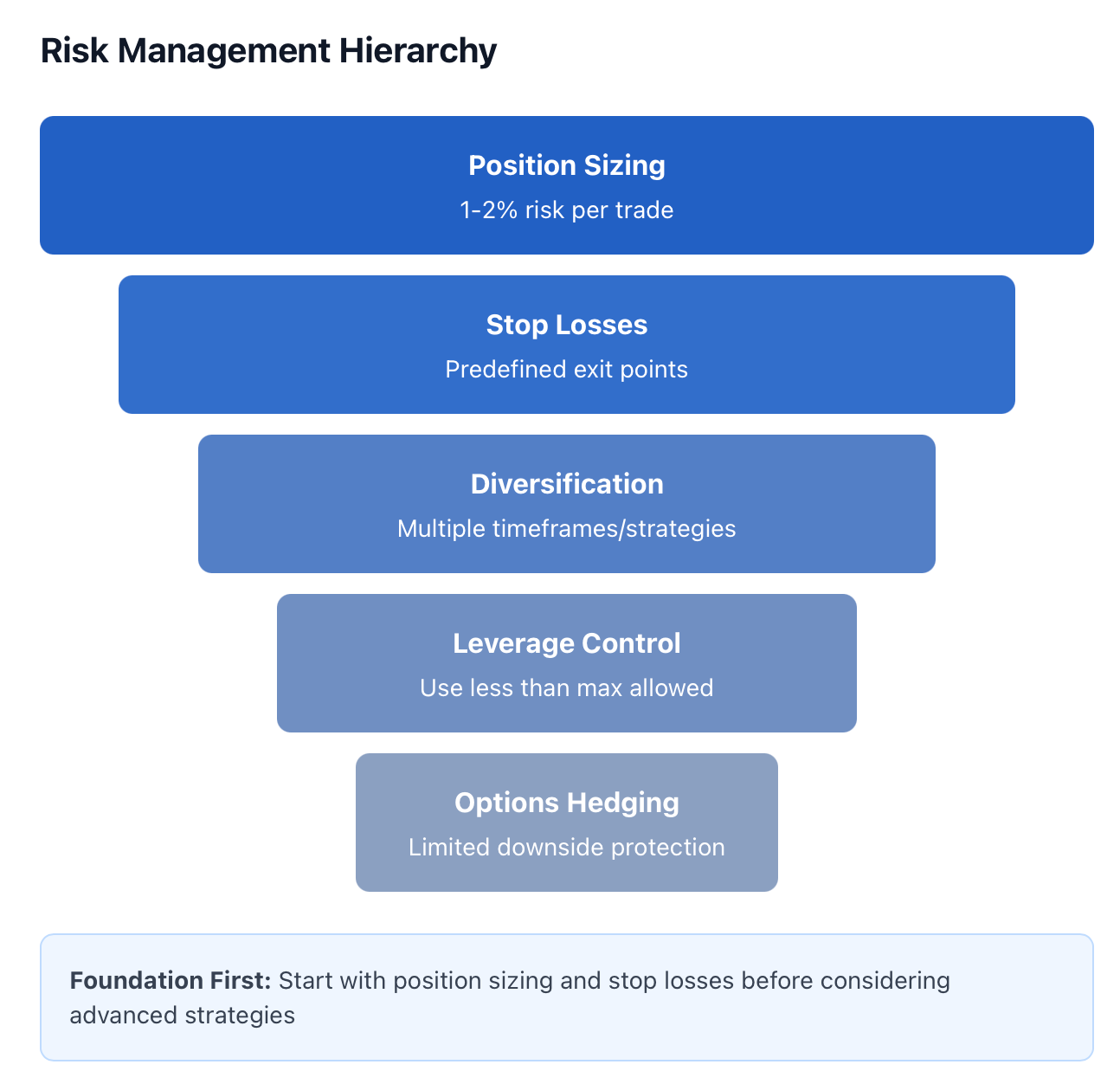
Don't use excessive leverage, even though futures allow for a significant amount of leverage. For example, $2,500 can control a position worth $37,500 for cotton at a 15-to-1 leverage ratio. However, you need to keep in mind that a 6.7% move against your position will eliminate your margin on that position. As a general rule, professional traders tend to use a lot less leverage than permitted on the exchange, since they have seen first-hand how quickly over-leveraged positions can collapse.
Another useful risk management strategy is to use options. Instead of purchasing futures contracts directly, you could also use call or put options as a way to limit your losses to the premium you paid for the option while retaining the potential for large gains.
While call and put options cost more than carrying a futures position on margin, the limited risk often offsets the additional cost associated with these products in highly volatile markets, such as cotton.
Creating diversified portfolios using various lengths and types of investments is another method of managing risk. For example, you might consider incorporating both short and intermediate term trades into your overall portfolio strategy, including short-term trades based upon seasonal cycles or intermediate term trades based upon multi-month forecasts of anticipated weather patterns.
Utilizing a variety of trading strategies, trend following to capture trends, mean reversion as a strategy during periods of price stagnation, and fundamental analysis to help predict eventual large-scale changes; will give you a greater chance for success.
The behaviour of institutional investors prior to the Brazilian elections of 2022 provides a clear example of how many institutional investors managed risk by decreasing their exposure to commodities or hedging their positions using options in advance of the unknown outcome of the election. They did not know what outcome would occur; rather, they were managing risk by explicitly dealing with a known uncertainty.
Following the completion of the election and in the absence of significant disruptions, these investors resumed their positions. While they gave up some margin of profit by performing this manner of risk management, their actions prevented them from experiencing considerable losses if the result had been anything other than a smooth election.
Cotton CFDs: An Accessible Alternative
A lot of individuals do not care to learn about futures contract specifications, delivery months, and rolling positions. Cotton CFDs (Contracts for Difference) provide an opportunity to maintain exposure to cotton price movements without the complexities associated with traditional futures contracts.
The price of CFDs is based on the price of cotton futures contracts; however, there are many advantages of trading with a CFD. One advantage is that there are no physical delivery concerns when trading CFDs; therefore, you have no risk of having 50,000 pounds of cotton show up at your house if you forget to roll your contract position over.
Another advantage is that you can size your CFD position to match your account size and risk tolerance. You have the flexibility to trade smaller than one full contract, allowing you to size your position according to your account. The ability to trade CFD long or short just as easily also gives you more opportunities to make money when the market is moving in either direction. In addition, some futures markets place limitations or restrictions on the ability to go short and/or charge additional fees for going short; however, with a CFD that is not an issue because both long and short are treated symmetrically.
The capital requirements associated with CFDs are generally lower than those of futures contracts. For example, the margin requirement necessary to take a position in a futures contract may be $2,500 per contract, while the majority of CFD platforms allow you to take positions with only a few hundred dollars. Therefore, traders with retail accounts who do not have large amounts of capital can still participate in trading cotton as a result of this lower capital requirement.
The disadvantage is that when trading a CFD, in addition to the spot price of the underlying commodity, you will also have to factor in the spread and overnight financing costs, which can significantly increase the cost of trading a CFD, particularly when holding a CFD over an extended period of time.
The simple way to trade is to identify a price direction (up or down) for cotton and then take an appropriate long or short CFD position based on that prediction. If your prediction is correct and price movement is in your direction, you make a profit. If it is not correct, then you incur a loss. The calculation of P&L is straightforward because you simply take the difference in price of your opening and closing position and multiply that by position size.
For instance, imagine cotton futures are trading at 76 cents per pound. You anticipate that due to drought, prices will increase, so you purchase a CFD for cotton, which represents the same amount of cotton as 10,000 lbs (one-fifth of a full futures contract). Prices then rise to 78 cents, representing a gain of 2 cents per pound, which results in a profit of 2 cents multiplied by 10,000 lbs or $200. However, if prices fell to 74 cents, your loss would also be $200.
CFDs are ideal for shorter-term trading strategies. The overnight financing costs associated with CFDs deter long-term positions, which typically last weeks or months. Therefore, when making trades lasting anywhere between a few days and a couple of weeks, CFDs are far less expensive than futures. Another advantage of CFDs is that they can be sized flexibly and, therefore, offer you the opportunity to gradually increase or decrease your exposure to cotton.
For those who want to trade in cotton, CFDs have some advantages over Futures. CFDs do not offer the level of price discovery or market depth that Futures on exchanges do. When you trade a CFD, you will be trading with your broker’s price which may reference Future prices but will not be exactly the same. So traditional Futures will be a better choice for serious traders who want narrow spreads and good execution. For many retail traders who want to participate in cotton price movements but do not want the complexity of actual Futures contracts, CFD trading provides an easy way to take part.
Looking Ahead: 2025-2030 Cotton Outlook
Over the next five years, the way that seed cotton markets will react to these issues will be unprecedented. Weather patterns are becoming more unpredictable and prone to extremes as a result of climate change.Even though there is a strong effort being made to improve supply chain resilience, the impact of climate change will cause our supply chains to remain vulnerable.
Currency markets will see increasing pressures from differing monetary policies and geopolitical tensions.When combined, these factors point to a significant increase in volatility in the seed cotton market.
The climate trends indicate that significant drought and flooding will occur more frequently within the primary seed cotton-producing regions.The southern US is experiencing increased stress due to drought, whereas the monsoon rains in India are becoming much less reliable.
Additionally, while Brazil has traditionally been considered one of the most stable places in the world in terms of growing conditions, there are emerging signs of change. While farmers in these areas may not produce less cotton every year, farmers will have a significantly greater range of variance in their cotton yield from one year to the next.
For traders, this creates an opportunity to generate larger price swings based on weather effects, thereby creating greater opportunities for traders who are able to anticipate the effect of weather on seed cotton returns.
The global cotton supply faces many uncertainties related to the competition from synthetic fibers. Developments in synthetic fibers due to increased sustainability concerns through innovation within materials science. Despite these developments, cotton retains several advantages over all other forms of fibers, such as softness and breathability, that provide a relevance to the clothing and home textile markets.
Emerging markets, especially in Africa and Asia, may offset demand loss in developed markets as they continue to utilise cotton. These factors will likely generate only a limited amount of new demand in the cotton commodity market; therefore, supply-side factors and currency values will take on much greater importance in determining prices.
The use of agricultural technology and data analysis in forecasting yields and managing risk is available to everyone dealing in cotton commodity trading. Satellite images and soil sensor measurements, and weather modelling systems to cover all types of crops, aid cotton commodity traders in predicting crop conditions.
The same technology, however, will eventually be available to all other traders, decreasing the competitive advantage that these technologies once offered. Traders that have multiple data sources and can evaluate the connection between data sources and how they interact with one another, along with how each affects price trends in the market, will be successful.
The use of speculative cotton futures will likely increase the use of algorithmic and machine-learning strategies (i.e., high-frequency trading tools) in the cotton commodity market. On the one hand, this increase will cause heightened volatility in the cotton market in the short term. Alternatively, the increase in algorithmic trading tools will help to promote market efficiency in the cotton market over a longer period of time. Traders will have to adjust trading strategies for the more rapid pace of today's technical-driven trading market.
Future predictions on exchange rates will be complicated because of how unpredictable this will be with fluctuating commodity prices causing these exchanges. The unpredictability will continue happening because of differences in central banking practices between both developed and developing markets. Having knowledge of currency trading, along with knowledge of commodities, will provide a trader with an advantage.
One method a trader can use to deal with these unknowns is to utilize scenario planning. If you envision yourself in a situation experiencing high volatility with frequent fluctuations in the weather and currency markets, then shorter-term trading strategies that cause you to react quickly to changes in the news would be the best option.
Conversely, if you predict a gradual improvement in yields and a decline in volatility, you should consider utilizing a long-term fundamental strategy. However, no matter which strategy is deemed best, be flexible enough to switch from one style of trading to another depending upon how either the commodities or currency markets change in the future.
Key Takeaways for Cotton Traders
When it comes to cotton futures trading, cotton prices experience several global impacts at once. The most significant impact on cotton's fundamental drivers is through climate and weather; however, development's supply chain logistics, currency fluctuations, political events, and market-driven speculation also play a role in causing cotton price fluctuations. All these factors need to be closely monitored to successfully trade cotton.
To obtain the most current and actionable insights into cotton future prices, continuously monitor weather forecasts and soil moisture levels in the three key cotton-producing regions: Texas, Brazil's Mato Grosso, and India's Gujarat. Additionally, monitor the Brazilian real exchange rate closely, as the movement of Brazilian real will significantly impact Brazilian cotton exports on the worldwide market within weeks of those movements.
In addition, it is important to follow the CFTC (Commodity Futures Trading Commission) COT (Commitments of Traders) reports for Information on the levels & trends of speculator positioning, which can provide insight on when speculators position themselves to extreme levels of either being long or short cotton compared to the majority of traders, and therefore will provide the potential for a reversal of trend in speculative trading action.
Follow USDA (United States Department of Agriculture) crop reports for the official numbers of supplies available to the market, however, perform your own research when determining what the actual USDA numbers will look like.
Position sizing and risk management are two of the elements that set successful cotton traders apart from those who eventually experience significant losses over time. Cotton tends to be one of the most volatile commodities, thus making cotton futures trades especially unrelenting for overleveraged positions.
To protect your investment, utilize stop-loss orders for each trade made in cotton, base your position size on the amount of risk per trade, and when uncertainty in your position rises, reduce your exposure.
Cotton, although a globally traded commodity, has a network of dependencies and interactions between international markets and domestic cotton production within the U.S. Cotton production and currency policy in Brazil may impact the price competitiveness of Indian cotton exports; likewise, price movements in the international future markets (such as ICE) will reflect those price differences caused by price competitiveness.
Lastly, pricing of information occurs in many markets with different time frames. Weather may cause major changes in cotton prices prior to damage reports having an impact on price. The position of speculators may move dramatically prior to the commercial hedging position of the marketplace changing.
The currency exchange rate serves as an indication of what will occur in export trade. When traders can identify these lags and the relative amount of time it takes for particular data to cost in the market will give them an edge over other traders and allow them to generate superior risk adjusted returns to their investment.
Ready to trade cotton futures on your terms? Tradewill.com offers flexible CFD trading with real-time market access and risk management tools designed for commodity traders who demand precision. Start with what you know and scale as markets evolve.
Disclaimer: The content of the blog does not represent any position of Trade W, does not serve as any trading-related decision advice, and does not endorse any third-party.