

 Trade W
I. Introduction: What Are Cyclical Assets in Forex?
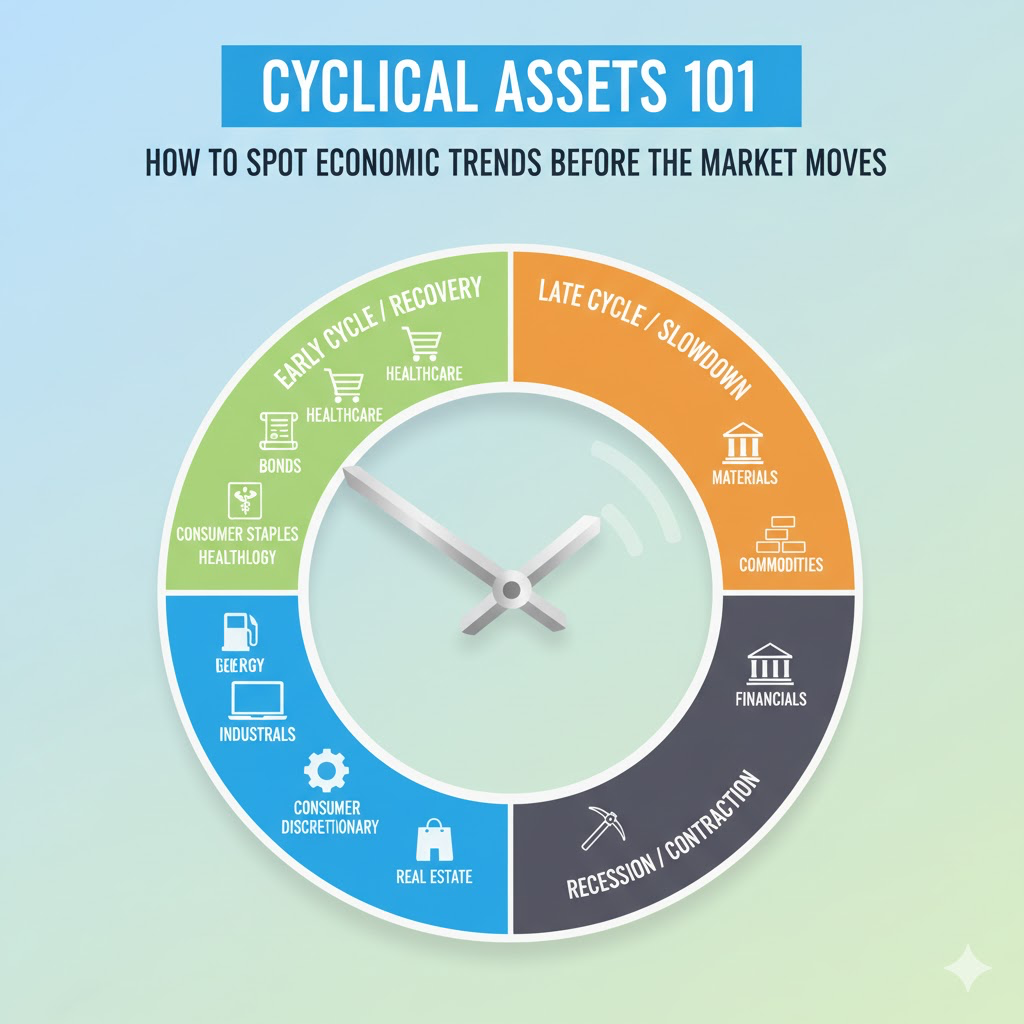
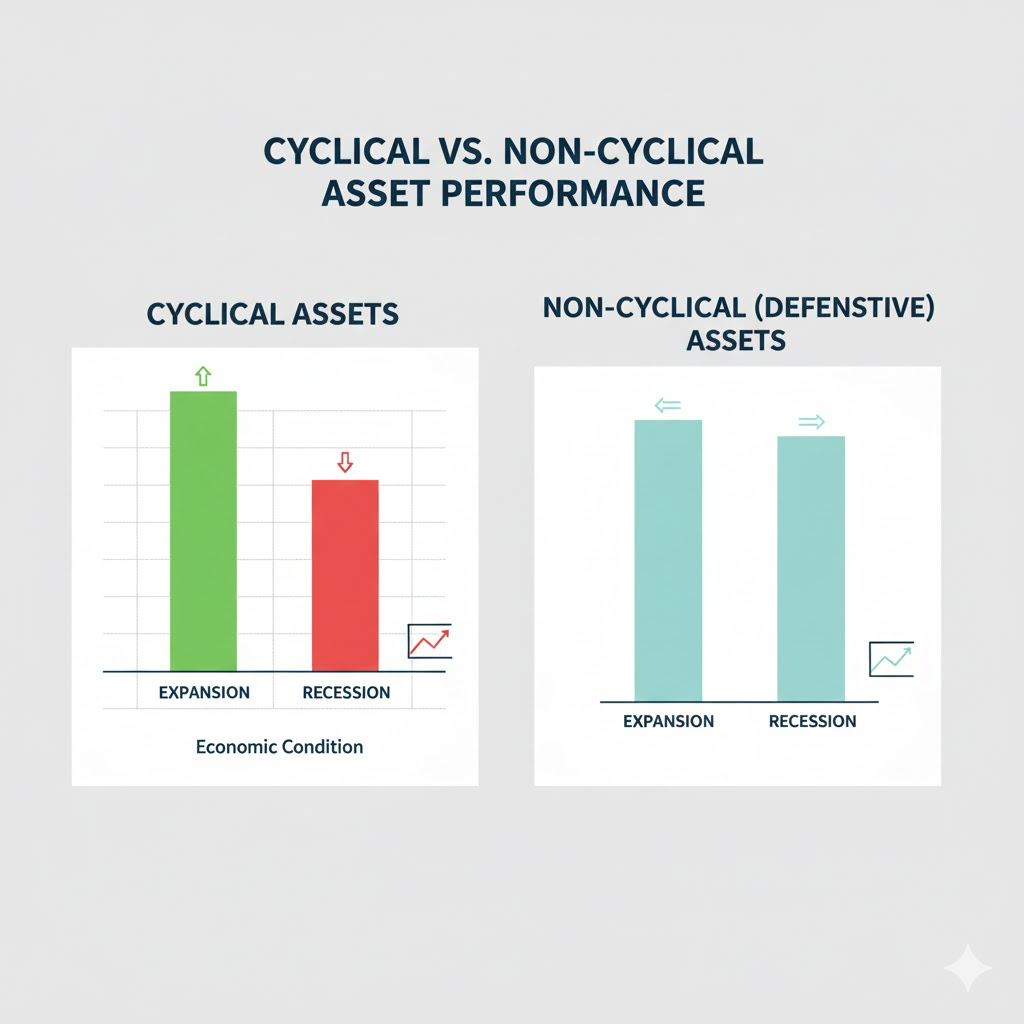
Cyclical assets are those whose values fluctuate along with the pulses of the world economy. They appreciate when the economy is expanding. In a recession, they usually depreciate as well. Their price movements are basically echoes of the larger economy's cycle, thus cyclical assets expand in times of growth and contract in a downturn.
Non-cyclical or defensive assets either have price stability or appreciate regardless of economic conditions. Think of it in terms of staples of consumption and their production, or healthcare companies that produce goods or services that consumers "need" for every kind of economic condition.
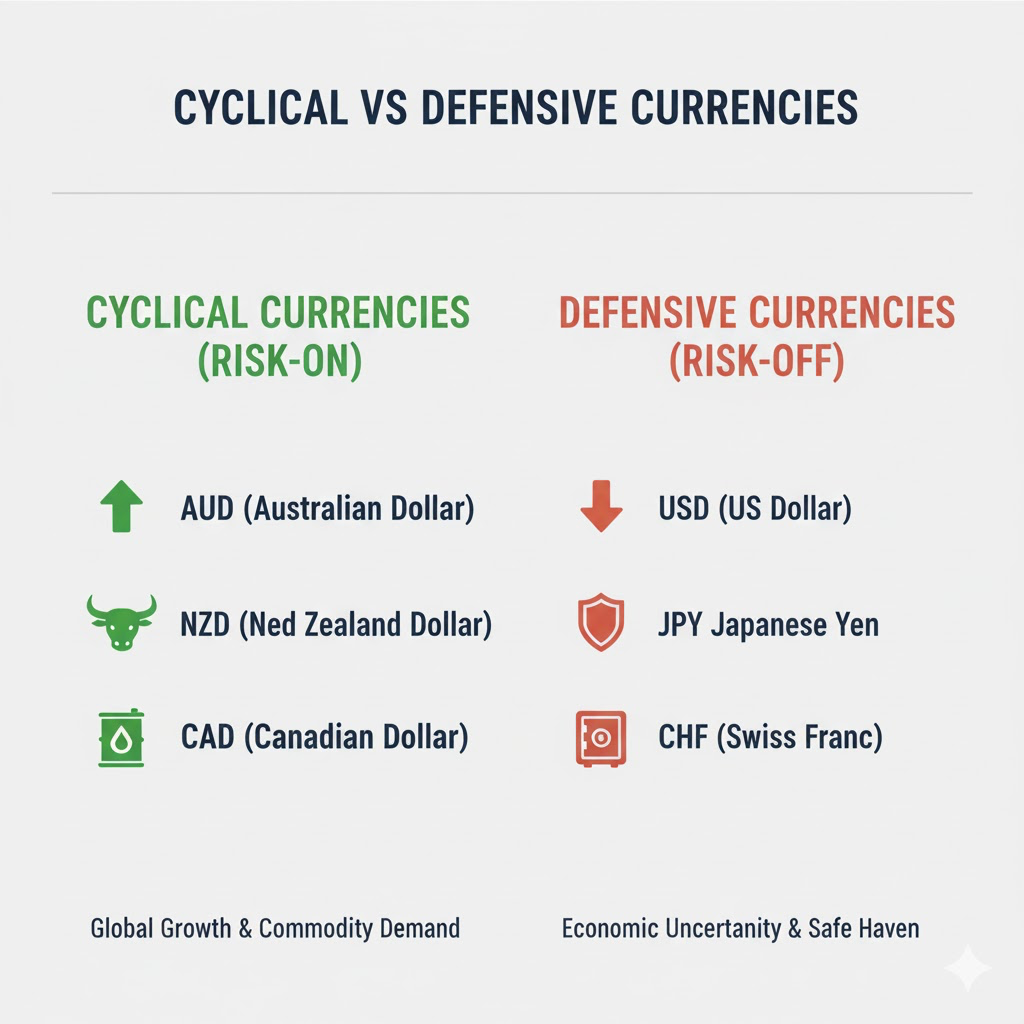
Entire currencies or exchange rates can act in a cyclical manner in the Forex market. For example: when global trade or commodity demand rises, currencies like AUD, CAD and NZD appreciate. Defensive currencies like USD, JPY and CHF tend to appreciate over the time horizon during uncertainty.
For example, for new traders, visualize the manufacturer of luxury automobiles that does positively as consumers spend money "on things" versus a food manufacturer that produces goods that consumers buy no matter what the state of the economy.
In the Forex market, the same phenomenon occurs, and frequently the AUD/USD exchange rate gains when global expansion occurs. A specific example would be in the post-COVID expansion markets between 2020 and 2021, whereby the AUD and NZD appreciated along with global equities. Defensive currencies like USD and JPY would take an advantage in times of slow economic growth or recession.
Cyclical assets in Forex reveal how currencies respond to global economic tides, giving traders an edge when spotting shifts early.
II. Understanding Cyclical Assets in the Context of Forex Markets
The performance of an economy has a decisive influence on the strength of currencies. During episodes of strong global growth, the demand for goods, commodities and exports increase. This leads to an increase in the value of commodities currencies, which are currencies tied to the movements of commodities, such as the Australian Dollar (AUD), New Zealand Dollar (NZD), or Canadian Dollar (CAD).
Conversely, currencies like the US Dollar (USD), Japanese Yen (JPY), and Swiss Franc (CHF) are defensive currencies, attracting capital during global uncertainty when investors prefer safe havens. Traders will typically refer to these as “risk-on” and “risk-off” types of behaviour. In risk-on, currencies that are more growth focused will typically outperform other forms of currency. In risk-off, safe havens will appreciate relative to higher risk currencies.
For beginners, think about this simply; when an economy grows, factories will need to use more and more raw materials, leading to increased demand for currencies whose economies are generated for resource-related exports.
For seasoned traders, it can be read as interest rate cycles, liquidity flows, and capital flows.
The Australian dollar USD is a good example of observation and price movement correlating with the manufacturing PMI reading in China. When China's economy is growing, Australian exports will pick up and the AUD will appreciate accordingly. The Canadian Dollar (CAD) is a very similar currency, with appreciation tied to oil pricing (between $40 and $100).
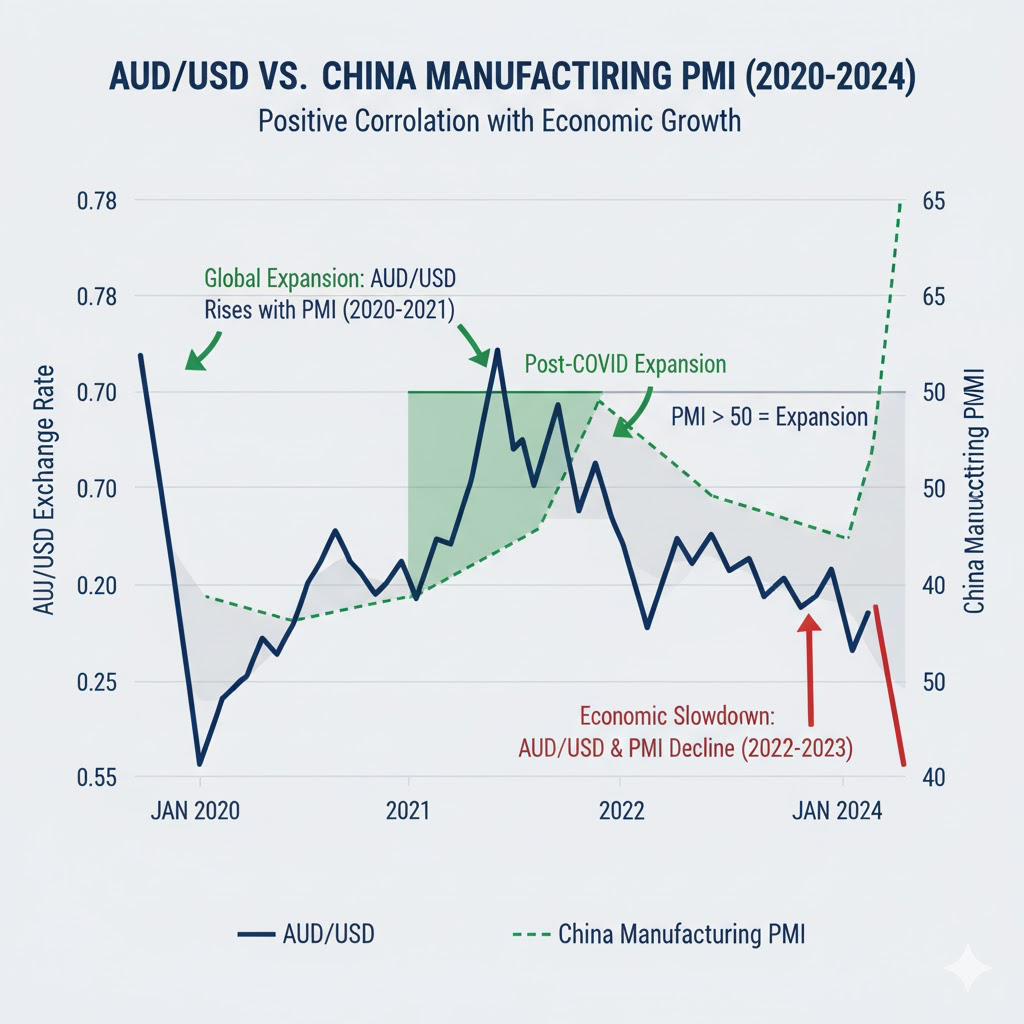
Traders are large followers of correlations, and being able to pick up on these metrics can help traders position themselves ahead of a large price changing event.
III. The Relationship Between Cyclical Assets and Economic Indicators
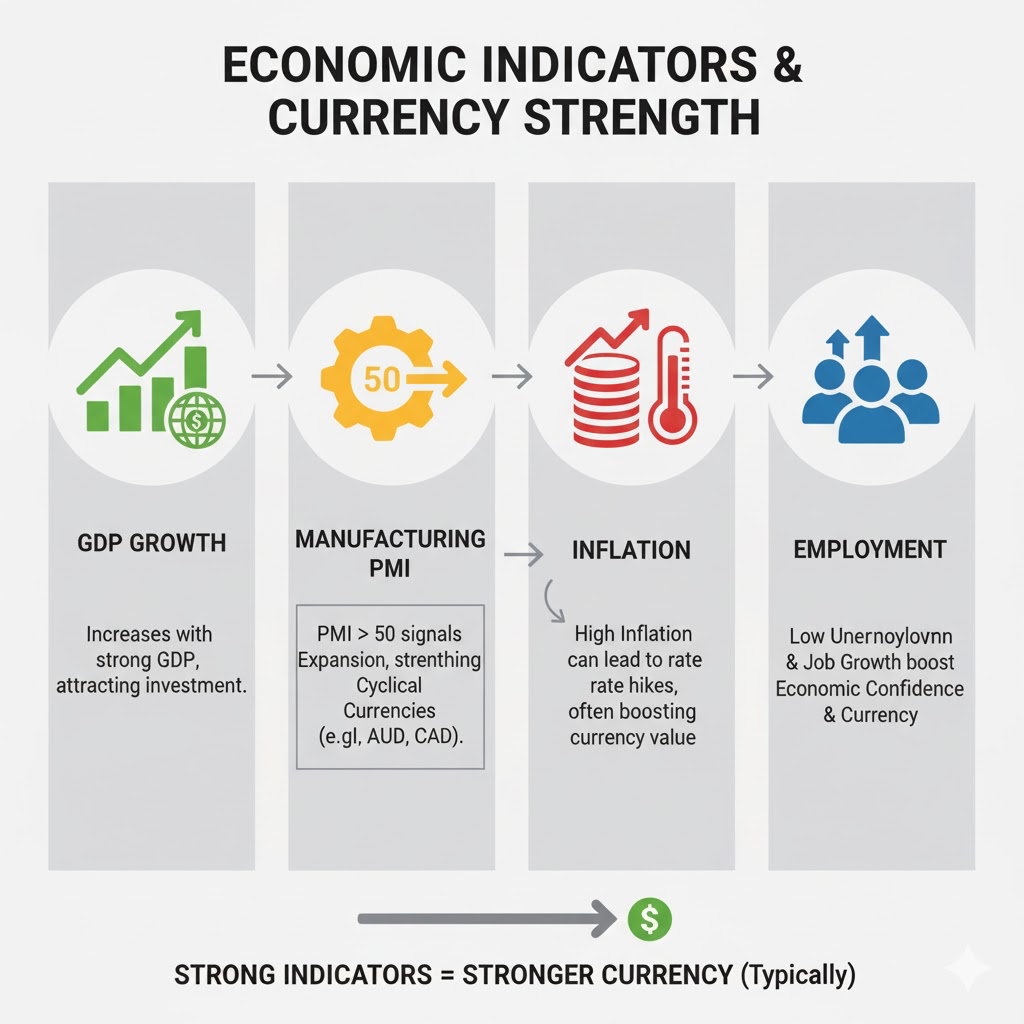
Currency movements are often associated or grounded in macroeconomic indicators. GDP growth, PMI statistics, inflation, and employment numbers determine investor sentiment and correspondingly interest in a currency.
When a country's GDP increases, typically so does its currency, as investors expect higher returns. As the PMI prints above 50, it is indicative of expansion, thereby strengthening cyclical currencies such as AUD or CAD. The more sophisticated professional trader will be tracking economic indicators & macroeconomic performance alongside the gauge of the US dollar, known as the DXY.
As an example, during the global expansion between 2016 - 2018, commodity currencies were lifted for the log of expansion. When the slow down occurred in 2022, flight-to-quality was seen in USD and CHF as traders looked for safety.
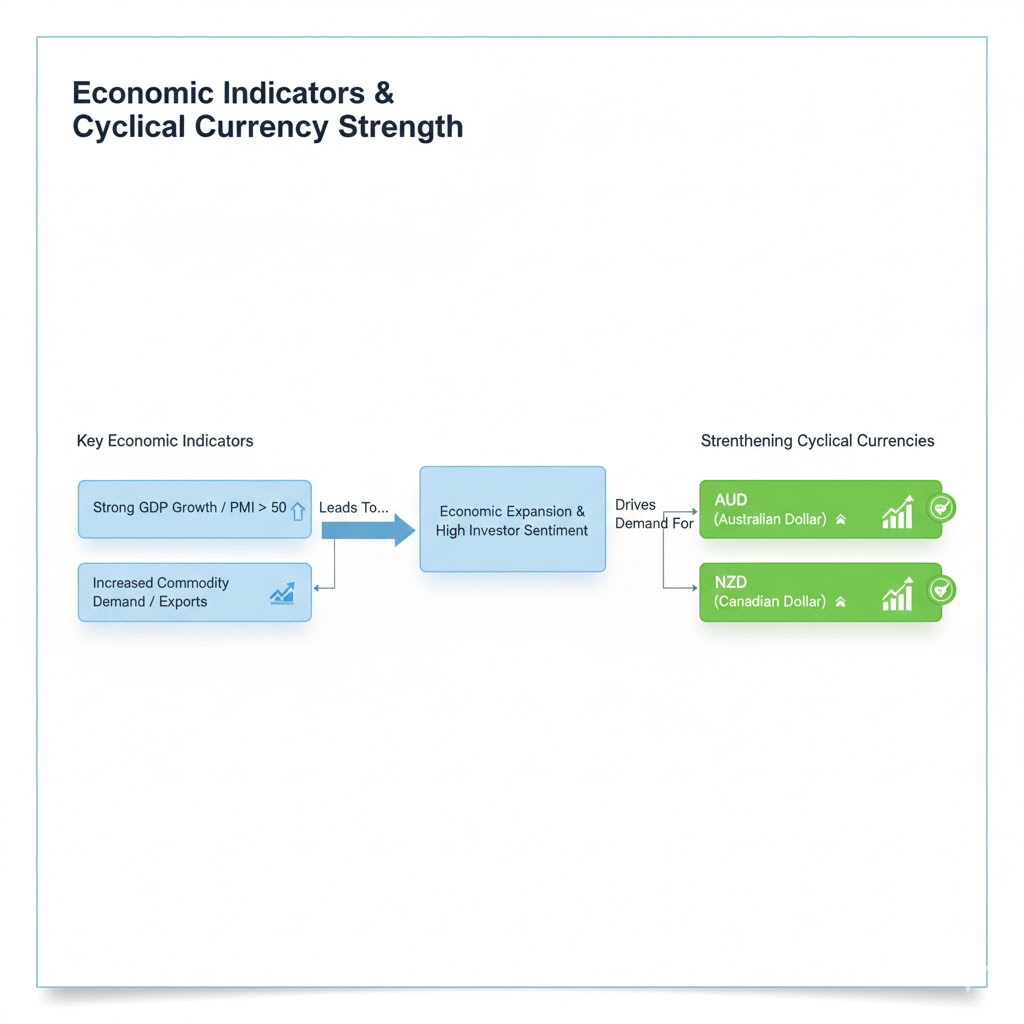
In CFD markets, we observe similar behavior in regard to metals, oil, and equity indices. Understanding how these indicators dance will give traders an opportunity to assess trends based on real economic activity rather than random price movement.
IV. Applying the Concept of Cyclical Assets in CFD and Forex Trading
Traders who discern early indicators of upturns or downturns in the economy can find themselves in a strong position. The main leading indicators to monitor will include copper prices, trends in PMI, and stock market performance.
A practical approach is easy to follow. When the economy is growing, traders can go long on cyclical currencies such as AUD or CAD. When they begin to see signs of a slowdown, they would then switch to defensive currencies such as USD or JPY in order to maintain their capital.
New traders can simply look for changes in global growth indicators and act accordingly. More seasoned professionals may analyze PMI and yield spreads, to identify turning points. CFD traders may take advantage of cyclical momentum and apply leverage but will want to take risk management precautions.
The commodity boom of 2021 was driven by China's recovering demand and revealed how an asset class aligned with an economic cycle may benefit.
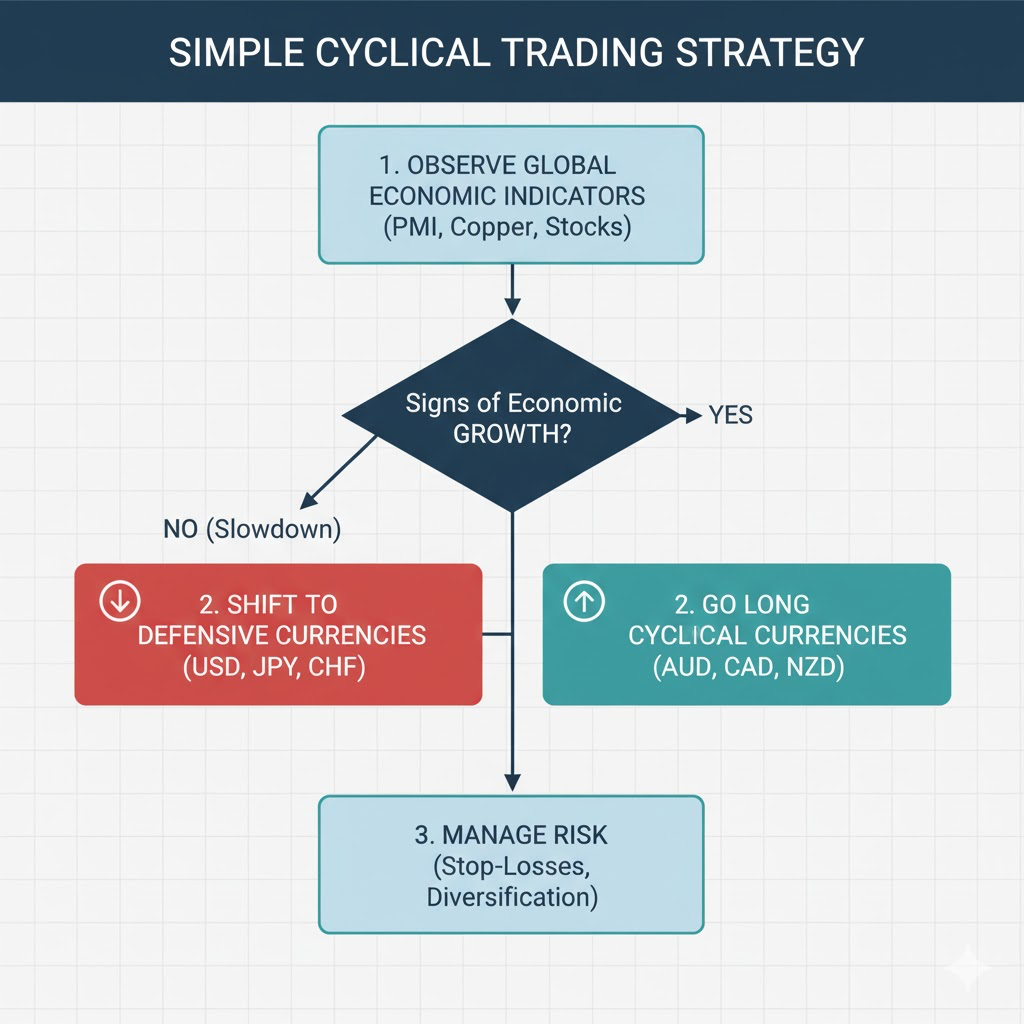
Trading at the same time with the global economic cycle stands for a long-term advantage that will often exceed short-term participants.
V. Metric Cyclical Momentum: Quantitative Methods and Indicators
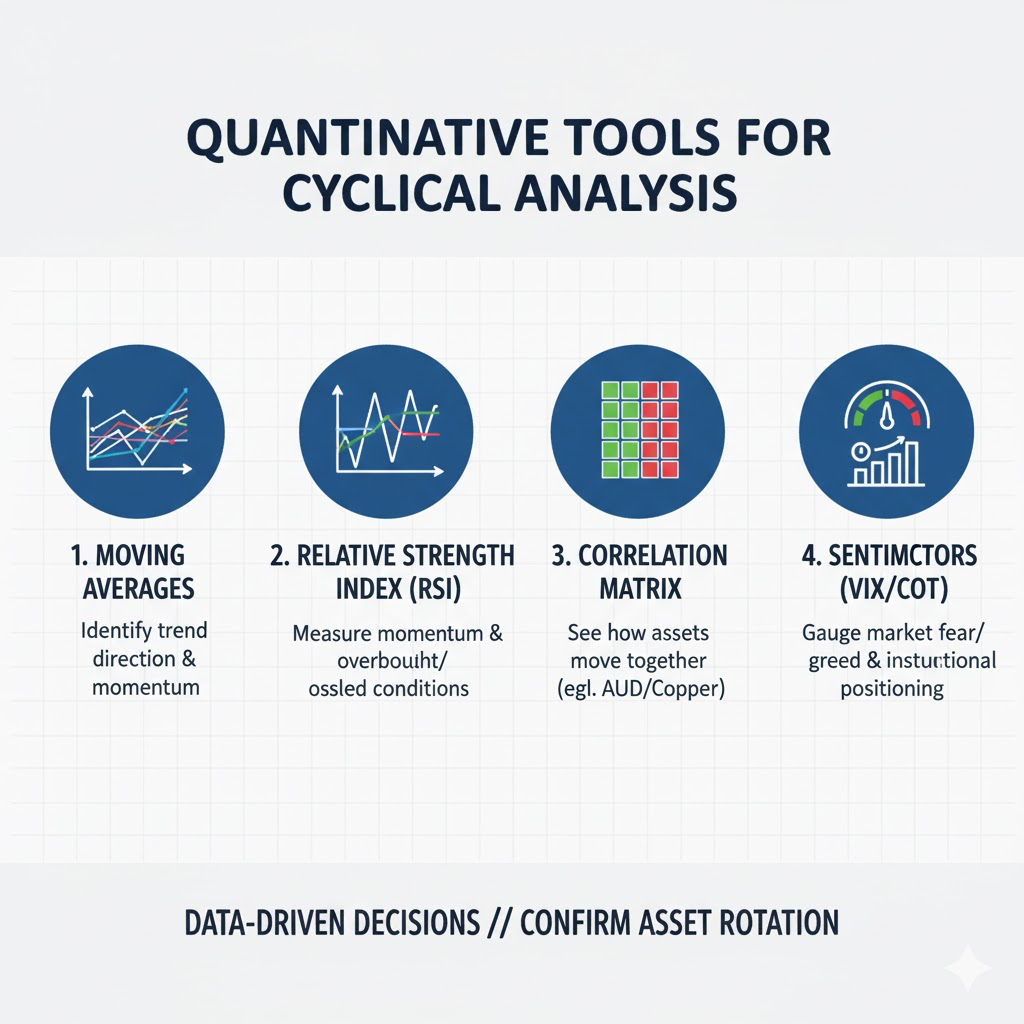
Using data-based analysis enables traders to assess the strength and timing of cyclical movements. The main tools used would be: Moving Averages, the Relative Strength Index (RSI), correlation matrices, and sentiment indicators (such as the VIX or Commitment of Traders COT reports).
For beginners to trading, momentum is a simple way to illustrate how strongly price moves, consistency with the economic cycle. More advanced traders use these tools only to add feedback to confirm asset rotations or investor sentiment changes across the markets.
A strong correlation among commodities and cyclical currencies often reveals the overall health of the global cycle. The Cyclical Rotation Model places Assets Court, on both a timeline and directional axis across four separate phases, expansion, peak, contraction, and recovery. As an example, back testing the AUD/USD spot rate against PMI momentum from 2020 to 2024, highlights how closely the two variables move together.
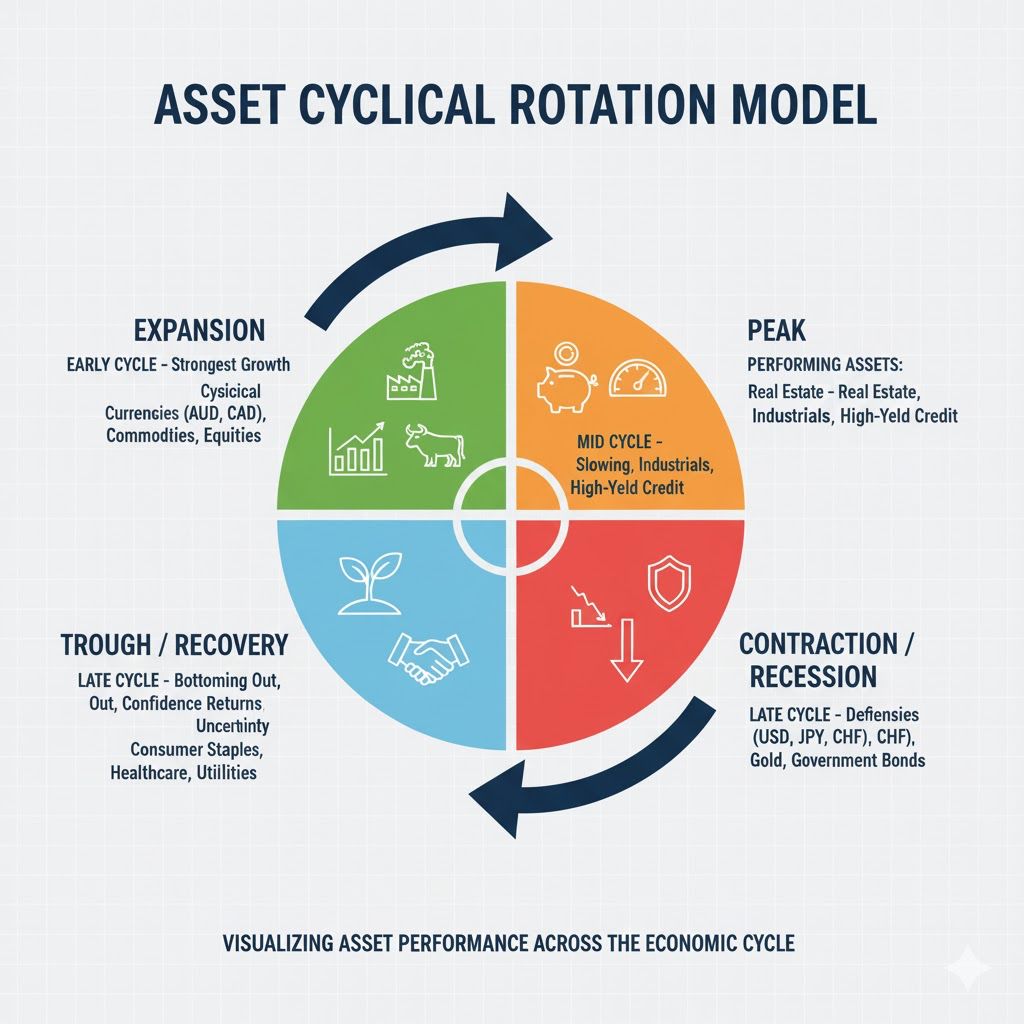
Quantitative tools provide clarity and process-based thinking to help traders look for opportunities based on data instead of personal emotion.
VI. Navigating Downturns: Defensive Assets and Portfolio Hedging
During times of economic slowdown, defensive or counter-cyclical assets can be used to help alleviate potential loss within a portfolio. Examples of defensive assets which appreciate during market turmoil include the currencies USD, JPY, and CHF, as well as assets like gold and government bonds.
From an amateur's perspective, it is easy to remember the concept of gold appreciating when other markets create downward pressure. An experienced trader may naturally transition away from AUD/USD to USD/JPY when they perceive a risk-off environment. In CFD trading, a trader can hedge by taking a long position in a defensive asset while going short on a cyclical asset. Having stop-loss orders in place along with diversification in a portfolio can help mitigate volatility in a down cycle.
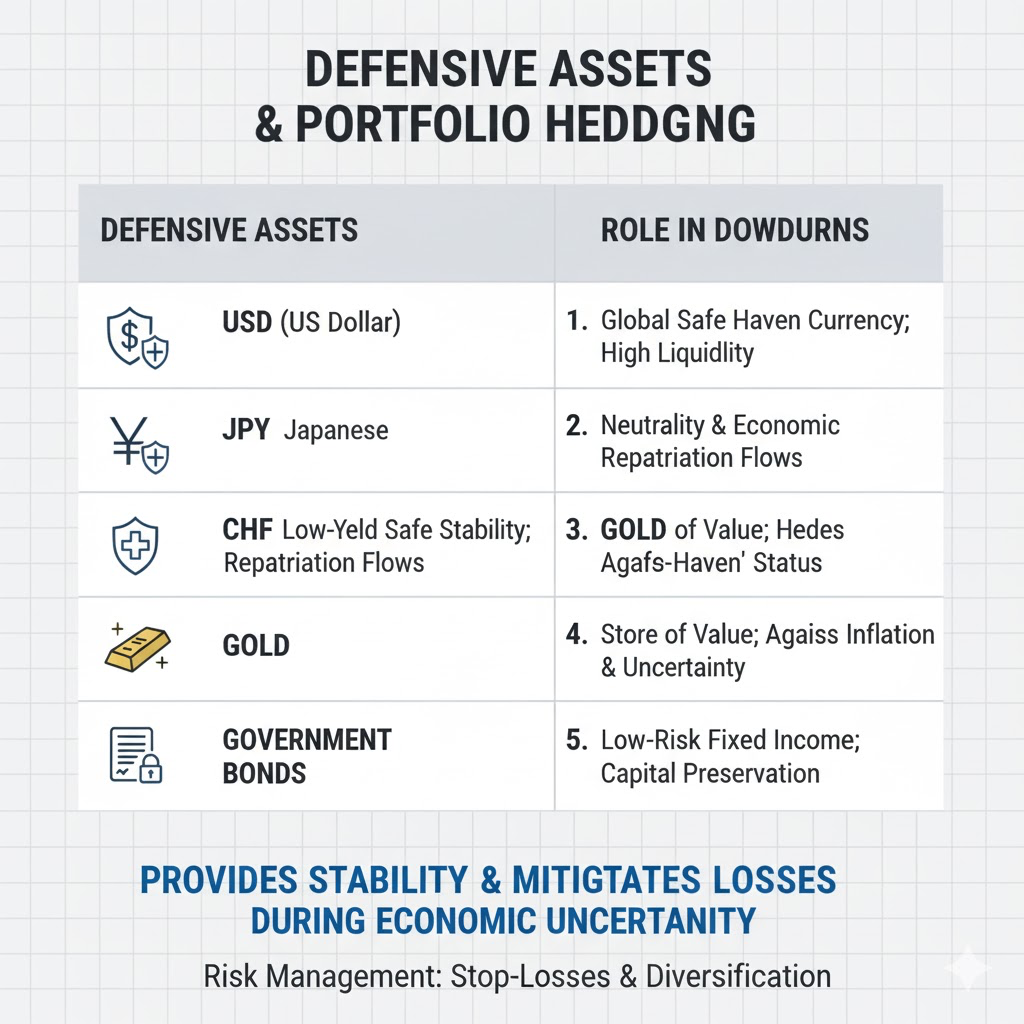
In the market of 2022, as inflation accelerated through the year along with diminishing global growth, traders' preferences transitioned away from growth assets toward gold and the U.S. Dollar or U.S. Treasuries. Knowing how to both manage risk and downside when trading the cycle is just as important as trading the upside of the cycle. The key to long-term success is consistent survival.
VII. Summary: Building a Cyclical Playbook for Forex Traders
Cyclical assets are the pulse of the world economy, and if we recognize where we are in this economic cycle, traders can make better-informed decisions on which currencies or assets to trade.
The key is to monitor GDP, the purchasing managers’ index (PMI), demand for commodities, and overall risk sentiment. A simple cyclical playbook would outline three steps:
(1) identify the fundamental phase of the world economy,
(2) select matching currencies,
(3) balance exposure with defensive hedges.
Using Tradewill’s charts and CFDs can benefit readers in analyzing these cycles.
Start identifying your next cycle trade with Tradewill today.
Stay ahead of the market — trade the cycle, not the noise.
Disclaimer: The content of the blog does not represent any position of Trade W, does not serve as any trading-related decision advice, and does not endorse any third-party.