

 Trade W

Introduction: The Investment Dilemma
It's 2 AM, and you're on Reddit. You see traders there celebrating their daily wins of $500, while just a bit down the page, long-term investors are revealing that their portfolios are up 200% over a three-year stretch. The conflict that this presents to the sort of person who might be up at this hour, scrolling through trading-related subreddits, is... quite emotional.
This precise quandary erupted onto social media when billionaires investor Howard Marks made a direct observation about the day traders. Marks said, "Day traders considered themselves successful if they bought a stock at $10 and sold it at $11, bought it back the next week at $24 and sold it at $25, and bought it a week later at $39 and sold it at $40. If you can't see the flaw in this—that the trader made $3 in a stock that appreciated by $30—you probably shouldn't read the rest of this book."
The Reddit trading community didn't take this lying down. They flooded in with thousands of comments, seeing experienced traders and sharing real-world examples of why day trading isn't just about missing the "bigger picture" and managing risk. As they saw it, day trading is a way to create a consistent cash flow and is a wealth-building methodology that has nothing to do with long-term investing. If you're a fan of short-selling, day trading, or any other way of using up and down trends to your advantage, you might want to explore the world of cash-secured puts and protective puts.
This blog presents an analysis of both strategies that is both data-driven and free of bias. The analysis includes actual insights from Reddit and up-to-date market stats so that you can really find the approach that works best for you.
Understanding Day Trading: Fast Moves, Fast Risks
Day trading involves buying and selling financial instruments within the same trading day, often multiple times, with the goal of profiting from short-term price movements. Unlike traditional investing, day traders close all positions before the market closes, avoiding overnight risk.
The Reality of Day Trading Success Rates
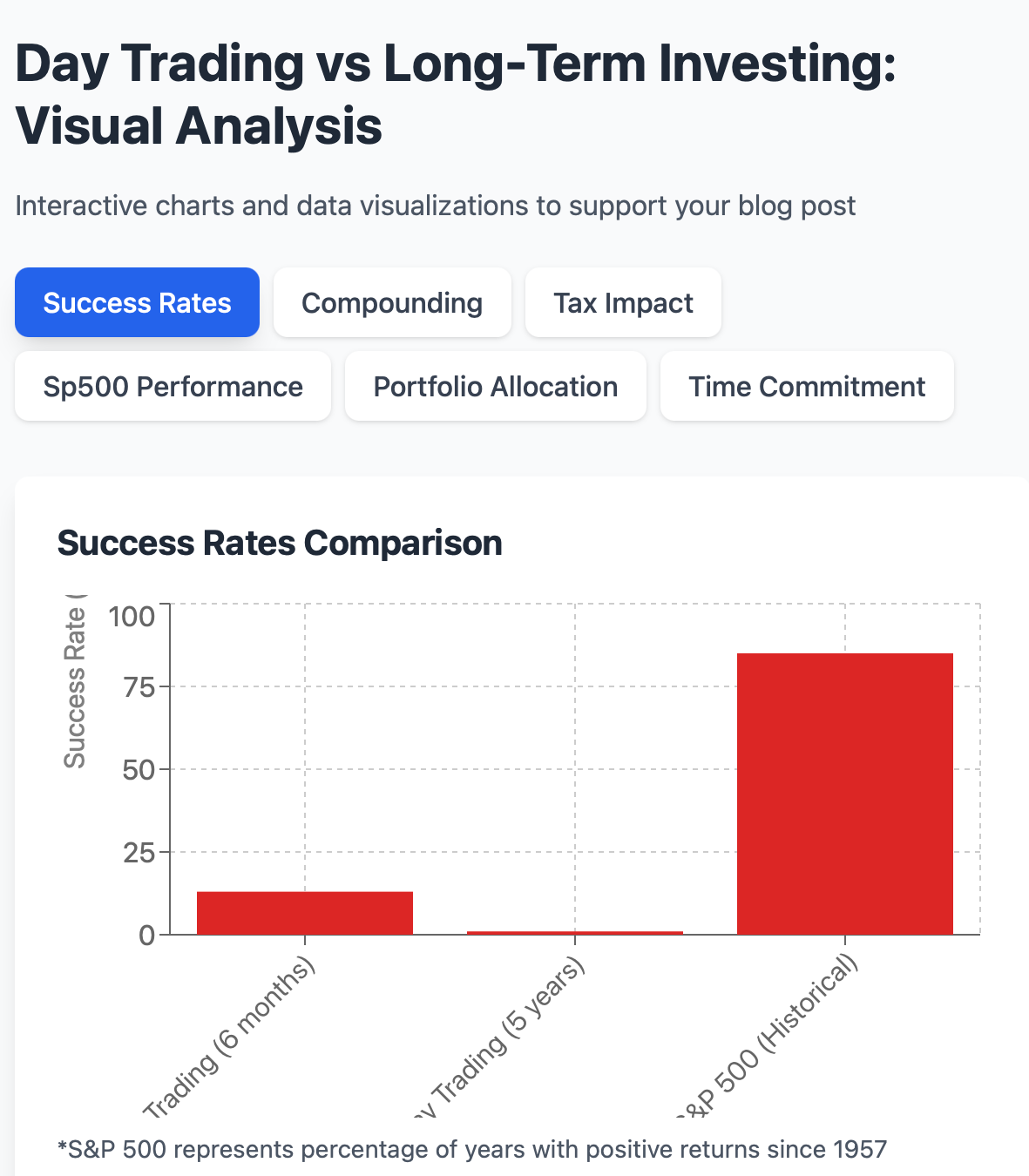
Let's start with the hard truth: Only 13% of day traders maintain consistent profitability over six months, and just 1% achieve success over five years. Even more sobering, 72% of day traders experienced financial losses in 2020, according to FINRA data.
But here's where the Reddit community pushes back on Howard Marks' critique. One veteran trader shared their journey:
"I calculated my beginning capital as a day trader to present day. I've had a return from my starting capital in 2008 to present day to be 3,400%. That's an average of 200% per year for 17 years. The first six of those years I lost money. This is all day trading."
The Psychology and Mechanics of Day Trading
Day trading requires intense focus, quick decision-making, and emotional discipline. Traders use technical analysis, chart patterns, and momentum indicators to identify opportunities within minutes or hours. The psychological toll is significant—constant screen time, reaction speed pressure, and the emotional rollercoaster of rapid gains and losses.
Modern day traders utilize:
-
Advanced trading platforms with real-time data
-
Leverage to amplify positions (and risks)
-
Stop-loss orders to limit downside
-
Multiple monitors and high-speed internet connections
-
Sophisticated charting tools and technical indicators
The Day Trading Advantage: Flexibility and Risk Control
Reddit investors highlight many pros that Howard Marks' critique doesn't grapple with. Here's why they think it's okay to trade like it's 1999 again.
-
Stocks are up. Markets that go up make people money.
-
"bull markets should be treated as bull markets."
-
The Reddit way has made many people rich.
Efficient use of capital: Day traders are also buying 10,000 shares and selling them after making a dollar profit. A long-term investor would be using maybe 100 shares to make the same investment.
Risk Management: "In day trading, a stock can shift from $10 to $11 to $10 and a day trader will pocket up to $2 profit that day. Moreover, during bearish market days, my day trading gains usually offset my long-term position daily unrealized pullback losses."
Market adaptability: Day traders can profit in both rising and falling markets through short selling. Long-term investors usually need upward market momentum to make a profit.
The Harsh Reality Check
For all the success stories, the stats are quite grim. A mere 1%-3% of day traders consistently beat the stock market. More than 97% of day traders would be better off investing in the broader market, like the S&P 500.
Professional trading firms with significant resources and advanced technology struggle too. Among proprietary traders, only 16% are profitable, with just 3% earning over USD significant amounts.
Long-Term Investing: Compounding vs. Complacency
Investing for the long term means purchasing and retaining investments for a long stretch—usually five years or longer. The hope is that this strategy will pay off over time, not just because of the appreciation in the overall market but also due to the "compounding" effect that increasingly larger sums (the principal plus prior interest) can generate.
The Power of Time in Market
Starting in 1957, the S&P 500 has brought in an over 10% average annual return, delivering substantial long-term wealth to investors who have put their faith in it and let time do the rest. To be exact, in the 100 years prior to 2018, the S&P 500's very quietly muttered law of large numbers had it spewing forth 10.463% annualized returns. Most of us will just round that to 10.5% and call it a day.
The average yearly return from 1928 to 2024 has been 8%. But the compound annual growth rate has been 6.2%. This shows that we need to understand several different ways to calculate returns.
The Compounding Effect
There can be no question about the compelling effectiveness of compounding in mathematics. A $10,000 investment that works at 10% per year for a number of years produces the following results:
-
$26,974 after 10 years
-
$67,275 after 20 years.
-
$174,494 after 30 years is a large sum of money.
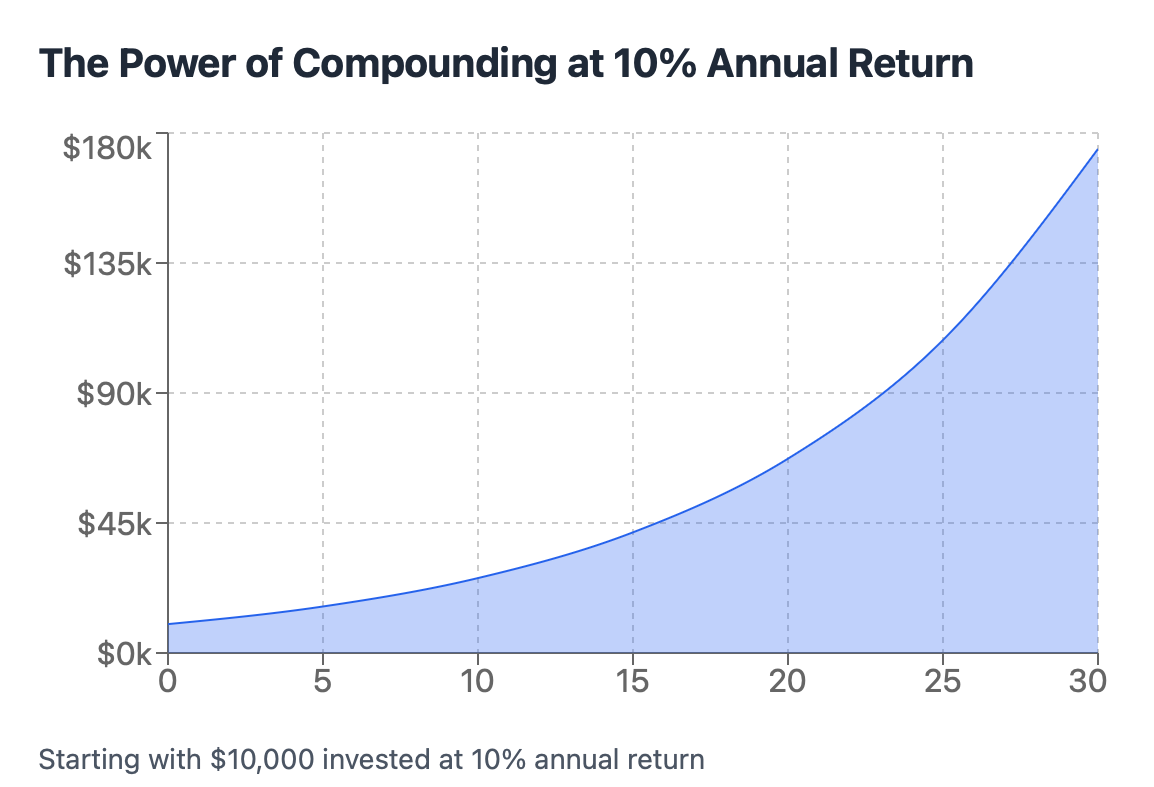
That amount may put you in a position of comfort or luxury in retirement. Yet the figure also may represent something else: the value of not having the amount you were due—and not even knowing you were due it—for 30 long years.
This is what Howard Marks argues that day traders miss when they focus on $1-2 daily profits. Instead of holding winning positions, they cash out after the kind of minor moves that can only be reliably charted in a bull market.
Long-Term Investing Isn't "Set and Forget"
This is not what many people think. But in truth, investing well for a long time takes a lot of work. You have to make a lot of decisions—mostly good ones—if you want to come out ahead.
-
Distributing assets: Balancing equities, fixed income, and other investments based on age and risk tolerance.
-
Rebalance: Adjust portfolio weights periodically to maintain target allocations.
-
Tax Optimization: Leveraging tax-favored accounts and harvesting loss strategies
-
Emotional Discipline: Staying engaged throughout market drops and not succumbing to the temptation to sell in a panic.
The Psychological Challenge
One Reddit user captured the emotional reality: "I still can't sleep before NVIDIA's earnings—even though I'm holding for the long run."
Long-term investors face their own psychological challenges:
-
FOMO: Fear of missing out on hot stocks or market rallies
-
Volatility Stress: Watching portfolio values swing wildly during market turbulence
-
Patience Requirements: Waiting years or decades for investment theses to play out
-
Opportunity Cost: Wondering if active trading could generate higher returns
The Middle Ground: Hybrid Strategies
Many experienced investors don't choose between day trading and long-term investing—they combine both approaches strategically.
Core-Satellite Approach
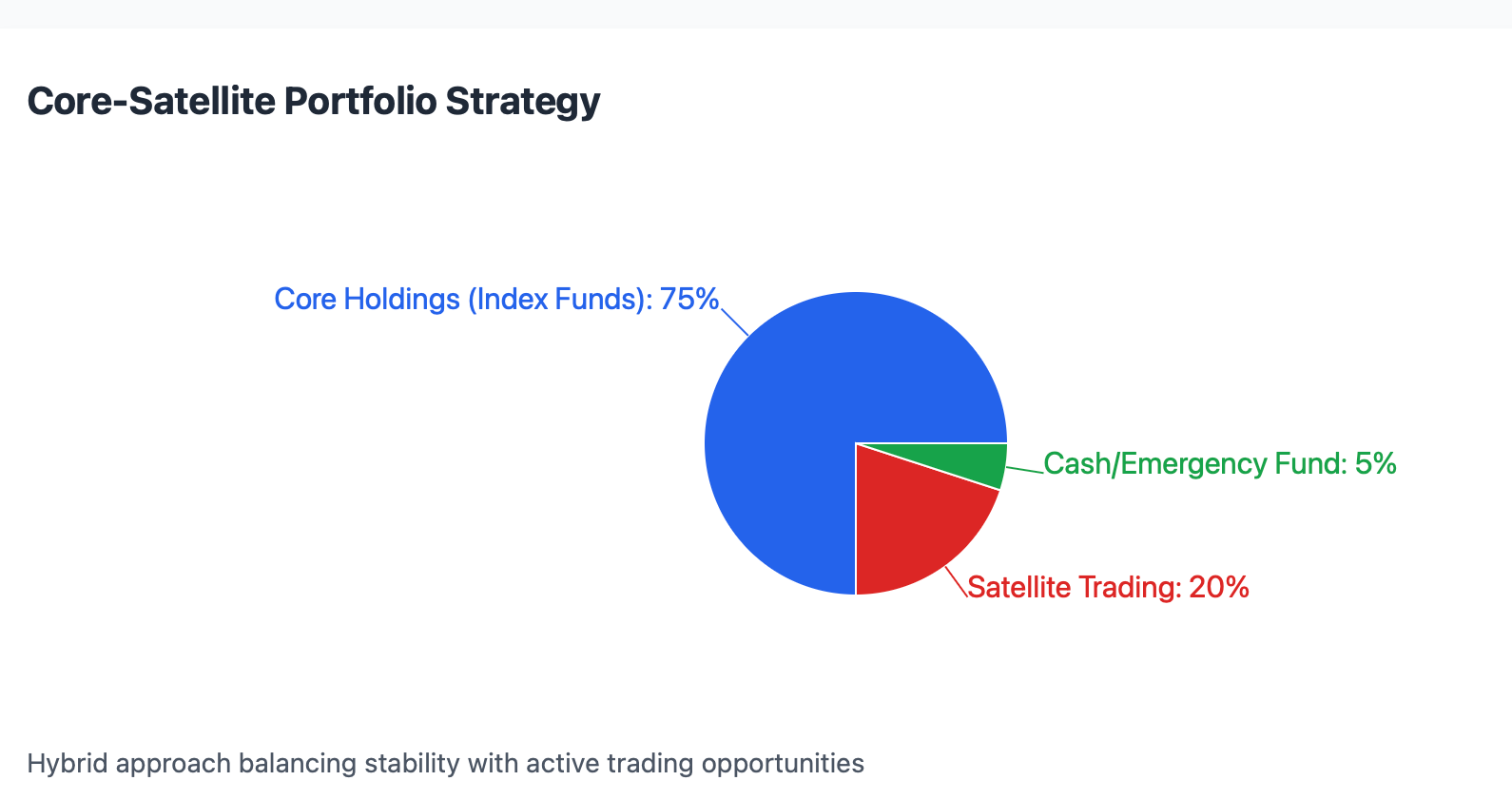
This strategy involves:
-
Core Holdings: 70-80% of capital in diversified, long-term investments (index funds, blue-chip stocks)
-
Satellite Positions: 20-30% allocated to tactical trades, including day trading, swing trading, and sector rotation
Reddit traders frequently describe this balanced approach:
"I use all three approaches, day trade, swing trade and hold some long term. Lots of intraday opportunities to make money, currently a lot fewer long term. I create capital for my long term by trading."
Risk Hedging and Cash Flow Management
Smart traders use day trading as a complement to long-term positions:
"Sometimes I have to day trade just to cover my AMD losses. It's nice to supplement enough throughout the day so that during a drawdown, you are still even so that when your long positions come back, you are then making money and not just catching up."
The Diversification Angle
Professional money managers often employ multiple strategies:
-
Long-term equity positions for compound growth
-
Short-term trading for income generation and volatility management
-
Options strategies for additional income and downside protection
-
Sector rotation based on economic cycles
Strategy Comparison: Pros and Cons
Day Trading Advantages:
-
Acknowledge the accomplishments and setbacks you experience daily.
-
Risk Not Held Overnight: All exposures are eliminated before the day is done.
-
Flexibility: Has the ability to produce earnings in a market that is rising, falling, or flat.
-
Capital Efficiency: increased capital turnover.
-
Developing Skills: Rapid responses build trading smarts.
Day Trading Disadvantages:
-
Success is elusive: Even after 6 months, only 13% feel they have a positive cash flow that they are maintaining.
-
Extended stress: This involved an uninterrupted need for vigilance, along with prompt decision-making.
-
The expenses that are tied to transactions: It costs money when you make a transaction. When you buy and when you sell, besides the taxes and costs of rebalancing your portfolio, you must consider two kinds of costs associated with transactions.
-
Inefficient taxation: Inefficient taxation results in the same rate being applied to short-term profits from asset sales as to normal income.
-
Requires an undivided attention for the whole trading day.
Long-Term Investing Advantages:
-
Dependable Historical Returns: The S&P 500 has proved its worth time and again. Since its inception in 1957, it has averaged returns of a little over 10% per year.
-
Lowered stress: High supervision not needed.
-
Easier to construct portfolios that are well-diversified and serve their intended functions.
Long-Term Investing Disadvantages:
-
Delayed Results.: It may take several years or even several decades for truly meaningful outcomes to be achieved.
-
Market risk: Prolonged downturns in the market can annihilate investment portfolios.
-
Inflation risk: The returns you set may not equal the prices that are rising.
When you don't engage in short-term trading, you're foregoing profits you could have made from trading. Many investors just don't have the time, and also the kind of risk tolerance that's necessary, to trade this way. But some folks make this kind of trade a go, using some strategies that make it workable for them. So, if you're not doing it, and if you're missing some kind of profit that you could be making.
When the market is down, it takes a lot of emotional energy just to keep the faith. You have to be really patient to endure these tough times. It is indeed a test of faith and faith in the sense of taking a long view, not just in the sense of biding time until the market recovers.
Personality Fit: Know Yourself Before Choosing
You should align your investment strategy with your persona, way of living, and monetary aspirations.
-
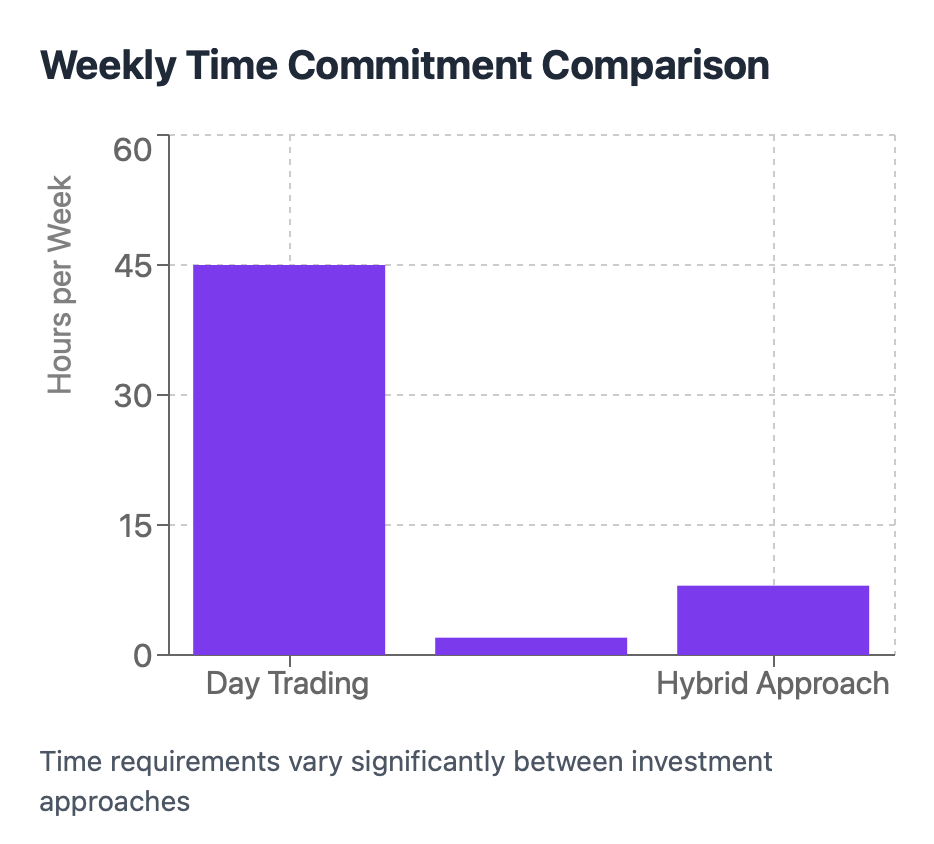
Time Commitment: Day trading requires dedication, with 6 to 8 hours spent each day in the market, plus additional time needed to prepare for the upcoming trading sessions.
-
Long-haul Investment: 1-2 hours every week spent appraising and recalibrating the portfolio.
Risk Tolerance
-
Day Trading: At ease with daily ups and downs and possible complete loss
-
Investing for the Long Term: Accepting the possibility of temporary multi-year losses in return for gains over a long period.
Emotional Profile
-
Day trading: Flourishes in tense situations; makes fast, reliable decisions; maintains composure under pressure.
-
Investing for the Long Term: Requires patience, discipline, and the ability to ignore the distractions of the short-term
Financial Goals
-
Day trading: Pursuing the active income, the short-term wealth.
-
Investing for the Long Haul: Planning for life after work, preserving the money you have, building an enduring legacy.
Skill Requirements
-
Day Trading: Technical analysis, chart reading, risk management, emotional control
-
Investing for the Long Haul: Patience, diversification, and fundamental analysis. Understanding economics and the big picture.
The Tax Reality: A Critical Factor
A frequently neglected facet of the debate between day trading and long-term investing is how they perform in terms of tax efficiency. In the United States:
Short-term capital gains (assets held for less than one year) are taxed just like ordinary income, with rates going up to 37%.
Long-term capital gains: Assets held for over one year qualify for the preferential rates applied to long-term capital gains: 0%, 15%, or 20%, depending on how much the taxpayer earned during the year.
A day trader who is in the 24% tax bracket and makes $10,000 in short-term gains has a tax liability of $2,400. But the same gains held long-term might only incur $1,500 in taxes (at a 15% rate), leaving $900 more for reinvestment.
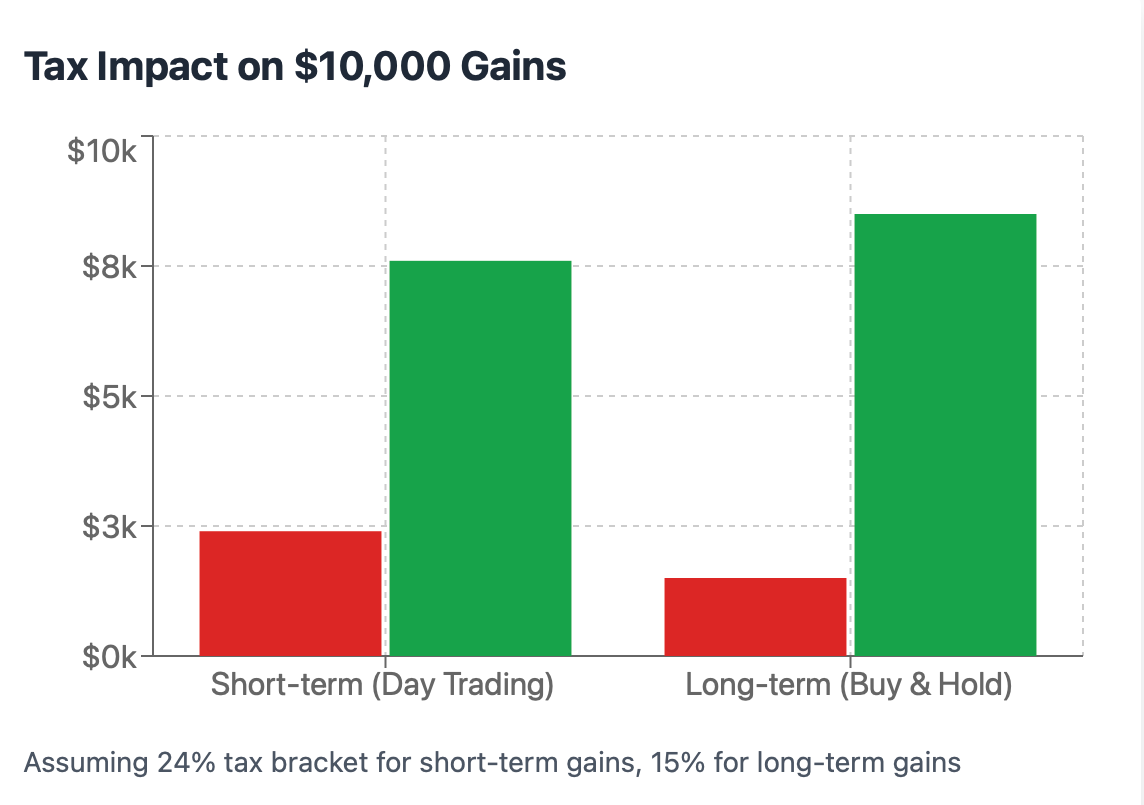
Over time, this tax disadvantage compounds, making it much more difficult for day traders to beat buy-and-hold investors. Compounding affects traders much more than it does investors. Why? Because traders pay these taxes annually, which means they are paying taxes on top of taxes—over time. And what is the primary reason that traders have this annual tax liability?
Real-World Case Studies
Case Study 1: The Reddit Day Trader
A Reddit user detailed their 17-year experience with losses in the first six years, followed by a 3,400% return in the most recent 11 years. While this is a truly impressive figure (and an extreme outlier), it is important to note that this return is not typical of what most day traders experience over time.
Key Factors in Their Success:
-
Conducted student activities on a trading floor.
-
Poured money into schooling and training for people.
-
Upheld rigorous risk management policies and procedures.
-
Possessed enough funding to endure early financial setbacks
Case Study 2: The S&P 500 Investor
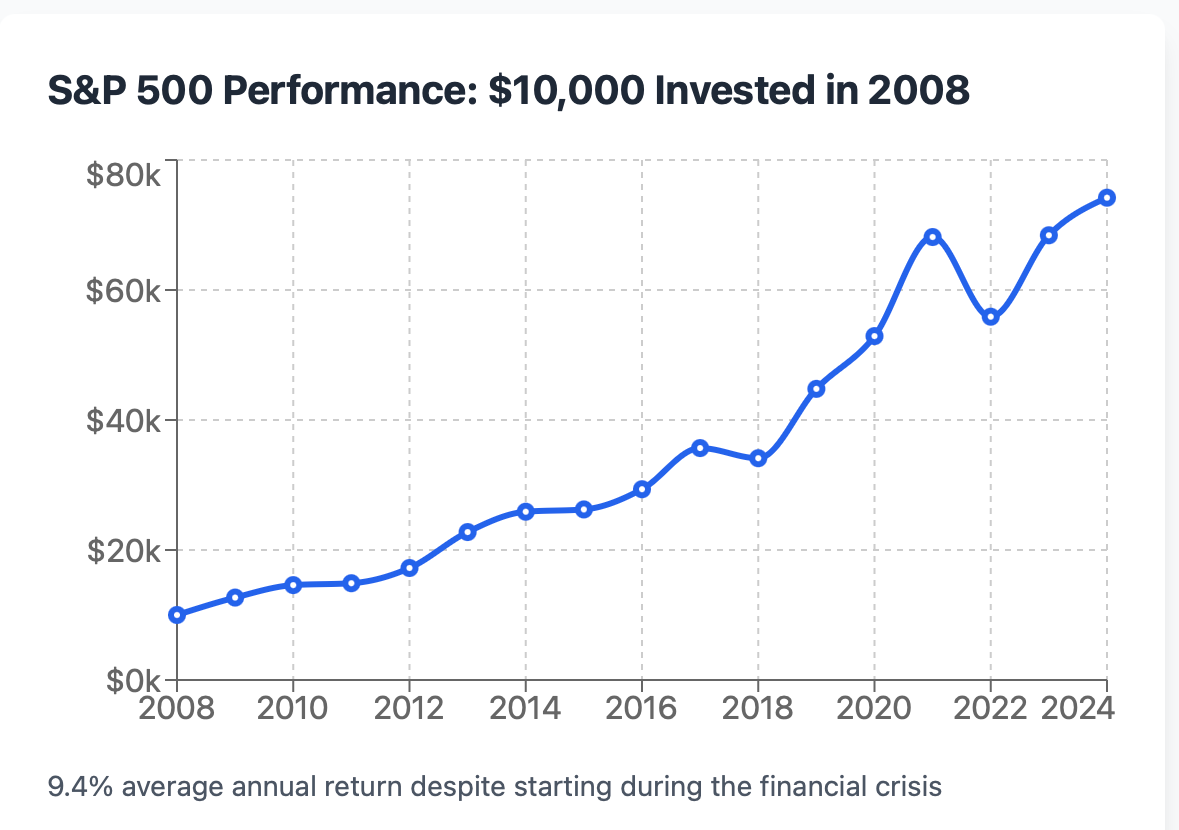
An investor placing $10,000 into the S&P 500 in 2008 (during the financial crisis) and holding through 2024 would now have approximately $42,000. This is with the assumption of dividend reinvestment. It represents about a 9.4% annual return despite starting at one of the worst possible times.
Key Factors in Their Success:
-
Maintained investment through several market periods.
-
derived profits from dividend reinvestment
-
Steering clear of attempting to time the market.
-
Retained emotional control in tough times.
Case Study 3: The Hybrid Approach
An investor with a PhD in economics and a 40-year track record allocates 80% of his assets to index funds and 20% to active trading. After 10 years:
-
The core portfolio increases from $80,000 to $200,000 (9.6% annual return).
-
Trading portfolio nets $50,000 in profits over 10 years
-
Cumulative return: 250% vs. 220% for index fund performance.
-
This method afforded a bit more return, with the added bonus of seeming like real trading.
The Verdict: Context Matters
Day trading and long-term investing are both potentially effective strategies. They serve, however, different purposes and appeal to different personalities. Day trading is for those who like things fast and furious; long-term investing is for those who like to take the long, safe road.
Select day trading if you are:
-
Possess enough capital to take hits while engaging in a learning curve.
-
Can devote completely professional focus to the market
-
Prosper in conditions of stress and take pleasure in making choices rapidly.
-
Comprehend the statistical probabilities and acknowledge them
-
Possess alternate monetary inflow during student life.
Select the long game of wealth accumulation when you:
-
Desire to accumulate assets for retirement or other significant life objectives.
-
Wealth building favors a more passive approach, though.
-
Promote tax efficiency and simplicity.
-
Can sustain emotional control during periods of decline in the marketplace
-
Maintain a time perspective of 10 or more years.
Think about a combination method if you:
-
Desire the finest aspects of two different situations.
-
Possess complex knowledge of investments
-
Can separate diverse risk levels into distinct categories.
-
Participate in some lively trading, but grasp the significance of constructing wealth over the long haul.
Conclusion: The Strategy That Fits You Wins
Most day traders ignore significant long-term profits and instead concentrate on small daily ones. Howard Marks isn't entirely wrong when he critiques day traders. However, the day trading protests by the Reddit community that assert day trading isn't a stupid strategy highlight an important truth: there's no one-size-fits-all investment strategy.
The crucial understanding isn't that day trading is undesirable or that long-term investing lacks excitement. It's that effective investing demands a candid evaluation of one's character, objectives, and skills.
Only 13% of day traders remain profitable after six months. The average annual return for the S&P 500 over many decades is more than 10%. Statistical evidence favors long-term investing for most people.
However, the statistics only reveal part of the picture. There are some traders who, when the random effects that govern any form of trading are taken into account, really do have the skills, discipline, and emotional dispositions that enable them to succeed at day trading. Other traders can achieve a kind of active trading nirvana, not through day trading, but through some form of hybrid trading.
The decision that carries the most weight isn’t the one between day trading and long-term investing. It’s the one concerning which strategy you can stick with in both bull and bear markets. And it really does boil down to that, because in the end, consistency and discipline matter a whole lot more than the specific kind of approach you take.
The next step is this: Commit no significant capital to any strategy until you've proofed it with a small investment. For day trading strategies, try paper trading first. For buy-and-hold, long-term approaches, test them out with a small investment in an index fund. And for any trading strategies or tactical asset allocation moves, monitor not just your results but also your emotional responses to wins and losses. Then increase the size of your trades or investments as your confidence and competence grow.
Here are two examples of the kind of success that can be achieved using either of these quite different methods. They have been used with striking effectiveness.
What do you think about the debate between day trading and long-term investing? Have you experienced both methods?
Enlighten us too —the investment community is better for it when we share our actual experiences, good and bad.
Disclaimer: The content of the blog does not represent any position of Trade W, does not serve as any trading-related decision advice, and does not endorse any third-party.