
 Trade W
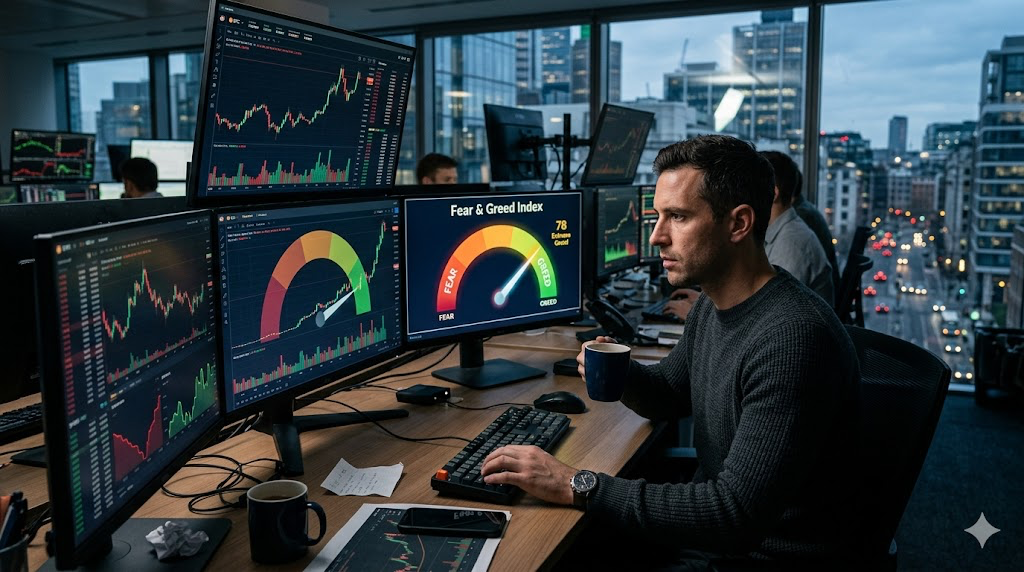
What is the Fear & Greed Index?
The Fear & Greed Index is a way to measure the amount of fear and greed in the cryptocurrency markets. Each time the price of Bitcoin drops sharply or reaches an all-time high, there are always similar market emotions behind those price changes. The index provides a numerical value from 0 to 100 to represent traders' levels of emotion toward their trading activity, essentially giving traders a summary of how they feel about trading at any particular time.
The index can help traders understand what happens when enough people become scared or greedy. In an extreme case, if many people become scared, the market tends to drop below what value would justify based on fundamentals, thus creating an opportunity for buyers. Conversely, if many traders become greedy, prices rise above what is logical, thus creating an opportunity for sellers.
The Fear & Greed Index measures the level of emotion present in the market every moment of every day. Think of a Black Friday shopping experience at a mall, with shoppers going crazy and grabbing everything off the shelves regardless of price. That represents extreme levels of greed. When people are too afraid to go to the mall, very few people will be shopping. That would represent extreme levels of fear. In the end, the index measures those emotions through how crowds behave and provides traders with actionable insight into market trends at a given time.
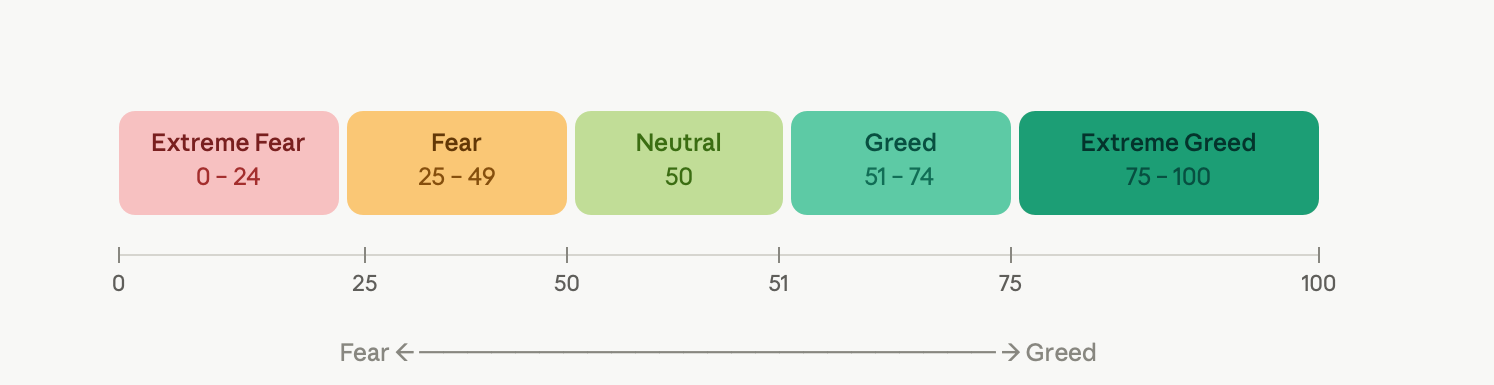
Traders in the crypto market look at the index to quantify whether they are experiencing extreme levels of panic or euphoria. Forex and CFDs utilise the same principle to gauge how much risk to take in the overall market. Institutional investors look to this, among many other macro indicators, to base their investment decisions on the information received from the above-mentioned indicators.
The most important thing to note is that sentiment tends to change before price. If you see extreme fear in the index, generally, people have already been trying to get out of their positions. It is the gap between changes in sentiment and changes in price that creates trading opportunities.
Understanding How the Fear and Greed Index Functions
The Fear and Greed Index was not created with cryptocurrency in mind; it was originally created by CNN Business to help show sentiment within the stock market. Research into investor psychology has existed for more than 100 years, including in the stock market. Alternative.me then created the Fear and Greed Index for crypto using the same approach as in stock trading, allowing crypto retail trader sentiment to change quickly and drastically compared with most traditional market conditions.
What makes this index reliable is not one of the seven categories of metrics by itself, but instead how they are combined together and weighted based on their predictive strength to create a greater degree of credibility. In other words, while individual metrics could be distorted due to influences outside an individual metric's control, using multiple independent metrics that point toward a similar result provides greater credibility than relying on one metric alone.
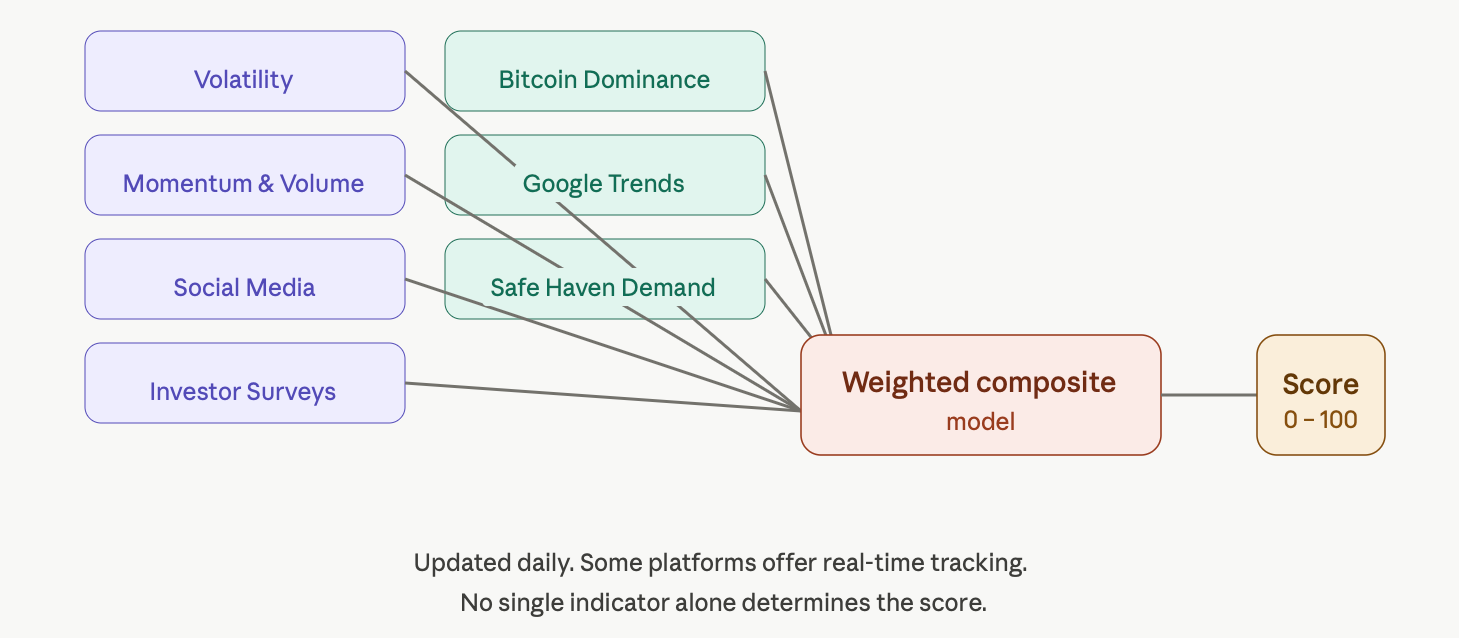
Every day, most platforms update their index. A few trading dashboards provide near-real-time tracking. Each component doesn't have the same impact; however, some beginners do not realise how important this is. For example, an increase in the amount of chatter on social media will not impact the index as much as a major change in the volatility of the price of Bitcoin. The weighting system incorporates the fact that certain signals have historically been much better at predicting results than others.
The 7 Indicators That Drive the Fear and Greed Index
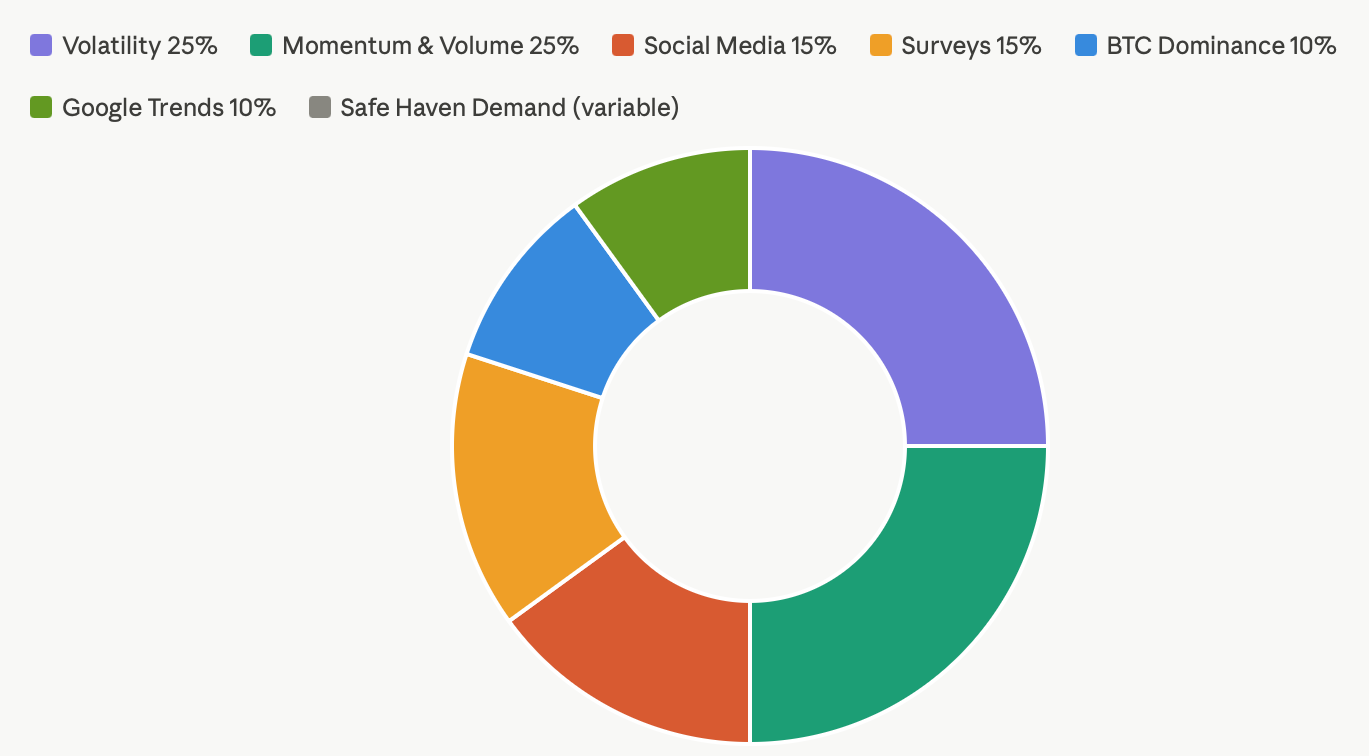
Here's what each of the seven indicators actually measures, and why it matters to your trading decisions:
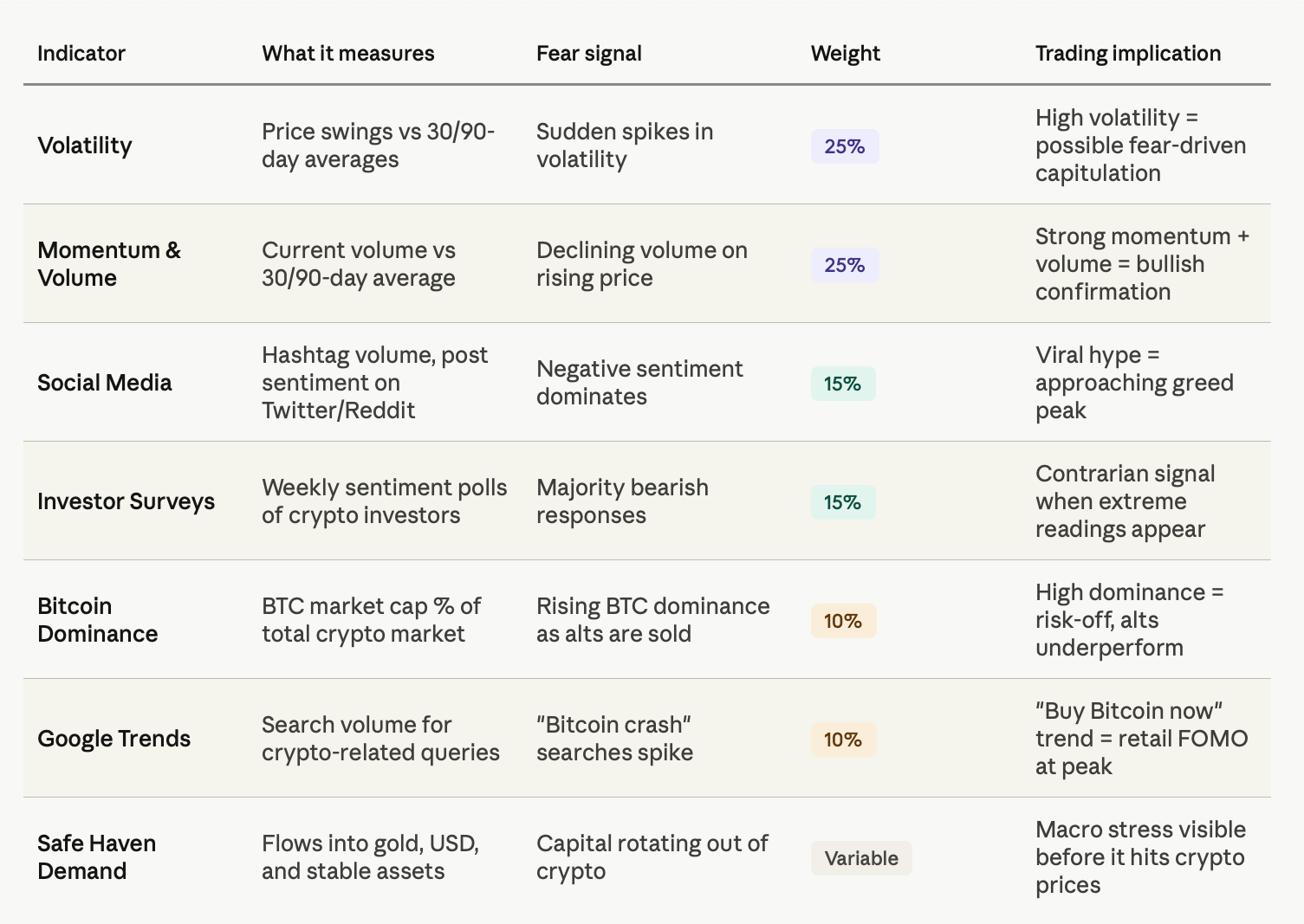
Every one of these indicators demonstrates what actual traders are doing, rather than being based only on abstract theories or models. If there is a drastic spike in Bitcoin dominance, with altcoin market caps falling, this means that numerous participants have all determined that, due to unanticipated factors (e.g., the economy), they want to invest their money in Bitcoin until things calm down, not the other way around, as some other signals may suggest. Similarly, if Google Trends shows spikes in search queries for "buy bitcoin," then that could indicate that many retail investors are piling in after seeing a headline in the national news; however, as has been proven in the past, this could indicate the end of a phase of greed and not necessarily the start of a sustainable rally.
Why the Fear and Greed Index Is a Powerful Tool for Timing the Market
Warren Buffett's famous saying, "be fearful when others are greedy; be greedy when others are fearful," is an excellent illustration of the contrarian investment strategy. In addition, the Fear and Greed Index provides investors with a clear guide on when to take action according to this philosophy.
Historically, when the fear reading reaches extreme levels, the market has already factored in all of the bad news. Panic sellers have sold, weak holders have left the market, etc. Therefore, while there may not be an immediate price correction, historically speaking, periods of extreme fear regarding Bitcoin have provided some of the largest price recoveries the market has seen to date. For example, the extreme fear level at the time of Bitcoin's crash to $3,800 in March 2020 was followed by a recovery to greater than $60,000 within a year.
The opposite example, extreme greed, follows the previous one quite well. In late 2021, Bitcoin was priced above $69,000 for a number of weeks, and the Fear and Greed Index was in extreme greed territory. This was followed by a crash over the course of the following year, erasing 70% of Bitcoin's value.
Therefore, one very important thing to consider is that the Fear and Greed Index will provide traders with an idea of where the crowd is positioned at that moment in time, and experienced traders will find that when they see the entire crowd positioned on one side of an investment, it is usually much closer to reversing than most people actually believe.
While long-term holders usually are not able to take advantage of rapid changes in investor sentiment, short-term traders are uniquely positioned to make quick and profitable trades by acting swiftly on those sentiment shifts. For instance, a swing trader who sees the index drop from 75 to 55 over the course of two weeks will have valuable information regarding the psychology of the market, independent of whether the price has changed during that period.
How to Use the Fear and Greed Index in Your Trading Strategy
The primary thing to remember is that the Fear and Greed Index is a confirmation tool only and does NOT signal an entry or exit. For example, you should not enter a position merely because the reading is at 15, which indicates extreme fear. If you obtain the index at this number, then you should wait until it aligns with other indicators and confirms that they agree with one another.
You can use the Fear and Greed Index to develop a trading strategy by utilising the following guidelines:
Use RSI for your entry confirmation: When there is extreme fear, meaning the Fear and Greed Index is in extreme fear territory, and your daily RSI is below 30, which indicates oversold conditions, those two signals together create a strong argument for a possible market reversal. Both alone are not strong indicators, but when both are showing the same thing, they suggest that the market is technically and psychologically oversold.
Use MACD for your momentum confirmation: If you are getting a fear reading, check the MACD to see if it is showing a bullish crossover or at least a contraction in bearish momentum. If there is a fear of reading plus a MACD showing that momentum has peaked, then this creates a setup. If there is a fear reading plus a MACD that is still deep in negative territory, then it is too early to look at this as a signal.
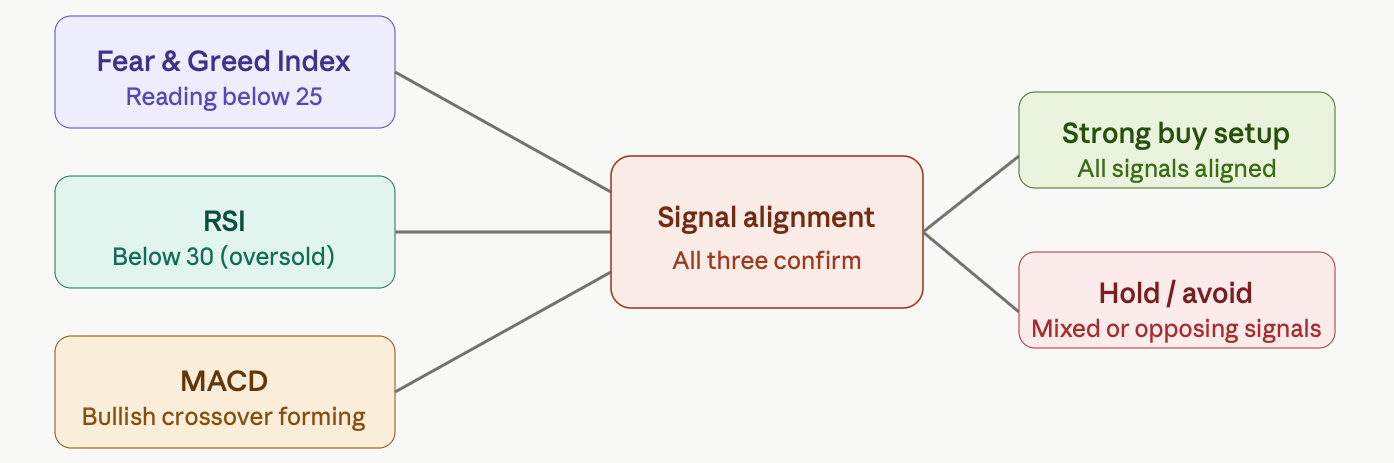
The primary thing to remember is that the Fear and Greed Index is a confirmation tool only and does not signal an entry or exit. For example, you should not enter a position merely because the reading is at 15, which indicates extreme fear. If you obtain the index at this number, then you should wait until it aligns with other indicators and confirms that they agree with one another.
You can use the Fear and Greed Index to develop a trading strategy by utilizing the following guidelines:
Use RSI for your entry confirmation: When there is extreme fear, meaning the Fear and Greed Index is in extreme fear territory, and your daily RSI is below 30, which indicates oversold conditions, those two signals together create a strong argument for a possible market reversal. Both alone are not strong indicators, but when both are showing the same thing, they suggest that the market is technically and psychologically oversold.
Use MACD for your momentum confirmation: If you are getting a fear reading, check the MACD to see if it is showing a bullish crossover or at least a contraction in bearish momentum. If there is a fear reading plus a MACD showing that momentum has peaked, then this creates a setup. If there is a fear reading plus a MACD that is still deep in negative territory, then it is too early to look at this as a signal.
Common Mistakes When Using the Fear and Greed Index
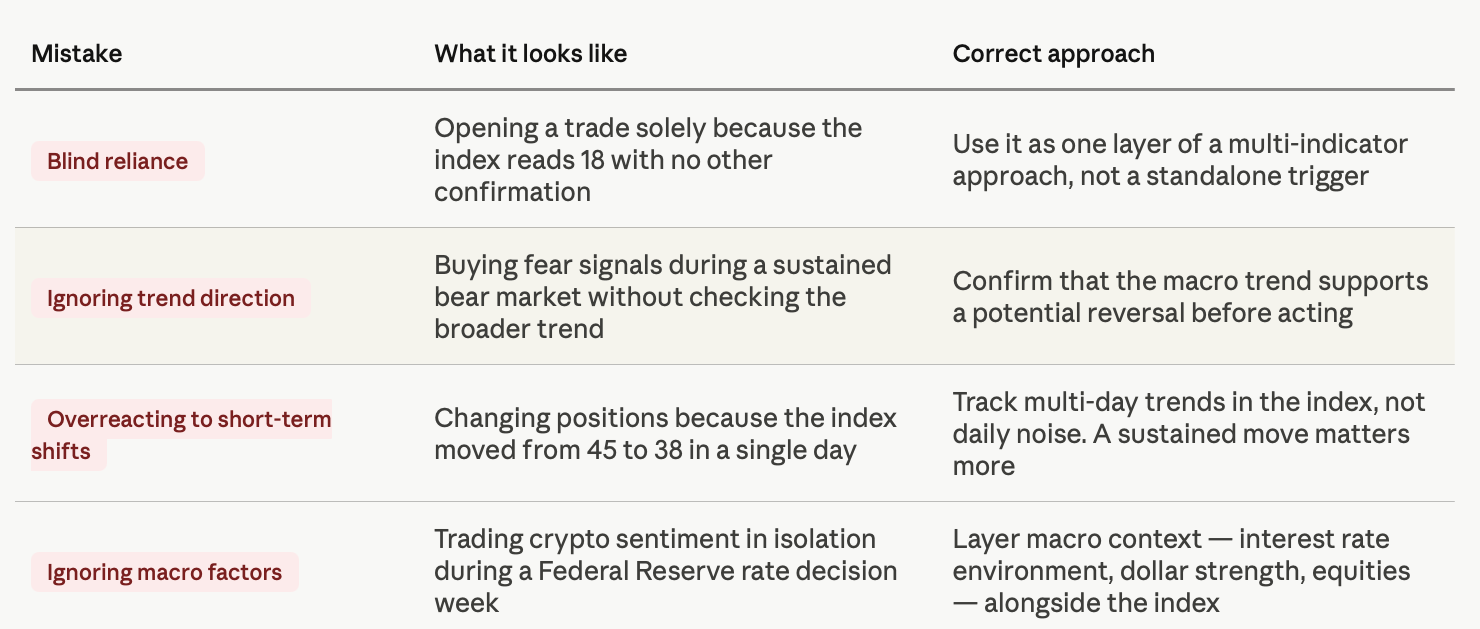
The long-term greed described above is worth analysing carefully. The 2021 bull run was a prime example; for months, Bitcoin remained in "Extreme Greed" territory but never pulled back significantly. A trader who went short based solely on the index signalling 80 would have faced substantial losses had they held onto their position until BTC reached $69,000. The index represents sentiment; however, the belief systems developed around an event can be sustained much longer than logic would dictate, particularly when the narrative behind an event is supported by institutional participation. So, although the index serves as an indicator, it is not the "stopwatch" that some people believe it to be.
Best Tools to Track the Fear and Greed Index in Real Time
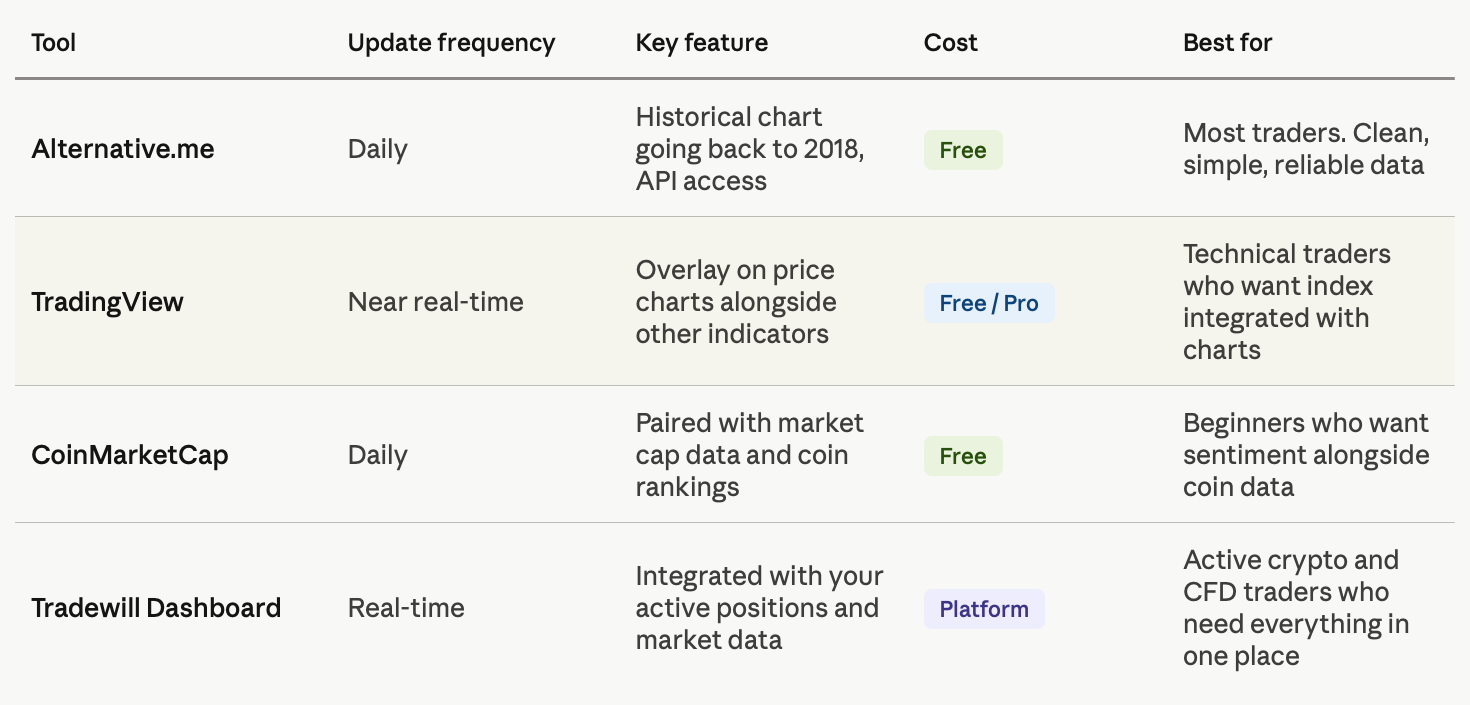
For the majority of traders, reviewing the index once each day as part of their morning market review provides sufficient data on which to base their strategy for the entire day. The daily reading will provide the necessary context to prepare for the current trading day. If you are a swing trader using a weekly timeframe, looking at the average trend in the index over the week will be significantly more helpful than simply reacting to the daily number when making trading decisions. Building the habit of understanding where market sentiment is before even looking at charts will give you valuable context when evaluating price action.
Final Thoughts
The Fear and Greed Index does not forecast what is going to happen next. There is no single indicator that can do this, but what the index does provide is arguably even more useful: a fact-based image of how the majority of people are feeling, which is often one of the biggest influences on price action that the chart itself does not directly show.
Swing traders can use the Fear and Greed Index as an emotional filter to avoid making trades based on buying into euphoria or selling out of despair, and vice versa. The majority of retail traders make this mistake at every turning point in the market cycle. A short-term trader can identify when price action has reached an emotional extreme by using the index as a tool to anticipate where a reversal is more likely to occur. For anyone trading crypto CFDs, it provides an additional layer of macro sentiment context, helping traders combine technical analysis with the reality of how the market is actually behaving.
The traders who consistently outperform the market do not necessarily have better charts than everyone else; they have a better ability to remain aware of their emotions, and the Fear and Greed Index, combined with sound technical analysis, provides one of the most accessible methods for systematically developing that edge.
Start trading on Tradewill today and stop guessing what the market is feeling.
Disclaimer: The content of the blog does not represent any position of Trade W, does not serve as any trading-related decision advice, and does not endorse any third-party.