

 Trade W

Basic Awareness Layer
What Are FOMC Meeting Minutes and Why Do They Matter?
If you follow financial news, you've likely heard about the FOMC meeting minutes. This term can be a bit confusing, as there is a lot of conflicting information about this topic and how it fits into the overall financial markets. We're going to take a look at how the FOMC meeting minutes work in an easy-to-understand way.
The FOMC (Federal Open Market Committee) is not just one person who makes decisions about interest rates; it boasts 12 voters who make up the committee. The voters include the Federal Reserve Board of Governors, the President of the New York Federal Reserve Bank, and the Presidents of the 4 regional Federal Reserve Banks, each of whom serves on a rotating basis. Together, these 12 members are responsible for setting the monetary policy of the United States.
In addition to determining the federal funds target rate, the FOMC is responsible for targeting money supply growth, directing open market operations, and making many other important decisions that affect the entire financial system. By meeting approximately once every six weeks, the members of the FOMC are creating a framework for managing the economy that ultimately affects everything from your mortgage rate to your retirement savings account.
Now, let's address an important point of misunderstanding that has confused so many market participants: three different FOMC-related communications serve different purposes.Meeting Minutes from the FOMC help shine a light on the Fed’s process and thinking behind decisions. They offer an analysis from within that provides valuable insight into what has transpired, but it has taken 2-3 weeks after the actual meeting to prepare the Minutes so that the Fed can make sure that the information included does not include any information that would have been classified or market-sensitive early in the process.
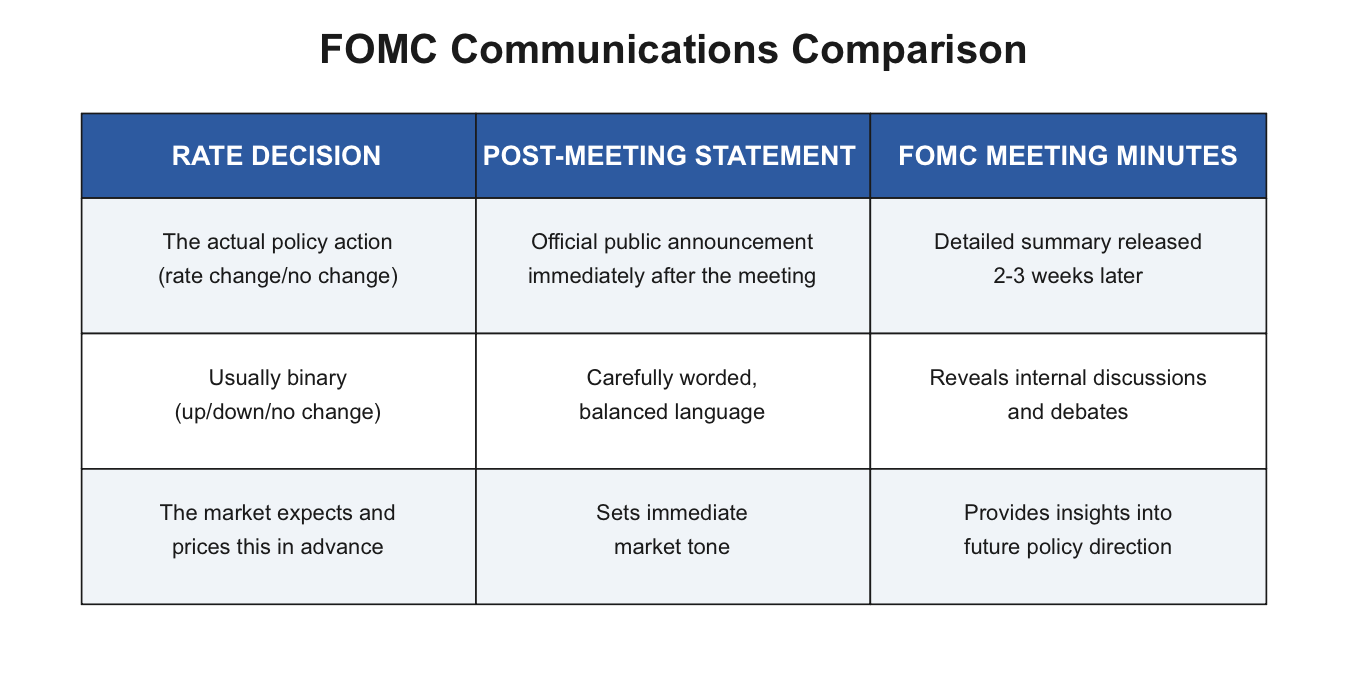
The Meeting Minutes are not a transcription of the meeting word for word, but summaries of the discussion highlighting the main points of disagreement and agreements amongst the members discussed at the meetings. These summaries also allow for time to pass between the meeting and when the Minutes are published so that the likelihood of the market reacting too quickly to the announcement of a change in the Fed’s policies is reduced while still providing transparency around the Fed’s thoughts.
Who are the people who pay attention to the Meeting Minutes? It is not your average customer looking for the best savings account rate. Instead, the Meeting Minutes will be very important for Forex traders anticipating the strength or weakness of the USD, Gold and Interest Rate traders who are basing their trades on the anticipated Real Yields, and Mid-term Macro Investors who will adjust their Portfolio Allocations based on the anticipated Policy Position.
In other words, while the rate decision is akin to a grad being given a grade by a teacher, the Meeting Minutes are akin to the teacher explaining to the grad in detail about the grad’s work and areas that they can improve upon, the style and nuances which are missing in the Rate Decision notifications but indicate what possible future actions the Fed is likely to take and when. Savvy market participants will take the additional context and nuance provided by the Meeting Minutes into consideration when determining their future actions regarding changes that may occur due to the Fed.
Mechanism Deep Dive Layer
Why FOMC Minutes Often Trigger Bigger Market Moves
This phenomenon is hard for many new market participants to understand. Why can the information in the FOMC minutes create as much, or more, volatility than the actual interest rate decision? Understanding the difference between predictable versus unpredictable information.
Before any meeting, the market has already put in a lot of analysis on what the FOMC members will decide. Pointing to interest rate futures, economist forecasts, and historical communication trends, market participants reach a consensus regarding what they believe the FOMC will vote to do. The first repricing occurs well in advance of the date of the decision.
Considering this example: 85% of economists are predicting the FOMC will increase rates by 25 basis points, and the Fed members have made it clear that they are concerned about inflation. Therefore, most market participants have already established a price for this outcome before the meeting. When the decision that the Fed made matches the expectation of the market, the market will likely bounce for a very short period of time, but then settle back down.
Meeting minutes from each Federal Open Market Committee (FOMC) meeting are not known ahead of time, creating a certain level of uncertainty when determining how those will impact financial markets.
There are three reasons for this:
-
No detailed information is presented regarding disagreements among members of the Committee. We know there are hawks and doves on the committee, but we cannot determine how strongly each member of the committee feels about a particular issue or how their opinion may have changed once the majority voted.
-
The tone used by committee members in the minutes cannot be quantified. For instance, if the tone of the minutes changed from "moderate concern" to "significant concern" about inflation, this represents a large increase in concern, but it is not possible to quantify the strength of concern before seeing the minutes.
-
Subtle differences in opinions about future monetary policy paths are not presented in the initial statement. The minutes could show us that members of the FOMC are considering a pause in raising interest rates after one more increase, or that members are still debating when to cut interest rates.
-
The uncertainty created by these factors leads to what we refer to as "two repricings". The first repricing is the initial confirmation of previously established market expectations, whereas the second repricing is a more massive change in the financial markets to reflect new information.
To understand the effect of these 4 categories from the minutes to the second repricing, we should dissect each of these 4 pieces of information contained within the minutes:
Dissension Structure: The minutes indicate the existence of factions on the FOMC. A 9-3 vote with large dissent may look different from a 12-0 unanimous decision.
Risk Change in Priorities: Officials can change their primary focus from risk to inflation risk or recession risk. This is a sign that risk has been rebalanced, and therefore, there may also be a policy change.
Discussions About Policy Path Options: Minutes can provide insight as to whether or not officials are discussing whether to pause their tightening process, to increase or decrease this process. This provides clues regarding the direction of their actions.
Shift in Sentiment: A change in tone from confidence to caution may indicate that officials are feeling less confident about economic conditions.
Here's a simplified timeline of how this process typically unfolds:
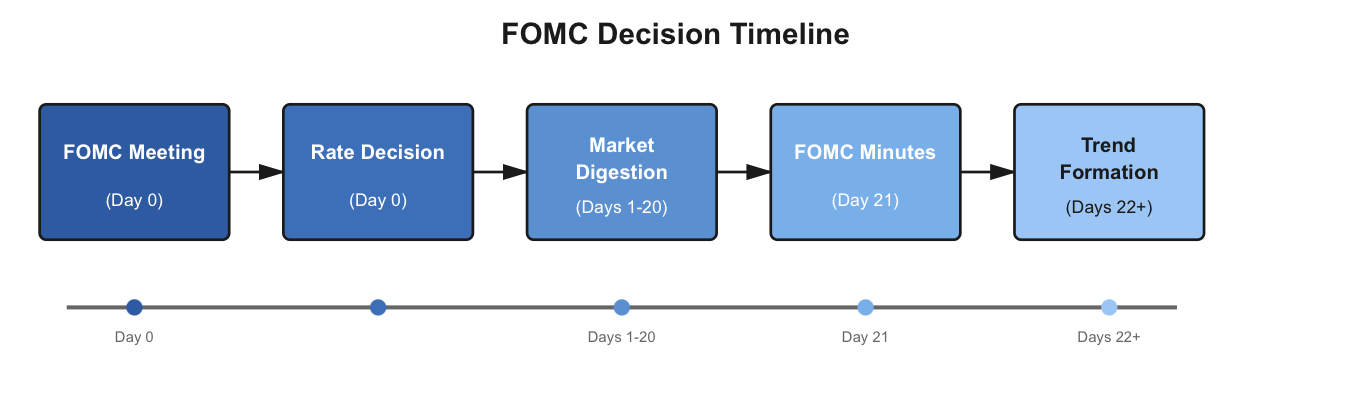
While the market reacts quickly to the rate decision, the true trend does not often emerge until after the minutes are released and after the market has fully digested their meaning. An analogy would be a company's earnings announcement compared to the detailed quarterly report. The company may report earnings that meet expectations; however, the discussion around future guidance in the detailed report could have a larger impact on the company's stock price in the long term.
The conversations regarding the future from the FOMC minutes create the "earthquake effect" on the market because they result in existing market expectations being rewritten. The FOMC minutes provide the basis for new market expectations and are, therefore, often responsible for larger and longer-lasting trends than the rate decision itself.
Language Decoding Layer
Hawkish vs Dovish: How to Read Fed Language
When evaluating FOMC Meeting Minutes, familiarity with the Fed's unique terms of language will be essential. The two most familiar terms are Hawkish and Dovish; what do these terms really mean?
Essentially, a Hawkish position has more fear of runaway inflation than it does of any negative effects on the economy. It is therefore more important to Hawks to have price stability and to raise interest rates to control inflation, even at the risk of causing a slowing of the economy, than it is to avoid a slowing economy.
A Dovish position is concerned more about the negative impact on workers/employees and the overall economy, particularly unemployment. A Dovish position prefers lower interest rates as a way to increase employment and overall economic activity, and therefore also accepts slightly higher inflation.
This difference is not just academic, as it is a determining factor in how much influence a Hawk or Dovish on the FOMC has on changes in monetary policy, and any changes in this mix of Hawk and Dovish presented in the Meeting Minutes will likely signal future changes to Monetary Policy.
The Fed has expressed itself in language that conveys its opinion on certain categories of interest. The language used by the Fed when discussing inflation, monetary policy, and risk provides an insight into how the Fed views the economy overall.
Inflation-related terms:
-
"Moderately above target” vs. "significantly above target"
-
"Transitory" vs. "persistent"
-
"Well anchored" vs. "elevated" inflation expectations
Policy intensity terms:
-
"Patient" vs. "prompt" approach
-
"Gradual" vs. "steady" pace
-
"Some further" vs. "ongoing" adjustments to policy
Risk-related terms:
-
"Balanced" risk vs. "skewed" risk to downside
-
"Uncertainty" vs. "heightened" uncertainty
-
"Solid" vs. "moderate" growth outlook
In addition, there are differences depending on 'who said it' in regards to how much importance we give to the Fed’s perspective on these items. For example, when we see in the minutes from the Fed’s meetings that 'some members' expressed concern, this provides us with more weight than if we had read that 'many members' or 'several members' had expressed that same concern. These types of terms help to show the level of consensus among the members and not the number of votes cast on the subject.
The use of conditional language is critical for us to interpret the comments made by the Fed. For instance, when we read the following: 'The committee may need to consider additional tightening should inflation remain elevated,' this comment represents more of a 'contingent' statement versus one that is a definitive statement. For instance, 'The committee will implement additional tightening should inflation remain elevated,' would indicate the committee's level of commitment to tightening interest rates.
The market reacts to changes in language, not the words themselves. The same word may have a varying meaning depending on the stage of the economic cycle. For example, when inflation is around 2% and it is referred to as 'elevated', that could be a concern. However, when inflation reaches about 7% which it may not have actually been 'elevated', it may evoke a sense of relief.
In addition to this, if the FOMC has a change from 'participants expect inflation to decline gradually' to 'participants anticipate inflation will move down', just this subtle change can trigger a dollar bullish rally. The transition from 'gradually' to 'move' alludes to higher confidence in the inflation forecast, although both phrases essentially mean the same thing.
To illustrate: If we were to receive a report card from the teacher who grades students on the following statement: 'Student is doing adequate,' that indicates neutrality. If we received a previous report from a teacher that said the student was having trouble keeping up, that would indicate positive momentum. Conversely, if the student received a report that they were excelling, that same phrase could now refer to trouble.
The bottom line for all traders: Stay aware of language changes, not necessarily absolute statements. The most important information provided by the FOMC is the shift in how the Fed officials are thinking about the economy, not just the reconfirmation of your prior knowledge.
Reading Methodology Layer
A Step-by-Step Framework to Read FOMC Minutes
Many people feel overwhelmed with the FOMC minutes because of the dense writing, the carefully chosen words, and what may seem purposely vague language. The goal of this article is to create a systematic strategy for gathering insights from FOMC meeting minutes.
Step 1: Read the inflation section first. The Federal Reserve's number one mandate is to promote price stability, so it is important to see how the Federal Reserve officials talk about and characterise current inflation. Look for:
-
Some type of change in the way that they are describing current inflation levels
-
A change in their assessment of inflation's persistence
-
Any discussion of expectations of future levels of inflation
Typical inflation sections appear at the beginning of FOMC minutes and provide the framework for everything that follows in the minutes.
Step 2: Review the employment assessment. The dual mandate of the Federal Reserve means that maximum employment is just as important as price stability. Therefore, how officials review the labour market is of utmost importance. Pay attention to:
-
The way they are characterising levels of employment and unemployment
-
Any discussion of wage pressures
-
Any references to tight or slack labour markets
The labour market places constraints on the Federal Reserve's ability to set monetary policy, so understanding how much flexibility the officials feel they have is critical.
Step 3: Look for risk assessments. This is where the committee will be able to highlight its most forward-looking information. Look for:
-
How are they balancing risks to inflation vs. risks to the economy
-
Any discussion of financial instability
-
Any mentions of domestic vs. international risks
The risk assessment portion often indicates what the committee is most concerned about and therefore what their priorities are and mindset.
Step 4: Look for differences of opinion and alternatives. This section is probably the most beneficial section to consider when attempting to gain insight into future policy path expectations. Look for:
-
The issues that had the greatest disagreement among committee members
-
Which alternative policy paths were considered
-
Which arguments were persuasive in nature?
When we notice growing intensity or a changing nature of disagreements, this is a strong indicator that policy changes are forthcoming.
Important Paragraphs to Identify
Not every section of an FOMC meeting is equally significant. Some sections provide a far more comprehensive picture of the events than others. The paragraphs that may not seem important to most people (but contain substantial information) include:
-
A description of the collective outlook on the economy by the FOMC members
-
The details surrounding the current status of the financial markets
-
An evaluation of how effective the current monetary policy is on the economy
Mistakes to Avoid When Reading FOMC Minutes
Only Reading Headlines (Media Covering FOMC meetings): The media will often provide a media summary that provides the most exciting part of the minutes; however, they are quite likely to miss certain subtle, but significant, changes to language that may occur during the FOMC meeting.
Taking Statements Out of Context: One statement can be considered hawkish or dovish, while it may have a different meaning in the context of the entire minutes.
Trading on a Single Signal: The minutes should not be interpreted as if each section is independent, but as an integrated whole that together form a cohesive understanding of what the FOMC members are communicating.
Overweighting Your Own View: A trader might be tempted to solely look for confirmation of their own viewpoints; however, one should consider all of the information included in the minutes and not discount contrasting views.
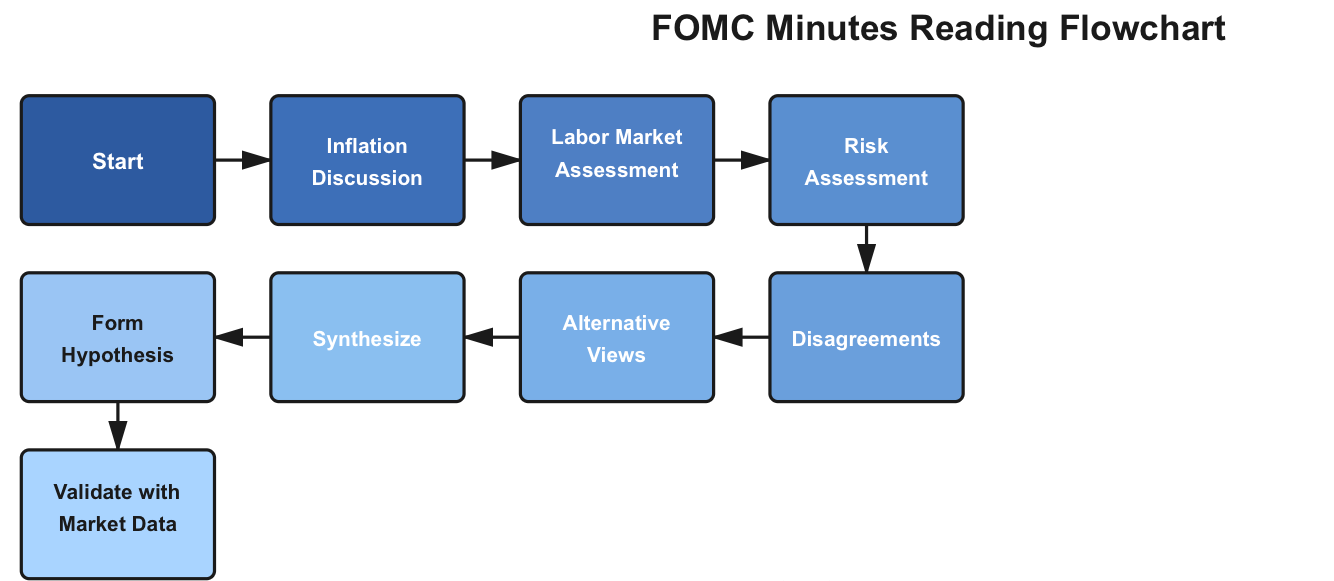
In reading the minutes from meetings, you want to look for the areas of “uncertainty,” or the places where officials voiced scepticism or differing viewpoints, or areas that do not have a clear direction going forward. These areas of uncertainty often become the basis for future discussions about monetary policy and ultimately lead to the decisions that will drive the markets.
Using this framework, you can dig a little deeper than just a surface view and really understand what the minutes will be telling you about where the future of monetary policy is headed.
Practical Trading Layer
Trading USD & Gold Around FOMC Meeting Minutes
The minutes of meetings held by the Federal Open Market Committee (FOMC) sometimes predictably react to different asset classes, but usually react most quickly & significantly in comparison. Traders are often drawn towards trading both USD and Gold because they respond regularly & significantly to this particular report.
Why do USD & Gold react first?
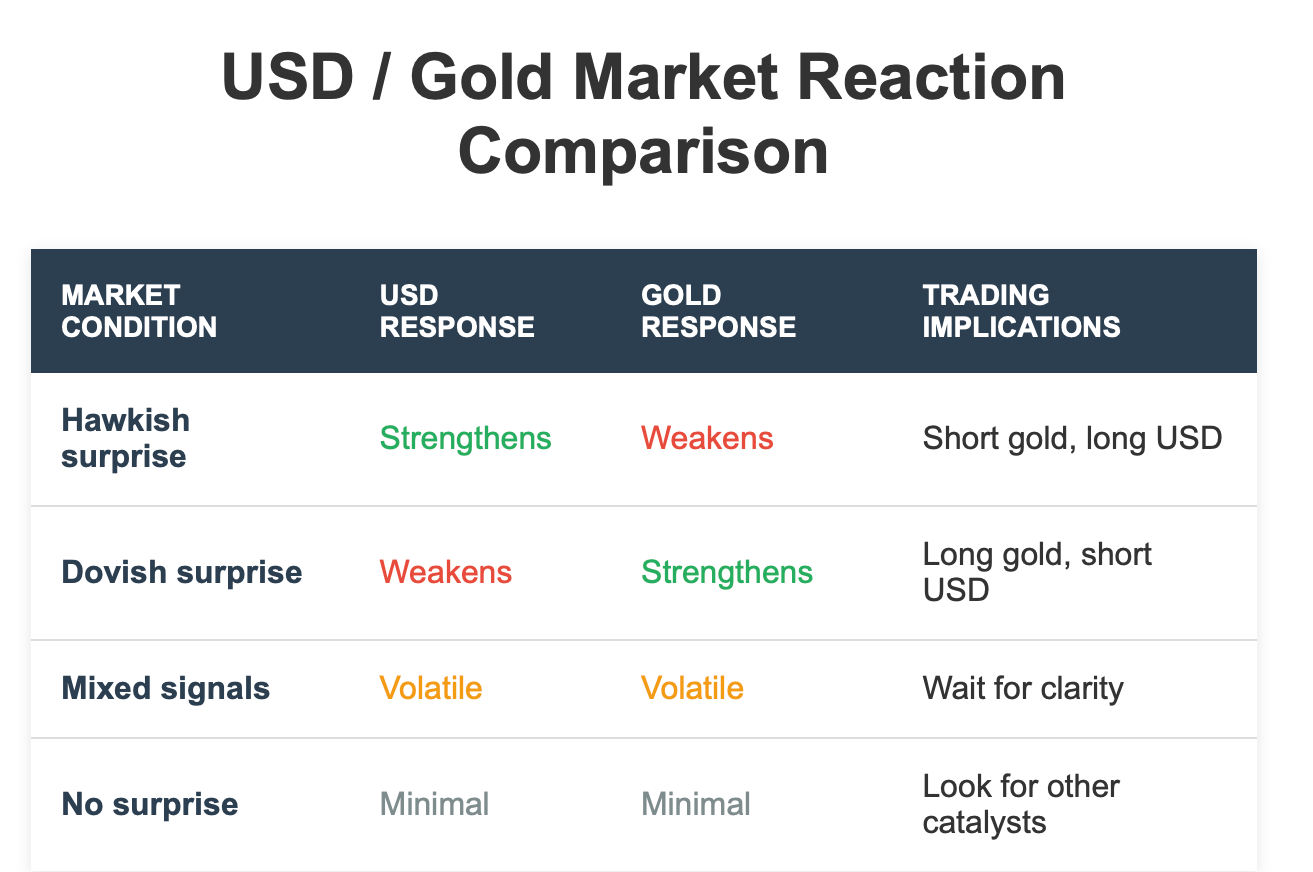
The value of the USD is essentially a reaction to US interest rate expectations. Higher US rates encourage an influx of foreign capital, which increases the demand for the USD. Generally, when the minutes are perceived to have an increasingly hawkish tone (indicating the likelihood of future increases), the USD strengthens. If the minutes indicate a lower likelihood of rate increases or a potential cut in the future, the USD generally weakens.
On Interest Rates, Gold has no positive yield; therefore, Gold is very sensitive to the correlation between real interest rates. Generally, when the minutes of the FOMC indicate hawkish comments, the price of Gold declines. Conversely, the potential future lowering of rates will generally create support for Gold values.
Three Main Types of Market Structures
False Breakouts: The market typically experiences a spike in price action immediately following the release of the minutes, and once traders have finished considering all aspects of such minutes, the market will likely then begin to retrace considerably. The initial volatility of the market will generally be based on traders' interpretation of the minutes.
In addition, traders will assume a more hawkish tone due to an initial spike seen; however, after the spike ultimately reverses itself, traders will then assume the concerns raised in the previous minutes may exist longer into the future.
Confirmation of Trend: In many cases, the minutes may confirm what the market has already suspected regarding the direction of US monetary policy, leading to greater support for these existing trends. If the market is already positioned for a more hawkish Fed and then receives confirming information from the minutes that further supports that outlook, there is an excellent chance that the ongoing dollar trend will experience an increase in momentum.
Emotionally Volatile Markets: On rare occasions, surprises in the minutes can produce unexpected emotional responses by the trading community, which provides an opportunity for long-term traders to capitalize on these occurrences after that initial volatility has subsided and some degree of normalisation has occurred.
Trading Principles for Different Time Horizons
Traders who prefer short-term trading (one day to a few days):
-
Direct attention on volatility management instead of trend prediction.
-
If major price movements are anticipated with the release of the minutes, look for opportunities to make straddle trades before the release of the minutes.
-
The movement of the market can quickly change direction or reverse course and should be treated as an opportunity for either a larger profit or loss, depending upon the type of trade executed.
-
Because spreads tend to widen around the time of the FOMC release, it is important to have tighter risk management procedures in place than you would for other types of trades.
Mid-term traders (a few weeks to a few months):
-
Trade after the initial volatility from the release of the minutes has subsided.
-
After the initial volatility from the release of the minutes has subsided, it is best to enter trades based on confirmation that a new trend has been established.
-
Both the stock market and the bond market will be affected by the effect of the release of the FOMC meeting minutes on the currency markets due to the fundamental change created by the release of the FOMC minutes.
The Risks of Trading Around the Release of the Federal Open Market Committee (FOMC) Meeting Minutes
-
Due to the lack of exposure: Lack of exposure created by the wide variance in the available price hours before and after the release of the FOMC meeting minutes on the selected security, specially designated risk management strategies should be established for any trades surrounding this significant economic event.
-
Liquidity deficiency: Due to the speed at which the price moves in the markets, it is possible for your trade to execute at a very large amount away from where you expected your trade to get executed, especially when entering trades using market orders.
-
Emotional response: Due to the nature of very rapid price changes, your emotions can have an effect on how you trade and the decisions you make. To minimise your emotional response and increase the likelihood of a good outcome from your trade, it is recommended to have a predetermined trading plan that will help eliminate impulsive trading activity.
Pre- and Post-Release Time Distribution
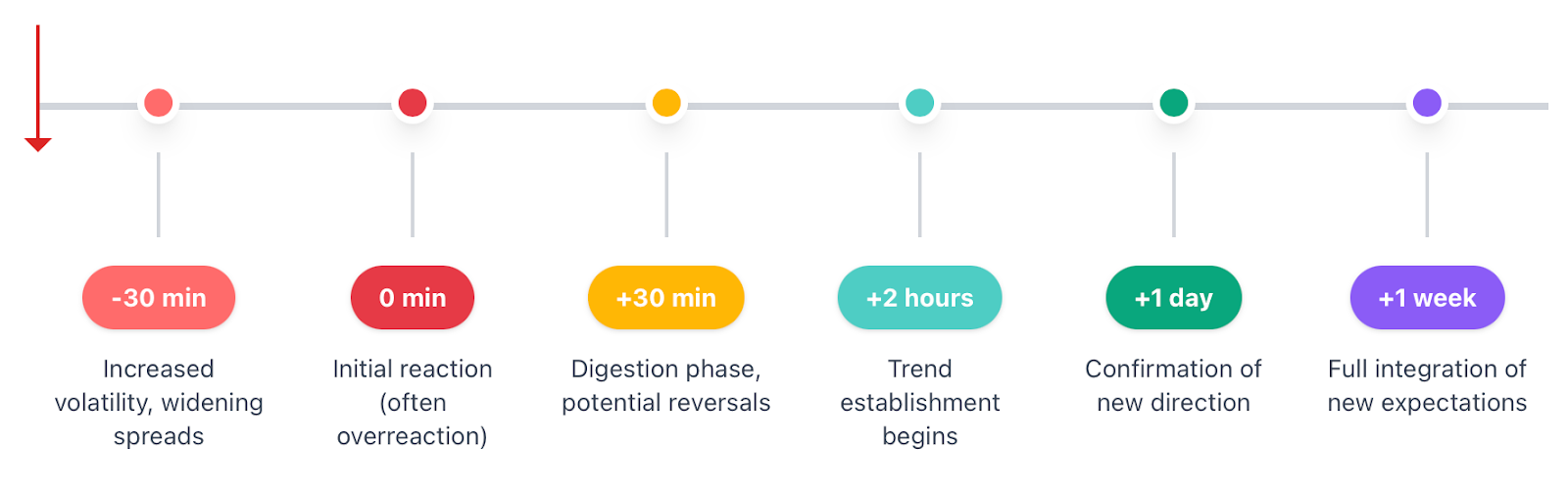
While they can be used by successful day traders as confirmation or a challenge to their existing views of the market, they must remain open to adapting and changing their views based on new data.
Forward-Looking Judgment Layer
Using FOMC Minutes to Anticipate the Rate Peak
The insight gained by analysing FOMC meeting minutes has one of the greatest values in finding possible changes in the direction of interest rates. The peak in the cycle of increasing the Federal Funds rate is crucial information to have for every trader, regardless of the asset class he or she trades.
How "Rate Peak" is a Psychological Change
No one economic number will signal the peak in a rate increase cycle. Rather, the peak is determined through a psychological change that occurs among the members of the FOMC. This Psychological Change among the members can often be seen when reviewing the minutes of the last FOMC meeting. Understanding the derivative psychological change into the future from the last FOMC meeting will provide the best opportunities to anticipate when monetary policy will change direction.
The peak in the rate increase cycle will occur when members of the FOMC come to a consensus about:
-
Their current Monetary Policy will do enough to achieve the goals of the FOMC.
-
The cost of future Monetary Policy tightening is greater than the benefit, or
-
The effect or lag of the last series of rate hikes has not yet fully developed in the U.S. economy.
Stage-wise Changes in Inflation Wording
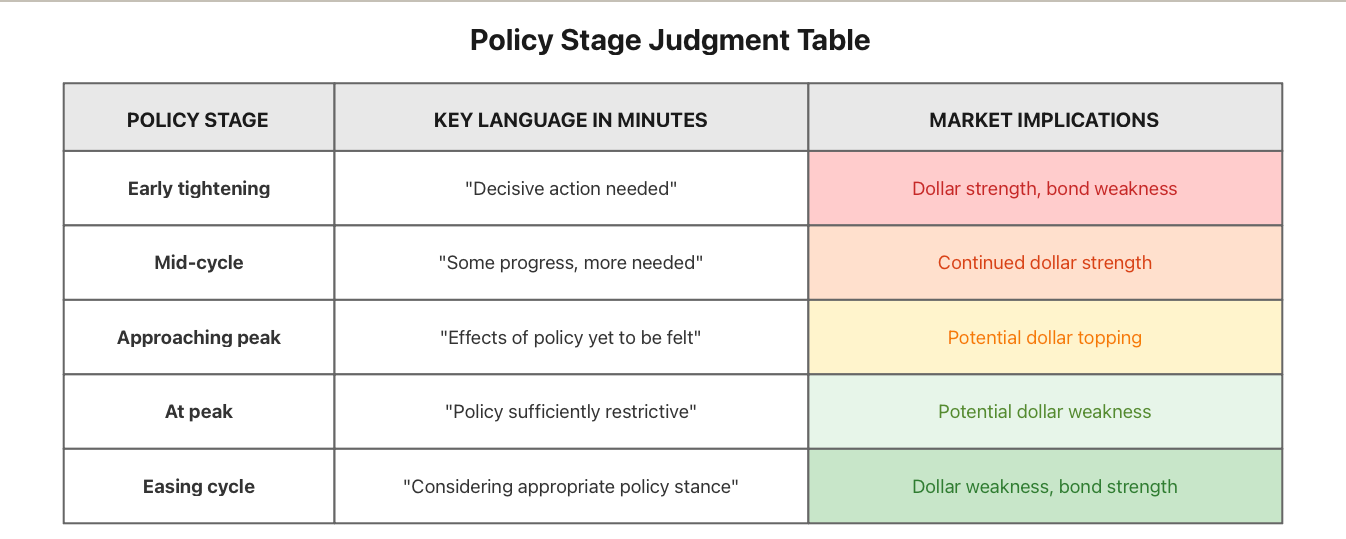
As the April 2022 meeting takes place, it is safe to say that the Federal Open Markets Committee (FOMC) has passed its ‘Peak.’ This is clearly stated in the minutes of the most recent meeting. The wording used for a FOMC member is generally broken down into 4 different stages:
Stage 1 (Early Tightening):
-
"Inflation is now above our long-term goal"
-
"The committee is keeping a close eye on the inflation risks"
-
The focus will be on the urgent need to take action.
Stage 2 (Mid-Cycle):
-
"Inflation is still elevated"
-
"Considerable progress has been made, but we need to do more"
-
The conversation includes the cumulative effects of policy.
Stage 3 (Peak Approaching):
-
"Some moderation in Inflation has been seen"
-
"I still have not fully realised the complete impact of the last round of tightening"
-
Increased emphasis will be placed on data-dependence.
Stage 4 (At Peak):
-
"Inflation is a gradual decline to our long-term goal"
-
"Current Policy is enough to keep inflation low"
-
"The FOMC will discuss how long to maintain the current rate direction of policy"
Monitoring the above changes in language when reviewing the FOMC minutes will help the traders to have a better idea of when the FOMC is currently at its peak.
Furthermore, although the labour market generally does not get as much publicity as inflationary pressures do, the labour market actually plays a key pivotal role in determining the rate peak. If this viewpoint is accurately validated through the minutes, a trader should expect to find:
-
The wording of whether the labour market is "tight" or "softening"
-
The impact of wage growth on inflation
-
The current unemployment rate in relation to what the unemployment rate is considered to be a "natural rate."
-
If FOMC members begin to focus more on the status of the labour market than they do on inflation, a trader may anticipate that the rate peak is near.
Combined Judgment Logic
The most reliable approach to identifying the rate peak is to combine signals from multiple areas:
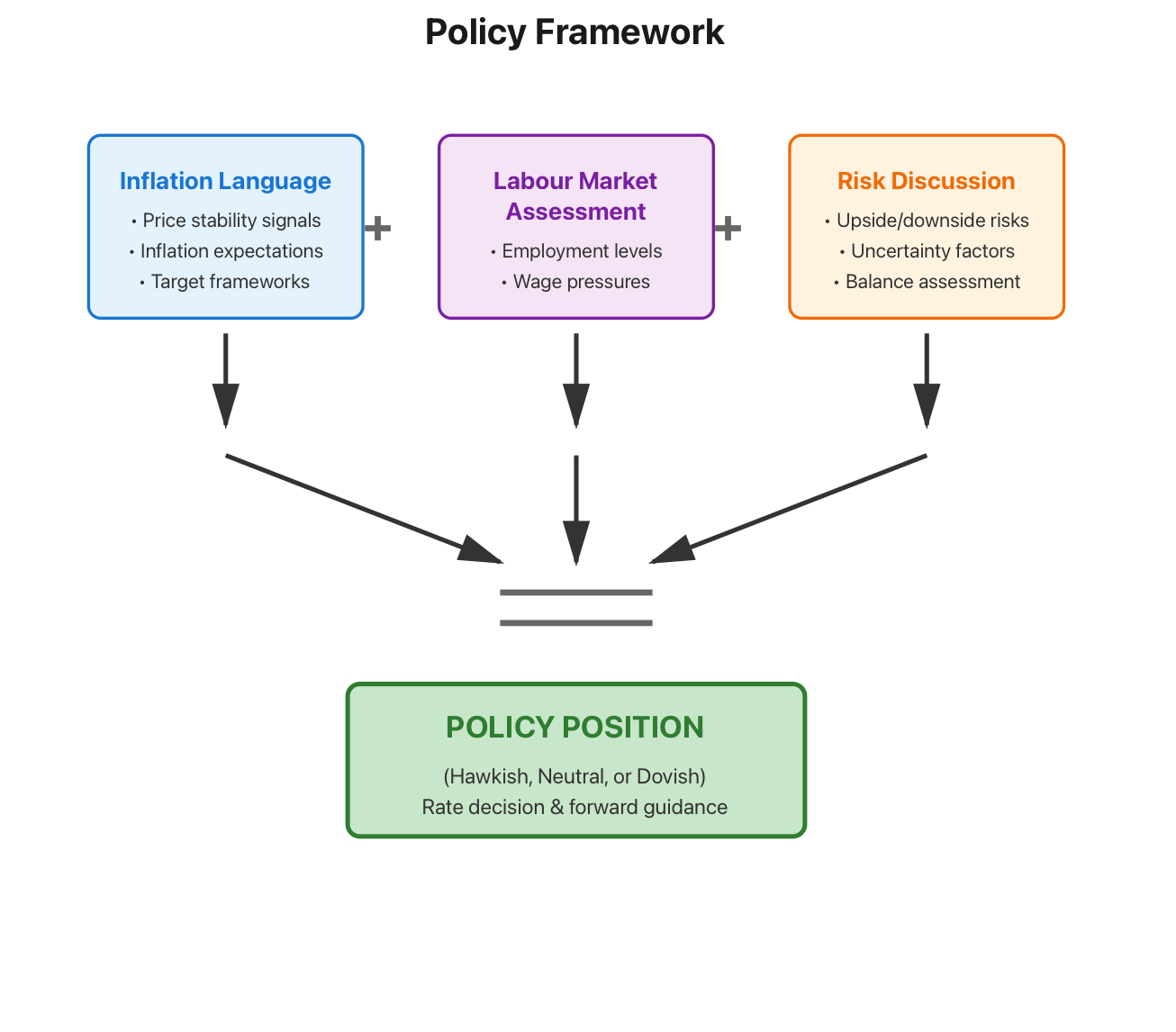
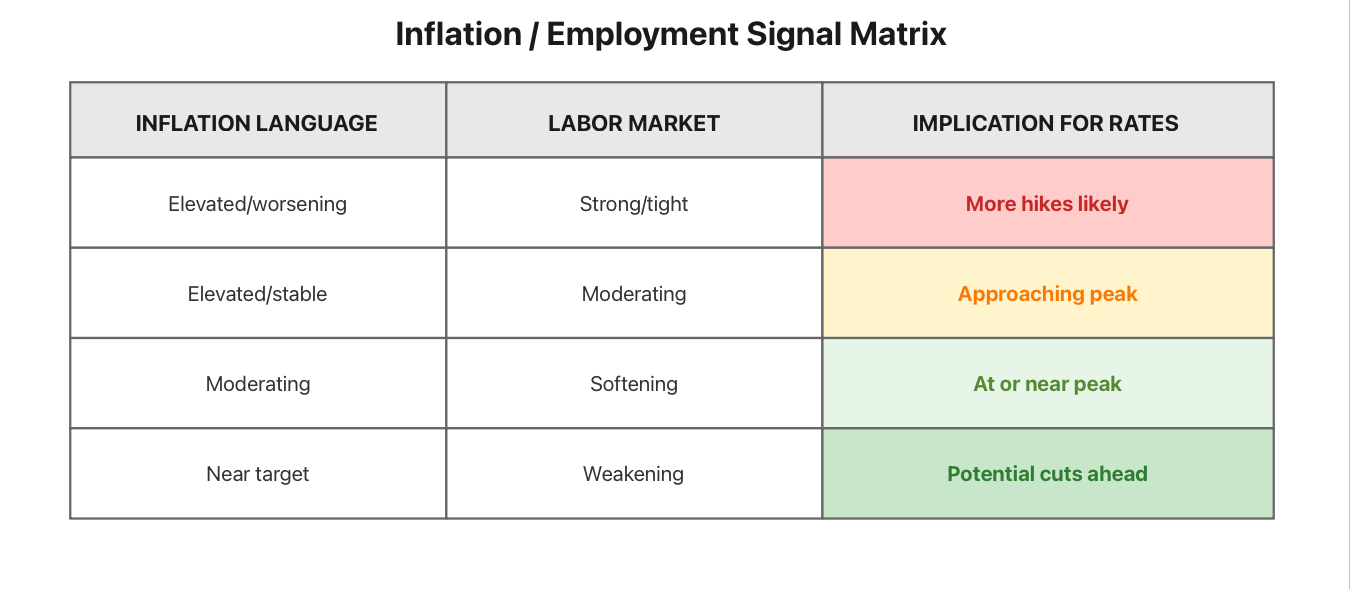
For instance, consider the minutes' indication of:
-
Inflation changed from "higher" to "lower";
-
Labour Market indicators - "less strength"; and,
-
Risks are "levelling out".
These factors indicate that the Interest Rates are at or near their "highest value".
Important Reminders
A set of Meeting Minutes from one trading meeting is not sufficient to determine whether the Federal Open Market Committee (FOMC) or the Board is making a major policy change. To assess the likely direction of monetary policy, a trader should look for:
-
There will generally be a consistent theme that appears throughout several meetings.
-
A growing number of Members who agree on a particular view regarding monetary policy.
-
Economic Data will provide evidence in support of the growing consensus.
Signals of future monetary policy direction are built upon incremental changes and therefore develop over time, rather than coming as a bolt from the blue in one quarterly publication.
Through knowledge of these signal developments and with the help of additional signals from other markets, traders can make more informed decisions regarding future monetary policy and therefore be prepared in advance of any sudden market movements.
Conclusion: Why Understanding FOMC Meeting Minutes Is a Long-Term Trading Edge
In this guide, we have already examined how FOMC meeting minutes provide insight into the way the Fed thinks. Therefore, let us now take that knowledge and put it together in a structured format that will benefit your trading strategy.
FOMC meeting minutes are not only news that can be read and forgotten. They also give a clear indication of:
-
The written representation of the Fed's internal thought processes.
-
The very first indication of how market expectations can change.
-
A guide to the potential future direction of monetary policy.
The market doesn't actually trade interest rates; rather, it trades on the likelihood of how any of the future directions of monetary policy will impact current and future interest rate movements. It is critical to differentiate between interest rate decisions, which provide a snapshot of where monetary policy currently stands, and the contents of the minutes, which provide valuable clues about where monetary policy may be headed at any given point in time.
Why Most Traders Fail to Use Minutes Effectively
The key to finding an edge through reading the Fed meeting minutes lies in the recognition of what most people in the markets overlook:
Traders are:
-
Focused on the headlines only, no one pays attention to the underlying content.
-
Waiting for others to determine how to interpret it before they decide what they think about it.
-
Only interested once they have already seen the impact of it on the market.
Traders who have the edge in reading the minutes:
-
Notice subtle changes in the wording and think about the implications.
-
Constructively look for differences in how market participants disagree and how they expand on their opinions.
-
Observe the overall development of the market in relation to risk preferences.
What we have learned about the FOMC meeting minutes is that they don't give you an answer, but instead give you insight into future policy by exposing you to a period of indecision. It's these transitional periods of uncertainty, argumentation, and reassessing what will happen next that represent the potential of "future" policy change.
Connecting Macro Understanding with Trading Behaviour
While reading the minutes of the FOMC meeting isn't going to guarantee you trade at every opportunity that they provide, their true value lies in helping you to:
-
Identify the difference between "quiet" trends and "noisy" trends
-
Determine whether or not markets are adjusting to fundamentals or reacting to emotion.
-
Identify potential reversal points before they happen.
The benefits of doing this in the long run include:
-
Avoiding unnecessary risks at inopportune times
-
Getting prepared for critical reversal events ahead of time
-
Creating a greater depth of understanding of market behaviour.
As one successful trader has stated in the past, "Volatility is always present in the market, but the reasons for volatility are never clear." This statement captures the heart of why conducting a detailed examination of the FOMC minutes gives you such an advantage.
Call to Action: Turn Understanding into Advantage
To bring the information presented above into full effect, you'll want to do so using the tools and perspective provided by Tradewill.com. With Tradewill.com's comprehensive access to Forex, Gold, Indices & CFD Markets, along with the analytical tools that allow you to act instantly upon the Federal Reserve meeting minutes, you will be able to develop a multi-market perspective while benefiting from a more stable trading environment.
Disclaimer: The content of the blog does not represent any position of Trade W, does not serve as any trading-related decision advice, and does not endorse any third-party.