

 Trade W
What is a Bear Market
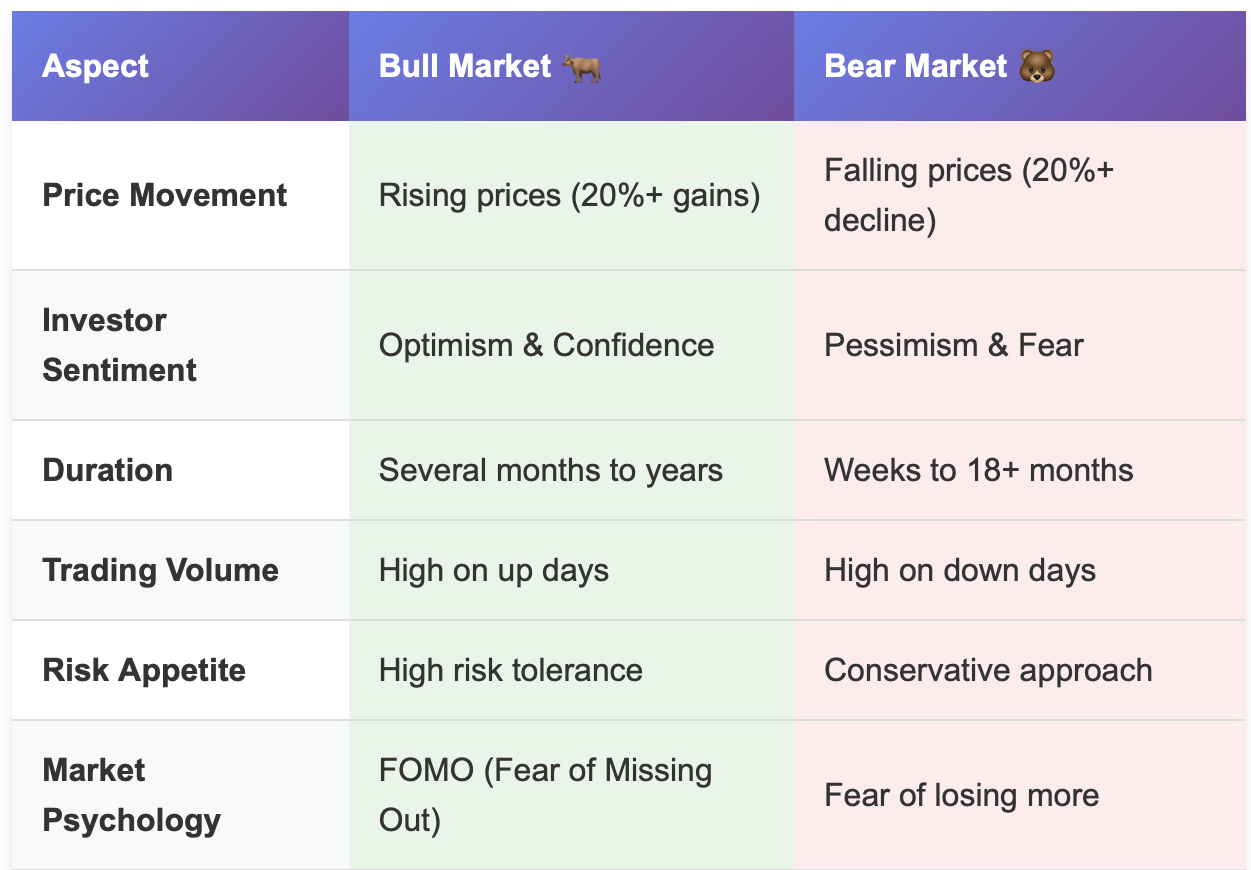
Bear Market In finance, a bear market is identified as a longer-term downward movement in the financial markets. As a general rule, bear markets begin once prices have fallen by 20% or more from a recent high and continue to fall over a matter of weeks or months. Bear markets are different from bull markets in much more severe ways than simply price movement.
Bull markets have price increases and optimism about the future. Bear markets have price declines and pessimism about the future. Additionally, bull markets have increasing confidence from investors and bear markets have losing confidence from investors.
When things are going down it factors into our decisions and fear serves as the primary motivator. Market psychology matters in a bear market. Panic sets in for market-tiers as sellers increase the selling pressure. Nobody wants to catch a falling knife. Think about it like a bargain bin in the classroom. It keeps getting cheaper for weeks.
At first people were excited, then they started to feel bad for buying, then they just stayed away and waited for it to fall more. The demand declines and prices fall. Just look at the EUR/USD pair. Look at 2008; it fell and fell and fell against the dollar.
Every time there was a new day the market opened up with more selling. However, bear markets are more than just price movement. They change the way the investor acts and loses appetite for risk. Conservative strategies are the only thing being utilized. The entire market sentiment shifts to caution and fear.
Causes of a Bear Market
Bear markets are often a result of several factors. For example, the decline is often kickstarted by the economic fundamentals. Growth in GDP may decline, enter negative territory, the market perceives economic activity in this way and corrects. Interest rates change unexpectedly. Inflation cannot remain over a set of comfortable levels.
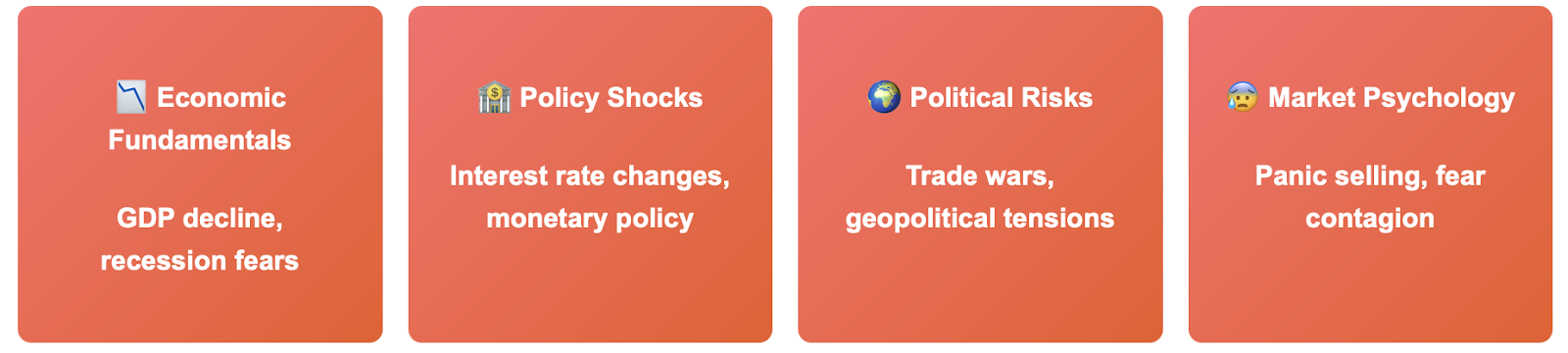
Policy shocks can also contribute to swift declines in the market, for example, a financial crisis that destroys confidence in the markets, overnight. Political risks create uncertainty, natural disasters may disrupt some economic activity; trade wars can destroy relationships between countries.
Begin thinking about something mundane that occurred in your school, for example if food prices related to snacks changed and students would no longer buy; demand drops instantly. Sellers start to panic and drop prices significantly to attract students as buyers, creating a downward spiral.
Another extreme example is in 2015 with the collapse of the Swiss Franc. The Swiss National Bank removed the currency peg and the CHF jumped 20% in a matter of minutes - EUR/CHF collapsed when traders tried to exit positions whilst there was still liquidity.
Investor psychology compounds these factors. Fear in the marketplace in a declining environment can go quicker than rational thought. Panic selling starts to occur. The universal answer to 'what do I do, I have margin calls' further helps sell. This can create a cycle.
The 2008 financial crisis built upon almost all the above factors. Failures of the banking system aggregating to credit crunches pushing the consumer into an asset destruction phase, government interventions that missed calming the markets domestically leaving investor confidence in pieces across the globe. The most recent economic example is COVID-19.
The pandemic shut down the entire ecosystem for functioning in almost every economy globally - the level of uncertainty reached an extreme level. You could see this being played out in currency markets, which nettled around with all the excess volatility .
Bear markets are the result of interrelated forces; no single factor is responsible for prolonged declines. Economic weakness, policy error, psychological issues, and more work together as coupled events. If we consider this, we can prepare and create more effective strategies as traders.
Identifying a Bear Market
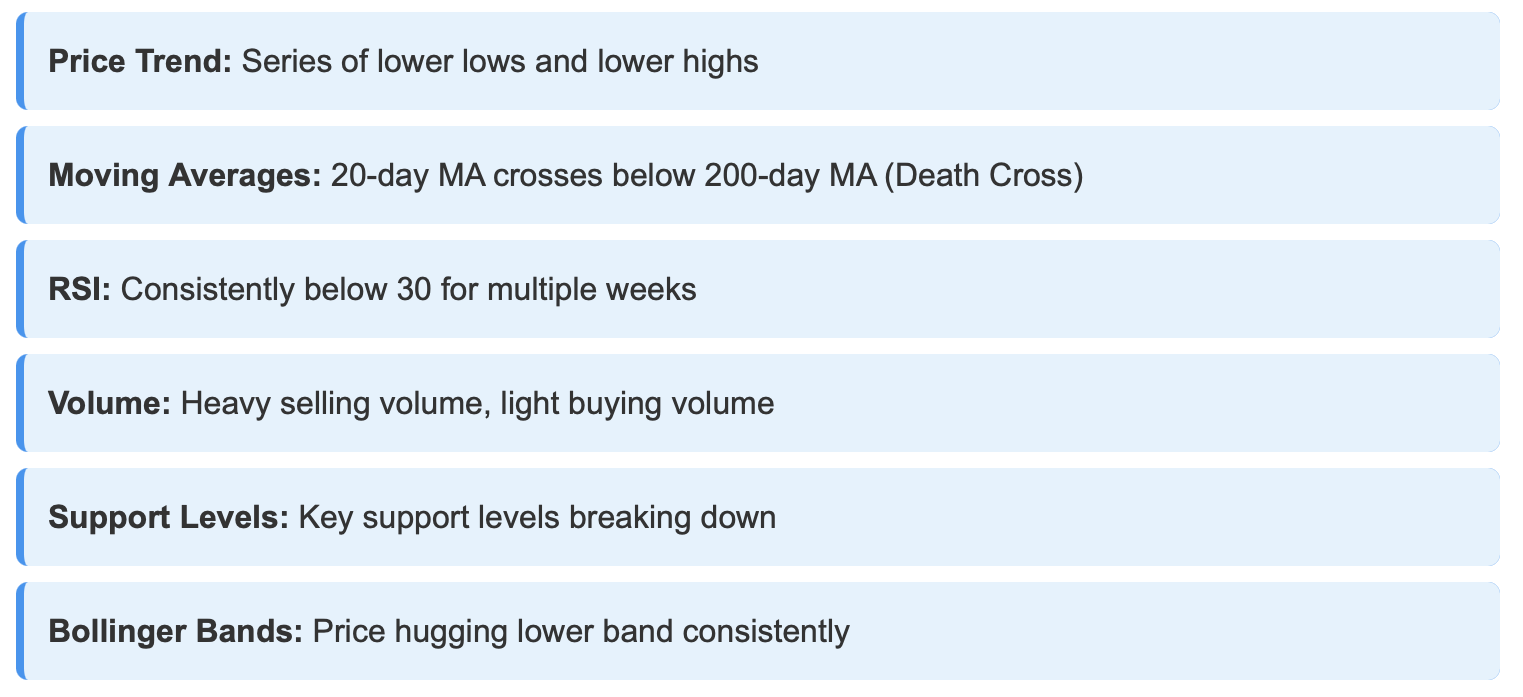
Recognizing bear markets as soon as possible gives traders a significant advantage. A traders first clues will arise from price trend analysis. A bear market will show a series of lower lows and lower highs. The entire direction will be down for an extended period.
Next is technical analysis that validates trend analysis. Sometimes price trends can fool us. Moving averages will give you the most straightforward signals. If the shorter MAs are crossing below the longer MAs, then you know that bearish momentum is building. If the 20-day MA crosses below the 200-day MA, that is a signal that a major trend has changed.
If the RSI shows readings below the 30 levels, then prices are oversold. But that is just one piece of information. In bear markets, the RSI will remain depressed for multiple weeks. Bollinger Bands will show increased volatility. Money prices often hover near the lower band.
Consider over the course of a few days, how snack prices in your classroom decline each day. Team consent begins to erode as students continually purchase less from the vending machine. This process is indicative of a bear market on snacks.
But think about what the EUR/USD looked like over the course of 2020. The pair broke through major support levels (in between the 100-day and 200-day moving averages). All moving averages aligned bearish, and the RSI was depressed for weeks.
Volume and event patterns are important, too. Heavy volume on downside days confirms selling pressure and lighter volume on any bounce shows weak buying interest. That combination is confirming bearish price movement.
Support and resistance levels can also provide valuable confirmation. When a level of support has broken cleanly to the downside, bear markets can quickly accelerate lower. The support level can just as easily become a new level of resistance. The point is the process will continue as long as price keeps making new lower lows.
Combining several confirmations always increases accuracy. There are no magic signals, and you will never use just one signal. Always use trendlines, and moving averages, and combine them with a momentum indicator. This approach will always give the best result in limiting false signals and timing.
Behavioral Aspects in a Bear Market
Just as fundamentals lead bear markets, psychology is also a component. Fear will reign supreme. Objectivity is overcome by panic. This will create a huge opportunity for those traders that are prepared.
Panic selling comes in waves. First, the weak hands (retail investors) exit their positions. Second, large institutional investors start to sell. Finally, forced liquidations cause the capitulation event. Each wave sees a very broad degree of volatility.
Think about how emotional trading depletes trader accounts. Traders abandon their systems and plans. Rationalizing losses in escalating position risks. The size of their positions increases and they do so at the most ill-conceived moment. They have eliminated their stop loss either entirely, or moved their stop loss further into losing territory.
I laugh at a conversation I had with my students, particularly the ones who are just as emotional about their snack prices declining with the market. When snack prices decline suddenly, kids panic and dump everything. The smart kids are sitting pat, waiting for the opportunity to buy - when someone else is dumping to panic and sell everything out of fear.
Highly leveraged forex trades increase such feelings. Margin calls compel traders to close positions before they're ready. Traders witness their account balances erode quickly under distress. The psychological pressure can be overwhelming and many traders walk away from the markets altogether.
Retail traders always make the same mistakes during these environments. They shorthand their losses to avoid realizing a loss. They ignore their risk management rules. Their trading capital has "scared money". These behaviors ensure that losses commercially, we would refer to these as "bear" behaviors.
Professionals notice and capitalize upon retail psychology. They fade emotional market price behaviour. Professional traders buy when fear is greatest, and sell when the hope is once again temporarily present. The contrarian views and profits arise from the resulting trading behaviour of the retail traders.
One of the more interesting challenges of trading successfully in a bear market is the need for emotional discipline. You need emotions set aside and follow a predetermined trading plan. You do not add to a losing position and increase your risk - if you are losing money, you get out of trades with small losses and wait for a high probability trading setup to build.
Historical Case Studies
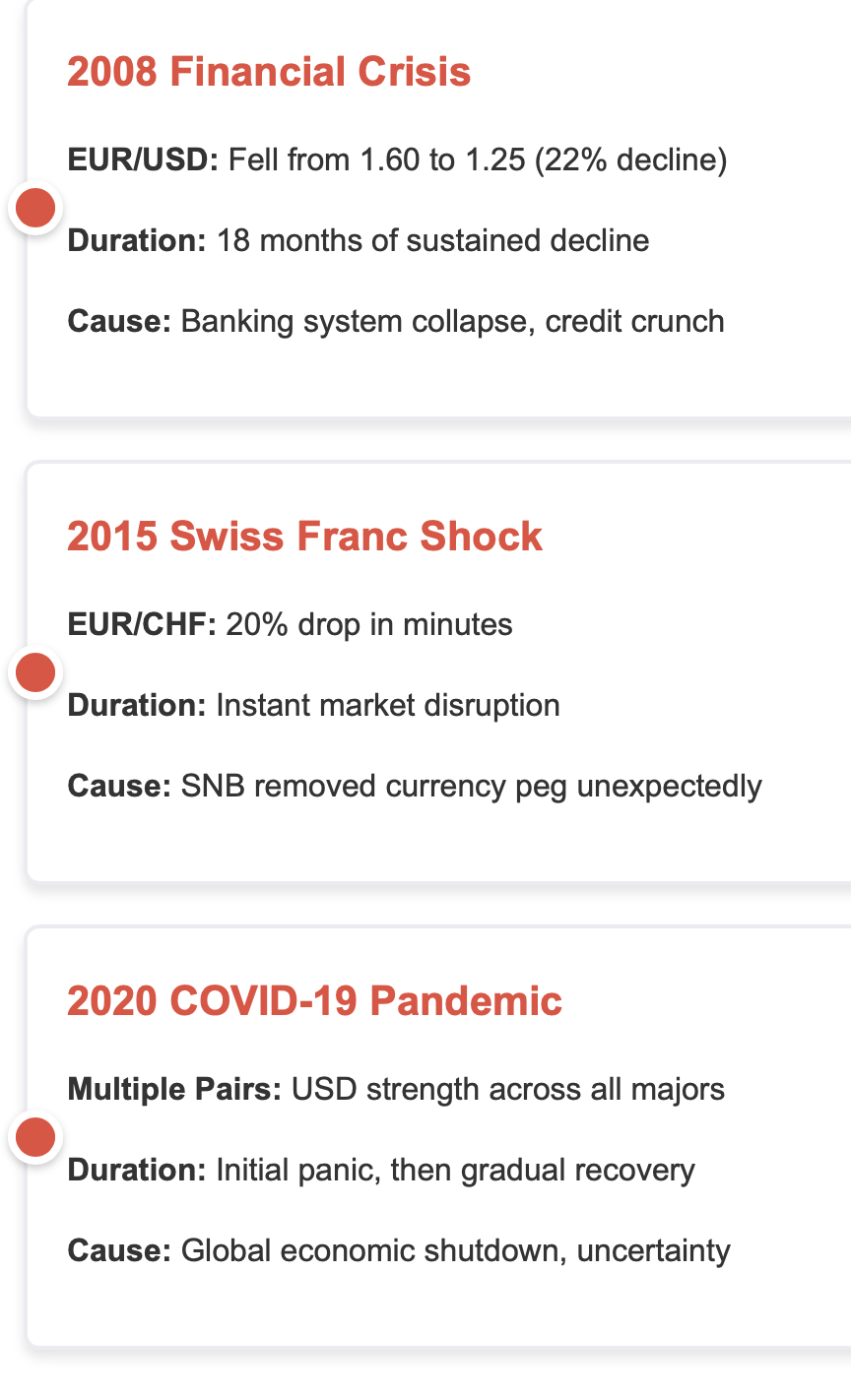
The banking system initiated a bear market in currencies that lasted around eighteen months and was the worst since the Great Depression.
Between 2007 to 2008, the EUR/USD currency pair fell from 1.60 to 1.25, while many exchanges witnessed sharp declines in transaction volume, or 'liquidity' during important moments of crisis.
While the bear market was general market price behavior, nevertheless as financial systems were collapsing, and currency liquidity levels were diminishing, the EUR/USD currency was the major financing currency in the market globally due to substantial funding liquidity problems amongst European banks deploying long or short equity strategies.
Professional traders were able to adapt quickly. They recognised the trend early. They made profits shorting the currency pairs. Their risk management systems permitted them to prevent losses during the interim rallies.
The 2015 Swiss Franc example stunned the currency markets. The EUR/CHF dropped 20% in a matter of seconds. The Swiss National Bank surprised investors by removing its currency peg. Many brokers were wiped out overnight from client losses.
This situation provided a teaching opportunity. Central bank policies can put extreme risks in the currency markets. Leverage can amplify these extreme risks exponentially. It demonstrated that even professionals can suffer unbelievable losses. Risk management policies must be constantly enforced and monitored.
The COVID-19 crisis provided another instructive case study. The initial hysterical panic was remarkably similar as the panic buying pushed USD strong against all pairs. EUR/USD, GBP/USD and AUD/USD all nosedived. Volatility returned to a crisis level in a matter of days.
The recovery pattern was equally interesting. Central banks stepped in and actually balanced their countries' economies. Markets were being stabilized. Risk appetite slowly returned. Currency pairs and strengths began to separate based on the economic recovery in each country for their respective currency.
The above historical examples have vastly similar patterns. An initial shock to the system creates an immediate and panicked market reaction. The fundamentals will drive the markets down for as long or as much as the market will allow.
Once the fundamentals stabilize in whichever direction the market is paired to, then the markets can recover. Learning to identify and therefore improve future decision making requires understanding and seeing the patterns.
Trading in Bear Markets
Short-selling is the essential profit strategy during a bear market. Simply sell high and buy back low. A short-selling strategy profiting from the downward momentum of prices. The key is timing your entry and exit with good analysis.
Use technical indicators to assist your short-selling. Enter shorts when the RSI recommences lower after a significant bounce off oversold levels. This indicates that the price increase, or the buying phase is coming to an end. Exit when the RSI indicates extremely oversold reading under 20 to ensure gains are taken as the trend continues lower.
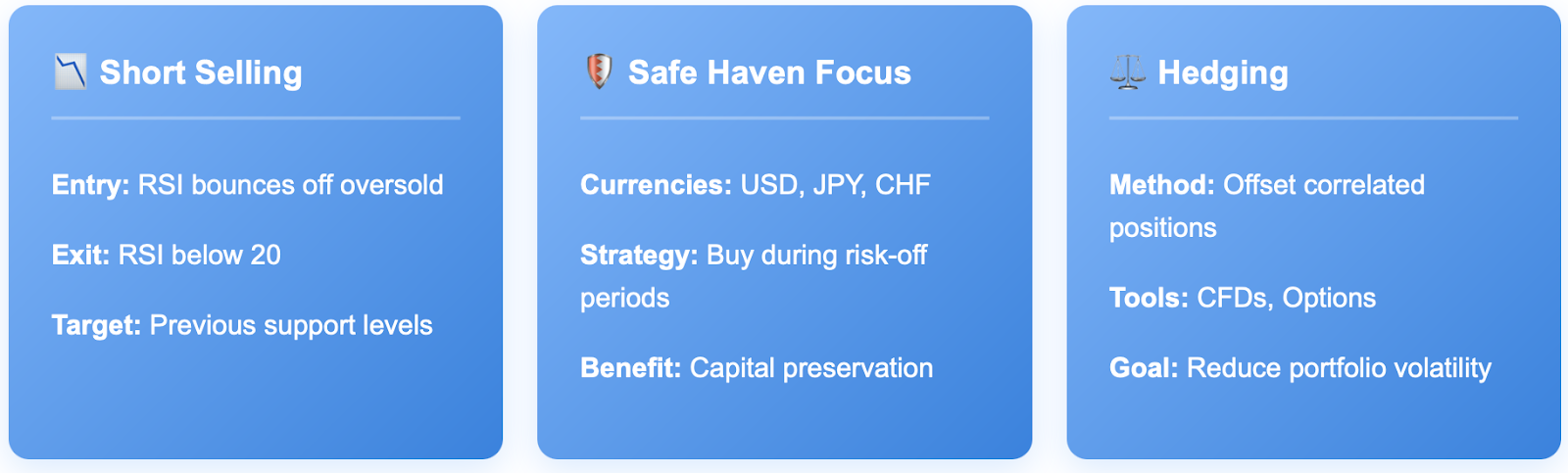
Coaches use technical analysis and moving average crossovers for excellent short signals too. When the prices break below the moving averages with volume behind them, the acceleration to the downside in bearish momentum begins. To capture the profits, target the weak lows or thresholds of continued support levels that can be shorted as the target.
You could think of this as selling snacks early in a declining snack market. Sell the snack for a high price, then buy back low when it reaches the last significant low in price. The profit is yours based on the price difference calculated and timing is of the utmost importance to have success.
EU/USD trading short-sales during 2008 and early 2009 was consistently profitable. Traders were selling off rallies back to the moving average. Once price reached key support levels, profit taking was a no brainer. For better than a year, buying back those shorts was made easy.
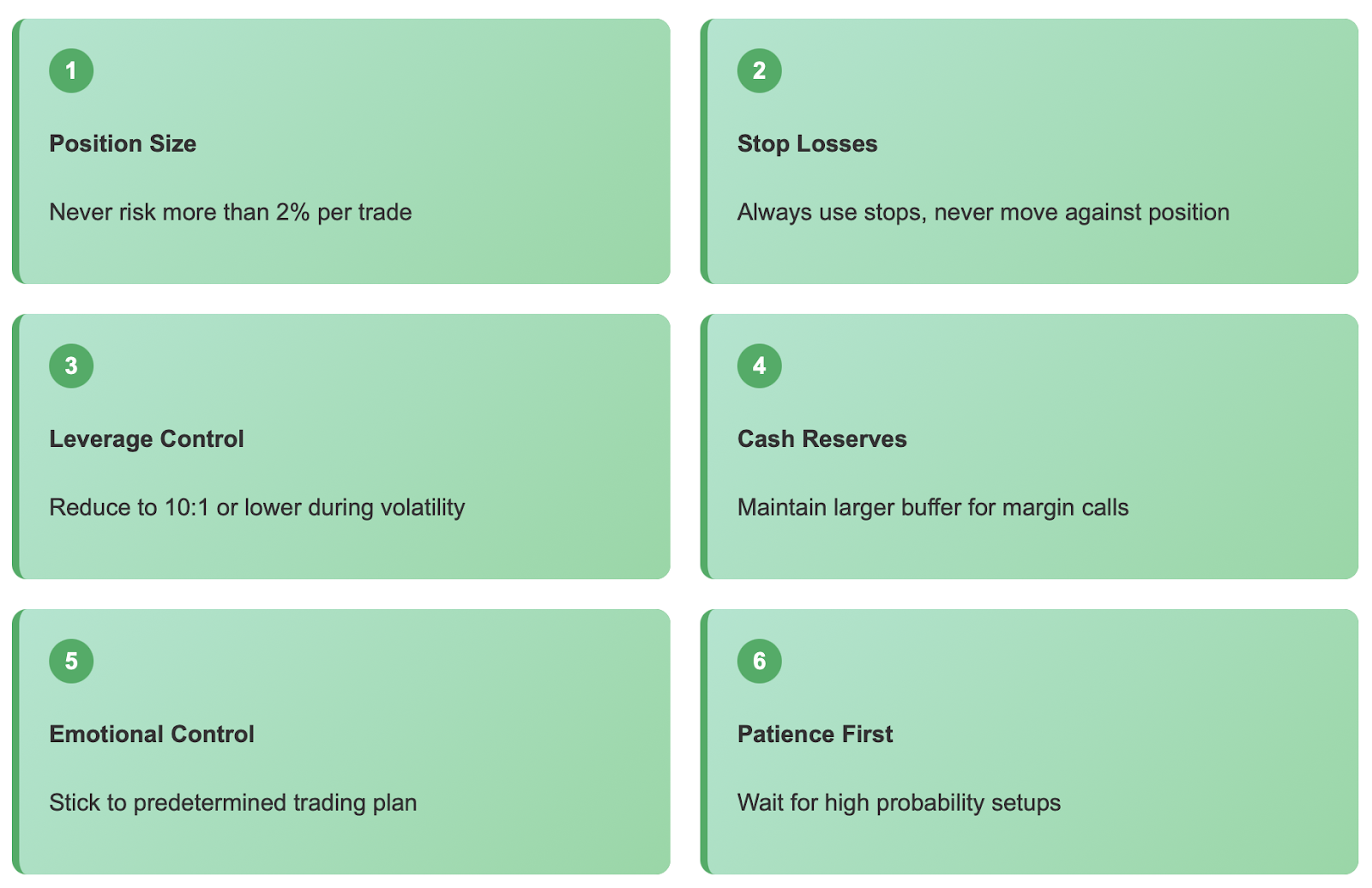
Risk control in a bear market becomes absolutely critical to protect your capital and account. Use tight stop losses on every trade you take. Never risk anything more than 2% on each position. Bear markets create unbelievable rallies that can quickly destroy both profits and your short position.
CFD trading also contains extra benefits in bear markets. No cost to establish a short position. High leverage magnifies profits when calls are correct. The same leverage destroys accounts when calls are wrong.
Sizing your position has to be less in these types of volatile periods. The rationale for smaller positions is that you can widen your stops; therefore one would leave more room for price action to develop without getting taken out during the normal market noise. You would then be patient instead of aggressive.
There is a lot of discipline and patience needed to be a successful bear market trader. Simply wait for a high probability setup; never chase price to the downside; accept that you will let some opportunities pass; consistency beats the chances to hit a home run
Asset allocation and Hedging in a Bear Market
Diversifying the currency pairs in a bear market will mitigate risk and bear market fx opportunities in a bear market. Don't jam all your positions into correlated lots. A dollar on EUR/USD position will move similar to a dollar on GBP/USD position. You should diversify totally and spread risk, across a variety of currency groups.
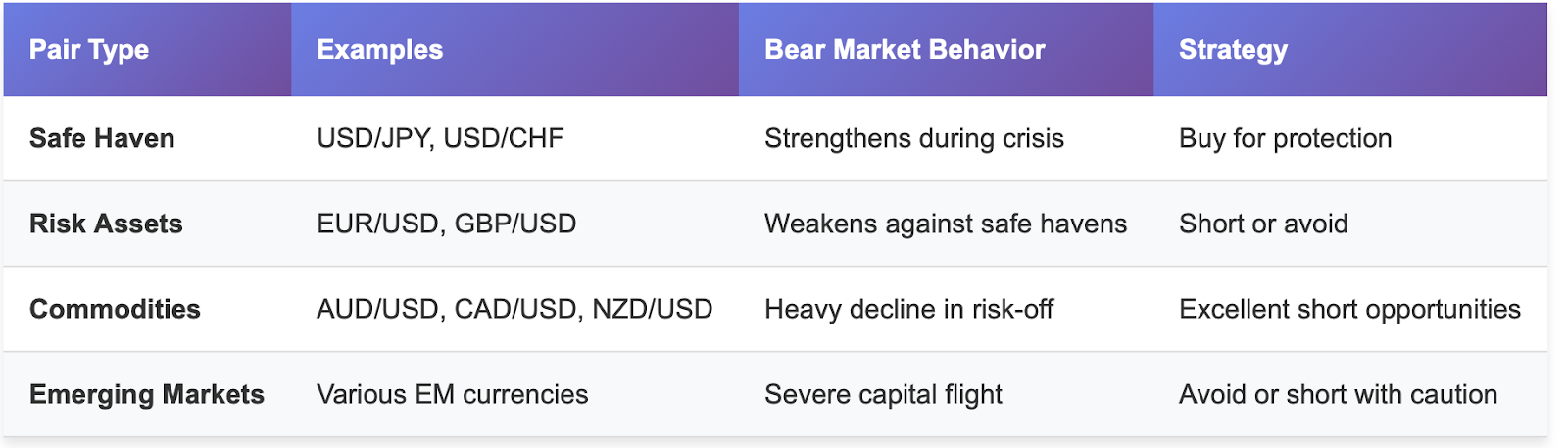
Safe haven currencies are more dominant in bear markets. USD, JPY, and CHF have a tendency to perform better during periods when investor confidence declines. Safe havens should be included in bear market strategies; they also are a natural hedge.
Just as students can swap out different types of snacks to buffer losses, swapping out a traded snack to one that is more even in a down market will help preserve portfolio values on total snacks. If fruit's price is declining, a student will trade it for crackers, because crackers will hold value better than fruit. That way they are diversifying their overall portfolio snack value.
Hedging strategies become an important tool. If you are long EUR/USD, you can hedge your position by going short on GBP/USD. This action decreases the overall portfolio volatility. Gains on the hedges offsets losses on the significant position.
Options can provide a great hedging instrument. Put options on currency pairs are less costly than hedging the complete position. A put option lets you downside price protection with upside exposure. This asymmetrical risk reward profile is perfect for bear markets.
CFD platforms present multiple hedging opportunities. A long USD/JPY position can hedge a short EUR/USD position. Correlation analysis will help determine proper hedge ratios. You will need to rebalance positions on a regular basis to maintain the effectiveness of your hedges.
Commodity currencies usually take a hit during bear markets. The AUD, CAD, and NZD all generally decline when there is a risk appetite downturn. Avoid the risk of commodity currencies or use them as an opportunity to short. The focus should be on safe haven currencies.
In bear markets, the whole portfolio becomes more important than the individual trades. Track the exposure levels of your individual positions. As volatility increases, you should decrease the position size. Be mindful of having enough cash available to capitalize on one-off opportunities.
Bear Market Tips for CFD Traders
Be extraordinarily cautious with the usage of leverage in bear markets. Because losses can multiply quickly in volatile bear markets, you should decrease leverage from normal levels. 10:1 is more than enough leverage - utilize a 10:1 ratio compared to 50:1 or greater.
Loss management becomes paramount as you stay alive in the game. You have to use stops, and place them at appropriate technical levels. Don't ever move a stop against your position. If the stop is hit, take your losses. Staying disciplined in this will save your account from devastation.
Keep position sizes small when experimenting with strategies for bear markets. It is similar to thinking of a small allotment is like using your allowance on cheap junk food. You want to try your strategies, but need to reduce your risk when doing so. Increase trading quantities only when you can prove to yourself that you will make money.
When you are trading CFDs on EUR/USD and the market is in decline, don’t forget about risk when you are placing your stops. Use stops on the other side of recent swing highs, and use a previous support level, preferably from the day before, as your profit targets. Use very thorough risk assessments. Understanding this also includes the risk of loss from status quo positions. Avoid risking more than what the opportunity offered, and whatever ratios make sense for your win rates.
Margin requirements often increase during difficult or volatile periods. Always keep a larger cash buffer than what you would normally have in your trading account. Do not trade with the maximum amount of leverage available. Always keep reserves available for margin calls or new positions at an unexpected opportunity.
During crisis times, the reliability of your trading platform can be crucial. When you are evaluating what brokers to trade with, consider your evaluation of their financial backing. Take some time to test the stability of trading platforms you are considering. There is a trade-off between platform reliability and good executions. Shame on you if you realize the nearest backup trading platform during emergency conditions.
Controlling your emotions is what determines long term capital growth. Bear markets are difficult psychologically. Always stay within your determined risk parameters. Do not increase position sizing after you lose. Avoid trading when you are stressed, a decision I think we should all recognize at some point in a trading career.
Professional traders tend to reduce activity during times of extreme market volatility. They choose to wait for more investment opportunities. Amateur traders are often guilty of over-trading when they are excited. Use patient, disciplined traders who are professionals in their field as a benchmark from which to study.
Bear Market Key Takeaways
When involved in a bear market, there are the challenges of price decreases as well as psychological considerations. Bear market conditions involve two elements: price declines and psychological aspects. Technical analysis allows price trends to be identified early on; risk management rules are designed to prevent total ruin, or large losses; and psychology typically determines the outcome in the end.
It is never a waste of time to learn more history. Previous bear markets exhibit similar traits. Recognizing these traits allows you to make more informed decisions for the current markets. Look at the patterns of previous currency crises and bear markets to see the major events involved.
There are multiple strategies to utilize in a bear market. You can short-sell markets to profit on prices moving downwards. Special situations to protect and hedge your portfolios' standard deviation. Buy safe haven currencies to preserve accounts. Use multiples for maximum success.
You cannot negotiate risk management. Place stop losses on every position. Reduce your position sizes when the market is volatile. Keep cash reserves. Don't risk more than you can afford to lose.
Patience trumps aggression in bear markets. Wait for high probability trades. Avoid chasing every price move. Recognize that sometimes you will not act on a low probability trade; accept that. Usually, small consistent profits compound very well over time.
Bear markets represent some of the best opportunities for traders who have prepared properly. Bear markets create fear and fear creates mispriced assets/markets. Typically, emotional reaction to price movement represents entry points. Traders who execute their strategy with discipline create profitable trades. Preparation and patience is the secret sauce.
Traders who know bear markets can gain a competitive edge over other traders. Most traders lose money during these time frames, but properly prepared traders tend to make their best returns. Knowledge is combined with discipline to make money using any trading plan in various market conditions.
Are You Ready to Profit From Bear Markets?
Bear markets allow traders to differentiate themselves from traders that lose money. The strategies and direction in this guide offers some foundational pieces for trading bear markets successfully, however, knowledge without action is not enough. Put this knowledge into action today. Open a demo account and practice short selling techniques. Test out different technical indicators and backtest them against historical bear markets. Skyrocket your trading skills before risking your capital!
Join our advanced forex trading community today and get access to live market analysis for the whole volatile period. Get advice and learn from seasoned traders that have managed multiple bear markets with success. You will also receive trading alerts in the form of a text message or email to your smartphone, for high-probability trading opportunities.
Do not wait for another bear market to occur before preparing yourself. Check our bear market trading toolkit right now. You will receive strategy templates, risk management calculators and historical case study analysis.
Go click the link for resources that you will not find elsewhere for bear market trading. Your future profits will be based on the work you do today! Another bear market will occur, will you be ready to profit from it?
Disclaimer: The content of the blog does not represent any position of Trade W, does not serve as any trading-related decision advice, and does not endorse any third-party.