

 Trade W

1. Why Dubai Has Become a Global Forex Trading Hub in 2026
Dubai is increasingly regarded as a global financial hub rather than simply an advertising vehicle. The volume of transactions that take place in Dubai, as well as the presence of a solid institutional foundation for brokers and retail customers, have made this location an attractive place to conduct business compared to anywhere else in the Middle East. The Dubai International Financial Center (DIFC) has become known as a bona fide financial jurisdiction in its own right, akin to London or Singapore, and provides brokers and liquidity institutions with a competitive advantage over other countries seeking to conduct business from Dubai by allowing them direct access to customers rather than relying on remote communication.
The city's time zone is one of the most significant features of Dubai as it relates to the global retail Forex trader. The Gulf Standard Time (GST) zone that Dubai follows places it exactly between the start of the Asian trading session and the start of the European trading session, allowing retail Forex traders in the UAE extended periods of liquidity across major currency pairs (EUR/USD, GBP/USD, and USD/JPY). Additionally, gold and oil, which have played a major role in establishing Dubai's cultural and economic heritage, are among the most actively traded global commodities. Thus, it should come as little surprise that XAU/USD and crude oil CFDs have historically ranked among the most popular products traded through UAE-based accounts.
Mobile-first trading continues to grow rapidly in the UAE. Dubai-based retail traders' adoption of MT5 has grown dramatically over the past 12 months, with most brokers now reporting that a significant proportion of their UAE clients execute their trades entirely via mobile devices. As a result, brokers have been forced to upgrade their applications and execution infrastructure, creating a more competitive trading environment overall for local traders compared to just three years ago.
Therefore, should you choose to search for forex brokers based in Dubai, you will be part of a dynamic and regulation-driven trading community, and the quality of the brokers you choose here is of greater importance than in most other markets.
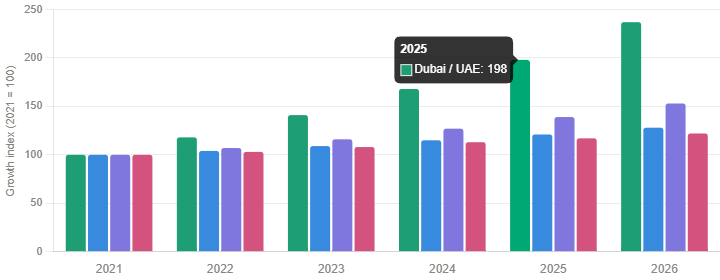
Here's how Dubai's retail forex trading growth compares to other global financial centers, and the trajectory makes a clear case for why international brokers are investing heavily in UAE-focused infrastructure right now.
Gold dominates UAE retail trading volumes, which makes XAU/USD spread quality one of the most important selection criteria when comparing Dubai forex brokers.
2. Is Forex Trading Legal in Dubai?
Forex trading is fully legal in Dubai and elsewhere in the United Arab Emirates; nonetheless, the regulatory framework governing forex brokers is more complicated than many traders anticipate, and understanding these regulations will ultimately influence how safe you feel entrusting your money to a broker.
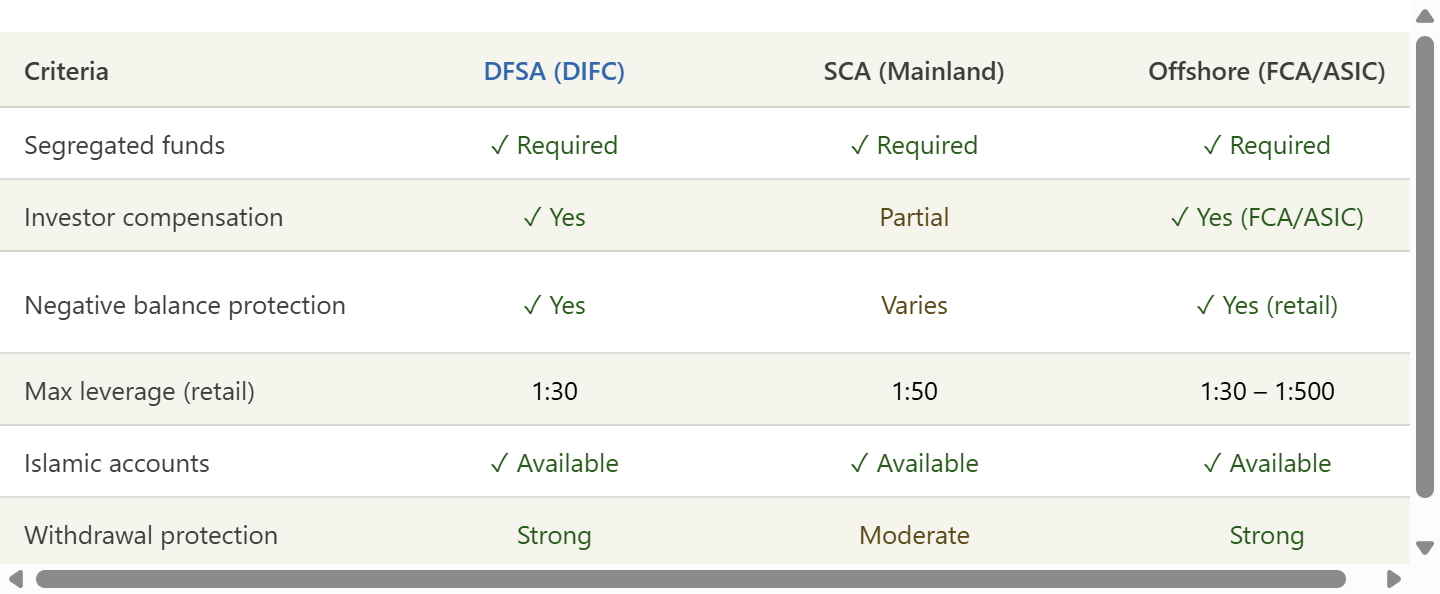
The Dubai Financial Services Authority (DFSA) regulates all forex brokers that operate from Dubai's International Financial Centre (DIFC) and imposes stringent compliance and financial requirements on these brokers, including the requirement to maintain segregated accounts for client funds in order to protect clients should the broker declare bankruptcy.
An example of how safe your funds can be when your forex broker is licensed by the DFSA is that your trading funds will be held in a separate bank account (segregated). Consequently, these funds cannot be used for the broker's operating expenses or any other business purpose. In effect, your trading funds are stored in a "vault," separate from the broker's cash flow and day-to-day operations.
The Securities and Commodities Authority (SCA) provides regulatory oversight of brokers operating in the mainland United Arab Emirates (UAE), but only for brokers located outside the DIFC. Most traders based in the UAE who work with international brokers will find that many of these brokers are licensed offshore and regulated by organizations such as the FCA (UK), ASIC (Australia), or CySEC (Cyprus). These offshore licenses provide international credibility and client protection, and many of the world's leading forex brokers are licensed across multiple jurisdictions.
The key distinction for traders in the UAE is that an offshore broker is regulated and licensed by a foreign authority rather than being unregulated. The majority of the top ten brokers compared here hold Tier-1 regulatory licenses from internationally recognized authorities, providing significant client protection against broker insolvency, misconduct, and issues related to fund withdrawals.
3. How to Choose the Best Forex Broker in Dubai
There are many differences among the brokers serving the United Arab Emirates, but it's important to understand that many factors beyond brand-name recognition will influence your final decision.
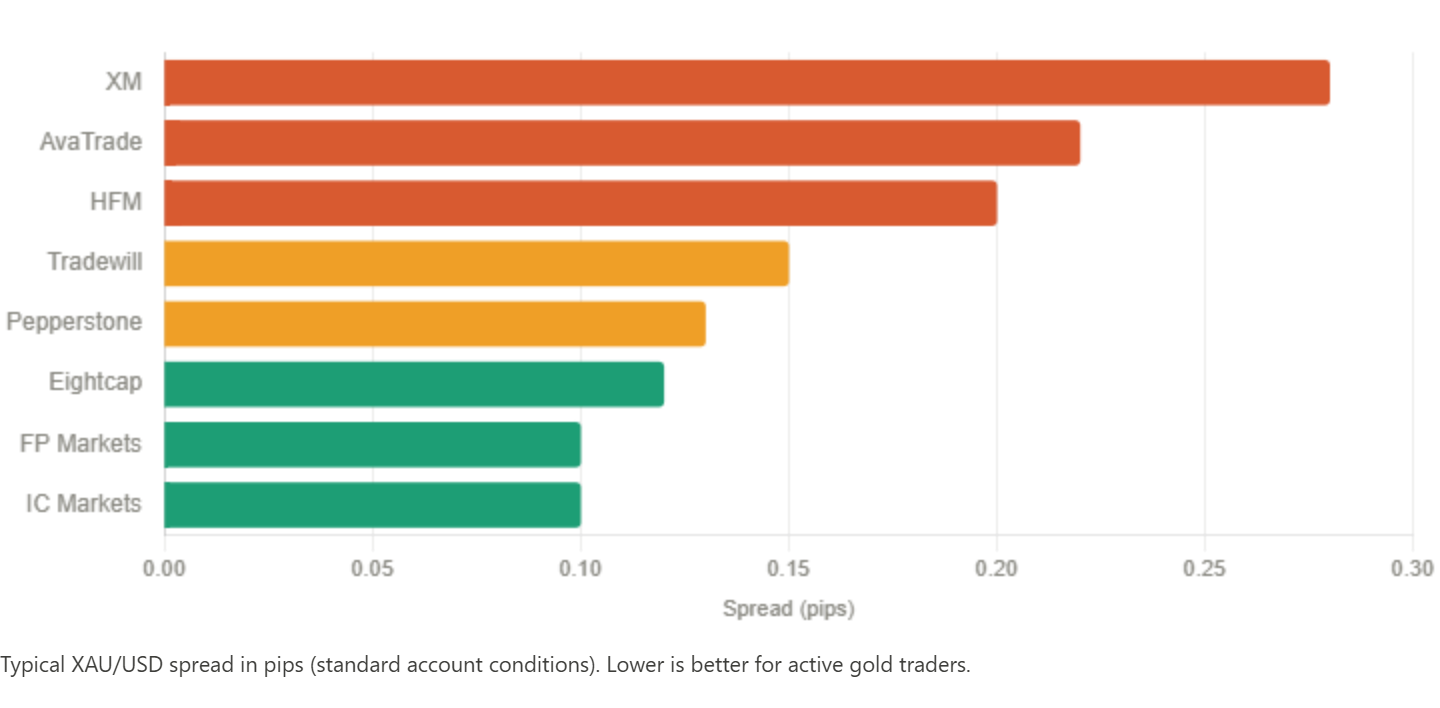
The two most critical factors in determining how much it costs you to execute trades are your overall spread and commission structure. For instance, a 0.1-pip difference in the EUR/USD currency pair may not seem like a significant issue, but when you're a scalping trader who makes several dozen trades per day, that minor difference becomes an enormous cost drain over time. When trading XAU/USD (gold), traders in the UAE should be very aware of how widely spreads can vary, ranging from as low as 0.08 pips to more than 0.30 pips, depending on which broker they use. If you intend to trade gold as frequently as possible, it is essential to understand how much additional profit may be lost as a result of these differences in spreads.
When executing active or day trades, speed of execution is critical for today's traders, as any slippage (or missed opportunity) caused by high-impact news events, such as U.S. CPI releases or Federal Reserve interest rate decisions, can create losses that exceed the typical difference between wide and narrow spreads. It is also important to consider whether a broker has servers located closer to the major liquidity providers in London and New York City, as this can improve the quality of trade execution when dealing with highly volatile instruments such as XAU/USD and crude oil CFDs.
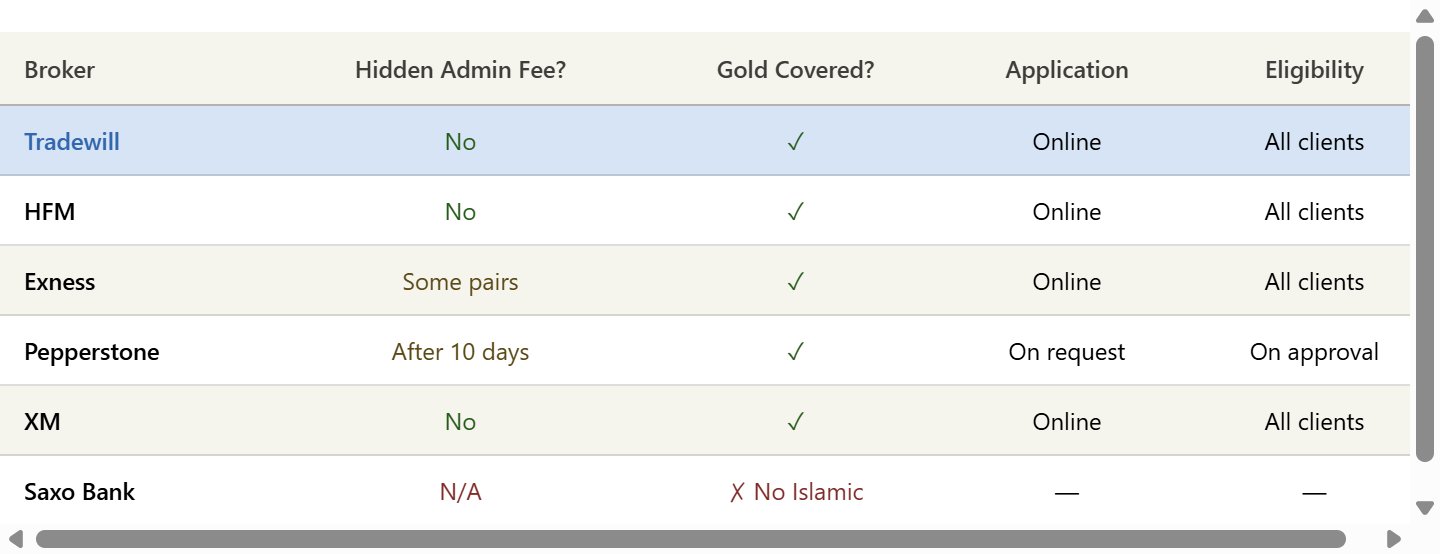
A fair number of UAE traders base their trading decisions on the availability of a genuine Islamic (swap-free) account that does not impose overnight rollover fees, in accordance with Sharia principles. Each broker's offering can differ significantly; some impose administrative fees on Islamic accounts, which can offset the cost savings of a swap in a different form. Therefore, it is recommended that traders review the fine print before committing.
Another important factor is support for the MetaTrader 5 (MT5) trading platform, as trading in gold and multiple asset classes is more prominent on MT5 than on MetaTrader 4. MT5 provides a more comprehensive solution for gold and multi-asset traders through enhanced charting capabilities, a greater number of available order types, and faster execution speeds.
4. Top 10 Forex Brokers in Dubai (2026): Full Comparison
Below is a comprehensive breakdown of the best Dubai forex brokers for 2026, covering regulation, Islamic account availability, spreads, platforms, and what each broker does best.
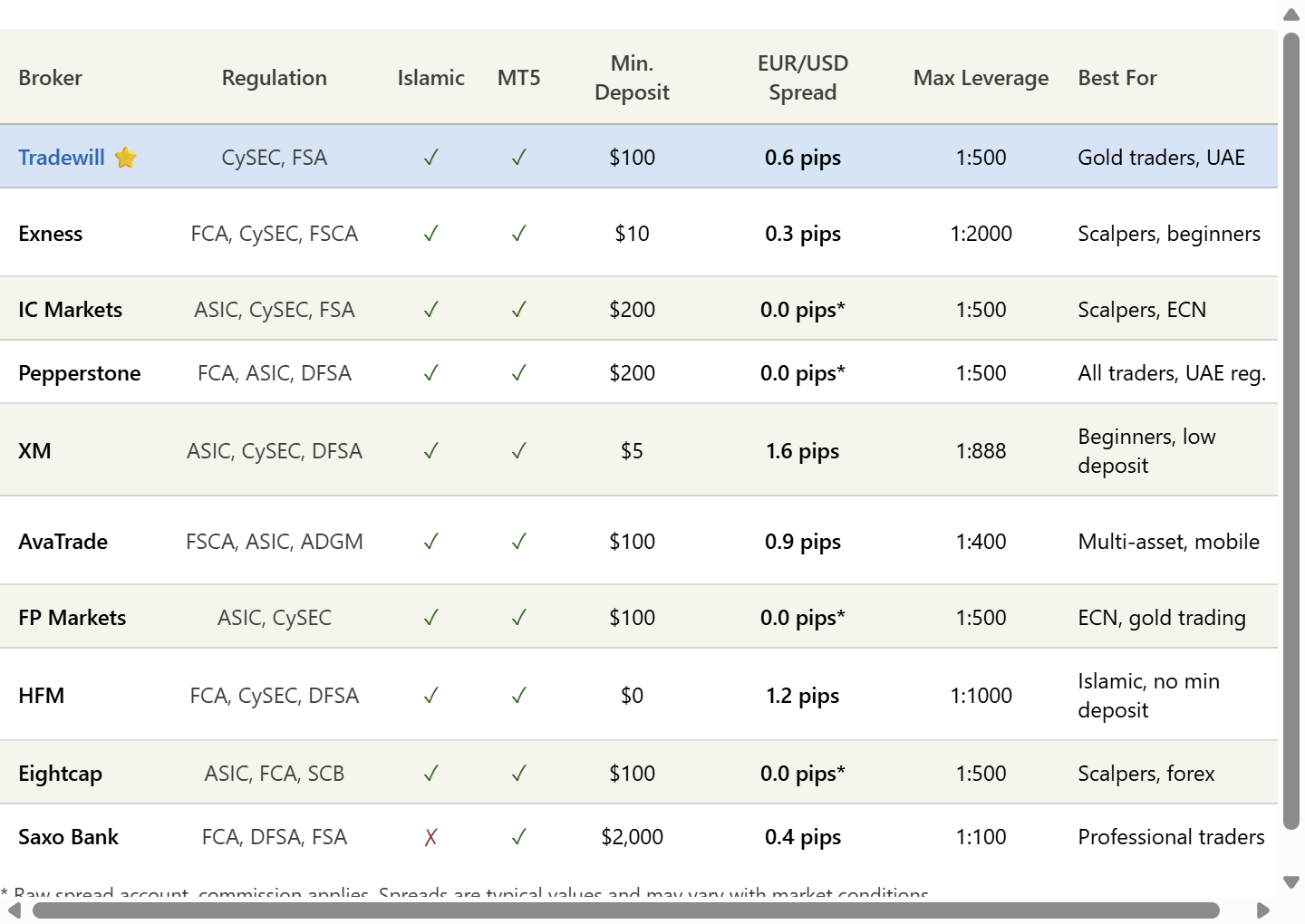
With its specific focus on forex CFDs and gold, Tradewill is well positioned to attract traders in the UAE because it offers a competitive MT5 platform and genuine Islamic accounts with no hidden administrative fees, unlike many swap-free accounts offered by other brokers. For traders primarily seeking a broker operating within a DFSA-regulated environment, Pepperstone would be one of the strongest options to consider.
Both IC Markets and Eightcap serve as benchmarks for traders seeking raw spreads or pursuing scalping strategies. Among the brokers covered, Exness provides the greatest deposit flexibility and is therefore likely to appeal to new traders who wish to start with a relatively small amount of capital. Although Saxo Bank offers many advantages as a professional-grade broker, including access to a wide range of markets and extensive research tools, its appeal to UAE-based traders is limited by its high minimum deposit requirement and the absence of an Islamic account option.
5. Islamic Trading Accounts: What UAE Traders Need to Know
An Islamic swap-free account is not merely a checkbox for Muslim traders; it is a structural element that determines how brokers and traders interact within the UAE market, where a majority of retail traders seek Sharia-compliant trading conditions. In a typical trading account, the cost associated with holding a CFD position overnight is a rollover charge that is either paid or received, resulting from the difference in interest rates between the currencies being traded. Islamic accounts, on the other hand, do not incur this cost because Sharia law prohibits the payment or receipt of interest, known as riba.
The impact of this from a swing trader's perspective is significant. When a trader follows a macro trend, they are likely to hold a gold position overnight for multiple days or even weeks. When doing so with a standard account, overnight rollover fees can accumulate quickly, creating substantial costs that erode the potential profitability of the position before the trader has an opportunity to realize gains. Conversely, if the trader uses a genuine swap-free account, these charges are not incurred at all.
An important point to note is that many brokers replace swaps with a similarly named administrative fee, which ultimately results in the same charges while appearing to be separate from interest. TradeWill, HFM, and XM have offered fully compliant Islamic accounts without relying on this method of compliance — they provide genuinely swap-free accounts rather than accounts that appear to comply with Sharia principles while still imposing equivalent rollover charges through alternative fees.
6. Gold and Forex Trading Platforms in Dubai
Dubai's retail trading market places a strong focus on gold, with XAU/USD CFD trading characterized by low transaction costs and competitive spreads. Over time, however, the spread cost incurred on each trade can have a substantial cumulative impact on overall profitability. While the difference in trading costs on an XAU/USD CFD position may not appear significant at first glance, it can quickly amount to hundreds of dollars over the course of a month of active trading. For traders who use multiple trading accounts, the costs incurred through gold trading on XAU/USD can have a considerable cumulative effect on account balances, depending on account size and trading activity.
The MT5 platform has become the standard trading platform for gold traders due to its enhanced charting capabilities, the ability to trade XAU/USD directly from technical price-action charts, and support for multiple asset classes, including forex, commodities, and indices, within a single application. The ability to trade both EUR-based currency pairs and XAU/USD across multiple account types from one multi-asset platform provides a significant advantage in terms of productivity and trade execution.
When a UAE trader executes gold trades repeatedly each week, choosing one of the green-zone brokers that charge between 0.10 and 0.15 pips can result in significant cost savings compared to brokers with higher spreads. This is especially true during periods of high volatility, when liquidity is reduced and spreads may temporarily widen beyond their typical levels.
7. Costs and Risks of Forex Trading in Dubai
In addition to evaluating spreads, traders must consider their total trading costs and avoid underestimating risk, as poor risk management is one of the primary reasons new traders lose their accounts more quickly than they expect.
Leverage allows retail traders with limited capital to participate in the forex and CFD markets; however, it can magnify losses just as easily as it can amplify profits. For example, when trading XAU/USD with 1:100 leverage, a move of just 1% against your position can be enough to eliminate your entire margin. Therefore, proper position sizing and the use of stop-loss orders are critically important. Effective risk management and trade planning are often what separate consistently profitable traders from those who exhaust their accounts within a matter of weeks.
A margin call occurs when your account equity falls below your broker's maintenance margin requirement. When this happens, the broker may begin closing positions at the prevailing market price, which may not be favorable to you. In fast-moving markets, such as during a Federal Reserve interest rate announcement or a major geopolitical event, the actual execution price may be significantly worse than the last quoted price at the time the margin call was triggered due to slippage.
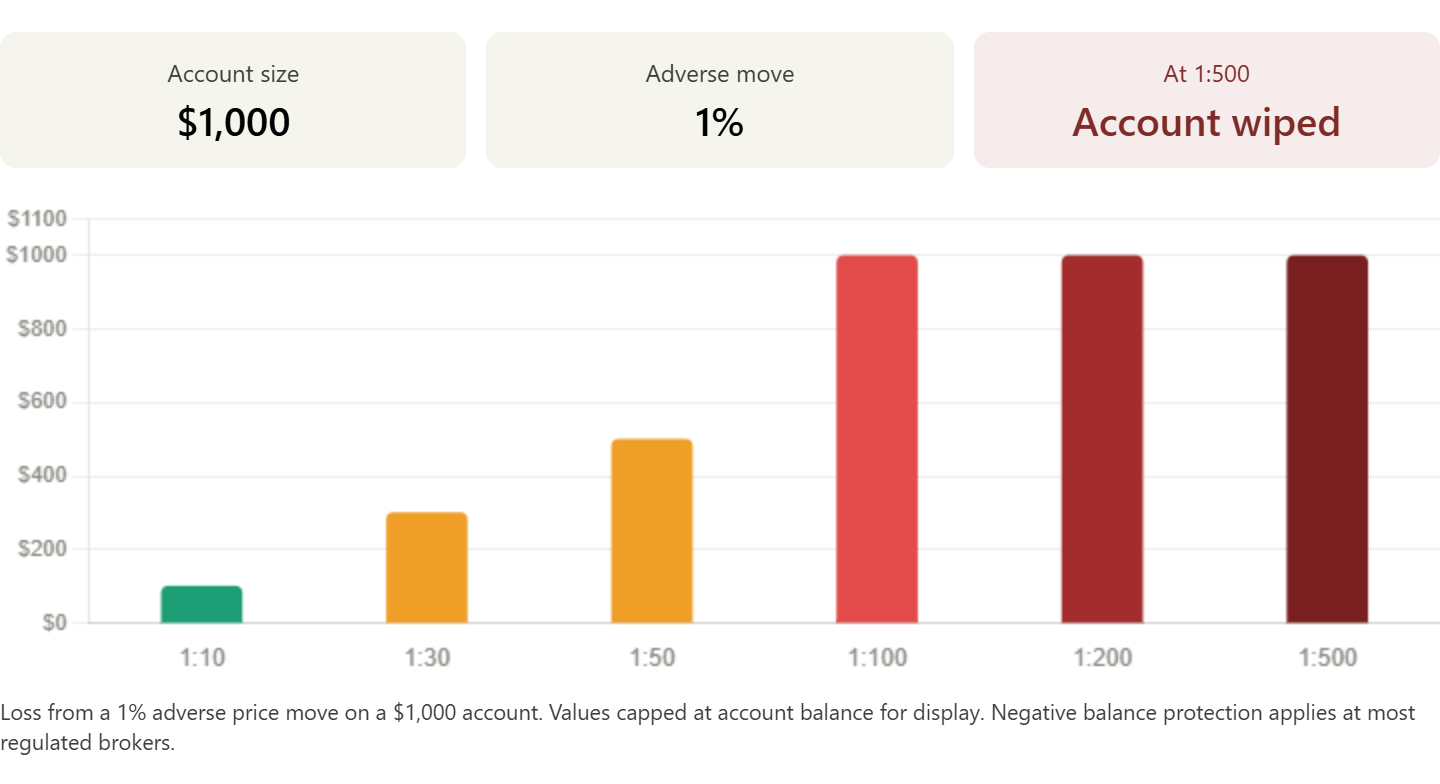
When you look at a leverage risk chart, it becomes clear how significant the relationship is between your account balance and the amount of leverage used. For example, if you are using 100:1 leverage with a $1,000 account, a loss of just 1% against your position could be enough to exhaust your entire account. This is not merely a hypothetical scenario; there are occasions when gold moves by 1% or more following the release of major economic data such as CPI or Non-Farm Payrolls (NFP), and such volatility is relatively common.
If you are still developing your trading strategy, using lower leverage is not simply a matter of being cautious, it is often the most practical way to remain in the market long enough to develop consistency and generate profits over time.
8. How to Start Forex Trading in Dubai: Step-by-Step
To start trading live in Dubai from scratch, you can typically complete the account setup process and place your first trade within 24 to 48 hours with most brokers, provided you follow the appropriate sequence. The process is generally as follows:
-
Select a regulated broker that aligns with your trading style—for example, gold traders may prefer Tradewill, scalpers may consider IC Markets, while new traders may find XM or Exness suitable options.
-
Create a trading account through the broker’s website or mobile application. Most brokers allow you to choose between a standard account and an Islamic account during the registration process, enabling you to select the account type that best suits your needs.
-
Verify your identity by uploading a government-issued identification document and proof of residence as part of the broker’s Know Your Client (KYC) compliance process. For most brokers, verification is completed within a few hours during business days.
-
Fund your account using a bank transfer, credit card (Visa or Mastercard), or an e-wallet. If you are located in the UAE, it is advisable to confirm which funding methods are available, as some deposit options may have minimum deposit requirements that differ from the broker’s standard minimum deposit amount.
-
Install the MT5 platform on your laptop, desktop computer, or mobile phone, then log in to your account using the server information provided by your broker in the approval email sent after your account has been verified.
-
Use a demo account for at least two to four weeks before trading live to become familiar with real market conditions. Demo trading allows you to test strategies, learn the trading platform, and develop disciplined execution without risking capital.
-
When you begin trading live, risk no more than 1% to 2% of your account on any single trade and always use a stop-loss order to protect your capital before entering a position.
9. Conclusion: Which Is the Best Forex Broker in Dubai in 2026?
Many factors will determine which forex broker is the best choice in Dubai for 2026. If you are an active trader focused on gold CFDs and require a genuine Islamic account with competitive spreads, Tradewill and HFM would likely be among the top options. If you trade using a scalping strategy and require the tightest possible raw spreads, IC Markets, Pepperstone, and Eightcap are worth considering. If you are a beginner seeking a regulated broker with a low minimum deposit requirement, both XM and Exness provide accessible entry points for starting your trading journey. Professional traders looking for extensive market access and advanced research tools may find Pepperstone or Saxo Bank particularly attractive, although Saxo Bank's minimum deposit requirement should be weighed against individual trading needs.
In every case, the criteria that most UAE traders use to evaluate brokers remain largely the same: the quality of regulation, the integrity of the Islamic account offering, execution speed for XAU/USD and major forex pairs, access to MT5, and the reliability of deposits and withdrawals. These five factors often determine whether a broker serves as a valuable trading partner or becomes an obstacle to long-term profitability.
The forex trading environment in Dubai in 2026 is expected to remain highly competitive, meaning traders should not have to compromise on any of these key criteria when selecting a broker that is well suited to the UAE market.
Ready to trade gold and forex on a platform built for UAE traders? Tradewill offers regulated MT5 trading with real swap-free Islamic accounts, competitive gold spreads, and a $100 minimum deposit — open your account today and claim your welcome offer.
Disclaimer: The content of the blog does not represent any position of Trade W, does not serve as any trading-related decision advice, and does not endorse any third-party.