
 Trade W
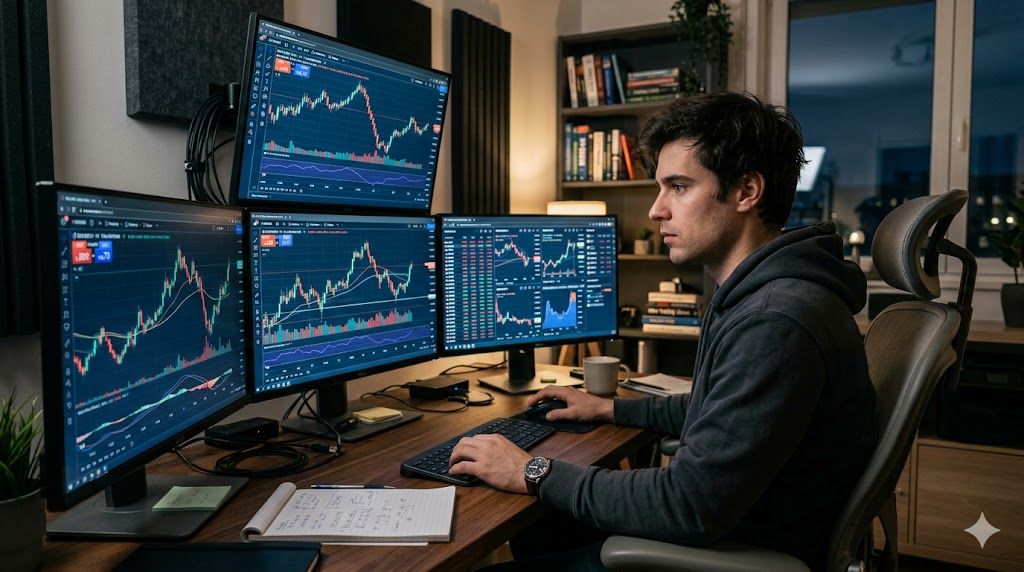
Forex is a $7.5 trillion marketplace. That’s a total of $7.5 trillion in transaction volume on a daily basis. Forex is a marketplace that dwarfs every stock exchange combined.
Forex (Foreign Exchange) is the worldwide marketplace for all types of banks, corporations, and individuals involved in buying and selling currencies.
Every time you convert your dollars into euros before you go on vacation, you are also participating in forex trading. The same process happens when you make foreign currency conversions; however, there are vast differences in terms of scale.
Who is the forex trader? Traders, investors, and institutions all make up a great deal of the volume, and every day they participate in forex. Traders hold a share of the market volume created by central banks. Commercial banks create and settle exchange rates. Multinational corporations (MNCs) make foreign currency conversions and repatriate profits back home.
Why are so many new traders joining the forex market? The three main reasons are the following: you can start trading with as little as $100, forex is open for business 24 hours a day except on Sundays, and you have the ability to trade on your smartphone while you’re at your job or during business meetings. Nowhere else can you get these three things: access to the newest financial markets, flexibility to trade around your schedule, and entertainment.
What is forex trading?
"Forex" means purchasing one currency and selling another currency at the same time, and you trade currencies as a pair. That's how forex works, and it always does.
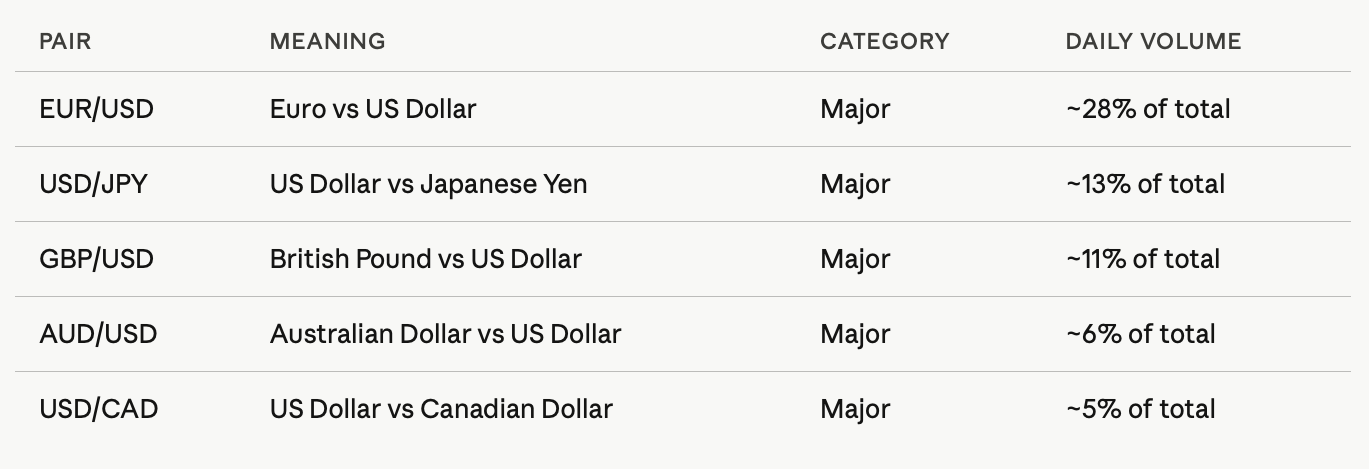
One of the most popular currency pairs is EUR/USD. The euro is on the left, or base currency, and the dollar is on the right, or quote currency. For example, EUR/USD is trading at 1.10. So, if you have one euro, you can buy 1.10 USD today.
Your profit is created by price movement. For example, if you purchase EUR/USD at $1.10 and the price rises to $1.12, then the difference is your profit. If the price falls to $1.08, then you have a loss. Whether you make a profit or a loss will depend on the direction you took with your buy or sell order, as well as how large your position is.
An example of a forex trader is someone who believes that the US Federal Reserve is about to lower interest rates. This trader will sell USD pairs before the Federal Reserve makes its announcement, then buy them back once the announcement has been made. This same principle can be seen with a beginner buying euros to travel to Europe for vacation, and then selling any leftover euros when they get home.
Forex trading is not complicated. Rather, it is based on the difference in value between currencies. Once you understand this, everything else can be built on it.
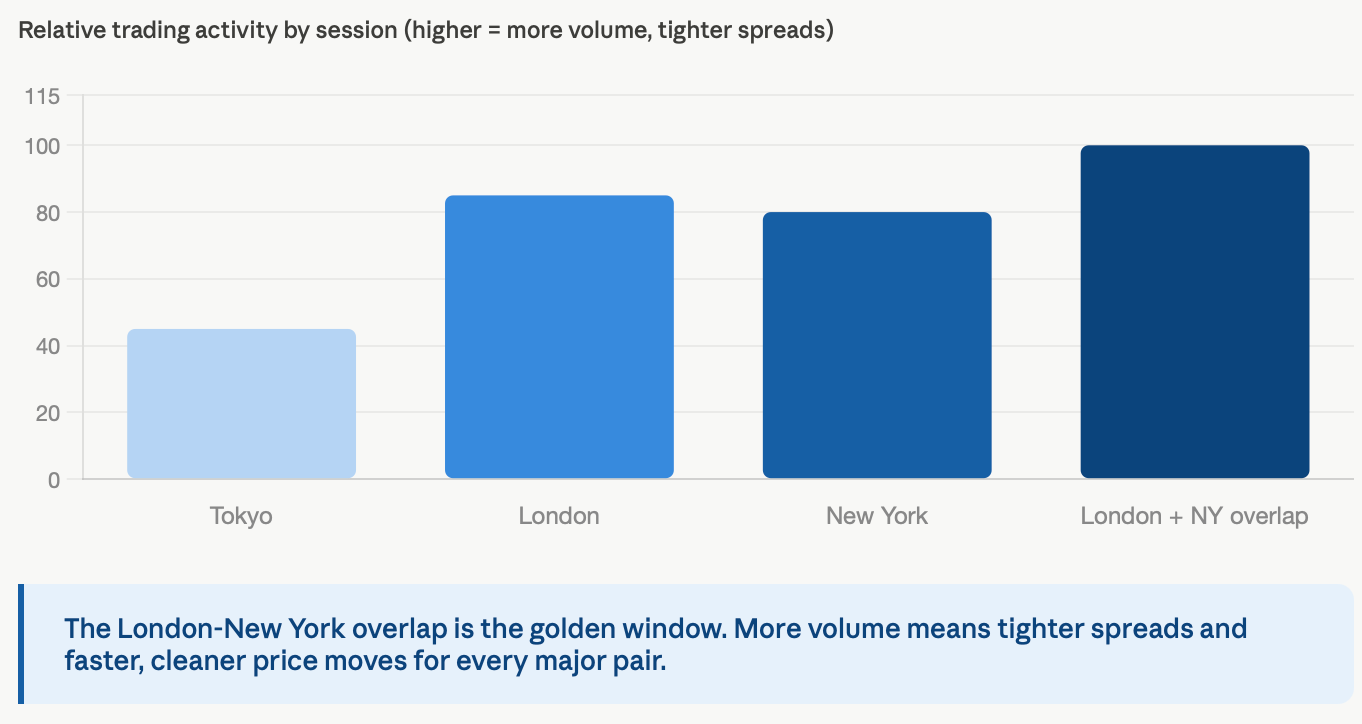
Daily trading hours for forex – how to trade using the forex market
The forex market is open 24 hours per day during the week. It opens on Sunday at midnight (New York time) and closes on Friday at midnight (New York time). It has four major trading sessions throughout the world. Each hour of the day has a different personality and level of volume.
The first session begins with Tokyo and the start of the Asian trading hours. Tokyo has the lowest and most stable price action, with JPY pairs as well as commodity currencies like AUD and NZD. Then, the London trading session quickly picks up the pace with an increase in volume. The London session creates the majority of forex activity in Europe. The New York trading session immediately follows London and continues at a rapid pace for the rest of the afternoon.
The most critical trading time for novices is during the overlap of the London and New York trading sessions, from 1 PM to 5 PM GMT. The reason for this is that there is a dramatic increase in trading volume during this period. This period also provides the maximum amount of price movement on the EUR/USD and GBP/USD currency pairs, the lowest buying and selling spreads, and the highest liquidity and consistency of opportunity across all currency pairs.
You don’t have to trade all the time. You can choose which session to trade and learn how prices behave during that session, then develop your trading habits around that time. Working around the clock doesn’t make you a better trader; it makes you a tired one.
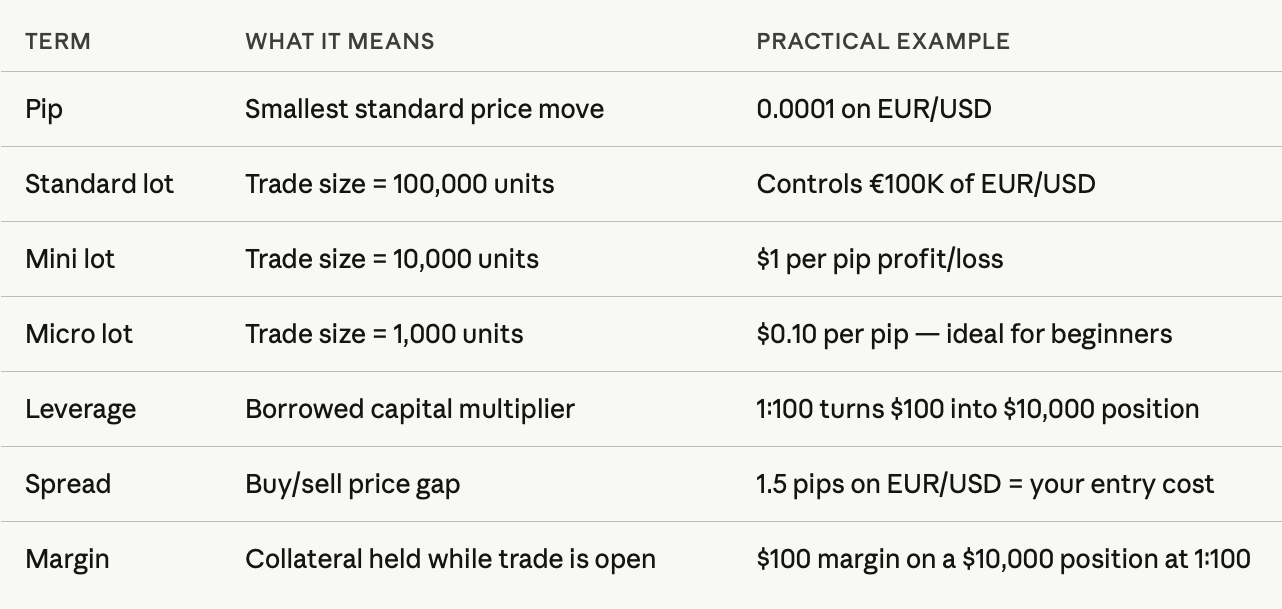
Key forex terms every beginner must know.
Beginner traders will encounter many different terms that often put them off before they ever start trading. Below are six key terms you need to know before starting to trade any currency pairs. Understand these, and everything else regarding forex will fall into place quickly.
A pip (short for "percentage in point") is the smallest movement in price for most currency pairs traded on the foreign exchange market. For most currency pairs traded today, a pip equals 0.0001. For example, if the price of EUR/USD moved from 1.1050 to 1.1051, you would have seen a movement of 1 pip. Your profit or loss will initially be calculated using pips and will then be converted to the currency of your trading account based on lot size.
Lot size represents the amount of currency you are trading, either buying or selling. A standard lot equals 100,000 units of the base currency. A mini lot represents 10,000 units. A micro lot represents 1,000 units. When you begin trading, you should use micro lots. While you are learning, the losses will be smaller.
Leverage is money that a broker provides you to trade forex. For example, using 1:100 leverage allows you to control $10,000 with as little as $100 in your account. Leverage increases the size of your position. In turn, leverage increases both your potential profits and your potential losses equally.
A spread refers to the difference between a currency pair's buying and selling prices. This difference reflects the profit that brokers make from every trade performed through them. If you have a tight spread, it will reduce your trading fees, something that many inexperienced traders don't appreciate enough yet.
Your broker will also hold margin when you have an open trade as security. The margin isn't considered a fee, and you will receive it back when the trade is closed unless you have generated a profit or loss.
How forex trading works — from opening a trade to profit
The complete process of currency trading, starting with choosing to purchase currency and finishing with selling it at a profit.
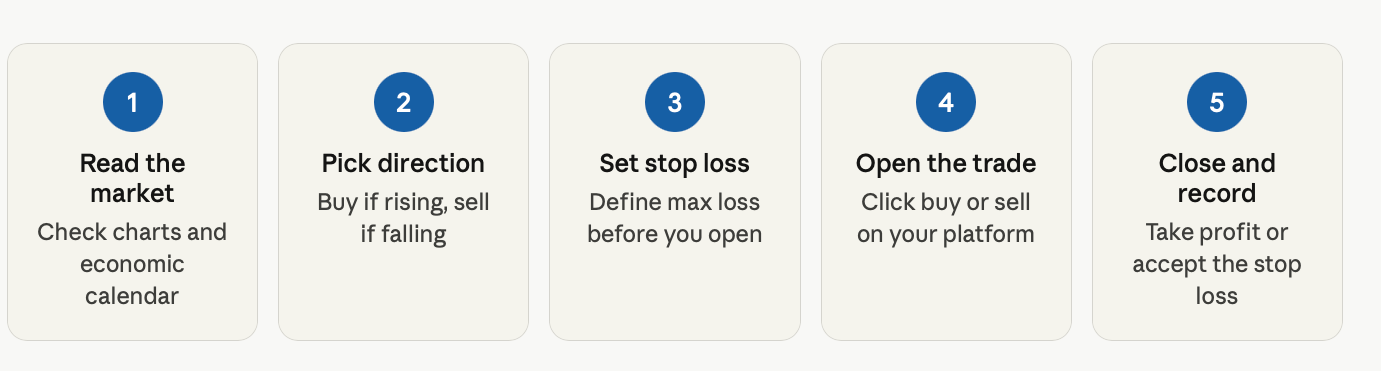
You access your broker's platform. You're now able to see that the EUR/USD is trading at 1.1050. Based on the most recent economic calendar, you have determined that the ECB has indicated it will not raise rates. Your belief, correct or not, is that the euro is going to decrease in value against the dollar, so you sell.
The exchange rate moves to 1.1020, at which point you complete the trade by clicking on the "close" button in your broker's platform. That means you have made a gain of 30 pips. Pips represent the decimal places of currency exchange rates. The gain is based on the downward movement from 1.1050, the price you sold at, to 1.1020, the price you closed at. In other words, if this were a mini lot, where one pip equals approximately $1, your total profit would be approximately $30. This would not change your life today; however, if you consistently executed profitable trades, the dollars would really add up.
If you had believed, correctly or not, that EUR/USD would go up, then you would buy EUR/USD at 1.1050, wait until it reached 1.1080, and then close the trade with a 30-pip gain, the same as above. As you can see, buy and sell trades are executed the same way, except that one trade is a sell and the other is a buy. Everything else is exactly the same.
Your broker represents you in every transaction as an intermediary or middleman in executing your orders. They do this by executing your orders, holding your margin as collateral for the trade, matching your trade with the market or other banks, and charging you a spread when placing an order with them. Therefore, a properly regulated forex broker is not optional. Before you make any deposits to a forex broker, confirm that they are licensed with the FCA, ASIC, or CySEC.
Is leveraging your forex trade an opportunity or a trap?
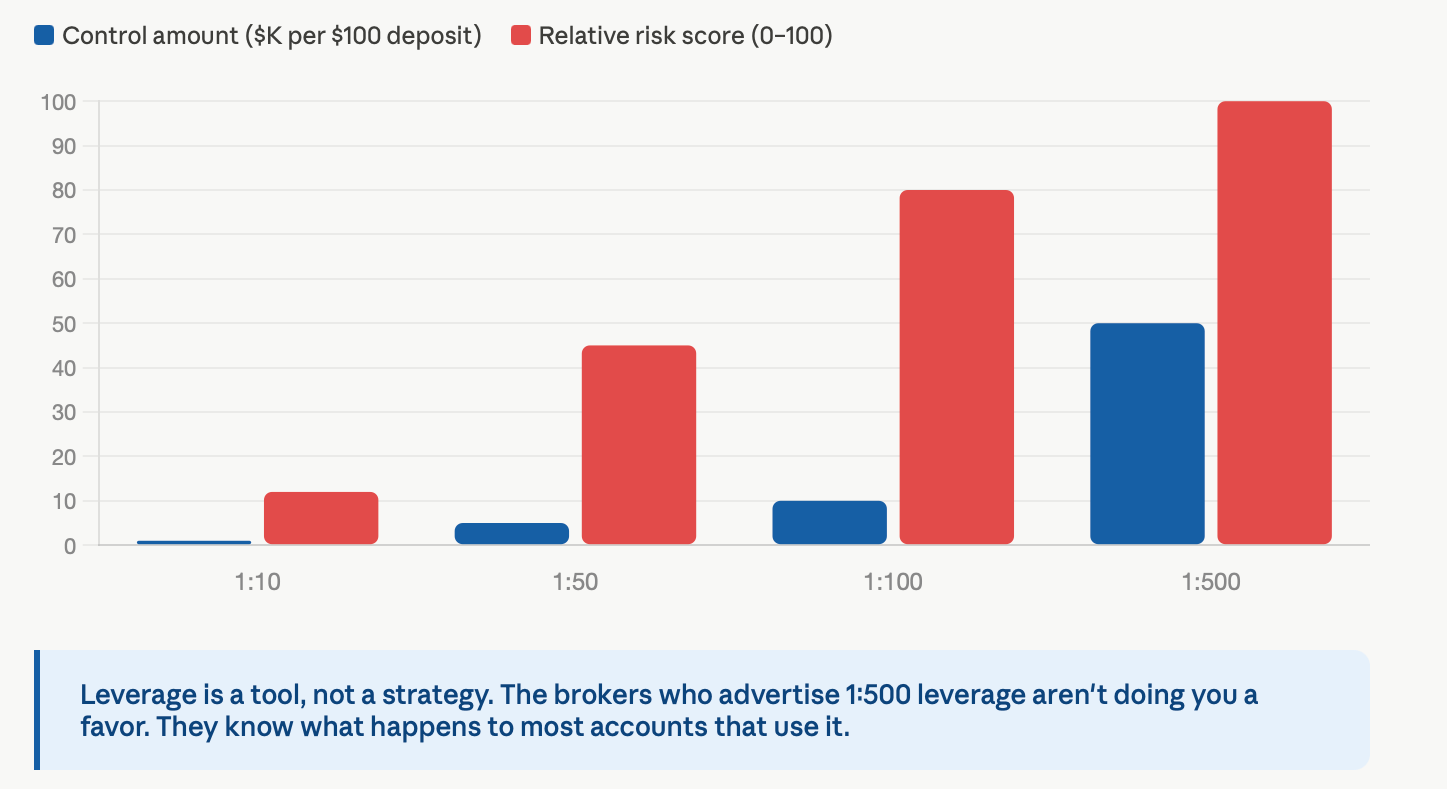
Leverage allows you to control a large position with a smaller account. For example, if you leverage your money at 100:1, you can control $50,000 in currency with a $500 account balance. That’s what brokers advertise when you open an account with them, and it is often one of the major appeals to new traders.
However, they do not tell you that if the market moves 1% against you on your $50,000 position, you could lose your entire deposit, in this case, $500. Thus, one trade that doesn’t go your way can wipe out your entire deposit in one night.
That is not an unrealistic example. It is common for the EUR/USD to move 1% in one day under normal trading conditions. New traders usually find this out very quickly, normally within the first week of trading live, when they sign up for an account and immediately use maximum leverage.
High leverage will not provide a new trader with an edge in trading. It simply makes the cost of making a mistake much greater. Most professional traders keep their leverage at 10:1 or lower. Protecting your trading capital is always the first priority; trying to earn a return on your money comes second. This is an extremely important distinction.
As a new trader, you are best suited to use the lowest leverage your broker allows. The minimum is generally 10:1 or 20:1. Therefore, you should build your trading history through consistent, disciplined trading using this lower level of leverage. You then have a basis for determining how much leverage you can use to manage your trading risk over an extended period of time.
Which Market Is Right For You: Forex, Crypto, Or Stocks?
Three markets, all very different from each other. Your market selection will depend on your personality and availability.
This will most often benefit you as a beginner trader with any work schedule, giving you more to choose from as you navigate through the three possible choices of forex, crypto, and stocks.
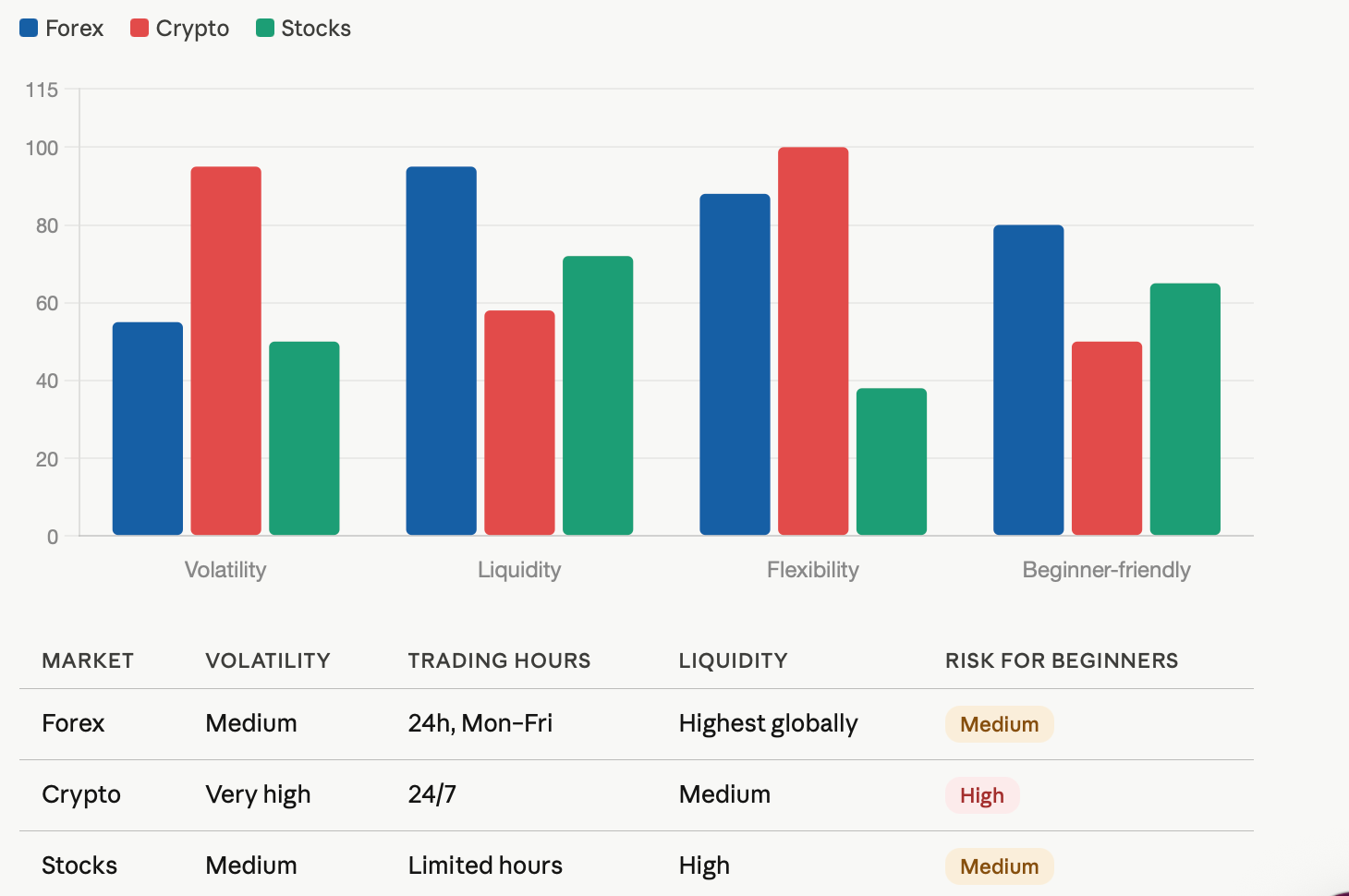
The forex market is available for trading 24/5, giving you better flexibility when it comes to timing your trades than either crypto or stock markets.
Crypto markets are always open for business, giving you additional flexibility when it comes to timing your trades.
Stocks are only available for trading during business hours when the exchanges are open.
The volatility in the three markets is comparatively different. Stocks and forex typically have medium levels of volatility. Crypto can have extreme volatility, ranging from +20% to -20% overnight, or even greater variance based on one social media post by a well-known account. When crypto price movements favour you, it's very exciting. When they move against you, it can be catastrophic.
As a beginner trader, the forex market offers a more structured environment for understanding market moves based on economic data, central bank interest rate announcements, employment numbers, and geopolitical events. All of this information is public, easily tracked, and easy to learn about, allowing you to create a base framework for identifying why market prices change.
Steps for getting started in forex trading
In order to start currency trading successfully, there are five easy steps you will need to follow, from signing up with a broker to placing your first real trade.
The first step is selecting a regulated forex broker. This is by far the most critical decision you will make as a new trader before you ever click the “buy” button for your very first trade.
Regulation should come from either the Financial Conduct Authority (FCA) located in the United Kingdom, the Australian Securities and Investments Commission (ASIC) located in Australia, or the Cyprus Securities and Exchange Commission (CySEC) located in Europe.
Check to make sure the broker has segregated client accounts so that your money is kept separate from theirs. Compare the different spreads on the EUR/USD and find out if the broker’s trading platform is compatible with your operating system.
The second step is opening your forex brokerage account. Generally, the identity verification process will take about 20 minutes or less to complete with most brokers.
In most cases, you will have to provide either a state-issued driver’s license or photo ID, plus one of the following as verification of address: a recent utility bill or bank statement will be fine.
The third step, which is extremely important, has been completely forgotten by most beginner traders. You should trade on a demo account before beginning to trade with your live equity.
Every regulated forex broker supplies clients with a free demo account. Trade a forex demo account with virtual money in real-time market conditions based on live market fluctuations before trading your live money.
Don't rush through this stage. Spend at least two to four weeks working toward achieving a consistent level of performance before placing your first live trade.
The next phase is funding your new account with an amount you can afford, but if you happen to lose it through trading activities, you will not be financially impacted. Most places recommend trading with no less than $100 and no more than $500 for beginner traders. Use micro lots initially so that you only risk one to two dollars on any individual trade.
Now you are set up to place your first trade in real time. Find a major pair, such as EUR/USD, and set your stop before you hit enter to buy or sell. Start with a small position size and remember, your first trade is not about making money, but rather executing a trade without being scared, hesitating, or reacting emotionally.
One week of demo trading will save you months of painful losses in real trading. Skipping the demo period has been called the number one most expensive error committed by new traders.
Common beginner mistakes in forex
Many times, novice traders fail due to psychological factors rather than a faulty trading algorithm. Emotional trading, more than any other aspect of the foreign exchange marketplace, causes traders to underestimate their emotions when trading with genuine funds.
If you overtrade continuously, then your net losses will continue to mount. As you search for the right opportunities in the markets, you may find that you shouldn't trade every day of the week. In fact, you should wait until an opportunity arises that is worth capitalising on. When you are bored or feel impatient, you may experience more losses than normal.
Leverage does play an important role in forex trading; however, using excessive leverage can ultimately wipe out your trading account in a very short period of time. For instance, an account with a leverage ratio of 1:100 that experiences a 2% downturn in the market can wipe out the entire account balance. Most traders realise this within their first week of trading with their own funds and subsequently conclude that forex is a fraudulent investment vehicle, when in actuality, it is the improper use of leverage that has negatively affected the trader’s account.
If you fail to place a stop loss on a trade prior to executing the order, then you can turn a $15 loss into a $300 disaster. All trades must have a stop loss in place before the trade is executed. “I will monitor it frequently” is how many traders end up in losing positions and remain there for hours waiting for a reversal that never takes place.
In retail trading, chasing losses is by far the worst cycle you can get into. You make a bad trade and lose $30. You then get desperate and make a quick attempt to recover that loss by immediately entering another trade. That trade doesn't work either. Then you lose a third trade that is even larger. The downward spiral happens very fast and rarely ends well.
You need to fix your behaviour and emotions first. You need to address the emotions you have regarding loss and your impulse to overtrade. Once you learn how to execute consistently without emotion, even the most basic trading system can work for you. Most traders do the exact opposite and spend years looking for new systems when their biggest barrier to success is their own personal discipline.
Frequently asked questions
What is forex trading exactly?
Forex trading is the act of buying one currency while simultaneously selling another, profiting from changes in their exchange rate. It's the largest financial market in the world, processing over $7.5 trillion in daily volume across every time zone. Anyone with a brokerage account and internet access can participate.
Can complete beginners trade forex?
Yes, and forex is one of the most accessible financial markets for people starting out. Most brokers let you open an account with $100 or less, and all reputable brokers offer free demo accounts where you can practice with virtual money under real market conditions before risking your own capital.
How much money do you need to start?
Most regulated brokers accept deposits from $10 to $100. For a meaningful learning experience on a live account, $100 to $500 gives you enough balance to manage position sizes correctly and handle small drawdowns without immediately blowing your account. Never deposit more than you can afford to lose completely.
Is forex trading risky?
Forex carries real risk, mainly because leverage amplifies losses just as much as gains. Studies consistently show that the majority of retail forex traders lose money overall. Risk management, starting with a demo account, using low leverage, and trading only with money you can afford to lose entirely are all non-negotiable for anyone new to this market.
What is the best time to trade forex?
The London-New York overlap between 1 PM and 5 PM GMT consistently offers the highest volume, tightest spreads, and the most reliable price moves of the day. EUR/USD and GBP/USD record their biggest daily ranges during this four-hour window. Beginners should pick one session, study how price behaves in it, and build their routine around that time block.
Open a free Tradewill demo account today and place your first forex trade in real market conditions with zero risk to your money.
Disclaimer: The content of the blog does not represent any position of Trade W, does not serve as any trading-related decision advice, and does not endorse any third-party.