

 Trade W
Introduction
Most new traders find their way to the market through major currency pairs like EUR/USD, GBP/USD or in the case of reversals USD/JPY. However, there are entirely new possibilities available to traders without reference to the USD, and those are called cross currency pairs. Cross currency pairs are pairs that will not involve USD at all such as EUR/GBP, EUR/JPY or GBP/JPY.
Cross currency pairs are actual currency pairs that indicate a direct exchange between two non-USD currencies. There are also indirect currency pairs, which is a trade that is applied to one outside the native currency pair. An Example was a recent article based on USD/JPY, and the use of it in a specific trade with the JPY (.68). The graph shows the dollar price agreement which was used for long or short.
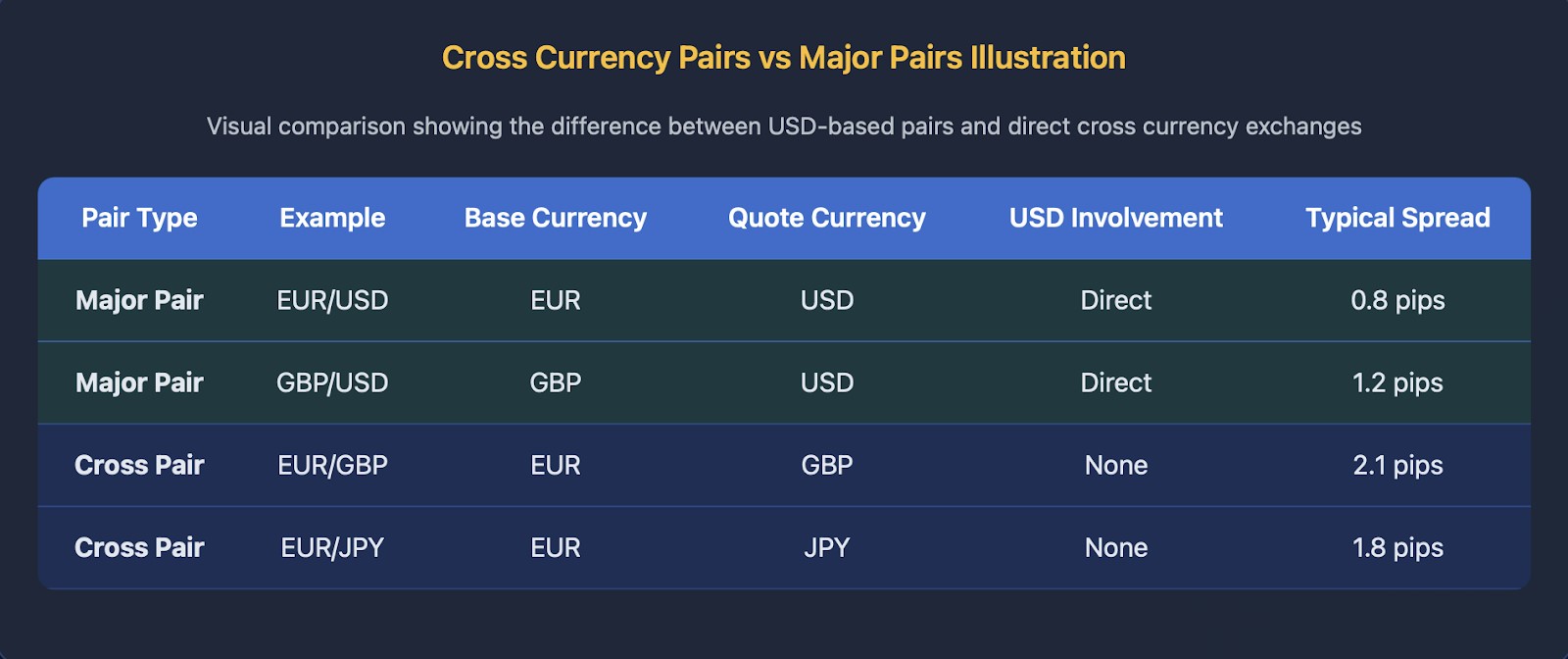
Cross currency pairs allow traders to explore this spectrum of possibility with different currencies and their different trading. While the USD is due to its international relevance and as the world's only reserve currency, cross currency pairs allow traders to position themselves regarding other major economies without US 'noise' or market sentiment.
Understanding and mastering cross currency pair trading can provide new profit opportunities especially when USD pairs are going nowhere, or a specific region is creating economic events to trade Non-USD currencies from. Most cross currency pairs operate with different latent volatility patterns, correlation structures, latent currency behavior, and market cycle positions in response to global economic events.
This ultimate beginners to advanced guide will permit you the opportunity to walk though all aspects of cross currency trading. We will explains how to obtain the best trading pairs, build solid trading strategies, manage your risk, and how develop and implement a systematic view of cross currency trading.
No matter whether you are a new trader who would like to expand into the other pairs from the majors or an intermediate trader who would like to improve your cross currency strategies this guide will provide you with some fundamentals as to how to trade cross currency pairs.
When you finish this article, you will have an understanding of the make up of what all cross currency pairs will consist. How to identify the best trade opportunities, and how to implement risk management strategies. These that help you navigate the sometimes difficult, and at times very profitable, cross currency trading markets.
Cross Currency Pair Basics
Cross currency pairs, sometimes referred to as 'crosses', are currency pairs with no USD anywhere in the currency pair. Major currency pairs use USD either as the base currency or quote currency. Cross currency pairs consist of direct exchanges between 2 other currencies, which creates a different market dynamics that every trader should understand.
The most traded active cross currency pairs are EUR/GBP (Euro/British Pound) EUR/JPY (Euro/Japanese Yen), and GBP/JPY (Pound/Yen). They are good examples as they are relationships between some of the most economically important regions and currencies in the world, and, as such, they tend to be liquid enough for retail traders to trade and, still have different characteristics than their USD equivalent.
In order to bring together the notions of currency pairs, pricing in currency pairs, USD transaction and cross currency pairs: One could think of the USD as a 'universal campus currency' in an analogy.
Thus, in most transactions, traders exchange their local currency for USD, and then exchange UD for their desired currency. Cross currency pairs are like when two student exchange two tokens on campus , without using the universal campus currency first!
These two student tokens create a peer to peer, direct relationship and the dynamics and reactions to specific types of regional economic information will thus be even more pronounced because the cross currency price will include that local information, therefore impacting the dynamics of the currencies even more.
Key Differences from Major Pairs:
Cross currency pairs are mostly volatile when compared to major USD pairs due to their lack of liquidity and the complex price formation process. In trading a cross such as EUR/GBP, you are factoring in not only Euro and Pound fundamentals, but also their relationship to the dollar and their relationship to global markets. This layering creates some complexities that lend itself to more abrupt price differentiation.
In general, liquidity will be lower in cross currency pairs than major pairs. Cross currency pairs may have wider spreads depending on market conditions and greater slippage in super volatile market conditions. The most popular crosses - for example, EUR/GBP, EUR/JPY, GBP/JPY will maintain their liquidity during major trading sessions to accommodate most retail trading approaches.
Increased risk is balanced with some criteria. The major advantage of cross currency pairs is to provide pure exposure to specific bilateral economic relationships. When trading the EUR/GBP cross, you not only focus on the fundamentals from the Eurozone economy and the UK economy, you have separated out the US dollar influence. If there are periods of volatility around the dollar, or a number of regional economic events create a strong directional bias, this can be very valuable.
Cross currency pairs also offer great diversification benefits. A trader is able to diversify their risk over separate currency relationships and when USD pairs are flying in ranges, they may find opportunities. Other cross currency pairs often clearly demonstrate a very strong trending behavior, and showing a technical pattern that could be easier to trade than a difficult USD pair that is simply choppy in price action.
The disadvantages, meanwhile, are that they can carry wider spreads, higher volatility which can get a trader stopped early, and fundamentally can be harder to assess what determines the rate. A trader must remain aware of multiple central banks, economic calendars, and regional news developments at the same time, which adds complexity. Some of these cross rates are very synthetic (i.e quality based on USD pairs) which can open small arbitrage opportunities that can disappear quickly by sophisticated algorithms.
Understanding these basic elements of structure creates a foundation to be good at cross currency trading. The most important element is to remember that cross currency pairs provide unique opportunities, but they do require different and adjusted position sizing, risk management, and analytical approaches as compared to most major larger USD pairs.
Guidelines for Selecting Cross Currency Pairs
Selecting cross currency pairs is critical for your trade success. Some crosses are better than others and knowing the major criteria for the selection of pairs can mean the difference between successful trading and disappointing losses. The selection process should primarily consider liquidity, volatility, trading sessions, and fundamental drivers.
Liquidity Priority:
The most important factor to consider when choosing cross currency pairs is liquidity. High liquidity leads to tighter spreads, better order execution, and less risk for slippage. The most liquid cross currency pairs are EUR/GBP, EUR/JPY, GBP/JPY, AUD/JPY, EUR/AUD, and GBP/AUD.
Above-average liquidity develops when there are active participants in the market: institutional traders, banks and retail traders which generates deep order books. It is the depth of the order book which provides room and flexibility in execution.
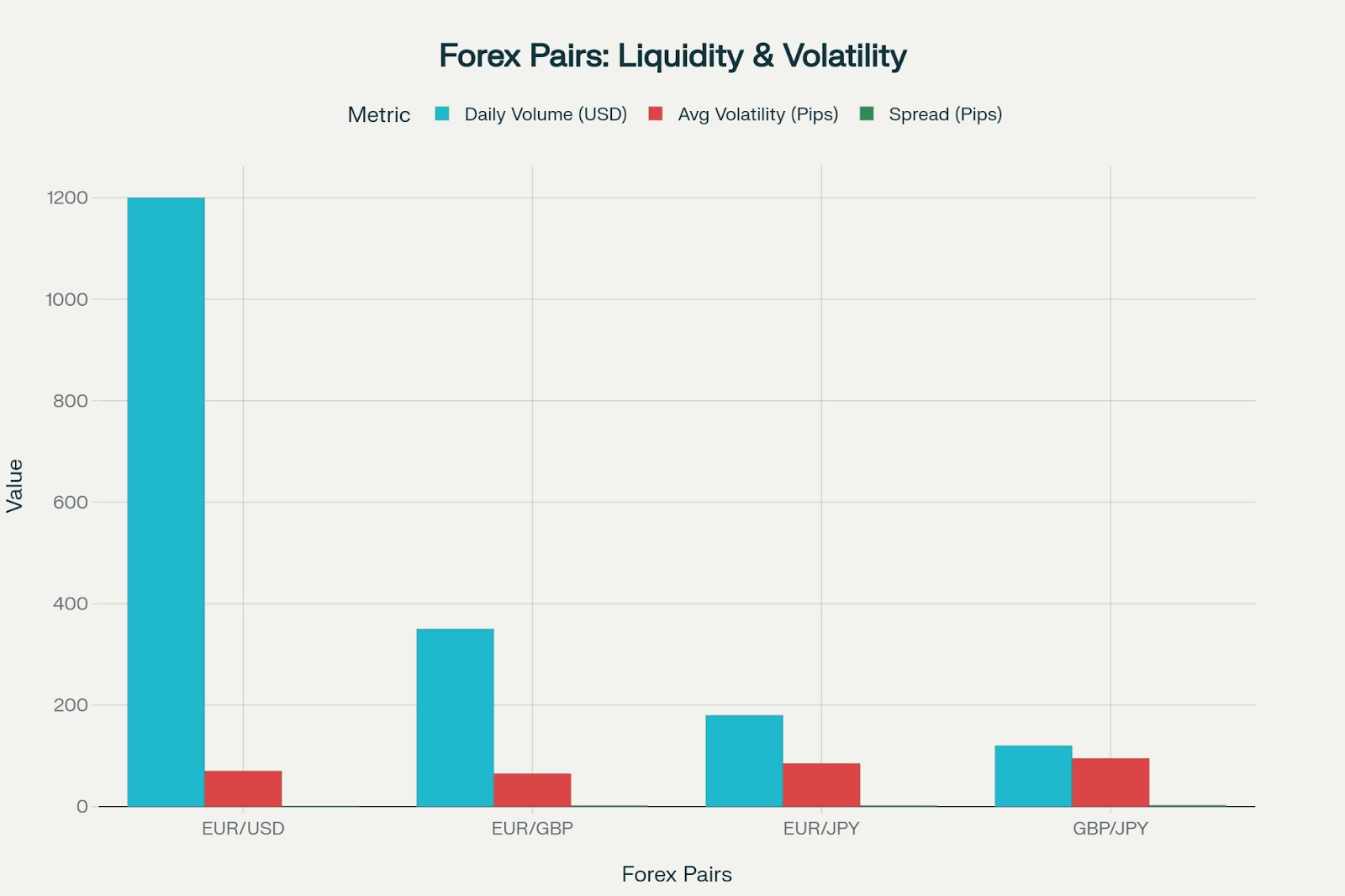
It may be true that NOK/SEK or CAD/CHF pairs have attractive and interesting fundamental stories, but price action could have wide spreads and inconvenient execution which will quickly lessen any profits from the original story. The major consideration for selecting cross currency pairs should be pairs with an average daily trading volume of more than $10 billion, and spreads routinely under 3 - 4 pips during the major trading sessions.
Volatility Factors: Moderate volatility is an ideal trading environment for cross currency pairs. Little volatility causes price action to stay in tight range, missing opportunities to cover spreads and profit. Too much volatility can result in hitting your stops too quickly or having unpredictable market conditions.
EUR/GBP normally has moderate volatility with average daily movement of 80-120 pips, making this pair suitable for scalping and swing trading. GBP/JPY has significant daily movement, typically moving between 150-250 pips, however, this comes with the need for wider stops and smaller position sizes. EUR/JPY is in between with reasonable movement but a little more consistent with patterns.
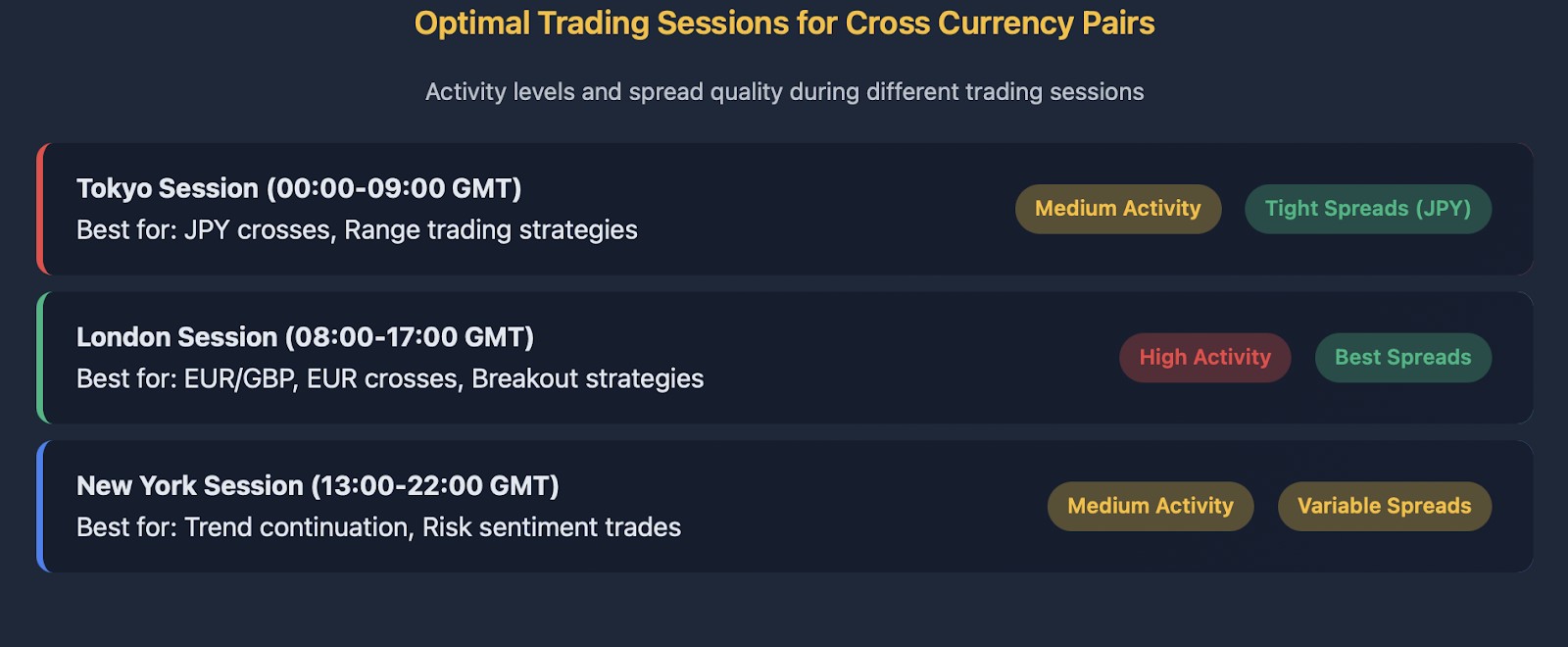
Optimization of Trading time: Cross currency pairs have all different behaviors during different trading sessions. Crosses that are used, such as EUR/GBP and EUR/CHF, are most active during the London trading session, and specifically when both European and UK trading hours are overlapping (8:00 – 17:00 GMT). These trade opportunities tend to have the tightest spreads and the best price action during this time period.
Asian crosses, in particular JPY crosses, are more active during Tokyo trading hours however have reasonable liquidity during London trading hours due to carry trade activity. When determining when to trade, follow the same logic and follow the best time to execute for the different cross currency pairs you trade, in order to capture the best price action and cheapest costs to execute your trades.
The Fundamentals:
Understanding the underlying fundamentals behind cross currency pairs is important in successful trading. For example - the EUR/GBP is unusually beholden to particular events related to Brexit, the divergence between the European Central Bank and Bank of England vs. relative economic conditions within the UK and Eurozone etc.
EUR/JPY is very responsive to the change in risk sentiment. In that the pair would be higher in a risk-on environment and lower in terms of a risk-off environment. Cross currency valuations also reflect actual. movements of markets in the JPY - so Japanese intervention threats (currency buying) along with European economic data, and general performance of global equity markets have a marked effect on the pair.
With GBP/JPY, the pair combines UK-specific fundamentals and risk sentiment components. Hence, it is without doubt one of the more volatile and opportunity-rich crosses. Naturally, one should have appropriate controls around what's being traded due to the inherent volatility.
Economic Calendar Correlation:
Choose cross pairs from regularly observable currency pairs that match your trading abilities. European crosses will require being on top of ECB meetings, UK data releases, developments and/or changes to Brexit.
JPY crosses will require awareness of Monetary Policy changes with the Bank of Japan, risk sentiment indicators, and economic data related to Asian countries.
In the end, when through selection of pairs - also be aware and consider the timings of when you trade based on information-processing capacity.
To trade all the many pairs superficially is likely not advantageous and perhaps you would be better off spending time really knowing a couple variations of crosses (2-3) - rather than being more superficial on many different pairings and treat it all like fundamentals are non-important!
When you are applying these selection criteria, you will undoubtedly develop a list of cross currency pairs that fit your individual trading styles, trading timelines, and risk management methodologies. Most importantly, it should be noted that successful trading of cross currency pairs is dependent on depth of understanding, not breadth of pairs.
Trading Strategies for Cross Currency Pairs
Trading cross currency pairs requires specific strategies that are mindful to the particulars of cross currency pairs. Currency crosses do not necessarily follow the same trends as USD pairs. They may be acting differently by way of support and resistance, and appear to have different technical indicator patterns. Below are successful trading strategies that were created for cross currency trading.
Trend Following Techniques:
Cross currency pairs often experience strong, sustained trends due to their fundamental drivers and lower liquidity. The goal is to correctly identify the trend direction early and ride the trend as it builds momentum while managing risk.
The EMA crossover strategy works great with EUR/JPY and GBP/JPY. The entry signals can be on the 20 EMA crossing above the 50 EMA for buy signals and the reverse for sell signals. These pairs respect the moving averages better than the related major pairs, especially when there are clear fundamental themes, such as risk-on/risk-off cycles.
For added confirmation of the trend, you can use the EMA crossover signal along with technical momentum indicators such as Average Directional Index (ADX). The ADX rising above 25 indicates increasing probability of trend continuation when accompanied by the EMAs aligned in the trend direction. The stronger the upward movement of ADX, the greater the probability that the trend goes. This is effective in the European hours when liquidity is more conducive to supporting sustained directional moves.
Support and Resistance Strategies:
Cross currency pairs often respect psychological levels and previous swing highs/lows more consistently than USD pairs, so support and resistance levels work very well, especially on higher timeframes.
When trading EUR/GBP, identify major psychological levels (0.8500, 0.8600, and 0.8700) where price act as major support or resistance based on option barriers and levels where central banks occasionally intervene. If the price approaches a psychological level of a major round number and the momentum indicators signal divergence, then get ready to reverse your trades, with tight stop losses for risk management.
GBP/JPY respects round numbers and previous daily/weekly highs and lows. Even with GBP/JPY's volatility, there are clear swing points that are typically going to hold for a considerable time. Enter and trade the bounce from those levels with 30-50 pip stops, then set targets with next significant level.
Synthetic Pair Trading:
Advanced traders can build synthetic cross currency positions using major pairs to provide better pricing and fast execution while providing cross currency exposure. With long EUR/USD and short GBP/USD position you have synthetic EUR/GBP long exposure.
There are a number of advantages to this; you get better spreads then direct cross trading, the ability to leg in and leg out of positions at different times and having the chance at some basic arbitrage when synthetic prices are diverging from direct cross quotes (assuming you can know what the synthetic price is). With that said proper position sizing will be needed for this strategy to properly manage risk ratios. You will also have to manage both legs continuously and at the same time, being sure to maintain your required size and ratio.
Range trading strategies:
Lots of the cross currency pairs hover around some solid ranges a lot of the time with EUR/GBP as well as others while it can be quite a successful trade when risk is managed properly.
Identify ranging markets with standard Bollinger Band settings – 20 periods, 2-standard deviations. When price touches the upper band and RSI is above 70, consider shorting with a target at either the middle band or the lower band. Then, reverse the idea for long positions at the lower band.
The secret to ranging markets is patience and discipline. Only entertain these ideas if the price clearly touches the boundaries, perhaps even confirmation from momentum trading. Wait for the lower band to touch the price or the upper band to touch for shorting opportunity. Once you're ready to make the trade, place stops just outside the range boundary of the close of the bar, and take profit once it hits the opposite boundary or the middle of the range.
Breakout Strategies:
Cross currency pairs can occasionally yield explosive breakout moves when the fundamental catalysts converged with the technical position. Examples would be Brexit votes, central bank surprises, or shifts in risk sentiment. This can drive enormous movements, but for long-term trend traders, especially traders who employ their technical positions before entering a trade, it can give major upside or downside results.
When price breaks in the direction with volume (which can be seen as increased volatility in regards to forex), then it's a good time to buy or sell in that market direction with stops set below or above the recent consolidation. The targets in these situations may be the last significant level or just find the last stop and begin trailing the stops to profit along the way.
Session-Based Strategies:
Customize your strategies to optimal trading sessions for each cross. European crosses are deterministic during London hours, Asian sessions can have range-bound strategies for EUR/GBP and breakout based strategies on JPY crosses that gap and fall in the same directional move based on overnight news. Then when we get into the London hours, we can use trend-following strategies and momentum based strategies. During the London market session, liquidity is often present enabling sustained directional moves.
Risk Management Integration:
All strategies should also include being disciplined with risk management specifically regarding cross currency volatility. Use the Average True Range (ATR) to set dynamic stop losses that accommodate the natural volatility of each pair.
For example , EUR/GBP stops of 1.5-2 x the daily ATR, and GBP/JPY work with stops of 2-3 x the daily ATR for successful positioning.
I position size based on actual pip risk rather than percentage risk because pip amounts differ across crosses. A 50 pip stop on GBP/JPY is different dollar risk than a 50 pip stop on EUR/GBP, therefore you would have to factor different position sizes in each in order to keep your risk per trade consistent.
To sum up successful cross currency strategies include them in conjunction with a thorough understanding of the market and disciplined execution, and to focus on becoming an expert at one or two approaches, rather than trying to implement all strategies all at once!
Technical Analysis in Cross Currency Trading
Technical analysis is the essential component of successful cross currency trading; however, because of the nature of crosses, one must have a different approach and use different indicators and/or methods. Cross currency pairs often reflect much clearer technical patterns as well as reliable signals from the indicators. For this reason, technical analysis is a useful method in these markets.
Important Technical Analysis Indicators:
The Exponential Moving Average (EMA) system works very well with cross currency pairs because they tend to trend. The EMA settings must be used on 3 different EMAs with 8, 21, and 55 periods for visible trend analysis when all of the EMAs are in line (the shorter is above the longer for long trends) the likelihood of the price movement staying in that direction for an extended period is high.
The Bollinger Bands in standard settings (20 period, with 2 standard deviation) gives great indications of volatility and possible price reversals. Cross currency pairs tend to rely more significantly on the Bollinger Bands than the major pairs, especially in ranging (sideways) markets. When price touches the upper band while exhibiting momentum divergence it is good practice to prepare for price reversals or at least a temporary price pullback.
The Relative Strength index (RSI) using 14-period settings produces dependable signals as to overbought/oversold areas, especially when combined with support/resistance levels. RSI divergences are powerful, especially in cross currency pairs, and usually give several hours or even several days warning of a significant reversal.
MACD (12, 26, 9) provides excellent signals with regard to trend change and momentum. The MACD histogram is also valuable to time entries and exits; Histogram peaks and troughs, usually correspond to bar extremes in crosses.
Candlestick Pattern Recognition:
Cross currency pairs create some of the most clear candlestick patterns in the forex markets. The lower liquidity in cross currency pairs and more defined fundamental drivers creates cleaner price action which form predictable, recognizable patterns; this is seen more often when compared to tracking major pairs.
Fading movements of momentum candlesticks at an important support/resistance level often lead to reversals especially if the momentum indicators confirm the signals. If they are in the form of a hammer or shooting star on euro-yen or pound-yen, they often work very well during periods of elevated volatility during a trading session.
Engulfing patterns (bullish and bearish) give very strong continuation or reversal signals - particularity on 4-hour and daily charts. Engulfing patterns also provide substantial moves engulfing in the direction of the engulfing pattern, especially if we see this taking place at or near a significant level and volume confirmed, in conjunction with good price action signal.
The pin bar (hammer / shooting star) pattern is an extremely reliable price action signal to trade on cross currency pairs - in particular when the pin bar appears at a previous swing high or low or at psychological levels. Timing on taking the trade based on your pin bar price action signal is to wait for confirmation of the next candle close before initiating your entry trigger.
Multiple Timeframe Analysis:
Cross currency trading greatly benefits from multiple timeframe analysis based on how easily these pairs tend to show their trend hierarchies. By regularly using daily charts we will be able to identify the direction of the fundamental trend, the 4 hour charts can identify directions of intermediate trends and intra-day trading will perform better if you use the 1-hour chart for the entry and exit timing.
The daily timeframe allows you to get a basic trend bias and major levels of support/resistance. The weekly timeframe allows you to identify major ranges, or changes in trend that can be missed on the daily or 4H timeframes. The monthly timeframe generally allows you to identify longer-term turning points or trend directions.
Make your trades on the lower timeframe according to the bias of the higher timeframe. That is, when the daily chart has an uptrend, concentrate on the buying opportunities on the 1H instead of trying to look for shorting possibilities and fight the bigger trend. Doing it this way will improve win rates and profit potential immensely.
Advanced Technical Tools and Methodologies:
Volume analysis in forex is not as direct as in other asset classes but can be measured using tick volume, or by using volatility. In general, an increase in tick volume while a breakout occurs will help confirm the validity of the breakout, while a decline in volume when a trend is in motion could signify reversal conditions.
Fibonacci retracements work incredibly well for trading cross currency pairs – especially taking into consideration 38.2%, 50%, and 61.8% levels, as these cross pairs will often respect Fibonacci levels literally; and provide excellent entry and exit points for continuation and reversal trades alike.
Market structure analysis or identifying higher highs and higher lows in an up trend, and lower highs and lower lows in the down trend is always useful analysis in forex markets, and cross currency pairs can often exhibit clear market structure for long periods, which is useful for trend following strategies.
Combining Indicators for Confirmation:
Technical analysis in cross currency trading is most effective when the trader combines multiple indicators for confirmation instead of a single signal. A great method of combining would be trend-following EMAs, momentum oscillators, like the RSI, and volatility measurements, such as Bollinger Bands.
The key to success is to wait until multiple indicators align prior to entering your trades. For a buy signal I would look for price to be above all three EMAs, RSI above 50 but under 70, MACD to be positive and rising and for price to bounce off the lower Bollinger Band. If you follow this multi-confirmation approach, you will improve the quality of your trade signals by eliminating the large majority of false signals.
Session-Specific Technical Behavior:
Cross currency pairs are affected by different technical behavior during different trading sessions. European crosses will exhibit more reliable breakouts and continuation during the London session, while in the Asian session, they more likely to move sideways or ranging.
You will need to modify your technical plan in relation to the trading session. During the London sessions you should favor breakout and trend-following indicators, and during the Asian session you should favor oscillators and range trading.
A strategy of technical analysis when trading cross currencies requires patience and a systems approach. It is better to focus on higher-probability setups with confirmation from multiple technical tools than to try and get every small movement. Generally speaking, there is clearer price action in crosses than in major pairs enabling technical analysis to be more reliable, but in order to make a consistent return on your investment, it is still important to execute your trades correctly and use proper risk management.
Risk & Money Management
Risk and money management can be the most significant aspect of successful cross currency trades. Cross currency pairs tend to be more volatile and exhibit different behaviors that affect risk management approaches that are not employed in major USD pair trading. Correct risk management will be responsible for differentiating consistent profits from destruction of trading accounts.
Fundamentals of Position Sizing
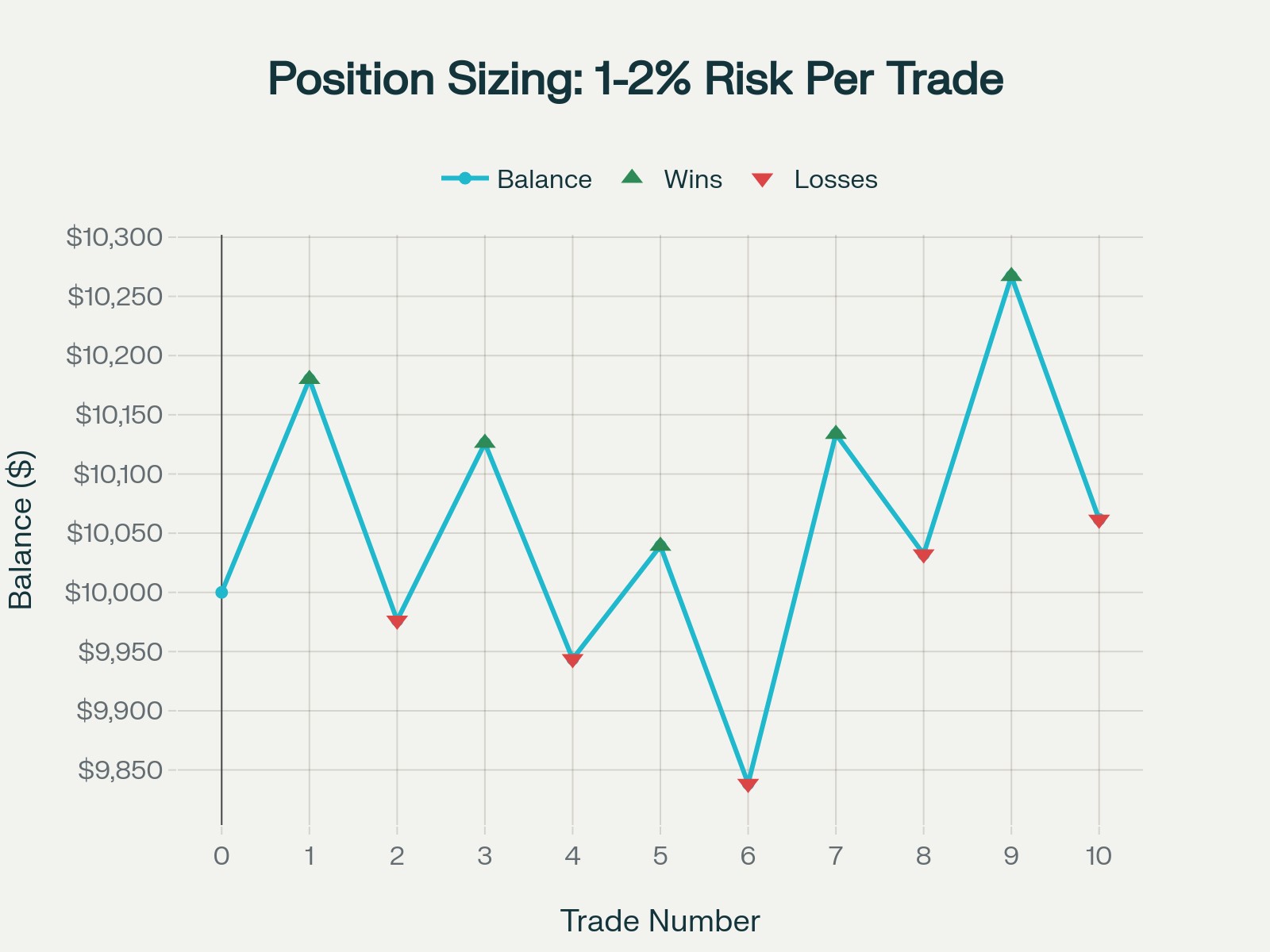
The key idea in cross currency trading is to avoid risking more than 1 - 2% of your trading capital at each trade opportunity. However, determining appropriate position sizing for crosses needs to incorporate some additional thinking regarding different pip values and the respective volatility of each pair.
You will still use the formula;
Position Size = (Account Risk Amount ÷ Stop Loss in Pips) ÷ Pip Value.
This can be pivotal in calculating proper position size for crosses because the value of a pip can vary considerably from one cross currency pair to another. If EUR/GBP has one pip value, it will have another pip value for GBP/JPY. Each cross currency pair would require a separate calculation to determine the appropriate position size.
Consider establishing a tiered trading strategy. For example, use 1% for high degree of confidence scenarios with multiple confirmations, 0.5% for standard trades and eliminate trades that do not meet measurable minimum requirements. This would allow you to utilize different position sizes while still controlling your overall risk on each trade and making moderate profits on trades.
Stop-Loss Strategies:
In cross currency pairs, a more complex approach is required for stop-loss placement than basic fixed-pip stops. The Average True Range (ATR) rules actually work very well by defining stop loss sizes at 1.5-2 times the ATR for normal volatility pairs like EUR/GBP and then slightly wider, 2-2.5 times ATR in high volatility pairs such as GBP/JPY.
Although not as effective as fixed pip targets, it is often possible to set technical stop-losses based on swing high and low points, support and resistance levels, and moving averages. This can work better than simply looking for pip-stops as these naturally align with the price action of crosses compared to arbitrary pip-stop placements that leave you with a higher chance of being knocked out by the market.
You should also consider trailing stops when in trending trades in cross currency pairs with possibility of extended moves. In the case of cross currency pairs, it is possible to employ trailing stops for quite a distance, make the determination to trail by either previous swing lows/highs of the trade, or moving average from the entry level while still moving in your favor.
Volatility Impact Management:
Cross currency pairs usually have relatively high volatility compared to major pairs, particularly in times of news events or market stress periods. Moving 200+ pips in a single session is realistic for GBP/JPY and 100+ pips for EUR/GBP during major announcements.
Change position size based on your expected volatility. When potential trades involve high-impact news events in your chosen crosses, consider cutting your position size by 50% or don't trade at all. Price can swing much wider in this timeframe, causing stops to get triggered that may have usually held in an ordinary market.
Keep an eye on implied volatility metrics and adjust your trading process. When it is so volatile that you cannot make a sound decision, pay attention to open positions and start with smaller positions and with wider stops, or wait until volatility subsides before establishing new trades.
Slippage and Execution Risk:
Low liquidity creates higher slippage risk, and it is even more pronounced during news events or opening/closing markets. This hidden cost can be dramatic to a trader's profitability if not properly handled.
Always use limit orders, not market orders, when entering trades. You'll miss some trades for sure, but the improved execution prices usually make up for that. For exits, depending on the given trade, you might have to use market orders (stop losses).
Never trade crosses during major news events unless you have specifically positioned yourself for the announcement. The given volatility combined with slippage can easily make an attractive risk/reward ratio an unfavorable one even if you do have the position correct.
Portfolio-Level Risk Management:
Never hold multiple positions in correlated cross currency pairs. For example, EUR/GBP and EUR/CHF tend to have a close correlation of movement, which means if you hold both, it is similar to holding a position that doubles your exposure to a Euro strength/weakness.
Also consider the synthetic relationship between crosses and major pairs. For example, if you are long EUR/USD and short GBP/USD, then you are effectively long EUR/GBP. Remember to factor in synthetic exposure when looking at total risk exposure.
Establish maximum loss thresholds for daily, weekly and monthly stop-loss limits. When the daily loss threshold (generally 3-5% of the account) is hit, stop trading for the day. This protects capital on losing streaks and eliminates emotional decision-making.
Emergency Procedures for Extreme Risk:
Prepare for and rehearse for emergencies with extreme market movements. Flash crashes, unexpected central bank announcements or geopolitical events can create large rapid moves in cross currency pairs.
Keep emergency contact numbers for your broker and familiarize yourself with a quick method of closing your complete position if required. Consider keeping a small amount of cash in your account to meet margin calls in volatile environments.
Set predetermined criteria for reducing or exiting all your positions. If you lose more than 15-20% of your account in a brief period, consider halting all trading activity to reassess your trading plan.
Psychological Parts to Risk Management:
The increased volatility inherent in trading cross currency pairs can elicit emotional responses that can cloud your judgement. Have a mental plan for handling both large unrealized profits and equally large unrealized losses without abandoning your risk management plan.
Practice the calculations involved in position sizing until they become reflexive actions. When the market conditions become turbulent, you want to be in a position to enforce your risk management rulesystem without having to think about it.
Take detailed notes to record your risk management actions and the outcome of those decisions. Regular review of your notes will assist you in identifying patterns and areas you can improve on related to your risk management.
Good risk and money management discipline, in cross currency trading happens with disciplined preparation and discipline in your response. The potential returns that cross currency trading offers are well worth the additional concerns, as long as you have sufficient controls in place to protect your capital when the inevitable run of losing trading occurs.
Currency Correlation & Arbitrage Opportunities
Currency correlations are an essential concept in cross currency trading. These correlations allow us to not only estimate movement in currency pairs but also identify potential arbitrage opportunities, as well as synthetic trades that traders with sophisticated trading environments exploit to improve returns and manage risk.
Understanding currency correlation
Currency correlations identify the extent to which two currency pairs move in relation to one another, with a value of -1 to +1. A correlation of +1 is perfect positive correlation (the pairs move identically) and -1 is perfect negative correlation (the pairs move oppositely). Values near zero would indicate almost no correlation or meaningful relationship.
Correlations between cross currency pairs are dynamic and vary depending on market conditions, economic events, each country's economic environment and attitude toward global risk tolerance. For example, EUR/GBP and EUR/USD could be positively correlated under normal market conditions but, during Brexit uncertainty, could be negatively correlated due to GBP's weakness impacting both pairs differently.
Analysis historically helps identify normal correlation but real time correlation checks, are critical to making good trading decisions. Major news, central bank meetings and periods of crises can change correlations quite dramatically, and it is important to be aware of this each time you're about to make a trade, as it can present opportunities and dangers.
Measuring and Monitoring Correlations:
I like using the 20-day correlation coefficient for short-term trading decisions, and the 60-day correlation for longer term decisions. Most trading platforms now include a correlation matrix, but, having a knowledge of how they are calculated helps understand what the data means.
It is critical to monitor the correlations between your traded crosses along with major USD pairs.
When using EUR/GBP for example, check its correlation with both EUR/USD and GBP/USD to determine how much of its strength (or weakness) is related to either the Euro, the Pound, or both simultaneously.
You'll also want to make heat maps of the correlations of all your watchlist pairs on your set time frame, and update them weekly or bi-weekly. Any breakdowns, or sudden/unusual strength in correlations may be great signals for trading opportunity or alerts to the potential added risk in your portfolio.
Synthetic Cross Currency Trading:
Synthetic trading simply means establishing cross currency exposure through trading major USD pairs instead of the cross directly, which usually provide better pricing/ execution/ and flexibility, all while making the same market/ currency exposure.
To establish synthetic EUR/GBP long exposure, you can purchase EUR/USD and sell GBP/USD in suitable amounts. The combined position behaves in a like manner to a EUR/GBP long position but will generally provide a better spread and execution.
The key is determining proper position amounts, using current exchange rates. For example, using the synthetic EUR/GBP, if EUR/USD is trading at 1.2000 and GBP/USD is trading at 1.4000, the proper ratio would be approximately, 1.2: 1.4 or simplified to 6:7. Noting you will need to buy 6 lots of EUR/USD for every 7 lots sold of GBP/USD, which provide balanced synthetic EUR/GBP exposure.
Arbitrage Opportunity:
You will discover arbitrage opportunities when there are differences between the synthetic cross rate and direct cross rate. This is a profit opportunity with no risk, but usually very small and short lived, as these arbitrages are corrected out quickly by algorithmic traders and institutional arbitrage traders.
Watch the relationship in the EUR/GBP synthetic rate = (EUR/USD rate) ÷ (GBP/USD rate) until there is a sizable disparity, generally in the range of 2-5 pips, between the two. When disparities appear, there is usually an opportunity to motive towards emerging arbitrage opportunities.
To complete an arbitrage, execute three trades simultaneously: buy or sell the cross that is underpriced; take the opposite synthetic position via two USD pairs. Profit will come from the price convergence (i.e., when the disparity or misprice get worked out) as a result of market forces (or your simultaneous trade).
In practice, actionable arbitrage will require speed of execution, low spreads, and sufficient funding to make small profit margins to make the trade worthwhile. Most retail traders may find monitoring arbitrage opportunities educational in nature, although they may not execute that trading plan for risk and transaction costs.
Risk Management through Correlations:
A high correlation between positions in a portfolio creates an even greater risk exposure - even if trading different pairs. For example, simultaneously holding a long position in EUR/GBP with a long position in EUR/USD during periods of high positive correlation essentially puts you long the Euro twice the exposure.
Use the correlation information to effectively diversify trading positions. You will want to combine pairs with low or negative correlations in order to reduce volatility in the portfolio while still keeping the potential for profit. For example, you are generally better off combining EUR/JPY (risk sentiment driven) with EUR/GBP (Brexit/European fundamentals driven) than combining the two highly correlated European crosses.
Track correlation changes during your holding period. The correlation that was low when you entered your positions may become more correlated with the response of the market, which may increase your overall risk exposure above the levels you initially intended.
Ways to use Correlation in Trading:
Correlation breakdown strategies involve a trading pair that typically has a high correlation when its relationship diverges. For example, if EUR/USD and EUR/GBP have a 0.7 correlation and then diverge from their historical relationship, capitalize on the convergence of the two pairs.
Mean reversion trades can be effective when strongly correlated pairs diverge from their historical correlation. Traders can set positions where the expected movement of the two correlated pairs will return to their normal levels, however, always place tight stops in case the divergence was based on a fundamental breakdown change.
Correlation momentum strategies involve trading towards a change in correlation. If trading two pairs that are normally uncorrelated and now strongly correlated, may signal a new market regime worth following instead of fighting it.
Advanced Uses of Correlation:
Hedge other positions with negatively correlated pairs. For example, if you're long EUR/JPY and think market risk-off movements could occur, hedge with long JPY/USD or other positions that act as safe havens normally negatively correlated with EUR/JPY during periods of stress.
Develop pair trading strategies with correlation analysis. Trade stronger currency against weaker, especially when two currencies that are typically correlated begin to diverge, and have an expectation that they will ultimately converge.
Employ correlation analysis for timing decisions as well. When you have multiple correlated pairs, all showing decent technical setups, it is likely that the probability of being successful trades increases, and multiple correlations aid in reinforcing market forces.
.
Understanding and deploying currency correlations in cross currency trading offers tremendous advantages in position selection, risk management and opportunity identification. Just remember that market correlations do change over intervals of time, and previous correlations or relationships don't always predict future behavior. As with anything, ongoing monitoring and adapting is key to success with correlation trading.
Impact of Economic Data & News
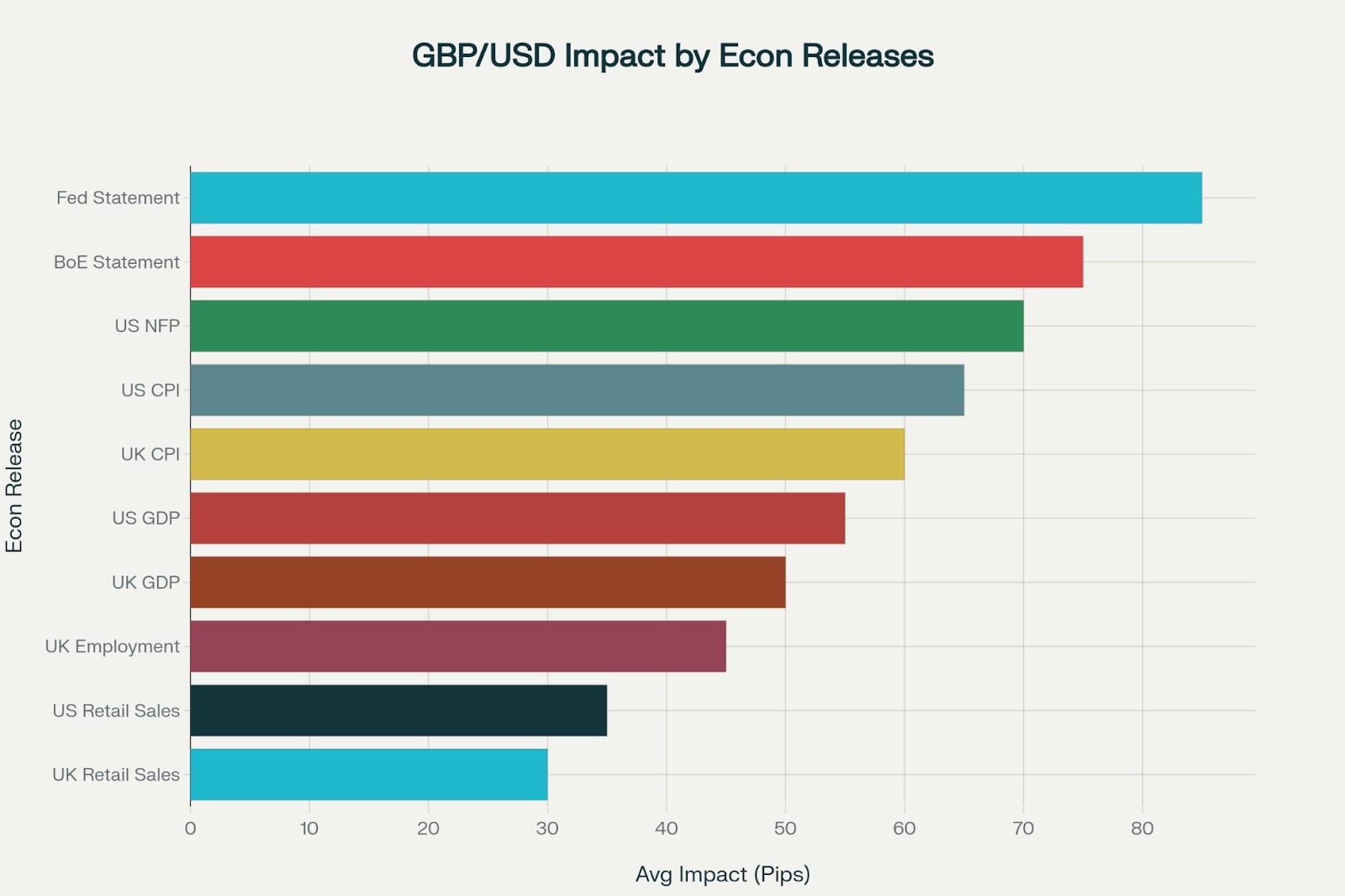
The impact of economic data releases and news events on cross currency pairs can be exuberant, often creating price moves even more drastic than with major USD pairs. This is critically important to understand and prepares us as traders for periods of high volatility when creating cross currency trades.
Key Economic Indicators by Currency:
For Euro based crosses (EUR/GBP, EUR/JPY) monitor European Central Bank meetings, Eurozone GDP, inflation data, and Employment. ECB policy decisions will impact Euro strength for all of its crosses, but the extent of the impact will vary depending on the economic situation in the currency paired against it.
Germany has a strong influence on EUR crosses. Germany is very important to the Eurozone economy. Therefore German manufacturing PMI, IFO business climate, industrial production data etc., will tend to move EUR crosses to a greater extent than total Euro area data.
UK based crosses (GBP/JPY, EUR/GBP) will respond closely to Bank of England meetings, UK inflation data, employment and any other Brexit development. Sterling tends to be incoherent and all over the place as a result strong data releases in the UK will frequently result in 50-100 pip moves in GBP crosses within minutes of the data release.
Japanese data has varying effect on JPY based crosses based on risk sentiment. During risk-on sentiment, positive Japanese data may increase JPY weakness due to diminished demand for JPY as a safe-haven. During risk-off sentiment, Japanese data may have little effect since flows to JPY during safe-haven sell-offs will demand prominence.
Finding Volatility Events:
Build an economic calendar that tracks high impact events for your crossed currencies. Higher priority is given to economic events such as central bank meetings; interest rate decisions; GDP releases; inflation data along with economic events taking place for all pertinent currencies.
Look for secondary data indicators, or data that often precede, or foreshadow what happens in cross currency pairs and major moves. For example, German Bund yields often seem to give an immediate reading of ECB policy expectations that in turn impacts some EUR cross rates prior to any major ECB meeting.
Risk sentiment indicators are important, too. Look for things like stock market performance, VIX levels and government bond yield moves. Crosses with Japanese Yen are always more muddled with changes in risk sentiment and whether stock markets are strong or weak has a direct influence on JPY crosses. Rising stock market moves normally equate to strengthening JPY crosses, and falling stock markets would suggest the opposite is true.
Cross Currency Sensitivity Variations:
EUR / GBP expresses significant sensitivity to relative policy variations between the ECB and Bank of England, TSY do not diverge, EUR / GBP generally trends strongly in the direction of the more hawkish central bank. GBP / JPY captures extreme sensitivity to not only UK specific news related to the UK economy but also global risk sentiment.
The extreme sensitivity to UK specific data, in relation to global risk events makes it one of the most volatile crosses. Often, GBP / JPY will move 200+ pips during major economic announcements regardless of the cross and sentiment. EUR / JPY only shows relative sensitivity to risk sentiment and ECB monetary policy, Japan domestic data has little to no sensitivity unless it relates to a specific point about potential Bank of Japan market interventions.
Pre-event Positioning Strategies:
In general, do not open new positions, prior to major announcements unless you are specifically open for event risk. Due to the uncertainty on position sizing size, potential slippage, it is unlikely to profit trading events unless you have directional hand.
On major event day, consider reducing your position size by 50%. You are already holding a position not to mention an unexpected adverse move could turn into a significant loss, and you still want to participate in the upside. Look to use option strategies or "synthetic" hedging to maintain your position through major events. Obviously this would be a significantly more complex procedure, but it would limit adverse moves and position you to profit if market continues movement in the desired direction.
Post-Event Trading Opportunities:
The initial reaction to significant economic releases often results in over-extended moves that reverse within hours. Look for extreme RSI readings (above 80 or below 20), and also check for converging technical levels to do your reversal trades.
Seek continuation patterns after initial volatility. Major economic surprises create new trends that often persist for days or weeks as the market adjusts its expectations.
It is important to focus on the surprise factor rather than absolute data readings. A UK inflation reading that is slightly positive, but far exceeded expectations, often has much greater influence on GBP crosses than a very positive reading that met expectations.
News Flow Management:
Find reliable news sources that offer real time economic data, central bank communication, and interpretation, such as Reuters, Bloomberg, and targeting forex news services that offer its basic level of coverage only to cross currency traders.
Track the speeches and interviews of central bank officials. These are important policy communications and often give the market direction between official meeting communications. Central bank speeches and interviews can move cross currency pairs widely and create liquidity.
Social media and financial news aggregators can often give you early warning of market-moving events but consider the source of the news and verify via available reliable resources before engaging trading decisions.
Brexit and Geopolitical Considerations:
It is important to continue monitoring developments related to Brexit, which can still impact GBP crosses on a weekly basis. Ensure you keep an eye on any developments regarding the UK-EU relationship, trade negotiations and any political stability that may impact Sterling strength.
At the same time, geopolitical tensions which can impact the major economies also create associated volatility for GBP crosses. Developments in European politics, trade relationships in Japan, or regional conflicts can all impact cross currencies even without any economic data releases reflecting changes.
Changes in government or election outcomes in major economies which relate to GBP crosses create medium-term trends in GBP crosses when market price participants adjust their future expectations in relation to policy changes.
Event Driven Trading Plans:
Consider developing standardised practices or plans for trading around significant events, which could involve a lesser position size, an adjusted stop loss, or the closure of the position entirely, during uncertain periods of time.
Your plans should include post-event analytics to see how your crosses responded to major announcements. This analytics process can help enhance future event-trading decisions and can lead to further appreciation of each pair's specific sensitivities.
Staying flexible to changing circumstances is also important, as cross currency pairs will not always the same response to similar events when other global market factors perhaps come into play .
Economic data and news events represent the greatest opportunity but also the highest risk in cross currency exchange trading. Being profitable entails being more aggressive when there are clear directional events and more conservative in a time of uncertainty. The name of the game is to develop an expertise in the fundamental drivers in the chosen crosses to use our understanding of systemically combined with execution discipline and risk control.
Advanced Technical & Quantitative Methods
More seasoned traders can augment their cross currency trading with more sophisticated technical analysis and quantitative methods. The power of these forms of analysis is not only that they provide more market intelligence but more pinpoint entry/exit time options that could be valuable in the demand of cross currency market dynamics.
Combined Indicator Systems:
EMA + Bollinger Bands system provides great trend and volatility analysis for indecisively moving cross currency pairs. The 21-period EMA works very well at trend filtering and measuring volatility with the 20-period Bollinger Bands (2 standard deviations = measure of $ volatility) is particularly insightful.
The entry signal is to enter long position when price has positive1 move when bouncing off the lower band while above the EMA, and because there is rejection of the upper band when price is below the EMA we short it.
The combination works well with EUR/GBP in ranging markets and GBP/JPY when trending SE, the EMA provides directional bias and the Bollinger bands provide optimal entry points and when to volume expands or contracts at points.
Multi-Timeframe RSI / MACD Confirmation:
More sophisticated cross currency traders can take a more nuanced approach to trading using the confirmation of multi-timeframe momentum using the alignment of relative strength index and moving average convergence divergence momentum parameters. The use of daily RSI provides strong primary trend bias, the 4 hour MACD for intermediate momentum, and the 1 hour RSI for intraday entry timing.
Only enter long trades when the daily RSI is above 40 (which avoids oversold bounces in declining trends), the 4 hour MACD is positive and trending up, as well as the 1 hour RSI crosses above 30 from oversold territory. This triple confirmation approach improves the overall win rates and reduces the impact of the false signals associated with cross currency trading in volatile markets.
Overall, the system works well with the EUR/JPY and GBP/JPY, because these pairs tend to have multi-timeframe momentum patterns before price makes a sustained directional move. Patience is a learned trait, and while it might feel like you are missing a lot of potential trades waiting for the three confirmations, your overall accuracy makes up for the lack of frequency in trades.
Quantitative methods:
Regression analysis gives traders the opportunity for powerful trend predictions for cross currency pairs. As with all regression methods, you need to calculate a linear regression channel based on your chosen dataset of 20 periods for short-term trading and 50 periods for intermediate-term trends. All price action usually respects and remains containe within linear regression channels, thus providing another profitable method of trade entries and exits.
When price reaches the top of the regression channel and there is a divergence in momentum, you can expect pullbacks down towards the regression mean. Whereas if price reaches the bottom of the regression channel while showing positive momentum divergence, you can expect bounces. This is great in markets that trend such as EUR/JPY and AUD/JPY.
Statistical opportunities arise when cross currency pairs have significantly deviated from their statistical relationships with major USD currency pairs. To take advantage of these situations, you can calculate the z-scores for price deviations from historical means, and begin to enter reversals whenever the z-scores exceed +/- 2 standard deviations. This is quantitative analysis, and while it can be intensive with data, it can provide some excellent mean reversion opportunities.
Advanced Pattern Recognition:
Harmonic Patterns (Gartley, Butterfly, Bat) occur often in cross currency pairs, due to the combination of their mathematical relationships and institutional interest of trading these pairs. These harmonic patterns provide precise levels to enter and target profit based on Fibonacci relationships.
The Gartley patterns I have tested work particularly well with 4-Hour EUR/GBP; producing pip moves in the range of 80-120 often with defined risk parameters. The key ratios of the Gartley are the following: 61.8% retracement of the initial leg - the A to B leg; and the 127.2% extension is the overall target of the last leg.
If you combine harmonic pattern trading with momentum divergence you have the highest probability setups for the relative risk of your intraday trading environment.
Elliott Wave analysis has the methodology for recognizing evolving cross currency trends and corrective price action. In general, cross pairs tend to have more coherent wave patterns than the major USD pairs. So, cross pairs tend to be easier to count waves using Elliott Wave analysis. Identifying impulse waves in the direction of the fundamental trend and corrective waves to initiate trades against the corrective trend is important.
Volatility-Based Strategies:
ATR expansion strategies take advantage of volatility breakouts that occur often with cross currency pairs. When the current ATR value is more than 50% above the 14-period moving average (for example, ATR = 1.20, and 14-period ATR MA = 0.80), anticipate continued volatility trends.
One method is to impose volatility-adjusted position sizing based on 1, 1.5, 2, or 2.5 ATRs. For example, during periods of low volatility (below average ATR), increase position sizes a little and tighten stops. During high volatility periods (above average ATR), decrease position sizes and decrease stops by the same % of volatility. This approach allows the trader to increase risk-adjusted returns whatever the market environment happens to be.
Another method is to monitor Bollinger Bands squeeze patterns. Squeeze patterns occur when the distance between the upper and lower Bollinger bands contract to exceptionally narrow levels. Squeeze patterns often precede explosive moves to the extent.
Cross currency pairs have great potential as they can have both ATR expansions and rallies, as well as, Squeeze patterns. Keep alert for occasions when the distance between the upper and lower band falls below 50% of the 20-period average. Once Squeeze patterns begin to develop, strong directional moves of size 100+ pips are typically resolved by strong directional moves.
Correlation-Based Quantitative Models:
This process entails constructing dynamic correlation models that are able to dynamically adjust trading signals based on the changing relationships between cross pairs and major USD pairs. For example, if the correlation between EUR/GBP and EUR/USD strengthens above 0.8, then trading strategies based on EUR/GBP trades should take into account only Euro-centric fundamentals. Conversely, if the correlation weakens below 0.3, then the trading strategies should be based on Brexit and UK-centric risks.
In addition, we can create pair-strength indicators by monitoring EUR in various cross pairs. If the cross pairs EUR/USD, EUR/GBP and EUR/JPY demonstrate strength in EUR (increase in price), then we are much more inclined to think that the probability of continued appreciation (mobility) of the Euro is high. Essentially, when a trader is able to see multiple pairs show a directional theme in cross pairs, it gives them greater conviction in directional movement in those trades about accuracy of directional trades and timing.
Machine Learning Applications:
Support Vector Machines (SVM) can distill non-linear relationships that have been observed in the results of cross currency price data that standard technical analysis does not fully capture. The SVM will take historical price data, technical indicators, and fundamental variables, and develop a model to predict and summarize the future price direction in the short-term.
By contrast, neural network models excel at observing similar patterns across multiple cross currency relationships. Recurrent neural networks (Long Short-Term Memory (LSTM) networks) can be used to identify price behaviors across time series to assess price and directionality prior to large directional moves. SVM and neural networks require alot of computational resources and historical data, but do provide sophisticated signal generation.
Risk-Adjusted Performance Optimization
Utilize the concepts of Modern Portfolio Theory to better optimize which cross currency pairs to trade, and how to size positions on the pairs. Calculate the Sharpe ratio of individual currency pairs, and the correlation adjusted portfolio Sharpe ratio when holding multiple currency pairs.
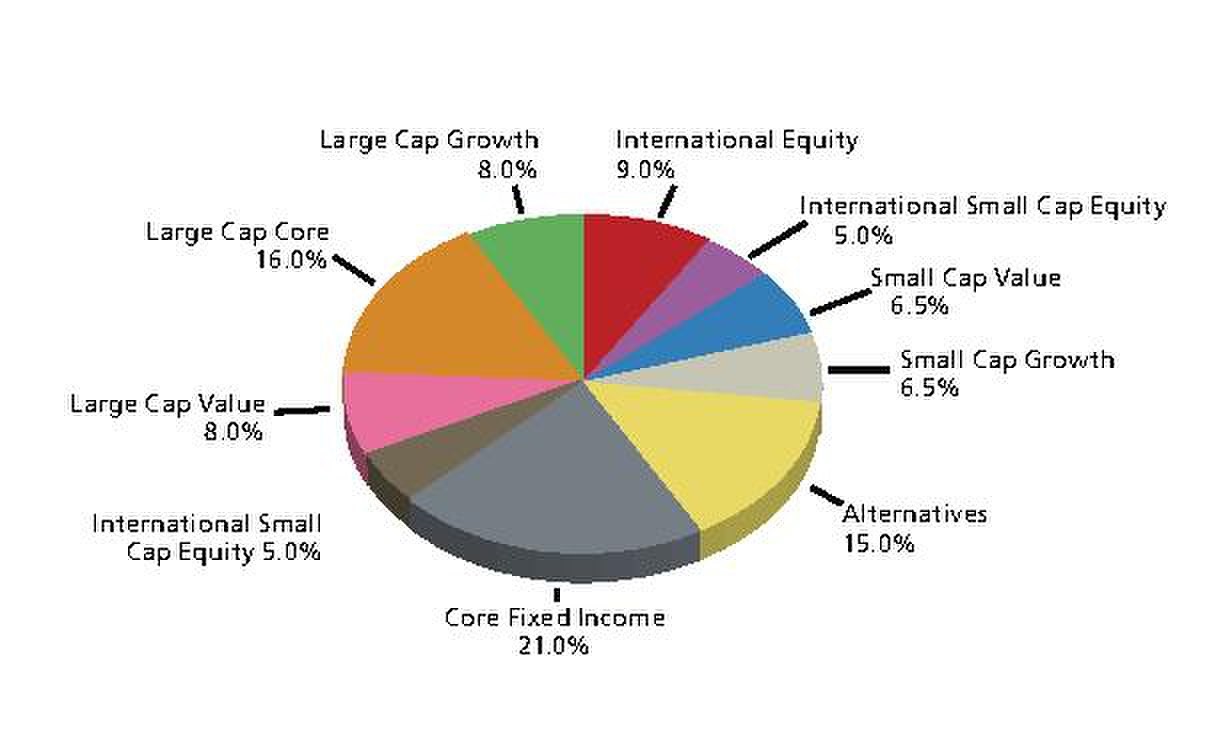
Utilize Monte Carlo simulation to evaluate your trading strategies across thousands of potential market scenarios. This quantitative approach will not only help with evaluating how robust the strategy is, but will help to identify that strategy's optimal parameters for varying market conditions.
Implementation Recommendations:
Use simple combined indicator systems, before using more complicated analysis using quantitative techniques. Consider cataloging your success on EMA + Bollinger Band combinations, and for using multi-timeframe analysis of multiple currencies, before moving to machine learning.
Backtest thoroughly on all of the advanced methods using out-of-sample data. Do not fall prey to the risk of curve fitting! What works with historical testing, does not mean it will work in live markets, if the model was over-optimized to historical data.
Make sure quantitative signals are aligned with fundamental analysis and proper context from the market. There have been the most sophisticated technical models that just get decimated even by regular news, and any structural changes to markets.
Advanced technical and quantitative methods can provide substantial advantages to cross currency trading, but they will need a great deal of you time, to accomplish the development and integration. Leverage all of the methods you are comfortable using based on your technical expertise and your analysis tools. Build on complexity as time, and your expertise, allow.
Trading Psychology And Execution
The psychology of trading cross currency pairs is even more demanding compared to trading in major pairs as volatility is greater, there are intricate fundamental relationships, and the price moves can be gut-churning at times. Developing good trading psychology and execution discipline is critical in successfully developing your long-term prospect in these difficult although immensely rewarding markets.
Decision-Making Under Pressure:
Cross currency pairs can make a 100+ pip move in minutes under extreme market conditions and pressure that arise during significant news events. In very volatile market conditions, a trader is often placed under huge stress to quickly decide which can lead to emotional-based thinking and poor trading decisions. Develop a series of predetermined decision trees for the range of trading market scenarios so that you can deprive critical moments of direct emotional stress.
Have "if-then" decision trees e.g. "If EUR/GBP trades above 0.8650 with RSI above 70, then take partial profits and trail the stop to break even." Making those decisions ahead of time in a calm state of mind can prevent decision mistakes due to market emotional panic under ultimately volatile conditions.
Practice making rapid position sizing calculations until it becomes second nature. In a stressful market environment you have to make sure you can calculate a position size properly and instantly without having the chance to refer to a complicated calculator or formula. Mental preparation helps you avoid having not sized positions that are too small or too large which can destroy the integrity of the risk management component of a trading system.
Strategies for Managing Emotions:
Cross currency pairs have an increased amount of volatility, which will cause an increase in emotional trading behavior compared to Forex trading based on major currency pairs. For example, a 150-pip adverse move (against your position) in GBP/JPY will have a much more intense emotional response compared to a 50-pip adverse move in EUR/USD, even when you use proper position sizing.
Develop techniques to anchor yourself emotionally because the last thing you want to do is make a trading decision in your emotional state when your unrealized loss is large. For example, with cross currency pairs like GBP/JPY, a 100-pip or higher movement in one direction is a normal occurrence, so do not overlook that temporary adverse moves do not invalidate your initial analysis. When you are in positions, try to remind yourself of what body of movement is normal for the pairs you are trading.
Undertake again, position size reductions when emotional buying and selling occurs. When you feel that the current volatility is overwhelming you in terms of analyzing and evaluating trades or that you are commencing to doubt your initial analysis and decision making, STOP! Reduce your position size to roughly 50% so that you can remain involved in the market without subjecting yourself to psychological pressure that over trading can create.
The Importance of Discipline within High-Frequency Situations:
Cross currency pairs will usually generate many opportunities that appear trades more times per session. Thus, the temptation to over trade can quickly cause a loss in trade profit, if we consider cumulative trading cost and lower selectivity.
We encourage traders to set restrictions on frequency of trades and number of trades taken, for example, limiting trading to 3-4 trades per day in cross currency pairs with a minimum 2-hour gap in between trades allowing yourself to provide a proper analysis and emotional reset of your mental state. In trading cross currency pairs, it is about quality over quantity.
Formulate minimum requirements checklists that you must comply with for any trade. These will include technical confirmation, fundamental correlation, acceptable risk/reward ratio, proper market condition, and etc. You should apply the minimum checklists accordingly to every opportunity to keep your pickiness standard.
Avoiding Emotional Pitfalls:
Revenge trading after a loss is especially risky in cross pairs due to their high volatility. A single revenge trade sized incorrectly could wipe out weeks of profit generated by careful attacks. Make it mandatory to observe a cooling off period any time your loss exceeds 1% of account equity.
Fear of missing out (FOMO) has driven more poor decision in fast-moving cross currency markets. Do not jump on board when you see a pair making a huge move without you. Wait for the next ideal set-up instead of entering after the fact at poor levels because you are prone to FOMO.
Hope and hold (holding losing positions after stop levels) has to account for losses in cross currency accounts more than any other psychological pitfall! Because of volatility you might pull off a temporary favorable price which you may excuse your holding behaviors, however taking the loss ensures discipline which prevents catastrophic ultra-drawdown.
Systematic Execution Protocols:
You do not have to use entirely systematic reduce the basis to standardized pre-trade routines (i.e. market analysis, size position, identify entry/exit levels, risk recognition). If you go through the same systematic approach after every trade you will eliminate emotional variability and develop some level of consistency.
Create protocols for a post-trade analysis of execution not just of profitability. Good execution of a losing trade is better for developmental psychology than poor execution of a winning trade.
Use trading journals with clear thought to cross currency features. Document not just the entry/exit levels, and profits/losses, but also volatility conditions, news issues, correlation factors, and psychological state for those trades.
Managing Success and Failure:
Winning streaks on volatile pairs like cross pairs can create some overconfidence and can lead to bigger position sizes and less selectivity. Create a profit taking protocol that take off a part of your profit from your trading capital after substantial rewarding periods.
Losing streaks create more valuable mental issues to manage than major pair trades due to severe individual loss potential. Consider different maximum drawdown limits for just your cross currency management, typically 10-15% of total capital allocated for your criteria.
Treat progress improvements as more valuable than profitable trades. For example, one good trading plan in a volatile EUR/GBP session of trading, even if you lose money, would be an admirable development process achievement.
Stress Management Strategies:
When trading in volatile crosses, managing physical stress is especially important. Exercise, sleep, and stress management strategies affect the quality of your decisions when trading in stressful conditions. After you have traded in very volatile circumstances (no matter whether you were profitable or not), take the appropriate length of break. The psychological energy required to trade pairs in stressful conditions or while reacting to news events requires time to recover.
Maintaining a disciplined trading schedule even when markets are very active is also easy to forget during the excitement of active markets. Often, the longer you are active (trading longer hours during exciting market conditions) the worse your decision making becomes, and more mistakes occur.
Building Psychological Resilience:
Use smaller position sizes than you would normally use for major currency pairs when you first start trading cross currency pairs, and then gradually increase them as you develop a greater psychological comfort level. The requirement to adapt psychologically takes time, and rushing your psychological adaptation usually leads to regression.
Think in terms of probability, not certainty. Markets are inherently uncertain, particularly in the cross currency portion of the market, so simply accepting uncertainty reduces psychological pressure to be right every time.
Trading psychology related to knowing how to trade in cross currency pairs takes a continuous path, and can be consciously developed. The upside of taking on these psychological barriers is documenting better performance in your trading regardless of market and developing emotional resilience in other areas of your life. Have patience in your development; don't be perfectionistic, and know process improvement is constant, and even legacy traders work on discipline deal with psychological discipline every day of their trading lives.
Portfolio Approach
A portfolio approach to trading cross currency pairs allows for a more effective way to manage risk, a smoother equity curve, and a greater potential for profits than a single pair trading approach, yet constructing a successful portfolio of pairs requires an understanding of correlations, allocation, and how to dynamically rebalance portfolio weightings.
Portfolio Construction Ideas:
The key to cross currency portfolio construction is trading pairs with complementary characteristics, rather than just diversifying across different crosses. A good example of complementary pairs are trend following pairs (like EUR/JPY for risk-on) and range bound pairs (like EUR/GBP for political stability). When you combine each type of trade, one idea is to aim for 50% capital exposure to each type of pair, resulting in some balanced exposure.
Allocating pairs based on risk (as measured by volatility) is a better way to allocate capital versus equal dollar allocations. If our portfolio consists of GBP/JPY and EUR/CHF, we would use smaller position sizes for the GBP/JPY due to greater volatility with GBP/JPY. The motivation behind this is that we want each pair to make a risk equal contribution (instead of making an equal contribution based on dollars or the same market exposure).
Plan your trade scenarios. Develop mental scenarios for how you will react if your trade goes in your favour, not in your favour, or goes sideways (inactivity). Planning for scenarios protects you from being surprised and losing emotional control while actually trading.
Take a closer look at fundamental diversification along with technical diversification. In diversifying with currency crosses, pair European focused crosses (EUR/GBP) with risk sentiment crosses (EUR/JPY) and commodity crosses (ex: AUD/JPY) to differentiate risk drivers in your portfolio.
Hedging Strategies:
Direct hedging means taking the opposite position on a correlated pair as uncertainty within the market rises. For example, if you have a long position on EUR/GBP based on fundamentals in Europe, and execution may include sharp volatility around Brexit news announcements, a potential hedging strategy is to take a short position on GBP/USD; thereby preserving Euro exposure, while also retaining some risk on the Sterling exposure, indirect to the Euro.
Synthetic hedging is often used with major USD pairs to achieve better execution as well as flexibility than conventional cross hedging. It is possible to achieve a synthetic short position on EUR/GBP by taking a short position on EUR/USD and a long position on GBP/USD, and the position can be adjusted as appropriate based on changing market conditions on the individual legs.
Dynamic hedging shifts hedge ratios depending upon volatilities and market conditions. During highly volatile periods a hedge might be 80-100% of your core position. While during stable trending periods, decreases to 20-30% of a hedge can be chosen to allow for profit potential.
Risk-Reward Optimization:
Modern Portfolio Theory applications, help to find mistakes and should be used to optimize cross currency portfolio construction as appropriate. In portfolios of cross currency pairs, expected returns, potential volatility and correlations can be calculated across your universe of tradeable cross pairs and mean-variance optimization allows one to find rational portfolio combinations.
The optimal portfolio will frequently have positions that seemingly contradict each other e.g. both long EUR/GBP and short EUR/JPY at the same time. These positions can be based on different fundamental themes (Europe is increasingly integrating vs global risk appetite) and have diversification benefits.
Use risk parity approaches that risk weight the individual portfolios (so the risk is allocated equally) not capital weight. In cross currency portfolios this sometimes means larger positions in relatively stable pairs, e.g. EUR/CHF, and smaller positions in more volatile pairs, e.g. GBP/JPY.
Dynamic Rebalancing:
When rebalancing the portfolio in cross currency trading there is the potential for substantially more frequency than traditional portfolios at the asset level due to the ever-changing nature of currency relationships. Weekly rebalancing is often optimal from the balancing weightings against transaction cost and drifts away from target allocations.
Volatility based rebalancing occurs when the volatilities of individual pairs change or shift substantially. For example, if the volatility of EUR/GBP has doubled due to Brexit news, you would reduce the size of the position equally taking into account how much potential volatility risk you wanted to contribute to the total portfolio. So you keep the potential risk contribution of EUR/GBP consistent regardless of the change in volatility.
Correlation based rebalancing occurs when relationships between pairs change significantly. For example, if the correlation of EUR/GBP to EUR/USD has increased from 0.3 to 0.8 you might reduce exposure to one of the pairs to avoid excessive concentration risk in euro positions.
Multi-Strategy Integration
In determining the optimal portfolio, it is essential to consider the use of several trading strategies in combination across the portfolio elements, this should be viewed as a method to reduce strategy specific risk. For example, applying trend-following methodologies on EUR/JPY, range-trading methods of EUR/GBP, and breakout strategies on GBP/JPY at the same time.
Another method to smooth the equity curves is employing varied timeframe strategies across pairs. For example, a longer-term position in EUR/CHF, a stable cross, and then a shorter-term strategy in GBP/JPY, as GBP/JPY will be a more volatile cross.
Integrating fundamental and technical strategies across portfolio pairs can provide a greater diversity of exposure to different market drivers. Basically, the technical based positions in EUR/JPY can be combined with the fundamental based positions in EUR/GBP to minimize the dependency on one type of analysis.
Performance Measurement
Look beyond simple portfolio performance evaluation, and use metrics based on risk-adjusted returns. For example, portfolio Sharpe ratios, max draw down, volatility measures, etc. to evaluate the methods effectiveness in ways other than simple profit/loss figure.
It is important to identify how different pairs contributed to overall portfolio performance, in having good analysis of which pairs offered the best risk-adjusted returns across the different conditions, it will help with future allocation decisions and what kind of changes should be made to the strategies.
Keep track of beta to the overall forex market movements. The ideal outcome for a well constructed cross currency portfolio would have low correlation to the dollar and its strength/weakness cycles, being as independent from the dollar as possible when returned results on returns.
Capital Models for Allocation:
Fixed Fractional Position Sizing: A fixed fractional position sizing allows you to allocate a fixed percentage of capital to each component in your portfolio. Depending on your portfolio size and risk appetite, this percentage usually is 2-5% per position. This is a good fundamental position sizing technique for beginner portfolio traders.
Volatility Targeted Position Sizing: Volatility targeted position sizing allocates different sizes to the components of a portfolio, thereby accounting for their specific volatilities. This is done to achieve the same level of volatility contribution from each pair. Calculate the volatility of each pair and inversely adjust how much position size to take for each pair so that your total net exposure is equal-weighted and volatility-weighted.
Risk Budgeting: Risk budgeting allocates risk amounts to each of your components in the portfolio based on your anticipated return and how much confidence you have trading each component. A high confidence setup may receive 3% and a weak setup may only receive 1% risk allocation.
Portfolio Stress Testing:
Scenario Analysis: The first exercise is to conduct scenario analysis. You can conduct this for "expected" strong moves based on event. By modeling the performance of your portfolio under specific constraining market events, like Brexit votes, unexpected central bank actions, or systemic risk-off periods, you can start to identify areas where you would be vulnerable if the market made extreme moves.
Probabilistic (Monte Carlo) simulation: This modelling describes what will probabilistically happen to your portfolio over time by examining thousands of market types and the associated possible outcomes. This modelling also establishes your expectations for returns and how realistic they may or may not be.
Historical back-testing: Back testing your portfolio through various iterations of markets will reinforce your assessments under differing market regimes. Examine how your portfolio performed when it was trending and ranging, when volatility was both high and not and examine each period what happened with your resultant wealth, to ensure your construction had a level of robustness built in.
Implementation Considerations:
Begin by constructing simple two or three-pair portfolios before progressing to more complex and intricate combinations. Use these small portfolios to truly learn and master the behavioral dynamics of the portfolios in the forex market before adding further complexity when you have developed effective management skills.
When developing portfolios, consider broker-specific factors including margin requirements, execution quality, and pairs traded as there could be distinct differences between brokers. Some brokers offer better execution with certain crosses and the portfolio will be impacted by this in determining your optimal composition.
Keep comprehensive records of the performance of the portfolio (to include re-balancing decisions, performance in response to market conditions, etc.). These records can provide helpful insights as you develop your repositories of techniques and methods for portfolio tactical approaches, and the action to take in different situations.
As you can see here, when constructed well, a cross currency portfolio will produce better risk-adjusted returns compared to trading single-pairs whilst keeping emotions in check through portfolio diversification. You can quickly lose track of the changing nature of the markets as the immediate environment becomes much more complex and the change of behavior becomes much harder to evaluate. Consideration should be given to your own development of knowledge, understanding, and experience in building and managing simple portfolios ideally from simple ideas before moving on to more advanced analytical optimizations.
Conclusion
Cross currency pair trading represent one the most advanced and potentially lucrative areas of the forex markets. Through the complete review of this e-book, we have explored the key concepts, strategies and techniques to achieve success in these highly complex and opportunity-rich markets.
The transition from the rudimentary aspects of cross currency principles to more sophisticated portfolio approaches requires persistence, practice, and ongoing education. We have examined the core characteristics that distinguish crosses—their heightened volatility, disparate levels of liquidity, and convoluted fundamentals that result in opportunities and complications for participants at all skill levels.
The selection criteria for cross currencies emphasizes that we should be using liquid and moderately volatile cross currency pairings with well-defined fundamental drivers, as opposed to finding exotic currency pairings that may be more eye-catching, but just don't have the market structure necessary to drive profitability with any consistency. EUR/GBP, EUR/JPY, and GBP/JPY are all excellent starting points for picking up the practice of cross currency trading.
In discussing trading strategies, we began to understand that cross currency pairings are more likely to reward you for being patient and methodical rather than using quick trigger finger trading methods. Strategies such as trend following, support and resistance, and breakout are more effective when approached with timely market entry and appropriate risk management. The overarching point is that different strategies will work better during different market situations, and successful traders will have the ability to adapt when it is required.
Within the context of cross currency trading, technical analysis offers more simplistic signals and patterns that have higher reliability than many other forex trading markets, but only if used with a complete scope of each pairs' distinctiveness. The multi-timeframe analysis, combination of indicators, and pattern recognition methods we have discussed earlier provide sound frameworks for sound trading.
Risk and money management rise to possibly the most critical elements of cross currency trading. The heightened volatility of the pairs and the distinct execution characteristics require greater sophistication of risk control measures that do not simply involve stop-loss orders. Successful cross currency trading is distinguishable from unsuccessful cross currency trading by the use of position sizing based on volatility, dynamic risk control, and risk management at the overall portfolio level.
In advanced topics like currency correlations, quantitative methods, and psychological management, traders gain the last elements necessary for trading like a professional. Concepts like these allow traders to find viable arbitrage opportunities, to systematic testing of their strategies for improvement, and to maintain the emotional discipline needed for consistent activity over the long term.
Lastly, the portfolio approach to cross currency trading, represents a shift from participating in one pair, to participating in the market overall. By participating in combinations of different pairs, strategies, and timeframes, the traders become more fluid in their equity curves, and the overall risk exposure is shared across lots of different instruments, which represents the reality of market participation with a portfolio approach.
Cross currency pair trading creates exceptional opportunities for discretionary and non-discretionary traders that are committed to taking the time and effort to progress through the learning curve towards these complex markets. When you combine the potential for profit, portfolio diversification benefits, and level of intellectual challenge, cross currency trading is a great niche within the larger forex ecosystem.
If you want to expand your knowledge of portfolio approach and practice in live demo environments, check out Tradewill.com for strategy guides, tutorials, and tools and products.
Disclaimer: The content of the blog does not represent any position of Trade W, does not serve as any trading-related decision advice, and does not endorse any third-party.