

 Trade W

Why Decimals Matter in Forex Trading
When you view a forex quote like EUR/USD at 1.08456, you should know that the numbers that appear after the decimal point are extremely important and aren't just random numbers. They are actually the precision markers that can either help your trading account or hurt it. Each decimal point signifies a unit price movement, and understanding what they mean will be the determining factor of whether you're able to trade profitably or lose money.
In forex trading, decimals refer to the digits that appear after the decimal point in the currency pair quote. Usually, brokers will display prices in four decimal points or five decimal points, and this is by design. It exists because the forex market moves in small increments, thus needing traders to be able to see those micro-movements to make informed decisions.
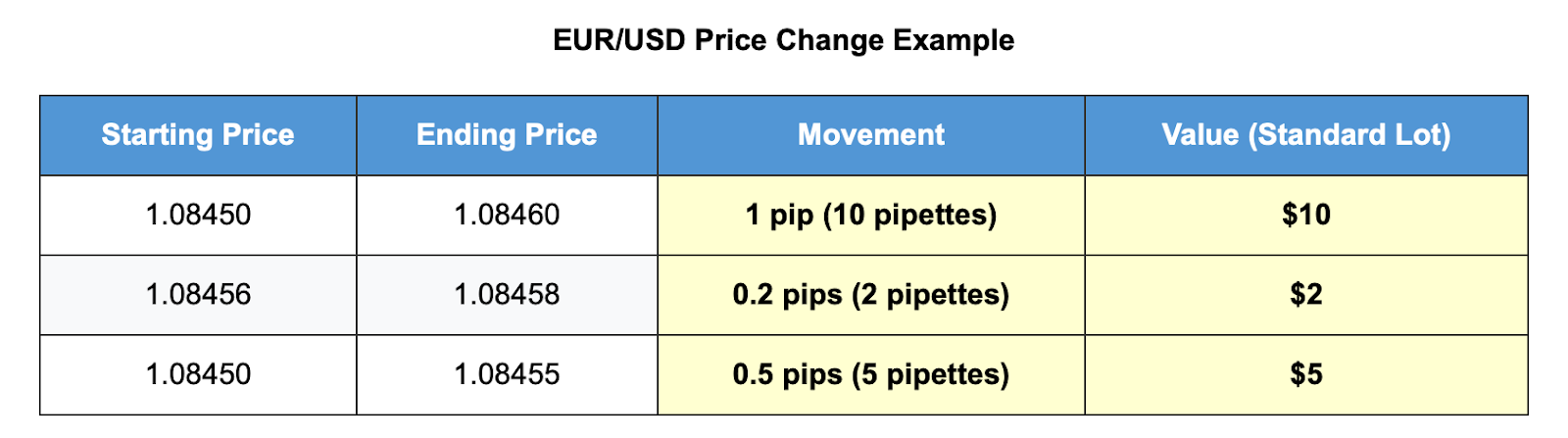
To help you think about it. If EUR/USD moves from 1.08450 to 1.08460, that is a one pip movement. If you're trading a standard lot, that one pip movement would mean you either made or lost $10. What's the problem? If this is a tad small, remember this is with leverage, and what appears to be a tiny movement ultimately has real dimensions on your actual balance.
Let's start with a simple analogy. Imagine yourself shopping and you see a product that has a price tag of either $1.00 or $1.01. You might think that varying the price tag by $0.01 is negligible. However when considered in the world of currency, that one cent can matter quite a lot, especially when this one-cent difference is multiplied across thousands of currency units. If you are trading a standard lot of currency, you might be trading 100,000 USD, and the decimal differences can now mean significant dollars.
Understanding decimal points is useful when calculating profit and loss, measuring the spread from a broker, and assessing your risk on each and every trade. Without this knowledge, you are trading blindly and will not have an idea whether a certain price movement is significant.
Understanding the Structure of a Forex Quote
All forex quotations adhere to a consistent structure comprising paired currencies. The first currency indicates a base currency, and the second indicates a quoted currency. For example, EUR/USD = 1.08456 means 1 euro is equivalent to 1.08456 US dollars.

Looking at that number more closely, 1 is the whole dollar amount, while 08456 represents the fractional value. The fourth decimal place, in this case the 5, is typically where you might see 1 pip of movement. The fifth decimal, here the 6, would represent a fractional pip, also known as pipette.
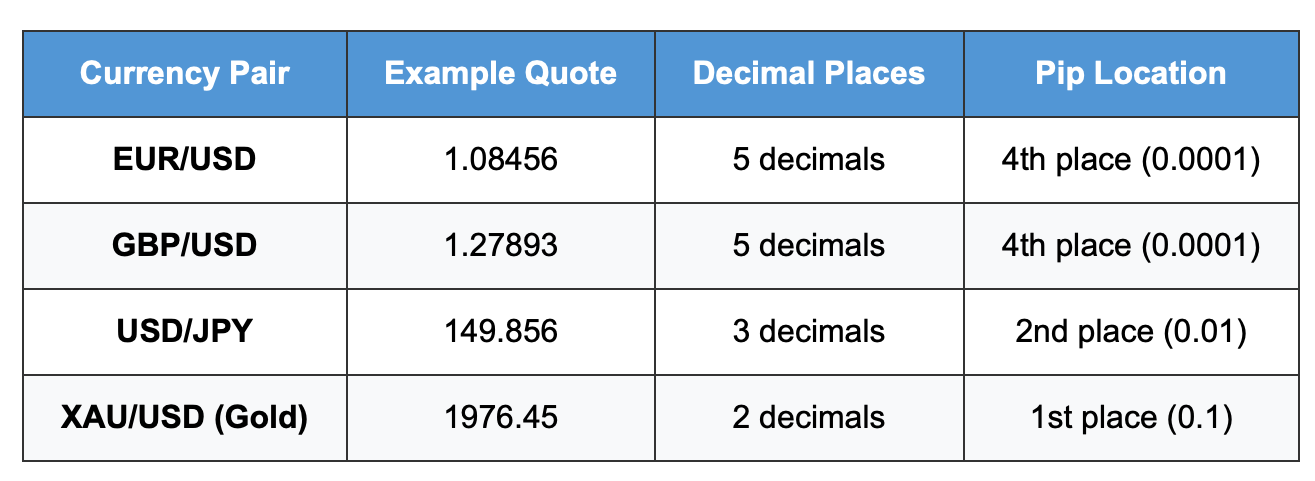
Instruments have distinct decimal structures. Major currency pairs, for example, EUR/USD and GBP/USD are typically displayed with 5 decimal points. Conversely, USD/JPY is displayed using just 3 decimal places because of the value scale used for the yen. A gold (XAU/USD) quote might be displayed with just 2 decimal places. These variations exist because many instruments have their own typical price ranges and volatility characteristics.
You can think about decimals like price tags at a store. For example, instead of pricing your milk at $2, you'd price your milk at $2.35 because the price tag matters to your accounting or comparison. Forex decimals do the same thing, they allow for a small or incremental price movement at the level of precision a trader needs to make decisions.
If your broker quotes EUR/USD at 1.0845 compared to 1.08453 it's not a whole lot of difference in price, but the price quote contains additional precision. It impacts your spreads, and it allows for tighter spreads and greater precision in your pricing, especially when there are rapid price movements I think that is why it is important.
Once you understand that each decimal place has a certain meaning and purpose, the structure is not complicated. They measure price movement, allow you to match profit or loss, and provide transparency to allow you to compare broker pricing.
The Relationship Between Decimals, Pips, and Pipettes
A pip, or "percentage in point," is the typical standard unit of measurement for forex price movement. For nearly all currency pairs, a pip is equivalent to the fourth decimal place, or 0.0001. For example, if EUR/USD moves from 1.0845 to 1.0846, that is one pip price change.
In forex trading, a pipette is essentially telling you one step further down to another decimal point. A pipette is one tenth of a pip, or the fifth decimal place, and the value is 0.00001. For example, if the EUR/USD has one of its prices quoted as 1.08456 moving to 1.08458, that is equal to 0.2, or two pipettes.
Why do brokers publish in five decimal places instead of four? Brokers are providing tighter pricing, meaning they can give a narrower spread, which is the difference between the bid and ask price, using pipette precision. This is advantageous for the trader because they save some money on every trade, especially if the trader is day trading and trading frequently.
You can think of this much like measurement. You can measure distance with a centimeter, which is an even number, but you can get a little more precise with measuring distance with a millimeter, which is an odd number. In this case, pips are your centimeters, and pipettes are your millimeters. The more decimal points you have, the more fine-grained measuring system you have, which in this case means better precision in tracking price movements.
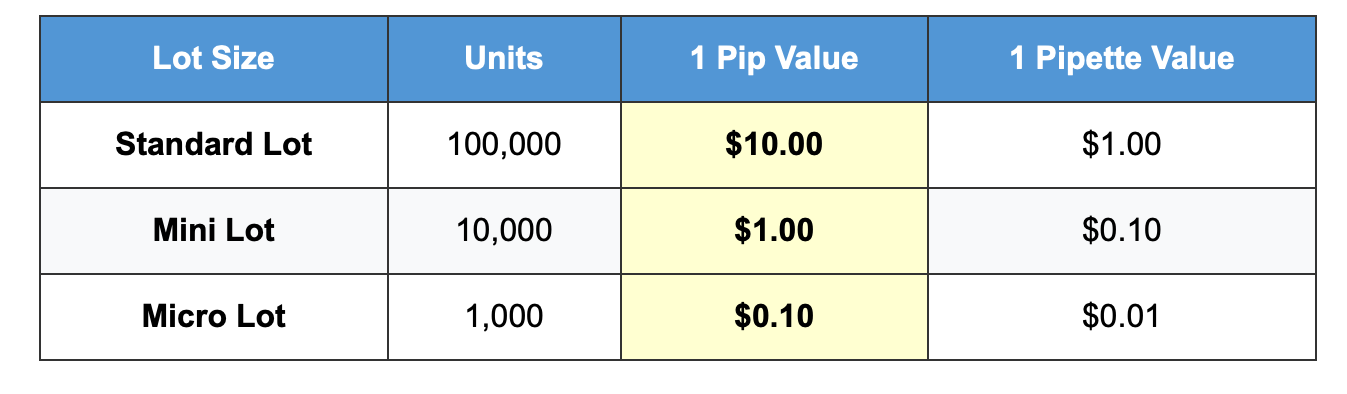
Now let's get into the practical stuff. Let's say you are trading the euro and the US dollar (EUR/USD) with a standard lot size (100,000 units). With this position size, you need to aware that a one pip movement is equal to ten US dollars. Which means if we scale that down any further, a 0.1 pip movement (or pipette) would be equal to one dollar. A mini lot size (10,000 units), would be equivalent to these amounts, thus one pip is equal to one US dollar and a pipette would be equal to ten cents USD. For a micro lot size (1,000 units), one pip is equal to ten cents and a pipette is equal to a penny or 0.01 USD.
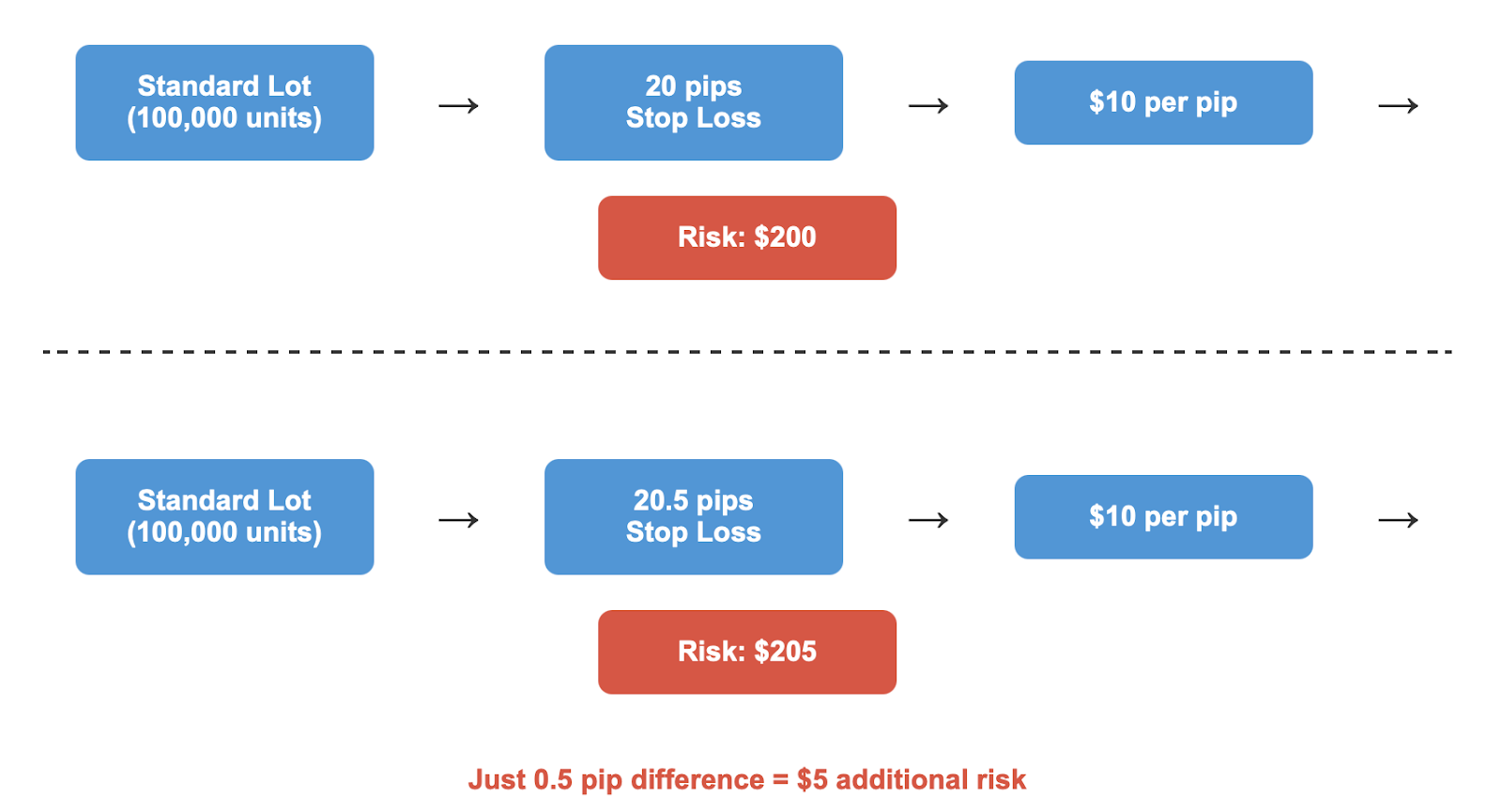
Once you understand this relationship, you can accurately understand and accurately estimate risk. For example, if you set a stop loss 20 pips away on a standard lot, you are risking two hundred dollars. If you set that stop loss 20.5 pips away, you are risking two hundred and five dollars. Once a trader grasps how decimals, pips, and pipettes are related to each other, the conversions become second nature.
For traders that employ algorithmic trading strategies or for scalping, pipette precision adds a level of precision that their trading might require. In particular, an automated system may be able to enter or exit trades on 0.1 pip movement. This ability only exists with five decimal place quoting.
How Decimal Precision Impacts Trading Strategies
The decimal precision has a direct impact on the spread per trade. The difference between the ask price (where you buy) and the bid price (where you sell) defines the spread. When brokers quote prices to five decimal places, a broker may provide you a spread of 0.8 pips, which is essential versus quoting it rounded to 1 pip. After hundreds or thousands of trades, the decimal difference adds up to a significant number.
Decimal precision is essential for a scalper to enter and exit trades quickly. For example, a scalper may be targeting a profit only 2-3 pips above and below, respectively. When you are targeting small profits, the entry and exit points are extremely important. Can you imagine the difference one broker quotes EUR/USD as 1.08456 versus 1.08460? In terms of pips, that's four (4) pipettes of difference! In the end, that could determine if a trade is a gain (at target) or a loss (at your stop loss).
Algorithmic traders that utilize an Expert Advisor (EA) greatly depend on decimal precision. These automated trade systems may only be able to execute trades using .1 pips as a measurement. An EA programmed to buy when the price is at 0.5 pips below a moving average requires that fifth decimal place of precision. Without it, the system would not work properly.
For swing traders and position traders, decimal precision is important when entering and exiting trades. Being filled at 1.08456 as opposed to 1.08460 may seem minimal, but when trading size, those four pipettes become real dollars.
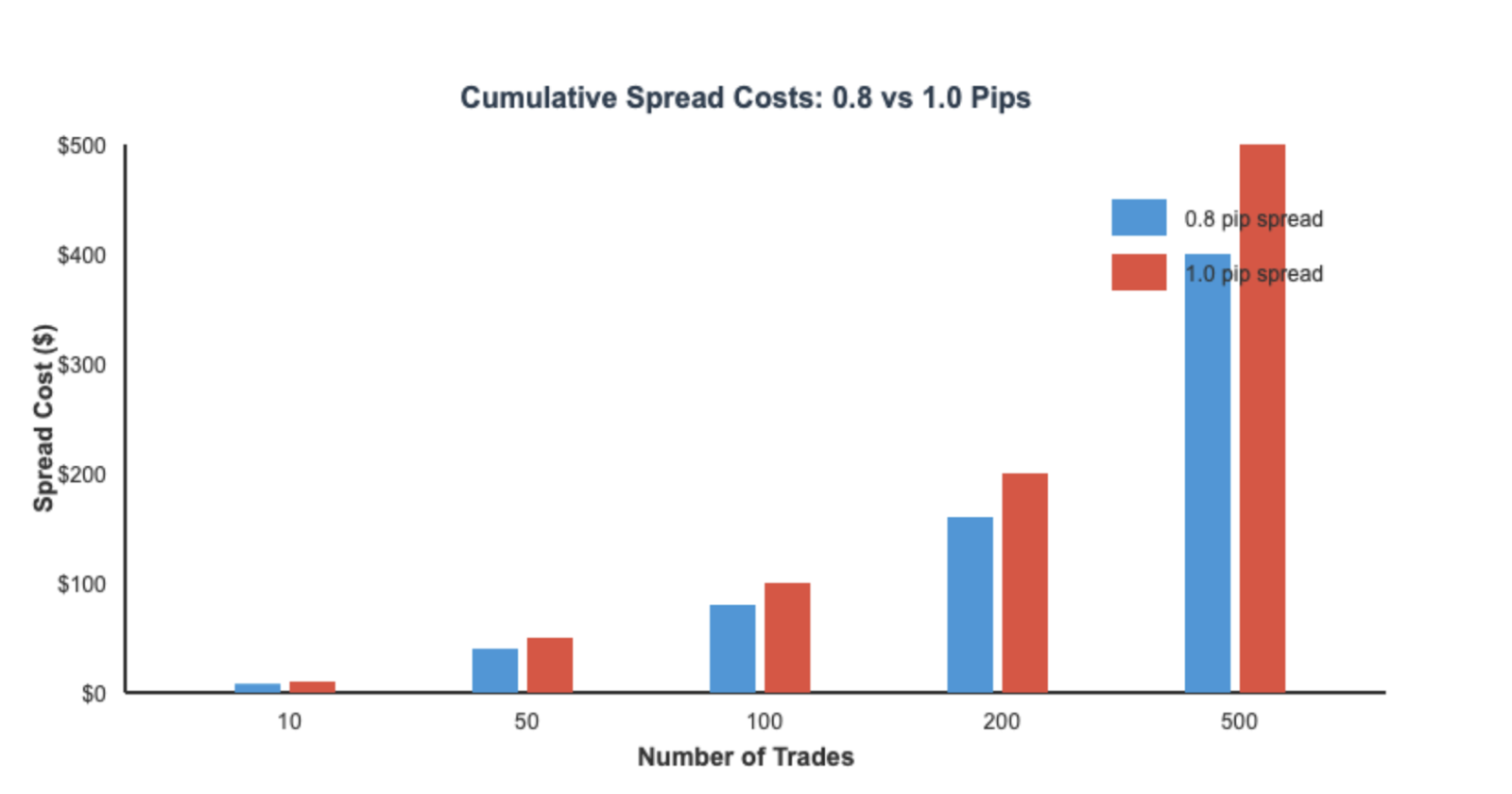
Decimal precision also affects your perception of volatility based on how the market makes micro-movements. Five decimal places versus four decimal places shows you a volatility that the latter would hide. Simultaneously, you gain valuable insight about momentum, to help make better decisions about your timing.
When you are comparing brokers, always pay attention to the decimal precision. You may think a broker using four decimal places is similar to one using five decimal places, but the extra decimal will give you tighter spreads, better execution, and that much more control over your entries and exits. If you are an active trader, that precision will make all the difference in profitability.
Common Mistakes Traders Make with Decimals
Mixing up pips with pipettes is a frequent mistake. A trader might think that they are setting a five pip stop loss but has instead set it to five pipettes (0.5 pips), leaving their position wide open. Conversely, the trader may have meant to set a five pip stop and accidentally set a stop for 50 pips, which is exposing them to much more risk than they originally intended.
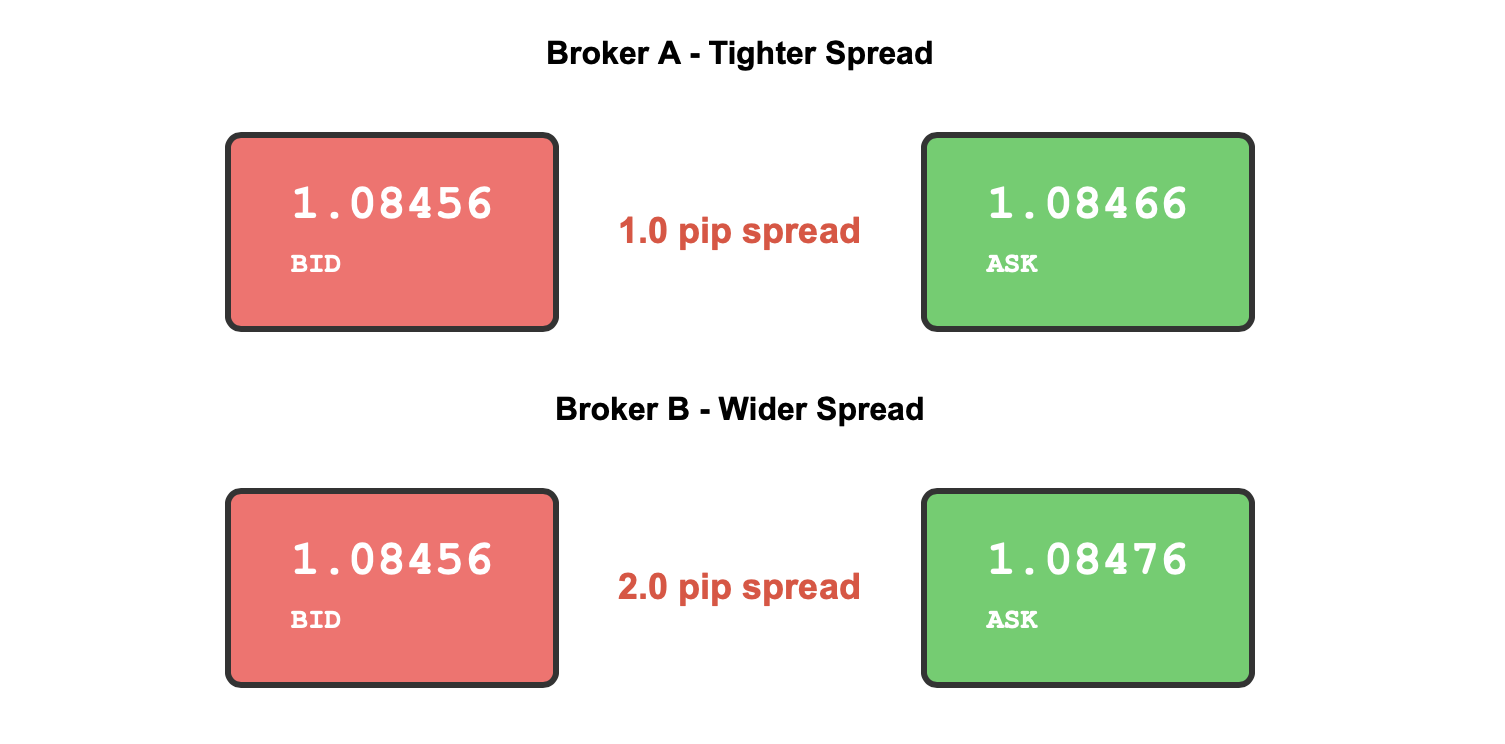
Another mistake is paying little attention to the decimal differences between brokers. For example, two brokers may say they have "tight spreads", but the first broker quotes the EUR/USD at 1.08456/1.08466 (a 1.0 pip spread) while the second broker quotes the EUR/USD at 1.08456/1.08476 (a 2.0 pip spread). If there is a lack of attention to the decimals, then it would be easy to not catch that a trader is paying double the spread on the second broker.
The trader can also miscalculate profit and loss because of the decimal place. A trader may think that they made ten pips of profit, when they really only had one pip of profit, simply because they read the decimal locations wrong. On a standard lot that is the difference between ten, and one hundred dollars. In an active trading environment these types of decimal errors can very quickly add up between multiple trades.
Some traders forget about the different decimal structure in the currency pair. Traders are used to trading EUR/USD with five decimal places, and then trade the USD/JPY with three decimal places and forget to adjust their pip calculations. So, when the USD/JPY moves 10 pips, you think that an adjustment to a pip is 0.0010, when in fact 10 pips in USD/JPY is 0.10. This confusion can lead to your account position size calculation being completely wrong.
Here's an example. You may see EUR/USD trade from 1.08450 to 1.08460 and think, "That's nothing, just 0.0001." In fact, this so-called "nothing" is a full pip, that is worth $10 per standard lot, or $1 per micro lot. When traders disregard small decimal moves as "nothing," that's how traders forget about their risk and overleverage their account.
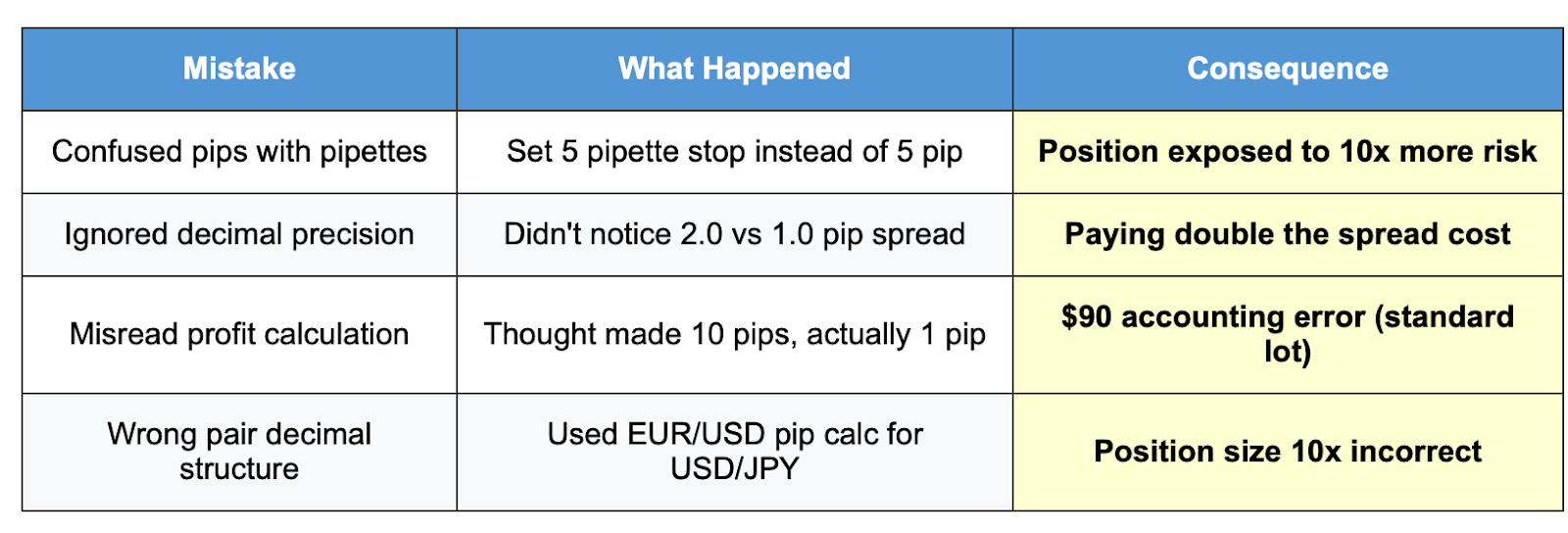
In order to avoid these common mistakes, always make sure to verify the decimal structure of the trading platform. you can identify this by counting the decimal places in your quotes. When calculating position size or their risk, you want to look twice to verify whether you are calculating pips or pipettes. If needed, you can use a pip calculator. These common checks will help you avoid an unnecessary large loss that may even put your entire trading account in danger.
Mastering Decimals to Trade Smarter
Decimals are the basis of being precise in forex trading, a large part of what enables you to measure price movement accurately, how close your spreads are, and how you can handle your risk and reward calculations accurately. Learning to understand decimals allows you to trade more confidently and accurately whether you're a scalper looking to profit off quick moves, or position-trader holding onto trades for weeks.
It's all about pips, and even the pipette that resides within the pip when you're risking real money. Sometimes the difference between trade profits and losing trades can often come down to these tiny details. If you can operate with precision in your decimals, then you can better time your entries and exits, manage your risk and avoid the emotional mistakes that come with miscalculating how forex prices work.
This is not just a technical aspect of forex trading which a more advanced trader may demonstrate. But even a new trader needs to have a grasp of decimals. If you can understand what each decimal place represents, then your ability to read what is on your trading platform will be more accurate. You can compare broker pricing when pricing may be higher or lower than the market without running a pip conversion which can be tricky depending on your experience level. And you will be able to input your stop losses and take profits more accurately.
Make sure you take time to comprehend the structure of decimals in the pairs you trade, up to at least the fifth decimal if possible. Get comfortable calculating pips and pipettes, and make sure you're reading the quotes on your platform correctly. These things might seem trivial, but they justify the distinction between those who earn consistent returns and those who are challenged to understand why their trades are not performing according to expectations.
In Forex trading, decimals matter. That tiny fifth digit poses either the difference between a profitable trade or a losing trade. Or between a narrow spread, and an expensive spread. Between precise risk management, and pure guesswork.
Ready to trade with precision? Explore platforms like Tradewill that offer transparent pricing and five-decimal accuracy, giving you the tools you need to trade smarter.
Start mastering the details that separate successful traders from the rest.
Disclaimer: The content of the blog does not represent any position of Trade W, does not serve as any trading-related decision advice, and does not endorse any third-party.