

 Trade W
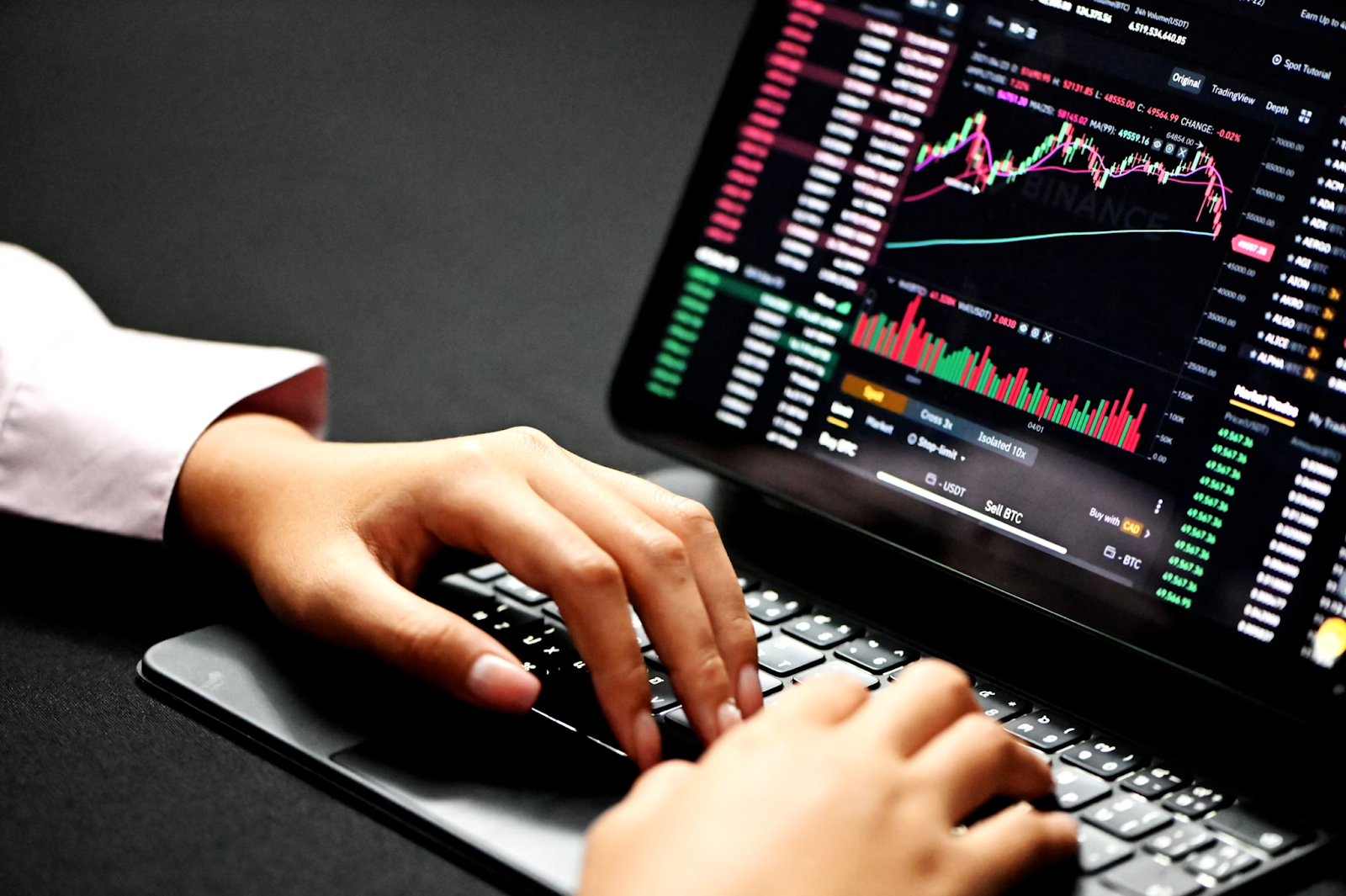
One of the most critical elements of forex and CFD trading success is knowing when to leave a trade. Most traders concentrate on the art of the entry, yet closing a position at the right time is at least as important and can make the difference between profit and loss. This is where take-profit orders come in handy as trading tools.
Recent market insights show that anyone who trades with systematic type exits, like take profit orders, performs with 23% higher profitability than traders who manually close out their trades. Whether you're a forex trader opening positions based on traditional currency pairs or you're diving into the exciting world of CFD trading, the way that profit orders are used is critical for long-term trading success.
This complete guide will teach you everything you need to know about take profit orders, from the most basic definitions down to the how-to of this order type. By the time you finish reading this article, you’ll be equipped with the education and the confidence to use these mighty weapons in your trading arsenal.
What Is a Take Profit Order?
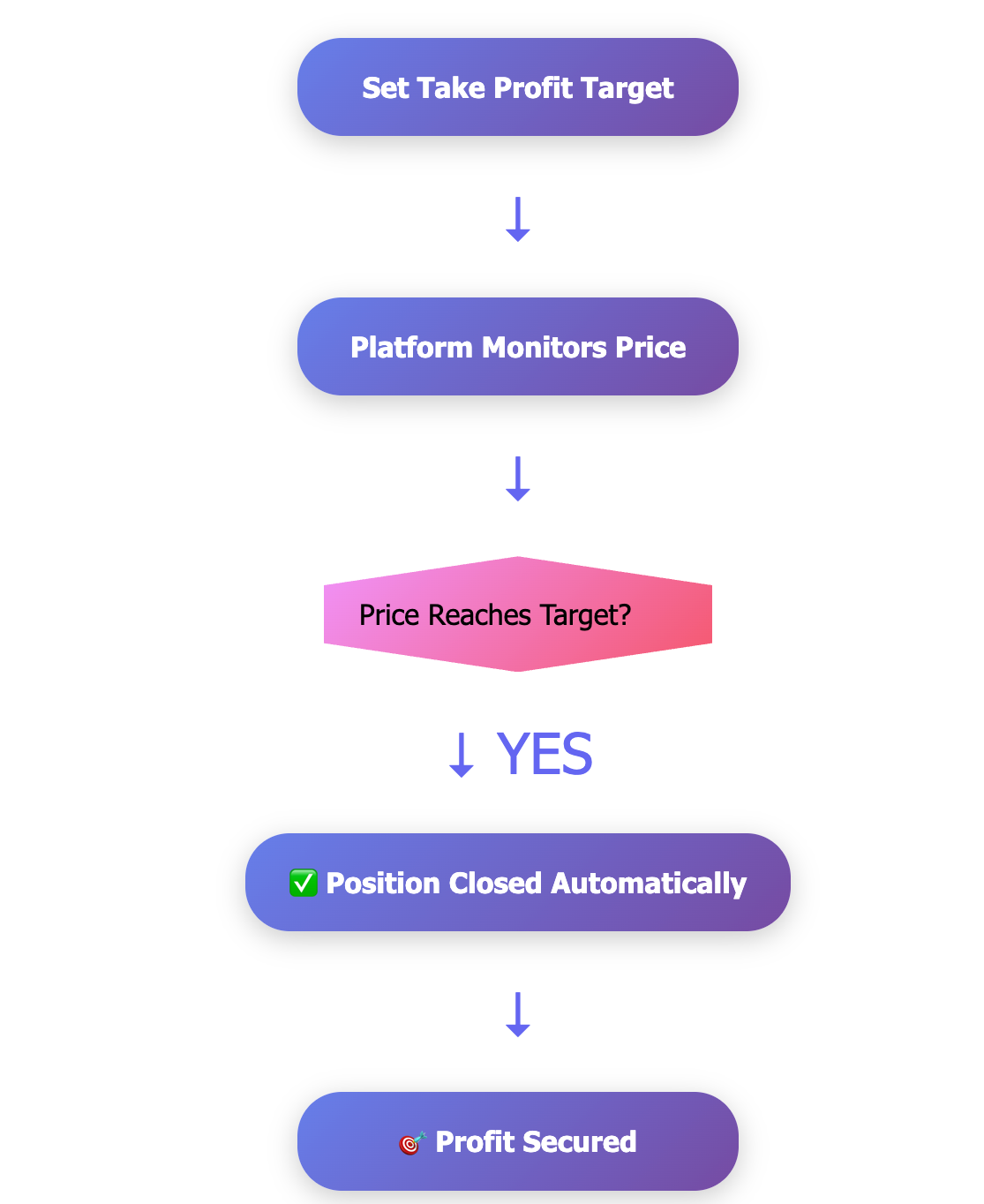
A take profit is an automatic order that closes your trade at a specified favourable price, should the current market price reach that point. Consider this your own personal trading robot, keeping watch over the markets day and night and carrying out your exit strategy precisely as planned.
What you, in effect, do when you add a take profit to an order is like saying to your trading platform, “Alright, close this position for me on its own when I’ve realised x amount of profit.” That removes the emotional aspect of decision-making on when to take profits, and it means you won’t miss opportunities from timing or availability.
How Take Profit Orders Work
The mechanics are straightforward. Once you have entered a position, you are going to establish a target price level to take profit. Whilst allowing for the price to fluctuate according to market conditions, the trading platform watches the market price, and if it's at or above the target price, the system locks in the profit for you and automatically closes your position.
So if you buy EUR/USD at 1.0800, and you want to take profit when the price reaches 1.0900, you set that up in the system and it does it automatically for you, “taking” the 100 pips in the process without needing your physical input.
Understanding Different Order Types
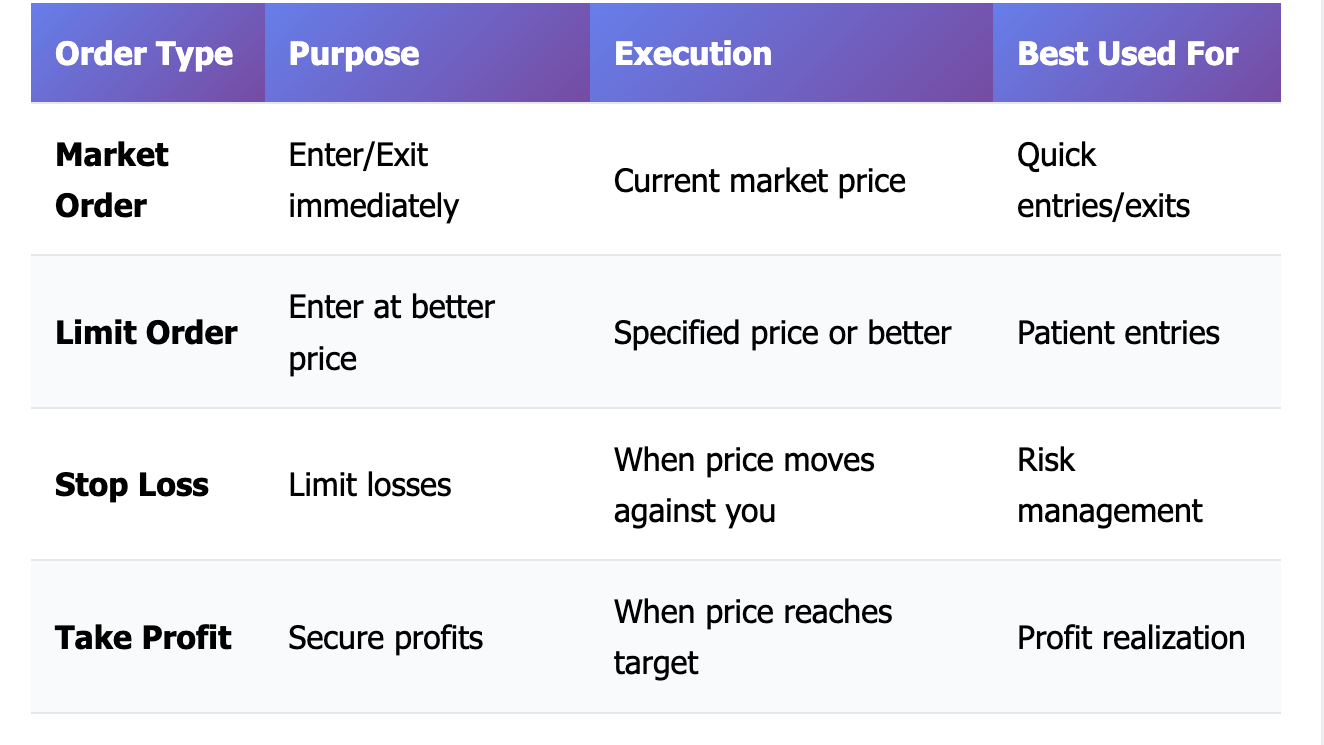
To appreciate the value of take profit orders, we need to know how these are different from other types of orders:
• Market Orders: (Unconditionally) perform at available current market prices.
• Limit Orders: Implemented a favourable rate that u specify only
• Stop Loss Orders: Close your positions to limit loss if prices move against you
• Take Profit Orders: Close trades and take profit automatically when prices move in your favour
Real-World Examples
Example for Beginners: Say you bought a pair of rare sneakers for $500. To your friend, you say: “I’ll take anything over $800 and sell!” That’s the take profit logic — you’ve predetermined a sweet spot profit target and don’t let greed influence you to wait for the next offer.
Example of Professional Trading: As an example, a forex trader will buy a currency pair if they expect its exchange rate will rise in the future and sell a currency pair if they expect its exchange rate will fall in the future. For instance, a forex trader will buy EUR/USD at 1.0800 and decide to sell the position if the market price reaches 1.0900. The euro is higher in European trade on economic data. Once the price is at 1.0900, the system automatically closes the trade for a profit of 100 pips and moves to other trading opportunities.
The distinction here is that a take-profit order is not a predictive tool; it is actually an execution statement for a planned profit strategy. It's about discipline, not forecasting.
Comparison of Take Profit and Other Traders’ Orders
Knowing how to take profit orders contributes to your overall trading order strategy will offer you insight when using these to manage your trades. Each type of order has its part to play in managing your positions.
Take Profit and Stop Loss Orders
Both are automatic exits, but are opposites:
• Stop Loss Orders: Protect your capital when prices move against you.
• Take Profit Orders: Lock in profit positions by exiting when targets are met
That is the only point of distinction in what is causing them. One runs when you’re losing; the other when you’re winning. Wise traders use both in conjunction with each other to form a holistic risk management structure.
Take Profit vs. Limit Orders
It’s a comparison that new traders frequently get turned around about:
-
L/Os(Buy/Sell): A way to enter a position at a good price
-
Take Profit Orders: These are used to exit one's current positions at favourable levels
You’re saying, “Buy/Sell when the price gets to this level.” This is a buy limit order. A free take-profit order takes profit at the take-profit level. You are saying,“ Close my trade if the price shows that it’ll turn around and go the other way!” An AJ limit order might be used for the take-profit area.
Take Profit vs. Market Orders
Market orders get executed at the prevailing price, while take-profit orders wait for a particular price. Market orders favour speed, whereas take profit orders favour price accuracy.
Take Profit and Trailing Stop Order Equivalents
Trailing stop orders move with the market price, however, adjusting a fixed distance as profits increase. Take profit orders do not adapt and become fixed at specific levels. Trailing stops are designed to protect profits by enabling a position to remain open and continue to profit as long as the price is moving in the investor's favour; take profit orders are used to set a targeted profit.
Professional Example: A Day Trader applies a trailing stop (to protect growing profits) and a take profit order (to ensure profits at the technical resistance levels). The combination of features offers flexible as well as stable profit management.
Why Use a Take Profit Order?
The advantages of using take-profit orders in your trading plan go well above mere automation. These are the tools many traders struggle with psychologically and pragmatically.
Emotional Discipline and Consistency
Trading psychology studies reveal that fear and greed are the primary killers of regular profits. Take profit orders help eliminate the emotional aspects out of decision-making. The natural response when you are in a position with profit is to let the trade go longer, looking to make even more profit. which can result to observing gains evaporate as markets head in the opposite direction.
Beginner Example: When you make a promise to yourself, you’re saying to yourself: “If I study for 3 hours, then I will allow myself to play a game for 30 minutes.” A take profit is just that pre-set reward system that keeps you from going too far, for too long.
Protection Against Market Reversals
Markets, by nature, are volatile, le and profitable positions can become losing positions quickly. With that, take profit orders help guarantee that you make money on good price movements before they are eaten up by a reversal. It is even more crucial in CFD trading, where leverage can turn both profits and losses.
Time Management Benefits
Not every trader has the ability to watch markets all the time. Take profit orders are executed 24/7, executing your plan in your sleep, at work or any way from your trading terminal. It mathe forex trading easier for novice traders.
Strategic Planning Enhancement
Utilising take-profit orders will make you consciously think of where to take profit before entering a trade. And his planning is what leads to more structured and disciplined trading. Together with a stop loss order, you establish a full risk-reward framework for each position.
Professional Example: A swing trader studying the GBP/USD finds a spot of interest using technical analysis that could offer a 150 pip potential move. Instead of sitting on the position for days and managing it themselves, they place a take profit at the price they are optimistic about, and a stop to control for how wrong they could be. This enables them to handle lots of positions at the same time, and still have comprehensive control of the risk.
Building Trading Discipline
It is important to trade well to consistently execute on your trading plan. Take profit orders lean into this discipline by forcing you to make profit-taking decisions ahead of time. And this disciplined effort will build toward more consistent trading.
The stress reduction is not to be minimised. Once you know that your take profit is set, you can focus on your analysis and strategy, instead of having to check the monitor prices and keep asking yourself if you took the right step.
How to Place a Good Take Profit Order
Placing good take-profit orders is an art that gets easier with time and starts to combine technical analysis with risk management and your trading style. There is no one-size-fits-all answer, but the following are some tried and true ways to help you make a choice.
Technical Analysis Approach
Most traders use technical levels to identify where to take profits:
Support and Resistance Levels: The last highs and lows are used as natural profit targets. So, if you are buying EUR/USD and the old high is 1.0950, placing your take profit at 1.0940 takes into account some resistance at the old high.
Fibonacci Retracements: A large number of traders employ Fibonacci levels to take profits. Frequently used ratios are 38.2%, 50% and 61.8% retracements of previous moves.
Trend lines and channels: If you are trading within a channel, the other end of the channel often makes sense for a take profit.
Risk-Reward Ratio Method
This method leans on the control of good-risk/reward ratios:
For example, if your stop loss is 30 pips once in a trade, place your take profit 60 pips away from your entry…This implies that your target would need to be placed 60 pips from your open price as well. Many successful traders shoot for at least 1:2 ratios and often look for profits double the amount of what they’re willing to lose.
Fixed Pip Targets
Some traders like this predictability and just like to take fixed pips as their targets:
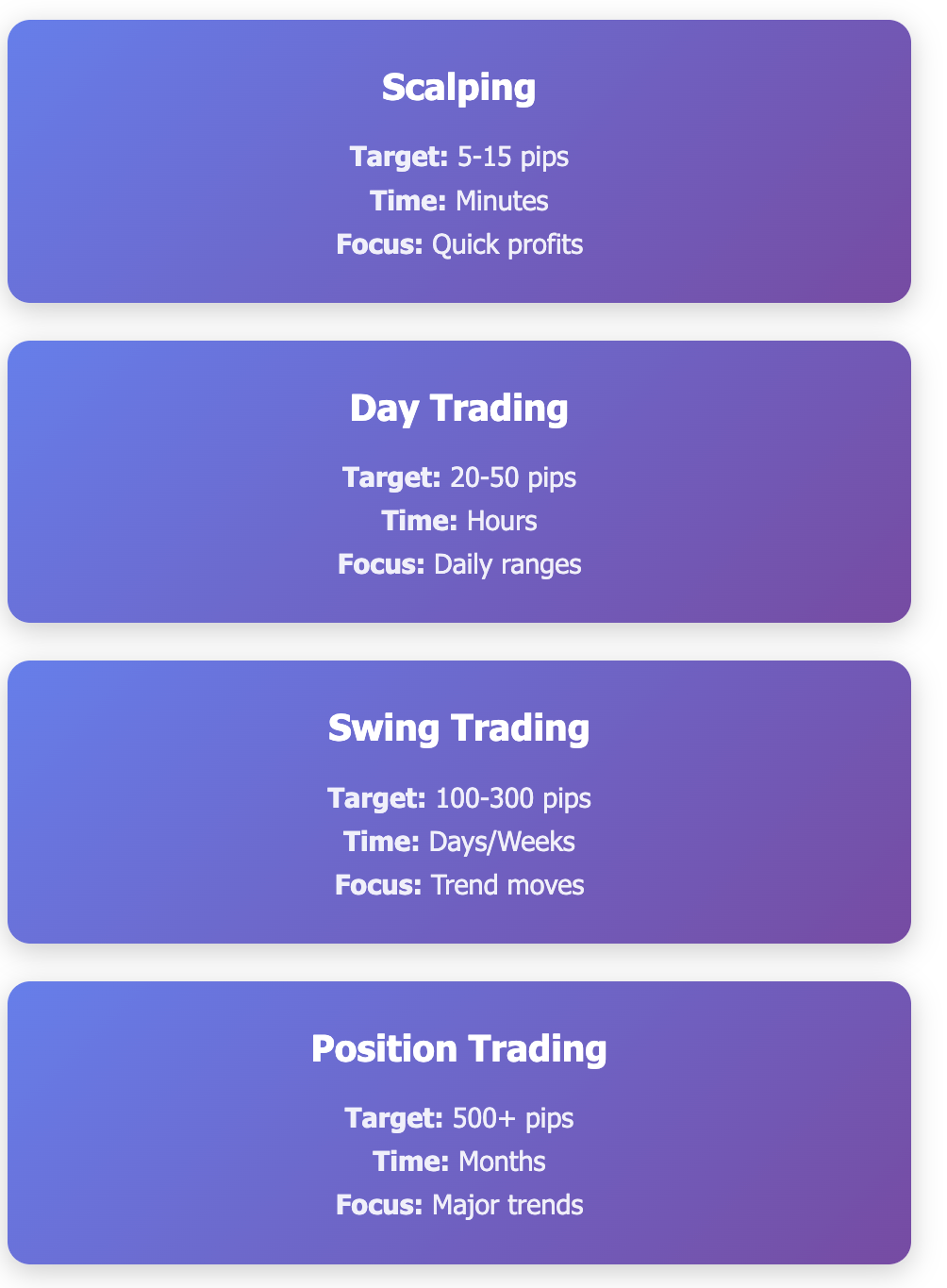
• Scalping strategies such as 5-15 pip targets for fast profits
• Day trading: Target 20 to 50 pips in daily trading ranges
• Swing Trading: For 100 + pips target (For higher time frames such as daily)
Time-Based Exits
Instead of price-based exits, a time-based trigger is often utilised in some methods of analysis. One such is to close all positions before big news releases or close before the market ends.
Adapting to Trading Styles
IntraDay / IntraDay Trading: In this case, the short takeprofit targets (20-50 pips) correspond to the daily ranges and will result in less overnight exposure.
Swing Trading: Long-term targets (100-300 pips) are taking advantage of multi-week price action, but it takes patience and significant capital to hold during regular market swings.
Position Trading: Really long-term (500+ pips) goals are watching for key trend reversals and/or macro changes.
Examples in Practice
Beginner Example: You want to make some money on the side to supplement your income, so you become a driver for a rideshare company, but decide to cap your time to 4 hours a day to avoid burnout. That is the same as drafting a sensible target in advance — a take-profit logic which prevents overextension.
Professional Example: The trend trader looks at XAU/USD (gold) and sees that there is strong support at $1,920 and resistance at $1,965. They long at $1,925 and their take profit is at $1,960 (slightly below resistance), and when gold hits itt they make a $35 per ounce profit, because they were not taken out when the market reversed at the resistance level.
The main idea is that ideal take profit targets are a balance between ambitious and realistic. The challenges should be difficult enough that you enjoy meaningful profit, but are attainable based on the existing marketplace and what you have assessed.
How to Place Take Profit on Trading Platforms
Knowing how take-profit orders work on various trading platforms helps ensure that you can execute your strategy smoothly, independent of the tools you use. Nowadays, on most platforms, you have a choice of how to place these orders.
Place Take Profit When Placing New Order
On Tradewill Platform:
-
Choose your instrument (eg EUR/USD)
-
Decide your position, direction (long or short) and size.
-
The "Take Profit" Field in the Order Window
-
Enter your target price level
-
Confirm the order placement
On MetaTrader 4/5:
-
Click with the left mouse button on your chart, and then select "Trading" → "New Order" from the context menu that appears.
-
Choose your lot size and order type
-
Type your target price in the "Take Profit" field
-
Hit "Buy" or "Sell" to order it
Mobile Apps Trading: Trading Apps are the new phenomenon in the investment world.
-
Select your instrument
-
Choose position size
-
Take the profit level in the order form
-
Execute the trade
Modifying Existing Take Profit Orders
There are also times the market changes, and you will need to adjust your take profit:
On Desktop Platforms:
-
Right-click on your open position
-
Select "Modify Order"
-
Adjust the take profit level
-
Confirm the modification
On Mobile Apps:
-
Navigate to your open positions
-
Touch the position you wish to change
-
Adjust the take profit level
-
Save the changes
Advanced Take Profit Features
Partial TP: Most platforms offer you the option to close only a portion of your position at a certain level. For instance, exiting 50% at your first target and allowing the rest of the position to run to a higher target.
Trailing Take Profit: Trailing take profits are available in advanced platforms, and they are used to automatically modify your take profit point as the market begins to move in your favour.
OCO Orders: The 'One cancels the other' order allows you to place two take profit levels at the same time, such that when one of them is executed, the other is automatically cancelled.
Platform-Specific Considerations
The terminology and the design of the UI may vary slightly from one to the other, but the functionality is the same. Get to know exactly what your particular platform is capable of.
Important Reminder: Take profit orders are important to include iyourou order setup process. Don’t ever miss this step, as it is your most effective method for taking profits systematically.
Most popular Take Profit errors and How to Avoid Them
Let's face it, even the most advanced traders can be prey to take-profit traps that hurt their margins. Knowing these popular errors allows for a better profit-taking strategy.
Take Profit, Why Too Close To Entry?
The Issue: You put take profit orders at entry (too close), and it gets hit so much that you make nothing. It feels gratifying to do this at first, except that it tends not to cover trade costs and does not benefit from serious price movements.
The Solution: Aim for take profit targets that mean you are taking meaningful profits from your trades when compared to the amount you are risking. A common guideline is having at least a 1:1 risk-reward, but most of the profitable traders look for 1:2 or better.
Take Profit Not Attached to the Current Price
The Problem: Unattainable profit targets that are seldom achieved. Ambitious targets may look attractive, but in my experience, the price never actually gets there before the market turns on you.
The Solution: Set your take profit levels according to technical analysis and reasonable expectations of market prices. Also,, take into account the average daily range and typical price action of the instruments you are trading.
Trading Without Take Profit Orders
The Issue: Many traders don’t like to take profit orders at all, preferring to manually close positions. This way of thinking usually results in missed chances and mucked feelings.
The Fix: Always include take-profit orders in your mechanical trading system. They bring discipline and consistency that can never be achieved by manual closure.
Ignoring Market Volatility and Slippage
Even These Hedge Funds Can’t Predict Top And Bottom Swings (In S&P 500), But Runner Knows How To! The Issue: Ignoring Market Volatility, Headline News, & Slippage When Placing Take Profit Levels, Ahead of high-impact news releases, price can gap through your targets.
The Solution: Change the way you take profit around big news events. You may wish to use tight stops or wider targets during other market conditions.
Poor Risk-Reward Balance
The Problem: The Market takes profits that are not proportional to our risk. For instance, risking 100 pips to make 50 pips is a type of risk-reward ratio.
The Solution: You must have a minimum 1:1 risk/reward ratio, 1:2 or even more is the best choice.
Emotional Interference
The Issue: Manually closing out trades that haven’t hit take profit “just in case” or other various reasons, whether it’s fear, impatience, etc. This is contrary to the methodical order that profit orders serve.
The Solution: Believe in your analysis and keep to your original targets. If you’re constantly cancelling your take-profit orders, then you may need to reevaluate your target-setting approach.
Examples of Costly Mistakes
Beginner Example: Similar to a video game boss encounter situation, where you're pushing for a few extra hits for bonus points, but get knocked down. Traders do it as well, but they become too greedy and they just ignore their take profit levels, then watch profits slip away.
Example: An FX trader sets a take profit order in GBP/USD at 1.2650 but closes out manually at 1.2600 as he is nervous about pending economic data. The duo then reached 1.2650 pinpoint before reversing, so that early exit turned a 50-pip profit into a loss.
Learning from Mistakes
The solution to avoiding these mistakes is simply to have a plan for taking profit settings and follow it religiously. Try your best to record every trade you made to anticipate the trend of your take-profit pattern.
Always remember, the take profit orders are just tools to realise your trading plan – they are not a guarantee of success. They need to be part of an overall risk-managed approach to trading, which includes good position sizing, the use of stop losses and realistic profit expectations.
Advanced Take Profit Strategies
As you become more expert in your trading, there are some more advanced take-profit methods for you to increase your profit potential and control your risk. These intermediate tactics are based on the basics, adding layers of depth and flexibility.
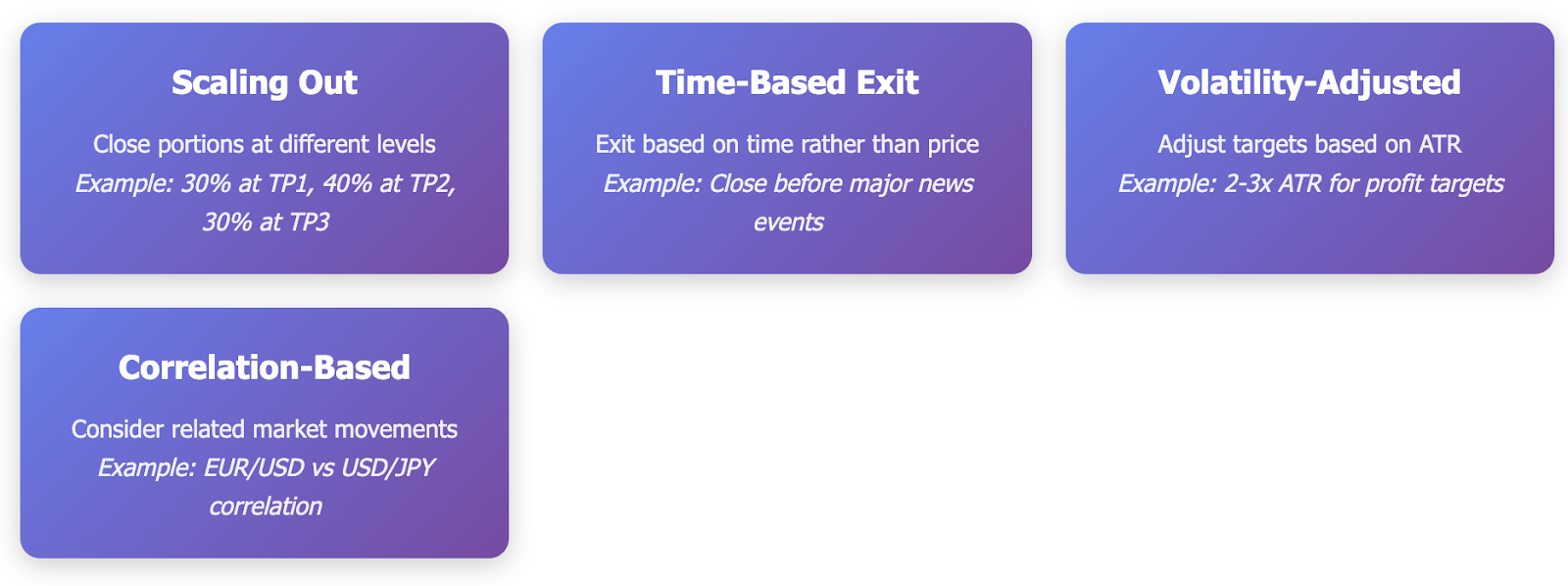
Scaling Out Strategy
Scaling out also refers to taking profits at different targets instead of doing so entirely at one level. This is the best of both worlds as you can lock in some profits but still have some room to the upside!
Execution: If you are long EUR/USD at 1.0 lot, you could:
• Close 0.3 lots at your first take profit level.
• Close 0.4 lots at your second target.
• Leave the final remaining 0.3 lots to run towards your final target, or you can trail it with a stop
This approach optimises between protecting profit and ensuring maximum profits.
Time-Based Take Profit
Certain market environments are more conducive to time exits rather than price exits. This becomes even more important in CFD trading as overnight financing charges can suck away profits.
Example: Day trader – a day trader could have a rule to close all positions 30 minutes before any major news releases, irrespective of profit/loss.
Volatility-Adjusted Take Profit
Your profit target distance should be adjusted for market volatility. In high volatility periods, you could use wider targets, and in low volatilit,y you may want to use closer targets.
Execution: Incorporate Average True Range (ATR) indicators to scale your take profit calculations for the current level of market volatility. A typical strategy based on ATR: Target price with a 2-3x ratio of the value of ATR.
Correlation-Based Take Profit
When you are trading correlated instruments, also take into consideration how movements in one market could affect the success of your trade in another market. For instance, if you are long EUR/USD and short USD/JPY, the correlation that these two pairs have should make you question your exit criteria.
News-Event Take Profit Management
Big economic releases can lead to rapid price movement, which hits your take profit without trouble, or simply surges enough to leave it completely behind.
Strategy: Book part profits on announcements or secure with guaranteed stops to cover against gaps.
Conclusion & Action Steps
Take profit orders are basic trading tools that every trader who is worth their salt must use. They bring the discipline, routine and emotional regulation needed to succeed over the long run. With these orders, it becomes much easier to take profit as emotions like fear and greed are no longer obstacles to realising substantial gains.
Key Takeaways
-
Profit-taking orders are very helpful risk management instruments that are used to lock profits automatically.
-
They are most effective with stop-loss orders to give full position management.
-
Achievable targets are a function of the technical analysis set against the prevailing market sentiment.
-
Various styles of trading involve various take-profit tactics
-
There are many mistakes we can make by placing targets too close, too far or not using targets at all.
-
Moving beyond the basics, such as scaling out and factoring in vol adjustments, can boost returns.
Your Take Profit Checklist
Before making your next trade, just make sure you can answer these questions:
-
Do you have a specific target that you can already profit from? Never enter into a trade until you know how you’re going to get out if it becomes profitable.
-
Was technical analysis part of your take profit? Set your targets on support/resistance with other confluence, not round numbers.
-
Have you got your stop loss in place? Take profit and stop loss orders are tools that help manage risk.
-
Are you avoiding excessive greed? Above all, realistic targets tend to return better than ambitious ones.
-
Have you considered market volatility? Let your goal be flexible to the current market conditions.
Implementation Strategy
Begin by testing out take profit demonstrations on a demo before using it on your capital. This allows you to:
-
Test different target-setting methods
-
Learn from your platform on the way they treat take-profit orders
-
Gain confidence in your systematic approach
-
Back test and tweak your approach, before the paper trading outcome
Remember that take-profit orders are an integral aspect of the trading systems of professional traders, which are not open for negotiation. They are the line between wishing for gains and methodically locking them in. Trading is all about planning and discipline, not luck or emotion.
Industry Use Case: Professional: OOOs,tradewill users who had system-based exits in place during recent market volatility simply outperformed those that exited manually. Their systematic way of taking profits allowed them to trade through choppy markets and still generate good returns.
The path to being able to trade successfully calls for time, studies, and realistic expectations. Take profit orders are your friends in this game. Without the discipline, Take Profit orders allow you to develop; you will almost certainly end up being another losing trader.
Ready to Start?
The only way you will get good at take-profit orders is by practising them. Begin by trying them out with demo trades before deploying them live to build confidence.
Give your future profitable self a gift and begin this journey toward disciplined and systematic trading by creating your first take-profit strategy with a free demo account today.
Disclaimer: The content of the blog does not represent any position of Trade W, does not serve as any trading-related decision advice, and does not endorse any third-party.