
 Trade W
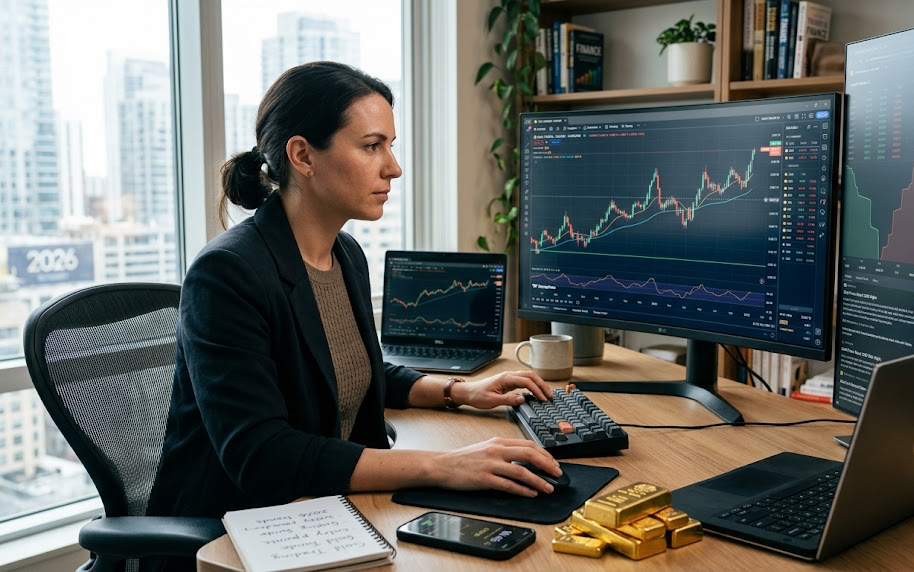
Gold trading involves buying and selling gold in order to benefit from price changes without needing to physically possess gold (e.g. trading futures instead). Most online traders use derivative products (like gold CFDs or XAU/AUD currency pairs) to trade directionally. They go long if they believe the gold price is expected to rise or go short if they believe the gold price is expected to decline. The difference between your entry and exit price is your profit or loss.
Simply put, gold trading is about betting in one direction or the other on price movements rather than storing bars of metal in a vault to profit from those movements. This is accomplished through margin trading, where you only have to offer a small portion of the full value of the position as a deposit and use a multiplier (leverage) to achieve your desired profit or loss outcome. Most retail CFD traders worldwide, according to broker governance disclosures, lose money. It has been reported that between 70% and 80% of retail CFD accounts incur losses.
The following are recommendations on how to start gold trading:
-
Understand the core mechanics, e.g. XAU/AUD, spreads, leverage, margins, and long and short positions.
-
Determine how you wish to trade gold (spot CFDs, futures, ETFs, mining stocks, or physical gold).
-
Select a regulated trading platform and apply for an account.
-
Test your strategy on a free demo account before committing money to it.
-
Open and fund a live trading account, and start with the smallest position size.
-
Implement a clearly defined trading strategy, including a stop-loss for every trade executed.
-
Set a maximum risk level of no more than 1% to 2% of your account balance on any individual trade.
Why People Trade Gold
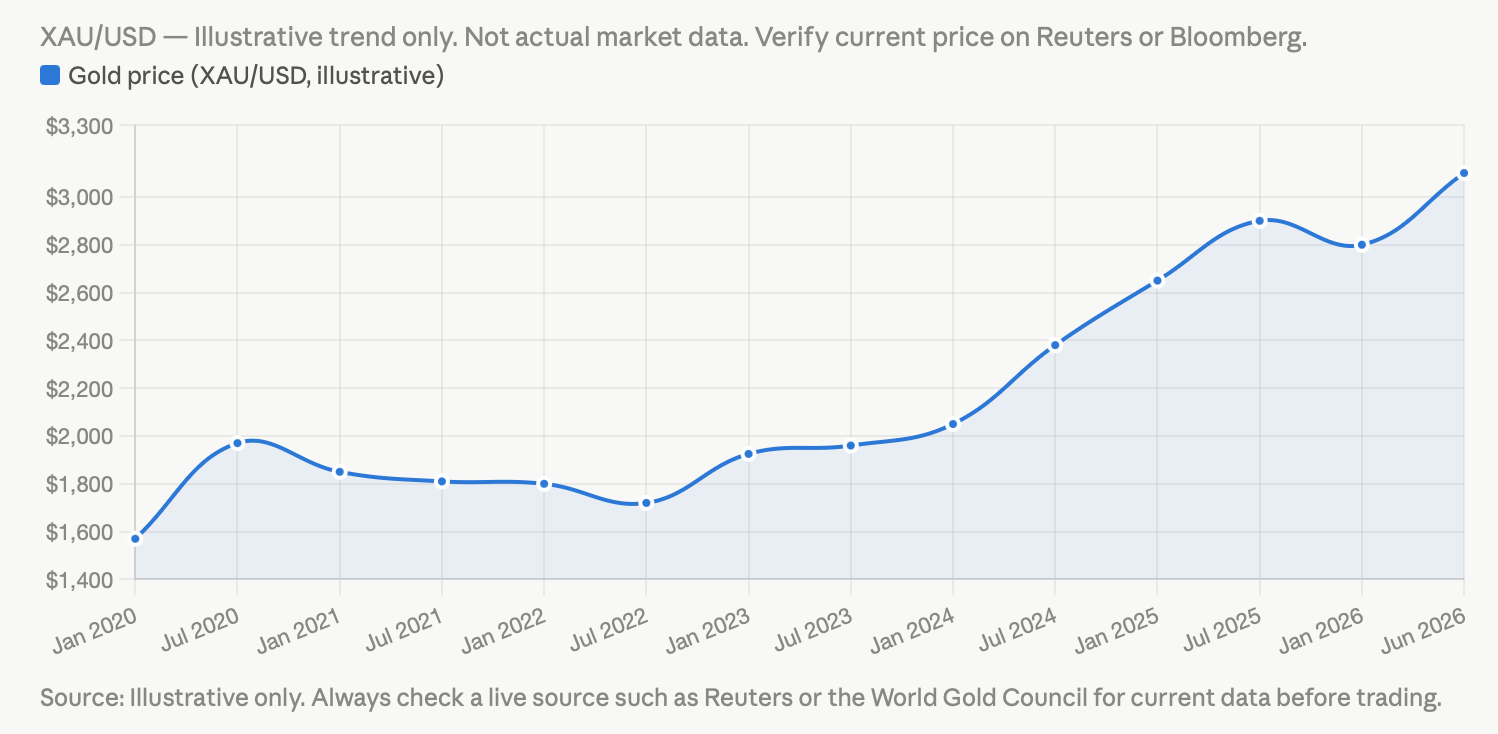
Gold has been a fixture in the financial markets for more than a millennium, though many active traders' reasons for wanting to trade it today are far more specific and tactical than traditional sentiment. As an asset, gold serves two purposes: it acts as a traditional store of value when the economy is shaky or uncertain, while also providing opportunities for traders to speculate and capture price swings each day and week.
Between 2025 and 2026, gold experienced record or near-record prices due to high inflation in major economies, substantial central bank reserve buying, and global geopolitical issues that diverted institutional capital into safe-haven assets. According to data from the World Gold Council, central bank purchases of gold are at levels not seen in decades, marking a fundamental change in how gold has trended upward over this cycle. Always confirm the current XAU/USD price on Reuters or Bloomberg before using any price-based data for your own analysis, as gold is a highly liquid instrument and any price provided at the time of publication may no longer be accurate when you read it.
Gold's liquidity and 24/5 trading availability attract both novice and experienced traders. XAU/USD trades roughly 24 hours a day, five days a week, across the London, New York, and Asian trading sessions, making it accessible whenever you wish to enter or exit a position. Gold also exhibits enough divergence from equities during different types of crises to create behavioural patterns that differ from stocks, providing opportunities for both speculators and investors seeking diversification from their primary positions.
That said, gold is not a safe trade in the strict sense of the word. Gold can move hundreds of dollars per ounce within a few hours when major economic news, central bank statements, or geopolitical events occur. Any leveraged position that lacks appropriate position sizing could result in catastrophic losses.
What Is Gold Trading and How Does It Work?
Gold trading comes down to taking a directional position on the price of gold, whether it is going up or down, over a specific period of time. When you take a long position in gold, you are buying and hoping that the price will go up. When you take a short position in gold, you are selling and hoping that the price will go down. Your profit or loss at the end of your trade comes from the movement in price and your position size.
Gold has the market symbol XAU/USD, representing how much one troy ounce of gold costs in US dollars. For example, if XAU/USD moves from $3,100 to $3,120, this represents a $20 per ounce increase in price, and a standard lot of gold equals 100 ounces. Therefore, that price movement would result in a $2,000 change on one standard position before considering any leverage.
The spread and cost of each trade are determined by the difference between the buy and sell prices. For example, if gold is quoted at $3,100.50 to buy and $3,100.00 to sell, the spread would be $0.50. For one standard position in gold, there would be an immediate charge of $50 to your account when you open the position. Some brokers may offer lower spreads but charge a commission for each lot traded, so you need to calculate the total cost of your trade rather than comparing only the advertised spreads.
When using a leveraged account on some platforms, with leverage of up to 1:500, your broker may allow you to hold a $100,000 position with only $200 of margin. This can create substantial profits when your trade moves in the right direction, but even a small adverse price movement can eliminate your margin and cause a forced stop-out of your position. Before trading real money in the market, you must understand exactly how derivatives and leverage actually function in practice.
If you hold a gold CFD position after the daily rollover, you will be charged or credited a swap fee based on the cost of financing an overnight leveraged position. If you hold a trade for longer than one day, you will incur additional swap fees, which could have a significant impact on your profitability for medium-term trades.
Ways to Trade Gold
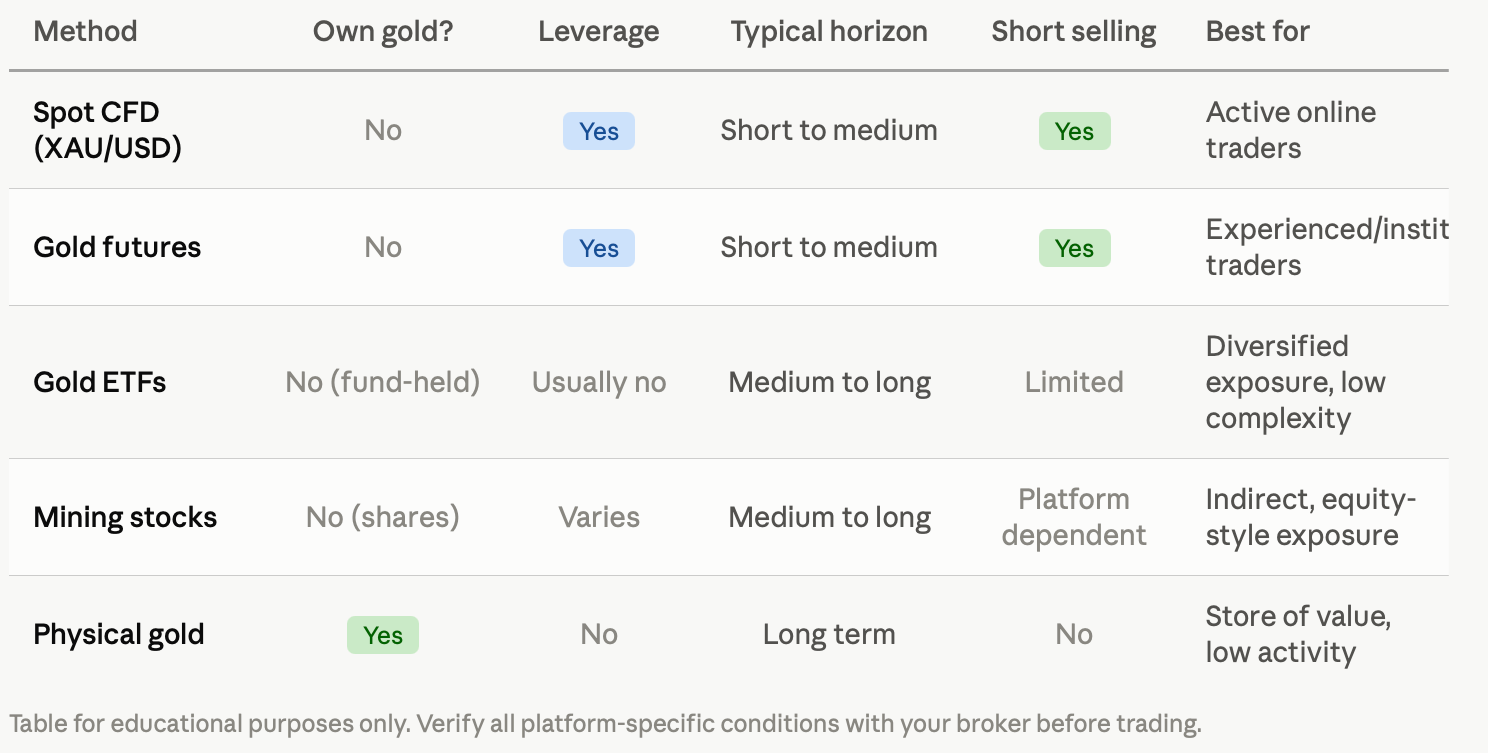
Gold CFDs and spot gold (XAU/USD): Online retail traders use this route most often because it provides an easy way to trade both long and short positions using flexible margin requirements and without an expiration date. With CFDs, you do not physically own gold. Instead, you are trading a contract that mirrors the current price of gold. As a result, while CFD trading is easy to access, many retail accounts lose money due to the high leverage associated with CFDs when inappropriate position sizing is used.
Gold futures: Gold futures are standardised contracts traded on U.S. exchanges such as the CME Group and obligate the buyer to purchase a specified amount of gold at an agreed-upon price on a specified future date. The majority of futures traders are either institutional participants or highly experienced individuals. Gold futures have significantly higher capital requirements than retail CFD accounts, include expiration dates that must be actively managed if you wish to avoid being automatically rolled into the next contract, and have more complex tax implications.
Gold ETFs (exchange-traded funds): ETFs such as GLD and IAU represent pooled holdings of physical gold. The gold owned through an ETF is stored in a vault on behalf of investors and traded on major stock exchanges, making ETFs an easy way to gain exposure to the price of gold without using leverage. This makes gold ETFs a suitable investment for medium- to long-term investors who want exposure to gold as part of a broader portfolio but do not wish to manage a leveraged derivatives position on a daily basis.
Gold mining shares: Investing in companies like Barrick Gold and Newmont is an indirect way to gain exposure to the price of gold. While the share price is influenced by the price of gold, it is also affected by factors such as operating expenses, management quality, hedging practices, and the company's financial condition. As a result, gold mining stocks have a very different risk profile from trading gold directly.
Physical gold: Purchasing physical gold, such as bars and coins, gives you direct ownership. Therefore, you are not subject to counterparty risk from a broker. There is also no leverage, no margin requirements, and no trading platform to manage. However, the associated costs are generally higher than with other methods of owning gold, including storage, insurance, buy-sell spreads charged by dealers, and the inability to profit from price declines without selling your holdings.
What Moves the Gold Price?
Traders who have been doing this for a long time have a good grasp of how the price of Gold changes in response to different macroeconomic and geopolitical factors. A thorough understanding of how these factors affect Gold will also help you identify good entry and exit points and manage your risk around predetermined events.
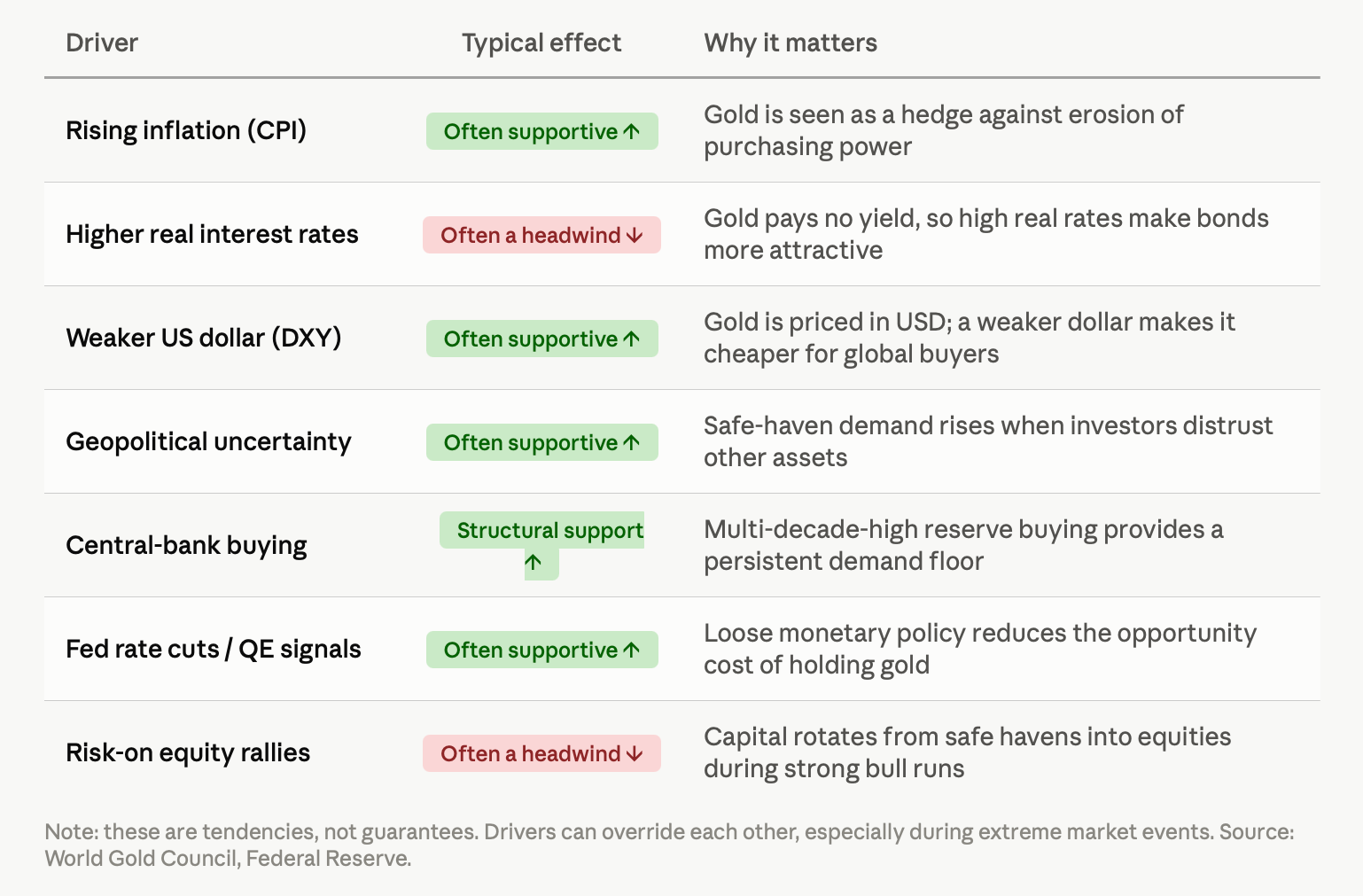
How does inflation work, and what is meant by the notion of an inflation hedge? Historically, Gold has been considered a potential long-term store of wealth and investment due to its relatively fixed supply compared to paper currency, the supply of which may be increased by government action. When the Consumer Price Index (CPI) data shows prices rising by more than expected, the normal tendency for the Gold market is to rally in anticipation of the future erosion of the real purchasing power of cash or fixed-income investments. Our dedicated guide on inflation hedging for investors contains a more in-depth examination of the relationship between CPI data and Gold.
The second leading cause of Gold price movement is the influence of real interest rates. Real interest rates are simply defined as the difference between nominal interest rates, the rates at which money is borrowed and lent, and inflation, the rate at which money loses its purchasing power. As real interest rates rise or reach higher levels than expected, Gold will typically experience a near-vertical drop in price because the return from lending money at nominal interest rates may be much greater than the returns available on Gold, which does not pay any interest. Conversely, when real interest rates fall or turn negative, Gold will usually experience a powerful rally. Thus, the direction of the Gold to U.S. Dollar exchange rate, XAU/USD, is significantly influenced by information and discussion surrounding U.S. Federal Reserve meetings and actions, such as quantitative easing, and the effects of those actions on global currency and asset markets.
Another key factor affecting the value of Gold is the strength of the United States Dollar (USD). Since Gold is priced and traded in USD, when the USD increases in value it makes Gold more expensive for non-USD buyers. Thus, as the purchasing power of the dollar increases compared to other currencies, there will typically be lower demand for Gold, resulting in lower prices. The relationship between the USD and XAU/USD is one of the most well-established currency correlations in the world's financial markets. However, significant global risk events may affect this relationship, as there are many cases in which both the USD and Gold rise together during periods of heightened uncertainty.
The level of central bank Gold purchases can significantly affect global demand for Gold and its price. According to the World Gold Council (WGC), central bank Gold purchases since 2020 have continued to significantly exceed historical averages. Central banks in countries such as China, India, Poland, and Turkey have increased their Gold reserves as part of a long-term strategy to reduce the proportion of their assets denominated in USD. This steady demand for Gold has been one of the leading reasons why Gold prices have remained much higher than they were before January 2020.
Geopolitical risk, as well as the prospect of financial system instability caused by armed conflicts and major political transitions, are major catalysts for Gold purchases as investors seek a store of value that can retain its worth regardless of actions taken by any single government or commercial bank. Because Gold traders closely monitor significant geopolitical developments, tracking these events is an integral part of the investment process for serious Gold traders.
How to Start Gold Trading
The first stages of starting gold trading are distinct steps, and skipping or combining them creates costly mistakes rather than shortcuts to profitability.
Step 1: The first step in your gold trading journey is to build a solid foundation of knowledge. You must understand what XAU/USD means, the cost of each trade through bid-ask spreads, what leverage means for your account in relation to price movements, and what margin means when trades move against you. Learning to reading bar charts and understanding candlestick patterns will help you interpret price action and improve your ability to make informed trading decisions from the very beginning.
Step 2: You should open a demo account and treat it with complete seriousness. Many regulated brokers offer free demo accounts that use virtual funds while replicating real market conditions. Although a demo account does not replicate the psychological pressure of trading with real money, it allows you to learn the platform interface, observe how gold reacts to economic news releases, and test your trading strategies without risking actual capital.
Step 3: You need to understand position sizing before placing any trades.
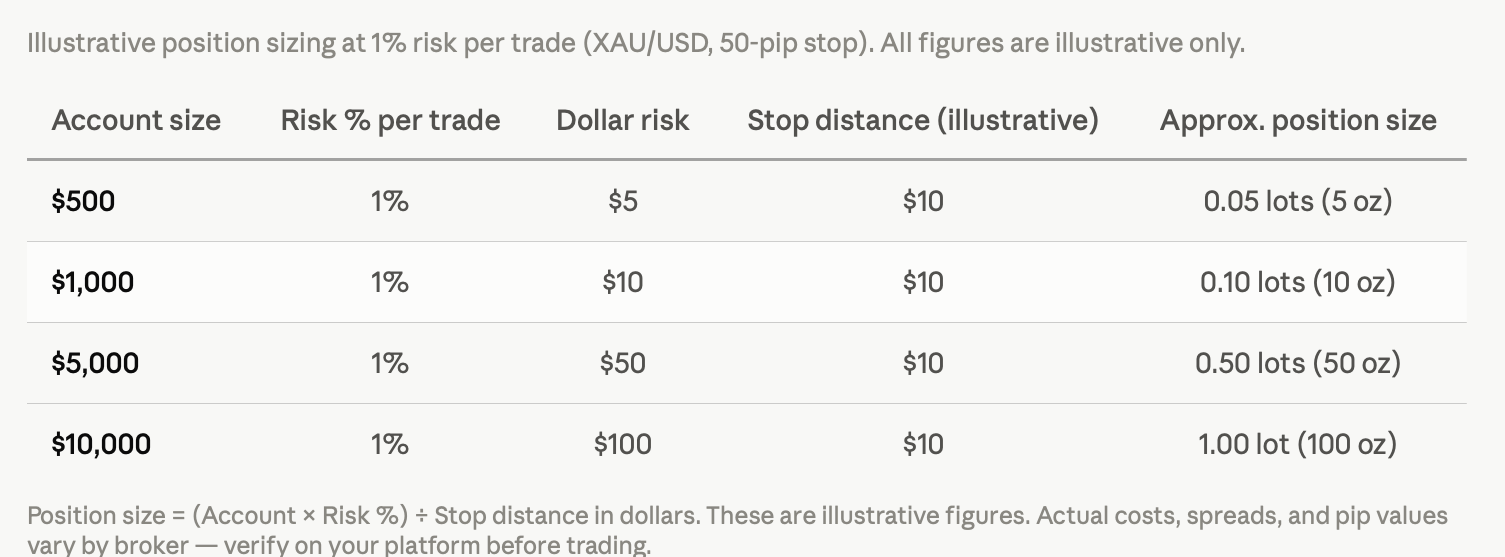
Step 4: Fund a live account; start with a smaller amount than you think you will need. After practicing on a demo account and developing a consistent process, use an amount that you are genuinely comfortable losing as part of your worst-case learning scenario because using this type of cognitive framework encourages the discipline to keep your position sizes in line with common sense. An effective first lot size (the smallest size available with any broker) will keep the amount you can lose on a given trade within a manageable range while you are still building significant experience in the live marketplace.
How Much Money Do You Need? Some brokers let you make a deposit of just a few dollars, but if you are going to use 1-2% risk management per trade, you need enough money to create a position size that still leaves room to exit the trade within an acceptable distance from the entry price. If you want to use a microlot and avoid having to take extremely small positions, a minimum account balance of $500 to $1,000 is recommended. This range is illustrative and does not predict the type of returns you can generate with these amounts.
Gold Trading Strategies
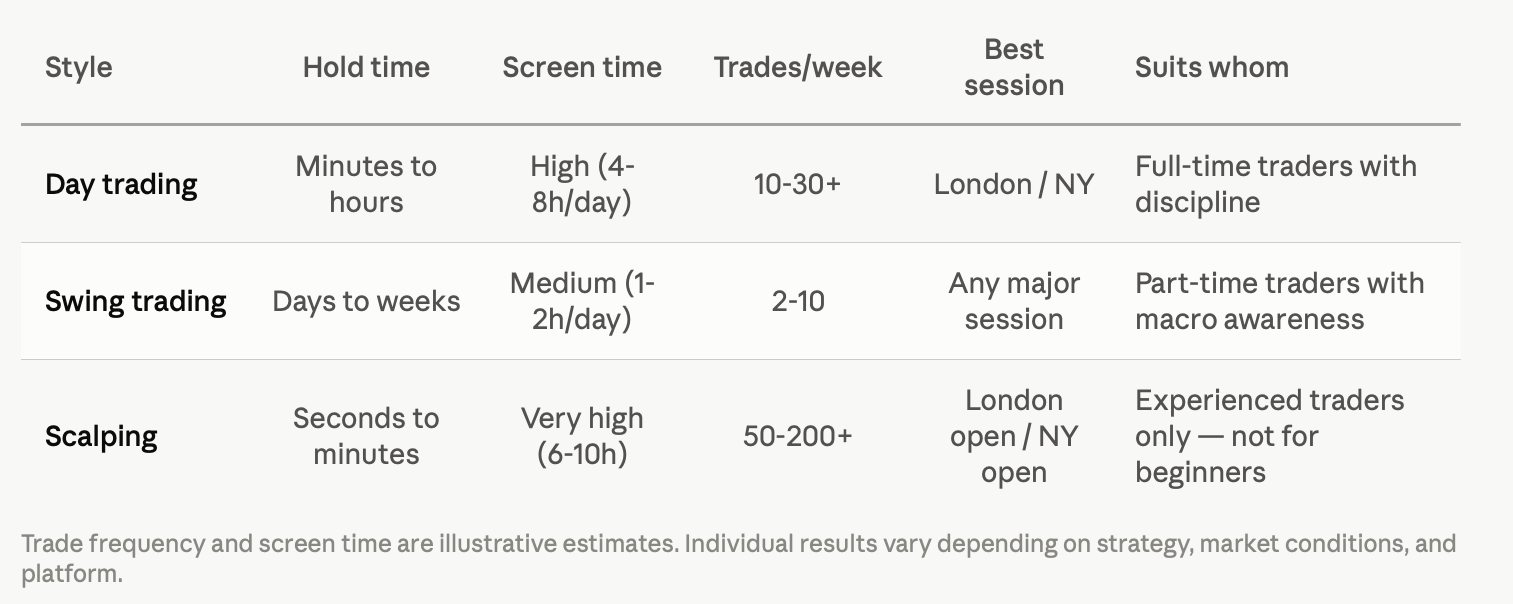
Day traders who trade gold usually open and close their positions within a single trading session. The period when the London and New York markets are both open, referred to as the London-New York overlap, offers the highest liquidity and the tightest spreads. For this reason, day traders focus on specific technical setups that provide clear support and resistance levels from which to enter or exit their trades.
Swing traders trade gold by holding their positions for anywhere from a few days to a few weeks. The objective of a swing trader is to capture a medium-term price move driven by either a macroeconomic theme or significant technical patterns. Most swing traders are not active throughout the trading day and do not monitor the market continuously. Instead, they focus on identifying higher conviction trade setups, which is typically easier for traders who have experience and a solid understanding of market behavior.
There are many technical indicators that can help swing traders identify entry and exit points. Many of these tools are also useful to scalpers. However, scalpers differ from both day traders and swing traders. Scalpers may place multiple trades throughout the trading day with the goal of capturing very small profits from short-term price movements in gold. As a result, scalpers must have a thorough understanding of gold's intraday price action and maintain exceptional discipline to avoid deviating from their trading plan after a series of small gains or losses.
Some of the tools that can be used by gold (XAU/USD) traders, regardless of their trading timeframe, include trend lines, moving averages (specifically the 50 EMA and 200 EMA), RSI (Relative Strength Index), and VWAP (Volume Weighted Average Price). Trend lines provide a visual representation of gold's price direction.
Moving averages act as dynamic support and resistance levels because they adjust as price changes. The RSI helps traders identify overbought and oversold market conditions that may precede a reversal, while the VWAP helps determine where the majority of trading volume occurred throughout the trading session in relation to the current price. For a full breakdown of how these tools can be applied to trading XAU/USD, please see our VWAP trading guide. The guide also explains how to use these tools alongside pairs trading and correlation-based strategies involving gold.
Gold vs Forex, Stocks, and Crypto
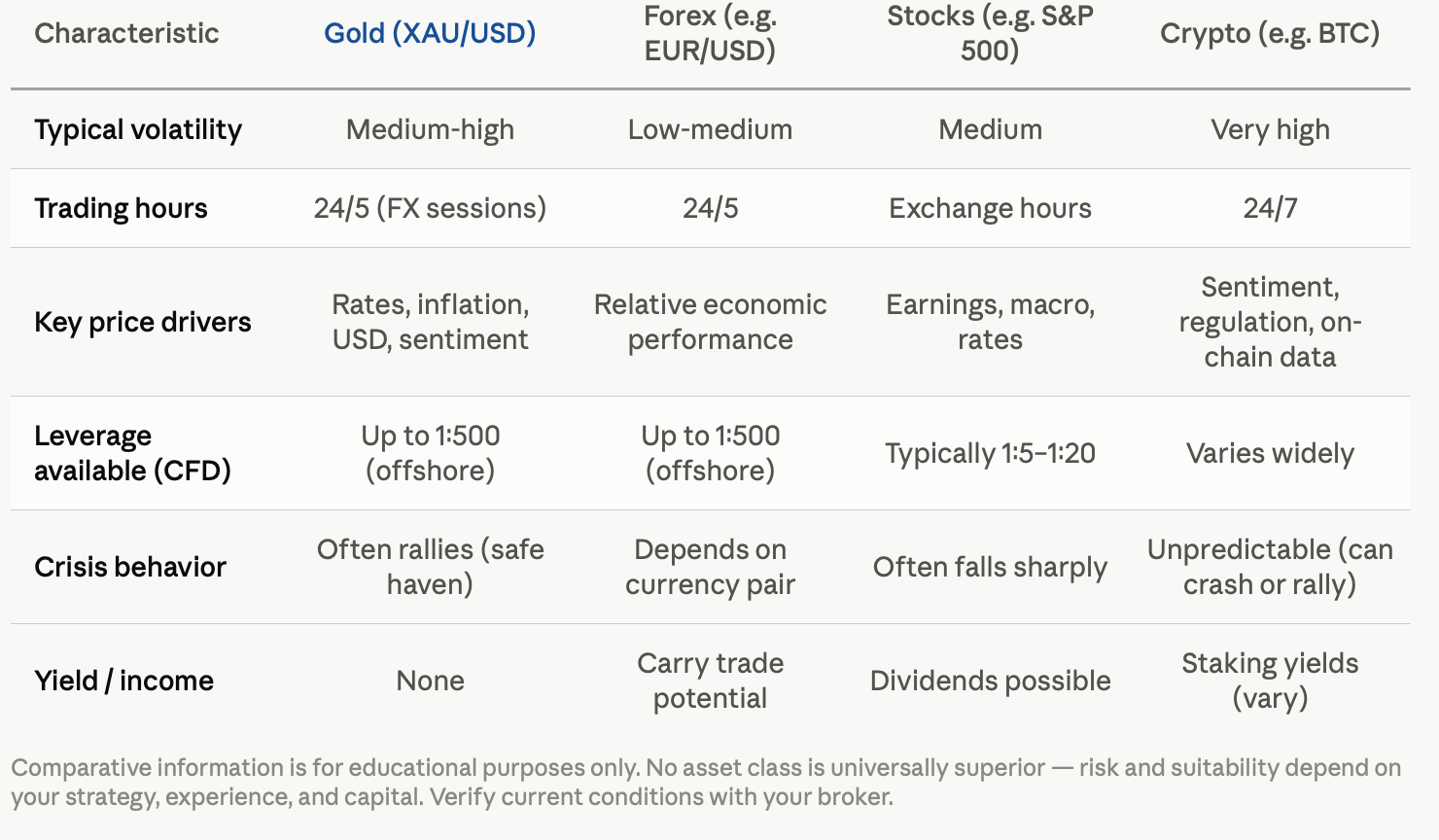
When considering asset classes, gold occupies a unique analytical space but has meaningful overlaps with equities (stocks), fixed income (bonds), and other asset classes depending on the prevailing macroeconomic regime. Many traders begin by trading currencies through forex pairs trading strategies and cyclical equity and asset analysis. As they develop a macro-focused approach, they may eventually transition into trading gold (XAU/USD).
XAU/USD is traded in the currency markets and shares the same trading mechanics, including spreads, leverage, and margin. It can also be traded from the same account as forex pairs. However, it reacts very differently to economic conditions than traditional currency pairs. Gold's price is driven primarily by macroeconomic factors, including, but not limited to, real interest rates, inflation expectations, and overall investor risk sentiment. Traders who understand carry trade dynamics and interest rate differentials within the broader macroeconomic framework, may recognize that gold and higher-yielding currency pairs often move in opposite directions during similar macroeconomic environments.
Historically, during periods of market stress, gold and the stock market have often exhibited an inverse relationship. When stock prices decline sharply, gold prices frequently rise as investors liquidate risk assets and reallocate capital into assets that do not carry counterparty risk, such as gold. Because gold does not generate earnings and its market is driven primarily by investor sentiment and macroeconomic conditions, rather than the operational performance of individual companies, the factors influencing the price of gold are generally different from those affecting stock prices.
When comparing gold to cryptocurrency, particularly Bitcoin, both are often described as inflation hedges or stores of value. However, their price movements do not consistently follow the same patterns. Bitcoin has demonstrated significantly greater price volatility than gold, trades 24 hours a day, 7 days a week, and is influenced by factors that have no historical equivalent in the gold market, including regulatory developments, market sentiment cycles, and on-chain activity. Unlike gold, Bitcoin has not yet achieved the same level of institutional trust or central bank acceptance that gold has earned over centuries.
Is Gold Trading Profitable? Risk Management Essentials
Gold trading is both potentially profitable and incredibly challenging; there is no contradiction between these two statements. A very small number of disciplined, knowledgeable traders generate consistent returns over time in the gold market, while the overwhelming majority of retail traders who enter these markets without a well-defined plan and proper position sizing lose money. The level of leverage offered by CFD platforms for short-term trading amplifies the impact of these two opposing outcomes for each type of trader.
The basic principles of risk management allow disciplined traders to operate within a structured trading approach while executing trades consistently under often highly emotional circumstances. Specifically:
Stop-loss placement on every trade: Every position must include a predetermined exit point to limit potential losses if the market moves against the trade, and place the stop-loss at a meaningful structural price level rather than an arbitrary number of pips from the entry price, which is often counterproductive when gold is highly volatile. If the stop-loss distance is narrower than normal market fluctuations, routine volatility may trigger the stop-loss prematurely. Conversely, if the stop-loss is placed farther away than what is justified by a reasonable profit target, the probability of achieving a favourable risk-to-reward outcome decreases significantly.
Position sizing: Dollar risk, which is determined by both the asset price and the stop-loss distance, forms the basis for calculating the appropriate position size for each trade. When determining position sizes, every trade should be based on the predetermined dollar risk and the stop-loss distance, rather than simply selecting a lot size to reach a desired account value.
Session loss limits: Before each trading session, traders should establish an acceptable maximum loss for that session. If that predetermined limit is reached, no further trades should be executed for the remainder of the session. By strictly following a session loss limit, traders can reduce the likelihood of emotional revenge trading after losses, helping preserve discipline and maintain consistency over the long term.
How to Choose a Gold Trading Platform
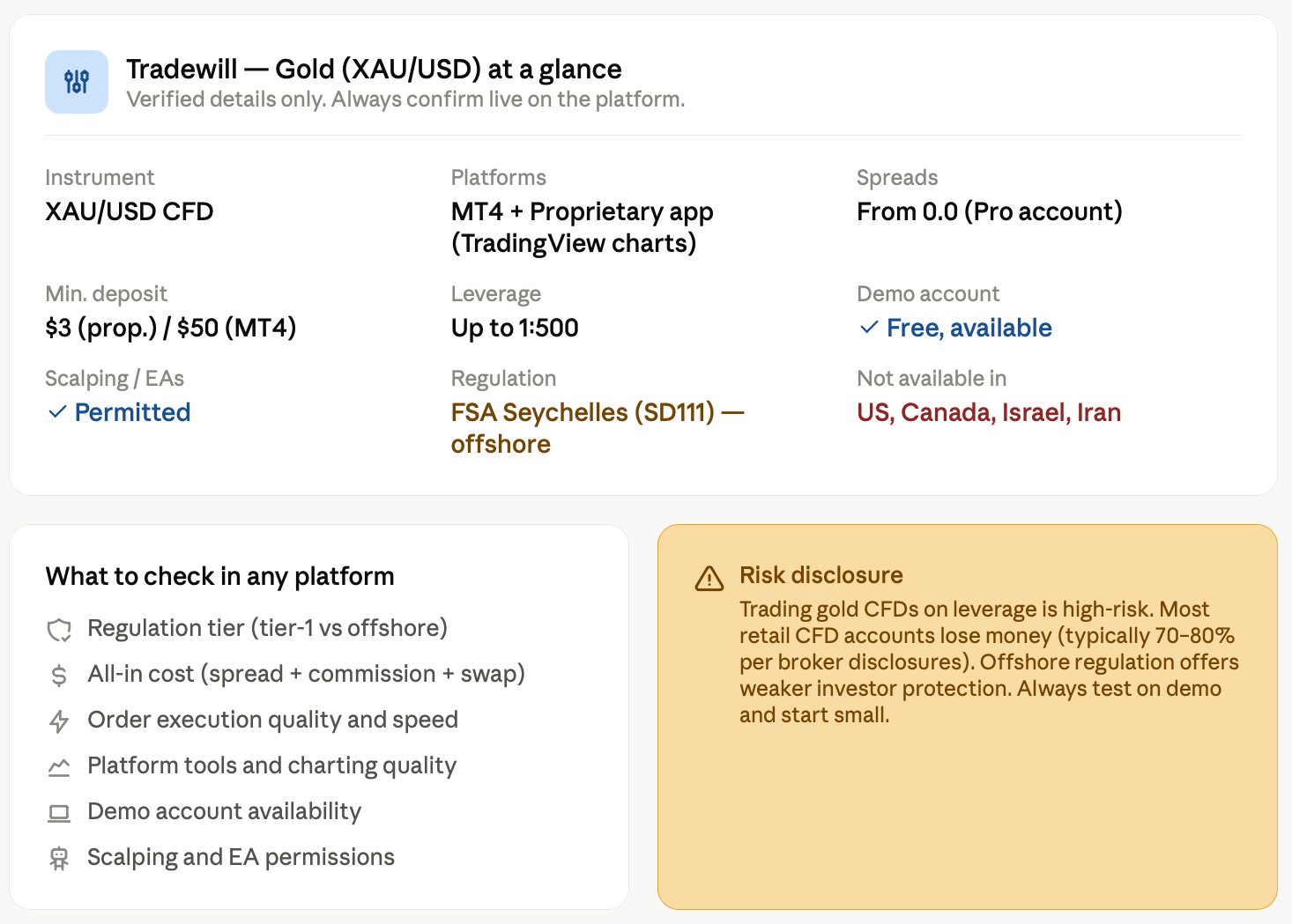
Selecting the right platform to trade gold is so important that many new traders do not devote enough thought to this decision. The platform you choose will determine the cost of each gold trade, the quality of trade execution, the selection and quality of analytical and charting tools available to support your trading decisions, and the level of regulatory protection you have if something goes wrong.
Regulation should be the top priority. A regulated broker operates under the supervision of financial authorities that provide legal recourse and structural safeguards, such as segregated client accounts. In some jurisdictions, they also offer deposit protection schemes to safeguard investors. Examples of some of the strongest regulatory authorities are the FCA (UK), ASIC (Australia), and CySEC (Cyprus and the EU). Brokers regulated in offshore jurisdictions operate under less stringent requirements and generally provide fewer investor protections, making them inherently riskier despite any potential benefits they may offer.
The total cost of trading, or the all-in cost, is more important than the spread alone. The spread is only one component of the total trading cost. When comparing brokers during your due diligence, it is important to calculate the total cost of a complete round-trip trade for your expected position size. This should include commissions charged per lot, spreads, and any additional fees before comparing brokers based solely on the quoted spread. For example, a broker offering a zero-commission account with a wider spread may, in some cases, be less expensive overall than a broker offering tighter spreads with commissions. The total cost depends on your trading style, position size, and trading frequency. Always compare the complete trading cost rather than focusing only on the spread.
Tradewill offers XAU/USD CFD trading on both MT4 and its proprietary web trading platform, as well as a mobile application that integrates with TradingView for charting and analysis. The minimum deposit for the proprietary platform is $3, while the minimum deposit for the MT4 Standard account is $50. Maximum leverage is up to 1:500, with scalping and expert advisor (EA) trading permitted. Demo accounts are available at no cost. Tradewill is regulated by the FSA Seychelles, which is an offshore regulator. As a result, the investor protections available to Tradewill clients are generally not as extensive as those provided by brokers regulated by authorities such as the FCA or ASIC. Tradewill does not accept clients from the United States, Canada, Israel, or Iran. Before depositing funds, verify the broker's spreads, execution quality, and platform stability by testing a demo account.
Frequently Asked Questions
What is gold trading? Gold trading is the buying and selling of gold to profit from price movements, usually without owning the physical metal. Most online traders access it through gold CFDs or the XAU/USD currency pair, going long when they expect the price to rise and short when they expect it to fall, with profit or loss determined by the entry-to-exit price difference.
How does gold trading work? You place a directional position on the gold price: a long position profits when the price rises, and a short position profits when it falls. The gain or loss is your entry-to-exit price difference multiplied by your lot size, with leverage amplifying both outcomes relative to your initial margin.
Is gold trading profitable? Gold trading can be profitable, but it's difficult and far from guaranteed. Leverage, spread costs, and volatility work against undisciplined traders, and most retail CFD accounts lose money. Consistent profitability depends on a repeatable edge, strict risk management applied without exception, and enough experience to execute a plan under pressure.
What is XAU/USD? XAU/USD is the financial market symbol representing one troy ounce of gold priced in US dollars. Buying XAU/USD means taking a long position on gold against the dollar, while selling means going short, and the pair trades nearly 24 hours a day throughout the forex week.
What moves the gold price? Gold responds primarily to inflation expectations, real interest rates, US dollar strength, Federal Reserve monetary policy decisions, safe-haven demand driven by geopolitical or economic uncertainty, and the structural reserve-buying activity of central banks at multi-decade volumes.
How much do I need to start gold trading? Some brokers allow very low minimum deposits, but realistic risk management requires enough capital that your position size can cover a meaningful stop distance. A practical illustrative starting range for a beginner is between $500 and $1,000, though this is not a minimum requirement for any particular outcome.
Is gold trading risky? Gold trading on leverage is genuinely high-risk. Sharp price swings around news events, the amplifying effect of leverage on losses, and the psychological difficulty of executing a plan consistently under drawdown pressure all contribute to the high proportion of retail accounts that lose money over time.
Can I trade gold on Tradewill? Yes. Tradewill offers XAU/USD CFD trading on MT4 and its proprietary platform with TradingView charts, plus a free demo account and minimum deposits from $3 on the proprietary platform and $50 on MT4. Tradewill is offshore-regulated by the FSA Seychelles and doesn't serve clients in the US, Canada, Israel, or Iran. Verify all conditions on demo before depositing.
Conclusion
To become successful in gold trading, you must understand that learning about the market, managing risk from your very first trade, and taking the time to build real experience are all essential. There are no shortcuts that can replace any part of this development process. In addition to the fundamentals covered above, including what gold is and why it moves, how to understand the mechanics of gold, which instruments are available for trading, and the risk management principles that separate sustainable traders from those who fail, you will develop a framework that can be applied across different markets and timeframes, regardless of where they are in their market cycle.
Start by trading on a demo account so you can develop a repeatable trading strategy before risking real money on your first live trade. As you gain confidence, gradually transition to a live account while continuing to build experience by using position sizes that are appropriate for both your account balance and your risk tolerance.
Consider using Tradewill to trade XAU/USD with TradingView charts, a minimum deposit of $50 for the MT4 Standard account, and spreads as low as zero pips on eligible account types.
Develop and evaluate your trading strategy in a demo account before risking real money. You can also take advantage of Tradewill's free demo account to test your strategy under real market conditions before placing any trades with live funds.
Disclaimer: The content of the blog does not represent any position of Trade W, does not serve as any trading-related decision advice, and does not endorse any third-party.