

 Trade W

Introduction: Why Coffee Futures React Strongly to Global Events
Coffee is a commodity that is frequently traded, and has an unpredictable price. As a commodity, coffee is used primarily to hedge against risk and to speculate on the futures market (i.e., trading in the expectation of earning a profit). Trading in coffee is done through futures contracts, which are contracts in which you lock in the price that you will pay for coffee at a future date.
The price of coffee fluctuates greatly, and in some weeks, it may rise by 8%. However, the following week, it may fall just as quickly. The fluctuations in coffee prices are not based on random chance but are primarily based on many different interrelated factors, such as the weather, disruption in shipping, and economic conditions. Many traders will find themselves blindsided by price changes that may occur because of any of these interrelated factors.
To illustrate the above concept in a simple way, if a major coffee-producing country were to be struck by a sudden heavy rainstorm and coffee crops in this country would be substantially reduced, the result would be an increase in prices (i.e., there will now be fewer pounds of coffee produced), which means that buyers will compete for the available goods, resulting in increased prices.
A Professional Perspective on Brazil Frosts 2021-2022 In July 2021, Brazil experienced several weeks of very cold weather which resulted in significant damages to Arabica coffee crops within Brazil; thus the price for ICE Coffee C futures rose dramatically by approximately 70% following this anomaly in terms of global scale. This illustrates how one weather event can significantly alter global coffee prices due to a significant amount of change in production capabilities and distribution capacity from Brazil to worldwide coffee demand.
You will learn about all of the key factors that affect the market for coffee futures. Topics include supply chain interruptions affecting exports and deliveries, climate events that damage coffee crops, currency volatility impacting exports to various countries, political uncertainty interrupting trade routes, and speculative trading. Each topic will include a real life example and how you can apply the knowledge gained from this article in your own business dealings.
Coffee futures are globally traded items. Coffee future prices are a reflection of the entire globe's economy and market conditions. Understanding the relationship between the factors that drive coffee prices will allow you to take advantage of your knowledge when purchasing or selling coffee futures based on your individual businesses' risk tolerance.
Understanding Coffee Futures: Core Concepts and Pricing Mechanics
Standard coffee futures contracts are created when a buyer agrees to purchase coffee from a seller at a specific price before an agreed future date. The two largest exchanges for trading coffee are ICE (Intercontinental Exchange) for Arabica coffee and the commodity exchanges for tracking Robusta coffee.
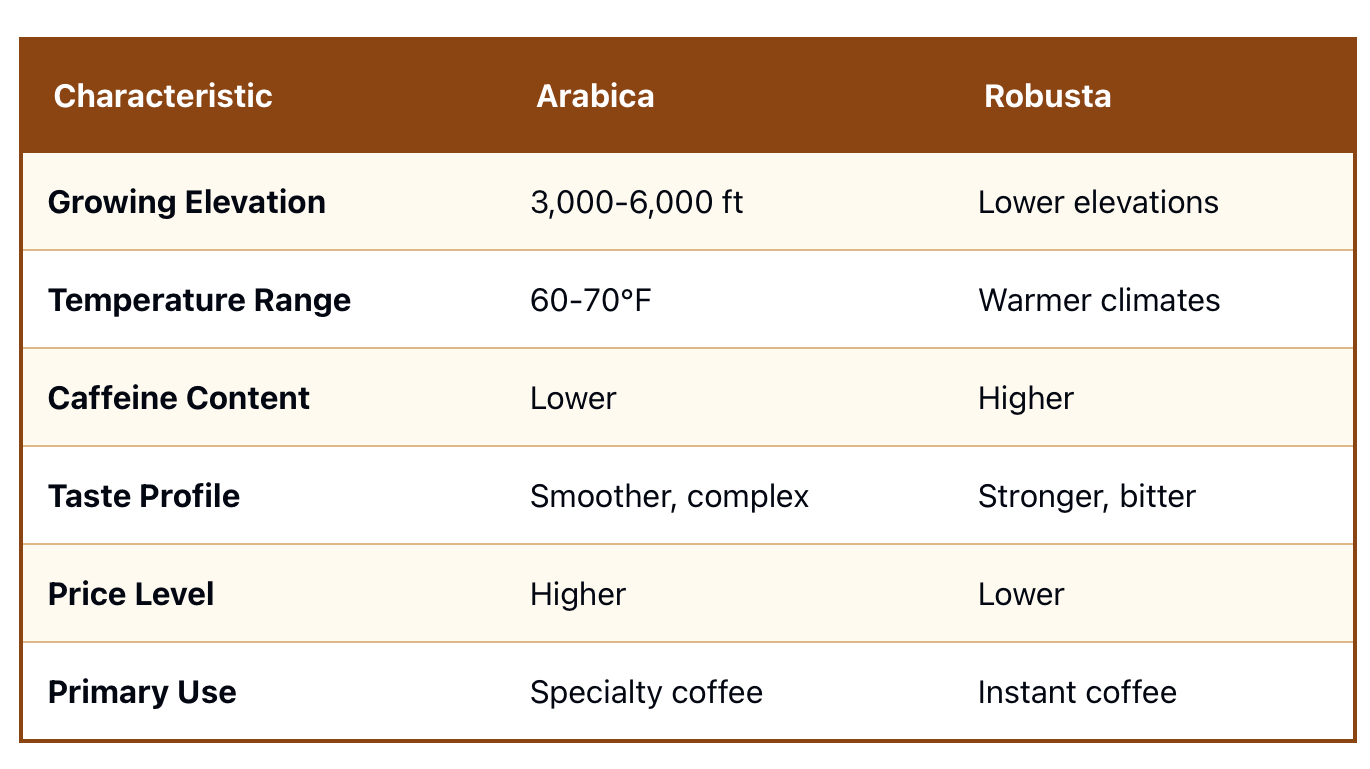
Arabica and Robusta are different species of coffee. Arabica is typically grown at higher elevations and has a smoother taste that commands higher pricing. Robusta is typically grown at lower elevations, is higher in caffeine, and has lower pricing. The vast majority of specialty coffee shops only use Arabica coffee beans, while instant coffee is almost exclusively made with Robusta coffee beans. The irony of the situation is that the supply chains, regions in which the different types of coffee are grown, and all other price drivers for Arabica and Robusta coffee are different, and therefore, coffee futures contracts for each coffee species are traded separately.
The standard contract for an Arabica coffee future on ICE Coffee C represents 37,500 pounds of coffee. Each contract will also have a specific date by which the trader must either roll their position forward or take delivery of the coffee. As a rule, most traders close their position prior to expiration.
There are several factors that will drive the pricing of Arabica coffee futures. The primary factor being supply and demand; this establishes the base price of the contract. Weather patterns play a significant role in coffee future pricing, as coffee is only grown in a narrow range of climates.
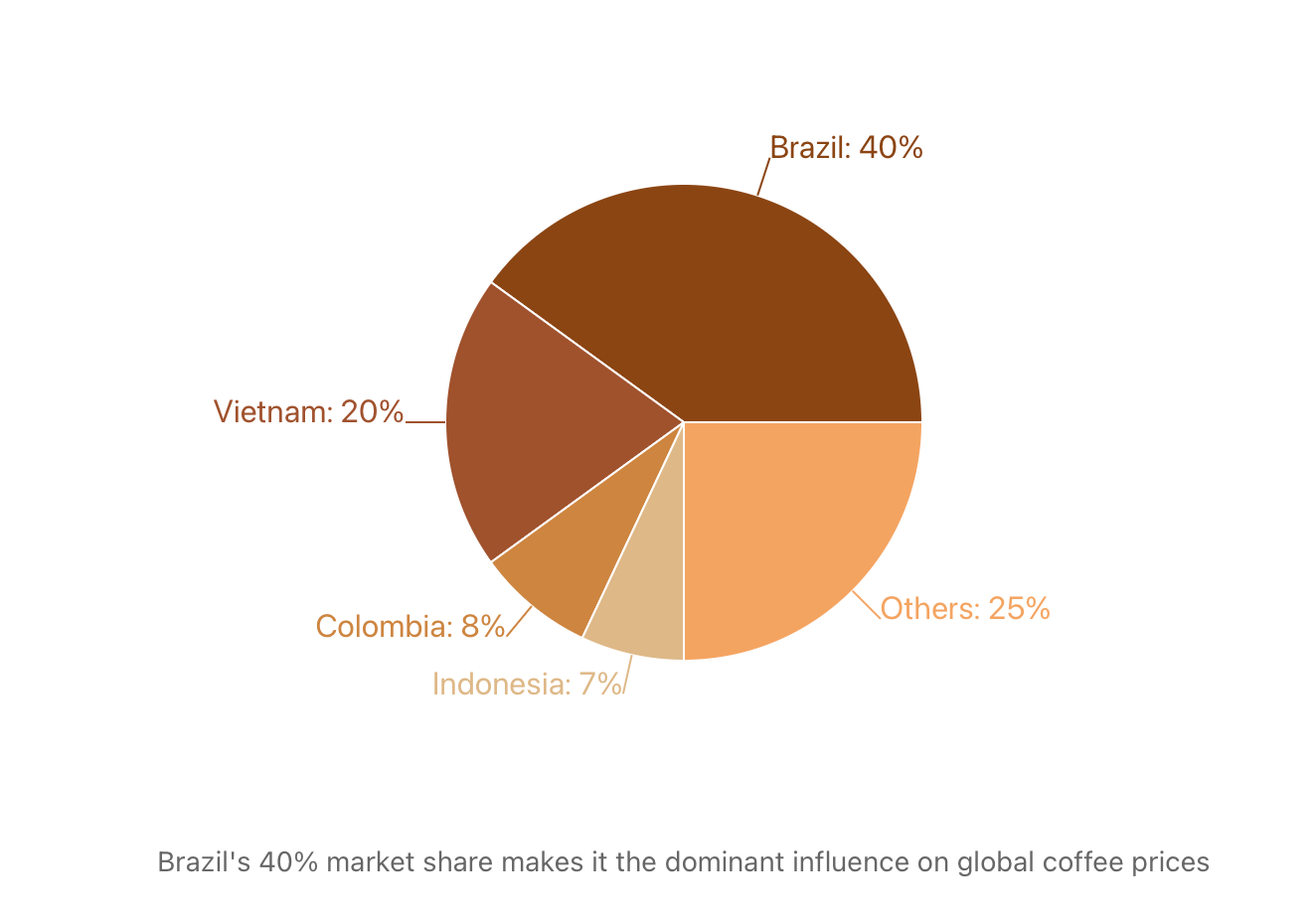
Currency movement is also very important, as the vast majority of the world's supply of coffee is produced in Brazil, and therefore, the movements in the value of the Brazilian Real (BRL) will affect the price of Arabica coffee futures contracts, as well as the value of all other types of coffee futures contracts. Global inventories of coffee also indicate whether supplies are tight or abundant; this will generally determine what price level the coffee futures will be priced at. All of these factors are generally impacted by speculative activity in the market.
As an example for beginners, you could think about an agreement to purchase your coffee at a fixed price for the month after today. If the price increases between now and next month, you save by having committed to the lower price. If the price drops, you have committed to pay a higher price than market value.
For professionals, the coffee futures market operates under more complex dynamics. Arabica coffee futures are highly responsive to Brazil's crop forecast and to changes in the BRL/USD exchange rate, because Brazil is the predominant exporter of arabica coffee. For example, when a weather model shows a frost potential for Brazil's coffee growing region, arabica futures will increase dramatically overnight. Conversely, any time the Real depreciates against the US dollar, Brazilian coffee exports become less expensive for international buyers, and this often puts downward pressure on arabica futures.
These market dynamics do not occur in a random nature. There are definitive global drivers that affect market behaviour. Weather satellites track potential storms in coffee growing regions. Currency exchange markets provide real-time updates of fluctuations in the BRL against the US dollar. Additionally, traders use various publicly available inventory reports to predict price movements based on their observations of these suppliers' behaviours.
Consequently, coffee prices will react swiftly to both weather and currency fluctuations. For example, if the National Weather Service warns about a potential frost in Brazil, markets could react within a matter of minutes. Likewise, if the BRL were to be reported with a weak reading, markets would quickly react, usually within hours. Because of this fast-acting pricing mechanism, there are opportunities and risks involved when trading coffee futures.
Supply Chain Shocks: How Logistics Disruptions Drive Coffee Futures Volatility
The coffee supply chain is deliberately designed to be delicate. The majority of the supply for coffee globally comes from three major producing countries-Brazil, Vietnam and Colombia-and the fact that so much coffee is produced in such a small area results in a very large ripple effect for any disruption in the coffee growing regions.
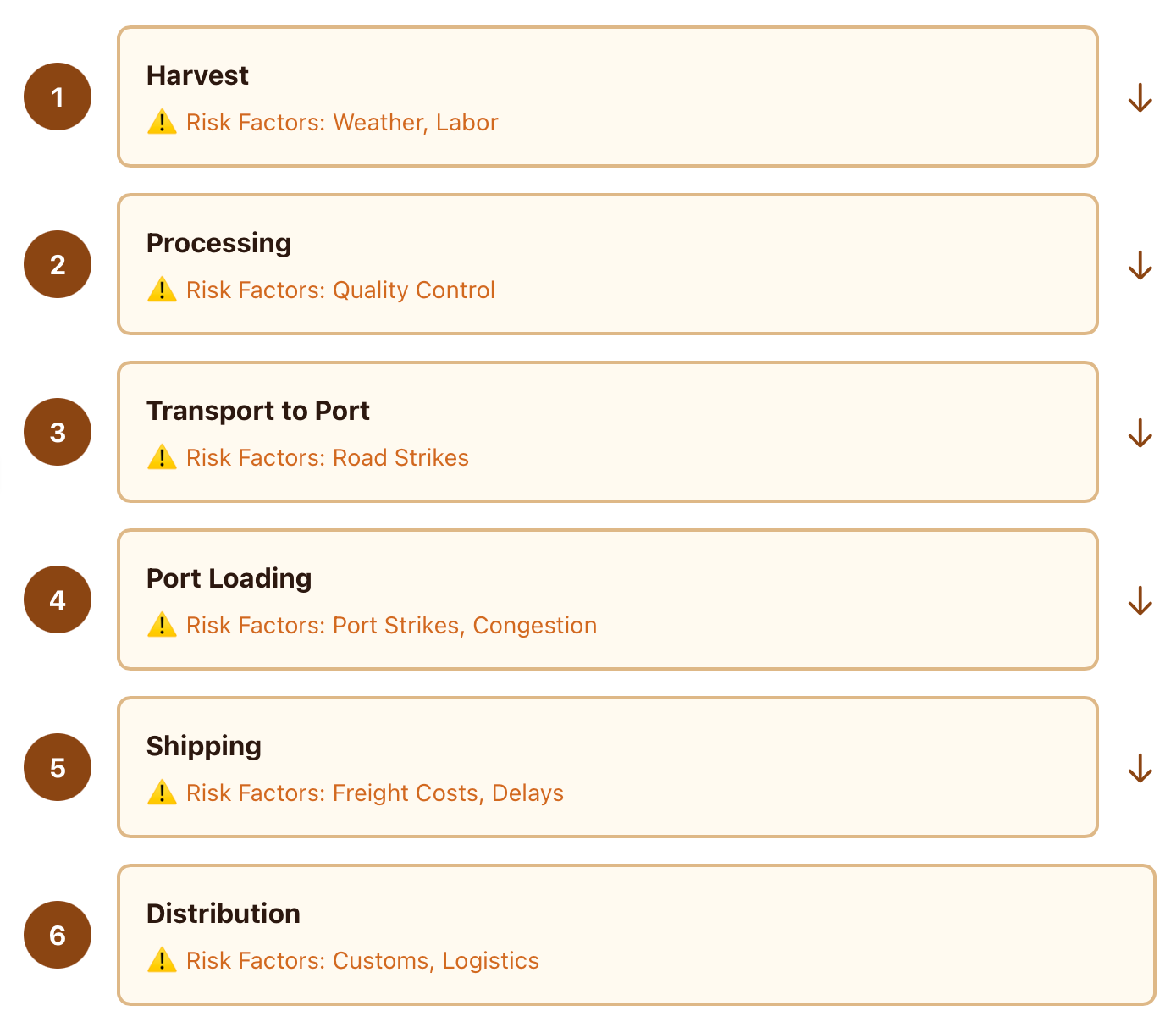
Coffee has many choke points between the producer and consumer. Coffee must be harvested, processed, transported to a port, and then loaded onto a ship and shipped to its destination where it is unloaded and then distributed to roasters; at each step the coffee supply chain is exposed to risk.
Commonly there are delays in shipping. Sometimes vessels end up backed up at port, creating a back log of coffee awaiting the ships to take it to its destination. This creates an artificial shortage of coffee which can result in higher prices to consumers even though the supply levels are still normal.
Cargo prices for freight during the years 2021 and 2022 increased exponentially due to pandemic related disruptions and resultant congestion at ports. The price of a container from South America to Europe sometimes tripled in price. The increase in freight cost drove the cost of exporting coffee up significantly causing the ICE Futures for coffee to rise as traders factored the additional logistics costs into their pricing decisions.
Port strikes create an immediate shock to the coffee supply chain. If dock workers refuse to work, this will prevent ships from loading or unloading coffee from their vessels. This therefore prevents the transportation of coffee to the end consumer. The market reacts to announcements of port strikes swiftly, as it knows that the coffee supply will be disrupted for the duration of the strike.
Panama Canal is one of the risks to the global coffee industry, as this major shipping route handles millions of bags of coffee each year. When drought hits, water levels drop in the Canal, and the authorities slow down the passage for ships. So, if there are fewer ships on the water, deliveries take longer to arrive. As a result, some of the recent Panama Canal restrictions caused shippers to need to go around South America to get their shipments delivered. This has added weeks to delivery times and significant additional costs in shipping.
That said, here's a simple example for the beginner. If port workers or truck drivers go on strike, the coffee can't get shipped out, so there's a lower supply of coffee in the marketplace. The two types of buyers will then fight over the supply that is available, and the price will go up for coffee contracts in the future.
A professional case study can be shown with the increased freight rates in 2022. There was a global spike in freight rates resulting from port congestion and equipment shortages. Because costs increased significantly to ship coffee, large increases in ICE futures were caused by exporters passing those increased logistics costs on to their buyers. Freight indices and coffee futures had an exceptionally strong correlation during this time period.
Disruptions through the supply chain can have a huge impact on the marketplace. Since coffee only has limited areas to grow, there are no other large-scale sources of supply. Therefore, if Brazil has any problems with shipping it cannot be easily offset by Vietnam or Colombia as they already operate at full capacity.
Supply chain shocks can be compounded by other issues. For example, a port strike occurring during the harvest season adds more to the disruption effect. Additionally, freight rates skyrocketing from drought years can increase the pressure on the supply chain. Traders who are savvy track logistics, weather patterns and currency exchange rates as it relates to their trading strategies.
Climate Events & Natural Disasters: Extreme Weather as the Biggest Risk to Coffee Futures
The tools used to grow and process Asian Robusta (Robusta) are considerably susceptible to changes in climate. Arabica coffee trees grow optimally at elevations between 3000 - 6000 feet and between the temperatures of 60°F - 70°F. Yield and/or quality decreases dramatically once outside those ranges.
The occurrence of severe climatic events has direct. Severe weather events affect the markets of coffee futures using the following methods: Frost affects the death of coffee trees; Heat wave affects the ability of the plants to produce beans and decrease the quality; Drought reduces the yield of coffee; and Excessive rain creates Fungal disease - Root rot. Each weather event results in unique market response.
The severe market reaction to the effects of frost on the Coffee Market is the most feared of all of the climatic events. Freezing temperatures will kill the coffee tree. When frost occurs in the Brazilian coffee-producing areas, there is the potential for trees to have their entire branches or trees die. When this happens the coffee trees take several years to fully return to production. In many cases the mature coffee trees die completely.
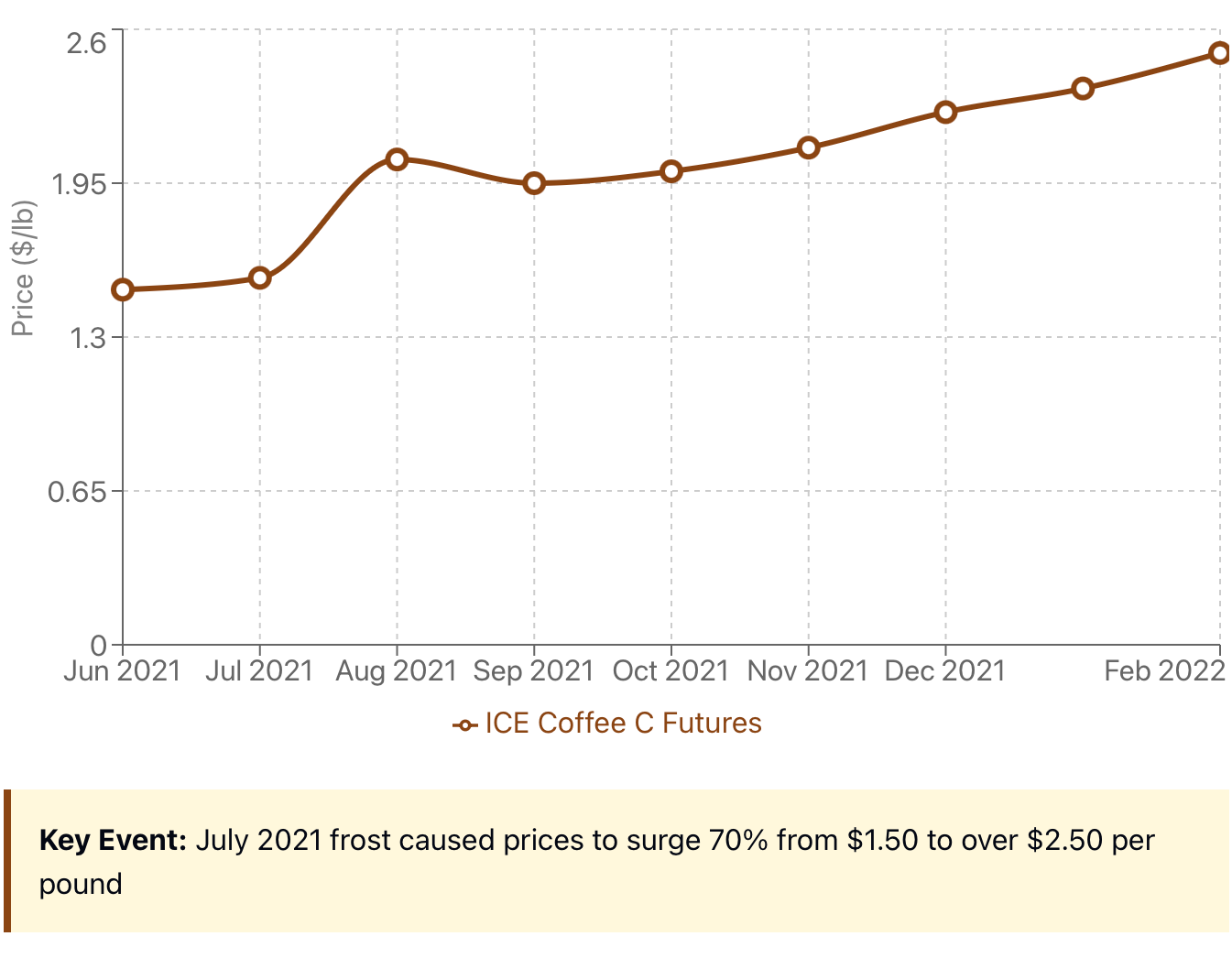
A classic case of frost was the July 2021 Brazil frost event and the resultant cold snap in key Brazilian coffee growing areas. This sudden and unseasonably cool temperature event resulted in the following:
-
The initial estimates of crop loss were at least 20 percent
-
As the assessments of damage continued to be reported, areas were reporting as high as 30 percent loss
-
Coffee futures (coffee C; Coffee Futures) increased from approximately $1.30/cwt. to more than $2.30/cwt. in less than 6 months.
Temperature extremes negatively impact coffee plants by stressing them out. Heat and cold stress hinder photosynthesis and impede the plant’s ability to produce coffee beans, leading to lower-quality coffee bean production, even if the quantity produced stays up. Lower-quality coffee beans sell at lower prices than higher-quality beans, so there is uncertainty around the pricing of the lower-quality beans; this is reflected in the futures market by wider bid/ask spreads and increased volatility.
Drought directly affects yield. Coffee plants require moisture for their roots to develop properly. If rainfall is not consistent during critical growing periods, the coffee plant will produce fewer cherries. As we see in Vietnam (the world’s top Robusta producer), droughts occur on a cyclical basis and increase the price of Robusta futures.
Excess rainfall, while generally considered to be a positive for agricultural growth, will also negatively impact coffee production. Extensive rainfall provides an ideal environment for coffee leaf rust and other fungal infection, and retention of moisture on the trees disrupts the harvest.
Wet coffee cherries will spoil faster; therefore, coffee beans produced from wet cherries will have lower quality than coffee beans produced from dry cherries. Colombia has experienced disruptions due to excessive rain that delayed coffee harvest, thus contributing to rising prices for coffee futures due to thoughts of supply shortages.
A way to visualize this for someone just starting in coffee is to think of how frost will destroy an apple orchard. When there is a frost incident, the apple trees die and an immediate drop in apples will result in a subsequent increase in the price of apples due to the scarcity of apples. It is the same for the coffee planet.
The viewpoint of professionals in the industry provides greater depth and perspective. In Brazil during 2021 to 2022, the freeze caused approximately a twenty percent decrease in the coffee crop grown in the affected areas, driving futures of coffee C up by over seventy percent from where they were before the frost occurred; additionally, those traders who had watched these Brazilian weather forecasts prior to the freeze event were able to position themselves long and benefit from huge profits, but those traders who had a short position had to deal with margin calls and subsequent forced liquidations.
Climate shocks are not long-term, theoretical problems; they create significant price volatility over the short-term and measurable events every year. The weather patterns in coffee-producing regions are influenced both positively and negatively by the cycles of La Nina and El Nino. Traders who are knowledgeable about those cycles have an advantage over the competition.
Weather forecasting techniques and technologies have improved significantly over the years. Today satellite images, ground sensors, and climate models give us the ability to predict what kind of weather-related problems may occur. Coffee traders also subscribe to very specific weather-related services that provide daily updates regarding the growing conditions in the critical coffee-producing areas.
Currency Movements: Why the Brazilian Real (BRL) Drives Coffee Futures
Brazil accounts for approximately 40% of the world's annual coffee exports. This dominant share grants the Brazilian Real significant influence over pricing for coffee futures.
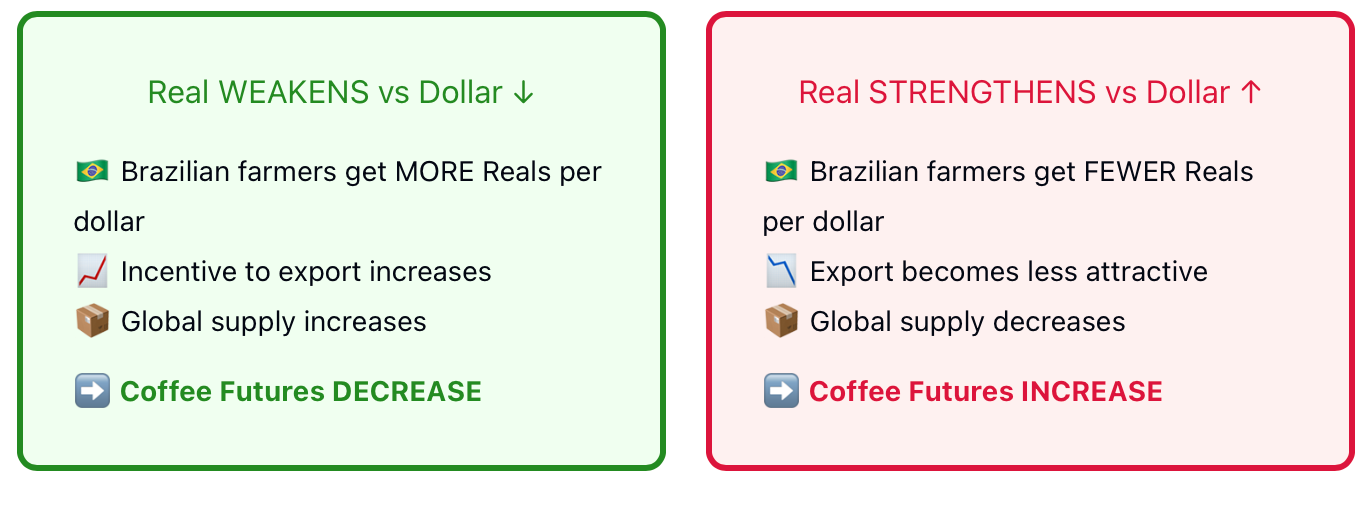
The majority of pricing for coffee is based upon the currency exchange rate of the Brazilian Real against the U.S. dollar. As the Real declines relative to the dollar, Brazilian coffee is cheaper for buyers in other countries that are using stronger currencies. This results in more available supply of coffee globally; consequently, pricing for coffee futures decreases due to greater supplies. Conversely, when the Real appreciates relative to the dollar, Brazilian coffee becomes more expensive for foreign buyers, resulting in reduced quantity of available supply and higher prices for coffee futures.
The relationship between the Real and coffee futures has remained strong and stable since 2020. There exists a significant negative correlation between movements in the BRL/USD exchange rate with ICE Coffee C futures from 2020 through 2022. When the Real depreciated, coffee futures were generally declining; when the Real appreciated, coffee futures were typically surging.
A clear and simple example of this relationship is illustrated by considering the effect on pricing for coffee when the Real depreciates versus appreciating. A seller located in Brazil may have a seller's price of $100 for coffee when the Real is worth $1 and $150 for coffee when the Real is worth $2. Therefore, the seller's total cost to produce and ship coffee to your location varies significantly based upon the Real's exchange rate with your currency.
For coffee professionals, the situation becomes more complicated. Brazilian farmers determine their production based on how many Reais their sales will generate (i.e. how much the Brazilian currency [Real] earns in US Dollars). When the Real falls compared to the Dollar (the US Dollar is worth more), it reduces the Dollar amount of their sales (on paper), but doesn't alter how many Reais are actually received. As a result, the strengthening of their REAvenue creates an incentive for them to produce and export their coffee products even when Dollar pricing is at lower levels than they would prefer (because the Reavenue still is higher). This increase in supply naturally depresses international coffee futures.
Brazil's Central Bank also significantly influences the coffee market through its monetary policy (in this case, interest rates) via currency channels. An increase in Brazilian interest rates (the cost of borrowing) usually leads to increased Demand for Brazilian Assets (a push for higher interest).The increase in Demand places upward pressure on the value of the Brazilian currency; thus supporting increased price for coffee futures. Conversely, when rates decrease, the Reverse is true.
The influence of political risk adds a further layer of complexity. Due to Political risk, there is considerable uncertainty around upcoming election cycles in Brazil and how that will affect Brazil's future Economic policy and how it will affect the value of the Real. Therefore, uncertainty surrounding the currency of Brazil creates uncertainty concerning the price of coffee futures in Brazil. Consequently, coffee traders make trades based on upcoming election outcomes.
While professional traders focus on multiple currency pairs, BRL/USD is their main focus. However, as both VND (Vietnamese Dong) and COP (Colombian Peso) also impact the supply of Robusta and Colombian coffees, respectively, these pairs are also influencing traders.
Whereas novice commodity traders tend to concentrate on weather and supply/demand, they frequently overlook currency risk. Losses can accrue because of this oversight, while experienced traders use currency analysis in all coffee futures trades.
Geopolitical Risks: How Global Political Events Influence Coffee Markets
Coffee’s future markets terrified of political unrest leads to volatility and indecision in the futures market. When a coffee-producing nation suffers from trade embargoes, travel bans, or political turmoil, it disrupts the entire coffee market. For example, when Colombia truck drivers strike and prevent coffee from being exported due to a lack of transportation options, Colombian exports are reduced, leading to uncertainty regarding delivery times for both domestic and international buyers. Future prices adjust accordingly.
When coffee-producing nations implement export restrictions, they create tension within the global coffee market. Thus, futures react immediately when these types of export restrictions are imposed on an exporting nation. Export restrictions are less common due to their considerable impact on world coffee supply. However, when a major producing nation implements quotas or bans on exporting, world markets must adjust accordingly, leading to dramatic price spikes in futures as traders attempt to find alternative sources of supply.
Civil instability or unrest within a country leads to significant fluctuations in price due to demand for risk premiums. Unrest can result from armed conflict, civil uprisings, or even large protests. If civil unrest disrupts normal harvest, processing, or transport functions, futures will lead prices upward in advance of any disruption occurring due to the unrest.
A strike at the ports is the most devastating event to the coffee industry. A strike at one farm will have minimal impact on the export of coffee from that company. However, a port strike will stop the flow of all coffee out of that nation when it finally occurs. For example, when Santos port workers in Brazil strike, all Brazilian coffee exports are affected. A strike of this magnitude has the potential to dramatically alter coffee prices around the world.
As an illustration of the above principles, consider this example of how cargo workers would stop working and the result: Cargo would be unable to leave ports and therefore reduce what is available to purchase globally. Think about how long it takes for a purchase made online to arrive, and an example would be that the freight company that brought the product goes on strike (the product itself is still physically there), and cannot be released from the facility. This happens often with coffee markets as well.
Professional traders pay attention to political activity within the top coffee-growing countries. In Brazil, during elections; in Colombia, during transitions of power; in Vietnam, during policy changes. Each of these scenarios provides an opportunity for traders to plan for a potential spike in volatility. Traders that are well-informed will reduce their exposure and/or size when they see that these uncertainties could happen.
International Trading Policies have a big impact on how coffee and other products move to a consuming market. If the consuming nations enact a new Tariff policy or set higher Standards, then how Coffee & other products are traded will change. Therefore Coffee that cannot be sold under the new European Union regulations will redirect to lower Standards in other Regions and bring a change of Regional Pricing Dynamics.
To assess the risk of Political movements on trading, traders must follow the media/manufacturing news out of those areas that produce Coffee and other Agricultural products. Economic announcements, strikes, and Political actions provide the earliest signs and indicate that the expected changes will occur in Supply before they are seen in Supply numbers. Traders that identify these changes first can position themselves in front of these changes depending on market moves.
Market Speculation: How Traders and Funds Amplify Coffee Futures Movements
The coffee futures markets have two types of participants: hedgers and speculators. Hedgers are producers, exporters, importers, and roasters that use futures to minimize their risk exposure and secure their product pricing. Speculators are individuals and institutional investors that attempt to make money off the volatility in coffee prices without caring about whether they ever receive any actual coffee.
Speculators play a vital role in the coffee markets by providing liquidity for hedgers; therefore, speculation is not necessarily a negative aspect of the coffee market. If speculators could not absorb the positions hedgers open or close, it would be nearly impossible for hedgers to manage their position size.
The problem arises when speculation inflates the price movements of coffee futures beyond the level justified by supply and demand. The largest speculative funds will react to reports and forecasts (such as frost warnings) and then will tend to act collectively (herd mentality) to create higher prices. If a currency gets weaker against the U.S. dollar, the funds will all tend to sell coffee at once. These types of coordinated trading actions cause the price movements of coffee futures to be volatile.
The CFTC (Commodity Futures Trading Commission) publishes weekly status reports called "Commitment of Traders" (COTs), which show how many positions are open in coffee futures according to the different classifications of traders. The COTs allow traders to view the positioning of the money managers (speculators) to see if they believe coffee prices will rise (indicated by a large number of long positions) or fall (indicated by a large number of short positions).
Many traders rely on estimations to define extreme positioning. A record long position by money managers indicates that there are fewer buyers left in the market. For prices to continue increasing, new buyers need to enter the market. Conversely, an extreme amount of short positions by money managers indicates the potential for speculative covering rallies as prices rise.
When a star athlete sustains an injury, there will be a mad rush on the betting market for people to either buy or sell. Traders will also move quickly and aggressively on information flowing into the marketplace. When multiple traders move toward the same direction simultaneously, prices will move very quickly.
From the trader's perspective, the positioning of traders produces dynamic trends. For example, during the winter freeze of 2022, the CFTC's COT report indicated the speculative long position of money managers increased markedly as estimates of frost damage to crops rose. As a result of this speculative buying, the buying pressure produced by fundamental changes in the supply of crops during the freeze intensified. Thus, as the estimates of frost-related crop loss peaked, so did the speculative longs. When the money manager funds began to take profits, the prices dropped sharply, even though supplies continued to be tight during that time.
The fundamental components of the market alone do not create a price trend; rather, they produce a dynamic trend on top of what was already in place. A frost with low levels of actual damage will likely produce a small-dollar value of speculative buying interest, and consequently produce only a small upward price move. A serious frost with significant damage to crops will elicit a much higher degree of speculative buying and produce a price increase much greater than for a minor frost.
By gaining a better understanding of speculative positioning in the commodity markets, traders can better anticipate reversals. There are unsustainable extremes of positioning; when all traders who want to buy have done so, there will be difficulty for prices to continue rising and vice versa. Thus, COT data can also help traders to observe the approach of these extremes.
Case Study: The Arabica Price Rally from 2021 to 2022
The Coffee Market of 2021 and 2022 is a prime case of the combined effect of multiple global factors causing an historic spike in Arabica futures prices. Between the middle of 2021 and the beginning of 2022, Arabica futures prices more than doubled. To understand why that occurred we have to examine the interrelated influences.
The Frost Event: In July 2021, a frost event occurred unexpectedly in Brazil's major coffee-producing regions, with initial reports indicating significant crop losses. As estimates of damage continued to be evaluated throughout August and September, it was determined that 20 to 30% of the coffee crop in the affected region had been damaged. Prior to the flowering of the coffee tree, the Coffee Harvest of Brazil's 2022 coffee crop will be significantly reduced.
Issues with the Supply Chain: Global shipping costs remained at elevated levels due to disruptions to supply chains created by the pandemic. Container shipping costs for container shipments from South America to North America and Europe were at least two and three times their normal levels, and there were continuing issues related to port congestion. As a result of these issues, even available coffee will incur significant delays in the shipment process, thereby making it more expensive to ship coffee.
Currency Dynamics: We have already discussed the fluctuations in Brazilian Currency from 2021-22. Leading to initial weakness in the Reais currency and some price support for Brazilian exports, the increased interest rates of the Central Bank of Brazil led to a large rally in the value of the Brazilian Reais/Real and subsequently a high price for Brazilian Coffee Futures.
Speculative Response: Major speculation occurred after the impacts of Frost Damage became apparent. Money Managers (Speculative Fund Managers) increased their long positions very rapidly in response to the growing Frost Damage and demand for Coffee beans. As an example, between Q3 2021 and Q1 2022, a CFTC Report indicated that Fund Managers increased their net long positions in Coffee futures by over 40% since before the frost damage occurred. As Money Managers were buying at this faster pace, it caused a high level of additional buying in response from Coffee producers and brokers who had a strong need to replace their damaged crops.
Inventory Levels: Coffee has been kept at moderate levels globally in Inventory through almost all of 2021. With the increased amount of frost damage to crops in Brazil, the balance of Coffee Supply and demand has shifted extremely in the direction of a significant deficit (meaning that Supply is less than Demand). ICE monitored Inventory volumes have continued to decrease steadily from Late 2021 to Early 2022 as Coffee consumption was greater than Coffee production.
The analysis provides depth to the report. In Q3 2021, ICE Coffee C Futures were at a price level of about $1.50. Reports of frost were made available at the end of July. Futures reached over $2.00 by August. Futures ranged from these levels during Q4 2021 as traders evaluated the damage caused by frost, and continued observing the strength of the Brazilian Real. In Q1 2022, futures reached a high of above $2.50, as inventory tightness became evident, and speculative trading was rampant.
It should be reminded however, that the decline in prices from their highest level was due to several reasons; Brazilian Real strength plateaued, long trade positions in the commodity were liquidated as traders booked profits, weather currencies for the Brazilian crop of 2022-2023 showed signs of normalcy indicating potential recovery, and as ports are experiencing a more normalized shipping rate due to diminished levels of congestion. With each of these support factors fading, it ultimately led to a correction in prices from their peak levels.
The studied case makes evident that production, trade or speculation can substantially impact futures markets. The initial market shock is usually caused by weather conditions. Secondly, supply chain conditions either amplify or dampen the impact caused by the shock. Next, currency movements alter the effective supply in the marketplace. The last factor is speculation; the momentum of the futures market increases due to speculation.
Finally, when traders gain insight into the condition of inventories by observing all four factors listed above, they will have a better understanding of market conditions than those that only observe one of these four factors. The occurrence of the rally was not a coincidence. Rather, it was the consequence of a logical series of cause and effect, stretching across multiple interconnected markets.
Risk Management Strategies for Coffee Futures Traders
Disciplined risk management is essential when trading coffee because of coffee's high volatility. Coffee has the potential for explosive upside as well as high downside risk; therefore, traders need to have protective strategies in place.
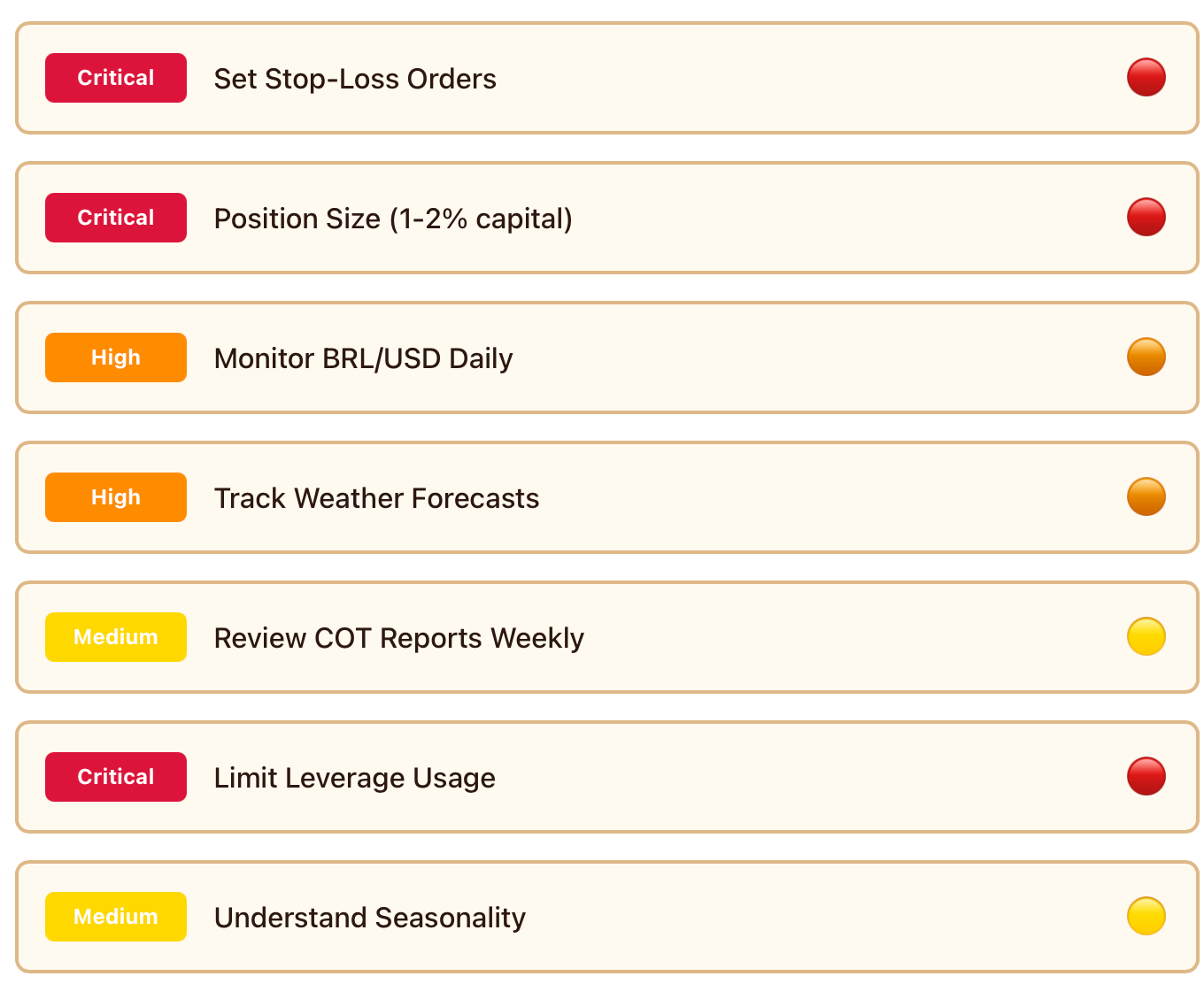
Placing Stop Losses: Traders should use a stop-loss order for each coffee trade. The use of this type of order will automatically sell the position if the price goes above what the trader considers to be the maximum price they are willing to accept. Traders should never trade coffee futures without a stop-loss order because of how quickly coffee prices can change.
Position Sizing: No more than 1-2% of a trader's total trading capital should be risked on any single trade involving coffee. The volatile nature of the commodity means that during times of extreme volatility (such as during a hurricane), prices can gap through stop-loss orders. Appropriate Position Sizing ensures that no single trade will completely wipe out a trader's account.
Significant Indicators: Traders should keep track of Brazilian weather forecasts during the active growing seasons. The Brazilian Real to U.S. dollar (BRL/USD) exchange rate should also be reviewed on a daily basis. COT positioning for futures should be reviewed on a weekly basis. USDA Crop Reports and ICE Inventory Data are important indicators and provide traders with early warning signals.
Limit Leveraging: Futures contracts provide traders with significant amounts of leverage; however, just because it is available to them, that does not mean they should use it all. The high level of leverage associated with futures amplifies the potential for gains; however, they also amplify the potential for losses. The high volatility of coffee makes leveraged positions particularly risky.
Seasonality: During the Brazilian Harvest Season, traders will observe different price behaviors than they will when trading off the harvest months because of what will occur in Brazil (due to weather and market conditions). Traders should pay particular attention to the risk for frost, which peaks in June and July. Understanding the Seasonal Price Behaviors of Coffee will help traders time their entry and exit points for their trades.
To protect themselves, traders use stop-loss orders, just as cyclists must wear helmets to avoid head injuries from a fall. Professional traders use advanced methods of doing this. For example, during Brazil's presidential election period, institutional traders often limit their exposure to coffee by reducing their position sizes (by as much as 50%) as the Brazilian Real is known to be quite volatile. Many times they have hedged their currency risk separately by entering into U.S. dollar contracts, rather than taking a simple position in coffee.
During the month of June, many coffee traders increase the size of their stop-losses because of the chance of frost affecting their production prior to the development of a true trend in price.
Correlation Awareness: Coffee prices often move along with other soft commodities, such as cocoa and sugar, which are also dependent on Brazilian production. If you are placing a significant bet on coffee, evaluate your exposure to other soft commodities as well. Simply diversifying your portfolio means nothing, if all of your commodities go up or down together.
News Reaction Discipline: Much like the weather or supply report of coffee futures, when major supply/news breaks occur, they're reacted to quickly. After such events, do not jump into the market immediately, allow some time for the markets and prices to settle down before you can determine whether the movement was warranted, or just an emotional reaction.
While there is a certain level of volatility that can be viewed as dangerous for most traders, when correctly applied with an appropriate risk management system, that same volatility creates a large opportunity for disciplined traders to profit. The most significant difference between novice and disciplined traders is how well they prepare and manage risk appropriately.
Future Outlook: What Global Trends Will Shape Coffee Futures in the Next 5 Years
Coffee futures are influenced by various structural factors over the next five years. Predicting how changing patterns in these factors will affect long-term dynamics requires understanding the following:
Climate Change Impact: Changing weather patterns due to climate change lead to greater uncertainty and variability in coffee growing regions. An increase in extreme events, such as drought and very wet weather, will likely increase volatility in coffee futures. For example, climate change may cause Brazil's coffee-growing regions to experience more frost events, while Vietnam may suffer from increased drought conditions. Thus, coffee futures are expected to follow a path of increasing structural volatility in the future.
Demand Growth: Another structural driver of future volatility in coffee futures is growing demand for coffee. The growth of middle-class populations in Asia has resulted in a rapid increase in coffee consumption in many countries, including China and India, in the last decade. Continued growth in global coffee demand provides a long-term foundation for coffee price stability in the future.
Supply Response Limitations: Additionally, coffee trees can take three to four years to reach full production capacity after being planted. Therefore, coffee supply cannot react quickly to price changes. Thus, the current high price of coffee signals that coffee supply will increase in three to four years.
Another structural trend affecting coffee futures is technological advances in agriculture. The use of precision agriculture, satellite monitoring, and improved crop management using AI allows farmers to better predict their yields. Improved forecasting of weather patterns enables farmers and traders to avoid unexpected shocks from weather events, thereby reducing volatility.
Speculation Increase: The increase of speculation that commodity funds are experiencing is generating a lot more capital to invest into coffee futures, which may have subsequently resulted in larger speculative flows into coffee. This increase in speculation could enhance near-term volatility of coffee prices, even while the underlying fundamentals are becoming more favorable.
Brazilian Real Outlook: Brazil's current and future economic policies will impact the Brazilian real (BRL)'s strength against the US dollar (USD). If Brazil continues with an orthodox fiscal policy that manages its inflation rate, the BRL should continue to appreciate against the USD, thus supporting the higher prices for coffee. Conversely, if Brazil adopts a less orthodox monetary policy and/or if inflation continues to increase, weaker BRL prices will place downward pressure on coffee prices, in spite of a global supply shortage.
Trade Policy Evolution: An evolving trade policy regarding coffee production, trade flows, sustainability and carbon footprint, will have an impact on the coffee trade flows between producing and consuming countries. An increasing number of countries that consume coffee are likely to require certification of coffee production that meets "sustainability" standards, thus leading to market fragmentation and the creation of price premiums for certified sustainable coffee.
Coffee market analysts, leading commodity research firms, predict that coffee demand will exceed supply growth through 2025–2027. This suggests a long-term price bias toward higher prices and ongoing short-term volatility due to weather, currency exchange rates and speculation.
Climate volatility is likely to increase. As a result, traders may need to reduce their position size to allow for larger fluctuations in price. In addition, the distance to stop-losses may have to be increased. Thus, with more volatility in the future, the importance of managing risk becomes even more essential.
The five-year forecast is not intended to predict a certain price point at any time in the future; rather, it is intended to demonstrate how the underlying drivers of price movement will impact market behaviour. The structural weaknesses of the climate force will likely lead to excessive volatility. The structural strengths of demand will lead to increasing average price levels.
The structural strengths of technology provide better information and a more fluid market process. Speculative activities and currency conversions will cause excessive short-term fluctuations associated with the long-term trend.
Conclusion: Key Insights for Coffee Futures Investors
Due to their interconnectedness, many factors influence the pricing of coffee futures globally, including the weather in Brazil, the shipping costs from Asia, the currency exchange rates from South America, the political environment in Colombia, and the ongoing market speculation in New York and London.
As a result, coffee traders track a number of different multi-factor signals, including: Weather conditions during frost; True Strength during harvesting; Futures trading positions (COT) extreme positioning; and Port Strike information. Each factor is important and missing one of the above signals will often result in missing a trade or ending up on the wrong side of one.
Despite the risks that come from using coffee futures, they can provide profitable opportunities for diligent traders. The same elements that generate risk also create opportunities.
All of the global data sources and information related to the effect of climate/change on the price of coffee, together with increasing demand for coffee will keep the market for Coffees strong for many years to come.
The already volatile Coffees market will be affected by increasingly volatile weather systems globally. In addition, create your own network of information regarding the different areas where Coffees are produced in countries like Brazil, Vietnam, as well as all the other producing countries. Create a network of information for yourself that develops and markets your information assets to provide you with a better understanding of Coffee's futures market. These are the qualities that will create long-term success for you in the Coffee futures market.
Coffee markets move fast. The next frost, currency shift, or supply shock could happen tomorrow. Start trading coffee CFDs on Tradewill with leverage, tight spreads, and no physical delivery requirements.
Disclaimer: The content of the blog does not represent any position of Trade W, does not serve as any trading-related decision advice, and does not endorse any third-party.