

 Trade W

The S&P 500 stands for the Standard & Poor's 500 Index. The S&P 500 is the index that professionals use when measuring the economy and the state of capitalism in the United States. When investing in the S&P 500, you will have a good chance of having invested in a retirement fund (401K and/or IRAs) already.
Before you jump into investing in the S&P 500, however, it is important to understand more than simply "buy and hold for a long time". You will find all of the information you need to know about how to invest in the S&P 500 in this guide, whether you are investing for retirement or for shorter-term trading opportunities.
What Is the S&P 500? Why It Matters to Global Investors
You should first understand what you are investing in before learning how to invest in the S&P 500. The S&P 500 is a market-cap weighted index of 500 large companies that are traded publicly on stock exchanges in the U.S. The companies in this index comprise about 80 per cent of the total market value of all equities traded on U.S. exchanges.
When you invest in the S&P 500, you are investing in a representation of the largest and most prominent companies in the United States, including companies in the technology sector such as Apple and Microsoft, health care companies such as Johnson & Johnson, and financial institutions such as JPMorgan Chase.
What makes the selection process for this index different from a random sample of 500 stocks is that companies are selected for this index based on stringent criteria set forth by Standard and Poor's, the company that created the S&P 500 Index. The companies selected for inclusion in the S&P 500 Index must have a minimum market capitalisation of $14 billion and meet certain liquidity, sector representation, and financial stability criteria. Companies that no longer meet the selection criteria will be removed from the index, and those that rise to the level of qualifying will be added.
By understanding the relationship between the S&P 500 Index and the health of the economy, institutional investors in Norway, Singapore, and many other countries have allocated a considerable amount of their investment capital to the S&P 500 Index. It is not merely an American investment; it has a global reach.
The S&P 500 Index provides exposure to the performance and success of the 500 strongest companies in the U.S. Rather than having to identify which companies are going to outperform others, you are investing in the overall strength of American enterprise. The S&P 500 Index is composed of all major industry sectors.
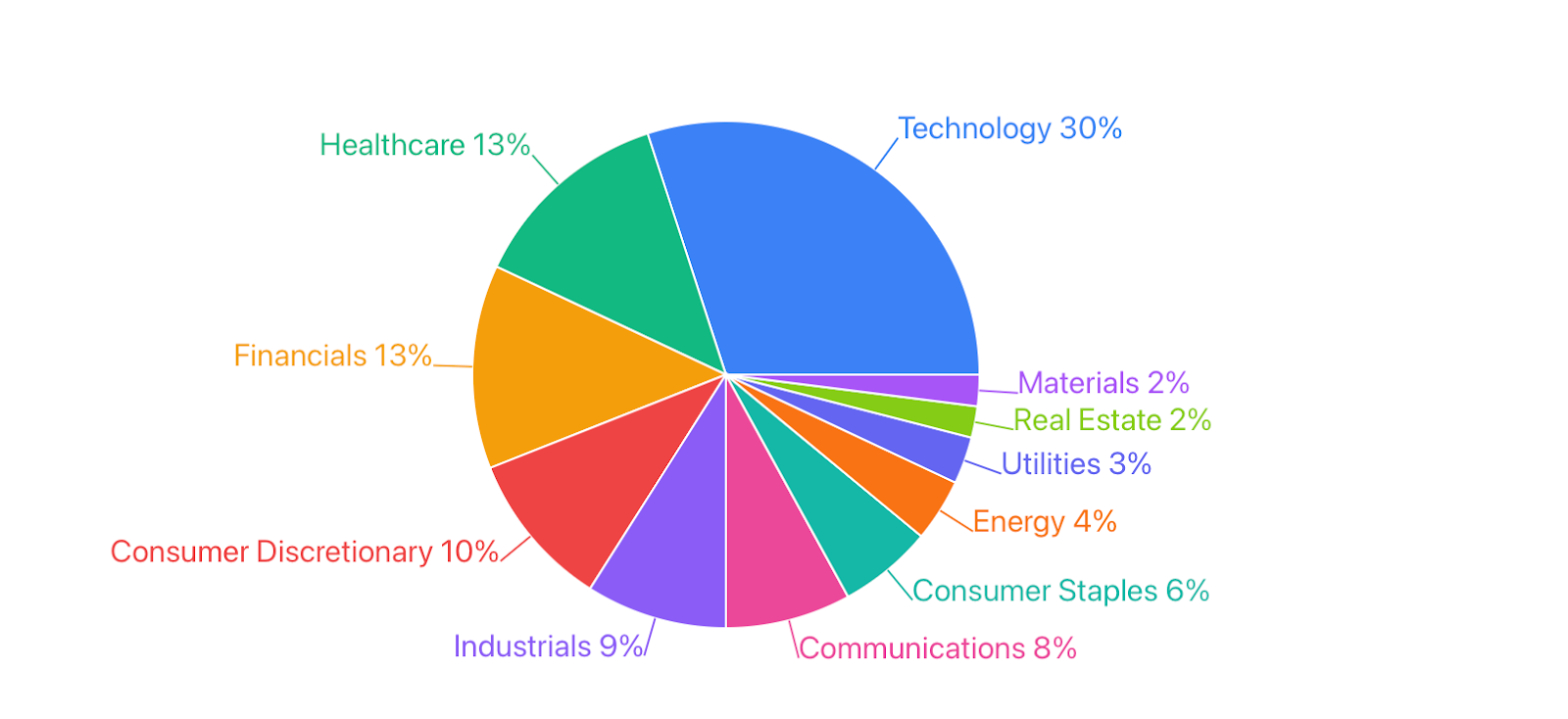
Currently, the technology sector has the largest percentage weight, around 23%, within the index, with healthcare around 13%, financials around 13%, consumer discretionary around 10%, and the balance of the index composed of companies in industrials, communications, consumer staples, energy, utilities, real estate, and materials.
The inherent diversification that comes with investing in the S&P 500 Index provides a major advantage for beginning investors, as well as institutional investors managing billions of dollars. Because there are many stocks within the S&P 500 Index, the loss of one company's stock would not be a significant loss to an investor's overall portfolio. Conversely, losses within entire sectors will often be offset by gains in other sectors.
How the S&P 500 Builds Long-Term Wealth Over Time
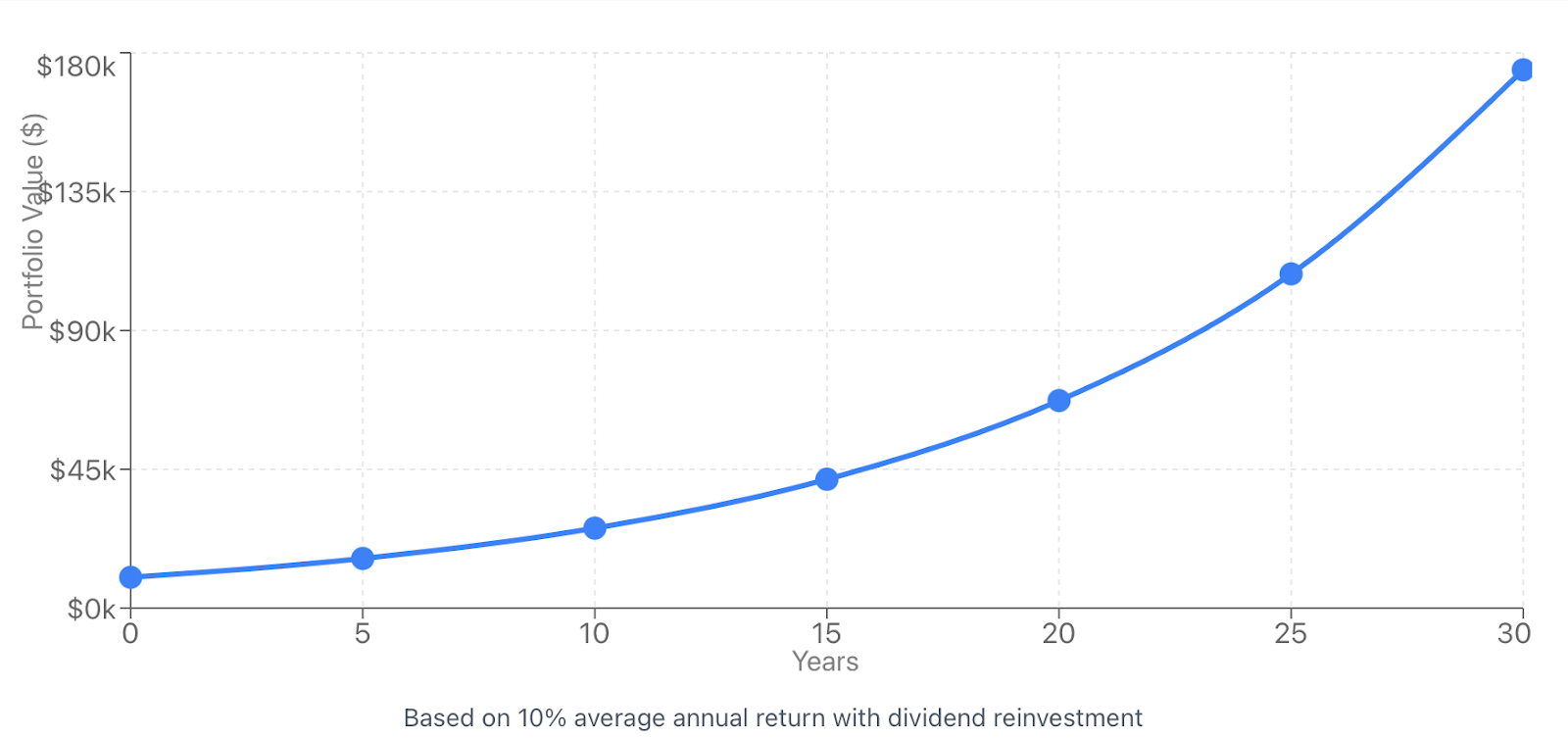
While historical returns have been good, with the S&P 500 averaging roughly a 10% return annually for many years now, it is much more important to understand why the S&P 500 increases in value over time than to just memorise the statistics about historical performance. In general, investing in the S&P 500 has three main sources of long-term returns:
Corporate earnings growth: The largest source of long-term returns comes from the growth of corporate earnings. The 500 companies that make up the S&P 500 are not static, and they continue to come up with new products, enter new markets, and become more efficient in their operations. When these companies generate increasing profits, the underlying stock price of each company typically also increases. Thus, the combined earnings growth of 500 of the world's largest companies causes a sustained upward movement of the S&P 500 index over time.
Dividend reinvestment: Most of the companies in the S&P 500 distribute a portion of their profits to shareholders through dividends. By reinvesting these dividends in order to acquire additional shares, investors take advantage of compounding benefits. Studies have found that reinvesting dividends may provide up to 40% of the total S&P 500 returns over long-term periods.
Economic expansion and technological progress: The U.S. economy has consistently expanded for many years, despite recessionary periods, wars, and financial calamities. As a result of increased populations, greater productivity, and continual technological advances, the S&P 500 provides exposure to companies that are capitalising on all of these factors to drive continued economic expansion in this country.
The power of compounding can be illustrated easily. For example, if someone invested $10,000 into the S&P 500 index fund 30 years ago and reinvested each dividend, that investment today would be worth more than $200,000. Imagine if an investor had managed to "get in" at the right time and sell at the perfect time, that is not why that investor would have made money. Rather, they would have stayed within the market for many years, through several recessionary periods, economic corrections, and all the uncertainties that lie ahead.
Knowing how to invest successfully in the S&P 500 index fund today is more about method and discipline than it is about being able to forecast "the next market top or bottom." When it comes to index fund investing, timing is far less critical than remaining dedicated to investing for the long term. The reason that professional institutional investors realise this truth is that they often build their portfolios using dollar-cost averaging, thereby minimising the risk of having a one-time lump sum investment immediately preceding a market crash.
For example, consider saving $5,000 each year in a savings account vs. investing it in an index fund. A savings account gives you modest but steady growth, while investing the same amount in an index fund will allow for volatility; however, over a longer time horizon, the difference between these two options will be enormous.
How to Invest in the S&P 500: A Side-by-Side Comparison of 4 Common Methods
How do you go about investing in the S&P 500? Should you do it?
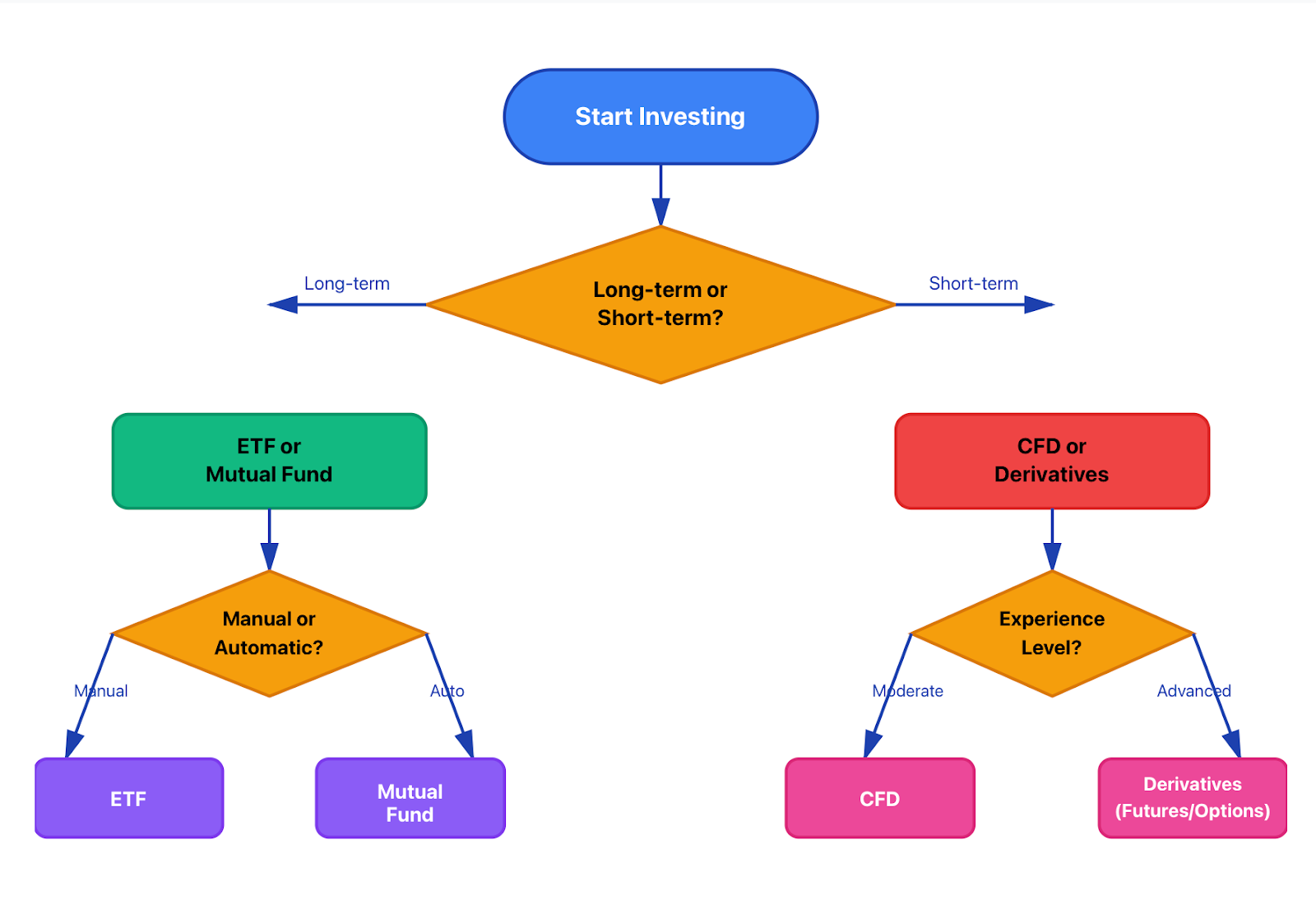
Four basic methods exist for executing an investment in an index like the S&P 500. Each method has its own characteristics:
Method 1: Exchange Traded Funds (ETFs)
You can invest in an index using an ETF, such as SPY, IVV, VOO, etc., which track the performance of the index and trade on an exchange as if they were stocks. They can be bought and sold continuously during trading hours based on their current market price. The costs associated with this type of investment are generally low (less than 0.1% annually), and the only requirement to invest is to purchase one share (i.e., there is no minimum investment requirement).
Due to this flexibility, ETFs have become popular among both retail and institutional investors. The primary drawback is that you will likely incur brokerage commissions for each purchase and sale transaction, although many brokerage firms now offer commission-free trading. In addition, dividends received from an ETF must be reinvested manually to achieve the compounding benefits of growth.
Method 2: Index Mutual Funds
Index mutual funds, such as VFIAX (Vanguard) and FXAIX (Fidelity), also track the S&P 500 and trade differently than ETFs. The only way to buy or sell shares is at the end of the trading day. Many index mutual funds have initial minimum investment requirements ranging from $1,000 to $3,000, but a significant number of these funds permit both automatic investing and reinvesting dividends. Many quality index mutual funds have low expense ratios similar to ETFs. Many investors find mutual funds appealing because they can "set it and forget it."
Method 3: CFDs (Contracts for Difference)
CFDs enable you to trade on the price movements of the S&P 500 without owning the underlying asset itself. CFDs enable traders to take long positions (expecting the price to go up) or short positions (expecting the price to go down). Traders of CFDs often use margin to increase the size of their profits and losses. While the thresholds for entering into this type of trade are generally very low, traders of CFDs can also trade outside of U.S. market hours.
Traders who utilize leveraged trading need to be aware of the many dangers associated with this type of trading; large gains or losses can occur quickly, there are fees charged by most CFD brokers daily for holding your CFD positions, and regulatory protections may vary from jurisdiction to jurisdiction. This method is not suitable for long-term buy-and-hold investors; it is intended for experienced traders.
Method 4: Derivatives (Futures and Options)
Professionals or seasoned traders can invest in S&P 500 futures and options as a way to hedge their current position or to speculate on price movements using leverage. To invest in a futures or options contract, you must understand how derivatives work, what margin is required to trade them, their expiration dates, and what risk management criteria should be considered. Mistakes will most likely cause you to lose your entire margin and potentially more than you invested.
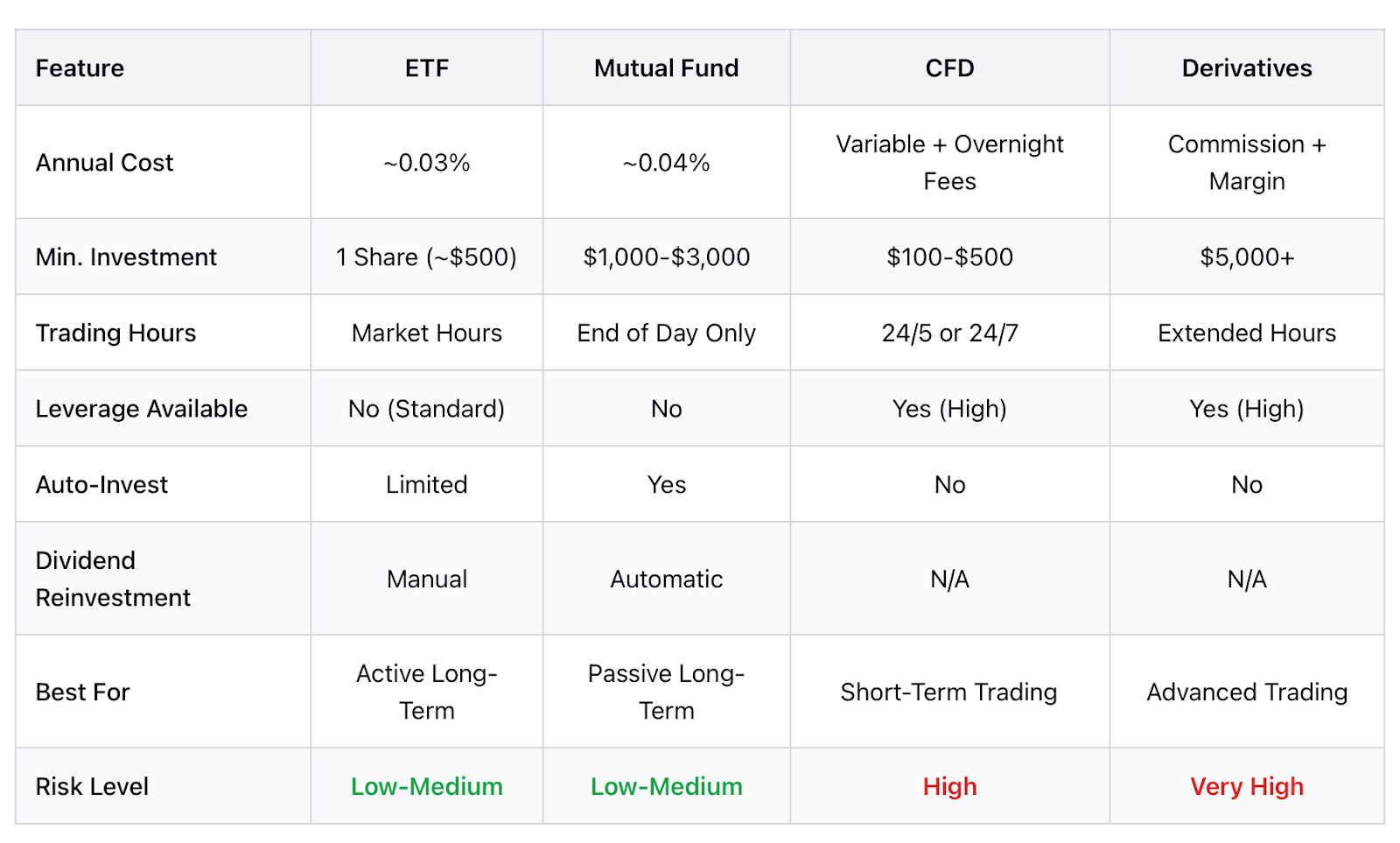
Summary of Comparison:
As a beginner who is looking to create long-term positions, you should stick with either an ETF or a Mutual Fund. Mutual funds and ETFs are completely transparent, easy to buy and sell, generally low in cost to investors, and their fees are known upfront. CFDs and derivatives are an attractive option for short-term traders who want to take advantage of opportunities and leverage; however, CFDs and derivatives require continuous monitoring, and they also expose the trader to a much higher level of risk.
If you were to compare ETFs and Mutual Funds to cars, you could compare a car with an automatic transmission to a car with a manual transmission. An automatic would take you from point A to point B with very little work on your part, while a manual would allow you to control every aspect of the car but would require constant attention to maintain that control.
There is no one "best" strategy for investing; there is only the strategy that fits your own goals, risk level, and amount of experience.
Lump-Sum Investing vs Dollar-Cost Averaging: Which Works Better for You?
Once you’ve determined which investment vehicle you will be using, you will have another decision to make: Invest the entire amount or invest in smaller amounts over a longer period of time (dollar-cost averaging)?
With lump-sum investing, you are investing the entire amount of money into the market right away. Statistically, a lump-sum investment historically outperformed dollar-cost averaging 66% of the time due to the overall growth of the market over time. If you invest $50,000 today and the market continues to go up, you will capture all that growth. However, if you happen to invest immediately before the market experiences a 20% drop, you will watch your account drop significantly and may have to deal with the psychological stress that comes from seeing your account drop.
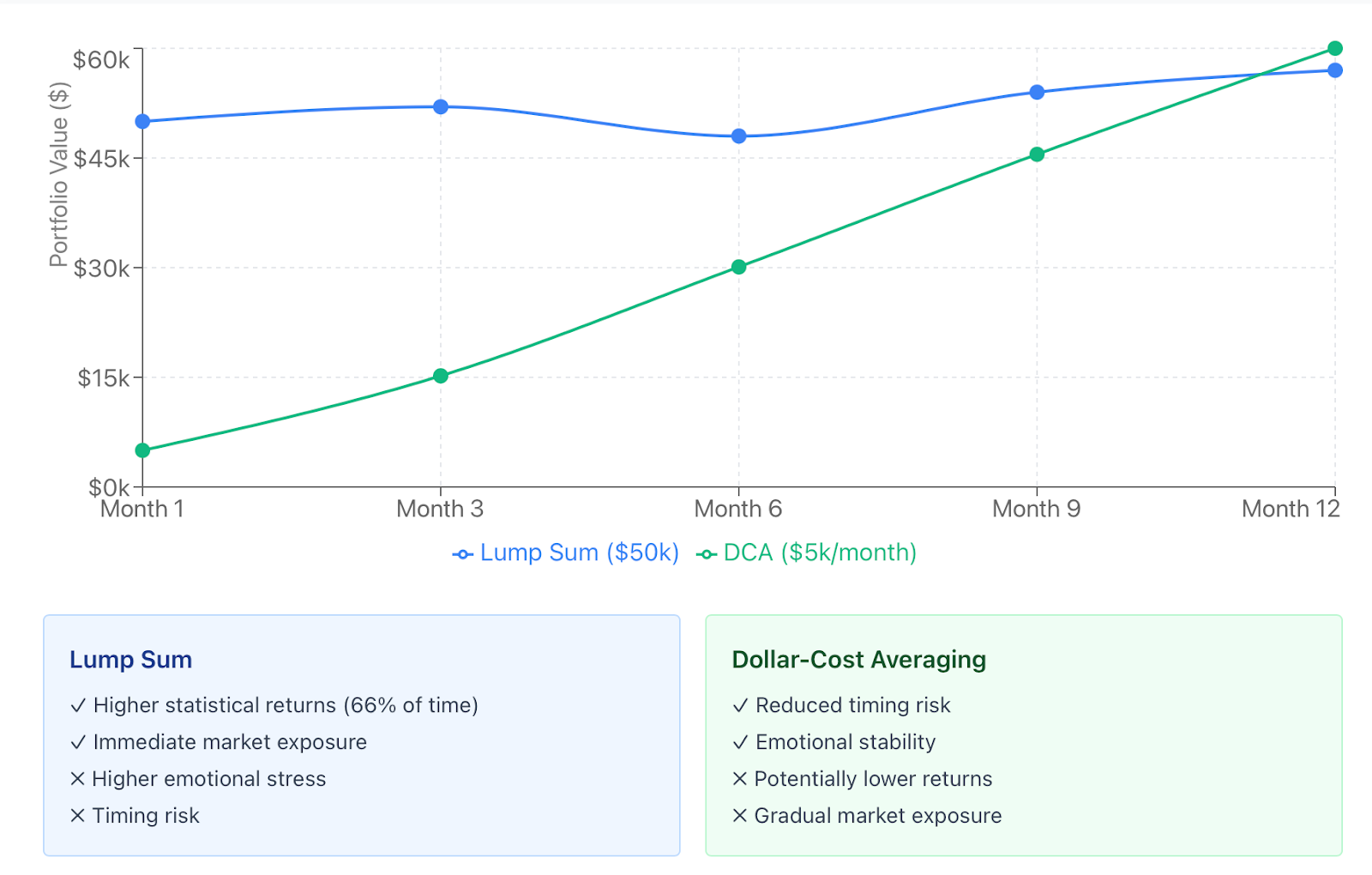
Dollar-cost averaging (DCA) is when you invest a fixed amount of money at a regular interval (ex $1,000 every month instead of $12,000 all at once). Dollar-cost averaging helps minimise the effects of bad timing in the market. When the market is at a high point, you are buying fewer shares because your fixed investment is worth less per share than it would be if the market were at a lower point. Dollar-cost averaging allows you to purchase more shares at a lower price when the market falls. Additionally, the psychological effect of dollar-cost averaging provides an investor with more emotional stability during a downturn since they have not fully invested in the market.
Whether or not to choose DCA or lump-sum investing will be determined by your unique situation. If you receive a large amount of money due to an inheritance or the sale of a business, lump-sum investing may be the right decision for you if you can tolerate the possibility of losing money in the short term. If you are building wealth over a longer period of time with a monthly paycheck or other similar income source, dollar-cost averaging may suit your needs more naturally since it fits better into your cash flow and keeps you disciplined.
Investing in the S&P 500 does not mean “buy once and forget about it.” An investor can expect and should always account for the fact that market conditions will change and that an investor’s financial situation may also change over the life of their investment, as well as an investor’s risk tolerance. A mixture of lump-sum investing and dollar-cost averaging is a strategy used by some investors to achieve a better balance between the statistical benefits of lump-sum investing and the psychological support of dollar-cost averaging.
In times of high volatility, fund managers will often build positions incrementally over time, not in an effort to market time their investment but rather to avoid the emotional toll of large unrealised losses at the beginning of a manager’s investment performance.
At the end of the day, execution is much more important than prediction. Creating a plan and committing to it regardless of market fluctuations will provide you with a more favourable outcome than continually second-guessing the timing of your investment.
5 Key Risks of the S&P 500 That Beginners Often Overlook
Let's get real about what can go wrong.
The market's downturn is unavoidable. The S&P 500 has gone through numerous corrections (10%+ drops) and bear markets (20%+ drops) over the years of its existence. The index dropped more than 50% from its highest to lowest price in 2008. Then, earlier in 2020, the S&P 500 dropped 34% in a matter of weeks. If you cannot stand to see a short-term loss of 20-30% of your portfolio, buying indices will be torture for you. The keyword here is "temporary," but this doesn't make things any easier on you in the short run.
The sector concentration has become significantly more concentrated than before. Technology companies now account for approximately 30% of the weight of the S&P 500. The 10 largest companies represent about 30% of the total market value of the whole S&P 500. This means that most of the performance of the S&P 500 depends heavily on just a few very large technology companies. If technology stocks perform poorly, then your "diversified" index investment will perform poorly too.
Macro-economic risk affects each of the 500 companies to varying degrees. Index investors are not spared economic events such as recessions, interest rate increases, inflation shocks, credit crises, etc. The S&P 500 is not a protection against economic volatility; instead, it represents that volatility directly. In the event of corporate earnings falling during a recession, that reality would be reflected in the S&P 500.
Emotional and behavioural risks destroy significantly more long-term investment returns than do crashes. The common investment mistake that turns a short-term loss into a long-term investment loss is the sale of an investment during periods of panic and the purchase of an investment during periods of euphoria. The only way to successfully invest in an index is to be committed to holding that investment for the long term. Many new investors do not appreciate how difficult it is to remain committed to holding an investment when the financial media is broadcasting "crisis" and their portfolio is down 25%.
Leverage risk can result in catastrophic losses for the investor. If you have 10 times leveraged and suffer a market move of 5% away from your position, you have lost 50% of your capital. While leverage increases both the magnitude of gains as well as the magnitude of losses, the psychological impact of a loss is disproportionately higher when compared to the financial impact of losses. As a consequence of leverage, margin calls can induce forced selling of positions at the least advantageous time.
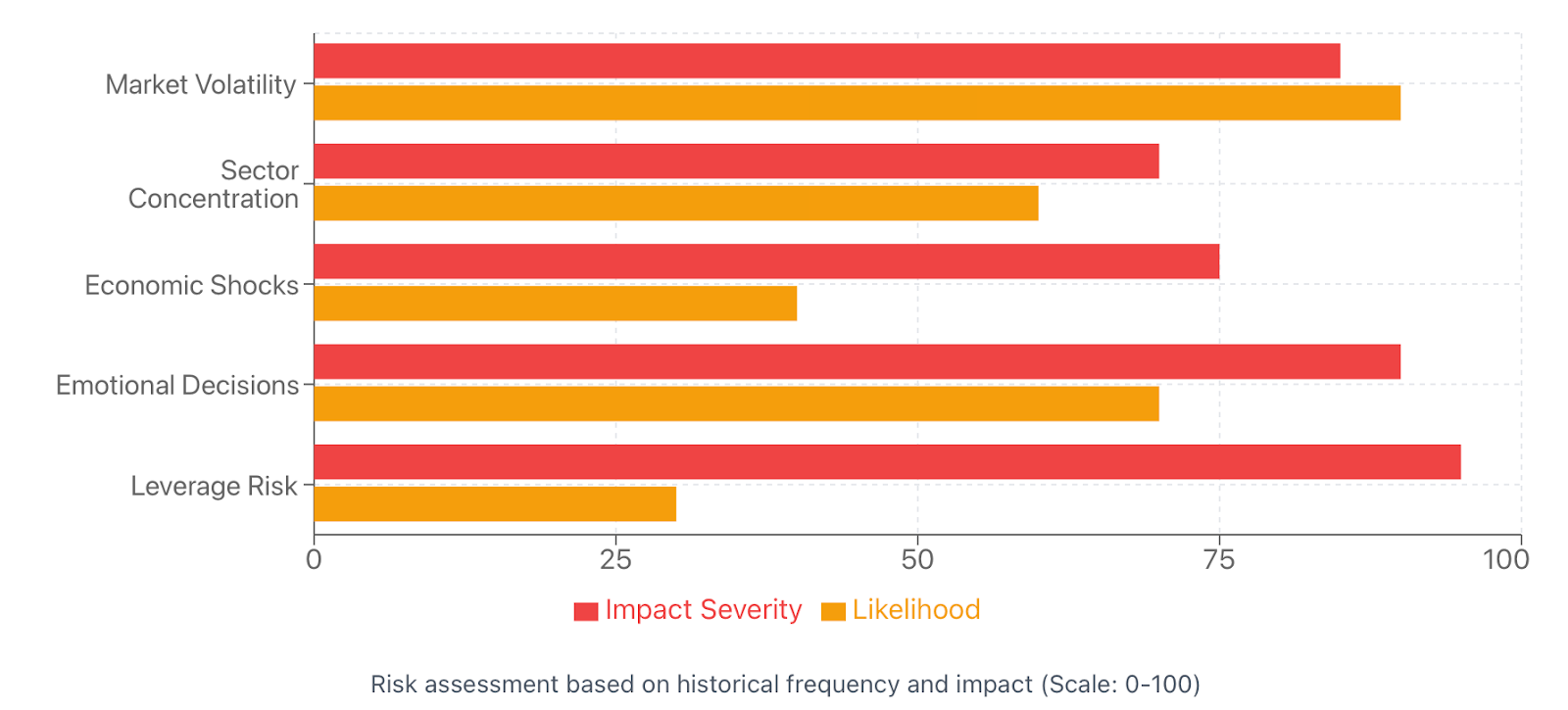
Professional investors deal with these risks by utilising position size, diversifying specifically beyond the S&P 500, and employing disciplined rebalancing strategies. New investors can begin their investing journey by accepting that volatility is a necessary component in order to receive long-term investment returns.
Images of your lifetime of education associated with your exam scores provide a good illustration of this analogy. Just as one grade does not define your performance academically, a single quarter or year of poor performance does not eliminate the potential gains derived from long-term investing in indexes.
Long-Term Investors vs Traders: Two Very Different Ways to Use the S&P 500
It is here where the most confusion generally arises, as the S&P 500 has a very different meaning for long-term investors and for traders.
Long-term investors see the index as a way to accumulate wealth through compounding. It is critical to have an appropriate asset allocation strategy, low expense ratios, maximise tax efficiency and an understanding of your time horizon. Long-term investors hold their investments for many years or even decades and ignore daily price movements or corrections in the market as they view these corrections as an opportunity to buy.
Long-term investors believe that corporate earnings will increase over time, and therefore, staying the course with your investment strategy is more profitable than trying to time your entries and exits into an investment.
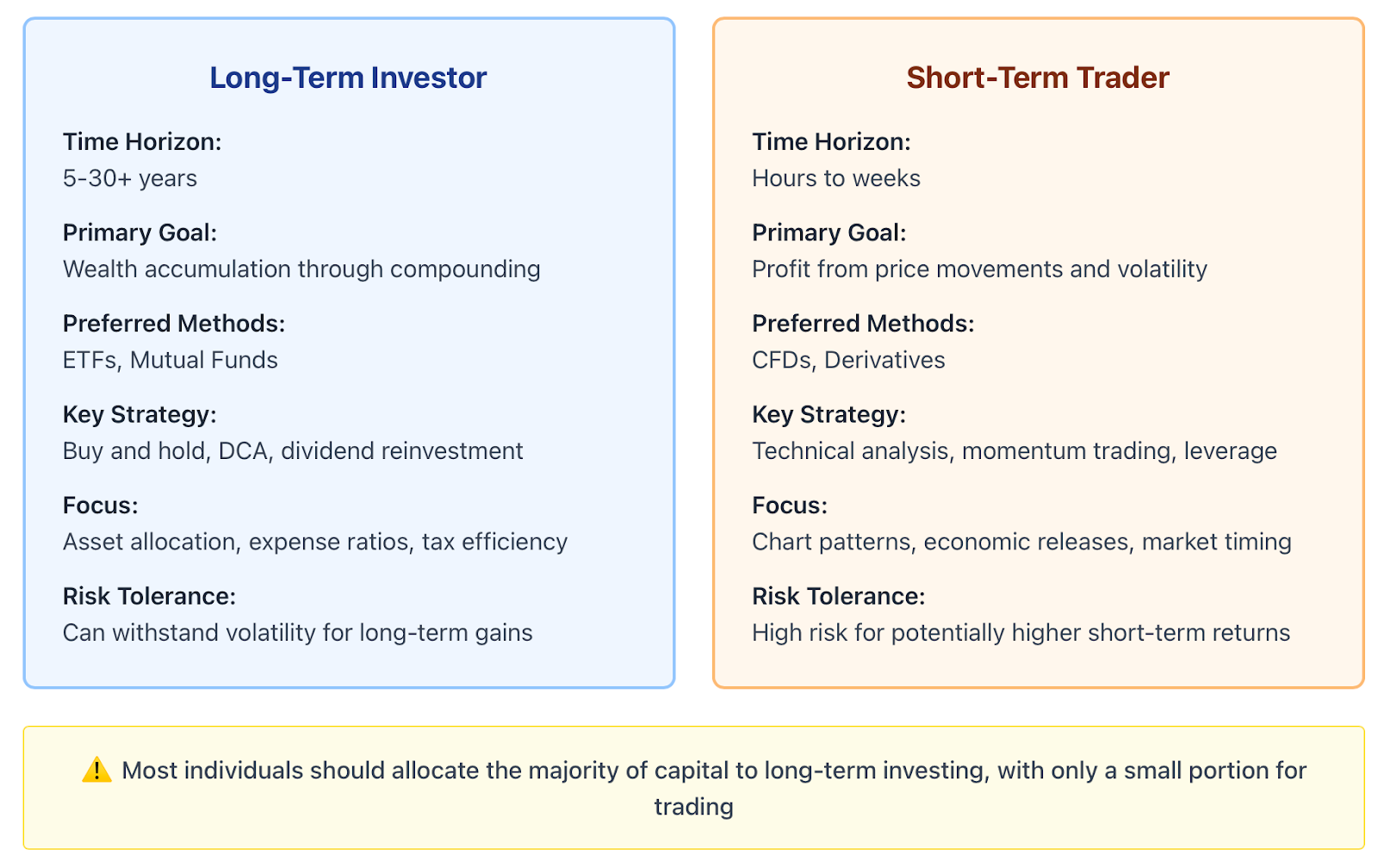
Traders see price movement and the volatility of the index as opportunities to buy and/or sell. Traders pay attention to technical patterns, momentum indicators, current economic data releases and overnight gaps; the holding period for a trade may only be a few hours, days, or weeks. Traders often use tools such as CFDs to make money on both rising and falling markets, and typically use leverage when doing so. Traders have a completely different investment strategy based upon spotting opportunities where a security or index is mispriced in the short-term and taking advantage of market inefficiencies.
Same index, totally different thought processes.
How to invest in the S&P 500 depends entirely on which side of the coin you are on. Building retirement wealth through an ETF and contributing each month to build that wealth is one way of
investing in the S&P 500 for long-term investors. Taking into consideration high-frequency trading around Fed announcements and earnings seasons, and using a CFD to capture short-term movements in price is a completely different type of trading.
Mixing the two styles of trading and investing creates problems for both long-term and short-term investors. Long-term investors using trading logic will typically overtrade, therefore being more tax-inefficient and emotionally drained. On the flip side, traders who approach trading the same way as they approach long-term investing will typically lose their potential profits, hold onto losing positions for longer and miss out on potential profit-taking opportunities.
Be truthful with yourself as to which one of these two groups you belong. The majority of individuals should be long-term investors for the majority of their investment capital and only trade a small portion of their portfolio that they are comfortable losing without having a significant effect on their financial goals.
How Non-U.S. Investors Can Invest in the S&P 500
While the S&P 500 tracks foreign companies in the United States, an individual outside of the United States can also invest in the S&P 500 by way of a broker. Many international brokers provide you with access to purchase S&P 500 ETFs either through their own exchanges or through locally-listed equivalents. To trade on behalf of yourself, you will typically need to set up an account with a brokerage and show them proof of identity and proof of your address. In some nations, there are local mutual funds that track the S&P 500.
Unfortunately, these might be more costly to maintain than funds that are based in the U.S. and have higher potential tracking errors than funds that are domiciled within the United States.
For those located in other locations where it can be difficult to open a brokerage account in the U.S., a CFD platform would give an investor another way to trade. By using a CFD, an investor will gain exposure to the S&P 500 while not needing to directly hold securities of United States-based corporations. However, with this feature will come the disadvantages of using CDFs (costs associated with leverage, overnight interest fees, and other risks) compared to investing directly.
One must also consider the impact of currency on his or her investment when they are purchasing U.S dollar-denominated securities from outside of the U.S. The amount of U.S. dollars that an investor will receive through any investment will be dependent upon the U.S. dollar's exchange rate with their original currency. When stock prices in the U.S. are higher than stock prices in other countries, this can result in a higher return on investment for an investor when they return to their home currency, and vice versa.
Also, different countries’ tax treatment of capital gains can vary. In many countries, there is no tax on capital gains; however, some countries have tax treaties with the U.S. that can affect withholding rates on dividend payments. If you are going to be investing cross-border, consult with a professional tax advisor to discuss your specific situation and get an accurate picture of the tax consequences of investing internationally.
The major takeaway: while the S&P 500 is a global investment, you, as an individual, wherever you live, can invest in the U.S. stock market and achieve the same levels of diversification as someone living in the United States.
2026 Special Report: Investing in the S&P 500 Through a Macro Lens
Investing through index funds is not done in isolation but rather is influenced by the economy on a macro level, where the overall economic circumstances will affect how the S&P 500 performs over time as well. At this time, it is important to understand that a set of macro indicators driving the performance of the S&P 500 creates certain market conditions that investors need to recognise.
When considering the S&P 500, years shall have different economic indicators that dictate how it performs (2021's pandemic recovery/stimulus is not the same as the current economic climate). During 2026, the interest rate cycle will only be in the middle to the late portion of its progress, inflation will have shifted from being a crisis and now poses a long-term structural challenge, and technology will have transitioned from hype to reflecting actual revenues, thus driving growth within.
Investing through index funds is not simply ignoring the overall economic environment, but if you buy into a restaurant (the S&P 500), and a new office building opens next to it, then business is likely to improve. Conversely, if a large number of people get laid off from their jobs, then the restaurant will see less business, and no amount of great-tasting food will be able to offset a decrease in income.
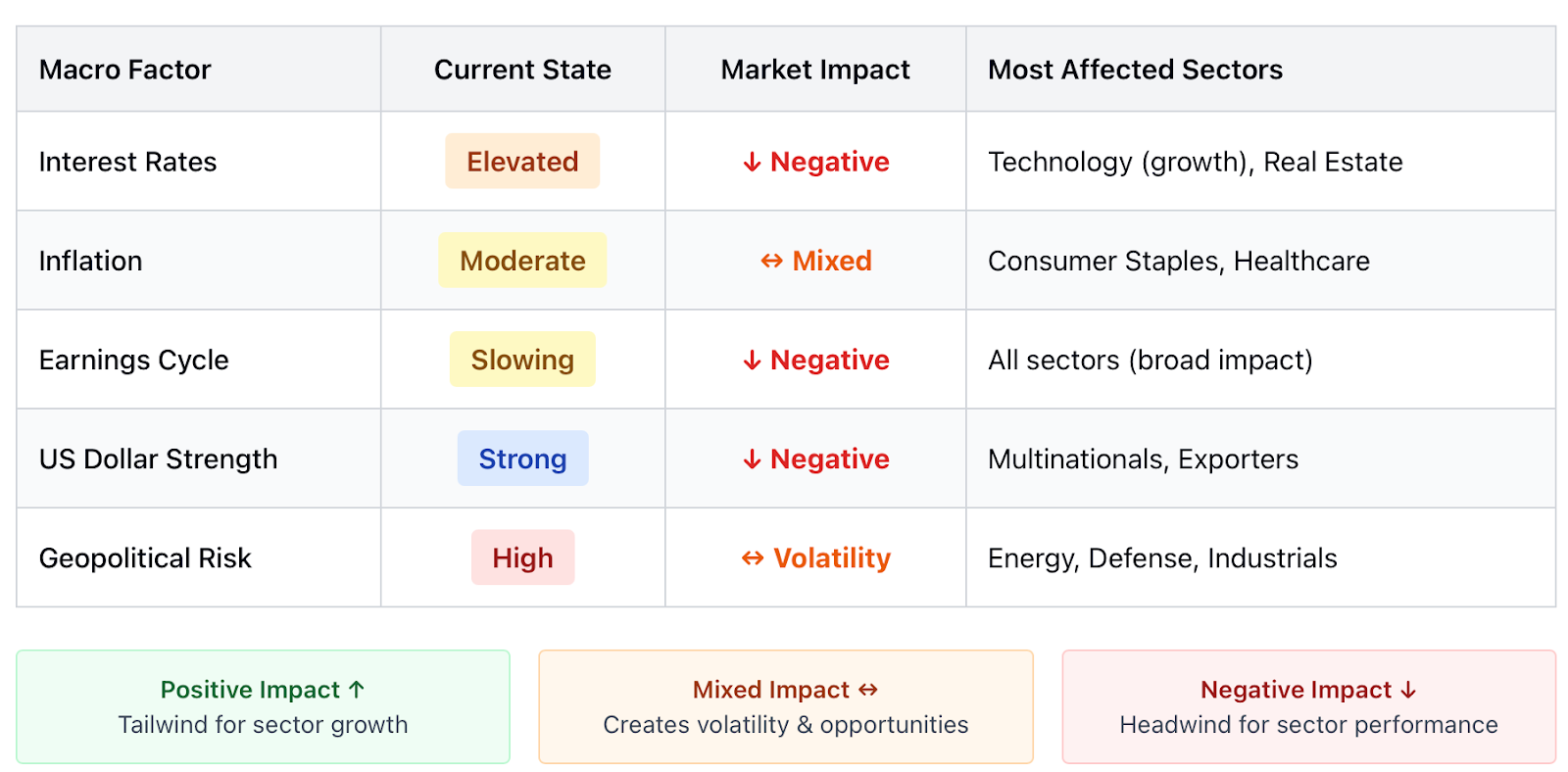
Five core macro variables shaping 2026:
Market Interest: World rates have climbed aggressively over the past year and, after stabilising somewhat, remain higher than seen throughout most of the 2010s. Higher interest rates will raise borrowing costs for businesses, making it more challenging and costly to grow. Higher interest rates also shift investor valuations on future cash flows/earning power from growth stocks with greater future years to complete earnings, versus more mature companies with current earnings.
Therefore, it will be important for these S&P 500 investors to keep an eye on what's happening in their industries, as some financial services companies may profit from higher interest rates, while companies with high valuations and growth (tech) face challenges.
Market Inflation: The panic phase (9% inflation) has passed; however, structural inflation is still occurring in several segments of service industries, wage levels, and the housing market. This means that companies continue to have higher costs, and, therefore, their profit outlooks will be compromised if they cannot pass those costs to consumers. The performance of the S&P 500 will depend in part on which companies can maintain pricing power versus those that are seeing their profit margins being squeezed.
Market Earnings Cycle: After enjoying several years of rising earnings, S&P 500 companies will begin to face tougher comparisons moving forward. Revenue growth will slow from what were once rapid results following the reopening of their business/after stimulus payments were distributed. An example of this is Starbucks, which will struggle to maintain its prior earnings growth levels because prior growth levels were primarily driven by the company's reopening. Future returns for the S&P 500 will be tied to a sustainable growth pattern of earnings or whether we are in line for the earnings recession.
Market US Dollar: A robust dollar enables US shoppers to buy foreign products, but creates problems for US companies exporting products and companies with substantial amounts of foreign revenue. The S&P 500 contains a large number of companies, businesses that sell products internationally; therefore, these businesses are exposed to currency headwinds, which may create disadvantages to overall earnings when reported.
Regulatory and Trade Policies and Geopolitical Risks: Changes in trade and regulatory policies and geopolitical conflicts create uncertainty. The upcoming 2024 election cycle will likely prompt several types of policy changes regarding various industries (energy, health care, technology, etc.) and the resultant uncertainty regarding the above-mentioned industry-specific issues. Geopolitical tensions also impact the markets through disruption to supply chains, commodity prices, and investor sentiment. They will not necessarily drive the S&P 500 into the ground, but they will create an increase in volatility and provide opportunities and risks specific to each industry.
Structural changes in the S&P 500: The S&P 500 is dynamic; tech has grown in its market capitalisation and creates the dilemma of overconcentration in terms of capitalisation weight for this index. Will AI & machine learning, cloud technologies, and automation experience a decline in valuations even though their economic fundamentals remain relatively solid?
Speculation is that sectors such as Industrial, Healthcare, and Financial Industries may offer capital reallocation opportunities as capital shifts away from high valuation-growth companies. These stocks will continue to be popular among investors with high industrial concentration, but, as more and more investors rotate toward higher-growth areas or toward industry sectors with lower valuations in comparison to the growth sectors, investors will have to reassess these sectors in the near future.
It should be noted that internal shifts occurring within the index may have a greater impact on the S&P 500 index than the actual market movement of the index itself, e.g., the S&P 500 index may close flat for the year, and yet some energy stocks may be up 30% while tech is down 15%, thus affecting performance expectations in the S&P 500. It is essential that investors keep an eye out for these internal shifts and understand the internal dynamics of the index.
How different investors should approach 2026:
Investors planning to hold for a long time (5-10 years):
Dollar-cost averaging still works for you. The "macro-madness" of 2026 will not affect your investments by 2035. Therefore, the most important thing you can do is to keep investing systematically while ignoring short-term fluctuations. You can also maintain your investment allocation relative to your investment goal by rebalancing annually so you are less likely to overreact to temporary market conditions.
Investors planning to hold for the medium term (1-3 years):
It is worthwhile to adjust how quickly you enter the market based on both the valuation of the S&P 500 and the macroeconomic environment of the time. If the S&P 500 is trading at a historically very high valuation because of low earnings growth, then you might choose to enter the market cautiously. If an economic correction creates an opportunity to enter into stocks, then you could accelerate your purchases. In this case, you are not timing the market; instead, you are managing tactical allocation within a broader strategic allocation plan.
Investors who are trading-oriented, including people who trade Contracts for Difference:
Volatility creates the chance to have long and short positions at the same time. When macroeconomic data shocks occur, the market often responds quickly. Therefore, when you understand how the employment report, Federal Reserve announcements and earnings results affect price movement, you will be better prepared to enter (or exit) trades. When using leverage, controlling risk becomes much more important. Take caution with the use of stop-loss orders, and size your positions appropriately. Finally, remember that using leverage only increases the impact of mistakes (being an amplifier), but it does not direct your investments.
Common misconceptions regarding macroeconomic analysis:
An index will always go higher, and therefore you should just buy and hold an inaccurate perception of the market; there have been long periods of time when an index has been significantly stagnant. You need to have a longer outlook to determine how much risk you will take when investing.
Many people will want to wait until the macroeconomic data improves before investing. In reality, this puts them in a position where they will most likely be buying stocks when prices have already risen above where they were when they got out of the market.
To invest all of your money in the macroeconomic market is a better plan than using a dollar-cost averaging method, because many individuals are unable to handle the emotional pressure of large unrealised losses. This inability to handle these emotions often results in panic selling.
People looking to enter into a macroeconomic market see macroeconomic analysis as predicting the future. However, it would be unrealistic to think you could accurately predict what the market would do in the future. Instead, you should use macroeconomic analysis to prepare for various scenarios and position your investments accordingly.
In 2026, the most important question for investors will not be, "Should I invest in the S&P 500?", but rather, "How do I maintain investment in the S&P 500 through the changes in macroeconomic factors?" The best way for you to be financially successful is to create an investment strategy based on your predictions about interest rates, economic growth rates and sector rotation rather than ignoring macroeconomic factors altogether.
Conclusion: Start Your S&P 500 Investment Journey with Confidence
While determining how to invest in the S&P 500 is only the beginning of investing, the more difficult portion comes when creating a strategy that fits what you are trying to accomplish long-term or short-term, managing risk accordingly and maintaining discipline during difficult times.
Investing in the S&P 500 provides investors with a way to participate in some of the best American companies without having to figure out how to pick individual stocks. That being said, it is still a very risky investment (the drawdowns, the concentration of companies included in this index, and the emotional roller coaster associated with investing in stocks are all examples of the risks), but when looking at the long-term historical performance of these stocks, there is no denying that they will continue to offer great investment opportunities.
If you are planning on using the S&P 500 as part of your retirement allocation through an ETF or Forex trading or are interested in using it for a short-term opportunity through CFDs, the very same investing principles apply: know what you are investing in, know what your risk tolerance is, and execute with discipline.
Have you had enough of just reading about this opportunity? Stop sitting on the sidelines, and start gaining your own real-world experience in the various financial markets through your own investments, where your learnings will actually be put to use!
Visit Tradewill.com to explore S&P 500 CFD trading with demo accounts, real-time pricing, and the ability to trade both long and short positions as market conditions evolve.
Disclaimer: The content of the blog does not represent any position of Trade W, does not serve as any trading-related decision advice, and does not endorse any third-party.