

 Trade W

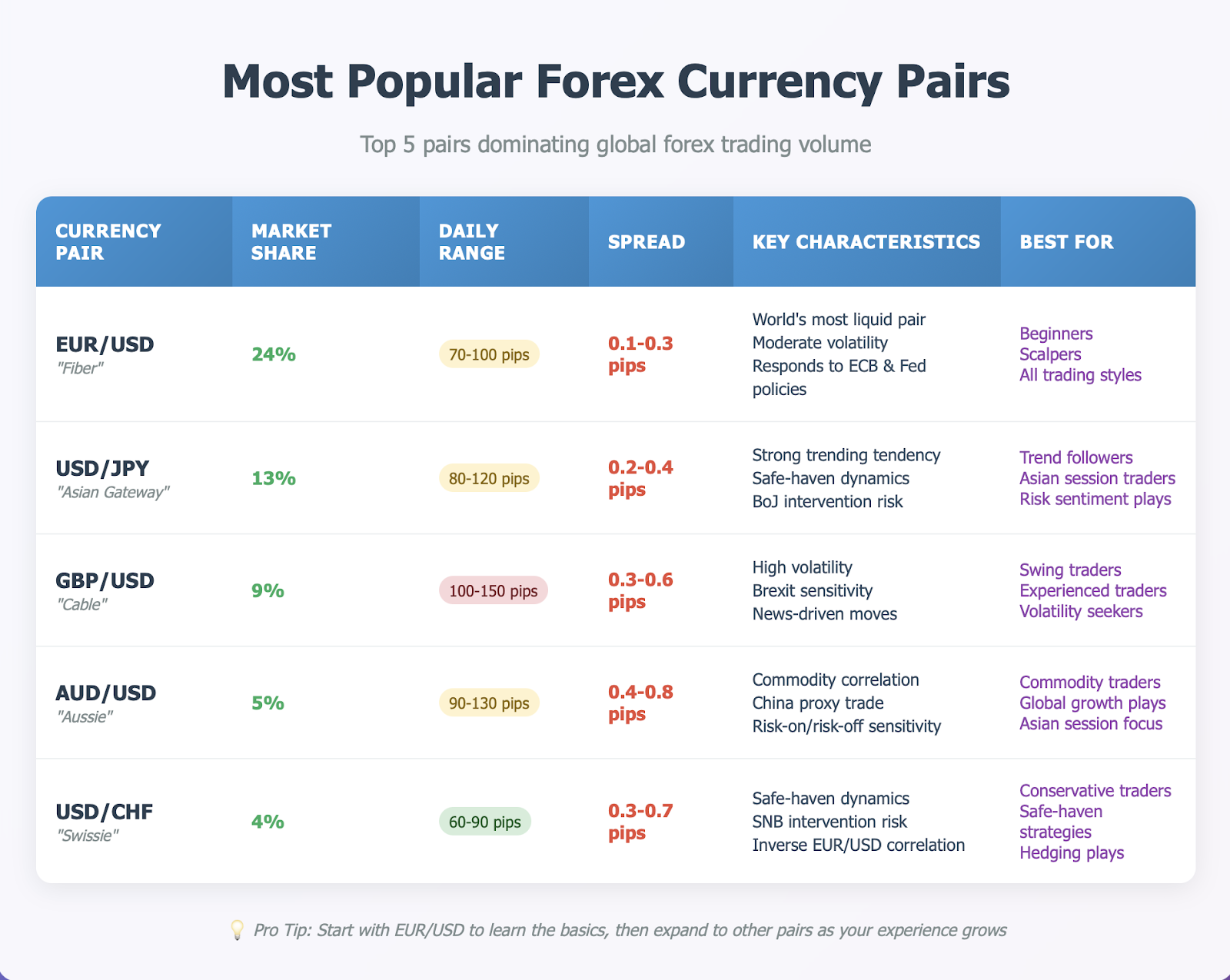
The foreign exchange (Forex) market is the most liquid and vast financial market in the world. The Bank for International Settlements (BIS, 2022) estimates Forex has a global trading volume of USD 7.5 trillion traded per day, which is many times larger than equity or bond markets. In fact, the large majority of trades take place in the major currencies (e.g., EUR/USD, GBP/USD, or USD/JPY) which supply an active marketplace with deep liquidity, tighter spreads and stable prices.
However, also exists a lesserknown corner of the Forex market that is not as liquid with higher associated trading costs, called exotic currency pairs. This involves a major currency (e.g., US dollar or euro) paired with the currency of an emerging market or smaller economy (e.g., USD/TRY or USD/ZAR). Exotic currency pairs have lower liquidity and higher volatility as these pairs have wider spreads and higher cost of trading (compared to major currency pairs).
So why do traders actively pursue trading in exotic pairs? The answer is that exotic pairs provide a unique balance of risk and reward. Exotic pairs normally have larger fluctuations than the major pairs which creates a desirable opportunity for a trader that understands the relationship between volatility and risk management. In simple terms, majors tend to have constant predictable moves, while exotic pairs offer the potential for explosive movement if you approach them properly.
Another analogy for new traders: consider this notion trading major currency pairs is like getting a Coke at the nearest store it is widely available, affordable and reliable. Trading exotic pairs, is more like finding an exotic rare imported specialty drink that costs more and is harder to get, but you can taste you cannot get any where else.
In this guide we will cover all aspects, from defining the exotic currency pairs to their features, advantages and disadvantages, economics list, and factors influencing the exotic pairs. We will also discuss practical emerging trading strategies, advanced portfolio deployment, and risk controls that traders can use to consider if exotic pairs are viable trades for you.
What is Exotic Currency Pair?
Currency pairs in Forex trading can be categorized into three groups: major currencies, minor currencies, and exotic currencies. Major currency pairs are ones that a lot of traders are familiar with (EUR/USD, GBP/USD, or USD/JPY for example) but exotics are less discussed but are just as important in the market.
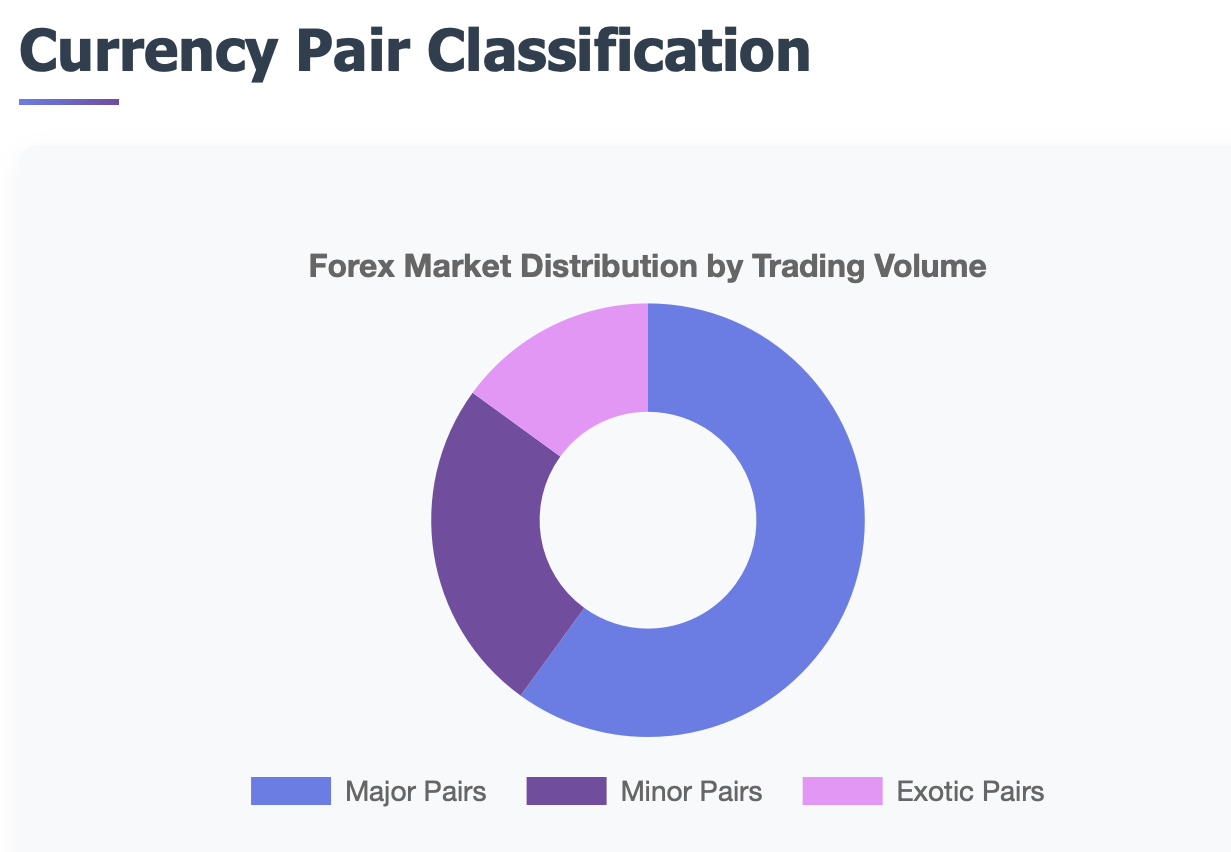
An example of an exotic currency pair is combining a major currency (the US dollar, euro or British pound for example) with a currency from an emerging or smaller economy.
Some examples of exotic currency pairs:
USD/TRY – US Dollar / Turkish Lira
USD/ZAR – US Dollar / South African Rand
USD/THB – US Dollar / Thai Baht
Exotic pairs are substantially different from major currency pairs with respect to liquidity, volatility, and costs of trading.
Key Characteristics of Exotic Pairs
Lower Liquidity
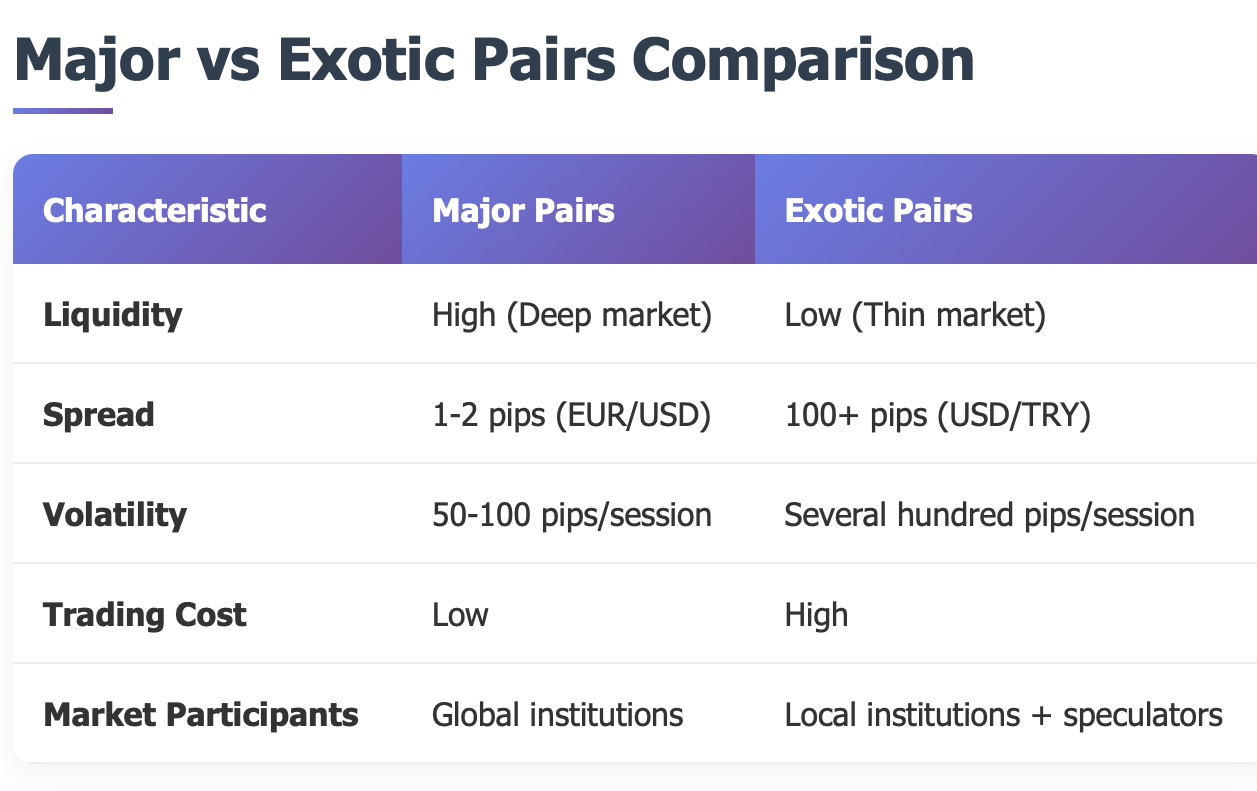
Exotic pairs have been traded the least compared to the majors, which means there are less buyers and sellers making the prices encouraged to fluctuate more often and a larger bid–ask (the difference between the buying price and selling price) spread, making them more expensive than majors. EUR/USD may have a spread of just 1 2 pips, however an exotic pair like USD/TRY could have a hundred pip spread or more.
Higher Volatility
Exotic pairs have greater price fluctuations. This is especially prevalent when there are political or economic issues, for example, if there is unrest in Turkey, traders would not expect the price of USD/TRY to remain stable and may be encouraged to make large trades in either direction. The price change for exotic pairs can happen quickly, one large risk but also big opportunity.
Higher Trading Costs
Due to liquidity in exotic pairs and spread bid–ask, exotic pairs can be costly to trade. This makes them less ideal for scalping or frequency of trades, however they may be premium for a swing trader or position trader, who can afford these increased price swings in exotic pair trading.
Market Participants
The major pairs attract banks, hedge funds, corporations, and retail traders internationally. Exotic pairs, however, tend to feature the local institution(s), government, and speculative flows.
Majors versus Exotics
To clarify this even more, you can think of major pairs as regular groceries in the supermarket. They are common, cheap, and consistent. Exotic pairs are like rare finds from specialty outlets. They lose some simplicity, cost more, get checked against a broader set of variables, but you get something unique that you can't get in the normal, runofthemill space.
Why Trade Them?
This raises an important question: if exotic pairs are more difficult and expensive to trade, why do some traders choose to trade these pairs? The answer to this question is found in the unique trading opportunities exotic pairs provide! Exotic pairs can have strong directional movement that the majors rarely provide, and skilled traders can possibly get outsized returns.
An example of this was during the 2018 Turkish lira crisis, when we saw extreme volatility in USD/TRY, where the lira lost nearly half of its value against the dollar. Traders who were aware of the risks and managed their placement were able to profit significantly.
In conclusion, exotic pairs are not side markets that do not matter, they actually provide traders unique opportunities if they are aware and can manage higher risk with disciplined strategies.
Why Trade Exotic Pairs?
If exotic currency pairs are tougher to trade than major pairs, are more volatile than major pairs, and are costly than major pairswhy do experienced traders actively hunt for exotic pairs? The answer lies in the opportunity that exotic pairs provide! Exotic pairs are valuable because they offer way of high volatility, speculative opportunities, portfolio diversification, and psychological barriers that excite advanced traders.
1. Higher Volatility Opportunities
For riskaverse traders, a sudden price movement can seem alarming. On the other hand, for opportunitydriven traders, volatility means potential for higher profits in shorter time frames.
Exotics tend to move much more aggressively than majors. For example, EUR/USD typically might move 50–100 pips in a session, while USD/TRY or USD/ZAR might move several hundred pips, given the right opportunity.
For technical traders, this volatility provides opportunity to implement strategy scenarios like trendfollowing, breakout trading, and momentum setups. If one is purposeful in their stoploss placement, and in their position sizing, volatility can become a trader’s best friend.
Beginner Analogy: Trading majors is like playing the easy level of a video game. It is safe and predictable, and anyone can learn to do it. Playing exotics is like choosing the “hard mode.” While fewer players will attempt it, the potential reward for playing is so much greater.
2. Speculative Opportunities
Exotic pairs can often be affected more by localized economic policies or political risk than by commodity prices. All of these factors can create speculative opportunities that are not directly correlated to the major currency’s global drivers.
Interest Rate Differentials & Carry Trades
Exotic currencies frequently offer a higher interest rate than developed markets. For instance, traders can use a carry trade to borrow in a low interestrate currency like the USD or JPY and invest into a higher yield exotic currency like the Turkish lira (TRY). This can create a good opportunity for profit and yield; however, if snapped, you may have seen dramatic currency depreciation pose a potential financial risk.
Commodity Links
Many exotic currencies are tied to a commodity. For instance, the Russian ruble (RUB) and Norwegian krone (NOK) are significantly affected by oil prices, whereas the Brazilian real (BRL) is influenced by agricultural exports geared for the global market, such as soybeans.
Professional Case: During the price crash of 2020 in oil, both USD/RUB and USD/NOK exhibited a high degree of volatility. However, traders who had identified the oilpricing link of these exotic pairs were able to speculate on the upside to take advantage of normal market conditions.
Beginner analogy: Trading exotic pairs is like searching for rare collectibles. If you time the purchase just right, the value could explode but the opposite will happen if the market really shifts, then you’re left with an expensive item nobody wants.
3. Portfolio Diversification
The other primary reason why advanced traders also may look to exotics is portfolio diversification. Exotics usually correlate much less with the major pairs and can exhibit shifts (when utilized wisely) with the overall risk of the whole portfolio.
For example, if a trader is only holding the major pairs EUR/USD and GBP/USD, they are going to react similarly in a global event that influences performance on the US dollar. However, if they take on USD/ZY or a USD/TRY position, they are start reacting to regional risks or opportunities that could offset their returns.
Example: So a trader holding EUR/USD, and GBP/USD might take on a USD/TRY position if there was political uncertainty occurring in Turkey. Though the majors are calm, the Lira could be showing volatility that literally could offset the trader's broad portfolio performance.
4. The Psychological Aspect
Exotic trading also gives credence to the psychology of traders that enjoy challenges. Many advanced traders enjoy trading difficult, complicated markets because they provide a sense of accomplishment. Higher return potential is only part of the equation; most importantly, exotics test and challenge a trader's discipline, patience, and risk management.
Beginner Analogy: Just as gamers love challenge and enjoy advanced or "expert level" stages, some traders are inherently drawn to exotic pairs. Their exotic nature presents a tough test and potentially rewarding experience.
Primary risk of Exotic Currency Pairs:
Exotic Currency Pairs can be very exciting; however, Exotic currency pairs have a unique risk profile that traders need to understand before trading. Unlike major pairs where liquidity is deeper and spreads tighter, exotic currency pairs carry greater price cost of execution, greater potential price volatility, and greater level of political/economic risk. Being aware of these risks is needed to survive in the Forex market.
1. Spread and liquidity risk
The first hurdle associated with trading exotic pairs is the low liquidity. There simply are not as many traders entering orders on USD/TRY and USD/ZAR as there are on the major pairs. Without good liquidity, the order book will be thinner. Your spread will be wider when you trade exotic currency pairs the distance (or margin) between the buying price and selling price.
For example, EUR/USD will often have a spread of 1–2 pips simply because it is commonly traded. Alternatively, an exotic pair, such as the USD/TRY, will typically have a spread ten times that value. This alone elevates the cost of trading and makes exotic pairs very difficult to use for scalping or highfrequency opportunities.
Beginner Analogy: Take a pair of rare sneakers for example. Because there are only a few people selling them, you would be paying a much higher price than with a regular pair of daily running shoes. Likewise, trading exotic pairs costs more in this example due to the fact that they are not usually available in the market.
2. Volatility Risk
Exotic pairs are synonymous with crazy volatility. One small dosage of priceshifting news whether it be a policy decision, a commodity price change, or a whirlwind in politics can cause exotic pairs to jolt hundreds of pips in a few hours. If you are trading exotic pairs with a tight stoploss, this presents the risk of getting stopout often.
For each trader, you may need to adjust your stoploss levels wider and the size of your position smaller so you can ride out the volatility without blowing your account. You also should be careful with your leverage whatever works with majors can be a potentially dangerous margin requirement with exotics.
A Professional Case: USD/TRY soared during the 2018 Turkish lira crisis as investor conviction evaporated. Long holders caught on the wrong side of the move could easily incur lifechanging losses if they were overleveraged or poorly hedged.
Beginner Analogy: Imagine a small pond, one where every splash creates significant ripples. Exotic pairs have a similar footprintsmall triggers can create outsized market reactions.
3. Political and Economic Risks:
Exotic currencies are often associated with emerging markets. Emerging markets are more susceptible to political instability, government intervention, and economic shocks. Political and economic risks can magnify volatility and make it more difficult to accurately determine market behavior.
Government Intervention: There are countries that impose capital controls and currency restrictions that can warp market pricing.
Geopolitical events: Events like political coups, sanctions, and disputes can quickly change sentiment and investor confidence.
Economic Fragility: Financial systems are often weaker, with higher external debt levels which can lead to exotic currencies collapsing much faster than major currency pairs.
Professional Case: After the failed coup attempt in Turkey in 2016, the lira crashed against the dollar while investors interchanged their assets for safety. Traders long the USD/TRY were quickly left speculating with little visibility around what right or wrong meant.
Beginner Analogy: Imagine fishing in a small pond and having one big fish swimming below the surface. That one fish has the ability to move the entire body of water. In exotic markets, it may be political or economic activity that acts as little "big fish" that transcends the normal price behavior of these pairs.
4. Risk Management: The Heart of Sticking Around
The most important takeaway for exotic traders is that risk management comes first. Exotic pairs have great potential to make money, but if you trade without concern for the risk, it will not take long to clear out your trading account. Exotic traders manage risk by:
-
Wider stoplosses with smaller sized lots
-
Management of leverage
-
Diversifying exotic pairs
-
Staying specifically informed on local politics, local central bank policies, and global commodities
Main Driver of Exotic Currency Pairs
Exotic pairs are driven by regional, political, and commodityrelated influences, rather than the global economic data and central bank policies of developed nations that drive the major pairs. Generally, exotic currency movements reflect the precariousness of smaller economies under the pressures of global financial flows. For anyone looking to learn about the factors driving exotic pairs and succeed in trading exotic pairs, it is essential to understand these driving forces.
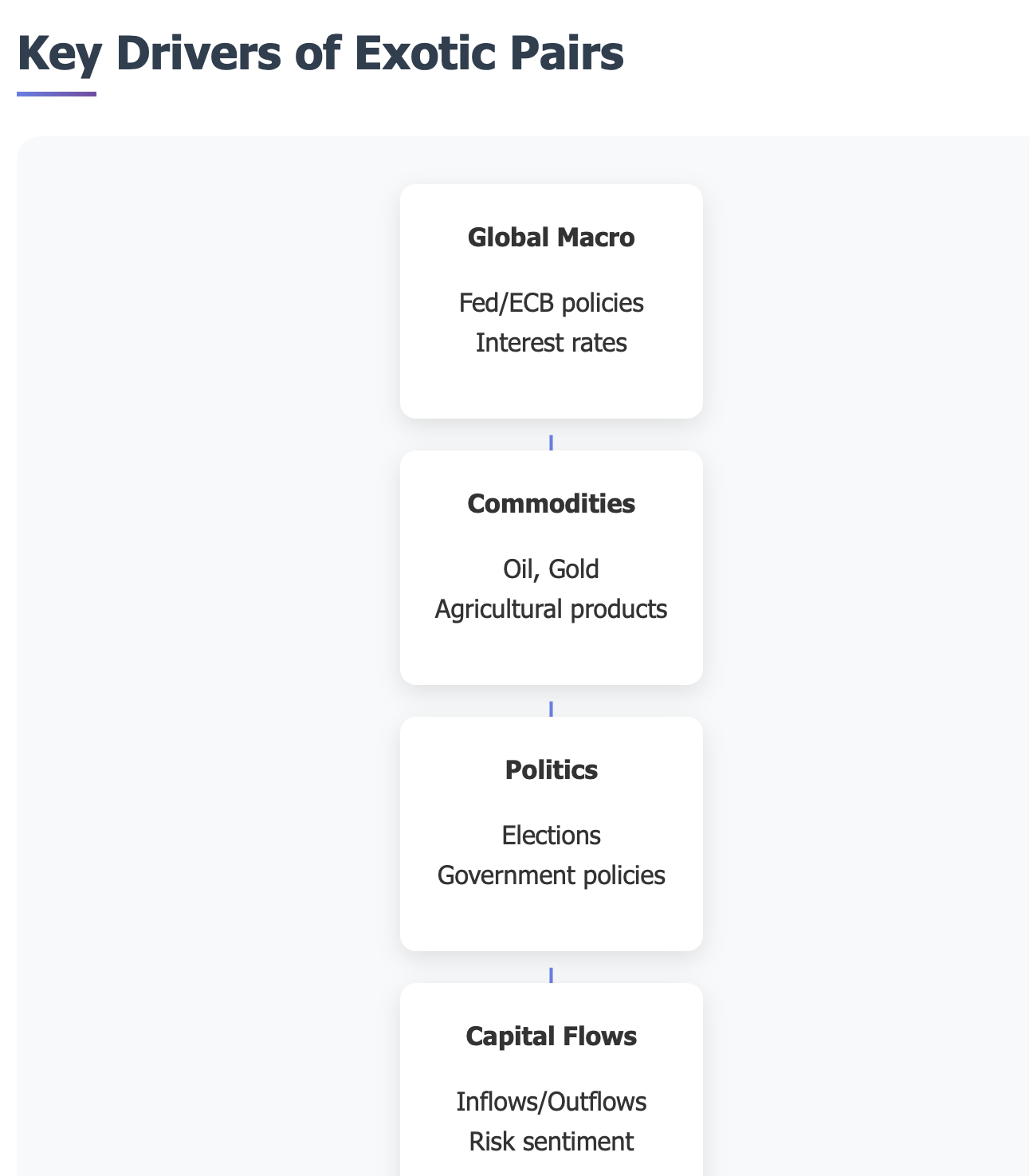
1. Macroeconomic conditions
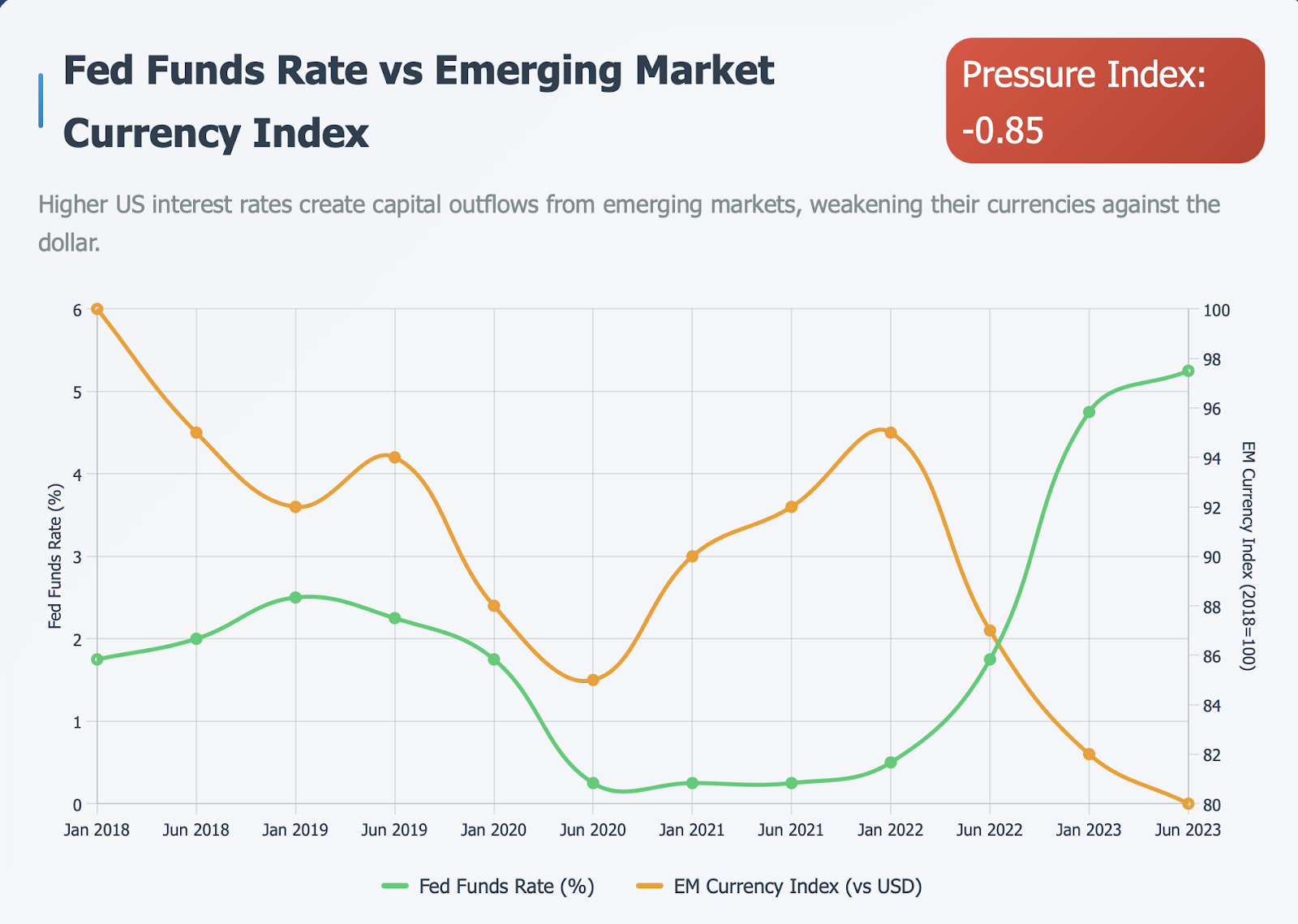
Exotic currencies are influenced by the monetary policies of major central banks, especially the Fed and ECB. Exotic currencies in emerging markets depend on foreign capital, so changes in global interest rates and liquidity conditions can dramatically affect emerging market currencies.
Interest Rate Differentials: When the Fed raises rates, capital tends to flow back into US assets weakening exotics such as the Turkish lira or Brazilian real. On the other hand, decreased US rates can drive investors into higher yielding exotics.
Economic Data: Local GDP growth, inflation (CPI), employment, and other assorted economic reports can create volatility. In Emerging Markets, these reports can have much larger effects than in developed markets.
Professional Case: The Fed aggressively raised rates risking recessions from 2022 2023 which placed extreme stress on emerging market currencies as capital fled towards US dollar assets, in particular if they were higher yielding. During this time exotics like USD/TRY and USD/ZAR weakened considerably.
Beginner Analogy: Think about a small town with windmills that rely on the breeze from a nearby big city. When the big city (Fed/ECB) changes wind direction, the windmills in the small town (exotics) spin faster or slower....
2. Commodity Price Relationships
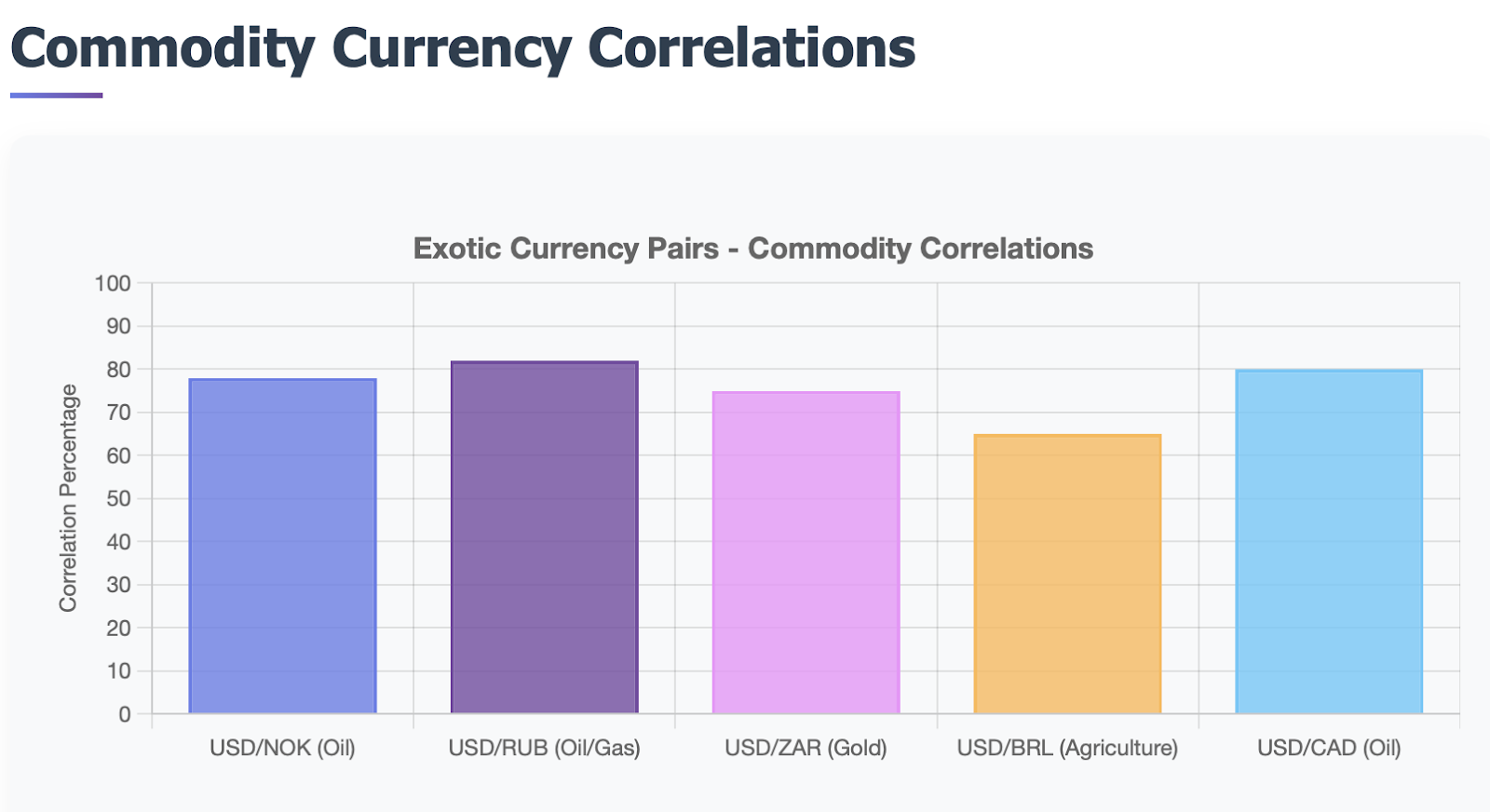
Many exotic currencies are highly correlated to the fate of key commodities. This relationship provides significant trading opportunitiesbut also exposes exotics to volatility in global markets.
Notes:
-
USD/NOK (Norwegian krone) → Highly correlated with oil prices
-
USD/RUB (Russian ruble) → Oil and natural gas exports have significant impacts on the ruble
-
USD/BRL (Brazilian real) → Oil price, trade balance and agricultural commodities (such as soyabeans and coffee, etc.) have evolving impacts
-
USD/ZAR (South African rand) → Highly correlated to gold and other precious metals
As commodity prices rally, there is a high chance these currencies will rally, and vice versa.
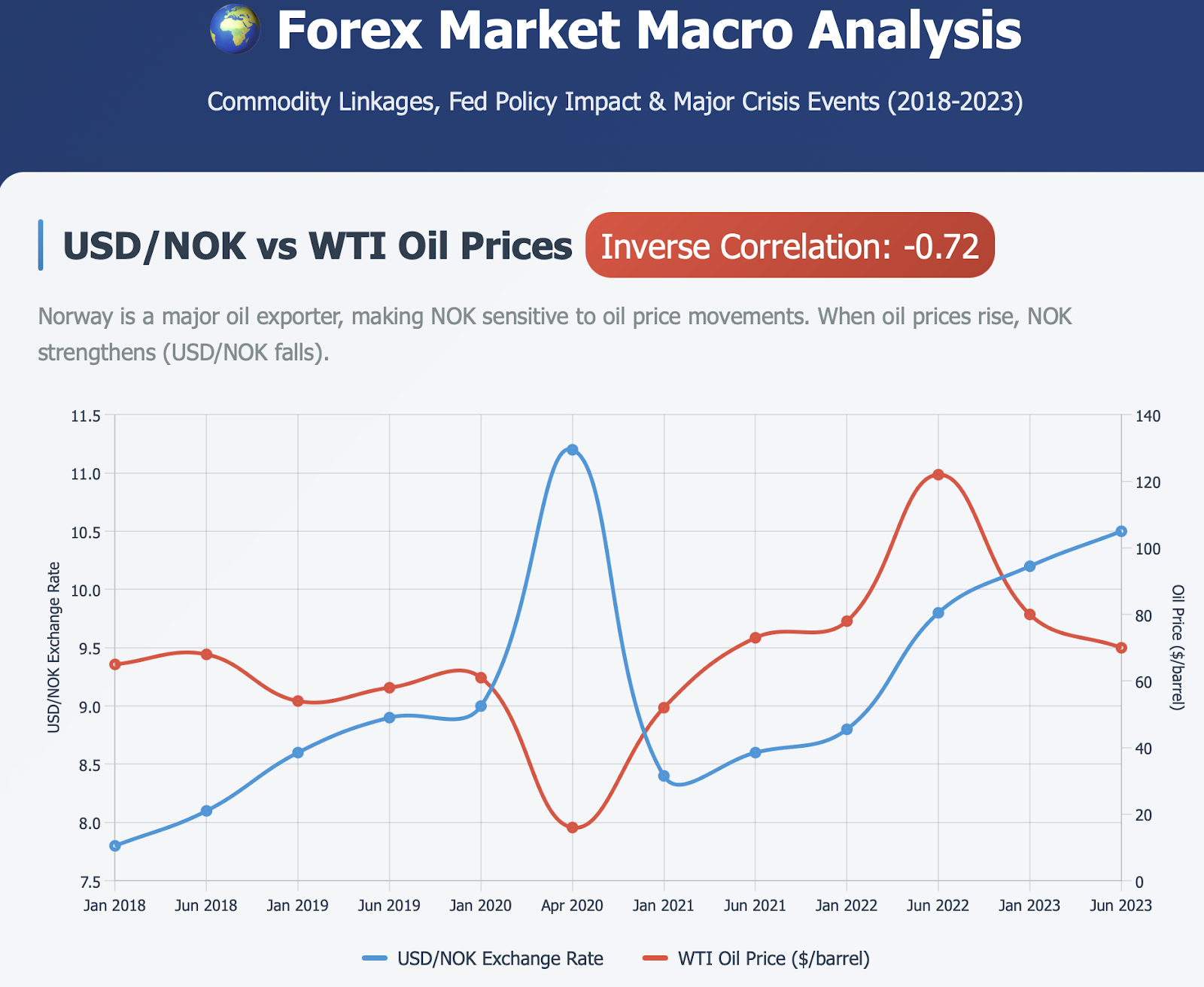
Example: The oil price crash in 2020 certainly impacted both the Russian ruble and the Norwegian krone, and they both collapsed against the dollar. Traders who had a very strong level of knowledge about the oil market would have had more knowledge in anticipating such moves.
3. Political and Social Events
Exotic pairs are particularly exposed to political instability, government interference, and social unrest. Unlike major currencies which are supported by larger and likely stronger institutions, emerging markets can experience rapid depreciation of currency when a crisis arises.
Elections and Changes in Policies: Sudden changes in policies, such as enacting capital controls or changes to tax structure can result in volatility.
Geopolitical Conflicts: Sanctions, wars, and other severances in relationships often result in immediate influence on exotic currencies.
Social Unrest: Strikes, protests, or general unrest can influence the exit of capital from the local market.
Beginner's Analogy: Imagine a small pond and a significant splash generates large ripples. In exotic currencies, events associated with politics and social issues are like that splash, amplifying any instability throughout the market.
4. Capital Flows
Emerging market currencies are highly reliant on capital inflows and outflows. When investors get excited about global growth, investors based in developed markets will put money into highyielding exotics. However, when uncertainty rises, the same investors return to safe havens like the US dollar, Japanese yen, or Swiss franc.
Inflow: unintentionally strengthens local currencies against the USD (decreasing borrowing costs and bringing in speculative traders).
Outflows: cause sharp devaluations, raise local interest rates, and increase volatility.
Because of this dynamic, exotic currencies are highly reactive to global investor sentiment and risk appetite.
5. Interaction of Drivers
Exotic currencies become especially complicated with all the interaction of the drivers. Just one event a Fed rate hike, a swing in oil prices, a local political crisis has the potential to quickly route through multiple channels and magnify currency moves.
For a trader, success will depend on being cognizant of large global macro variables while paying attention to local fundamentals at the same time.
How to Trade Exotic Pairs
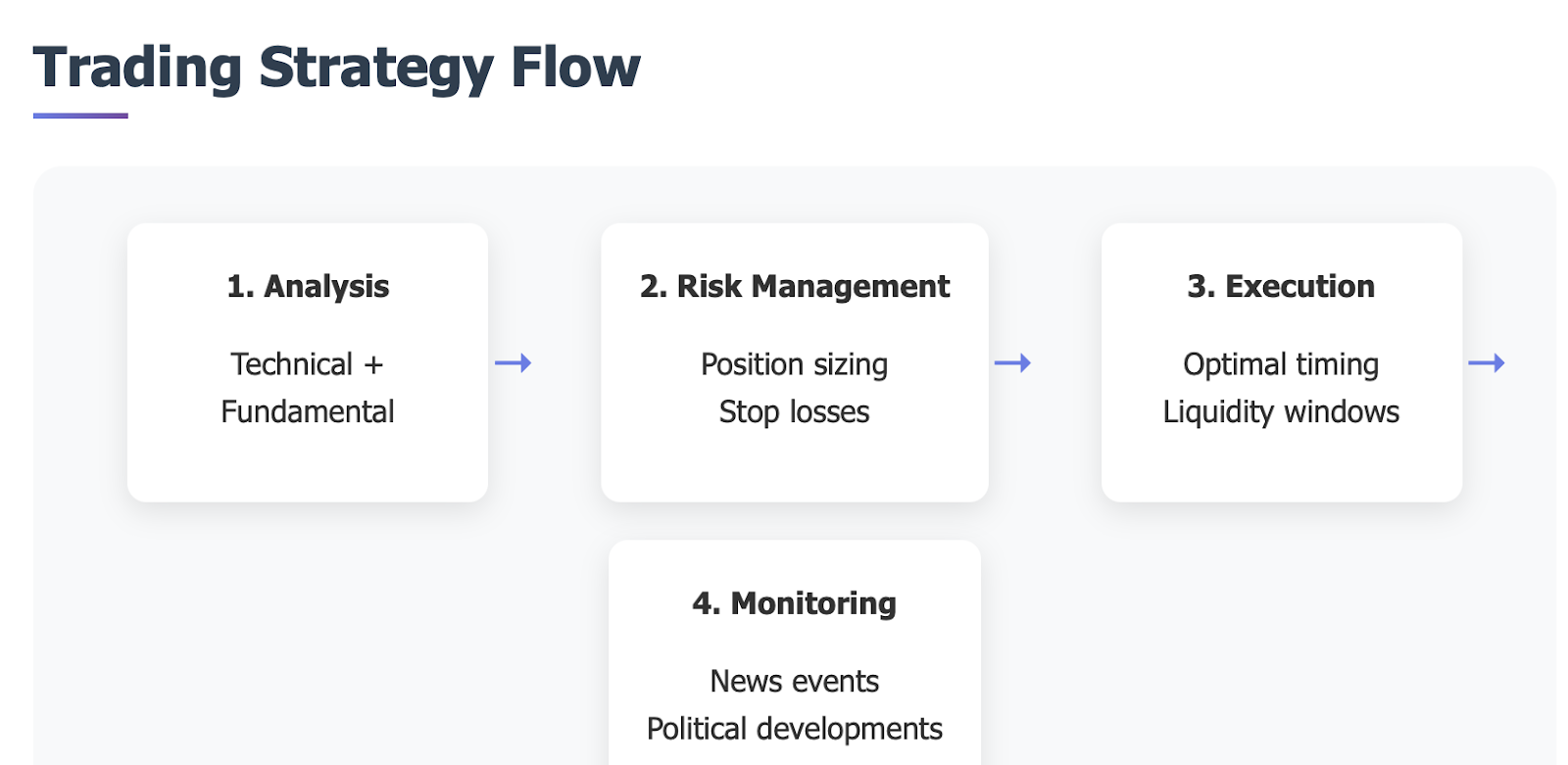
Trading exotic currency pairs involves more than excitement, it requires a strategic approach weighing the opportunity versus exposure and risk management. Because exotics behaved differently than majors, traders will need to employ modified techniques where low liquidity, high volatility, and local event risk is factoring.
Below are the main strategies and considerations to trade exotic pairs successfully.
1. Identify Optimal Trading Times
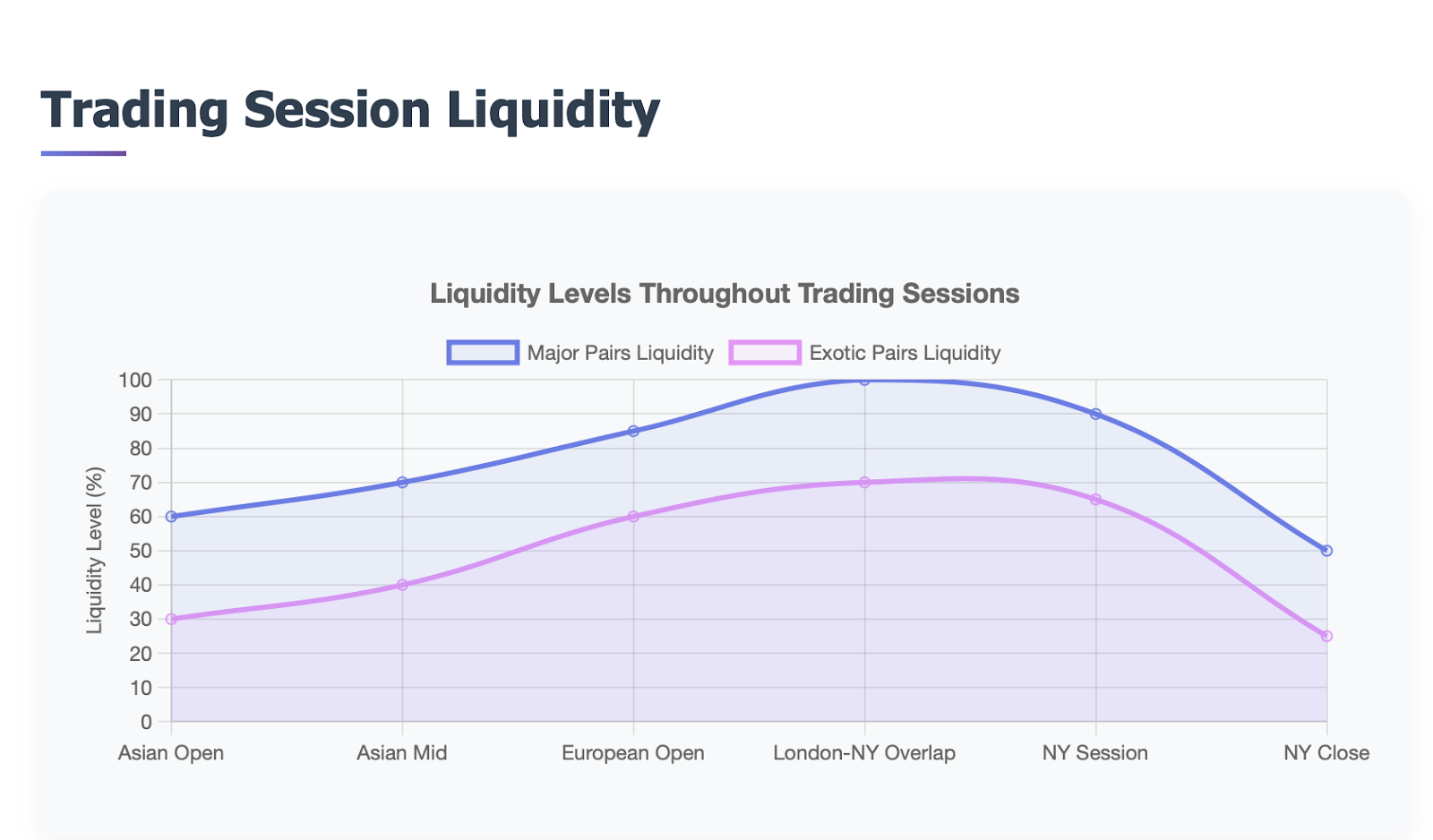
The liquidity in exotic pairs fluctuates tremendously with the active global trading sessions.
Asian Session: Some Asian exotics (USD/THB, USD/SGD) might be active.
European Session: Many exotic pairs related to Europe, Africa, and the Middle East (EUR/TRY, USD/ZAR) provide more liquidity.
U.S. Session: Trade overlap with Europe often results in high volatility for USDlinked exotic pairs.
Tip: Traders should make plans for their exotic to trade during it's most liquid trading sessions. Attempting to trade exotic pairs from low volatility hours often results in wider spreads and erratic price movements.
2. Risk Management: The Golden Rule
Exotics require a disciplined risk management approach. Risk management will benefit even seasoned traders, while the absence thereof can lead to catastrophic losses.
Consider Smaller Position Sizes. The volatility surrounding exotics means losses can increase rapidly smaller trades give you a little breathing room.
Consider wider stoploss levels. The average exotic can move hundreds of pips in seconds or minutes, so you need to be aware of the noise to place effective stops.
Consider Lower Leverage. Leverage effective for the EUR/USD may be disastrous for the USD/TRY by using lower leverage, you can control margin calls.
Also, Diversify. Do NOT overexpose your portfolio to a single exotic pair and/or a single region. Not all exotics are correlated, so it is better to spread your risks.
Beginner Analogy. Trading exotic pairs without using risk management is like driving on mountain roads at full speed: you might enjoy it for a few seconds, but the chance of crashing is enormous. A prudent driver considers the risks and slows down, applies brakes wisely, and respects the terrain.
3. Technical Analysis for Exotics
Exotics can be responsive to technical analysis, but traders will need to take the volatility, and resulting discrepancies, into account.
TrendFollowing: Exotics can trend strongly due to political or macroeconomic events. A trader may then identify a trend, and ride that trend, using a moving average or breakout.
Support and Resistance: Exotics often shift sharply at key psychological levels, so there may be good opportunities for entry and exit where price reacts decisively.
Indicators: These can be helpful also, like MACD or RSI [Relative Strength Index] and Bollinger bands. But will require discretion, especially for the standard settings, while adjusting for volatility.
4. Fundamental Analysis for Exotics
In exotic trading, fundamentals are particularly important because local economies and politics end up having disproportionate effects on the local currency.
Central Bank Policies: Look at rate decisions and policy statements from both the central bank of the exotic currency and the Fed/ECB.
Political Developments: Elections, coups, sanctions and reforms can have massive implications.
Commodity Prices: Follow the related commodity (oil, gold, soybeans) for the related currencies (NOK, ZAR, BRL).
Example Case: The South African rand (USD/ZAR) frequently trades off of gold prices and government stability. A trader that ignores either would be missing a large driver.
5. Psychological Factors
Trading exotic pairs is not only financially challenging, it is also psychologically challenging. The volatility of exotic pairs can test a trader's discipline, and may lead to emotional reactions.
-
Understand that volatility is normal.
-
Avoid acting as if every spike or movement is a catastrophic event.
-
Stay with your initial stoploss and takeprofit strategy; assiduously avoid chasing price.
-
Put into perspective the fact that not every opportunity must be traded.
Trading exotic pairs is like hiking into the steep mountain slopes. The view at the top may be priceless, but getting there requires careful thought, discipline, and stamina for the mental journey.
Case Study: Carry Trade in USD/TRY
The Turkish lira has always offered high rates of interest in comparison to the US dollar, allowing it to be a candidate for a carry trade. Traders would borrow in USD and invest in TRY to earn the rate differentials.
Upside: Attractive yield if lira is stable.
Downside: Numerous Turkish political uncertainties and high rates of inflation have caused the value of the TRY to decline multiple times, subsequently destroying an overnight carry trade profit.
This example demonstrates the fundamental reality of exotic trading that opportunity is inherently linked to risk.
Advanced Strategies and Use of Portfolios
Though exotic currency pairs are often considered specialist instruments, advanced traders view them as more than speculative plays. When the right strategies are employed exotic currency pairs can be hedging instruments, portfolio diversifiers, and sources of arbitrage. Exotic pairs can be incorporated into larger Forex strategies to incorporate exotic currency pairs while improving performance and maintaining risk.
1. Hedging Strategies
Exotic pairs can be used as hedges for exposures in commodities or interest rates. Since many exotic currencies are either highly correlated to resource exports or local monetary policy, they provide unique ways to have some control on portfolio risk.
Commodity Hedging: For example, the USD/ZAR often follows moves in UI gold prices. If a trader had positions with exposure in gold, USD/ZAR can be used a little like a fut futures for gold. The same goes for USD/RUB or USD/RON oil exposure in the market.
Interest Rate Hedging: Again, highyielding exotics can function as hedges for interest rates. Essentially, you may want to use an exotic to lessen your exposure if the central bank was Fed or ECB managing changes in their policy.
Professional Example: A portfolio manager who is at risk of a decline in gold prices could hedge this risk with long positions in USD/ZAR, because the rand usually declines when gold declines.
Beginner analogy: Think of exotic pairs as an umbrellait is not something you have with you every day but it is important protection when a rainstorm pops up on you.
2. Diversification with Exotic Pairs
Exotics hold little to no correlation with major pairs, thus making them good investment products for diversification purposes.
Majors (EURUSD, GBPUSD, and USDJPY) in large part are pushed by sentiment on the US dollar and global macro trends.
Exotics (USDTRY, USDTHB, and USD BRL) on the other hand, will likely negotiate on issues of local regional political unrest, commodities, and decisions by local Central Bank.
As an example, while a trader might hold long positions in EURUSD and GBPUSD, their portfolio might be diversified by a long position in USDTRY. Even if the majors are moving sideways, it is plausible that updates with how the political situation in Turkey unfolds could inject positive volatility into the exotic pair.
3. Arbitrage Opportunities
Advanced traders will search for arbitrage opportunities with exotic pairs, especially when they notice that inefficiencies exist in the market.
-
Interest Rate Arbitrage: Emerging markets tend to have much higher benchmark interest rates. By borrowing in a lower interest currency and investing it in the high yields in exotics, traders will profit from the difference.
-
Crossmarket Arbitrage: Because of the lower volume of trades that exotic pairs have, price mismatches sometimes occur between markets such as the spot market and futures or forwards market.
Arbitrageurs are able to leverage price discrepancies in order to make money.
Beginner version: Finding the same item in two stores, albeit for different prices. If you can do it quickly and correctly, then you can profit by buying low and selling high.
4. Psychological Benefits of Trading Exotics for Advanced Traders
For many advanced traders, exotic pairs prove to be an intellectual challenge that entails more analysis, larger risk techniques, and constant vigilance to both local and global affairs. Trading exotics forces traders to:
-
Be disciplined with risk controls
-
Extend their ability to know global markets
-
Formulate multiasset consciousness (e.g., commodities, rates, geopolitics)
Thus exotic trading becomes an advancedlevel practice while developing overall trading acumen.
5. How to combine exotics and major strategies
The best practice is to trade exotic pairs in conjunction with major pairs, not simply as independent instruments.
Hedging: Exotics can reduce portfolio exposure when the majors are highly correlated.
Opportunistic Trading: Exotics can have short bursts of return during a crisis and/or commodity cycles.
Risk Adjustment: Trader may have flexibility in their leverage and allocation between major pairs and exotics to smooth risk of return.
Final Thoughts and Call to Action
Exotic currency pairs are in a unique place in the Forex market. While the world’s major pairs represent overwhelmingly the most popular way of trading given their stability and liquidity, exotic pairs have their own personality: they are less stable, offer higher volatility characteristics, have higher spreads, and are more prone to volatility influenced by local politics, commodities, and capital flows. Ultimately, exotic pairs can be both risk and reward.
In this manual we’ve defined exotic currency pairs, highlighted their benefits and risks, explored their main drivers, discussed strategies for trading them, when to use them, and advanced trading strategies. We observe one abiding lesson here; exotic pairs are not for every trader – exotic trading is best suited to those who understand that with opportunity comes responsibility, and that there is a point at which opportunity and responsibility collide. The concept of risk management is important to consider and Non negotiable for exotic trading; such as reduced position sizes, wider stop losses, and diversified approaches.
Moreover, experienced traders can utilize exotic currency pairs as alternatives for other benefits such as hedging commodity exposure, diversifying portfolios, and benefits through arbitrage. In fact exotic currency pairs can also be a chance for traders to practice and understand how to keep themselves disciplined, patient, and adaptable in extreme market volatility.
If you are ready for exotic currency pairs on a professional platform for the global Forex markets, we can offer you a chance to explore that with Tradewill.com. Whether you want to diversify a portfolio, speculate, or create advanced hedging strategies, Tradewill can provide the platform and tools with which to trade confidently.
Start your journey today at Tradewill.com and discover how exotic pairs can add new depth to your trading portfolio
Disclaimer: The content of the blog does not represent any position of Trade W, does not serve as any trading-related decision advice, and does not endorse any third-party.