

 Trade W

What Is "Long on Top, Short on Sides"?
The ‘Long on Top and Short on Side’ strategy is a protective hedge that’s a hybrid of very aggressive upside and protective bearish direction trading. It is like putting a flag on a mountain peak, and placing the two security ropes on both hillsides, to represent a market that will grow significantly to the upside at the peak, and the protective nature of potentially unexpected drops in value through either hilltop or hillside security.
This is not just trading to the upside. The purpose of this strategy is to achieve profits during bull rallies while simultaneously having a security net in place in times of unexpected volatility. Traders implement this strategy across all product categories, including options, contracts for differences, stocks, and the foreign exchange marketplace, balancing out the potential reward, as well as the risk of a drop in value.
Essentially, the goal of this strategy is to keep profits at a high level during bullish trends. While the top positions are there to target the current dominant trend, the side positions are providing an offset to any potential loss due to volatility spikes or bear rejections. The ultimate objective of this strategy is to remain profitable throughout the ideal, as well as high-impact market conditions, without suffering the loss of an entire position as a result of a sudden market swing.
Where Did This Strategy Come From?
The long on top, short on sides method arose from traditional hedging practices that institutional traders were using in the early 1990s. As the options market matured and retail participation grew, sharp traders started applying these same methods to their smaller portfolios. In addition, the strategy started getting widespread acceptance when volatility during the 2008 financial crisis rendered pure directional trading highly speculative.
Market Applications
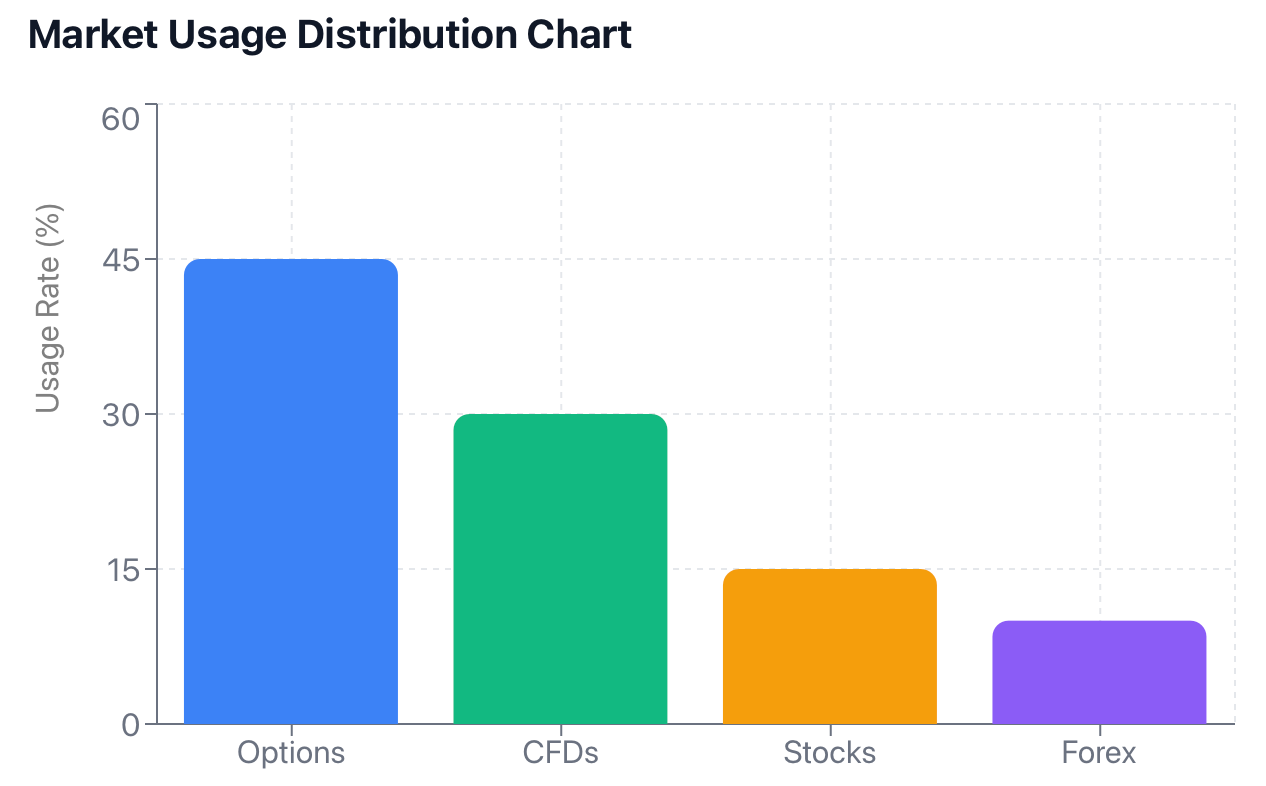
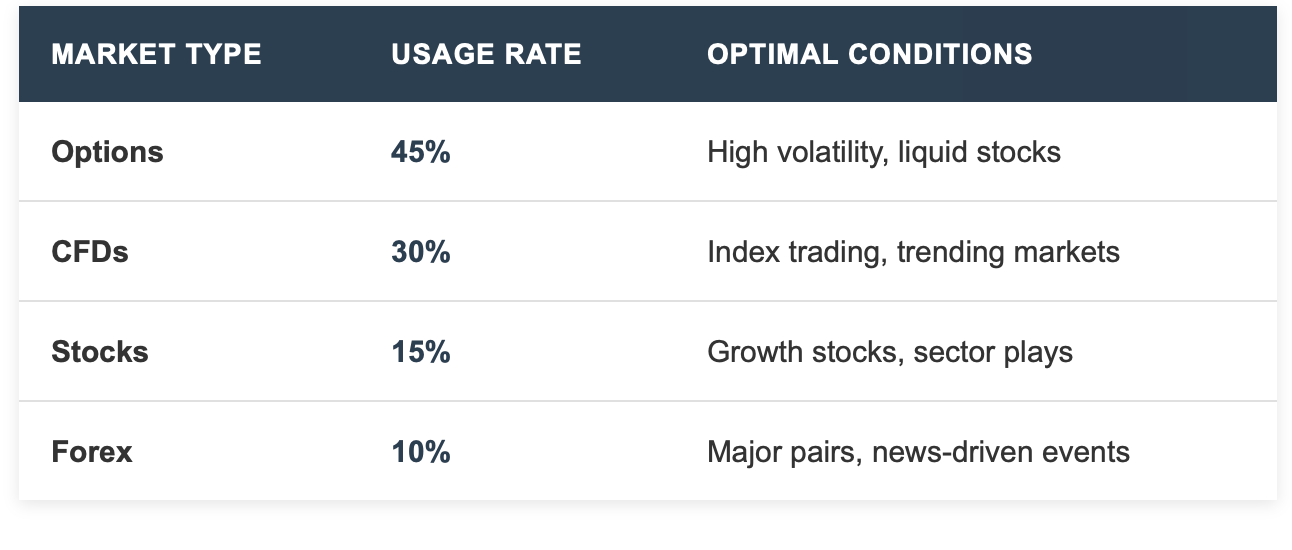
Options: Options are the best vehicle for high liquidity stocks such as Tesla and Apple, where you can buy call options positioned at the top, while also selling puts and/or buying protective puts on each side of your trades.
CFDs: CFDs work great with market indices such as the S&P 500 and NASDAQ during extremely volatile trading periods. When entering into a CFD position, you take a long position with your top position and use your side positions to mitigate drawdown risk.
Stocks: Stocks give you direct ownership of the equity at the top, along with the option of using inverse ETFs and/or short positions to hedge your specific sector risk on the sides.
Forex: Forex pairs with the highest liquidity (such as EUR/USD and GBP/USD) provide excellent long positions in the trend of primary currency movement while offering protection against sudden reversal of the trend or price-based movement due to central bank or geopolitical announcements.
Real-World Example: Tesla Options
Assuming that Tesla has shown extreme upward movement in terms of price action (currently trading for $240), the professional trader might consider:
-
For the Top position: Purchase 10 call contracts with a $250 strike price that will expire in 30 days.
-
For side positions: Sell 5 put contracts with a $220 strike price and purchase three put contracts with a $200 strike price.
If the price of Tesla rises to $270, the Top position produces a significant profit, while the side positions may expire worthless and/or at minimal loss. If the price of Tesla falls to $210, the protective put options limit the downside risk by limiting losses; the premium received from the selling of the put options will provide a slight cushion against losses incurred from holding the purchased puts.
Beginner's Analogy
When you're looking to invest in a new restaurant, there are two ways to go about it. The first is the main position of being an equity owner in the restaurant. Typically, this will be the largest amount of money you invest, as you expect the restaurant to be successful and generate a high return on your investment. The second type of position is the backup or insurance policy. Examples of this include having an exit strategy and/or keeping some cash reserves available in case of failure.
If the restaurant is successful, your investment in the restaurant will return you a large profit, but if the restaurant struggles, your backup plans should hopefully protect you from losing your entire investment.
Pros and Cons
Benefits:
-
Decreases volatility for portfolios invested in Uncertain Markets.
-
Captures the upside potential of Uncertain Markets while mitigating the downside risk.
-
Flexibility to Invest in All Asset Class Types.
-
Ability to Scale to Any-Sized Portfolio.
Drawbacks:
-
Execution Is More Complex & Requires A Certain Level Of Market Knowledge.
-
Transaction Costs Incurred By Taking Multiple Positions Can Decrease Profitability.
-
Poor Entry Timing May Result in Losses On Both Sides of Trade.
-
Need for Continuous Adjustment & Monitoring While Investing in Uncertain Markets.
Using the strategy of long on top, short on sides is no guarantee of success; it requires an in-depth knowledge of risk management, position size, and timing the market. Before investing your hard-earned money, ensure you fully grasp the core fundamentals.
Profit and Loss Dynamics: How This Strategy Really Works
Profits can indicate how a person is either a successful hedger or a lucky gambler based on their ability to figure out which direction their trade was moving in the past. The long on top, short on sides mechanism generates returns through asymmetric risk-reward setups.
Profits Sources
Gains from the Top Position: If your primary directional bet works out well, it should yield more profits than the costs associated with your hedges. For example, if I purchased a Tesla option for $500 and it doubled in value, I will be able to apply that value to offset my losses from the puts I purchased.
Premiums from the Side Positions: If I sell a put or CFD on the long side, I generate immediate revenue, which reduces the overall cost of my top option position and acts as a buffer in case my original option position does not move as anticipated.
Volatility Expansion: High volatility is generally beneficial for both the options sold and the long option purchased. As volatility rises, the price of the long option will likely move rapidly and increase profitability; the price of the options sold will also increase.
Loss Sources
Flat Markets: The worst scenario for long on top, short on sides is stagnation. If the underlying asset price has not moved, the value of time and opportunity is evaporating from any profits that may be accumulated from the options you bought.
Entering the Top Position Too Early: If an individual enters a top position prior to the price moving in the direction they want, they're effectively paying for the cost of their option and receiving nothing in return for their efforts. If you enter the position too late, you've missed an opportunity and run the risk of having the price decline back to a level where your original bet was made.
Too Much Hedging: The best way to eliminate profit opportunities when hedging is to create a hedge that is out of the money with a greater size than your long market position.
Volatility Analytics
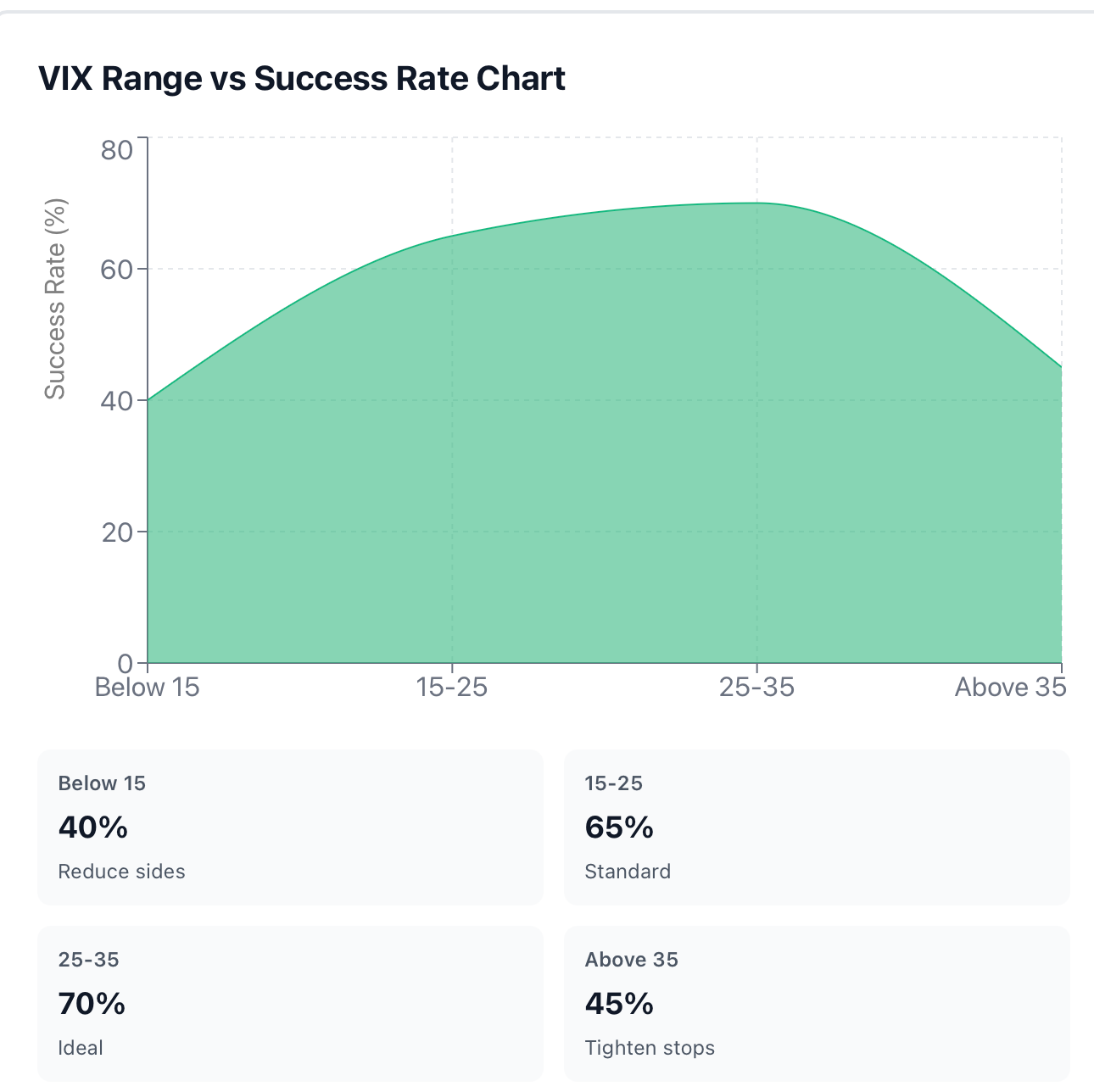
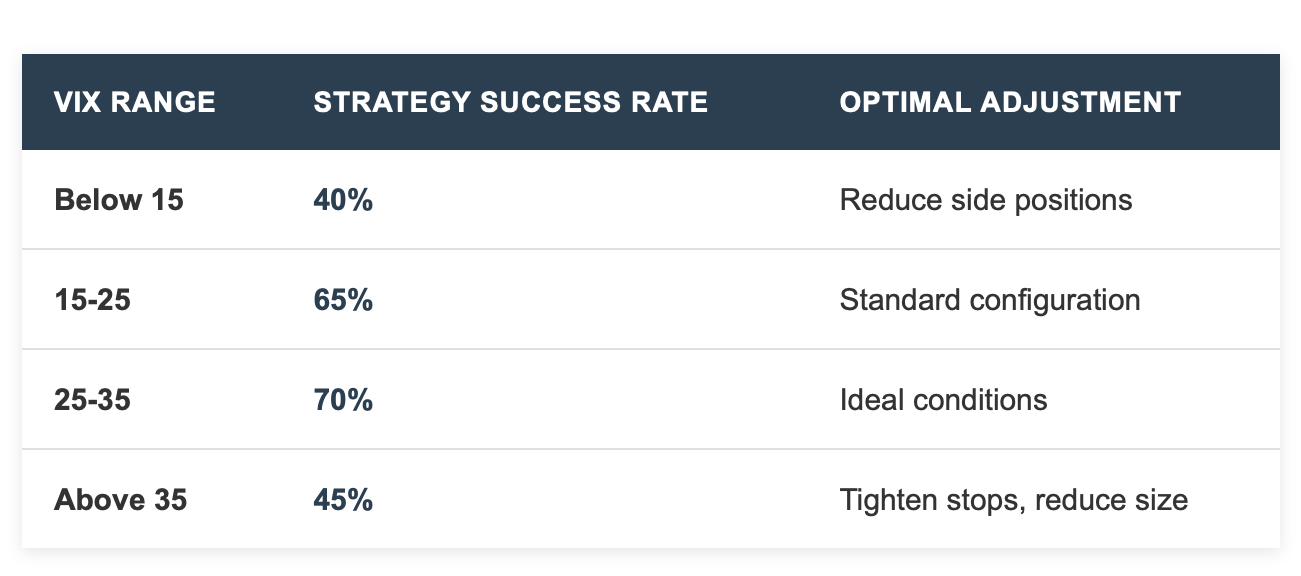
The optimal time to implement this trading strategy is when the VIX is at a level somewhere between 20-35. Below 15, your premium plus hedging would exceed your profits; above 40, it is possible that the strategies implemented would generate both a profit loss and a loss due to high volatility.Professional Example: Gold CFDs During Volatility
The turmoil in the banking industry during March 2023 led to gold moving rapidly from $1,900 to $2,050. A trader using long on top, short on sides:
-
Long Position on Top: A CFD on gold for 5 contracts at $1,920
-
Short Position on both Sides: Selling gold for 2 contracts at $1,880 and buying puts for protection against gold falling to $1,850.
This combination resulted in the following:
The long position made an increase in value of $130 per ounce, with five contracts producing $650 per contract (or $3,250).
The side short position lost $170 per ounce on the two contracts (producing a total loss of $340), giving the trader a net profit from both trades of $2,910 after three weeks, with a maximum drawdown of $1,500.
Beginner's Skiing Analogy
Many people go skiing. And one might picture oneself as doing so. The peak of skiing would be the culmination of skiing down the mountain and launching off a ski jump. High risk and high rewards combined with a lot of adrenaline.
Everything stems from ski jumping. Everything else can be linked to skiing from that point forward. Jumping from the peak of the mountain is what's most exciting about skiing, so therefore would result in a lot of thrill and glory as a result.
On the other hand, if you happened to have an accident when attempting to jump, you would be covered because the safety equipment protects you from being seriously injured.
Hedging Techniques
Stop-loss placement: Set stop losses at 15%-20% for your top positions and between 25%-30% for your side positions, as their primary purpose is to provide a buffer against significant volatility in the market.
Position sizing: Neither you nor I should risk more than a combined 2% of our overall capital on net exposure after hedging. If your top position was risking $1,000 and your sides were providing $600 worth of insurance, your net risk would be $400.
Dynamic Adjusting: When your top position moves into the profit zone, you should reduce your hedge position in line with the top position. You should lock in your gains by moving up your stop order as opposed to holding your hedges indefinitely.
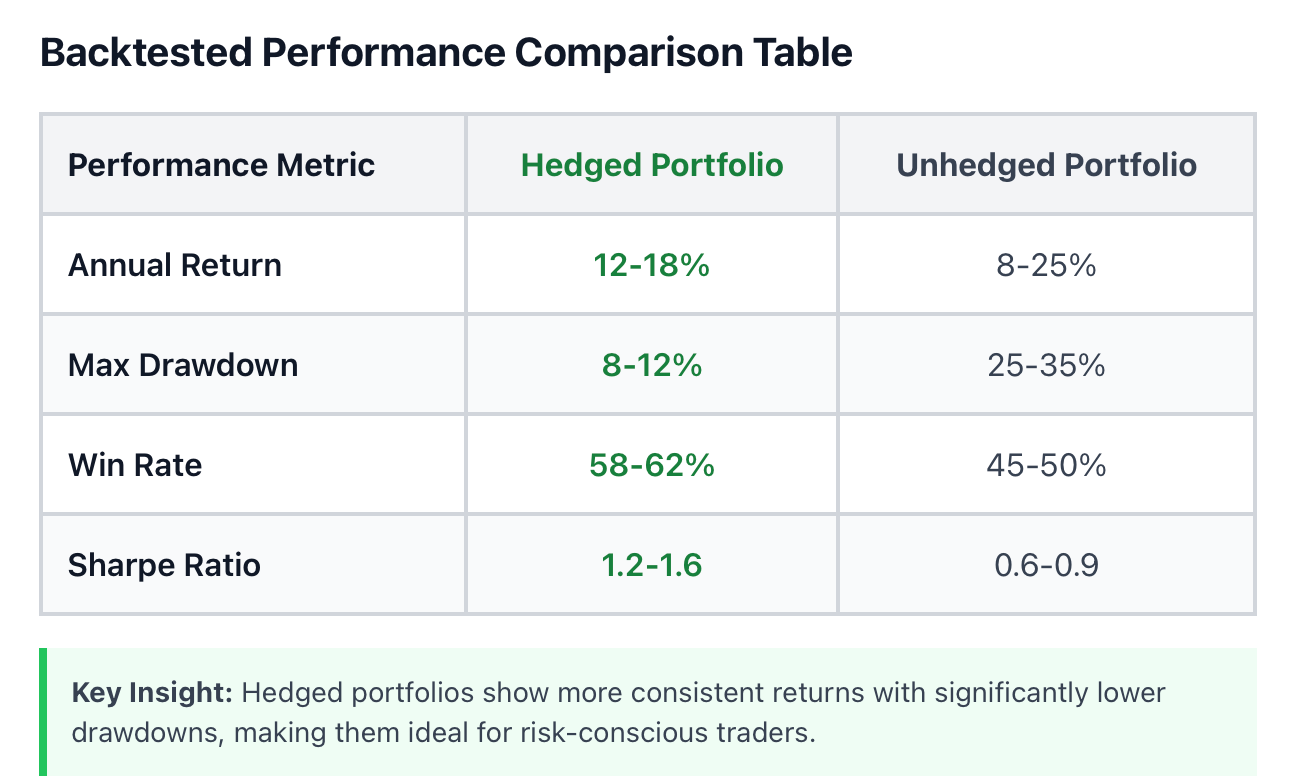
Backtested Data (2020-2024):
-
Average annual return: 12-18% on hedged portfolios
-
Maximum drawdown: 8-12% vs 25-35% for unhedged
-
Win rate: 58-62% on individual trades
-
Sharpe ratio: 1.2-1.6 (significantly better than pure directional)
The long on top, short on sides approach isn't about eliminating risk. It's about controlling it intelligently so you can stay in the game when others are forced out.
Step-by-Step Implementation: Setting Up Your Top/Side Strategy
Theoretical knowledge doesn't mean anything if it isn't put into practice, and this is how to construct a long on top, short on sides, starting from the ground up:
1. Market selection: search for liquid & volatile financial products. Liquid products have narrow bid/ask spreads. In addition, find products that trade enough every day so you can easily execute a trade with little to no slippage.
The best types of products would include:
-
Stocks - at least 5 million shares traded every day and a beta of at least 1.2.
-
Options - more than 1000 contracts of open interest and a percentile rank for implied volatility greater than 30.
-
CFDs - major indices and commodities that trade around the clock.
-
Forex - only trade major pairs (EUR/USD, GBP/USD, USD/JPY)
Avoid ultra-thinly traded products due to the high bid/ask spreads, which will eliminate your advantage before you start.
Step 2: Building the Top Position
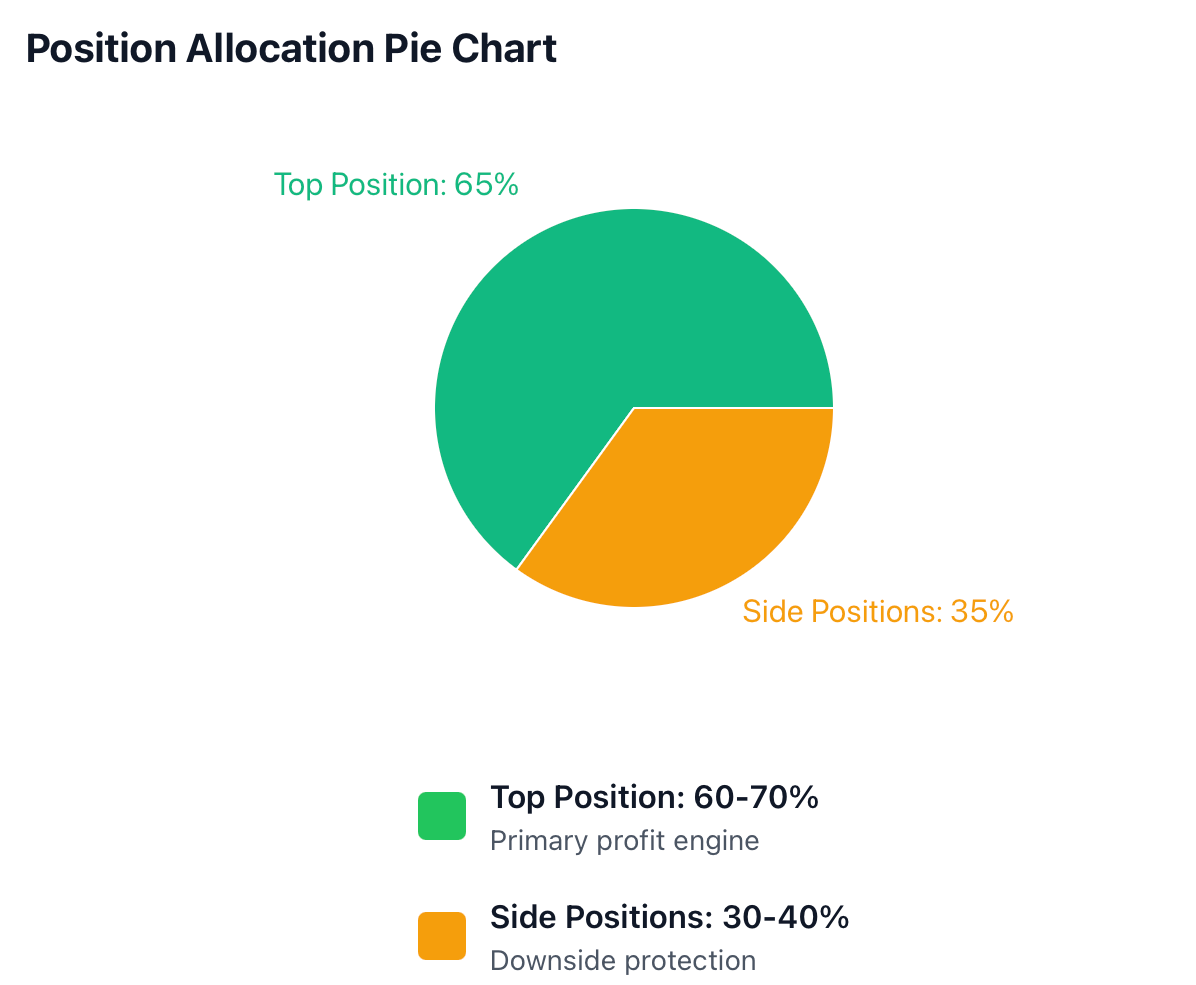
The primary engine of profit for this is through allocating 60-70% of total position risk to this area.
-
For shares: aggressive growth company shares are appropriate for purchase if positive momentum has been seen in price action and analyst upgrades are being reported, as well as deliveries beating the street's expectations; A stock being at $240. An example could be Tesla.
-
For options: At-the-money or slightly out-of-the-money calls should be purchased with 30-45 days to expiry. Options that are deep OTM (low probability) or far-dated (higher cost for decay) should be avoided.
-
For CFD: A Long position on an index that is trading above its 50-day moving average with increasing volume.
Entry trigger points:
-
When the price closes above the resistance level with volume support.
-
R.S.I. is closing above 50 but below 70, demonstrating positive momentum and no extreme overbought conditions.
-
Positive news catalyst for positive price action. such as a large earnings surprise.
Step 3: Risk Management Setup
Before placing any trades, define your exit rules in writing.
Top position stop-loss: 15% below entry or below key technical support.
Side position exits: Close protective puts when the top position is up 25%+. Let inverse positions run if the top reverses.
Profit targets: Scale. When implementing Sides, approximately 30-40% of your Risk Budget should be allocated to your Sides. Sides should suffice as an Asymmetric Protection for your Portfolio, as they offer small premiums for large insurance.
Method 1: Protective Puts
Purchase puts that are 10-15% below your entry point. These will appreciate when your highest position takes a nosedive.
Method 2: Inverse Positions
Create a short position in a related asset that is correlated with your long tech stock position. Shorting QQQ or investing in SQQQ will allow you to trade from the sidelines while maintaining a long position in your tech stocks.
Method 3: Sold Premium
Sell out-of-the-money puts under your protective price level and collect the premium for added income reduction. Only include this strategy if you are comfortable owning the underlying asset at that price.
Quantity Guidelines
-
Protective Puts: 50-75% of the size of your top position.
-
Inverse Positions: 25-40% of the size of your top position.
-
Sold Premium: 25-50% of the size of your top position.
Out of the top position at 20%, 35%, and 50% gains. Adjust sides accordingly.
You have the following capital to invest:
-
$10,000 = Maximum Risk Per Trade is $200 (i.e., 2%)
-
Investing at a top of $7,000 with risk being only $140 (the stop loss being 2% down),
-
Invested at the side with $3,000 invested, thus, also protecting 60-80%
For both top and side investments, your net risk would be $60 or $80 (your net risk is well below 2%; a safe investment).
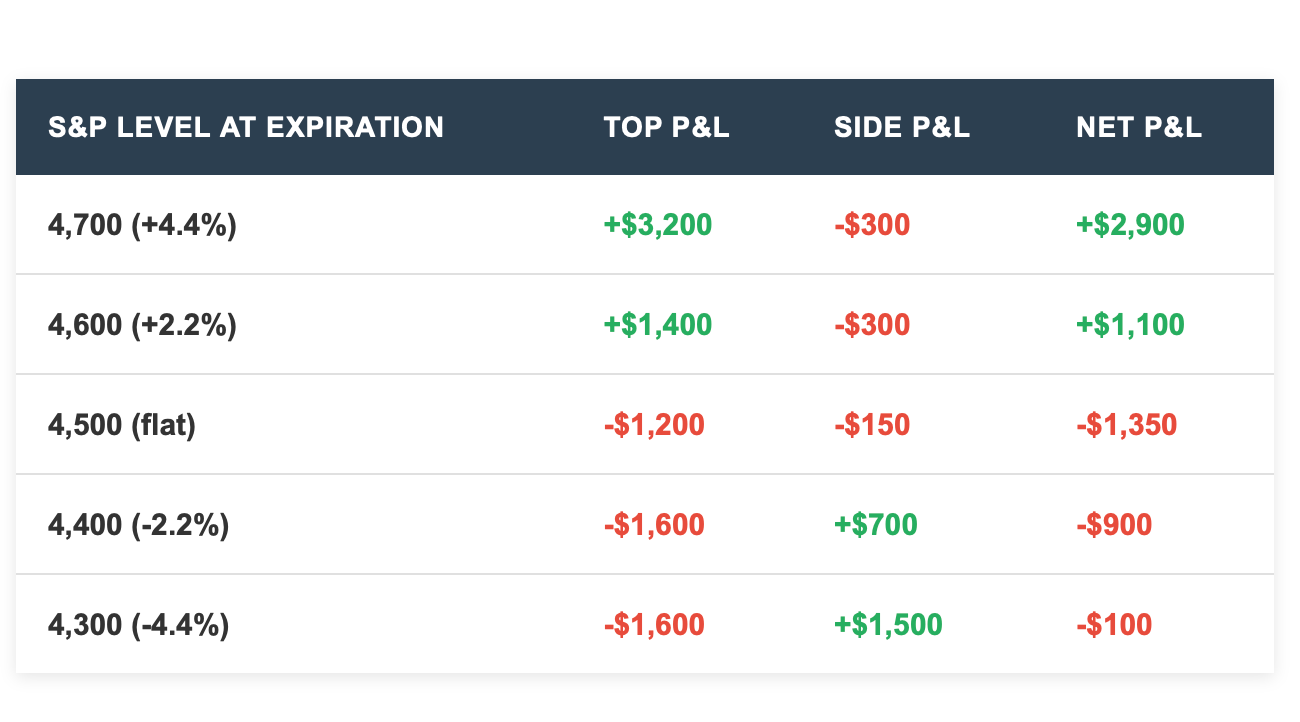
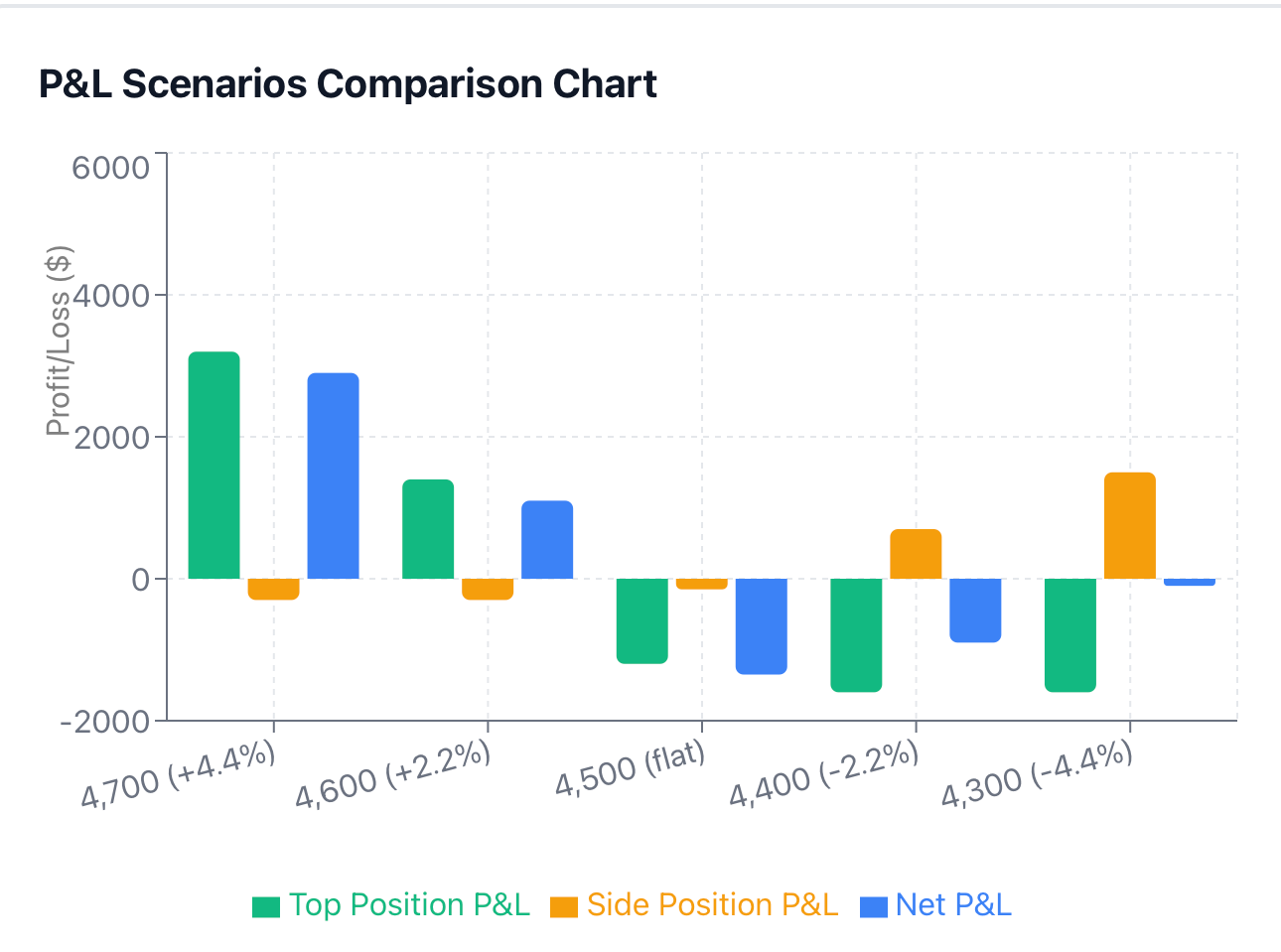
As a top position, purchase two SPY call options with a $455 strike price and 35 days’ expiration; cost: $800 each, total of $1600; stop loss will be to exit if it closes below $445.
For your sides, purchase one SPY put option with a $440 strike price and 35 days’ expiration for $300; then, for every SPY put option sold at the $425 strike price, you will receive $150 back.
Therefore, for a total net investment of $1,600-$150=$1,450, your max risk will be $1,600 minus your protection of $300 minus your credit of $150=$1,050 for maximum potential profit remaining after payment for your hedge at the upside.
Notice how side positions cap your downside at $1,350 while keeping unlimited upside potential.
Beginner Example: Small-Scale Stock Portfolio
You have $1,000 and a basic stock portfolio.
1. For the Stock part of your Portfolio, you Buy ($700) of Apple (AAPL) stock (assume it is $175/share = 4 shares).
2. For the Other part of your Portfolio, Buy ($300) of SQQQ (Inverse Nasdaq ETF).
If the technology sector rallies, your Apple shares go up, and your SQQQ goes down. If the technology sector crashes, your SQQQ shares go up by 3x and your Apple shares go down by 20%. This significantly mitigates your overall loss.
Step 4: Monitoring and Adjustment
Check positions daily during the first week, then every 2-3 days unless major news hits.
Daily Monitor:
-
Is the top position still above the stop-loss?
-
Has volatility changed significantly (VIX moved 5+ points)?
-
Any news that changes the thesis?
Once per day:
-
Is the top position still above my stop-loss?
-
Has volatility changed significantly? VIX moved 5+ points.
-
Has any news changed my thesis regarding this position?
Weekly Adjustment:
-
If I have a 20% gain on my top position, 30-40% of my side positions should be trimmed.
-
If I have a 10% loss on my top position, consider adding to my side positions or exiting altogether.
-
If volatility spikes: Make sure all stops are tightened and consider taking profit.
The long "top" short "side" strategy requires your active attention. Calendar reminders should be kept to ensure adherence to your strategy. 'Discipline" will win out over "discretion" every time.
Open a demo account at Tradewill.com to practice your long-top/short-side strategy without risk. Practice mastering the mechanics of this strategy before you invest your own money. Additionally, you can use the advanced charting tools to give you maximum control over your entry/exit points.
Disclaimer: The content of the blog does not represent any position of Trade W, does not serve as any trading-related decision advice, and does not endorse any third-party.