

 Trade W
Small cap stocks can be considered as the 'underdog' of the investment market. You will see very large companies (like Microsoft and Apple) get a lot of attention in the news and business magazines, but these smaller companies offer opportunities to create new products and services that may lead to breakthrough innovations for the next 10 years or more. If you are willing to accept some level of additional risk in exchange for potentially higher returns, small cap stocks should be seriously considered for your investment portfolio.
What Are Small Cap Stocks? A Beginner's Guide
Companies with a market cap of between $300 million and $2 billion are generally considered small cap stocks. This range can vary based on the market and who you ask, but most people will agree that these businesses are usually not well-known public corporations and still have a lot of growth potential.
A stock exchange separates companies into three types based on their size. Large cap stocks have a market cap of more than $10 billion; these are usually the world's largest companies with large market shares. Mid cap stocks have a market cap of between $2 billion and $10 billion; these are companies that have been in business for some time and continue to have steady growth.
Small cap stocks are at the bottom of this hierarchy, which means that the characteristics of these stocks are most appealing to many traders because of the significant opportunities they present.
The characteristics of small cap stocks consist of three main components:
-
Significant potential for growth
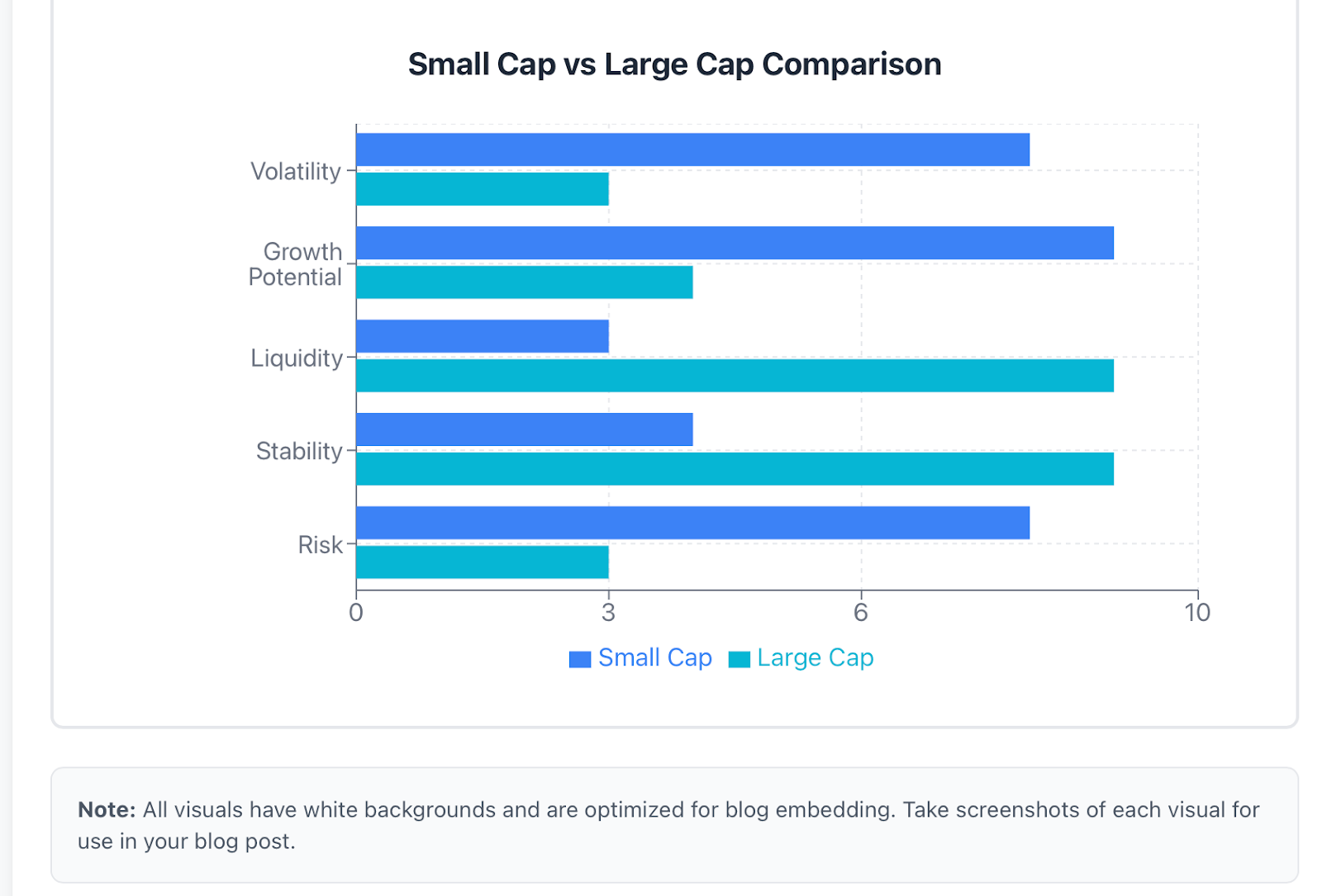
Because of the lower volumes of shares traded each day, prices of small cap stocks can fluctuate significantly when there is either buying and/or selling of a large number of shares by a large investor. Although volatility may discourage some investors, it also provides opportunities for profit.
Generally, small capitalisation stocks are primarily investors in niche markets or developing business sectors such as specialised medical device manufacturing, advanced technology/software development or regional retail chains. Generally speaking, small capitalization stocks generate a higher concentration of revenues as compared to larger, established corporations, allowing for the large impact of a successfully launched product or generated revenue from a major contract. However, the opposite potential exists, as a lost customer or failed project could significantly impact the company's performance.
A good analogy for this is a group of students forming a snack food business at school with limited funding and selling to local (small) customer bases. If the group's snack food products become popular, they will experience rapid growth due to starting from a small base. Likewise, companies such as Plug Power were able to capitalize on the growth of the hydrogen economy when it became a hot business sector, rewarding early investors with great return on investment's.
Although large capitalised corporations offer relatively stable investments and slow growth potential (generally due to their existing dominant position in the market), they generally do not provide the same level of exponential growth potential as small capitalisation companies. Depending on an investor's initial investment amount and the particular circumstances surrounding a specific investment, it is possible for small capitalization companies to produce returns of 100%, 200%, 300% or even over 1000% due to the volatility associated with their stock prices.
Top Small Cap Stocks to Watch in 2026
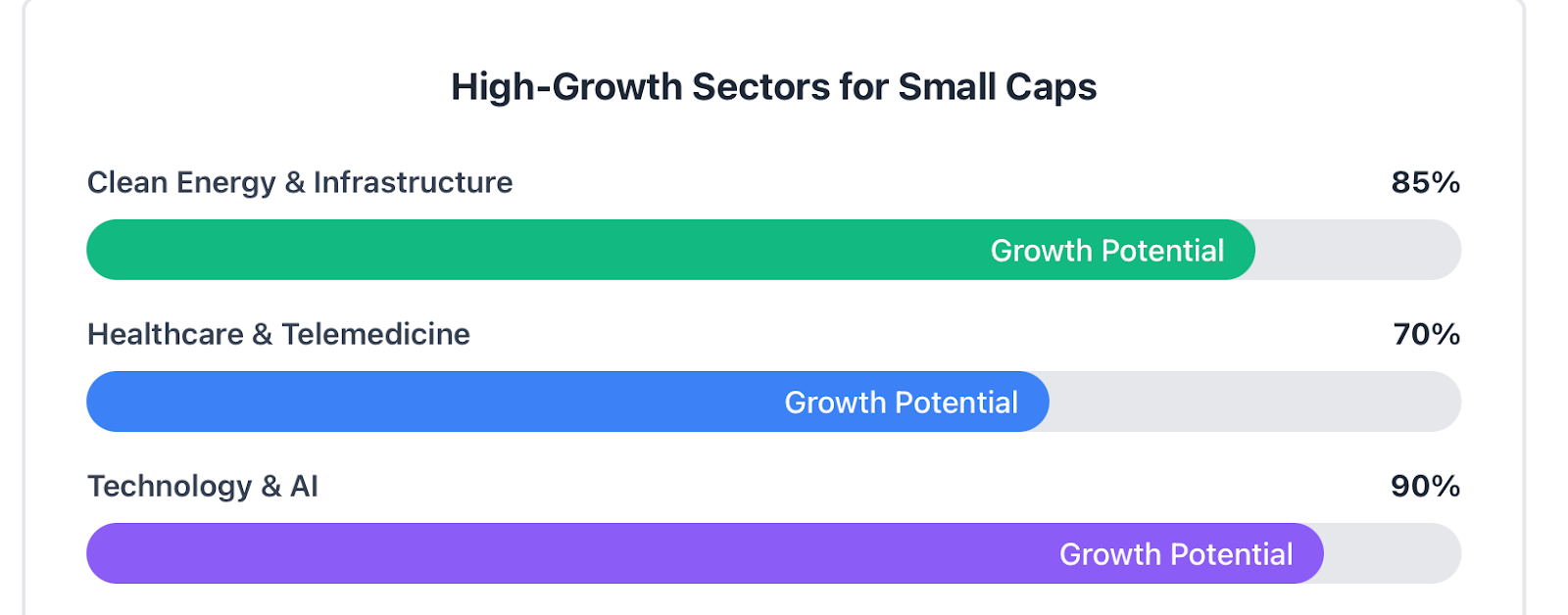
To identify the most attractive small-cap stocks, focus on the areas of growth and companies that have fundamental strength. Here are some sectors and companies that should be on your radar through 2026.
Clean Energy and Infrastructure
As we transition to a cleaner energy future, it's creating a lot of room for smaller companies to grow. For example, Plug Power was an early name in the hydrogen fuel cell space, but today it has grown beyond that into a much larger company. Also, look to companies like Blink Charging, which is installing EV charging infrastructure; this is an important part of the EV adoption story, as more consumers embrace electric vehicles, more charging stations will be needed. Both of these types of companies benefit from strong consumer demand, along with government incentives driving clean energy adoption.
Healthcare and Telemedicine
This sector can have explosive revenue growth; however, due to the nature of their business, companies in this sector tend to have thin gross margins, so when investing in these types of companies you're investing in their potential future profitability, rather than their current earnings, which carries a higher risk and a potentially higher reward when those markets reach maturity.
What to look for: companies with recurring revenue models (subscriptions, contracts with hospital systems) and improving gross margins as they scale. Healthcare is somewhat recession-resistant, which adds a defensive element to these growth plays.
Technology and AI
Tech investors are always on the hunt for the "next big thing." Smaller technology firms that specialize in servicing specific industry verticals such as FinTech (finance technology), Logistics, and Manufacturing continue to post a history of impressive revenue growth while still being overlooked. Companies that create Artificial Intelligence software products that solve very specific problems for an industry do not compete directly against major players such as Microsoft, but can create profitable niche markets by doing so.
Investors should focus on a few key performance indicators, including annual revenue growth between 20%, unit economics moving in a positive direction and acceptable valuations meaning price-to-sales ratios below forward estimates of 5-7x next 12 months' revenues, when evaluating these businesses. A number of these small cap technology companies trade at significant discounts to their projected growth rates, presenting tremendous opportunities from a standpoint of generating investor value.
Many of these businesses can be viewed as developing brands. Once the company's products finally begin gaining acceptance in the marketplace, the products' associated market capitalizations can expand rapidly. For example, if a business is currently generating $500 million of annual revenue and has a market capitalization of $500 million, and it continues to increase revenue at 40% per year, it could easily attain a market capitalization of $1 billion to $2 billion within five years, assuming it can maintain its current revenue growth trajectory. This is where the large investment returns will be realized.
Professional investors look beyond the market capitalizations of these developing companies and examine their financial performance metrics. For example, is the earnings per share (EPS) trend accelerating? Is the revenue growth rate increasing or decreasing? Are the gross margins of the company improving as it grows? The answers to these questions help determine whether or not the growth of the business is legitimate, or merely the result of a speculative hype explosion.
Risks also come into play in small cap investing. Small caps may experience dramatic declines in stock price from earnings disappointment (bad financial results) or from a sector move (shift between sectors). Due to the high levels of market volatility for small caps, market changes affect their valuations more negatively than larger cap stocks. Therefore, it is important to diversify your investments across many small caps from different sectors so that you do not have your entire investment thesis based upon one company's earnings report.
Small Cap vs Large Cap Stocks: Understanding the Tradeoffs
Investors can choose to select either small or large cap stocks. However, many smart investors will have both types, and understanding the differences between small and large cap will allow you to allocate correctly.
Large cap stocks are typically well-established companies; think of McDonald's. It is unrealistic to expect McDonald's to double its store count in one year, but it is also not going to declare bankruptcy in the near future. Large cap companies are generally stable with a predictable cash flow (dividend) and moderate growth potential.
On the other hand, small cap stocks are often similar to new businesses. For example, there is a possibility that the new small coffee shop could be the next Starbucks; at the same time, there is also a high probability that this small company will be out of business in two years. The upside potential for most small cap companies is generally considered to be much greater than that of their larger counterparts. However, the lower-end potential will usually be proportionately larger.
Data from history supports this argument. The S&P SmallCap 600 Index has outperformed the S&P 500 Index over extended periods of time, but the volatility associated with the two indices indicates that small cap stocks are generally more volatile than large cap stocks. During bull markets, small cap stocks will often outperform large cap; however, when the market is in a downturn, small caps tend to outperform larger companies.
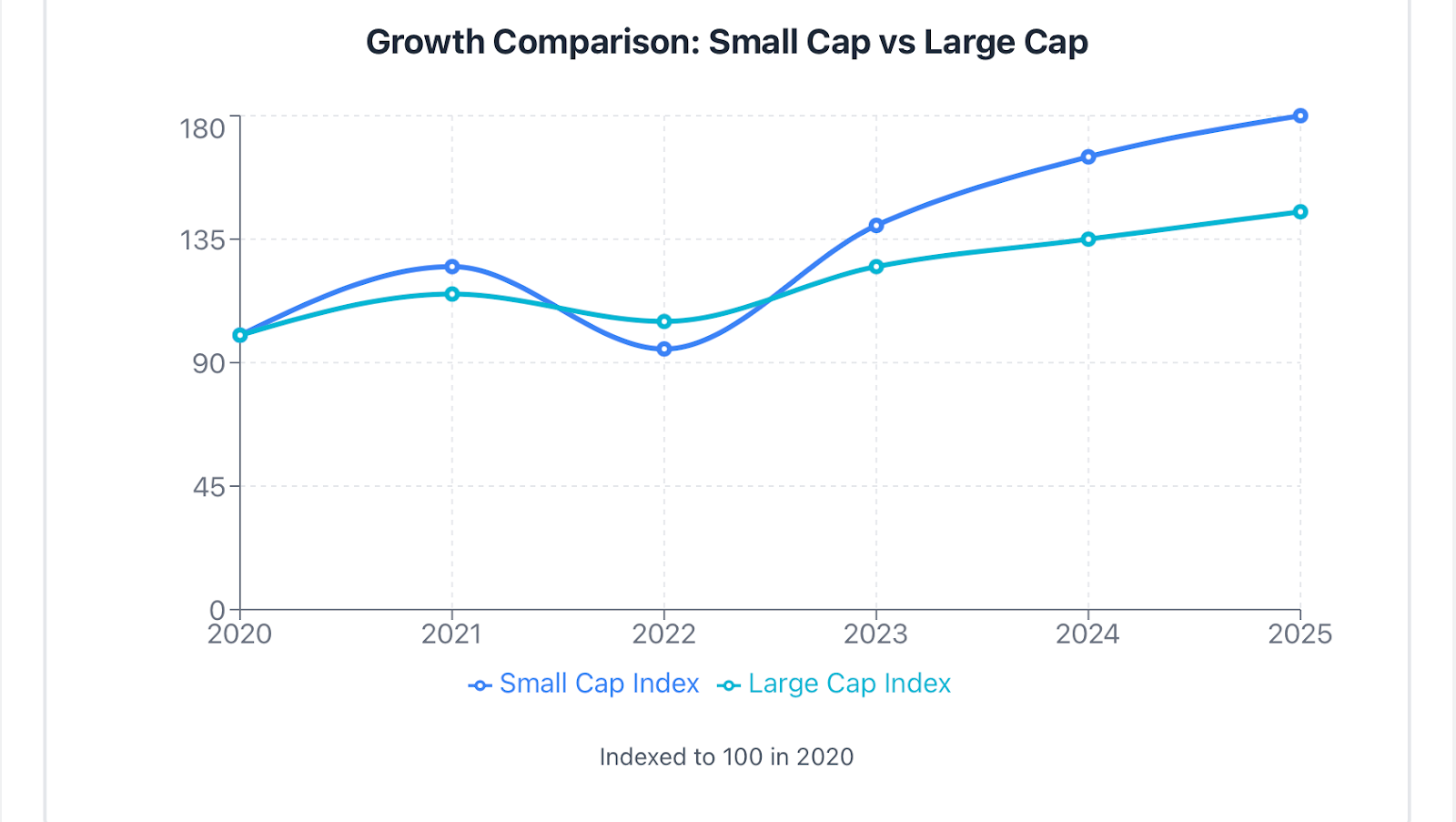
The amount of capital an investor allocates to small cap stocks will depend on their risk tolerance for this volatility. The sources of revenue for large cap companies are far more diversified than for small cap companies. Most large cap companies sell products all over the world (for example, Apple sells iPhones worldwide, as well as providing services, selling computers, wearables, etc.) while some small cap companies may have all of their revenue coming from one region or one product line. Therefore, depending on the extent of this concentration, a small cap stock could be viewed as both an opportunity and a risk.
The gross margins tell a different story. The larger companies have the ability to take advantage of their economies of scale, which means that their cost of goods sold decreases based upon increasing volume sold. Smaller companies may demonstrate an initial lower gross margin than larger companies; however, as they grow their sales, they typically can improve gross margins much more rapidly than larger companies. Monitoring the gross margin trend will enable you to determine the success of transitioning a company's growth phase into profitability.
The difference in liquidity is an important consideration that most novice investors do not consider. For example, you could buy or sell $1,000,000 of Apple shares without affecting the share price; whereas purchasing or selling shares of a smaller company may cause the stock price to increase by several percentage points. Due to this characteristic, smaller companies are generally less attractive to institutional investors, but they provide additional opportunities for individual investors to benefit from their nimbleness.
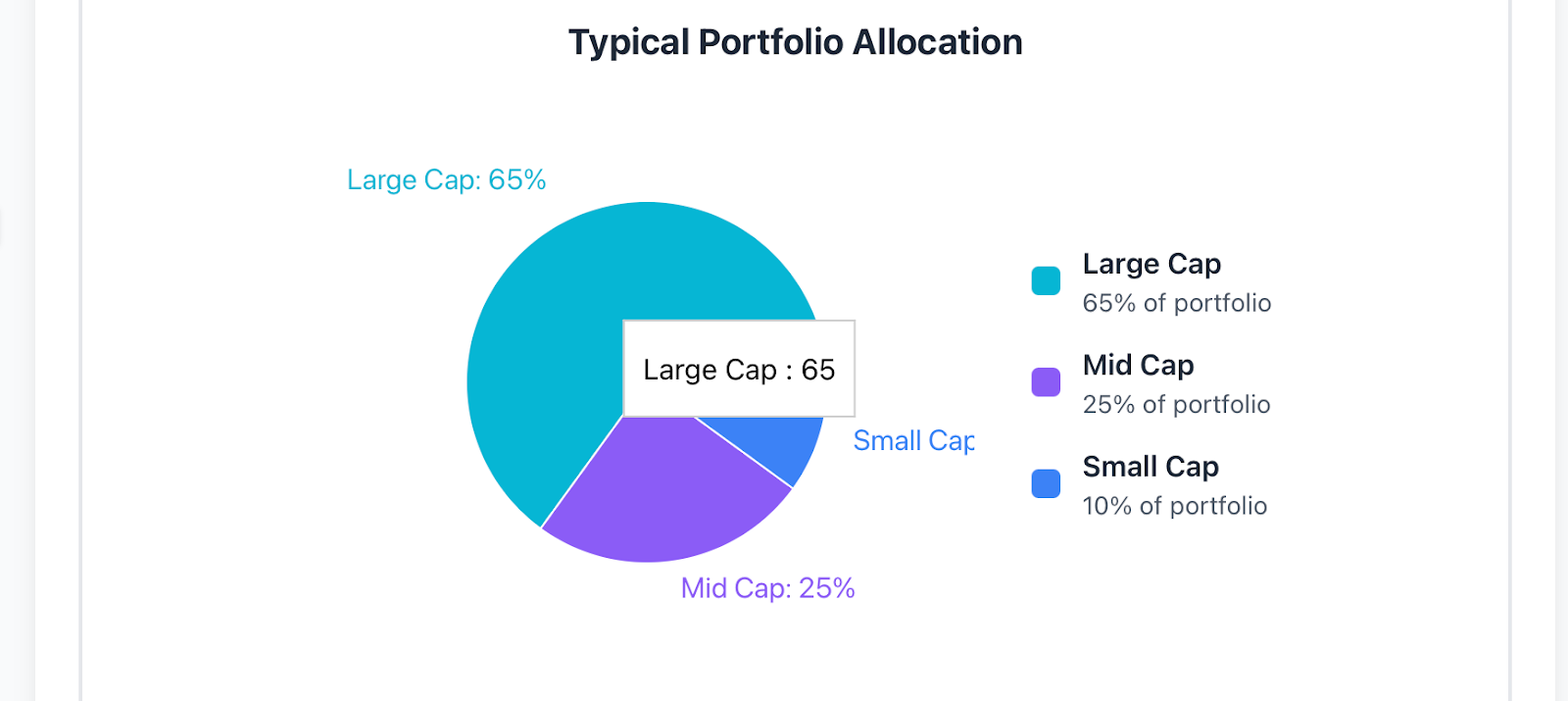
Therefore, it is essential for you to balance these characteristics when constructing your portfolio. A typical allocation will generally consist of 60-70% of your portfolio in large-cap stocks for stability, 20-30% in mid-cap stocks for balanced growth, and 10-20% in small-cap stocks for maximum growth potential. As you determine your portfolio allocation, you should adjust it based upon your age, risk tolerance, and investment time horizon. Since younger investors have a longer time horizon to withstand fluctuations in their investments, they can generally allocate more of their investments in small-cap stocks.
Risks and Rewards of Small Cap Stocks
If you're a small cap investor, you should be under no illusion; investing in small caps may not be for everyone because of the risks involved. The risk of liquidity is significant. Most small caps will have less than 500,000 shares traded each day, making them very thinly traded.
Unless you are lucky enough to have a buyer who wants to buy your shares quickly, you would have to sell your shares for less than what you paid to sell them, making it difficult to sell your shares quickly. This becomes more significant during times of panic when liquidity is virtually non-existent. For instance, many small caps had their bid/ask spreads widen to between 10% and 15% during the market crash in March 2020.
Then there is volatility. A small cap can fall 20%-30% in a single day following an earnings miss. Conversely, stocks that beat earnings can move up similar amounts. Both situations are usually driven by the supply/demand dynamic rather than the company's long-term fundamental prospects, so it is important to understand the dynamics at work with small cap stocks.
The financial instability of small caps also presents significant risks. Most small caps spend more of their cash on future growth than any other use. As a result of their growth, they may need to raise additional capital to remain viable, which often forces them to issue new shares, and therefore dilute the existing shareholders. In some extreme cases, some small caps do not have sufficient operating cash to continue operations and subsequently file for bankruptcy. Therefore, due diligence on balance sheets will be paramount.
Small-cap companies have much higher revenue fluctuation risk than larger companies. The main reason is that small-cap companies usually have fewer sources of income. For example, if a small-cap company loses a major customer, that could result in the loss of 20% of the company's revenue overnight. The impacts of potential supply chain problems, changes in regulations, or increased competition are much more pronounced for small-cap companies than larger ones, which typically have many lines of business.
Volatility in gross margins is another indicator of the operational difficulties faced by small-cap companies. For example, small-cap manufacturing companies may experience significant swings in their gross margins due to raw material costs or production efficiency and pricing pressures. The change in gross margins directly correlates with valuations; a company that is trading at 15 times its earnings and has gross margins of 10% will have that multiple reduced to 10 times its earnings if its gross margins drop to 7%.
An analogy to illustrate this concept is school snack stores. The owners of a school snack store usually have trouble making profits when their sales are low, and if they can't cover their fixed costs for a week, the owners may be forced to shut down. On the other hand, if sales increase dramatically in a week, the owners can generate significant profits since the fixed costs remain constant. Just like school snack stores, small-cap companies are essentially using leveraged investments to bet on growth, and the success of those investments has a huge financial payoff when the bet is successful or a significant financial loss if the bet isn't.
Many investors consider it worth taking the risk of investing in small cap stocks. When small cap companies can grow revenues from $50 million to $500 million, their stock can go up 10-20x in price while improving margins even further. Such opportunities do not exist with companies that already have $50 billion in annual revenues.
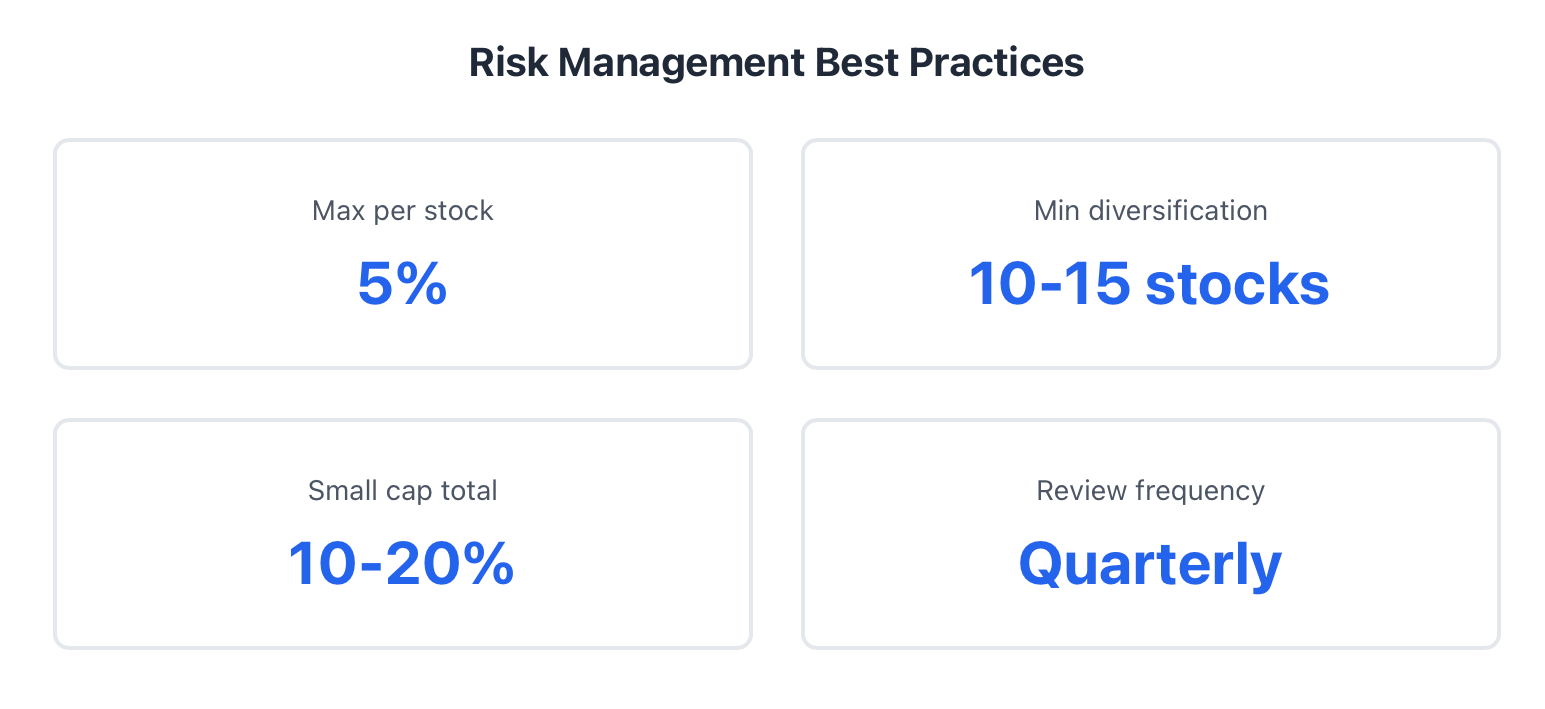
It is imperative to practice proper risk management when investing in small caps because of the extreme volatility associated with them. No more than 5% of your overall portfolio should be invested into any individual small cap stock. You should also diversify your holdings among at least 10-15 small cap stocks. Financial statements should be reviewed quarterly because small cap companies can lose value very quickly. A stop loss should be placed on any individual stock to limit its downside risk. Also, it is important to remember to only invest funds that can be considered 'losses' without jeopardizing your overall financial strategy.
How to Identify High-Potential Small Cap Stocks
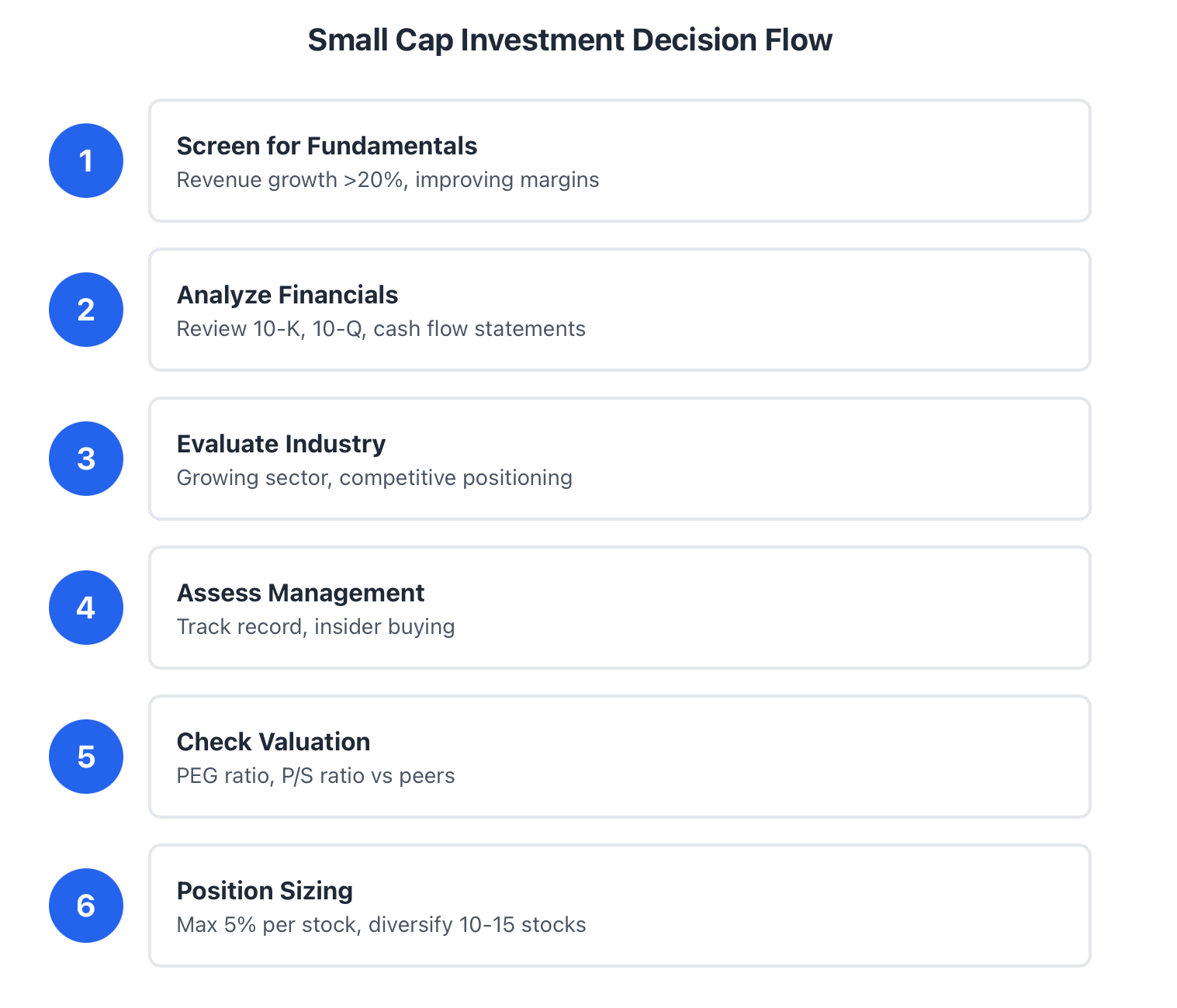
A successful investor identifies the best small-cap opportunities prior to the market realising them, as opposed to chasing momentum and purchasing at their peak. A methodical approach to searching for winners would begin with an analysis of financial metrics. Revenue continues to be the most critical measurement; companies that regularly report growth of 20% and above on a year-to-year basis are desirable.
While reporting strong quarterly numbers may appear impressive, achieving that level for a period of three consecutive years, on average, indicates the company possesses strong competitive advantages. To determine whether the business is gaining market share or losing market share, compare its revenue growth rates against the summary range of growth rate data from a company’s peer competitors in its industry.
The second most important financial metric to consider is EPS (earning per share). Similar to revenue growth rates, many high-growth small-cap companies do not prioritize profitability in the short-term as they will usually reinvest the profits generated into future growth. Therefore, review the trajectory of the EPS for the reporting periods being analysed. Is it improving? Are losses declining? A company’s path to reaching profitability is far more important than a company’s current EPS when considering growth firms. An increase in gross margin over time can be viewed as an indicator of operational efficiency. In the case of a company that has grown from $50 million in annual sales to $200 million in annual sales in three consecutive years, increasing gross margins were achieved due to the company spreading its fixed costs over each of the additional sales dollars generated.
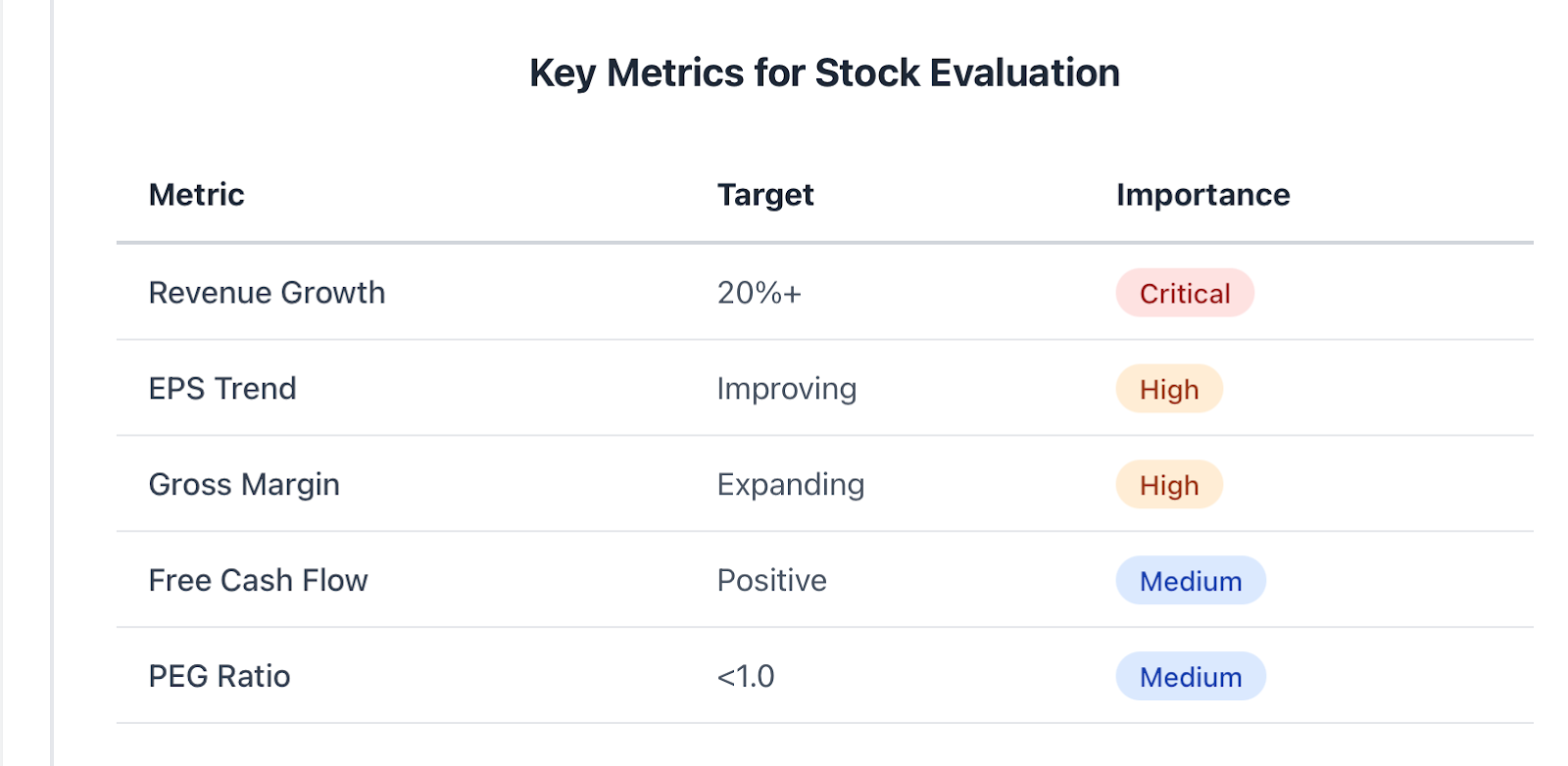
Conversely, if gross margins remain consistent or decrease during the same period, this indicates there is something wrong with the company’s overall business model. Many of the best-in-class small-cap companies demonstrate continued improvement of their gross margin as they grow.
The significance of free cash flow should not be overlooked. Companies can show profits according to Generally Accepted Accounting Principles (GAAP) while depleting all their cash reserves if they have increased their Working Capital and/or incurred high amounts of Capital Expenditures (CAPEX). If a company has positive FCF, it has generated more cash than what it used (through the sale of products), so it does not rely on outside financing to fund its growth. This will be very important to small-cap companies as they may have difficulty accessing outside capital when the market is falling.
A common way to identify value is through the PEG (price/earnings to growth rate) ratio. For example, if a small-cap company trades at 20 times its earnings and grows at 40% per annum, it would have a PEG of 0.5. Therefore, it may be undervalued compared to its peers. Comparing PEG ratios among similar companies will help you uncover relative bargains.
Besides the numbers, consider the qualitative factors. Is the company entering a growing industry or trying to grab market share in a shrinking one? Does management have a strong record of executing its business plan? Are company insiders buying stock with their money? These are important signals.
When selecting stocks, envision it like selecting which elementary school start-up is worth your support. You would choose the start-up that has developed a must-have product, has great leaders, and a very large addressable market. The same goes for small-cap stocks; however, you must conduct a financial analysis to verify your investment thesis.
To be successful, you need to be able to read and understand financial statements. The 10-K annual report has all the information you'll need about your investment's management, financial information, and possible business risks. The 10-Q quarterly reports provide the most recent trends that you can look for. The transcripts of the earnings calls give insight into the management's viewpoint and give you a place to evaluate their abilities.
An investor should be looking for warning signs, such as: a history of guidance misses, the constant loss of executives, too much aggressive accounting, and/or the selling of stock by insiders. If you see any red flags, pause and investigate thoroughly before investing.
Understanding industry trends and growth drivers will help you understand where your investment fits. A mediocre company (great company) in a rapidly growing industry may outperform a very good one (mediocre company) located in a declining industry. Therefore, find industries that will be growing over the next 5 - 10 years (e.g., renewable energy, artificial intelligence, healthcare, electric vehicles, etc.). Focus your search on those areas.
Completing a competitor analysis will supplement your research. Comparing your chosen company with other companies (peers) that operate within the same market may reveal how well (or poorly) your chosen company is performing with respect to growth rate, profitability, and value. For a growing industry, being a second or third position player may mean a very high return (you don't need to find just one winner).
It will take a considerable amount of time to accomplish this, but that is exactly why you will find a lot of investment opportunities. The majority of investors are not willing to conduct the research required and therefore create opportunities for you to locate the mispriced stocks by looking deeper under the surface so to speak. Stock screeners will help you to get your initial list. Systematically go through each stock and evaluate every candidate. Create a list of 30-40 stocks you want to keep an eye on, and wait for a good time to buy.
Small Cap Stock Investment Strategies for Long-Term Wealth
That making money in small cap stocks is not only about selecting the right stocks, but also how you manage your positions over time will determine what kind of returns you receive ultimately.
The main debate is between Value and Growth Investing. Value investors look for undervalued small caps that are currently trading below their intrinsic value (Profitable companies trading at 8 to 10X their earnings). Growth investors are willing to pay more for small cap stocks that are growing quickly (i.e., have high forecasted growth potential), and therefore have higher valuation multiples. Each method works; however, they have different mindsets and require different levels of risk tolerance.
Value Investing in Small Caps Offers a Better Downside Protection: You're Buying a Company with An Established Business that is Likely Generating Cash Flow (which the market is undervaluing due to short-term situations). Gains are made as the market recognizes a small cap's true intrinsic value. Returns tend to be more steady (i.e., Doubling or Tripling their investment) rather than 10x+ returns.
Growth Investing Has the Potential to Yield Big Returns But Requires a Strong Belief or Confidence in That Business Increasing Its Current Value: You May Be Paying Excessive Multiples (i.e., 30 to 50X earnings or buying companies with NO Earnings) on the Expectation of Future Explosive Growth, Wherein If You're Correct, Your Returns Will Be Exceptional. Conversely, if You Are Incorrect, You Can Lose More Than 50% to 70% of Your Investment Capital. Growth Investing Requires Careful Position Sizing and an Ability to Manage Losses and Reduce Position Sizes.
Investors that have become successful in investing in small-cap stocks typically do a combination of the two approaches: They purchase high-quality growth-oriented companies when they have been beaten down during a bear market as a result of the valuation compression. They invest in value-centric small-cap stocks that have solid balance sheets and can withstand the market's volatility; and they do a diversified strategy that will capture some of the upside potential but limit the risk of a disaster.
Dollar-cost averaging works exceptionally well for small-cap stocks. Rather than making an investment with a large amount of money all at once, spread your purchases over a period of time, typically three to six months in length. Because of the volatility of small-cap stocks, you will probably buy some of your shares at lower prices than others, allowing you to reduce your overall average cost basis. Additionally, using this approach will help prevent you from having the psychological hardship of buying at a high price and immediately losing money.
The S&P SmallCap 600 Index can serve as both a benchmark and an index fund. Investing in a small-cap index fund is beneficial because it will reduce the risk associated with individual stock ownership but provide access to the long-term above-average returns generated by this asset class. While the return from a small-cap index fund will not be outstanding, you also will not suffer catastrophic losses either. Many investors use index funds as their core holding for their small-cap stock allocations and use individual stocks as satellite holdings.
Rebalancing your portfolio helps to keep you on track with your targeted allocation. Small-cap stocks can quickly grow from being 15% to 25% of your total portfolio during a bull market. When this happens, trim the most successful stocks back to your target allocation and use the proceeds to invest in the less successful stocks or other opportunities. Being disciplined enough to perform this strategy will force you to sell your stocks when they are high, and buy them when they are low, which is the opposite of what many investors do.
If you care about your finances, be sure to pay close attention to the overall health of your portfolio. You should regularly assess your company's quarterly earnings, analyze both revenue and margin increases, and monitor trends associated with deteriorating fundamentals. Stock prices may change dramatically, going from long-term winners to rapid losses at an incredibly fast pace. Therefore, as an investor, you should not worry about owning the same stock forever, but rather for as long as the stock's thesis for investment (i.e., fundamentals) remains true to itself.
When making investment decisions, you'll also want to consider the tax implications of an investment. For long-term investments, the tax benefits associated with owning stocks for longer than one year will result in paying lower capital gains tax rates than the ordinary income tax rate. Long-term buy-and-hold investing strategies are generally more tax-efficient than short-term or frequent buying and selling trades. However, it is vital that you do not base your investment strategy solely on tax, as if the fundamentals show signs of weakening over time, selling your position may be warranted, no matter what the tax consequences may be.
Supporting a small-cap company resembles supporting your child's school by constantly providing funds for items sold by the school. Once again, as long as the company maintains strong fundamentals, it may provide you with the potential for long-term gains by making consistent additions to your existing position when the market experiences temporary weakness.
Lastly, you need to manage your expectations for your small-cap portfolio realistically. A target annual return between 15 and 20 percent, over the course of many years, is a reasonable expectation for a small-cap portfolio. The reality is that some of your companies will yield returns exceeding 500 percent, while others may fall to zero. In addition to being disciplined with your investments, the way you construct your portfolio and manage the associated risks will determine if your investment returns reach your target annual expectations or if you incur a permanent loss of capital.
Why Small Cap Stocks Are Poised to Outperform in 2026
As we move toward 2026, there are a variety of reasons why the small-cap stocks should prosper. However, there is no way for an investor to get a definite outcome from their investment.
Interest rates, after liquidating all of the aggressive rate growth of the previous years 2022-2023, will eventually settle in the mid-range of their cycle. Many small-business owners don't generate enough business cash flow to be able to satisfy their loans, so they rely heavily on credit as a source of new business growth. When rates decrease or become stable, it allows for substantial expansion in the value of small cap stocks.
Investing in small cap stocks is also influenced by the projections for economic growth over a number of months prior to that year's growth. Small cap companies will grow much faster than large businesses, as they usually expand with the level of the gross domestic product when times are good and contract faster than large companies when the economy is in a recession. Small business forecasts generally show moderate growth through 2026, which provides a favorable environment for small cap stocks as they will outperform large cap stocks from a perspective of growth.
Small cap stocks are trading at a lower price multiple than large cap stocks at this point and are trading at a wide range of the average price multiples for companies. The current price multiples for small cap stocks suggest that the price of large cap stocks may be much higher than the price of small cap stocks. Therefore, as the market averages to the mean, small cap investors will have an advantage over large cap investors.
In numerous sectors where significant growth is expected, smaller companies are at an advantage based on industry trends due to their increased ease of access to funding from both government agencies and private sector investors. Smaller companies within the clean energy sector are supported through both government subsidies and funding from private investors (such as Plug Power). Healthcare Technology companies are benefiting from the digitization of healthcare records, as well as the growth in telemedicine. In addition, smaller niche players will continue to take market share from larger technology companies due to Artificial Intelligence (AI).
The small cap space has historically outperformed larger cap stocks after undergoing a period of underperformance. Historically, small caps have had multiple years of increased performance following periods of underperformance. The S&P Small Cap 600 index has substantially outperformed the S&P 500 index from 2003-2007 and from 2009-2011. We may be nearing another period of strength for small caps.
Revenue Growth and Margin Expansion are the two primary catalysts for the success of small cap companies and the resulting increases in profitability they experience. The dramatic improvement in profit margins of a small cap company when they are able to GROW their business ($30% revenue growth/year and 30%-40% Gross Margin Expansion) will result in exponential growth in earnings for that year. The operational improvements will drive stock price appreciation for the small cap company more than multiple expansion.
There are specific examples to illustrate that the opportunity exists. Blink Charging Company is aggressively developing their EV charging network at a faster rate due to the increased acceptance and adoption of Electric Vehicles. If the EV market share reaches between 30-40% over the next 10 years, the amount of charging stations required will need to grow exponentially. The companies that will be in a position to capitalize on this growth potential are likely to see a multiple increase in their total market capitalization.
The pandemic has had an effect on telemedicine as it changes from being seen as a new way to deliver healthcare to becoming a more normal way of receiving healthcare, but there will still be long-term growth related to virtual healthcare. Smaller companies that provide a narrower set of services within specific medical specialties may have better prospects for outperformance than larger companies as the market for telemedicine matures.
During the recovery period after the financial crisis of 2009, the small-cap stock market performed much better than the large-cap stock market, and as the economy continues to improve from the recession, we may see similar patterns occur again. If the current economic conditions continue to improve, and if inflationary pressures ease without leading to another recession, we could witness the emergence of small cap successes once again.
It is important to note that the current macroeconomic environment isn't uniformly positive. Geopolitical tensions, potential policy changes, etc., as well as remaining inflation risks, could lead to negative consequences for some small caps. Therefore, it is essential to maintain diversification within your portfolio and engage in active management, because not all small caps will perform well even in a favorable economic environment.
You may want to think of today's environment similar to how favorable rules and increased student spending gave an initial lift to many new business ventures in the past. When the economy improves, those new business ventures will grow at a much faster pace than older and larger businesses because they are starting from a much lower base.
Therefore, your investment strategy should reflect these changes within the larger economy. When selecting small-cap stocks for your portfolio, focus on small caps with strong balance sheets that have enough cash flow to finance their continued growth and not rely upon the availability of funds within the capital markets. Look for companies that are in sectors that will benefit from long-term structural growth and not cyclical growth.
While it seems favourable to engage in small cap outperformance in the coming years, this doesn't mean that simply buying low priced stocks will deliver a good return. The key is to focus on buying quality companies and employing sound risk management techniques and develop realistic views on small caps.
Small cap investing is not a scheme to get rich overnight; it requires a systematic process to build wealth by taking a position in high-growth potential companies before the rest of the market wakes up and recognises their growth potential.
Small cap stocks will display high levels of volatility and will therefore be subject to a lot of emotional influence. You will also make many mistakes before you find success. When executed correctly, however, small caps can provide the kind of returns that will change your financial future. Start small, do your due diligence, and let the compounding effect work for you over time.
Visit TradeWill.com today to access our proprietary small cap stock screener and research tools. Our platform helps you identify high-potential opportunities, track your positions, and make data-driven investment decisions.
Disclaimer: The content of the blog does not represent any position of Trade W, does not serve as any trading-related decision advice, and does not endorse any third-party.