

 Trade W

What Are Tariffs and Why Do They Trigger Violent Stock Market Reactions?
In order to understand how tariffs impact the stock market, it is important to understand what tariffs are used for. Tariffs are not moral judgments or punishments; rather, they are tools that governments use to manipulate prices by artificially altering how much a product costs relative to another country’s product. In this sense, tariffs serve the purpose of protecting the United States from foreign competition and encouraging domestic production.
In addition, tariffs can be utilised as political tools (i.e., leverage) when negotiating international trade agreements. Over time, businesses will need to change their supply chain logistics to account for the new tariff regime.
The business world is very responsive to tariffs because the value of a company's equity is based on projected cash flows. Tariffs disrupt cost structures, revenue visibility, and capital expenditures, creating a triple threat to the valuation of a company.
While the actual tariff percentage may be important, it is really the uncertainty created by the tariff that drives investor reactions in the stock price. For example, if there is a 10% tariff but there are clear exemptions and timelines, that tariff may have less impact on company valuations than a 5% tariff that has uncertainty surrounding it.
Let's examine tariffs at two different levels.
At the professional level: Tariffs will increase the cost of raw materials, which will decrease gross margins and, ultimately, return on investment capital (ROIC). This will force financial analysts to revise their valuation multiples downward. This is how a policy announcement can result in a rapid stock price collapse.
If you own a company and you are suddenly faced with an increase in inventory prices due to a 20% increase in tariffs, and you cannot pass that increase onto your customers, your profits will decrease, and your investors will become aware of that and sell your stock.
It is important to keep in mind that markets do not only react to the actual rates of taxes, but also to the changes in the rules of trade. When rules change regarding trade and tariffs, all assumptions and predictions made in financial models relating to that are now in question. This is why we see movements as large as 3% per day in major stock indices during times of tariff-related news.
Ultimately, the tariffs' stock market reaction repriced of risk created by the uncertainty around tariffs. Investors require additional compensation for the new risks associated with future earnings projections due to uncertainty surrounding tariffs. As a result, we see higher rates of volatility, lower liquidity, and more chaotic price discovery once tariffs are introduced.
Before vs After Tariffs: How Markets Actually Price Tariff Announcements Over Time
Expectations Regarding Tariffs Affect Stock Price Movements
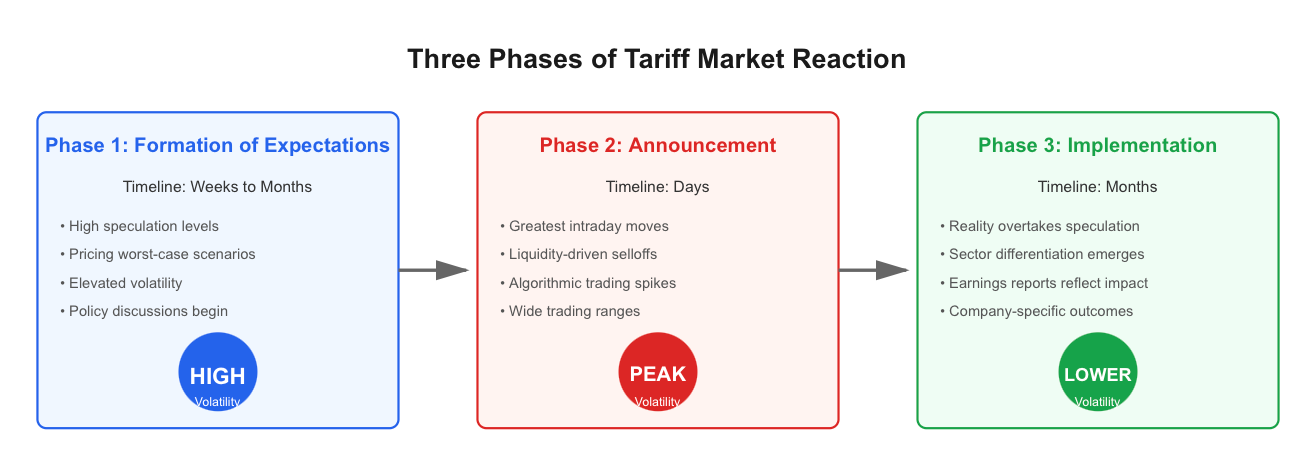
Tariffs' stock market reaction occurs in three different phases:
1. Formation of Expectations
Market participants are creating their expectations regarding tariffs through high levels of speculation. Traders are now pricing worse than worst-case scenarios into the stock prices and vice versa. The stock market is experiencing high volatility because of high levels of speculation in this phase. There are several weeks or months spent in this phase, building up to actual implementation, as demonstrated by events that occurred in the 2025-2026 tariff cycles from when policy discussions began in late 2025 through to the time when actual policies were implemented.
2. Implied Volatility
This is when the announcement of the tariff occurs, and generally, the greatest moves in terms of intraday price action occur. During this time, as a direct result of liquidity-driven selloffs and spikes caused by the announcement, stock prices create wide trading ranges and volatile price movements. An additional source of volatility during this phase is algorithmically driven trading activity and changes in ETF rebalancing.
3. Structural Differentiation
Implementation of tariffs has begun, and reality overtakes speculation. This is when there will be an increasing level of differentiation between companies within the same industry based on how companies are handling tariff-related cost increases. Ultimately, this is when companies will start to release quarterly earnings reports that reflect changes in tariffs that have occurred.
Conversely, why are bad news rallies typically occurring following the announcement of tariffs? This is due to environmental speculation being considered as a risk premium within the market. Once the outcome of a tariff is generally known, then the risk premium will normally fully diminish, and a stock that was assumed to be impacted significantly by the implementation of a 10% tariff will now be viewed as being affected by a 25% tariff.
The overall picture of the tariff responses in the stock market indicates that there is typically the largest opportunity for traders to benefit from tariffs occurring before implementation occurs; therefore, the majority of the major differential price adjustments have taken place by the time tariffs are implemented.
In summary, there are many traders who fail to capture alpha because they wait for confirmation of information on tariffs before they buy and/or sell stock in the affected companies, thus giving rise to the saying "buy the rumour and sell the news" with respect to tariffs.
Who Wins When Tariffs Hit? Stocks and Sectors That Benefit From Trade Barriers
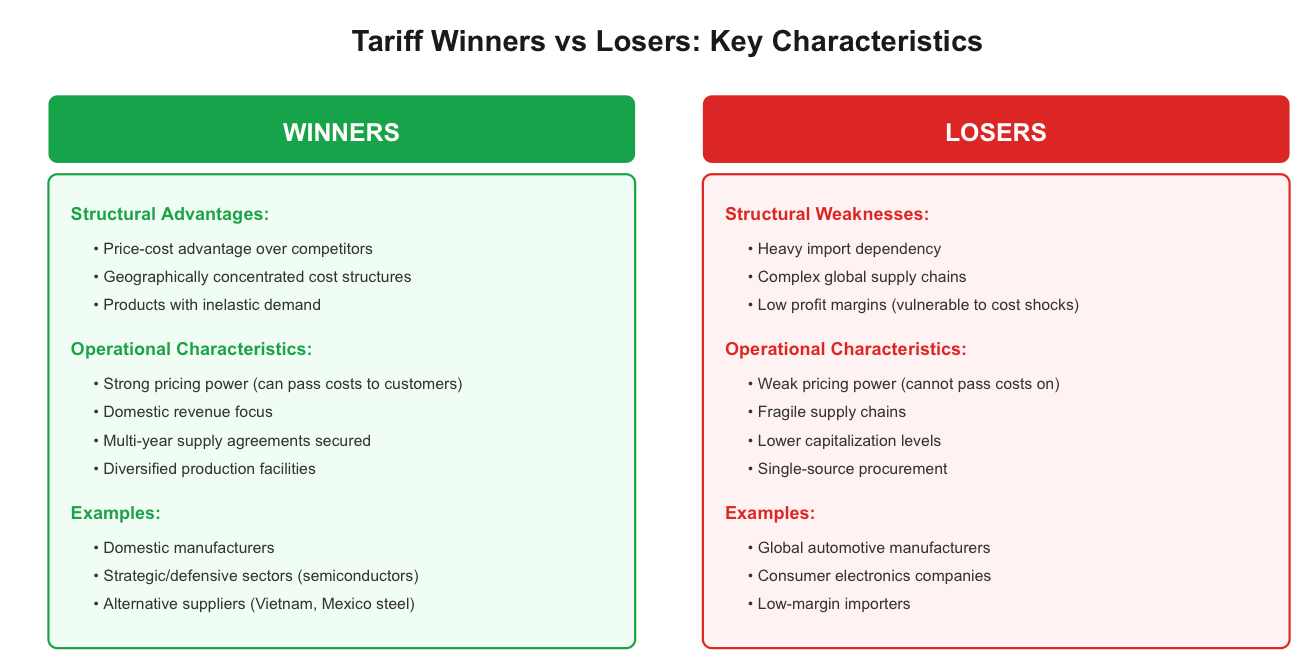
While tariffs redistribute value within an economy rather than destroy it universally, the identification of stocks that are positively impacted by tariffs can lead to discovering the business models that have inherent structural advantages under a given set of tariffs. Stocks that experience a positive tariff stock market reaction have three primary characteristics:
-
They possess a price-cost advantage
-
They operate with cost structures that are geographically concentrated
-
They produce products that have no substitute for demand.
Thus, if a company possesses all three characteristics, then tariffs may strengthen its competitive position.
At an industry level, the most obvious beneficiaries of tariffs are domestic manufacturers. As foreign-sourced products become more expensive, domestic-sourced products become relatively more appealing. In addition, those industries that provide alternatives to foreign-sourced products will experience a surge in demand; for example, if Chinese steel is subject to tariffs, then steel producers in Mexico and Vietnam will likely benefit.
Also, businesses in defensive and strategic sectors are more likely to outperform during tariff cycles because the federal government places a higher priority on supply security than on optimising costs. An example of this can be seen in the stock indices of semiconductor and rare earth metals companies during the 2025-2026 trade tensions.
From a company's perspective, a company's ability to pass on its increased costs to its consumers is of utmost importance. Businesses that build customer loyalty or offer niche products can increase their prices without seeing a drop in volume, whereas those businesses that are unable to pass on these increased costs will experience margin compression.
Companies that have established multi-year agreements before the tariff imposition or have production facilities across multiple countries possess a distinct advantage compared to their competitors.
As a result, when examining specific industries impacted by tariffs, professional and casual investors should pay attention to how these tariffs impact their respective industries and how they may position themselves to profit from the resulting trends.
Investors should keep in mind that the positive impact of tariffs on a particular stock is not always clear at the time of their imposition. For this reason, the need to remain vigilant and responsive to new information from the marketplace regarding companies that will benefit from the structural advantages of tariffs should continue through the life cycle of those companies.
Who Loses First? The Hidden Casualties of Tariffs in Global Stock Markets
The stock market represents "loser" companies, so it is important to also look at the losers when identifying stock winners. Tariffs can highlight the structural drawbacks these "loser" companies face both before and after an imposed trading barrier.
Loser companies are typically characterised by their extreme dependency on imports, low profit margins, weak/powerless pricing power, and fragile supply chains. The collapse of these characteristics will become acute when faced with tariffs.
When tariffs are imposed on product imports due to globalisation, they impose a cost based on the shocks faced by companies utilising global supply chains. Operational efficiency created through low-cost global products becomes a weakness once those same products are subjected to protectionist tariffs.
The market typically reacts negatively to tariffs and penalises affected companies. The market does not quickly assess firm-level differences and reacts by selling off its entire holdings in that sector, resulting in significant mispricing opportunities that we will explore in Section 6 of this report.
The global automotive manufacturer and electronic consumer sectors represent the epitome of what happens when tariffs disrupt procurement activities of companies with complex global supply chains. Tariffs can hamper a company's ability to procure goods, have an adverse effect on inventory costs, and create logistics obstacles for manufacturers. As inventory and logistics costs increase, operating margins for companies will likely decrease even if revenues remain steady.
To illustrate: a company's costs are increasing while it is unable to raise its prices. For example, due to pricing pressures from competitors and/or customer sensitivity towards price increases, the company's profits are shrinking, and investors are taking note and selling the stock, resulting in a lower stock price.
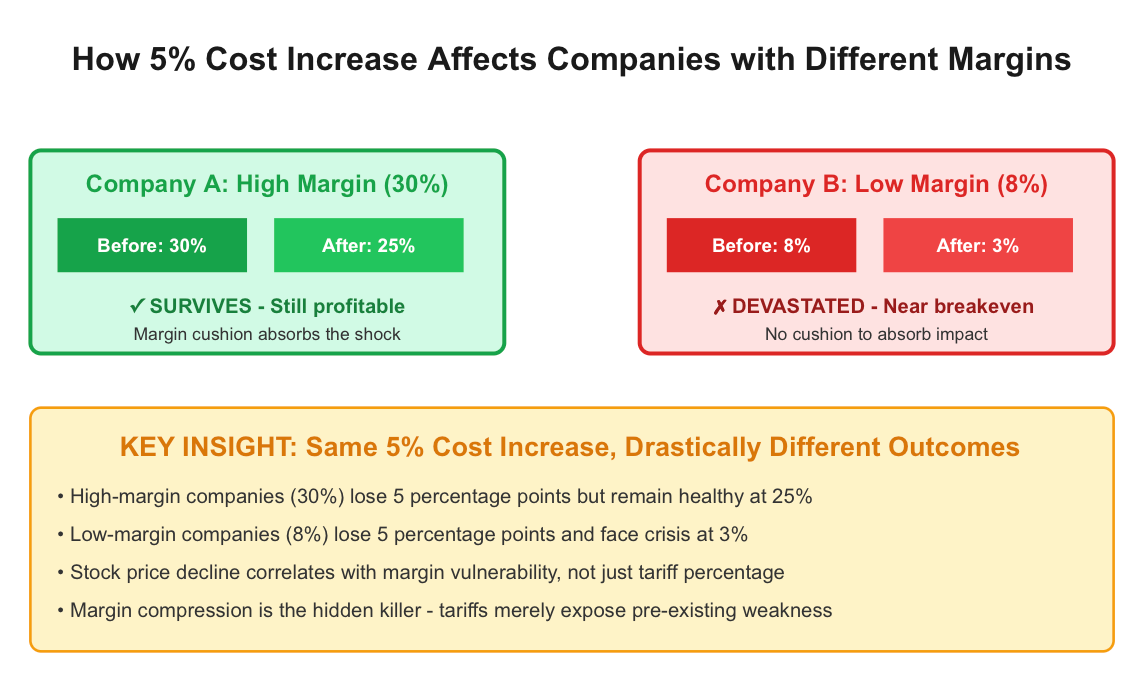
This information is critical in determining that tariffs will expose weaknesses but will not create weaknesses. A firm with low-profit margins was always an at-risk organisation; the inherent vulnerabilities of the firm were obscured by the absence of tariffs until the tariffs imposed a financial burden on the company.
Alternatively, well-capitalised firms with strong pricing power will easily absorb the shock. Conversely, smaller firms with lower capitalisation and/or weak pricing power will not. The correlation of stock drawdowns during tariff shocks with a company's sensitivity to costs is extremely high.
For example, a 5% increase in costs may not be fatal for a company with gross operating margins of 30%. Conversely, a 5% increase in costs may devastate a company with gross operating margins of 8%.
Beyond Stocks: How Tariffs Trigger Chain Reactions in FX, Rates, and Commodities
The tariff's stock market reaction is not limited to a few sectors (such as the S&P 500). Tariffs act as macroeconomic signals throughout multiple markets, including currency, interest rates and commodities, which in turn lead to effects on other related markets.
Tariffs create inflation expectations. Inflation expectations lead to a shift in the interest rate pricing structure. Interest rate differentials determine how investors value currencies. A similar relationship exists for commodities as they are influenced by both inflation expectations and the leverage of supply chain disruptions.
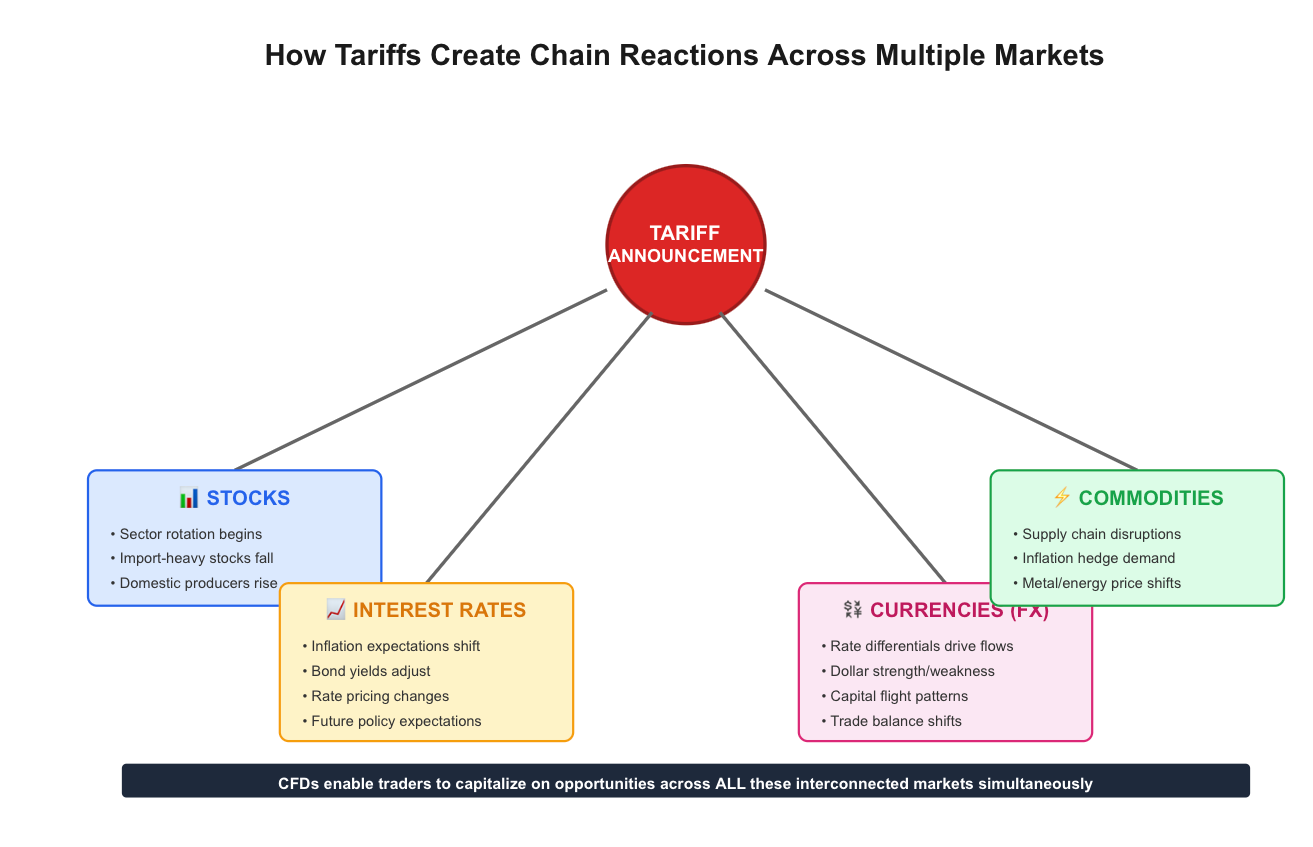
Professionals should monitor how changes in tariff announcements will influence market expectations regarding interest rates. If the market perceives tariffs to be inflationary, then bond yields will increase as a result of the demand for higher interest. Higher bond yields attract foreign capital, which in turn increases the value of the domestic currency. However, when a market believes tariffs will be negative for economic growth, the yield on bonds will decrease, which in turn will reduce the value of the domestic currency.
For beginner traders, the best way to understand tariffs is to look at how they affect the economic potential of a nation, and therefore the perception of the potential earnings of that nation, and the corresponding impact that perception has on the relative attractiveness of the currency.
The primary reason why Contracts for Difference (CFDs) are a good way to trade during periods of tariff-related volatility is that they allow traders to trade in and out of multiple markets, with varying degrees of exposure.
For example, traders using CFDs can trade commodities, currency pairs and stock indices, all from one account. Therefore, there are opportunities across asset classes due to tariffs, and CFDs allow you to take advantage of movements no matter where in the spectrum they occur.
In trading, the amount of time that elapses between your execution of a trade and when the information related to it is available in the market is a key consideration during periods of tariff-related volatility.
CFDs offer the trader the necessary speed of execution and leverage needed to successfully operate a trading strategy. A trader who takes into account the multiple effects that tariffs have on the markets will find many opportunities that the closed-end fund or equity-only investor is unable to capitalise upon, as the price response in currencies and commodities can be as strong as that in stocks.
Tariff Panic vs Earnings Reality: How to Spot Overreactions and Buy Opportunities
To exploit mispricing caused by panic in the stock market due to tariff announcements, you must identify the difference between an emotional sell-off and a fundamental loss.
There are common causes for concern regarding tariff announcements. The media sensationalises the story. Algorithmic trading uses computerised programs that trigger investor sentiment without any consideration for company performance. This results in wholesale ETF de-risking across an entire sector.
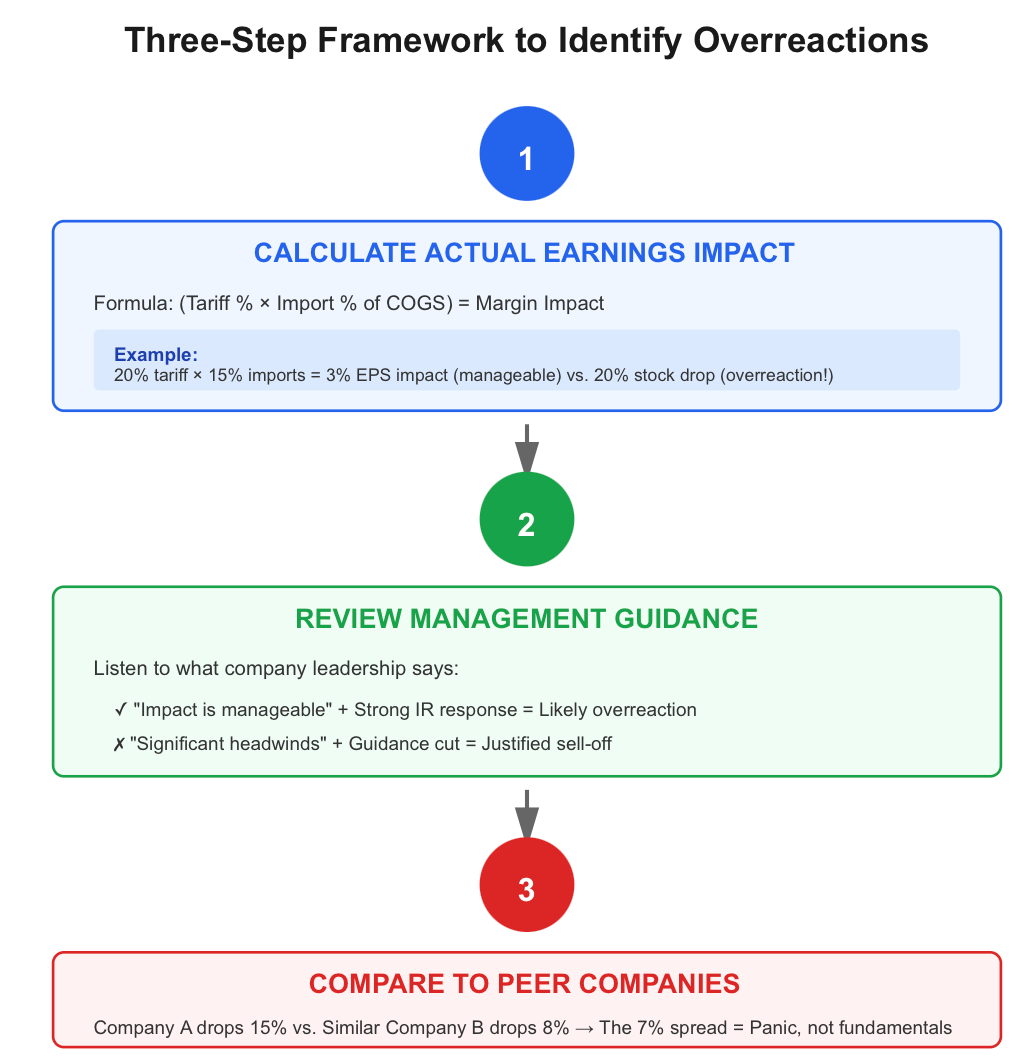
In order to find overreactions, create a three-step framework.
Step one: Estimate the earnings impact based upon the tariff function of the company, i.e. apply the tariff percentage to the company's import percentages, and calculate the damage to margins. Is it 2% of EPS or 20%? Most likely, the same uncertainty has been priced into the market.
Step two: Review management's guidance. The best companies have very good IR (Investor Relations) programs and quickly respond to investors' concerns. If management indicates that the impact is manageable, and what type of management you, as an investor, will receive, and yet the stock crashes, then most likely you have identified mispricing.
Step three: Comparison of peer companies. If a company falls off due to Tariff Announcements by 15% and its similar competitor falls off due to tariff announcements by 8% and both experience the same amount, the spread between them must be attributed to panic and not fundamentals.
From a Professional perspective, if you revise EPS estimates to EPS estimates, calculate EPS revision versus share collapse, you will know if a stock has over-reacted on the basis of unrevised EPS estimates. If a stock drops by 20% from an EPS down of 3%, that stock has clearly overreacted. If a stock drops by 8% from an EPS down of 15%, it is likely still overvalued.
From a Beginner's perspective: Initially, rumours will cause stocks to fall rapidly and rapidly. Eventually, Facts will occur, and there will be a window of time to engage in an investment opportunity during the period of transition from initial panic to true earnings risk.
Execution Discipline: Wait for the confirmation of the initial repair from the Tariff panic to see if the price reflects what the earnings risk will likely be. The initial panic reaction will create an arbitrage opportunity over time.
Rethinking Safe Havens: Why Gold and the US Dollar Can Rise Together During Tariff Shocks
The tariffs' stock market reaction breaks traditional safe-haven assumptions. Therefore, traders need to "revisit" older correlation methodologies to develop an understanding of how to evaluate today's market.
Traditionally, it has been believed that gold has an inverse correlation to the US dollar. As the dollar strengthens, gold prices fall, and the opposite is also correct. However, under current conditions of increased uncertainty caused by tariffs, there is evidence that this expected relationship is changing and no longer holds.
This change is attributable to the dual uncertainty associated with tariffs: 1. Policy Uncertainty, which is the unpredictability regarding what is going to happen next and 2. Inflation Risk from Import Pricing Increases. Due to these two forces, safe haven demand for gold and the US dollar will be directed in opposite ways than previously experienced.
Gold and the US dollar serve very different functions for investors. Gold serves to hedge against policy error, while the dollar serves to hedge against liquidity and settlement. Gold prices increase when investors lose confidence in either central bank policies or the stability of a currency, while dollar prices increase when investors have an increased aversion to risk in equities due to uncertainty regarding the global economy, or when both the US and other major economies face increased levels of uncertainty regarding Trade Settlements and Debt Markets, both of which depend on the use of the US dollar.
During some tariff-related events (specifically during the years 2025 and 2026), we have had instances of both gold and the US dollar increasing simultaneously. In these instances, investors were seeking to hedge against occurring policy failures (with gold) while simultaneously maintaining a position in an abundant and highly liquid instrument (the US dollar).
For more experienced trading professionals, it is useful to monitor events where we see both gold and the US dollar strengthening together. Typically, these events represent a period of high uncertainty, rather than high confidence in directional economic movements. Therefore, the correlation dynamic for constructing portfolios needs to account for these periods of instability.
For newer traders, think of this as investing in cash for liquidity, while also purchasing insurance against catastrophic events (both positions are appropriate when uncertainty is extreme).
The consequences of investing in these two commodities can be considerable. During times of stability, there is generally an inverse correlation between the price of gold and the US dollar, so they can be used to hedge against each other. However, during times of tariff shocks (high periods of uncertainty), both gold and the US dollar can reinforce one another and therefore lead to much higher risk levels than anticipated based on historical correlation models.
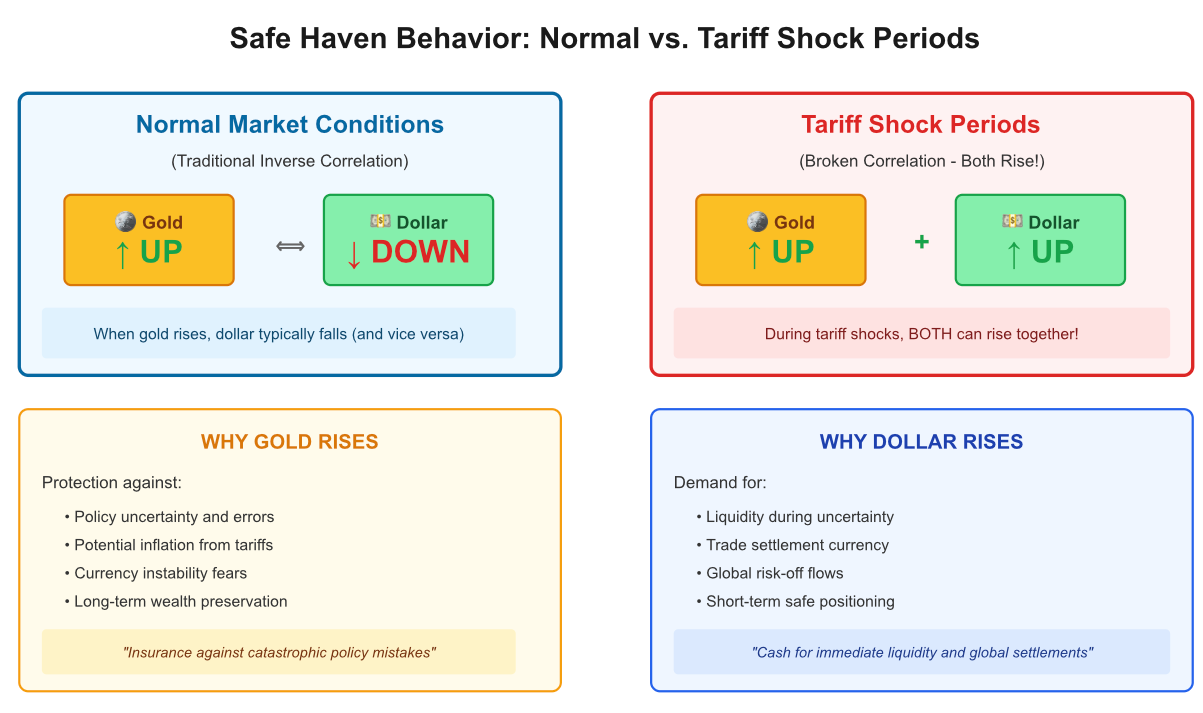
Haven investments serve as functions not as markets. Safe-haven commodities serve different functions based on fear. Tariffs create unique fears and must be treated flexibly.
Lessons From History: Comparing the 2018-2019 and 2025-2026 Tariff Market Cycles
To identify reusable alpha from the tariff stock market reaction, we must analyse previous cycles for common, duplicatable patterns.
The previous cycle (2018-2019) took the market by surprise. At this moment, trade wars were considered an old way of operating and therefore did not factor into many investors' decision matrices, for decades. Due to the novelty of the uncertainty surrounding trade wars, the volatility premium was above normal levels.
The cycle for 2025-2026 looked different from the previous cycle because the market learned from the previous one and therefore reacted quickly to tariff prices; sector differentiation began much earlier due to the use of successful playbooks having been previously developed, and so were quickly re-implemented after the announcement of any tariffs.
Across cycles, we see panic-driven mis-pricing at the start of a trade war; after the initial panic selling, fundamentals reassert themselves, and this structural process continues across cycles.
Sector rotation also repeats; many companies within the industrial sector focused on the US outperform those focused on other countries. Many companies with pricing power outperform those without; this is not a coincidence; these are mechanical outcomes of how tariffs affect the business models of different industries.
Conversely, while we see patterns in previous cycles, we do not see the rate of policy implementation; the pace and scope of tariff imposition are dictated by the administration in power and the political conditions at that time in history. Additionally, market microstructure has also evolved since the last cycle.
With the evolution of the algorithmic and passive investing, the manner in which information is incorporated into market pricing is significantly different from the previous cycle, and therefore is an additional driver of how markets respond to information more rapidly.
A strategic insight from this research is that we are trying to replicate the structure of the first two cycles, not the price paths. For example, we have no way to know what the index numbers will exactly be; rather, we can identify which sectors will outperform and which will not.
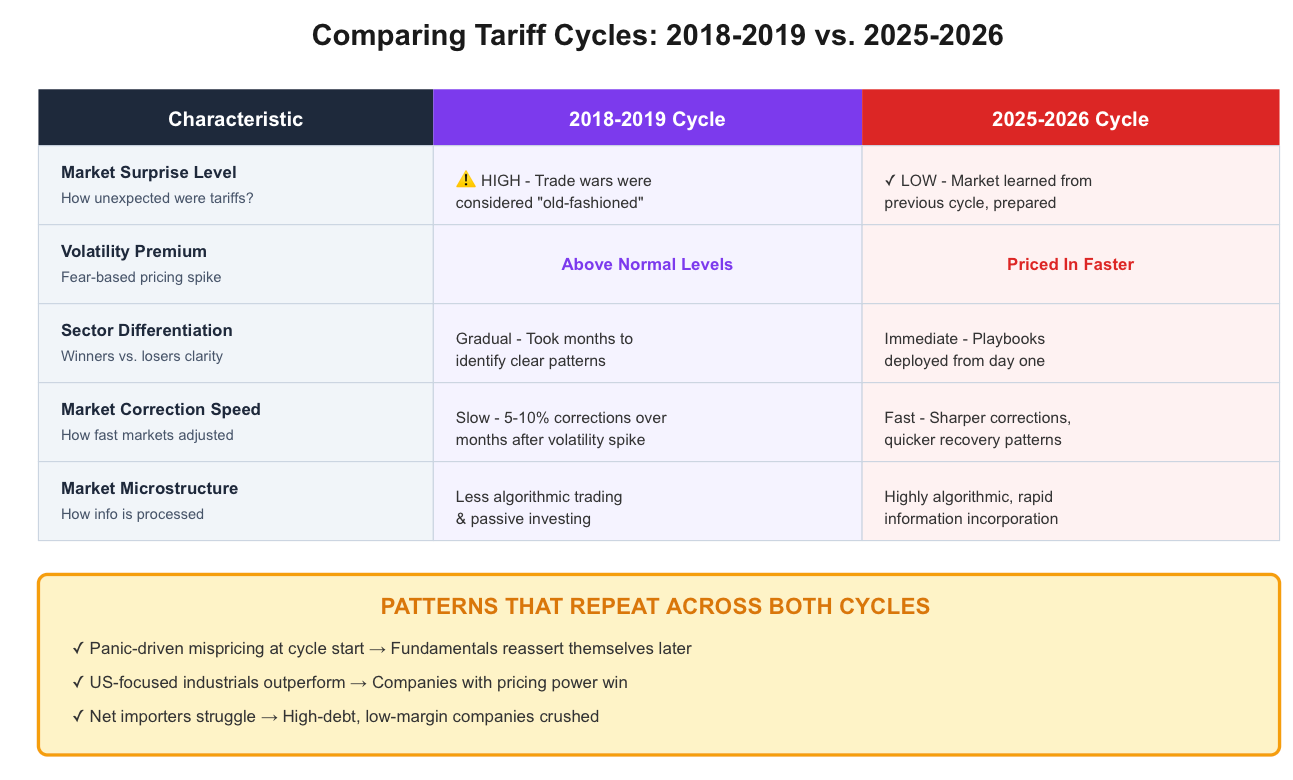
Many companies from the previous cycle, S&P 500, were under asset correction or averaging between 5%-10% corrections, for months following the volatility spike; however, in the 2025-2026 cycle, corrections were sharper, faster; the market adapted to the trade war faster in 2025 than in 2018.
Many winners in both cycles were domestic revenue producers, had pricing power and good debt management practices; conversely, many losers in both cycles were net importers, experienced margin pressure and had high levels of debt relative to their cash flows.
History provides us with patterns, however, not predictions; therefore, we can utilise the past cycles to build frameworks rather than forecasts. Each subsequent trade cycle will have some unique characteristics, but the fundamental cycles will continue to rhyme with historical cycles.
The 2026 Trader's Checklist: How to Trade Tariff Shocks Systematically
The ability to convert information into results must have a method through which to undertake an action based on the tariff's stock market reaction.
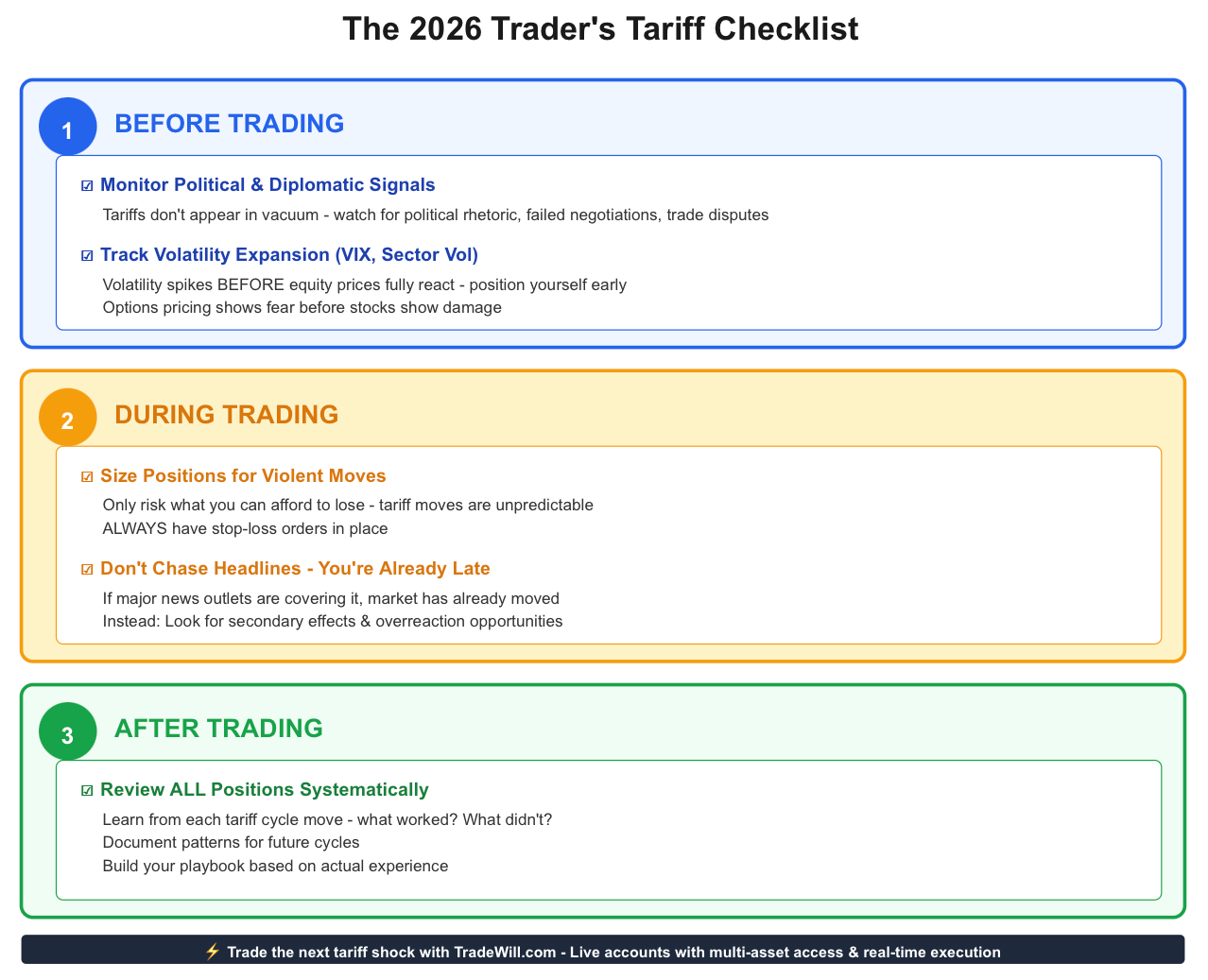
Before trading.
Monitor the signals being sent regarding tariffs. Tariffs do not arise in a vacuum; they come as a result of something that was said politically or when there is no agreement in negotiations following diplomatic disputes; therefore, by keeping track of the above-listed things, you will be in a better position to act.
Keep an eye on the expansion of volatility. When the VIX and/or sector-related Volatility are increasing, these are the times when you will be able to position yourself. Volatility is priced in options before the underlying companies have reacted fully in their equity share prices.
During the trade.
Position size is crucial for following a trade due to the possibility of a violent move on a trade. Therefore, the only amount you should risk on one position is what you are comfortable with losing. Always have stop-loss orders in place.
Avoid chasing headlines. If you are reading about the tariff on major news outlets, you are probably too late to react, as the market reaction has likely occurred. Instead, try and capitalise on the secondary effects of the tariff or look for opportunities of overreaction by buyers/sellers.
After the Trade.
You should review all of your positions systematically for each of your trades; this will allow you to learn more from each move of the tariff. You can utilise the Tariff Cycles as tools to learn more about
Are you prepared to trade the next surprise tariff? TradeWill.com provides you with a live account that gives you access to multiple asset classes along with real-time market analysis and market execution tools. This is your chance to not only observe the stock market's reaction to a tariff announcement, but also profit from it.
Disclaimer: The content of the blog does not represent any position of Trade W, does not serve as any trading-related decision advice, and does not endorse any third-party.