
 Trade W
Why Dubai Has Become a Global Forex Trading Hub in 2026
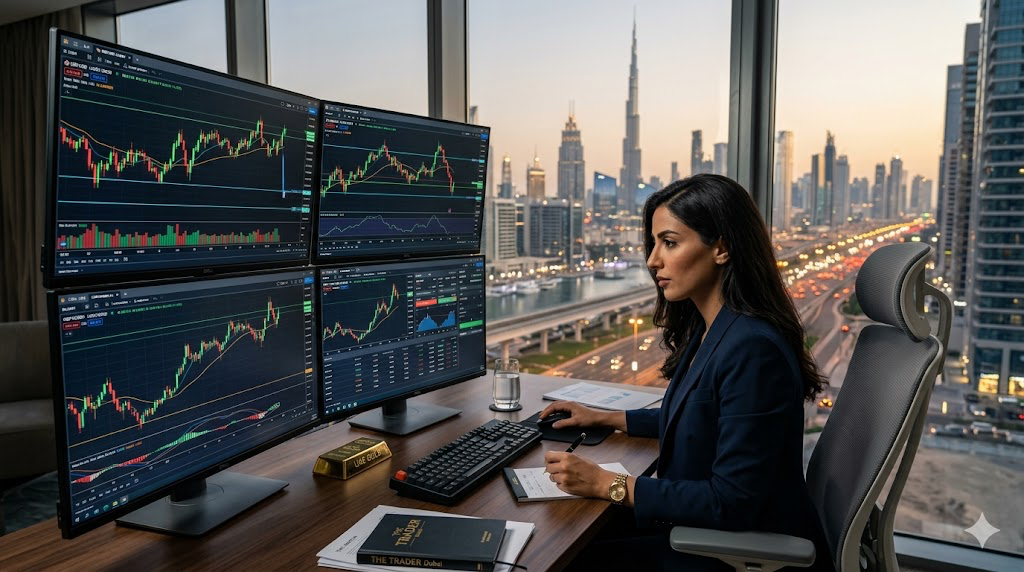
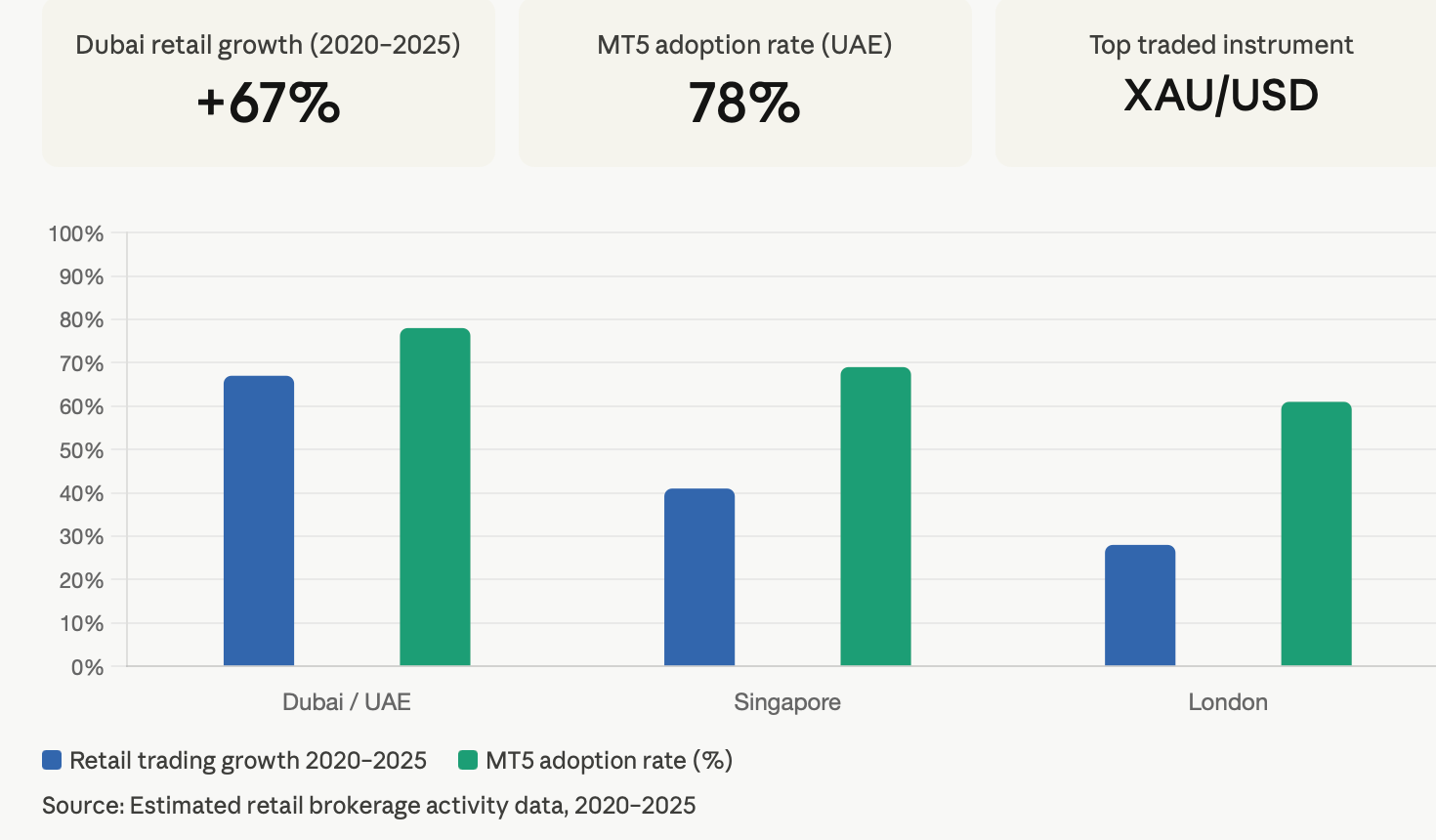
In general terms, Dubai has transformed from being merely the financial entry point to the Middle East into one of the world's largest retail trading marketplaces within the last decade. Dubai now rivals London and Singapore in terms of daily retail transaction volume and the overall sophistication of its client base, including both retail and institutional participants. Dubai’s growth as a retail trading hub has been paralleled by the establishment of a regulatory and commercial infrastructure built around the Dubai International Financial Centre (DIFC), which provides both institutional capital and retail traders with a unified jurisdictional base from which to operate throughout the UAE, South Asia, and the wider Middle East.
A unique convergence of factors exists within Dubai’s forex and CFD trading environment that typically do not align within a single geographical area: an experienced and financially savvy expatriate population, extensive mobile connectivity, high levels of internet penetration, and a cultural affinity for gold, which makes XAU/USD one of the most actively traded instruments in the region. For many people residing in the UAE, the purchase of gold is not undertaken solely as an investment but also as a means of preserving wealth, reflecting the historical role that gold has played in the region. Therefore, this connection translates into demand for trading platforms offering tight spreads on gold transactions, fast execution on XAU/USD trades, and access to oil CFDs that reflect the underlying economic relationship between the regional economy and the energy markets.
Since 2020, retail trading volume has accelerated significantly in the UAE through the widespread adoption of MT5 at a rate higher than that of virtually any other comparable jurisdiction, with UAE-based traders using a single consolidated platform to access forex pairs, gold, indices, and crypto CFDs. With regard to time zones, Dubai allows for an overlap between the London and Asian trading sessions, providing traders with access to periods of peak market liquidity during the trading day, where both execution speed and spread quality are critical success factors.
Is Forex Trading Legal in Dubai?
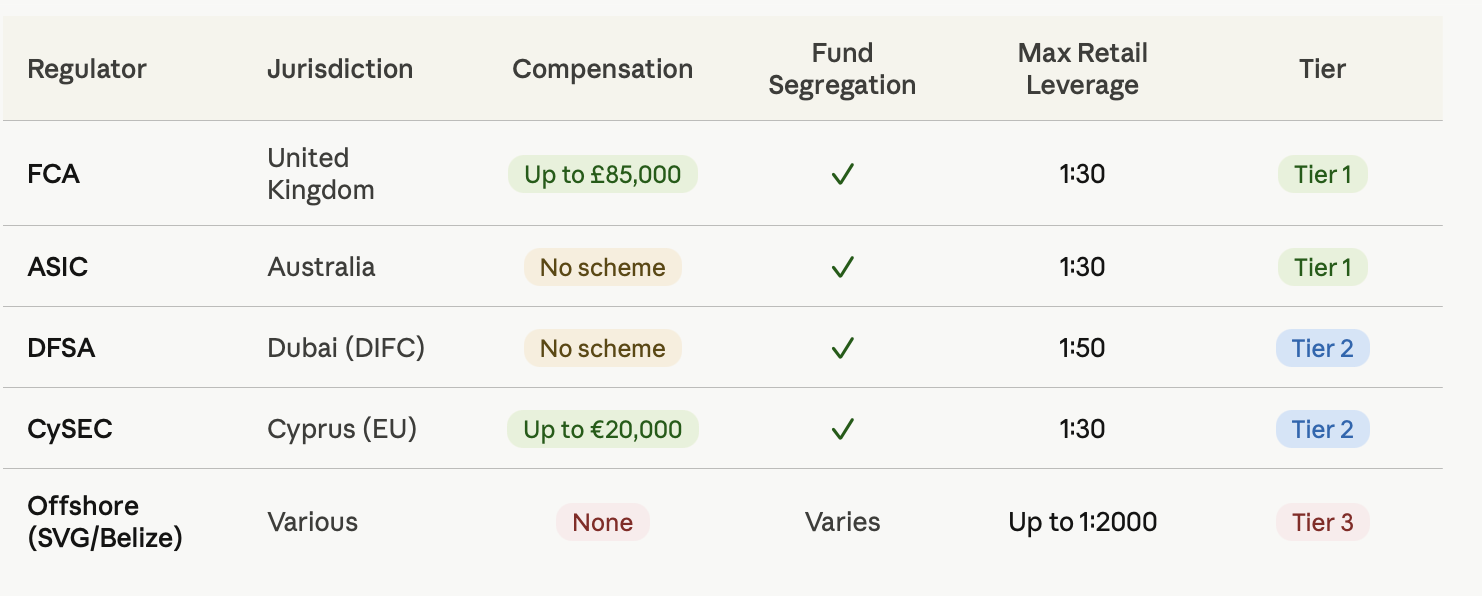
Trading in foreign currency is completely permissible in Dubai and throughout the United Arab Emirates (UAE). As such, Forex trading is subject to a three-tiered supervisory framework that many traders initially find confusing when creating their list of forex brokers in Dubai. At the top of this framework are two financial regulatory authorities, each with distinct and separate powers and responsibilities: (a) the Dubai Financial Services Authority (DFSA) and (b) the Securities and Commodities Authority (SCA). These two authorities also have different geographic jurisdictions. The DFSA oversees forex brokers operating within the Dubai International Financial Centre (DIFC), a designated special economic zone with its own set of laws and regulations based primarily on those of the United Kingdom (UK). Brokers that maintain DFSA licences are held to stringent rules regarding capital adequacy requirements, client fund segregation, and reporting obligations designed to help protect forex clients if their broker is unable to pay its debts. The SCA regulates all other forex brokers operating within the UAE outside the DIFC. While it has a strong reputation, it generally provides a lower degree of trader protection than the DFSA.
In Dubai, many of the largest forex brokers do not hold a direct DFSA or SCA licence. Instead, they operate legitimately within the UAE by servicing customers through entities licensed by internationally recognised regulatory authorities such as the United Kingdom's Financial Conduct Authority (FCA), Australia's Australian Securities and Investments Commission (ASIC), or Cyprus's Cyprus Securities and Exchange Commission (CySEC). Like most non-local licensing arrangements used by forex brokers, this practice does not place traders at significant risk, provided that the underlying regulatory authority is credible. If you would like a more complete understanding of the role that forex licences play in protecting traders from various types of losses, please refer to this guide to forex derivatives and risk structures, which outlines how forex licensing frameworks operate in practice.
The single most important trader protection provided to retail forex clients by regulated brokers is client fund segregation. In simple terms, regulated forex brokers are required by law to keep all client trading capital in separate bank accounts from the broker's operational capital. Should a broker suffer significant financial losses, client funds may still remain available to clients because of these segregation requirements.
Additional protections are available through compensation schemes associated with the UK FCA and CySEC. However, these compensation schemes do not apply under most offshore regulatory frameworks. Therefore, it is extremely important to understand the significance of regulatory tiering when comparing brokers, as these factors may determine whether traders are able to recover losses resulting from broker insolvency, operational failures, or other unforeseen circumstances affecting the broker.
How to Choose the Best Forex Broker in Dubai
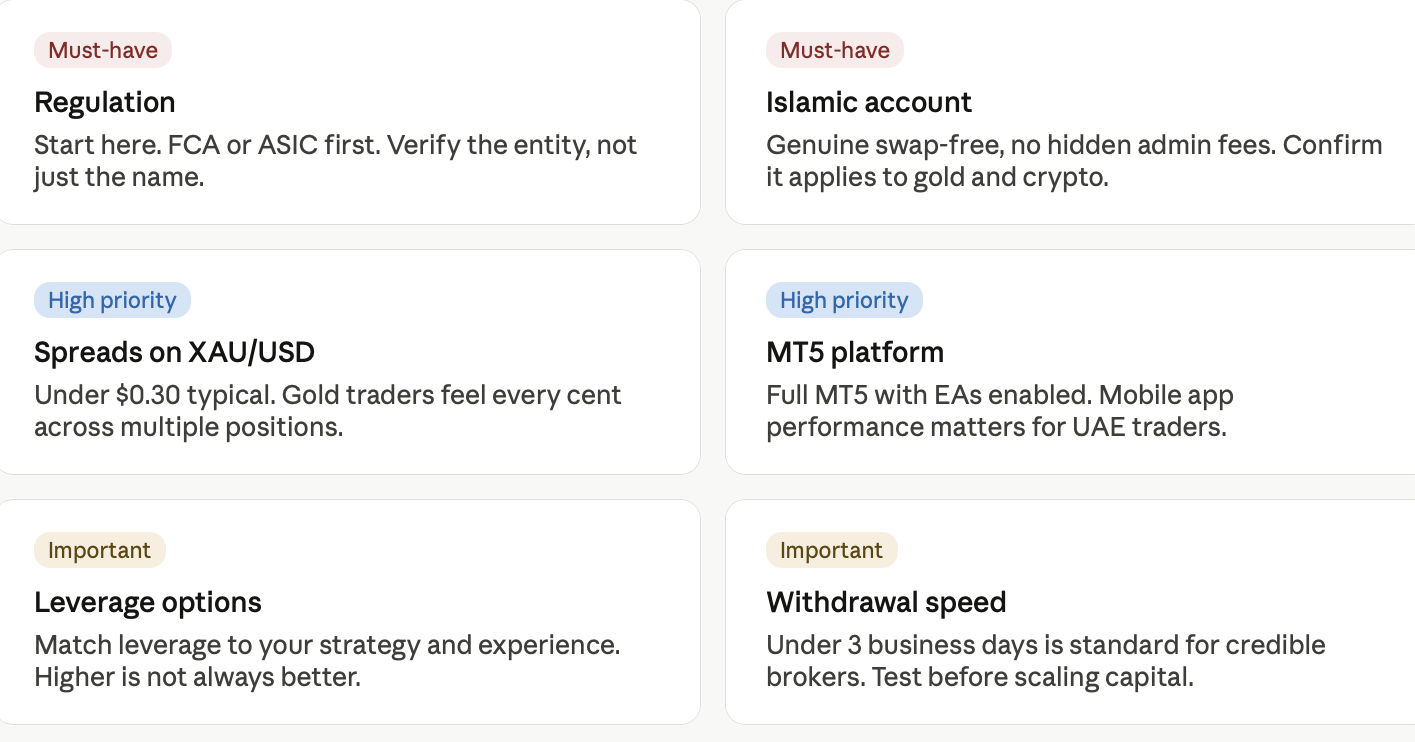
A structured decision-making process based on regulation must be used when selecting from all of the forex brokers in Dubai. Beginner traders will often base their choice of broker on a promotional bonus or on the recommendation of a trader who has a very different risk appetite; they frequently do this before verifying that the broker is regulated. Professional traders use this decision-making process in reverse order, and as evidenced by results from their trading methods, they are aware of this discipline.
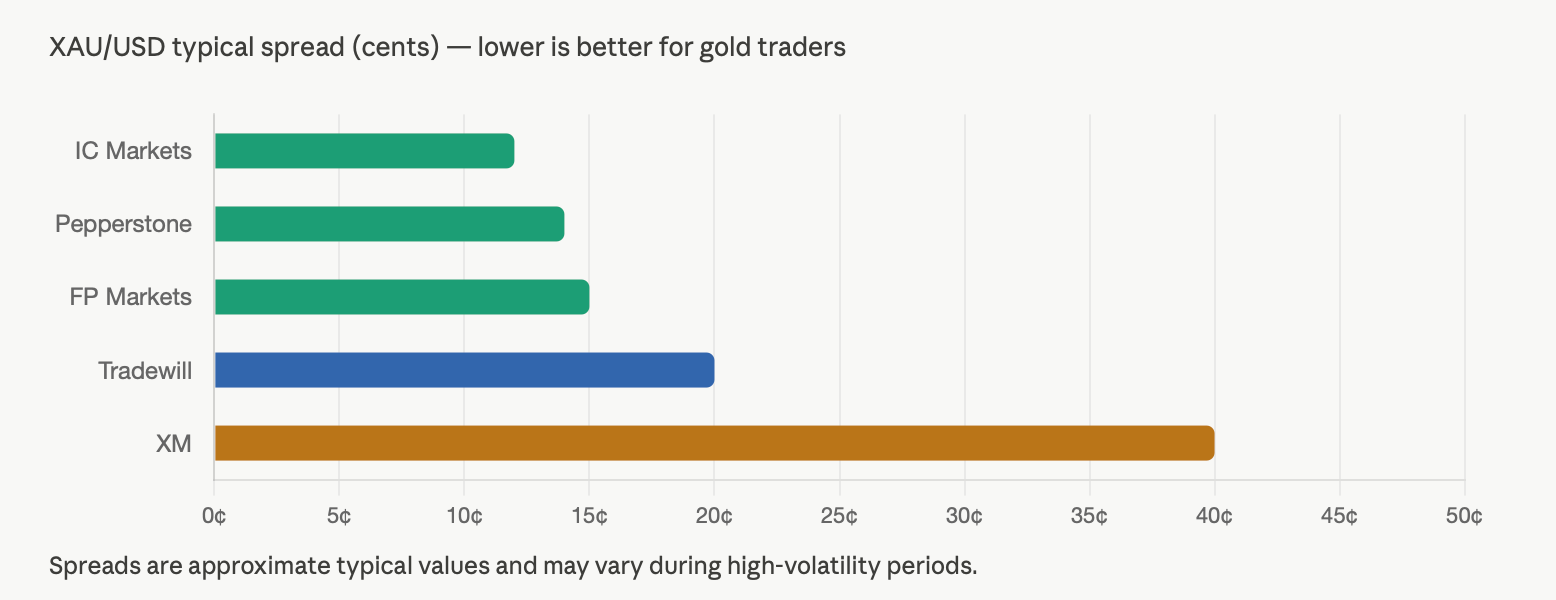
The two largest cost items for any trading strategy are spreads and the quality of execution. The "spread" is calculated as the difference between an instrument's bid and ask price. For swing traders who rely on high volume, the difference of 0.1 pips per trade could result in a swing trader losing a profit or not profiting when using a 0.8-pip spread on EUR/USD. Gold traders experience larger cumulative differences in pricing (XAU/USD spreads), which are 1-cent different all day long, than swing traders since the larger cumulative difference between pricing accumulates across multiple positions over shorter or similar timeframes.
To properly evaluate what a broker will cost per trade, you must understand how bid-ask spreads work across different market conditions.
Many traders in the UAE will not establish an account without being able to choose an Islamic account, which may not be equal in quality, and many brokers actually replace an overnight rollover with an administrative fee and charge similar costs for using an Islamic Account, just under another term. Therefore, you should carefully read the terms of the account before you open it; typically, brokers who use an open and honest Islamic account structure are also the brokers who transparently offer other trading services.
As a result of the increased number of instruments that UAE traders wish to trade, the support for trading platforms by brokers has dramatically changed in the last five years. In the GCC region, the majority of successful traders now use MT5 for trading forex pairs, CFD gold, CFD oil, CFD indices, and CFD crypto via a single trading platform (MT5) and an algorithm to apply their Expert Advisor or quantitative strategies. Brokers that are still only providing clients with MT4 are missing the opportunity to expand their client base as the market continues to change and grow.
Top 10 Forex Brokers in Dubai (2026): Complete Broker Comparison
The brokers below have been evaluated on regulation strength, Islamic account quality, execution standards, spread competitiveness, and overall suitability for UAE traders across different experience levels and strategies.
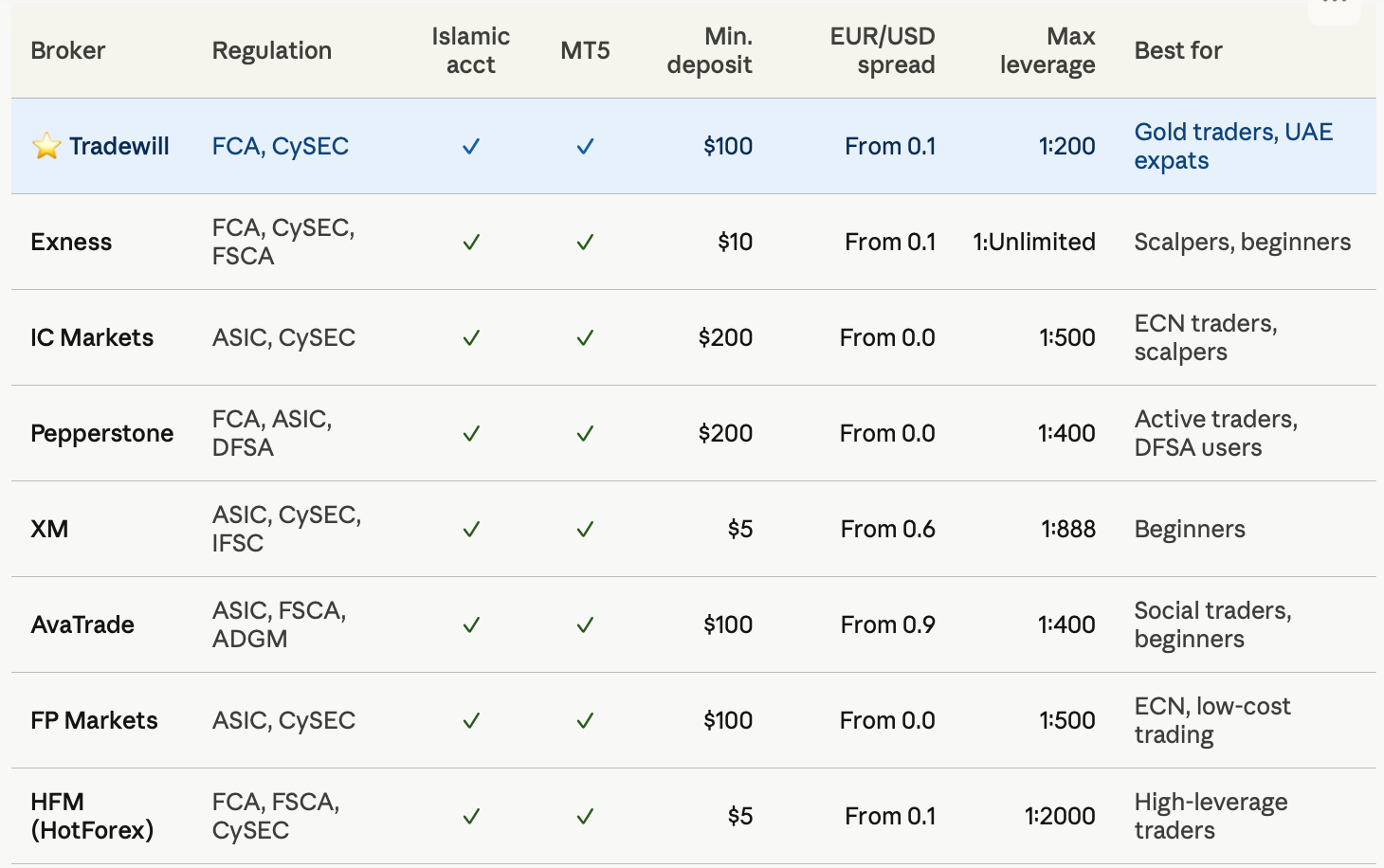
A structured decision-making process based on regulation must be used when selecting from all of the forex brokers in Dubai. Beginner traders will often base their choice of broker on a promotional bonus or on the recommendation of a trader who has a very different risk appetite; they frequently do this before verifying that the broker is regulated. Professional traders use this decision-making process in reverse order, and, as evidenced by the results of their trading methods, they understand the importance of this discipline.
The two largest cost items for any trading strategy are spreads and execution quality. The "spread" is calculated as the difference between an instrument's bid and ask price. For swing traders who rely on high volume, a difference of 0.1 pips per trade could determine whether a strategy remains profitable when trading EUR/USD with a 0.8-pip spread. Gold traders experience even larger cumulative pricing differences through XAU/USD spreads, as small variations can accumulate across multiple positions over shorter or similar timeframes.
To properly evaluate what a broker will cost per trade, you must understand how bid/ask spreads operate under different market conditions.
Many traders in the UAE will not open an account unless they can choose an Islamic account. However, these accounts may not always be equal in quality, and many brokers replace overnight rollover charges with administrative fees, resulting in similar costs under a different name. Therefore, you should carefully read the account terms before opening an account; typically, brokers that use a transparent Islamic account structure are also the brokers that transparently offer other trading services.
As a result of the increasing number of instruments that UAE traders wish to trade, broker support for trading platforms has changed dramatically over the last five years. In the GCC region, the majority of successful traders now use MT5 to trade forex pairs, gold CFDs, oil CFDs, index CFDs, and crypto CFDs through a single trading platform while applying Expert Advisors and quantitative trading strategies. Brokers that still provide only MT4 are missing opportunities to expand their client base as the market continues to evolve and grow.
Islamic Trading Accounts: What Dubai Traders Need to Know
Both types of forex accounts, including Islamic forex accounts, do not impose overnight interest charges on positions that remain open after the daily rollover period has elapsed. In traditional forex trading, this interest charge corresponds to the interest rate differential between the two currencies in an underlying currency pair, making it inconsistent with the Islamic prohibition of riba. As a result, for a UAE-based trader holding positions overnight or over multiple days, this charge can have a significant impact. For example, if a swing trader in gold were to hold a position for three to five days in a traditional forex account, they would accrue overnight charges that would reduce their effective profitability. In contrast, if they used a fully compliant swap-free account, they would not incur these costs. You can use this carry trade guide to understand how interest rate differentials affect these charges in this carry trade guide.
One of the most important factors that UAE traders should investigate when evaluating a broker’s Islamic account is whether the account genuinely eliminates rollover fees or simply replaces them with an administrative fee that functions as a substitute for the swap charge. Tradewill, IC Markets, Pepperstone, and Exness all provide Islamic accounts that apply to forex pairs, gold CFDs, and crypto CFDs, and independent reviews indicate that these accounts do not contain hidden replacement fees for rollover charges.
Gold and Forex Trading Platforms in Dubai
In the United Arab Emirates (UAE), gold is a key component of retail forex trading activity. XAU/USD is one of the most actively traded instruments among UAE clients due to the region's cultural familiarity with gold as a store of wealth and its responsiveness to major market events such as U.S. Consumer Price Index (CPI) releases, Federal Reserve announcements, and various economic and geopolitical developments throughout the Middle East. Silver and other commodity instruments compare with gold in terms of their spread structures and volatility profiles to provide traders with a useful benchmark for evaluating the total cost of trading Contracts for Difference (CFDs) based on precious metals.
Understanding Forex Trading Costs, Leverage, and Risk
All trades involve a cost structure that extends beyond the spread (the difference between the bid and ask price). Therefore, if traders do not take into consideration the other costs associated with trading, they are effectively working with only a fraction of the information required to make sound decisions regarding trade entry and exit. Commissions charged on ECN accounts, overnight swap fees applied to positions held in standard accounts, and slippage during periods of heightened volatility all contribute to a trade's overall cost. Over the course of a week or a month, these factors can significantly influence whether a trader ultimately generates a profit or incurs a loss.
Due to the wide variation in maximum leverage available in the UAE across different regulatory jurisdictions, traders need to use leverage prudently. Otherwise, traders can easily experience account blow-ups as a result of the high leverage offered by many foreign offshore brokers, which often attracts inexperienced traders. For example, if a trader opens a 1:100 leveraged long position on XAU/USD using $1,000 of available equity, that trader gains exposure to $100,000 worth of gold. Consequently, a 1% adverse price movement could eliminate the trader's entire margin and potentially trigger a margin call, requiring additional funds to be deposited into the account.
Understanding how price action and stop loss placement interact with leverage is the practical skill that separates traders who survive their first year from those who don't. Reading about double top patterns and trend reversals before increasing your position sizes gives you the technical foundation to time exits before margin calls become a factor.
How to Start Forex Trading in Dubai: Step by Step
The process of setting up an account with a regulated forex broker in Dubai has been streamlined, allowing most traders to complete the entire process within a few days rather than several weeks.
Here are the 5 steps to setting up your regulated forex broker account in Dubai:
Select a broker. Use the criteria mentioned above as your three most important factors: the broker's regulatory status, including the number and quality of regulatory licences it holds; the availability and conditions of its Islamic account offering; and support for the MetaTrader 5 (MT5) trading platform.
Complete the online registration form, which usually takes less than 15 minutes, with your selected broker.
Complete the KYC verification process by providing a passport or Emirates ID and proof of residential address in the UAE. All regulated brokerages must comply with current AML (Anti-Money Laundering) requirements across their respective jurisdictions.
Make your first account deposit using a bank transfer, Visa, Mastercard, or an e-wallet, depending on the payment methods supported by your chosen broker.
Download the MT5 trading platform and test it extensively using a demo account before deciding whether to deposit funds into a live trading account. Practicing candlestick pattern recognition and working with trendlines in the demo environment builds the consistency that live trading requires without the cost of learning mistakes with real money.
Which Is the Best Forex Broker in Dubai in 2026?
The forex broker that is best suited to you will depend on your specific priorities as a trader. However, regardless of your individual preferences, the hierarchy of broker selection criteria should always begin with regulation, followed by execution quality, Islamic account conditions, and platform functionality before considering secondary factors such as promotions or the visual design of a broker's trading interface.
UAE traders seeking a genuine Islamic account, competitive spreads on gold trading, full access to the MetaTrader 5 (MT5) platform, and the ability to trade through a broker regulated by the FCA from a single account may find that TradeWill meets these requirements without requiring a large initial deposit. For traders who place a higher priority on ECN pricing, IC Markets and Pepperstone are consistently recognised for offering some of the most competitive spreads among regulated forex brokers globally. For those seeking the lowest possible entry point and the reassurance of dealing with an established broker, Exness and XM both offer minimum deposit requirements of less than $10 along with verified swap-free account options.
Ultimately, if you are looking for a trustworthy forex broker in Dubai, you should only consider brokers whose regulatory status can be independently verified, that maintain a clearly documented Islamic account policy, and whose trading platforms you have thoroughly tested through a demo account before committing any of your own capital.
Open a Tradewill demo account today and trade live gold and forex market conditions, with genuine Islamic account terms and full MT5 access, before committing a single dollar of real capital.
Disclaimer: The content of the blog does not represent any position of Trade W, does not serve as any trading-related decision advice, and does not endorse any third-party.