

 Trade W

Most traders have a decent strategy. What they don't have is the discipline to follow it. Here's how to build a system that forces you to trade right, every single time.
Numerous competent traders forfeit their money due to a lack of discipline when they trade. An effective strategy may perform well in a backtesting situation, yet as soon as the trader's actual money is on line, the strategy fails miserably. The system is not the problem. The individual trader is. The real issue is a trader’s lack of discipline.
Trading emotionally, attempting to jump in and out of trades, removing your stop loss while the trade is active, doubling down on losing trades, and so on, are not signs of a failing strategy. Instead, these behaviours highlight the absence of rules within the trader's system. This article offers a complete framework that touches on all four conditions in detail (mindset → system → tools → execution).
After reading this article, you will have a clear framework for consistent trading rather than relying on luck.
The large majority of trading losses are caused by a lack of discipline in the trader rather than a lack of strategy.
What Trading Discipline Actually Means
Trading discipline is not about being emotionless or having a unique character; trading discipline is a skill. It is an acquired, duplicable type of behaviour that takes place when a trader follows the rules of their own trading plan, regardless of what is presently happening in the markets.
There are three main parts to trading discipline: Entry Discipline means you take trades only when your predetermined conditions are met, not when it feels right. Risk Discipline means you always limit how much money you can lose before considering the potential profit of a trade, and Exit Discipline means once you set the loss limits and profit targets on your trades, you will leave them to work even if you have a strong feeling about something else.
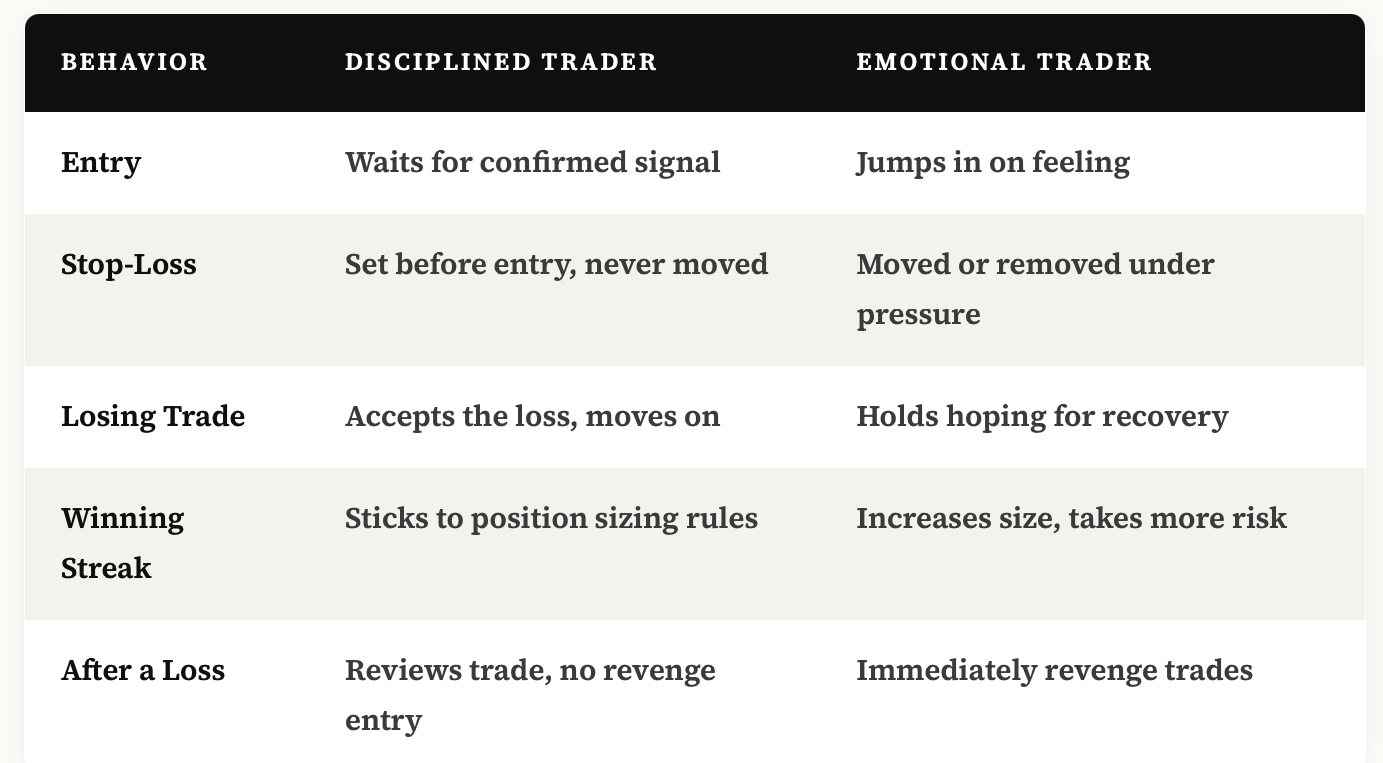
Discipline in trading is not a matter of intelligence; it is about applying a clearly defined approach. The disciplined trader uses a plan and follows procedures. The emotional trader reacts to trading data.
What your brain does to impede successful trades
The behavioural sciences have established that the part of the brain that generates feelings reacts much more quickly than the part that reasons. At the moment you experience an adverse price movement on a trade, your amygdala generates a feeling. Subsequently, before your prefrontal cortex can rationally evaluate the situation and respond appropriately, your body has already reacted with panic.
The following conditions produce psychological traps, producing significant damage to traders. With loss aversion, the emotions associated with a loss of $500 are approximately twice as powerful as the equivalent positive $500 experience of making money on the same $500.
Traders tend to hold their losing positions for extended periods as a result of their desire to avoid "realising" a loss. The "fear of missing out" causes traders to enter trades they would never consider in a proper mindset; "revenge trading" produces the worst potential financial outcome due to attempting to quickly recover a loss with an excessive volume on a position with little or no consideration for execution requirements.
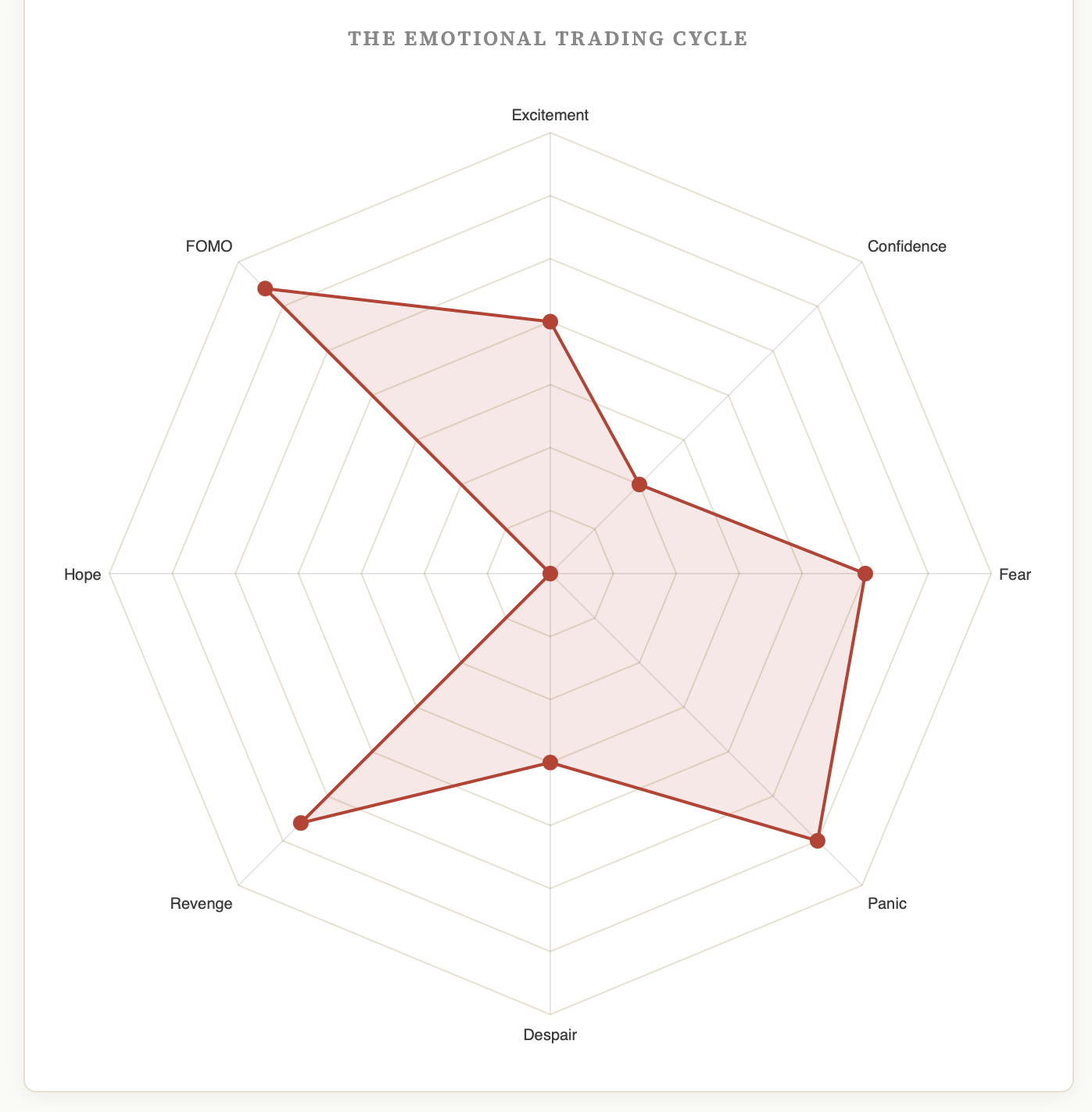
There is also a gap in knowledge and execution known as the "Knowing-Doing Gap." Knowing that you should honour your rules of trading, but under pressure and in the heat of the moment, you don't. This isn't due to weakness; it is due to wiring. Thus, the solution isn't based on increased willpower. It’s a requirement to create a structure that makes it much harder to break the rules than it is to follow them.
Create a Rule-Based Method – Convert Discipline into Process
A rule-based trading system is just that: Every trading decision is based upon the application of a written, objective rule. If there is no rule to base your decision on, then you cannot make a trade. It is as simple as that.
Good rules have three characteristics. They can be quantified, i.e. "price closes higher than the 50 EMA," not "looks bullish." Second, they can be repeated. Thus, if you have the same setup for your trade at the same price point, you can produce the same decision. Third, at the time a decision is made, the rules leave no room for interpretation.
You will need to create three different sets of rules for your system: Entry Rules define the exact criteria for entering a trade. That is, trend direction, price level, and indicator must all be in alignment before entering the trade. Exit Rules must define your stop loss and take profit levels prior to entering into a trade. Risk Rules define how much capital you are allowed to risk on any one trade.
The Trade Checklist: Your Filter for Every Entry
A trade checklist is employed as a decision filter instead of simply being a box-ticking exercise. Having a checklist will give you time to evaluate whether or not the appropriate conditions are met before you commit any capital. Most impulsive trades will not pass a proper checklist review, and that’s exactly why you have one.
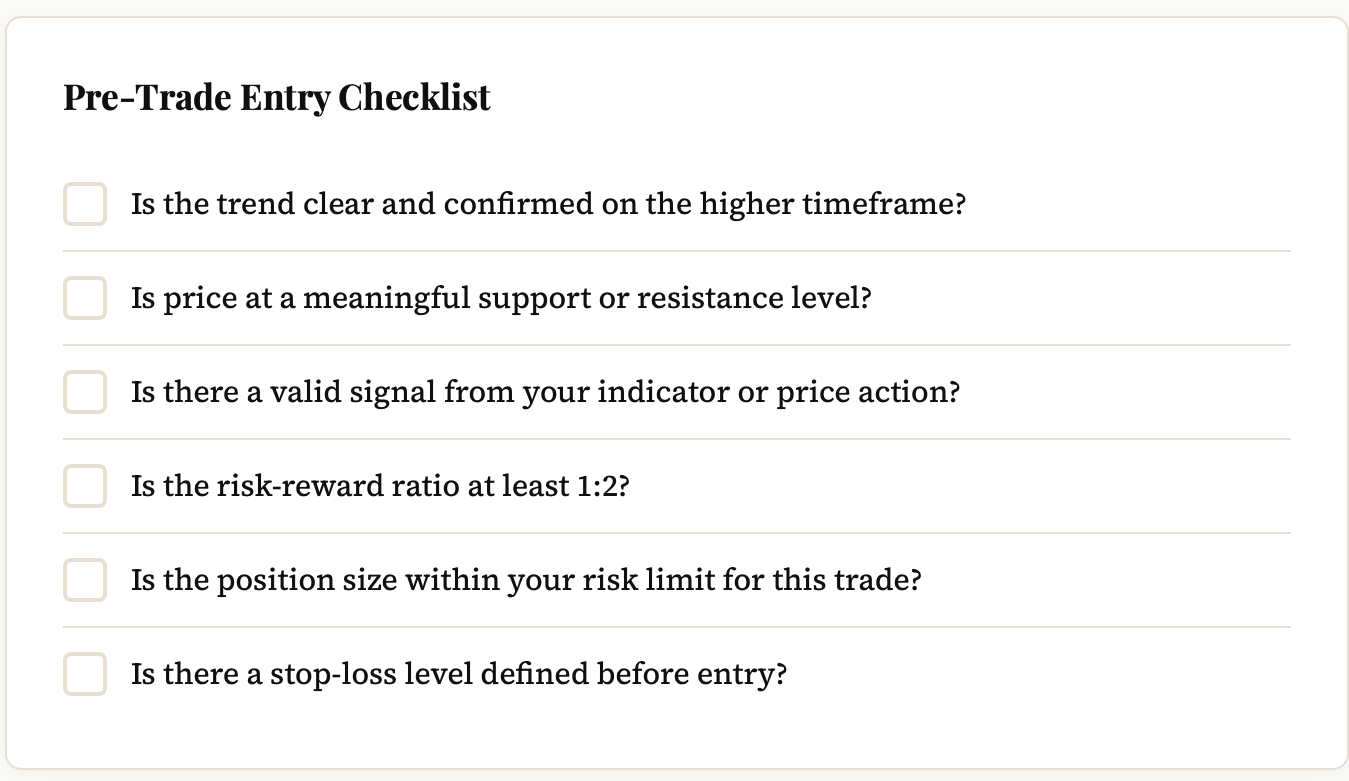
The rule is pretty simple: you need to have at least four out of six conditions that are green before pressing buy or sell. You choose a great trade; you don't chase a great trade.
Position Sizing: The Rule No One Ever Talks About
Everyone talks about when to enter a trade, but what decides whether you'll be trading after numerous losses is your position size. Most professionals have a rule to risk 1-2% of their total accounts on one trade. It sounds boring. But this rule is the reason why you see professional traders making money.
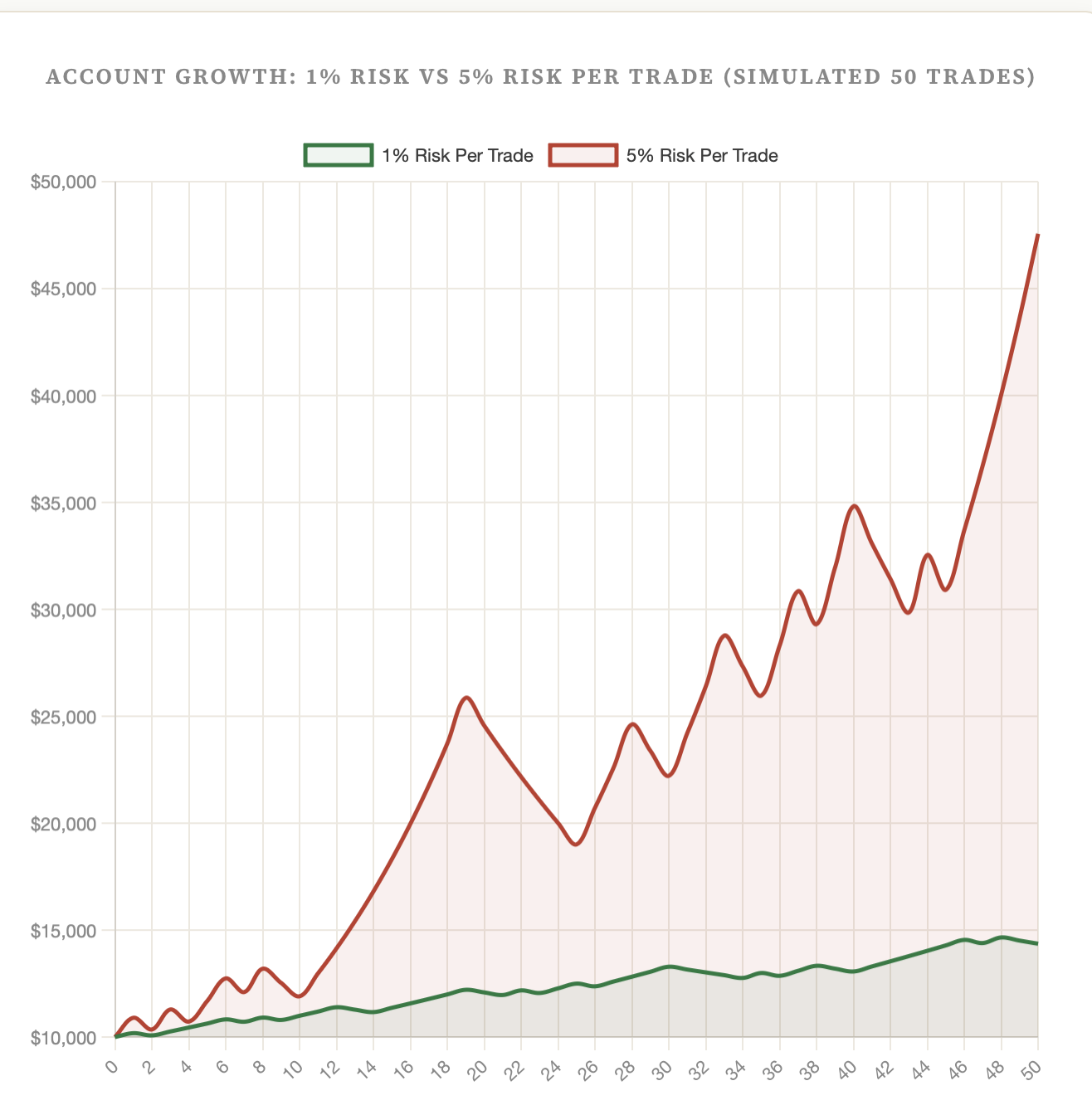
The following is an economic breakdown of using a $10,000 account and a 2% Risk Rule. Your stop-loss will be positioned 50 pips below your entry price. The pip value will be $1; therefore, your position size is 200 lots. Once you have calculated this for one trade, you must keep to that position size per trade for every trade thereafter.
The Kelly Criterion "optimises" bet size based upon the ratio of wins and losses on average over time. While most traders will be successful using a simple 1 - 2% risk rule, Kelly provides an excellent educational insight on the fact that even with a substantial edge towards winning trades, the destruction of a trading account due to excessive risk on each attempt far outweighs any period of losing trades. Survival before profit is most important.
Stop-Loss Discipline: Without a Stop, There is No System
Your stop-loss represents the difference between a trade and a gamble or speculation. If you do not place a stop-loss in a trade, you are not "giving the trade more room to play out". You are eliminating the only way to protect your capital should you be wrong in your opinion, and you will be wrong. The most talented of traders are right anywhere from 40-50% of the time.
Automated stop-loss orders are much more reliable compared to manually placing them. When you auto-arrange your stop-loss when you place your trade and allow the platform to exit your position, it will eliminate emotional decision-making when managing your manual stop-loss orders, as you will always be able to provide some justification to stay in a losing position just a little longer.
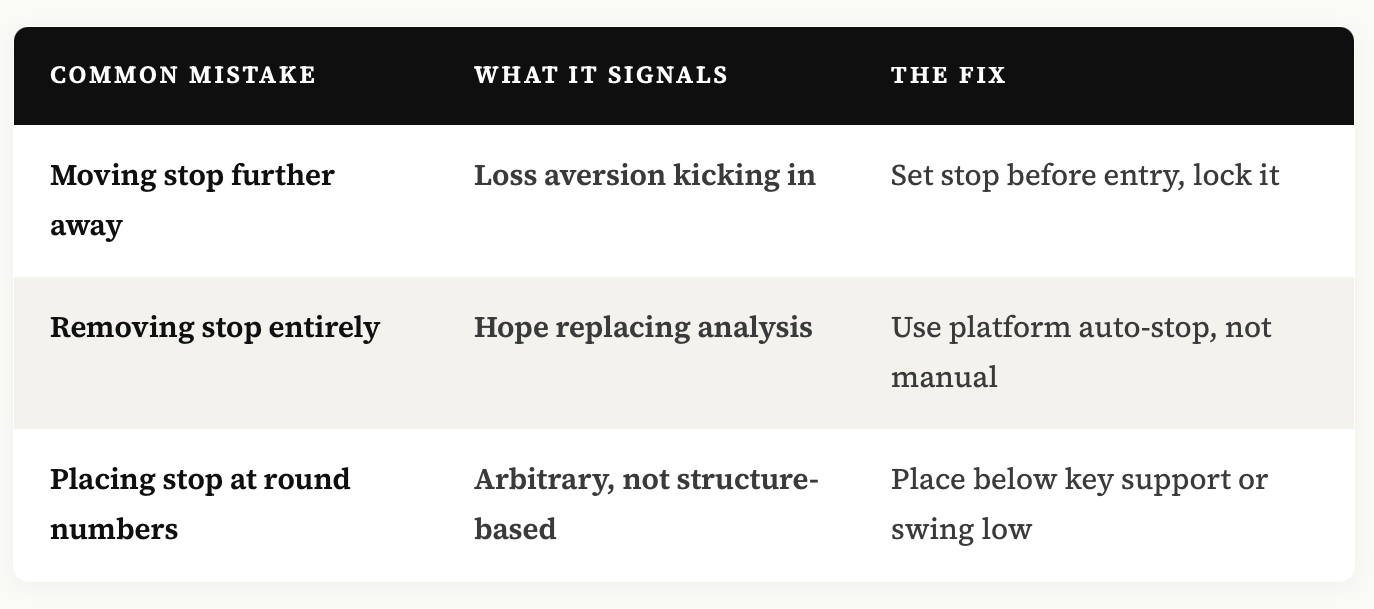
Establish your stop in relation to the market structure under a previous low for long trades and over a previous peak for short trades. It should indicate where you would no longer have a valid reason for placing that trade; it should not simply be where you want to stop having a negative experience with the position.
Trade Journal: The Way You Get Better
If you are not maintaining a journal of your trades, you are flying without an aeroplane. Journals allow you to measure your performance as well as the accuracy of previous decisions. Your trade journal serves as the only source of data for developing your understanding of what you are doing correctly, what you keep doing incorrectly, and where your emotional behaviours are causing you to lose money.
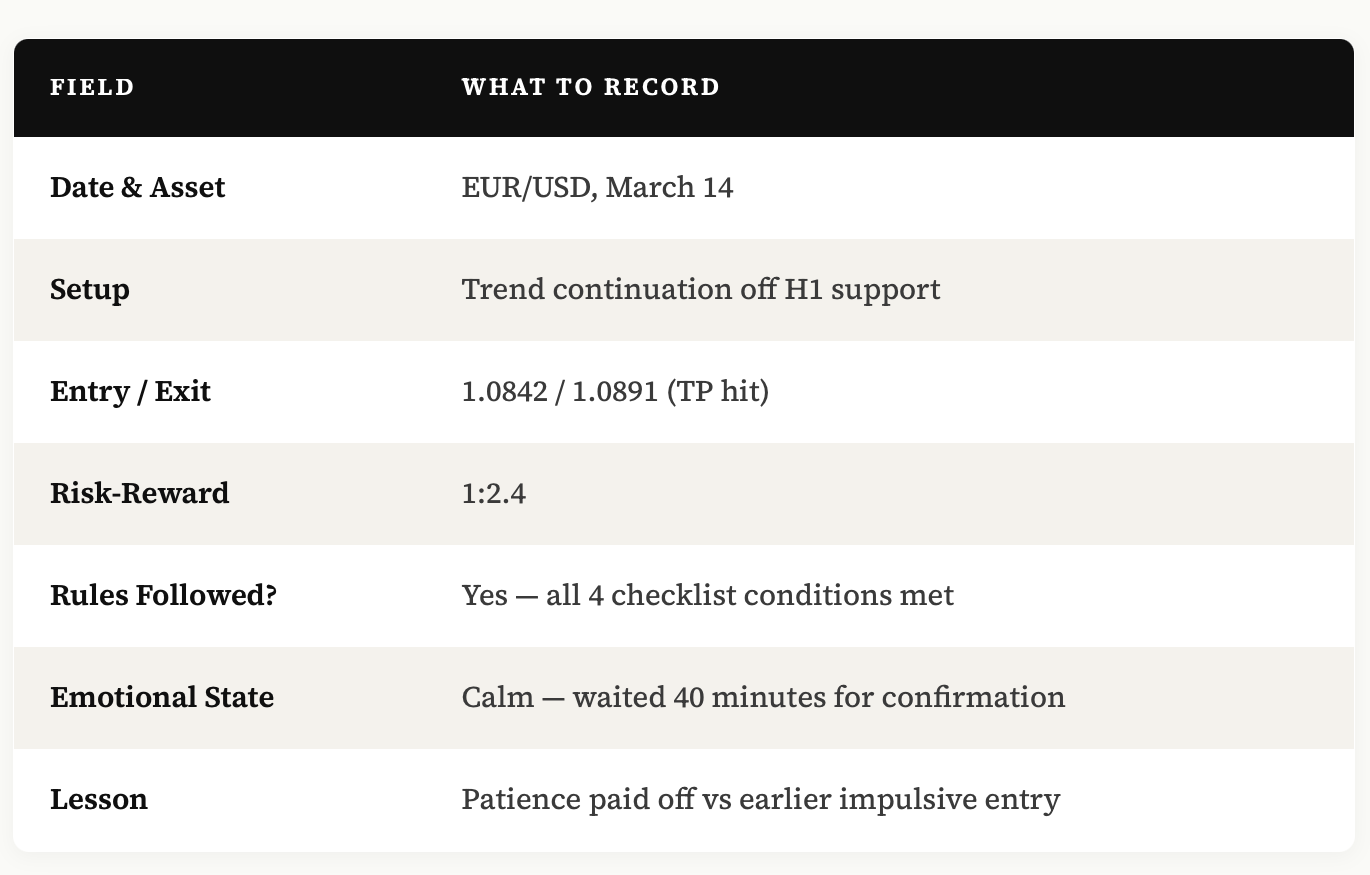
Make sure you check through your weekly journal entries and see if there are any repeat occurrences across all of them that represent successes or failures. Were there people or things that were involved with each occurrence? Additionally, check to see if you followed your rules at the time of either event. You cannot deny the history of your journal entries; being able to measure anything will cause an increase in that item.
How Automation removes the Weakest Link: YOU
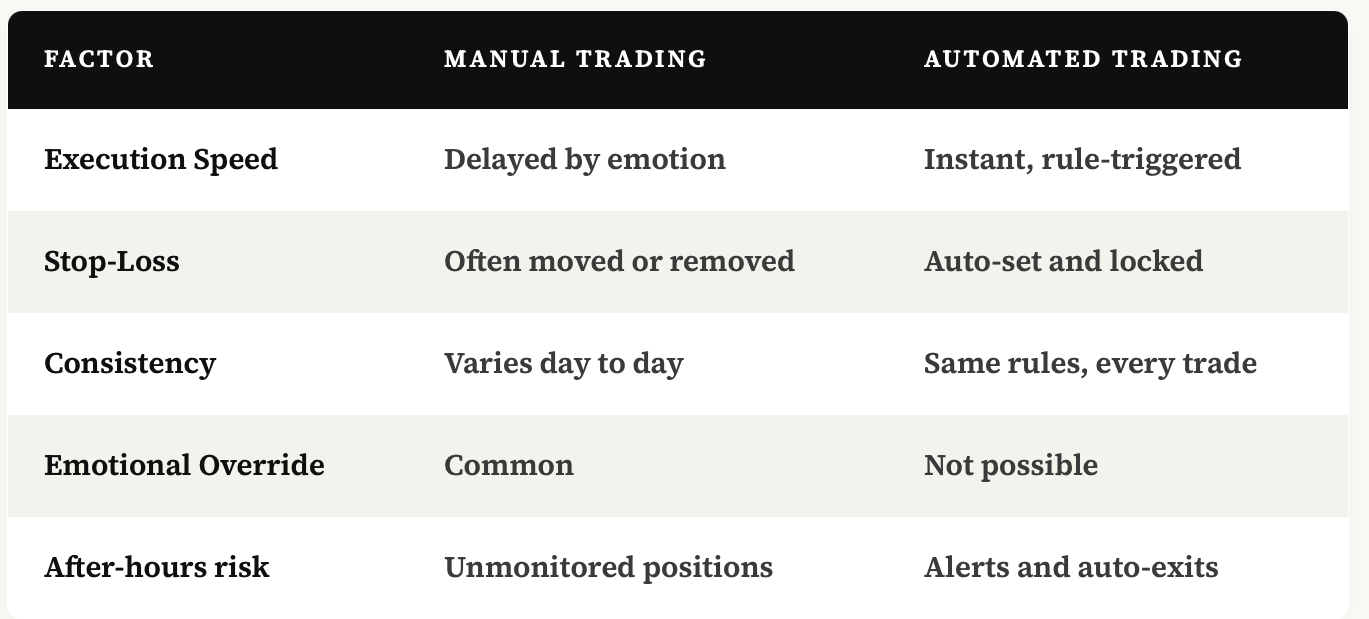
Your strategy is not replaced with automation; rather, it is reinforced. On days when you are tired, upset or preoccupied with other thoughts, this will still allow for proper operation of your entire system. That is the primary benefit.
Copy Trader Tools
Copy trader tools can help you copy the experience of other traders without having to develop your own trading experience first. Using a copy trader eliminates any emotional decision-making from your trades, which allows you to develop a disciplined trading strategy.
Strategy vs. Discipline — You're Fighting the Wrong Battle
There is an old saying in trading that says, “I just need a better trading strategy.” This is wrong! Using two traders with the same forex trading strategy, trader A follows all entry rules, stops, losses, and position sizes correctly compared to trader B, who does not respect entry rules and behaves in totally different ways on different days, with different patterns.
Both Traders Used The Same Forex Trading Strategy, But Each Had A Completely Different Outcome.
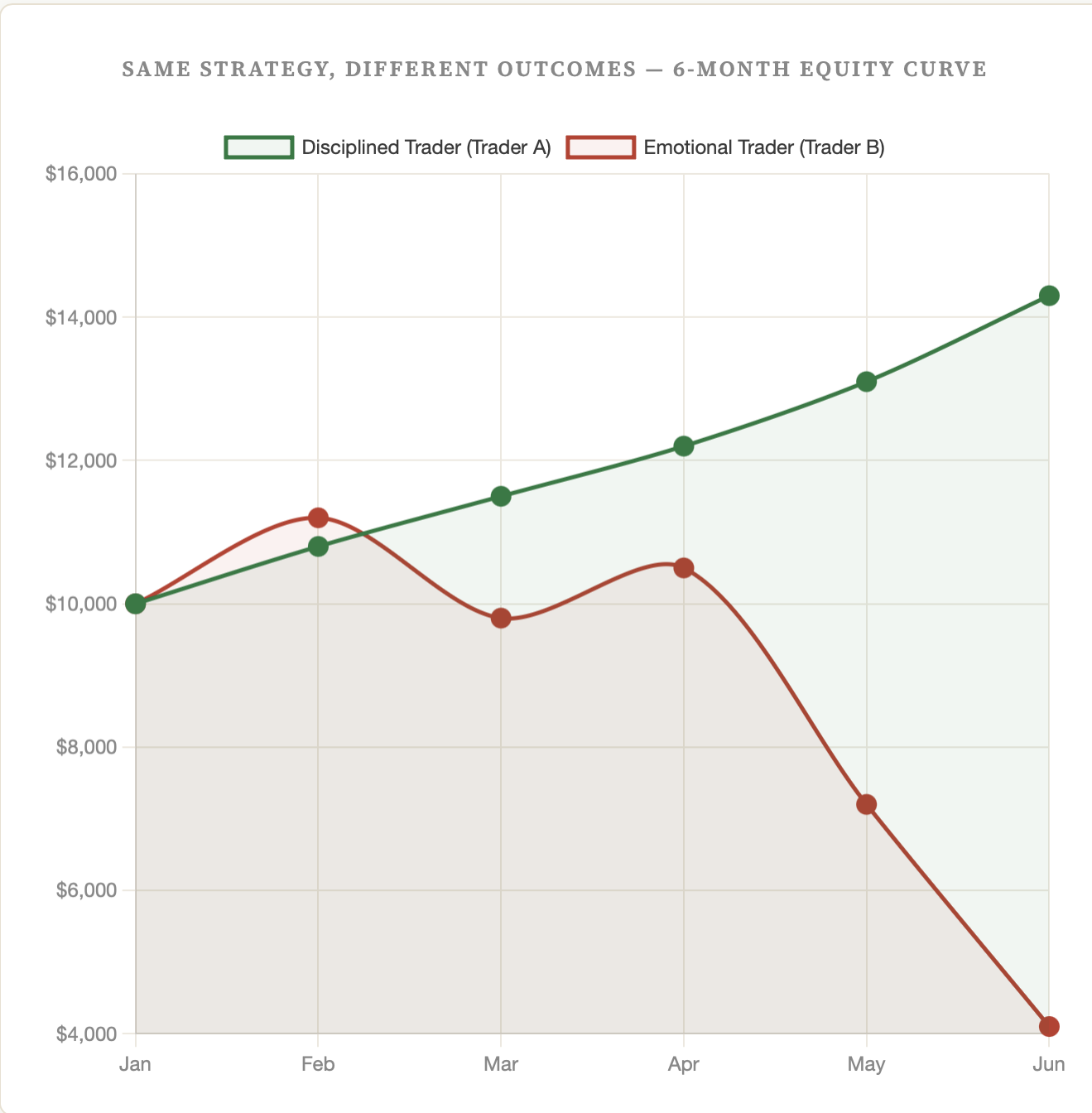
An average strategy that is applied consistently outperforms a high-performing strategy that is used inconsistently. So the edge isn’t found in your setup but rather within the quality of execution throughout hundreds of trades.
The Illustrative Trading Example
The Market Conditions
The market saw an intraday 8% decline in Bitcoin that occurred while macroeconomic uncertainty was rampant. These two traders both had a short position and the same trade setup, but had vastly different results.
Trader A: Uses A Disciplined Process
Trader A waited for confirmation of 4-hour lower highs before entering their trade. They were going to go in with 1.5% of their account size. They set their stop-loss above the most recent swing high before entering the trade. When the price fell rapidly, Trader A did not increase their position or adjust their stop-loss. Trader A hit their take-profit at a 1:2.8 risk-to-reward, which allowed them to take the trade out cleanly, log the trade, and move on.
Trader B: Acts on Emotion
Trader B FOMO traded ing b,eentering beforece started declining, wi,thout first receiving confirmation. Toss because they intended to “watch” the trade.
After experiencing a small bounce, Trader B thought the price would keep dropping, so they increased their position. However, after a more substantial bounce occurred than previously anticipated by Trader B, panic set in, and they closed their trade at a large loss, thus losing all the money they had gained over the course of the previous week.
Same trade setup, same directional bias, and yet the only difference was in execution between both traders with regard to their checklists, managing position size, and maintaining proper stop-losses. Discipline and process will help you make more money in the long run. This is not a theoretical statement; it is a trade-by-trade example.
What Daily Trading Routine Builds Consistency
Discipline in trading is not a one-time decision; it requires discipline at all times. Professional traders will not trade differently in each session depending on how they feel about it. They operate under a structured trading routine that takes the variability out of their process.
The Mistakes That Reset Your Progress and How to Stop Them
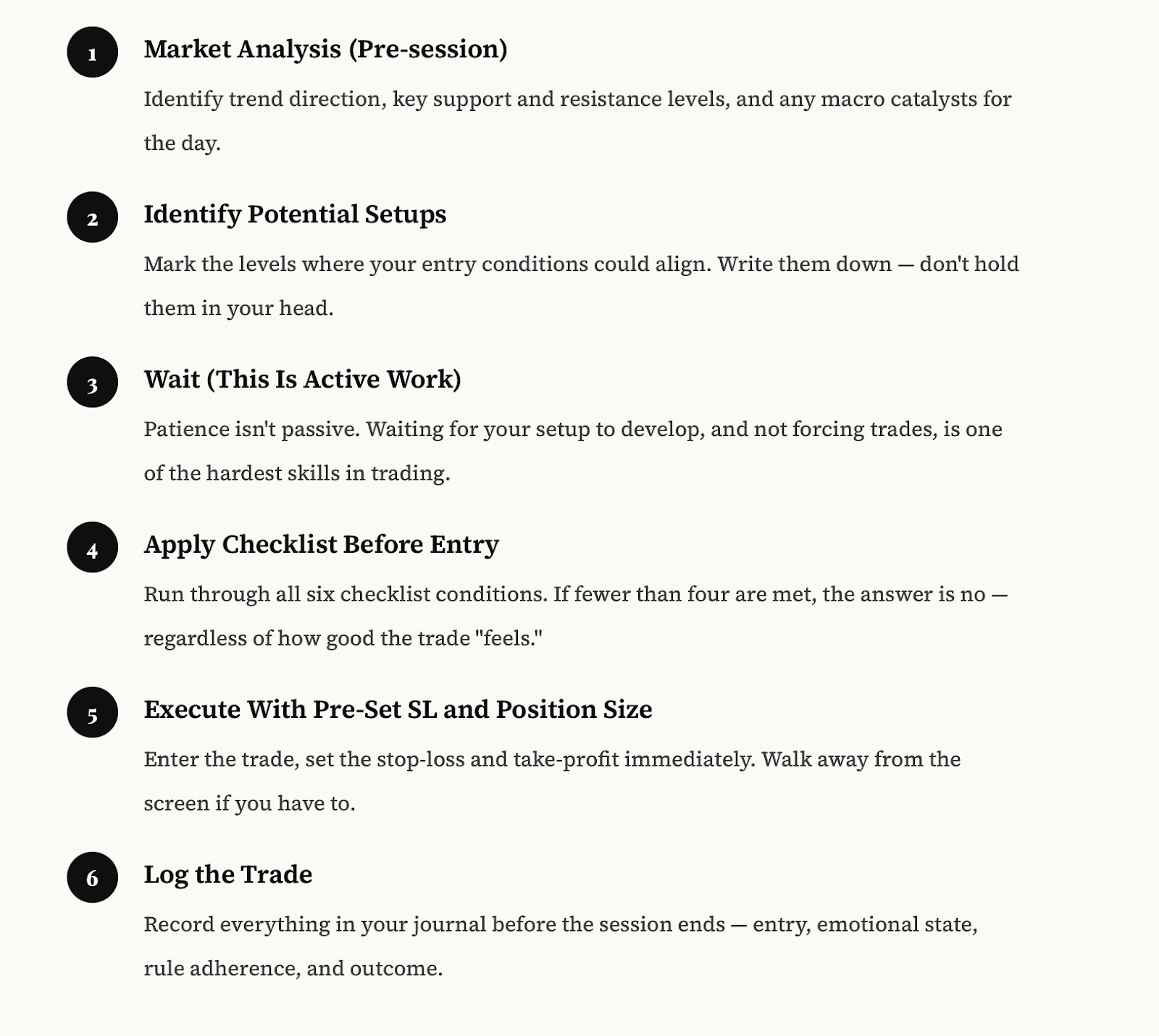
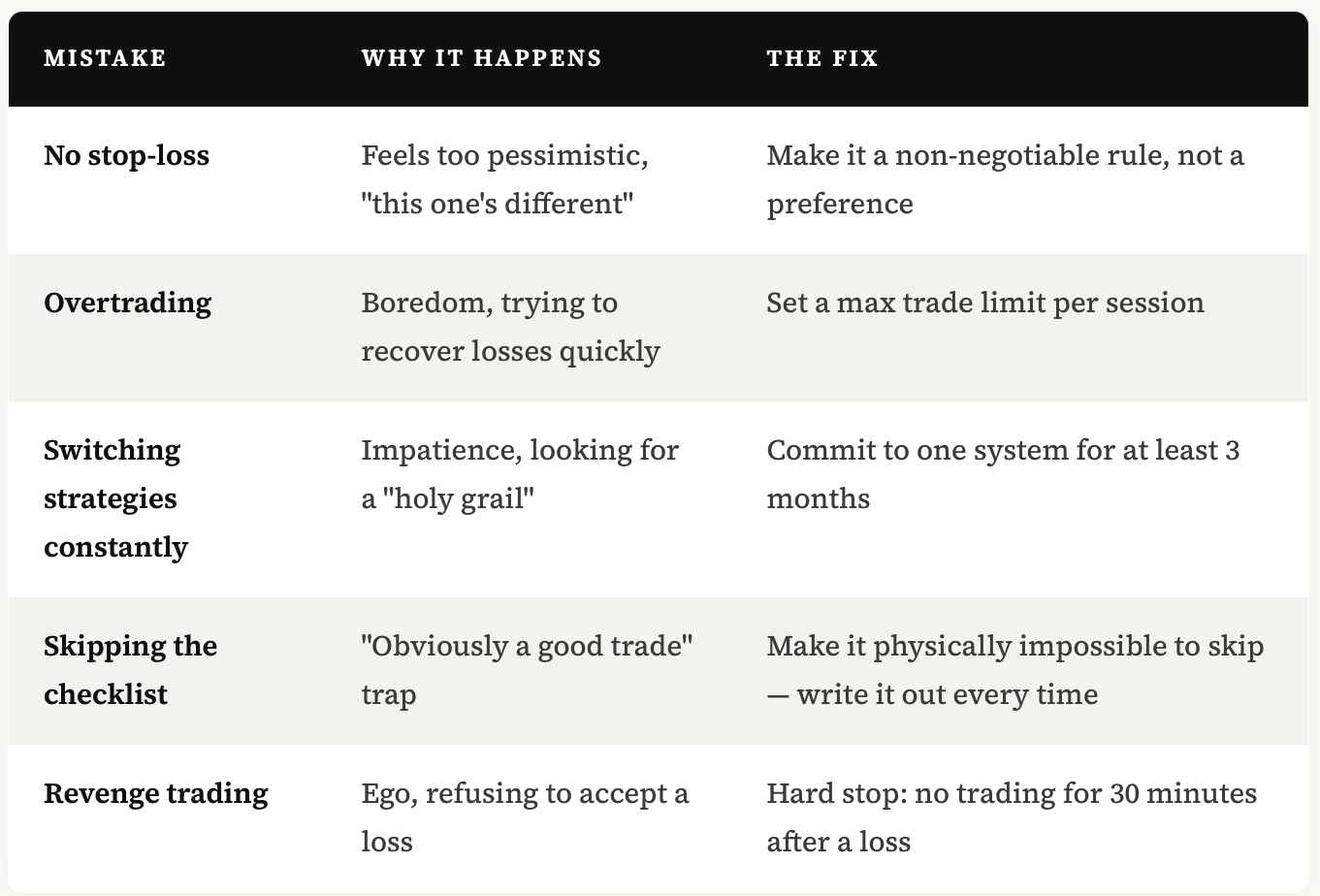
Not finding the perfect setups is less important than avoiding these types of 'mistakes'. The majority of account blowups result from many minor discipline breaks adding together to create a significant loss, rather than from one big trade.
Quick Answers: Trading Discipline for Beginners
What is trading discipline?
It's consistently following your predefined trading plan — entries, exits, and risk limits — without deviation based on emotion or impulse.
How do I improve my trading discipline?
Start with written rules, use a pre-trade checklist before every entry, journal every trade, and review patterns weekly. Improvement is systematic, not motivational.
Why do traders fail even with a good strategy?
Because they don't follow it consistently, strategy defines the edge — discipline is what converts that edge into actual profits over time.
Can beginners develop discipline?
Yes — and it's actually easier to build from scratch than to unlearn bad habits. Start with a demo account and enforce your rules there first.
How long does it take to become disciplined?
Most traders see meaningful improvement after 3-6 months of consistent journaling and checklist use. There's no shortcut, but the compound effect of small daily habits adds up fast.
Stop Trading on Instinct. Start Trading on Rules.
TradeWill gives you the structure, tools, and automation to execute your strategy exactly as planned — every session, without compromise.
Disclaimer: The content of the blog does not represent any position of Trade W, does not serve as any trading-related decision advice, and does not endorse any third-party.