

 Trade W
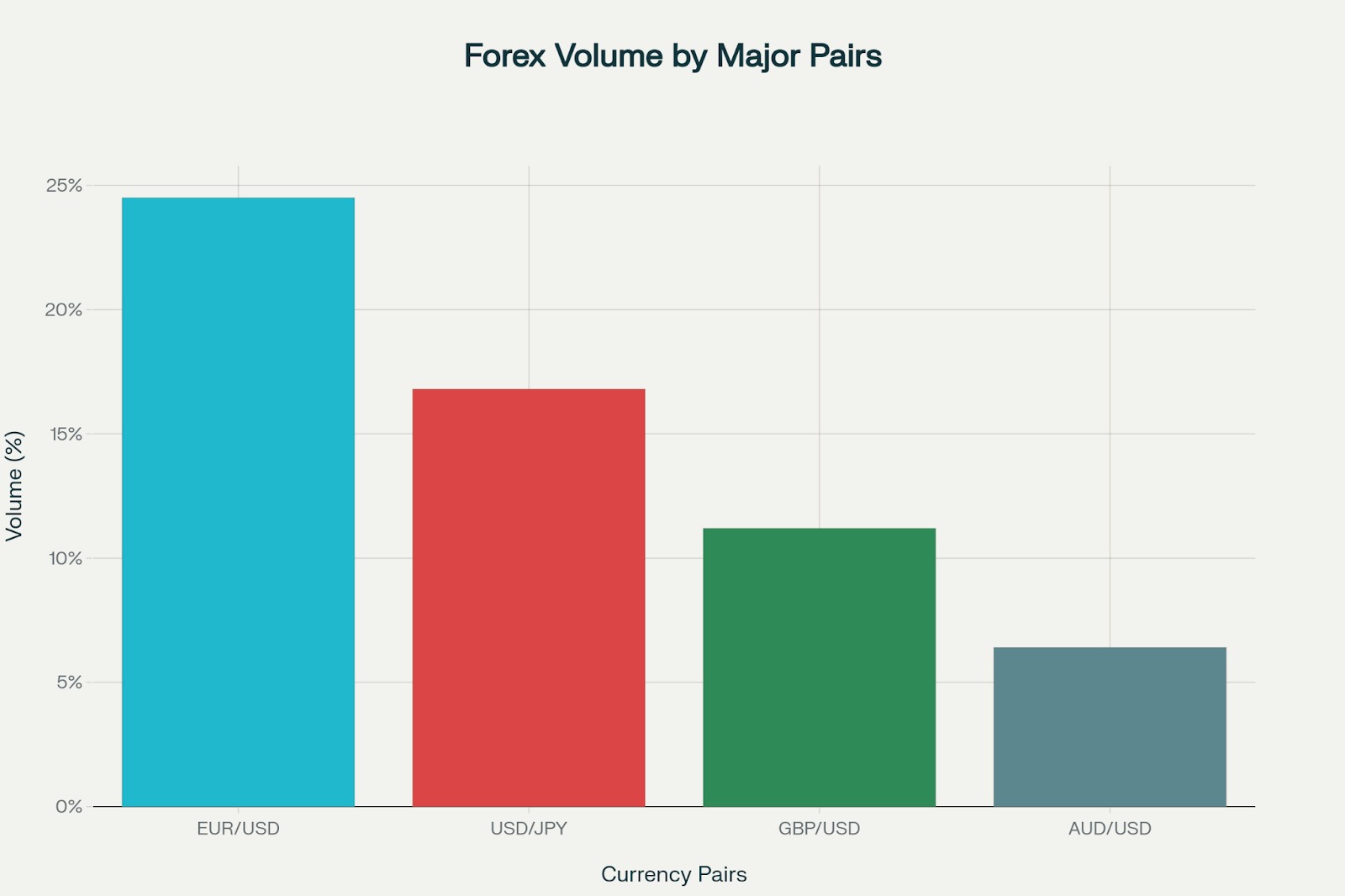
The GBP/USD currency pair is known as "Cable" and is one of the most liquidly traded pairs in forex, accounting for approximately 11% of forex trading volume. This major currency pair has tremendous liquidity and volatility providing several opportunities for experienced and inexperienced traders alike.
Trading GBP/USD comes with some unique advantages, mainly due to the extreme volatility you can have trading during the London and New York sessions having many opportunities to enter and exit from positions during the same trading day. Overall, the GBP/USD currency pair is impacted by a multitude of economic data, political climates and market sentiments from two of the largest economies in the world.
This guide shall provide you adequate knowledge to be successful trading GBP/USD by touching on everything from fundamental analysis, technical trading strategies, risk management and actual trading approaches you can use by themselves or to improve your overall trading.
GBP/USD Currency Pair Fundamentals
The GBP/USD currency pair represents the exchange rate between the British Pound Sterling with the U.S. Dollar and informs traders of how many U.S. dollars a trader can purchase for an actual British pound. GBP/USD currency pair shows extreme volatility often moving 100 - 200 pips in a single day which is great for day trading or swing trading.
Both currencies of GBP/USD are held up by economic fundamentals. The UK economy revolves around London, a strong financial services province, which provides an opportunity in the pound. Furthermore, the US dollar is the number one reserve currency, allowing it to have considerable strength when traded against all major countries, including GBP.
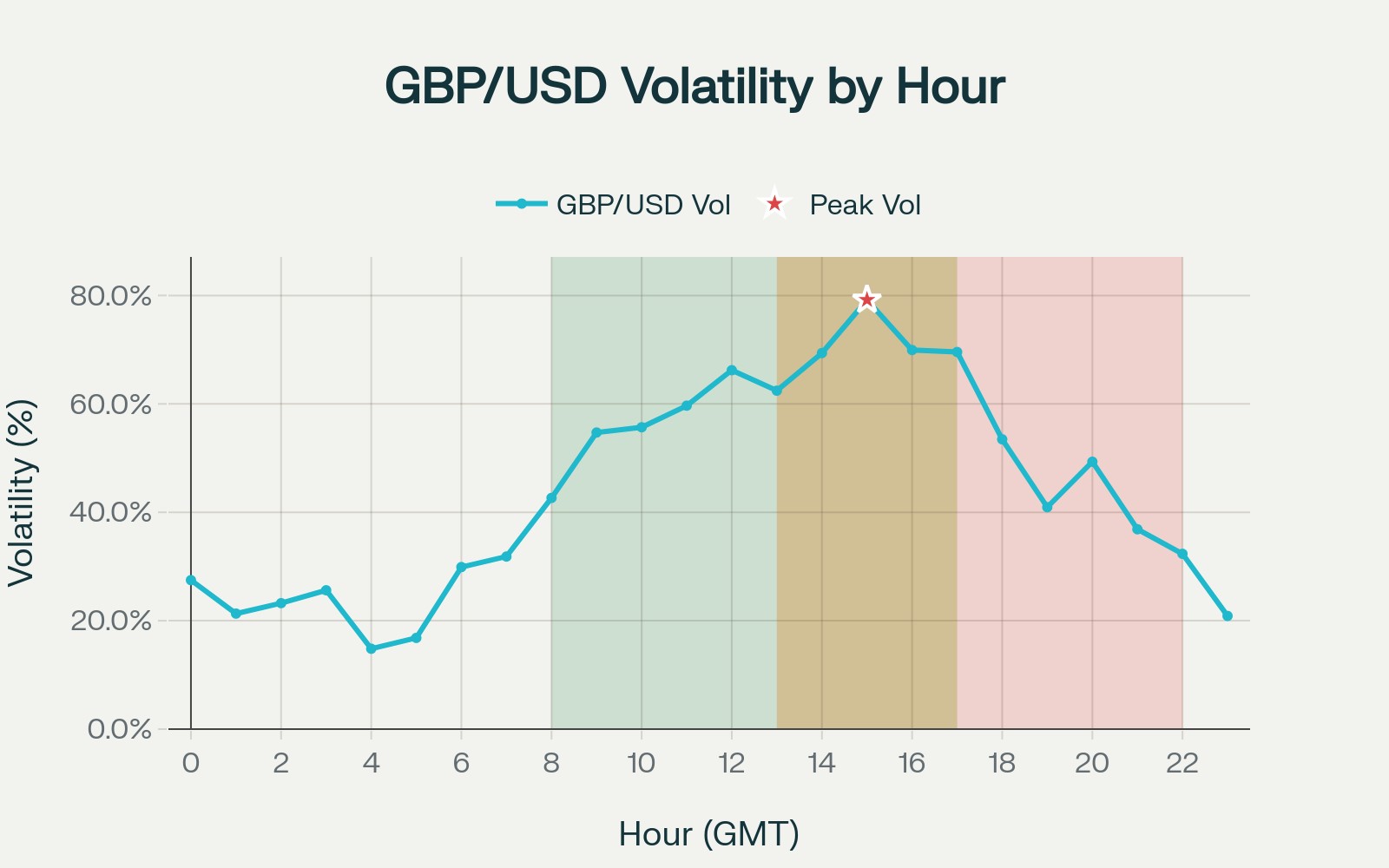
When market activity is highest is in the overlap of the London and New York sessions (8AM - 12PM EST), which is the time frame when UK and US traders are in the market. GBP/USD typically demonstrates the highest amount of volatility and trading volume during these hours, which is ideal for orderly trading or scalping.
GBP/USD is typically a day range of 80-150 pips, while it is rare (but not impossible) to observe 200+ pip movements, especially because of major economic announcements.
Analyzing the History and Long-Term Patterns
Looking at GBP/USD historical data gives clear patterns to make your trade decisions. In the last two decades, the range of momentum and emotion cycles has spiked around major economic announcements events.
The 2016 Brexit referendum was one of the most turbulent occasions in GBP/USD history too, causing the pair to go from 1.50 down to below 1.20 in just a few months. What Brexit demonstrated was that political uncertainty can create long-term directional moves that present traders with significant opportunities to trade the trend if they recognize the move early on.
Long-term, GBP/USD has a tendency to stay in multi-year trading ranges, with levels of support and resistance becoming evident over extended timeframes. GBP/USD has historically found identifiable levels of support around the 1.20-1.25 area (1.24 represents 38.2% retracement, from 1.10 to 1.50) and encounters identifiable resistance near the 1.40-1.45 psychological area.
Being aware of these historical trading ranges allows traders to identify potential reversal zones or area of trend continuation as these levels approach. Major economic cycles, like multi-year phases of increasing or decreasing interest rates will establish trending environments (multi-months to years), before returning to non-trending patterns.
Factors Driving the Economy
Quite a number of fundamental factors, which drive GBP/USD price movements and create volatility, with other significant contributions being releases of economic data . For example, UK GDP growth, UK inflation data (CPI) and employment data have a much more salient impact on the strength of the pound relative to the dollar, than positive developments in other UK economic news.
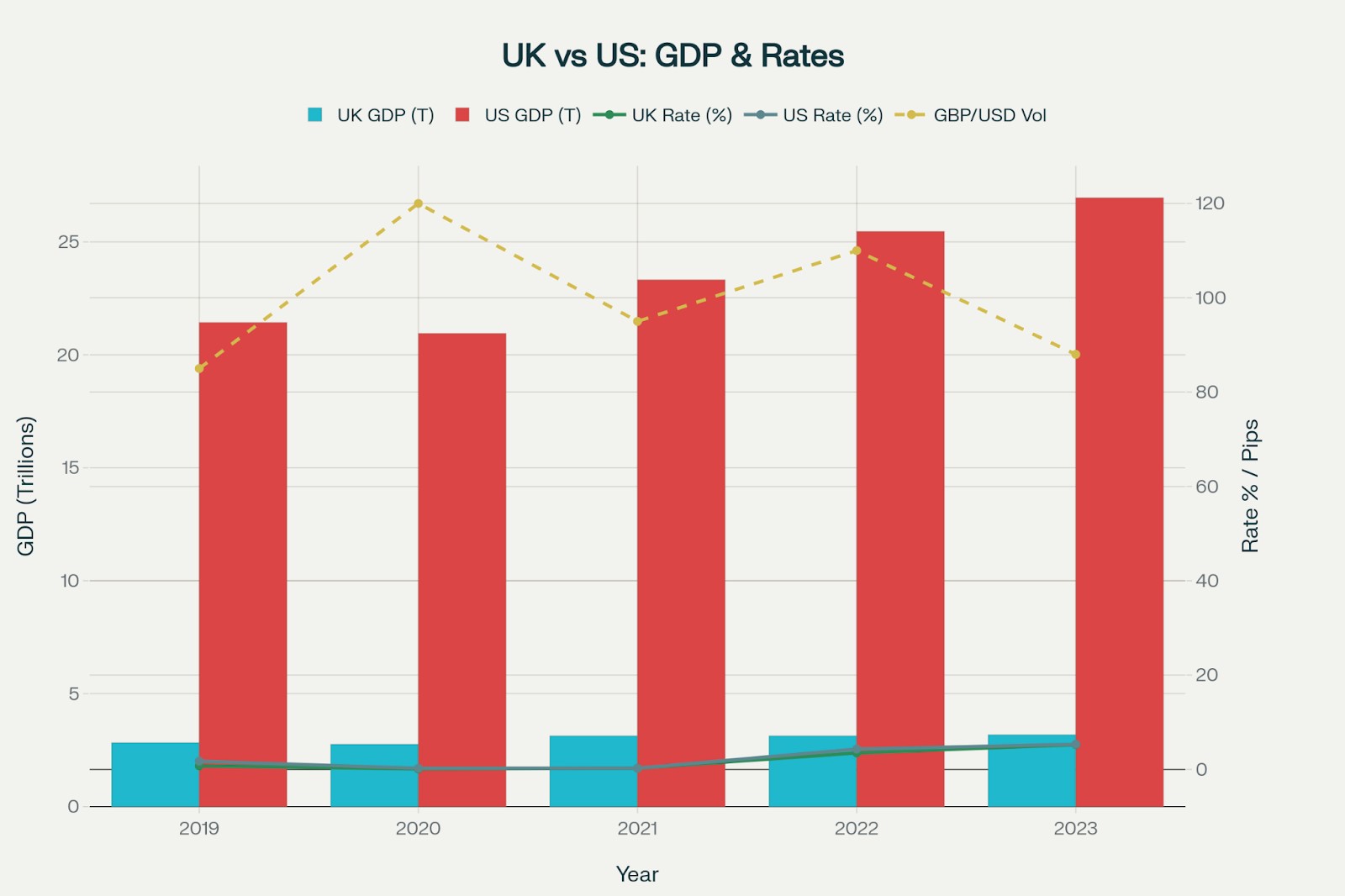
Differences in the Bank of England's (BoE) and Federal Reserve's (Fed) interest rates create strong long-term trends in GBP/USD. When the BoE is at a higher interest rate relative to the Fed, that is typically supportive of GBP strength, as investors seek higher-yielding assets.
The direction of the GBP/USD pair is also heavily influenced by political events, government decisions, and planned changes in policy. Any developments related to Brexit, UK General Elections, or changes in fiscal policy can result in material price movement. Likewise, developments in US politics, trade policy, and Federal Reserve communications also have an influence on the strength of the dollar.
Very importantly, the tone of market risk affects how GBP/USD behaves. During periods when risk appetite returns, it is common to see both currencies gain strength against JPY and CHF, with the winners typically being determined by underlying economic conditions. Conversely, during periods of risk aversion, the dollar typically has the upper-hand since it is regarded as a reserve currency.
Technical Analysis Tactics
Fundamentally, technical analysis offers a variety of valuable resources to be used to time GBP/USD entries and exits. Moving Averages, and particularly the 20, 50 and 200-period Exponential Moving Averages (EMAs), help develop understanding of trend direction and levels where price may reverse. If price is trading above these moving averages with the proper sequence, this may be an indicator of bullish momentum.
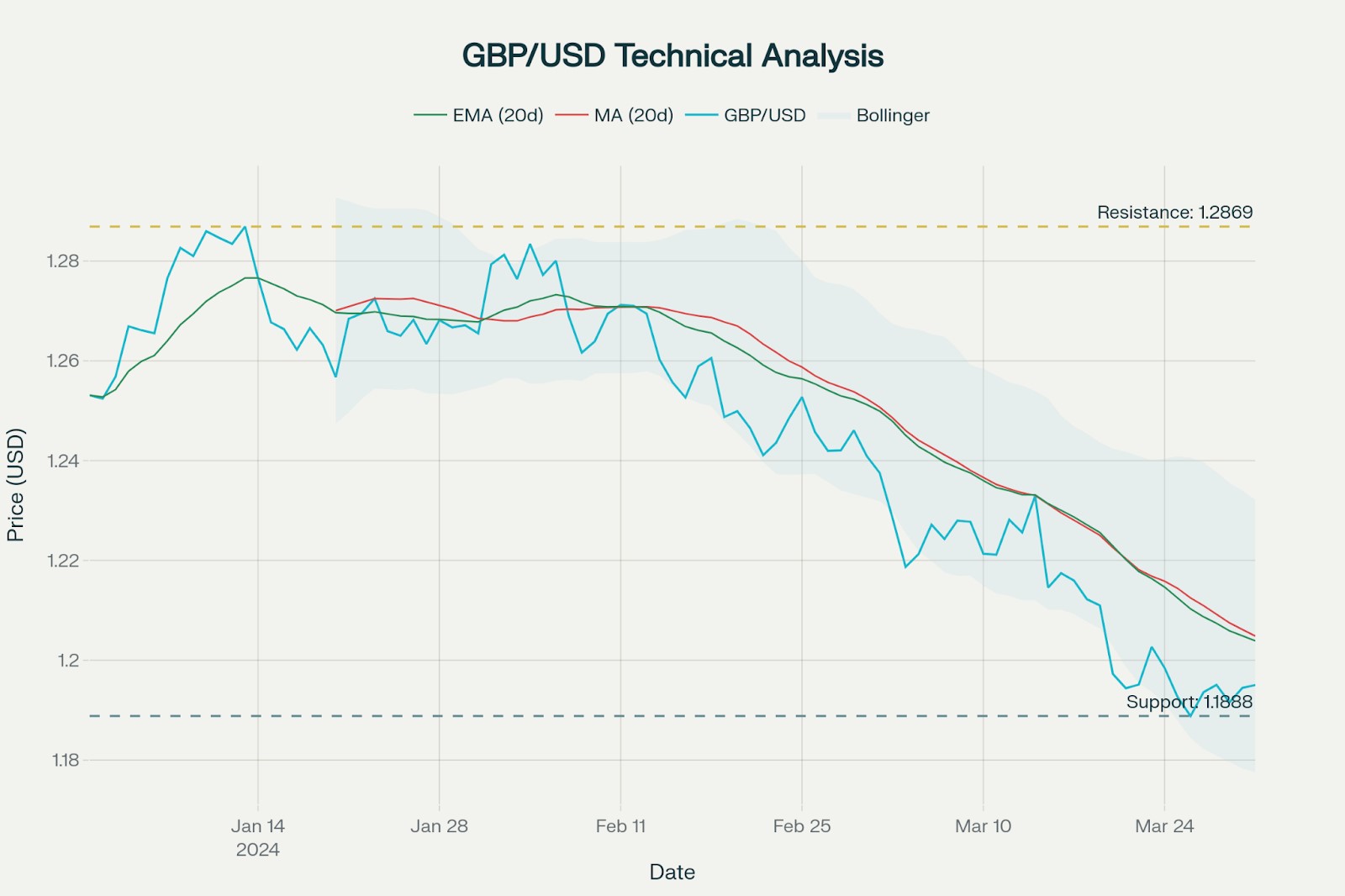
Support and resistance levels are especially important in GBP/USD due to its high liquidity and institutional involvement. Rounding numbers (1.3000, 1.2500) and other psychological numbers, support and resistance levels attract a lot of buying or selling interest.
The Relative Strength Index (RSI) and MACD indicator work well to identify overbought/oversold markets and momentum shifts. An RSI reading above 70 or below 30 along with divergence patterns often gives traders an opportunity for a potential reversal.
Breakout strategies work well with GBP/USD because of GBP/USD pair tendencies to give strong directional moves after consolidation. Traders like looking at flags, triangles, or when price is trading in a rectangular range. Traders typically tend to look for breakout opportunity when high impact news events are released.
Multi-time frame analysis can further enhance trading accuracy when aligning shorter-term entries with longer-term trend. A bullish daily trend with an oversold hourly reading can often provide high probability long entries.
News Trading and Volatility Management
Economic news releases often create great trading opportunities for GBP/USD pairs, with UK data and US data having different effects depending on market expectations. High impact releases include BoE interest rate decisions, UK employment data, US Non-Farm Payrolls, and Federal Reserve news releases and decisions.
Successful news trading is about identifying whether the market is pricing in expectations versus actual results. Sometimes the economic data is so far from consensus expectations, GBP/USD will make sharp moves, often directional, for a trader to take advantage of with pre-trade setup.
Pre-news positioning involves understanding market sentiment and possibly positioning for particular outcomes, but creating a position beforehand is risky; and when actual results diverge wildly from expectations, the reversals can be violent.
Once the news has been released, price direction may afford a clear decision direction to trade and to get on the band wagon after market volatility is still new price movements that have had time to subside in price movement post-news.
Post-news trading for news trading usually provide much better risk-reward ratios, there is always a need for quick thinking and only taking risk setups you believe can be handled.
Volatility triggers are often sound news events, and adjusting size and stop-loss levels is necessary. Many traders will work with size half their normal risk per position during high risk releases realizing that there will be greatly increased price uncertainty.
Risk management
Risk management is important when trading with GBP/USD, but no need to write a risk management manual here. Position sizing is not real trading, and should be no more than 1-2% to start, so the trader does not inflict the loss on their whole trading capital on one loss.
When placing a stop-loss order, it is important to consider the volatility characteristics of GBP/USD. Fixed pip stops (e.g. feedback entries using stop-loss orders of 30-50 pips for day trades) can work well in normal market conditions, while ATR-based stops (e.g. stop-loss orders based on 1.5 to 2x Average True Range) suit unpredictable volatility levels from day to day.
Because GBP/USD has a strong tendency to gap open, especially after a weekend with news releases, or during a holiday, be careful with position sizes in an overnight position. Many successful traders will close their positions before a weekend or major holiday to avoid gap risk altogether.
Risk-reward ratios should reflect GBP/USD's movement characteristics. A risk-reward ratio of 1:2 or 1:3 is often appropriate according to GBP/USD's tendency to make directional moves and sustained moves following breakouts.
Being aware of correlations can assist in managing risk on a portfolio basis when trading multiple GBP pairs. GBP/USD often correlates positively with EUR/USD and negatively with USD/JPY, which means good position management when trading these relationships (correlated pairs).
Trading Psychology and Discipline
Trading psychology is very important to have when trading GBP/USD. Psychological factors can weigh heavily on profitability because of GBP/USD's how volatile GBP/USD can be causes traders to often enter into emotional states that lead to poor decision-making. Being disciplined in winning and losing streaks is very important to be consistently profitable.
Fear and greed are usually felt during the volatility of GBP/USD. Traders sometimes close profitable trades because they fear price may reverse, or they may hold onto losing positions hoping to break-even or get back to profitable with additional movement. Having predetermined exit strategies can help to limit those emotional reactions.
Over-trading is common, especially during volatile periods. When a trader sees high volatility, they may have more than 1 or 2 setups that they find attractive. Successful traders focus on the highest probability opportunities while non-successful traders find every movement of price to be an opportunity to take a trade.
A detailed trading journal can assist in identifying some psychological patterns and help improve ones decision making process. Writing down the rationale for entry & exit, emotional state, and whether the market presented opportunities that supported the decision can all provide invaluable documentation to help learn and improve.
Having consistent routines and steps when analyzing the market and preparing/in executing a trade, and carrying out each step even during the most emotional parts of trading aids in limiting emotional obstacles, while establishing routines and procedures adds consistency to trading.
Constructing Effective Trading Ideas
There are many strategies that work well with GBP/USD. Several well-known strategies are typically applicable to GBP/USD and will work effectively with trading the forex pairs characteristics. Trend following strategies are prevalent due to GBP/USD’s ability to make large directional moves after either major breakouts or a change in fundamentals.
Range trading strategies typically perform best during periods of consolidation. Trades are placed buying at key support and selling at key resistance levels. It is important to practice range trading using key levels, which is advised if the market is not moving significantly outside of the significant trading session.
Intragroup scalping strategies are effective because of GBP/USD volatility. Scalping requires profiting from small movements of price, and GBP/USD usually provide great volatility throughout each trading day. GBP/USD requires maintaining tight spreads while executing trades.
Swing traders can keep positions open for multiple days and look for trend change events using technical analysis (chart patterns) and fundamental news (economic reports and central bank policy changes). This time frame is suitable for traders who cannot continually monitor the markets throughout each trading day.
Advanced Methods and Portfolio Considerations
Professional traders with experience using GBP/USD to trade the market, regularly hedge their positions using the correlated currency pairs or options to offset any GBP/USD risk. For example, if negative UK specific news is released, the trader goes long GBP/USD and perhaps they partially hedge their long GBP/USD position with a short EUR/GBP position.
Using cross-currency analysis encourages trading actively on GBP/USD, while monitoring movements in related pairs such as EUR/GBP, GBP/JPY, and GBP/CHF. If these pairs show unusual strength or weakness compared to GBP/USD that can often provide valuable pro-active signal, as it may dictate a direction change in GBP/USD price.
Optimizing a portfolio and portfolio composition on GBP/USD and another 6-12 currency pairs would be important to achieving a well-diversified portfolio with reduced portfolio volatility without sacrificing potential profits. When managing the overall performance of a portfolio it is helpful to diversify exposure among currency groups and with different time-frame trading styles to achieve better risk-adjusted return performance.
Key Takeaways to Consciously Decide on Trading GBP/USD
Trading GBP/USD requires a right-sized technical analysis, fundamental reasoning, and disciplined risk management. The GBP/USD pair has variable degrees of volatility so opportunity exists, although everything in trading needs to be done within the context of proper position sizing and management of stops.
The fundamental drivers to assess will likely come from major releases of economic and political data, interest rate differentials, and more overall political situations. You may be armed with this fundamental knowledge, plus various technical analysis tools to identify probability opportunities regarding your entry and exit points.
Use strict risk management strategies when trading. Never risk more than 1-2% per trade, and always utilize stop-losses on every trade. You will want to develop a full trading plan that considers different market scenarios.
While you should always keep learning and adapting your approach since market conditions and the characteristics of GBP/USD will change over time, you should be regularly evaluating your trading process and improve on it to yield better profits.
Start Your GBP/USD Trading Journey
Are you ready to put this information into practice? If you want to apply these ideas without risk, can I suggest you get a demo trading account and deploy everything you have learnt? Practice first and have no capital in the first instance, and develop your processes in a stable environment, so that you can feel well-intentional for disciplined execution and implementation.
Always be mindful that successful trading on the GBP/USD requires knowledge, skill, and patience. Start small, always maintain a trading record, and focus on your trading world given the market feedback and your own self-performance. Check out tradewill.com for more info!
Disclaimer: The content of the blog does not represent any position of Trade W, does not serve as any trading-related decision advice, and does not endorse any third-party.