

 Trade W
1. Why Treasury Stock Matters?
When a company announces a buyback, the stock price can frequently spike, but many investors are baffled as to the reason for that spike in stock price. The reason for this is found in the treasury stock concept, which also changes the overall financial position of the company, even while the company's operating performance has not changed.
Treasury stock, in simple terms, means that the company has repurchased shares of its own stock out in the market and taken those shares out of circulation. However, there are many more implications than just that.
These shares that were repurchased by the company are now treasury stock and thus will reduce the denominator of the calculation for the company's EPS, and also provide the company with a higher ROE on paper. Treasury stock also sends a clear message about management and how much confidence they have in the company's business. Understanding what treasury stock is goes beyond just being able to read the financial statements; it represents an understanding of capital allocation.
In this guide, you will learn about: how buybacks are done, financial statement reporting of buybacks, the reasons that some buybacks can inflate valuations, the times that buybacks provide a legitimate signal of strength, and how macro business cycles relate to buybacks. Most importantly, you will learn how traders can use buyback signals to identify trading opportunities and avoid value traps!
2. What Is Treasury Stock? A Complete Breakdown of Share Structure
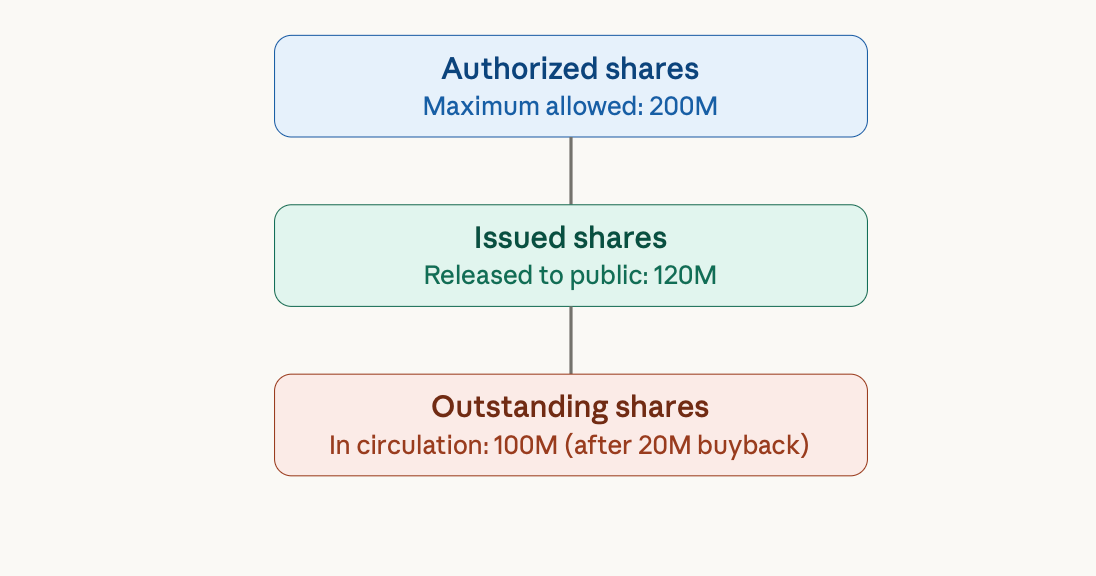
To understand Treasury Stock, you must first be familiar with the four levels of share capital. A company has a maximum number of shares it can sell, called "Authorised Shares". When a company issues shares from its pool of authorisations to the public, these are what are called "Shares Issued". When a company buys back shares from the public market, the difference between the Shares Issued and the number of Shares Outstanding is classified as Treasury Stock.
Outstanding Shares = Issued Shares – Treasury Shares
To illustrate this with numbers, a company has authorised 200 million shares of stock but has only issued 12 million shares of those. If the company repurchases 20 million of its previously issued shares, then the company has 100 million outstanding shares. It’s this number of shares that affects the company's EPS calculation and each shareholder’s voting power.
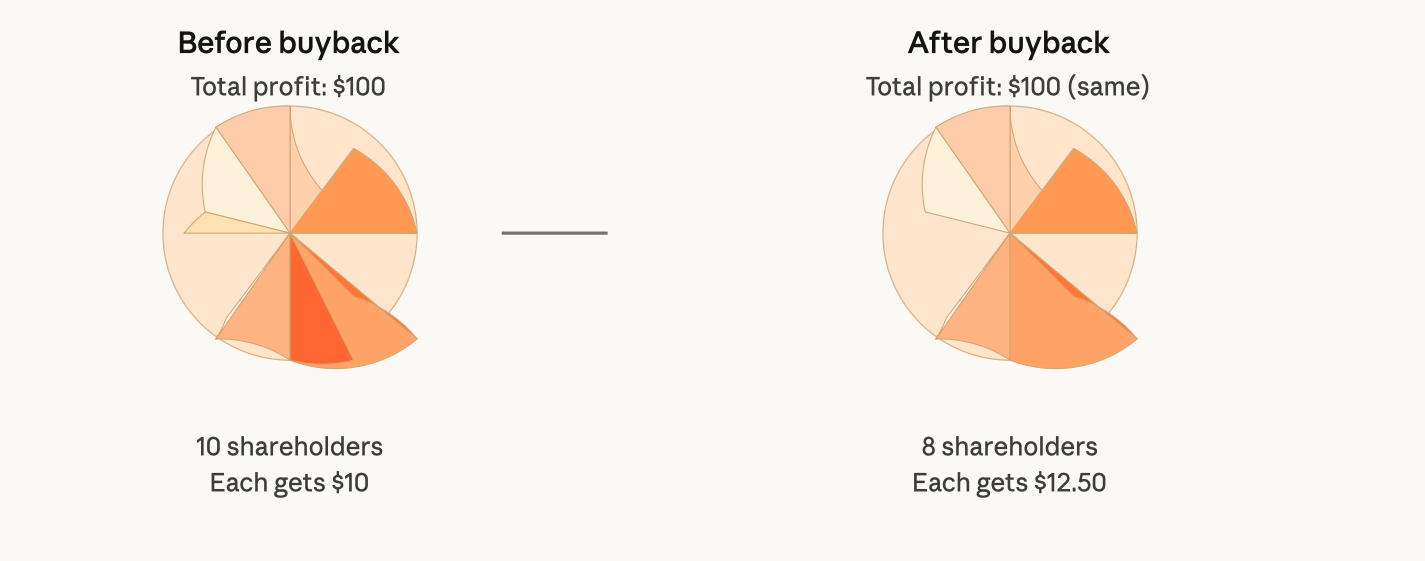
The Pizza Model makes this concept clear: if 10 people split a total profit of $100, then each person would get a profit of $10 from the total profit of $100. When the company repurchases two shares of stock, there are now eight shareholders splitting $100 of profit, so each will get $12.50 from the profit of $100. Although the total profit hasn’t increased, by buying back shares of stock, the company has increased the value of the profits per share.
Treasury stock does not possess any rights or privileges – no voting rights, no dividends, and no dilution of EPS. Treasury stock is considered dormant capital on the balance sheet of the company.
Before buyback: Net income of $200 million divided by 120 million shares = $1.67 EPS
After buyback: Same $200 million divided by 100 million shares = $2.00 EPS
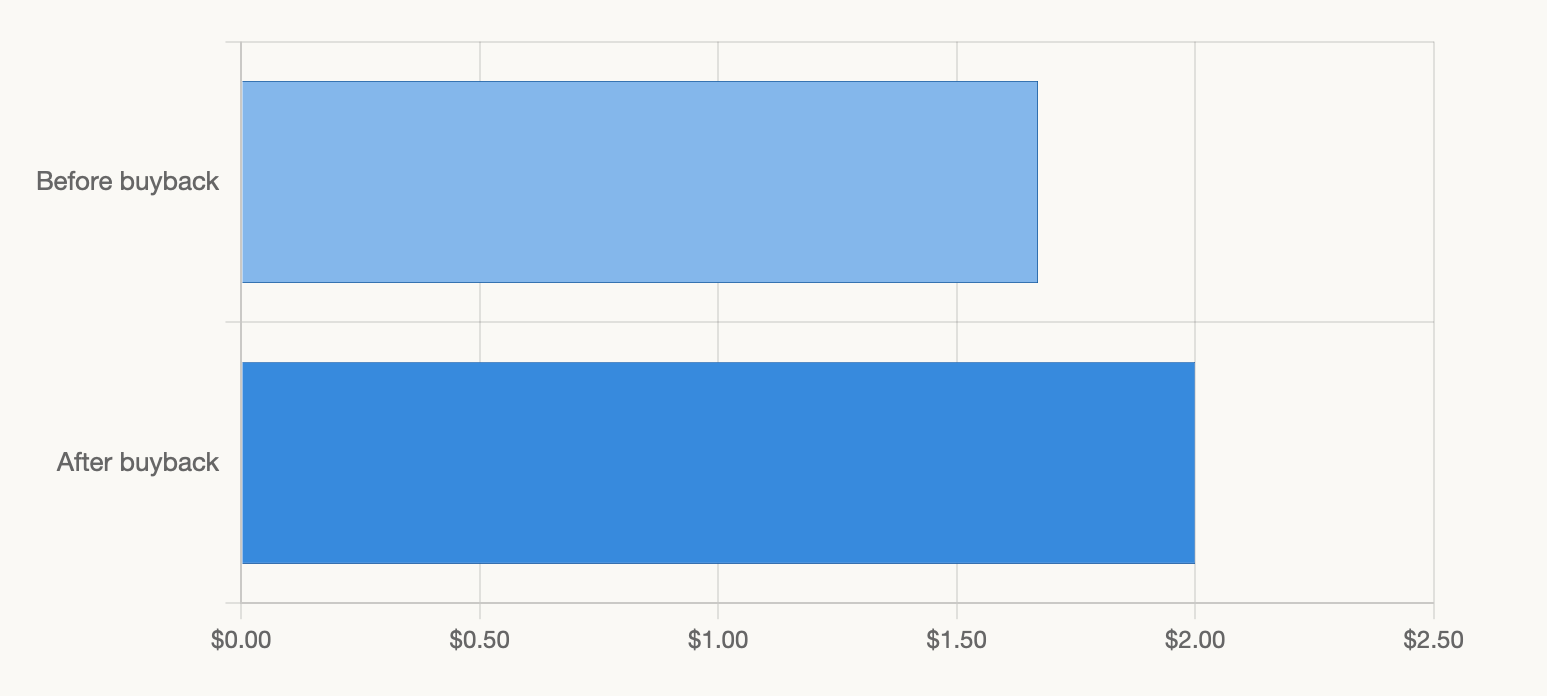
The earnings didn't improve. The denominator just shrank. This distinction matters because many investors confuse EPS growth with actual business growth.
3. Treasury Stock on the Balance Sheet: How the Accounting Works
When a corporation buys back its own stock, a few interesting things happen to its balance sheet. Cash goes down because they used the cash to repurchase stock, and equity also goes down. Treasury stock is recorded as a negative in shareholders' equity and is called a contra-equity account.
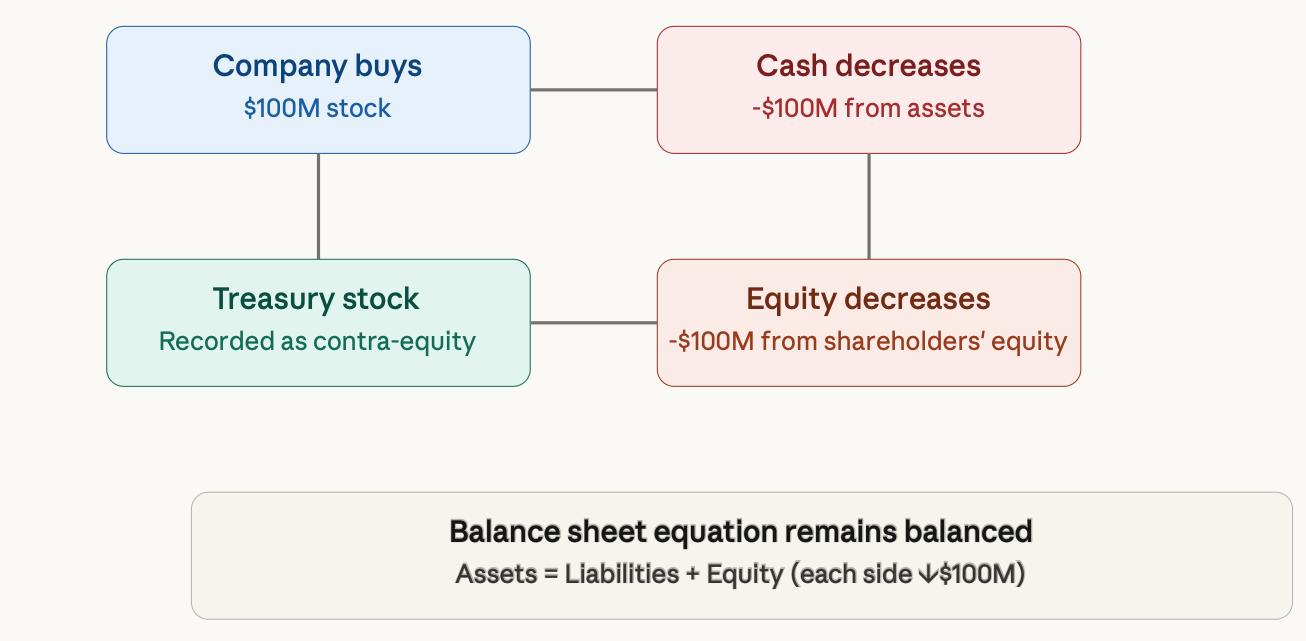
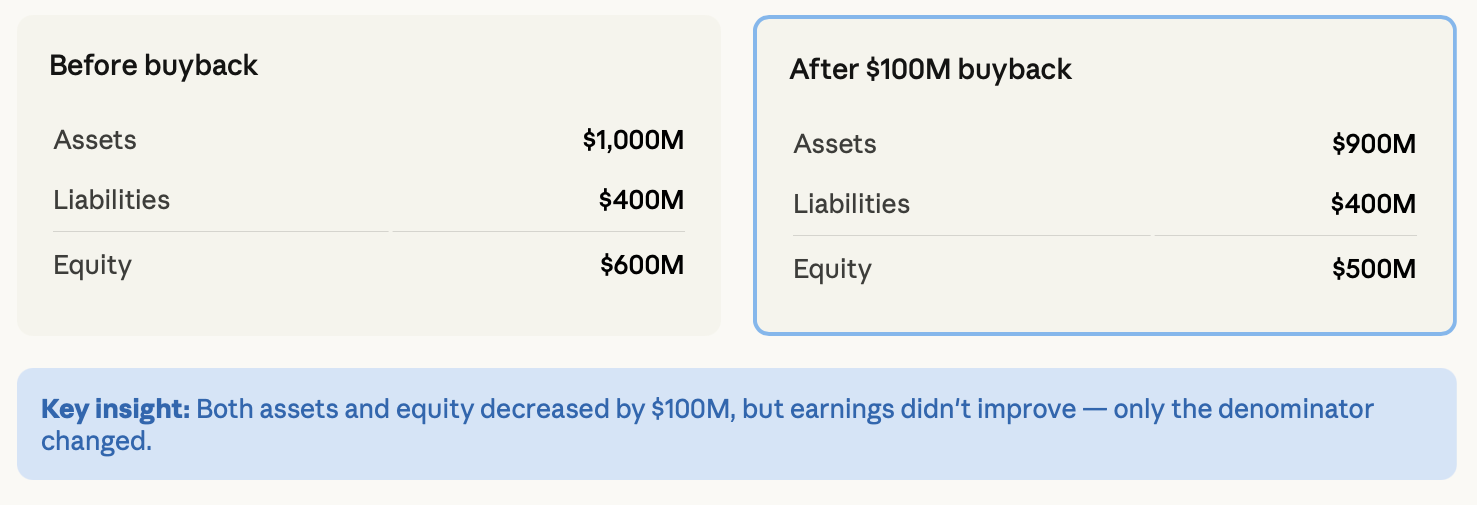
Essentially, while your Accounting equation (Assets = Liabilities + Equity) will remain balanced after the share repurchase transaction, the composition of the assets and equity will have been changed due to the buyback transaction - in fact, if we assume that you have $100 million to repurchase stock, your total Assets decrease and your total Equity also decreases by the same $100 million.
Before buyback:
-
Assets: $1 billion
-
Liabilities: $400 million
-
Equity: $600 million
After $100 million buyback:
-
Assets: $900 million
-
Liabilities: $400 million
-
Equity: $500 million
You can clearly see that while EPS increases with a buyback, the book value per share (value of the company’s assets after subtracting liabilities) actually decreases. This is why EPS should not be the only metric used to measure performance.
This makes ROE more interesting because ROE rises as equity reduces while net income remains constant. An increase in ROE due to equity being reduced does not mean the business is becoming more efficient; rather, it just means there is less equity.
A company may use buybacks in many cases just to improve their ROE. Because of this, a company having a higher ROE after a buyback may not necessarily indicate stronger performance.
Regardless of the reasons for doing buybacks, they are reported on the company’s Statement of Cash Flows the same way as dividends, under ‘Financing Activities’ of the statement of cash flows; both reduce cash. However, only buybacks reduce the number of shares outstanding.
4. Are Stock Buybacks Bullish? The Real Impact on Price and Valuation
The buyback story gets complex when you layer in market pricing. Two scenarios with identical earnings tell the tale:
-
100 million in earnings ÷ 100 million shares = $1.00 EPS
-
100 million in earnings ÷ 80 million shares = $1.25 EPS
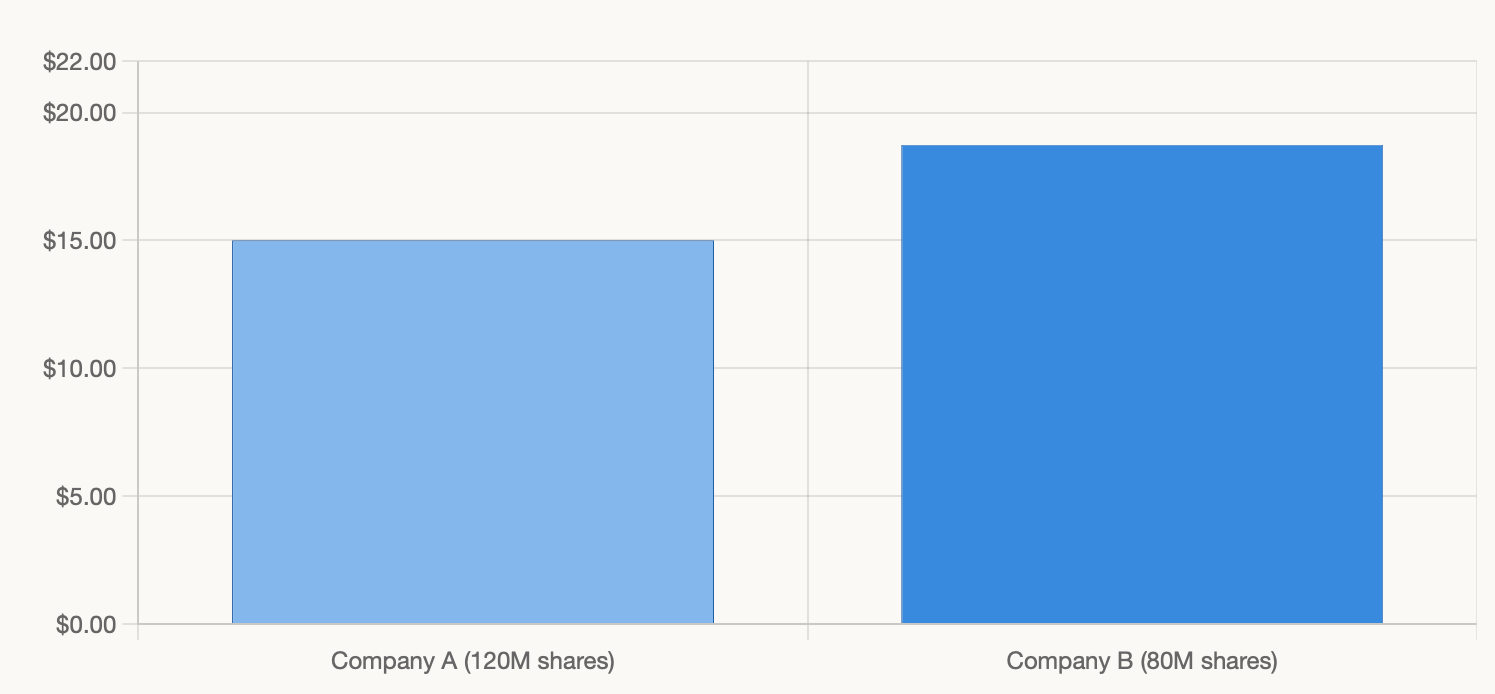
If a company's earnings are valued at 15x by the market, the first company’s stock price will be $15, while the second company’s stock price will be $18.75, since it is the same business; one’s price is higher than the other's price due only to the denominator effect related to the valuation chain. The valuation chain of higher earnings per share resulting in a lower price-to-earnings ratio and potential stock repricing is why a buyback strategy is significant for traders.
Insider share buybacks also send an important message regarding how management perceives the value of the business. If insiders decide to buy back shares, they believe that the stock is undervalued and they are confident in their ability to create value for shareholders that remain after the buyback. When this type of signalling occurs along with strong free cash flow, short-term momentum typically follows.
Not all buybacks have the same impact, however. A $10 billion buyback at a 12x P/E ratio with 15% annual growth would appear to be a good decision, but if this same buyback is executed at a 25x P/E ratio with leverage, then the buyback appears much more risky. Furthermore, if a buyback announcement is made during a period of zero growth, it could potentially be classified as a value trap disguised as financial engineering.
5. Treasury Stock vs Share Retirement: Why This Distinction Matters
When a company repurchases its shares, it has two options: it can either permanently retire the repurchased shares, thus removing them from its capital structure, or it can reissue them in the future to generate Capital. Both possibilities create hidden dilution to the shareholders who own the company.
Let’s say that a company has just bought back 50 million of its own shares, and later that same company issued an additional 60 million shares for employee stock options and for making acquisitions. At the end of the day, the company increased its total share count over time, regardless of the shares it originally bought back. An investor might miss this when evaluating multi-year trends.
The method of financing for the buybacks is also significant. When interest rates were low, many companies borrowed money at very low rates to fund their own share buybacks. As interest rates began to rise, however, the cost of borrowing began to rise significantly, resulting in higher interest expense for many companies, thus creating significant pressure on their balance sheets.
As a result, many companies that appeared to be financially strong actually had a high degree of leverage. Identifying these potential hidden risks requires reviewing the debt trend, financing cash flow, and multi-year total share count changes.
6. How to Calculate Treasury Stock: Finding It in Annual Reports
Locating treasury stock is much simpler than many investors assume. Go to the company's annual report, find the balance sheet, then check shareholders’ equity for the treasury stock. Treasury stock will be summarised as its own line item, generally appearing as a negative amount.
The calculation itself is simple:
Outstanding Shares = Issued Shares – Treasury Shares
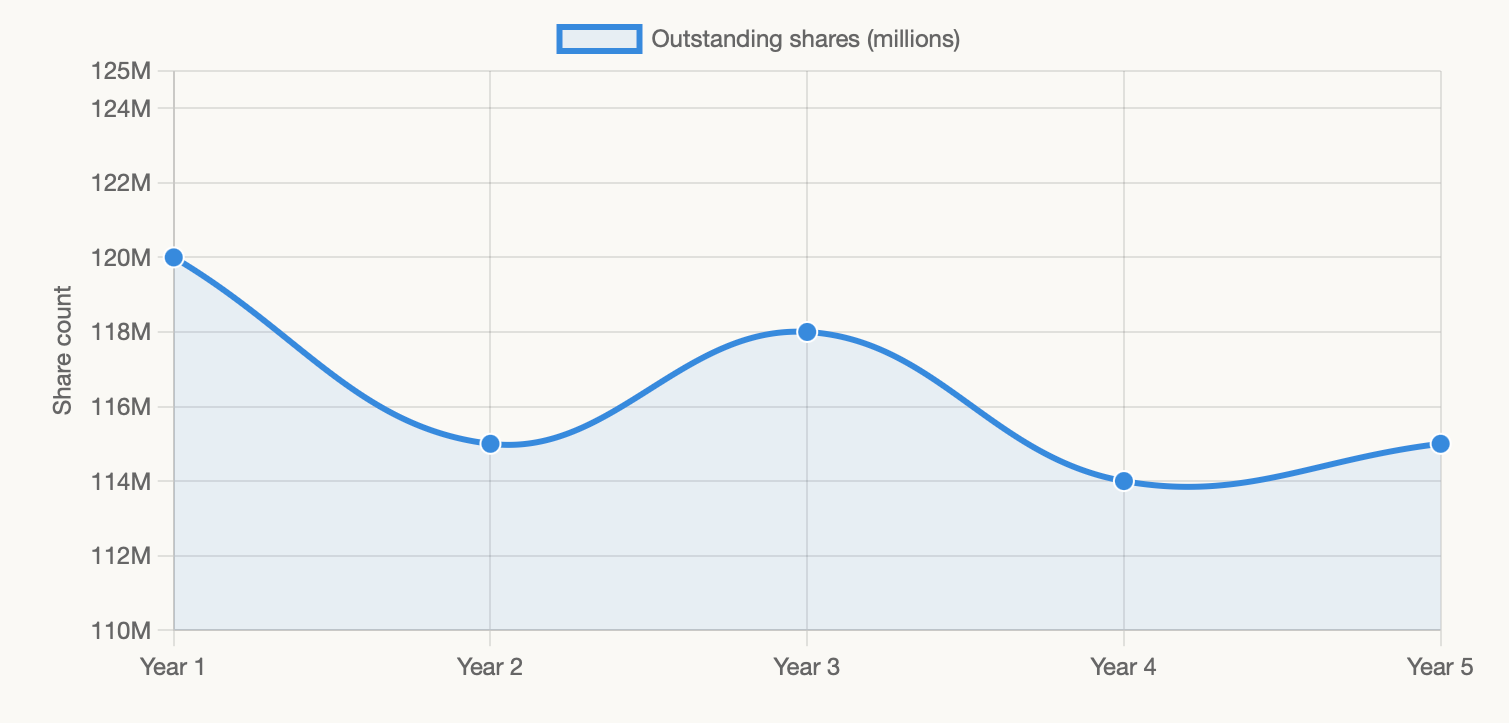
Using this information, you would be able to establish metrics such as EPS, ROE and Book Value per Share. An investor checklist will consist of: the size of the buyback, the percentage of shares being retired to the total number of shares, how the buyback was financed, any increase in debt during the same period and the historical pattern of any re-issuances of shares. Treasury Stock is capable of being compared over a three to five-year time frame in order to arrive at a net effect of buybacks versus dilution. If the share count continues to increase when buybacks are announced, this indicates that the share-based compensation has exceeded the total amount of repurchases.
7. Treasury Stock in the Bigger Picture: Interest Rates and Market Cycles
The volume of buybacks occurs in accordance with macroeconomic cycles rather than at random intervals. For example, low interest rates provide cheap borrowing options, which can cause companies to buy back more shares on an accelerated basis. When central banks tighten their monetary policies and raise the cost of financing, the volume of stock repurchases declines. This timing pattern became especially evident from 2021 through 2022 when the Federal Reserve transitioned from the expansionary phase of its monetary policy back into a contractionary stance.
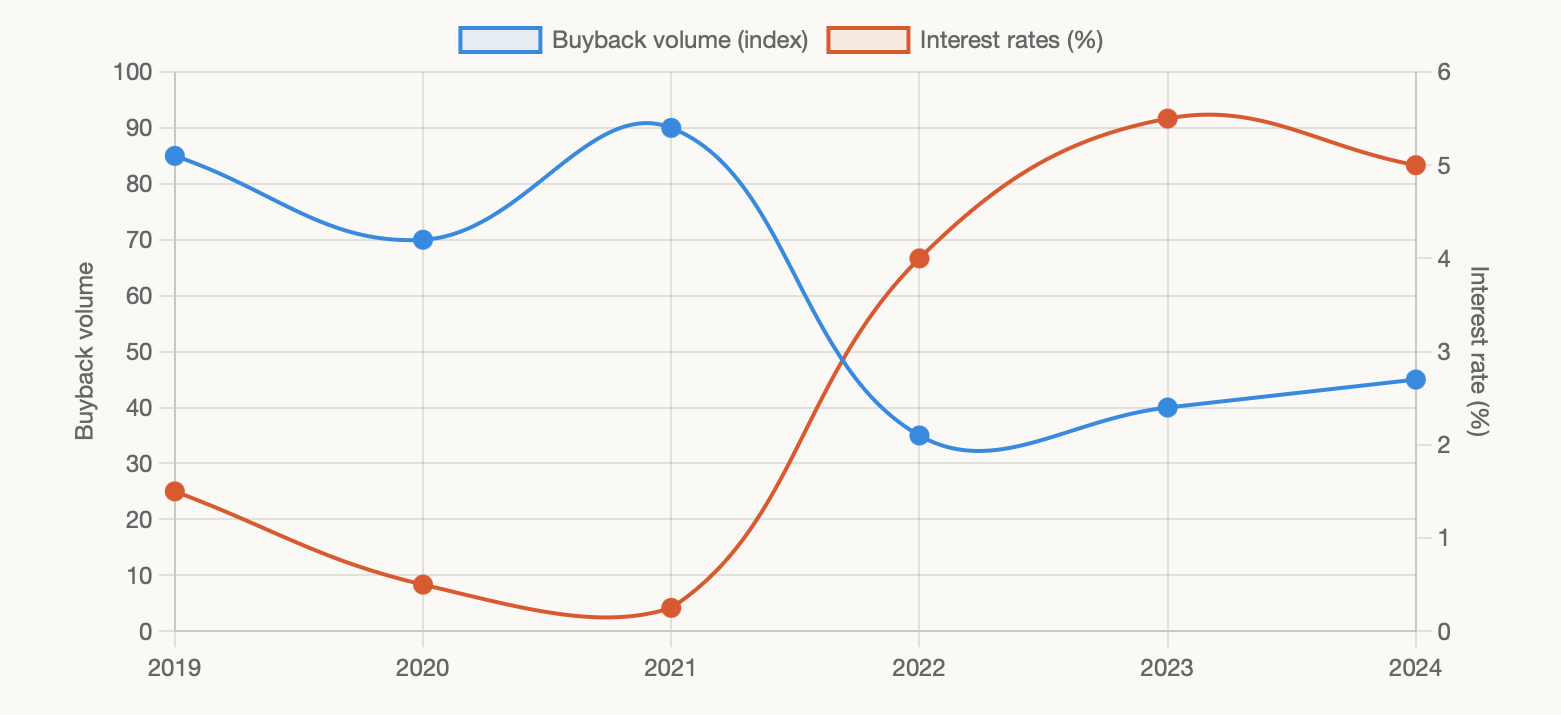
Buyback activity also tells a different tale compared to dividend payments. While dividend payments are cash distributions immediately available to the shareholder and generally indicate a stable and predictable income stream, stock buybacks provide an indirect method for increasing earnings per share (EPS), provide the shareholder with a deferral of taxes, and give the company the ability to have more flexibility. The company could stop buybacks but continue to distribute dividends.
In bear markets, the ability to test the financial strength of the corporation through share repurchases exists. From a theoretical perspective, repurchasing shares at lower prices should increase a corporation's long-term total return potential. Nonetheless, in practice, companies with weaker balance sheets either discontinue repurchase activity or face liquidity-related challenges and pressures. Conversely, companies with strong balance sheets will engage in longer-term strategic share repurchases during bear markets. Businesses that can be distinguished from one another, based on their conviction, utilise stock repurchases as a form of financial theatre.
8. How Traders Can Use Buyback Signals in Active Strategies
The announcement of a stock buyback program can present an opportunity for active traders to take advantage of potential gains through buying shares of a company's stock. For example, if a company announces a large repurchase authorisation, a reduction in the number of shares outstanding year-over-year (or Y/Y), and strong free cash flow, then these criteria could be used as a screening mechanism for future purchases.
Should buyback announcements result in immediate price pops upon announcement, then this may present an opportunity for short-term traders to buy stock at the bottom. If lower EPS multiples cause a re-rating of shares, then medium-term investors can rely on the initially favourable valuation to repurchase their shares. Long-term investors will benefit from investing in `Good` Companies through the use of long-term compounding effects.
Understanding treasury stock as it relates to your company's financial statements will give you an unequalled advantage in your analysis of interpreting a company's financial statements. For instance, as an analyst, you will be able to differentiate between legitimate earnings growth and `cosmetic` EPS growth based on Treasury Stock analysis. You will also have the ability to identify which buybacks are indicative of the strength of the business versus which buybacks are masking the weakening fundamentals of the business, and provide you with a means to identify and avoid value traps.
9. Final Takeaways: Treasury Stock Is a Signal, Not a Shortcut
The concept of treasury stock is not something that is shrouded in mystery. Companies use treasury stock as one of their methods of returning capital, adjusting how the capital is structured within the company, and indicating they have faith in their ongoing business operations. Through the use of treasury stock, earnings per share (EPS) will be increased without actual business results improving.
If treasury stock is purchased, return on equity (ROE) will be increased, but equity would be decreased, in which case the sequence at which you see this and think, "the stock will go up" will alter how the situation appears to you, such as whether or not the company is being conservative with cash flow, and another example of how companies allocate their excess cash to buy back shares. So when looking at an announcement of a buyback, one would want to first consider if the valuation makes sense before determining if it is a good buyback for shareholders.
Ready to Master Capital Allocation Signals?
Start tracking buyback announcements and share count trends in your portfolio today; they reveal what management really believes about value. At TradeWill, we help traders decode these signals and build strategies that separate genuine opportunities from financial engineering schemes.
Disclaimer: The content of the blog does not represent any position of Trade W, does not serve as any trading-related decision advice, and does not endorse any third-party.