
 Trade W
1. The Truth About "Safe Forex Brokers"
The Forex market is entered by many traders on the assumption that identifying brokers registered with a regulatory authority completes their journey. This misconception is reinforced by broker marketing, including the presentation of licence numbers, compliance badges, and trust signals. However, although it is a valid expectation, it is only half the story and can lead to wasted money for the trader because it incorrectly groups two distinct types of risk as one.
A regulated broker does not eliminate risk; however, it operates within a framework designed to control and manage risk by specifying rules for capital adequacy, fund management practices, and the conduct of business. This protects the trader to a greater degree than trading with an unregulated broker, but it should not be assumed to offer the level of protection that most new traders believe it does. A trader may still lose their entire account balance with a regulated broker. A regulated broker may fail, and the forex market will not be affected at all by the body that regulates the broker.
Instead of thinking about broker safety as a binary concept such as "safe" or "unsafe," it is more useful to view it as a spectrum. Broker safety exists along a continuum that ranges from completely unregulated entities to firms operating under some of the world's most stringent regulatory frameworks.
At one end of this spectrum are unregulated offshore brokers that offer little to no formal legal recourse for clients. In these cases, traders may have limited protections if disputes arise, funds are mishandled, or the broker becomes insolvent. At the other end are highly regulated Tier 1 brokers overseen by major financial authorities such as the UK's Financial Conduct Authority (FCA) or Australia's Australian Securities and Investments Commission (ASIC). These regulators typically impose strict capital requirements, client fund segregation rules, reporting obligations, and dispute-resolution mechanisms designed to enhance client protection. Between these two extremes lies a wide range of regulatory environments that offer varying degrees of oversight, transparency, and investor protection.
It is also important to distinguish between broker safety and trading safety, a distinction that is often overlooked in forex education. Broker safety relates to the structure and integrity of the brokerage itself. This includes factors such as regulatory oversight, client fund segregation, financial stability, operational transparency, and the availability of compensation or dispute-resolution mechanisms.
Trading safety, by contrast, is determined largely by the trader's own behavior and risk management practices. It encompasses position sizing, leverage usage, trade selection, stop-loss placement, and overall discipline. A trader may choose a highly regulated Tier 1 broker with strong investor protections, yet still lose a substantial portion of their account if they use excessive leverage or fail to implement appropriate risk controls.
For this reason, selecting a reputable broker should be viewed as only one component of a comprehensive risk-management framework. Regulation can help reduce certain operational and counterparty risks, but it cannot protect traders from poor decision-making, excessive risk-taking, or ineffective trading strategies. Long-term success depends on both choosing a trustworthy trading environment and managing risk responsibly within that environment.
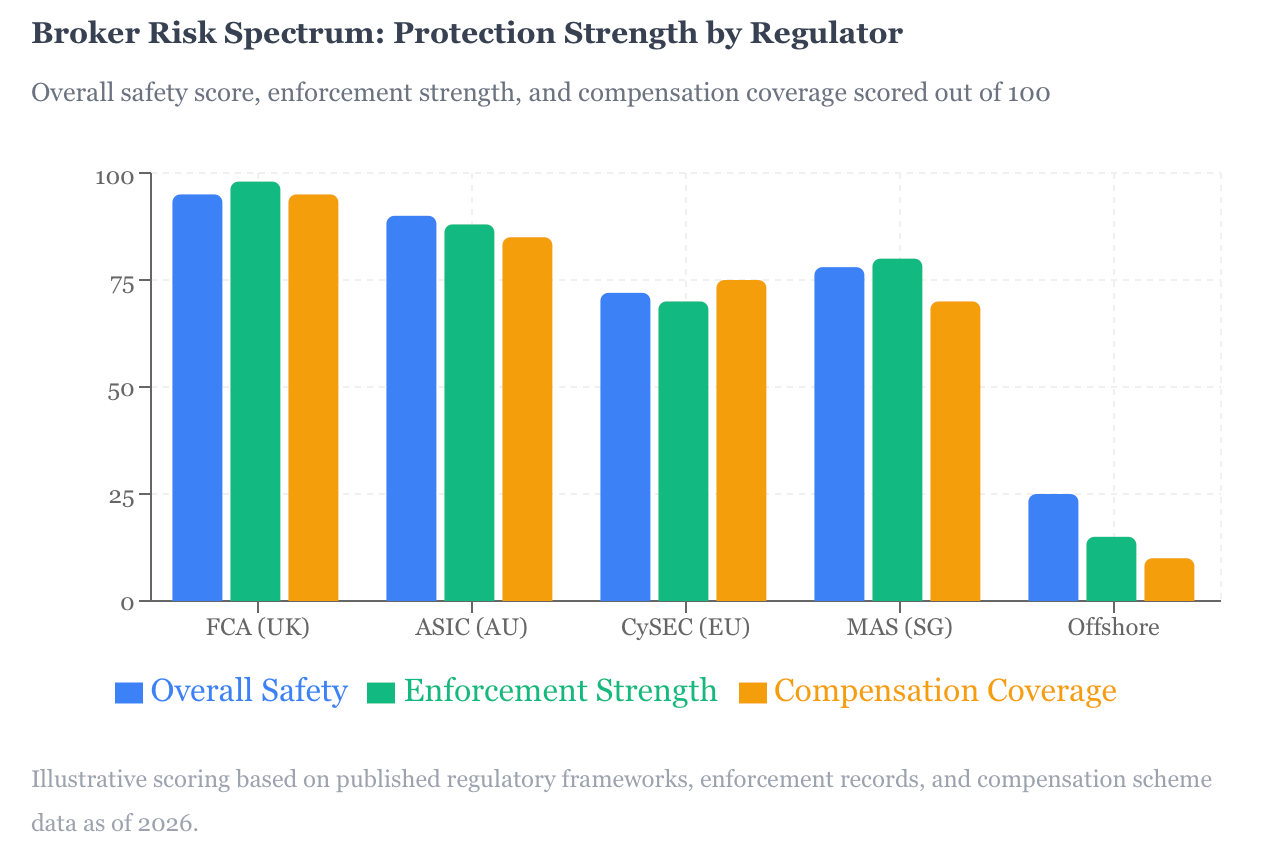
2. The Hidden Hierarchy of Forex Regulation (FCA vs ASIC vs CySEC vs Offshore)
Just because a broker's website says it is "regulated" does not mean much by itself. Therefore, not knowing the name of the regulatory authority that issued the broker's licence, and still treating regulation as a meaningful quality indicator or signal, is one of the largest and most costly mistakes that retail traders make in the market today. The name of the regulatory authority that issued the broker's licence, the way that authority enforces its rules, and the specific protections that the broker's applicable regulatory authority offers, if any, to retail account holders, all ultimately affect how a retail trader calculates risk profile and, subsequently, provide enough information for a retail trader to evaluate the broker and decide whether or not to trade with them.
There are three categories of regulatory authorities that issue licences to brokers; however, only two are typically referred to as Tier 1 regulatory authorities. These are the Financial Conduct Authority (UK) and the Australian Securities and Investments Commission (Australia). Both of these regulatory bodies enforce strict capital adequacy standards, require client funds to be segregated and held by a third-party bank, and enforce compliance with industry standards through their respective regulatory frameworks. With respect to the FCA, there is a compensation scheme that provides up to £85,000 of coverage to eligible retail clients if an FCA-regulated broker is liquidated. Therefore, this scheme provides substantial protection to retail traders and has a significant effect on how a retail trader calculates their risk profile. Over time, the FCA and its partners in the UK have effectively held non-compliant brokers accountable for their actions and provided significant regulatory oversight for retail traders who trade with an FCA-regulated broker.
While ASIC does not have a compensation scheme, it enforces some of the strictest operating standards in the world; however, it has a strong track record of pursuing legal action against non-compliant entities and provides genuine penalties and consequences to entities found to be out of compliance with ASIC regulatory policies.
Tier 2 regulatory frameworks, such as those administered by CySEC in Cyprus and MAS in Singapore, generally provide a moderate level of investor protection that falls between the stringent standards of Tier 1 regulators and the more limited oversight found in many offshore jurisdictions. While enforcement, supervisory intensity, and capital requirements may not always match those of leading Tier 1 authorities, these regulatory frameworks still offer meaningful safeguards for traders. Depending on the jurisdiction and regulatory structure involved, clients may benefit from investor compensation arrangements, regulatory oversight, and established dispute-resolution mechanisms.
The differences between Tier 1 and Tier 2 regulation often become most apparent during periods of financial stress. In situations involving broker insolvency, client fund disputes, or operational failures, the speed and effectiveness of regulatory intervention, compensation procedures, and legal recourse can vary significantly between jurisdictions.
By contrast, offshore jurisdictions such as Belize, St. Vincent and the Grenadines, Mauritius, and the Cayman Islands generally operate under a different regulatory philosophy. Brokers licensed in these jurisdictions may accurately describe themselves as regulated; however, the level of investor protection is often substantially lower than that provided under most Tier 1 or Tier 2 regulatory frameworks. Requirements relating to capital adequacy, client fund protection, reporting standards, and dispute resolution are frequently less comprehensive than those imposed by major financial regulators.
Another important consideration is the corporate structure used by many offshore brokerage groups. It is common for brokers to operate through multiple legal entities across different jurisdictions. While traders may interact with what appears to be a single global brand, the actual contractual counterparty responsible for holding client accounts and executing trades may be a separate subsidiary incorporated in another jurisdiction. As a result, understanding which legal entity is providing the service and which regulator oversees that entity is an essential part of the due diligence process.
For traders evaluating broker safety, regulatory jurisdiction should therefore be viewed as one component of a broader assessment that includes corporate structure, financial stability, client fund protections, operational history, execution quality, and the practical availability of legal recourse should a dispute arise.
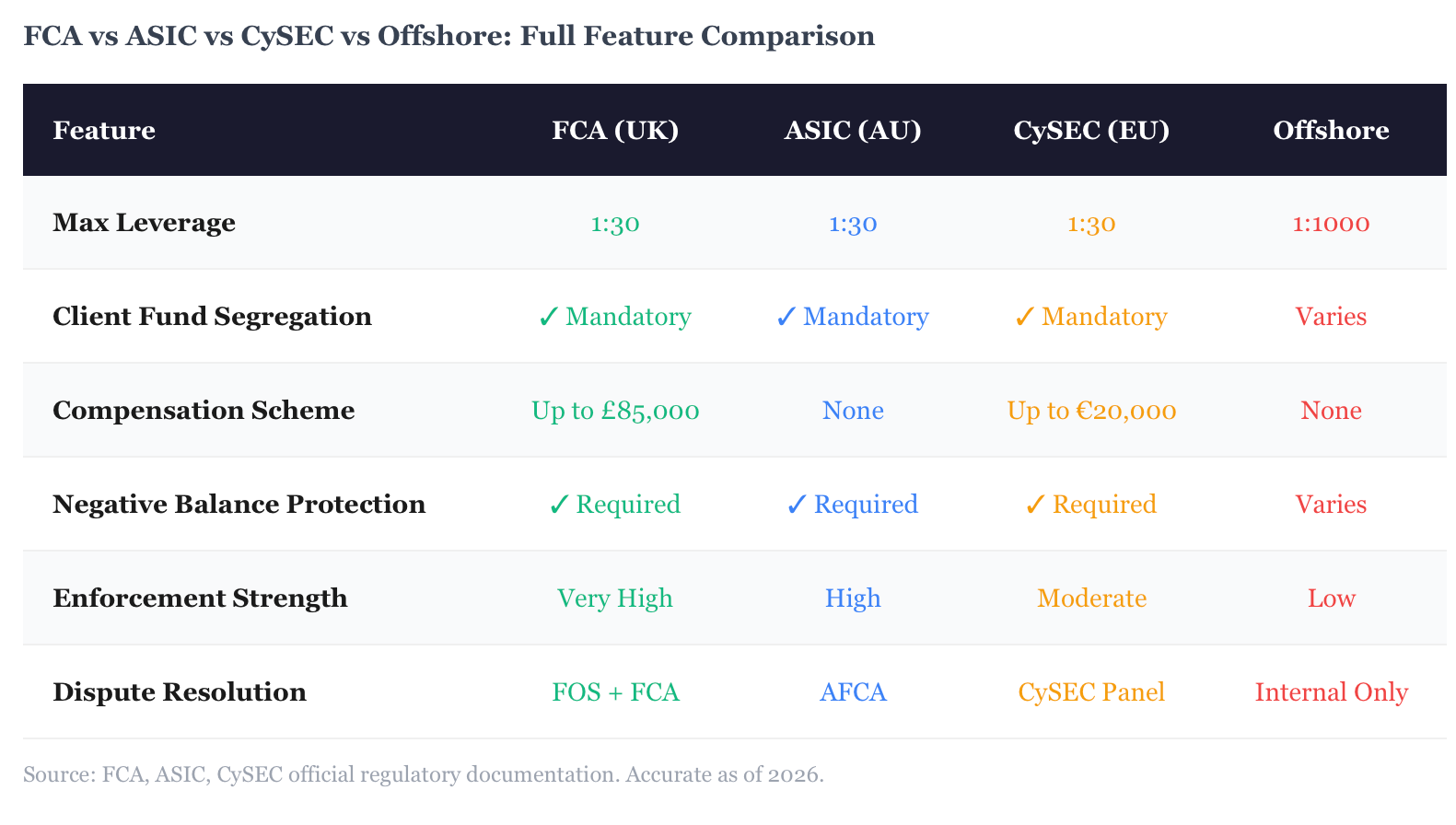
3. Why Offshore Forex Brokers Exist (And Why Traders Keep Using Them)
The presence of offshore brokers is not a consequence of poorly constructed financial systems, nor do they exist simply to prey on uneducated investors; instead, they exist as a structural reaction to a legitimate market need that Tier 1 and Tier 2 regulated brokers either cannot serve or are unable to serve due to legal limitations. In this context, understanding how and why they exist will help determine the actual trade-off associated with trading through an offshore broker.
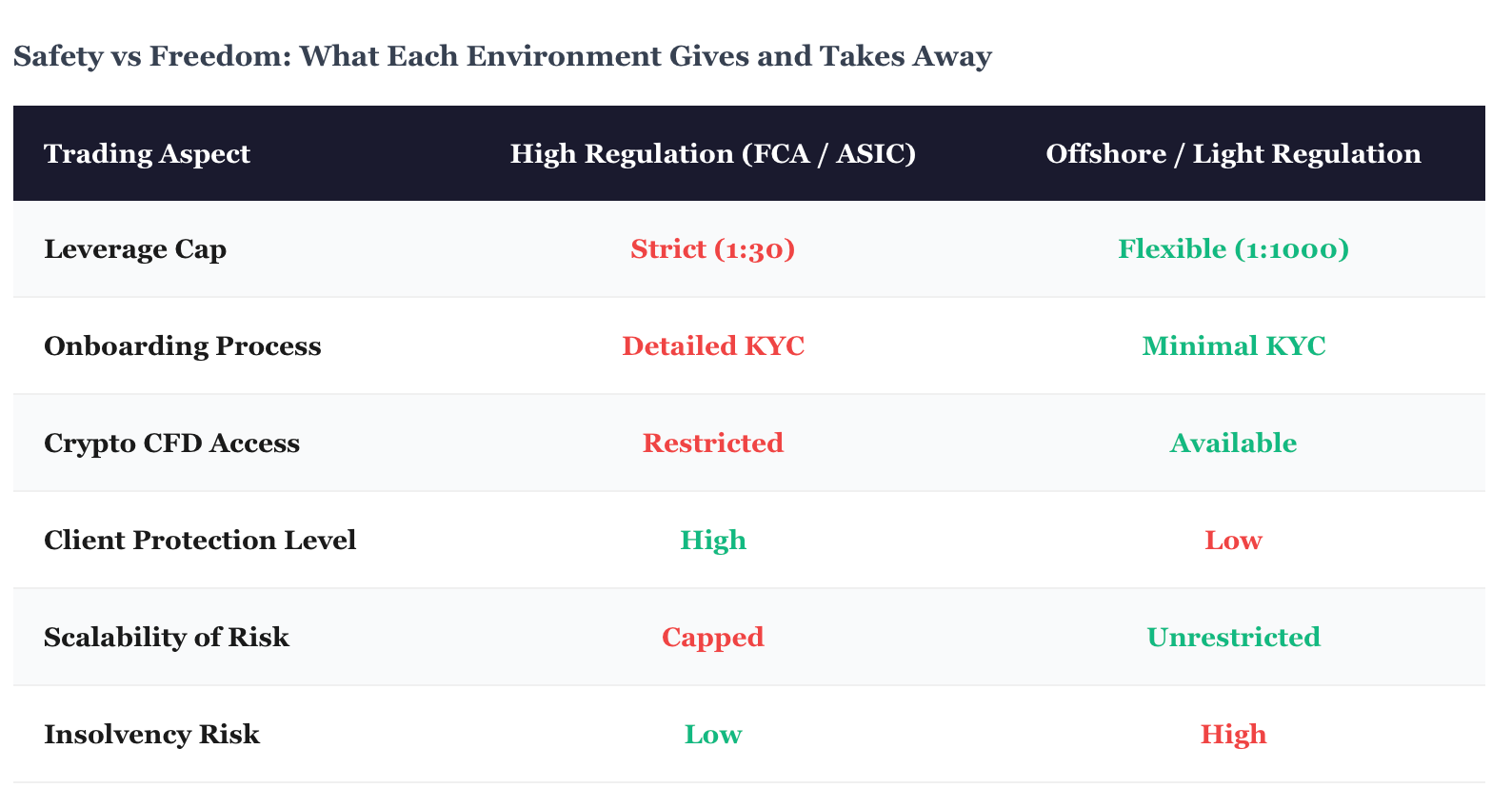
Many of these offshore brokers have numerous visible sources of demand, but the most significant source of demand is leverage. Traders who trade under FCA and ASIC regulation have limitations placed on them concerning how much leverage they can access while trading. For example, traders can only access 30:1 leverage when trading major currency pairs. This limit was instituted after a period of extreme volatility during which numerous retail traders lost all of their capital. For those traders who believe that they have the experience and discipline to use leverage at higher levels than 30:1, this limit takes the form of a constraint rather than a means of protection. Many offshore brokers provide traders with access to leverage at levels of 200:1, 500:1, or even 1000:1 in direct response to the level of demand in the marketplace. While many traders believe that they understand the risks associated with trading and the use of leverage, those who fully understand these risks have access to many more trading opportunities.
In addition to providing brokers with leverage, offshore brokers offer less stringent anti-money laundering requirements for onboarding clients, faster onboarding compared to onshore brokers, a wider selection of crypto CFDs and products available on Tier 1 exchanges, and greater accommodation for larger or more active traders through the account structures of the offshore broker. Carry trade strategies rely on the ability to access specific financial markets (currencies) via differential interest rates between two separate currencies; therefore, the bulk of all carry trades are developed by brokers at the retail level only through offshore trading companies.
The offshore broker market has grown due to the regulatory framework creating a distinct discrepancy between what compliant brokers can offer and what the active trader community is looking for from a brokerage perspective. While that does not make offshore brokers a good choice for most retail traders or alleviate the legitimate operational risks of using them, it does help explain the continued expansion of offshore brokers and the continued influx of users that has occurred despite the existence of well-funded, properly regulated alternative brokerages within the trading community.
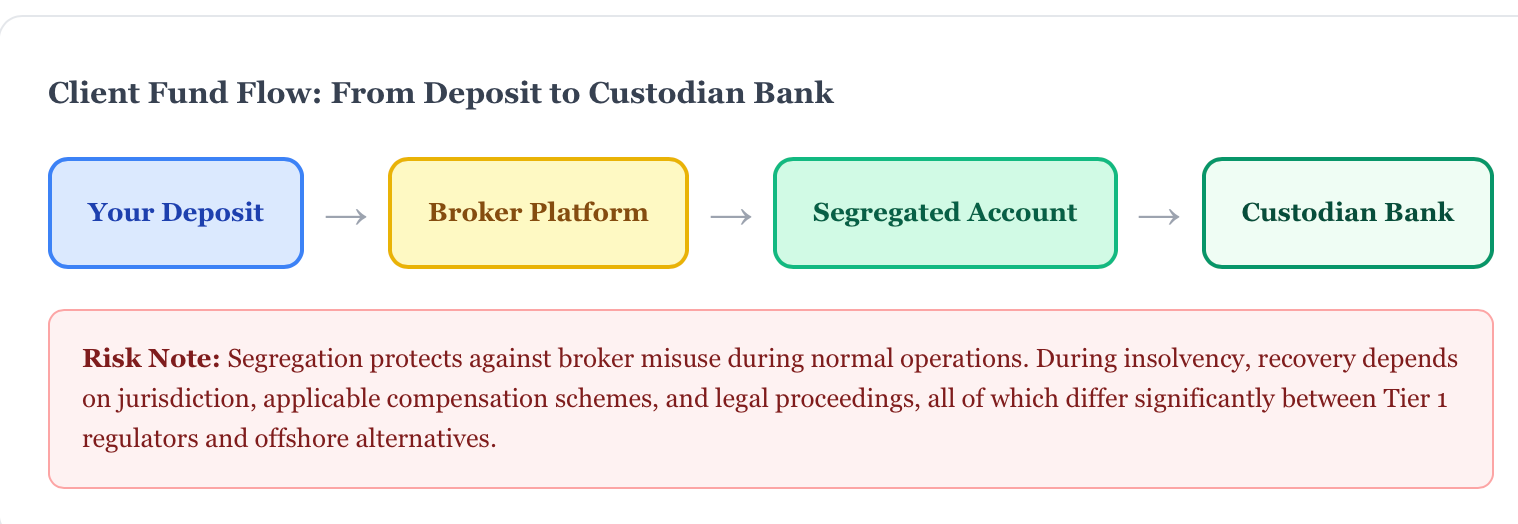
4. The Real Meaning of Client Fund Segregation (And Its Hidden Limitations)
Segregation of Client Funds: A Commonly Misunderstood Definition
Of all the areas that have been highlighted in reviews of brokers, "client fund segregation" has typically been at or near the top of each reviewer's list of issues. However, as evidenced by many brokerage reviews posted by the trading public, there is frequently confusion regarding the meaning of "segregated funds." When traders hear the term "segregated funds," many believe that their funds will be completely secure, no matter the situation. More accurately, this assumption is misleading; there are two different legal definitions regarding "segregation" that exist within the trading community and in the duties set forth for brokers.
The first definition of "segregation" relates to how brokers hold your funds. Typically, your funds are placed in "segregated accounts" that are separate and distinct from the broker's own operational accounts and funds, usually held with a third party such as a custodian bank or trust structure. This segregation of your funds from the broker's own funds is important because it prevents a broker from using your funds to pay for their own operational costs, loan repayments, or losses incurred through normal operations. In addition, if the broker is mismanaging their own company finances, your funds are segregated by law and therefore would not be mixed with the company's operational funds.
In cases of broker insolvency, the limitations are clear. The recovery process for segregated client assets held by a regulated broker that becomes insolvent involves many complex factors, including the laws of the jurisdiction where the broker is located, the financial structure of the broker itself, and the ability of the regulatory authority to process the recovery efficiently. The Financial Services Compensation Scheme (FSCS) in the UK is designed to compensate clients (up to £85,000 per eligible claim) of firms that cannot return client assets. Therefore, the FSCS attempts to address the gap between what segregated funds can cover during normal operations and the potential risk of loss of those funds in the event of broker insolvency. For jurisdictions that do not have a compensation or reimbursement scheme like the FSCS, the timeline for recovering such funds may range from months to years, and the partial recovery of client assets from an insolvent broker may be a reasonable outcome under such circumstances rather than an extreme example of a failed client recovery.
Therefore, the practical impact of segregation is that it protects against the intentional misuse of your funds but does not protect you from the inherent structural financial risk associated with a broker's insolvency. It reduces the overall likelihood of your capital being lost as a result of the broker's operational failure under normal circumstances, but it does not entirely eliminate this possibility, which is why a broker's regulatory designation is important to understand beyond simply knowing that it is licensed. In addition to a broker's license, there are compensation and enforcement mechanisms that help further close the gap left unaddressed by segregation.
5. Why Most Traders Lose Money Even With Regulated Forex Brokers
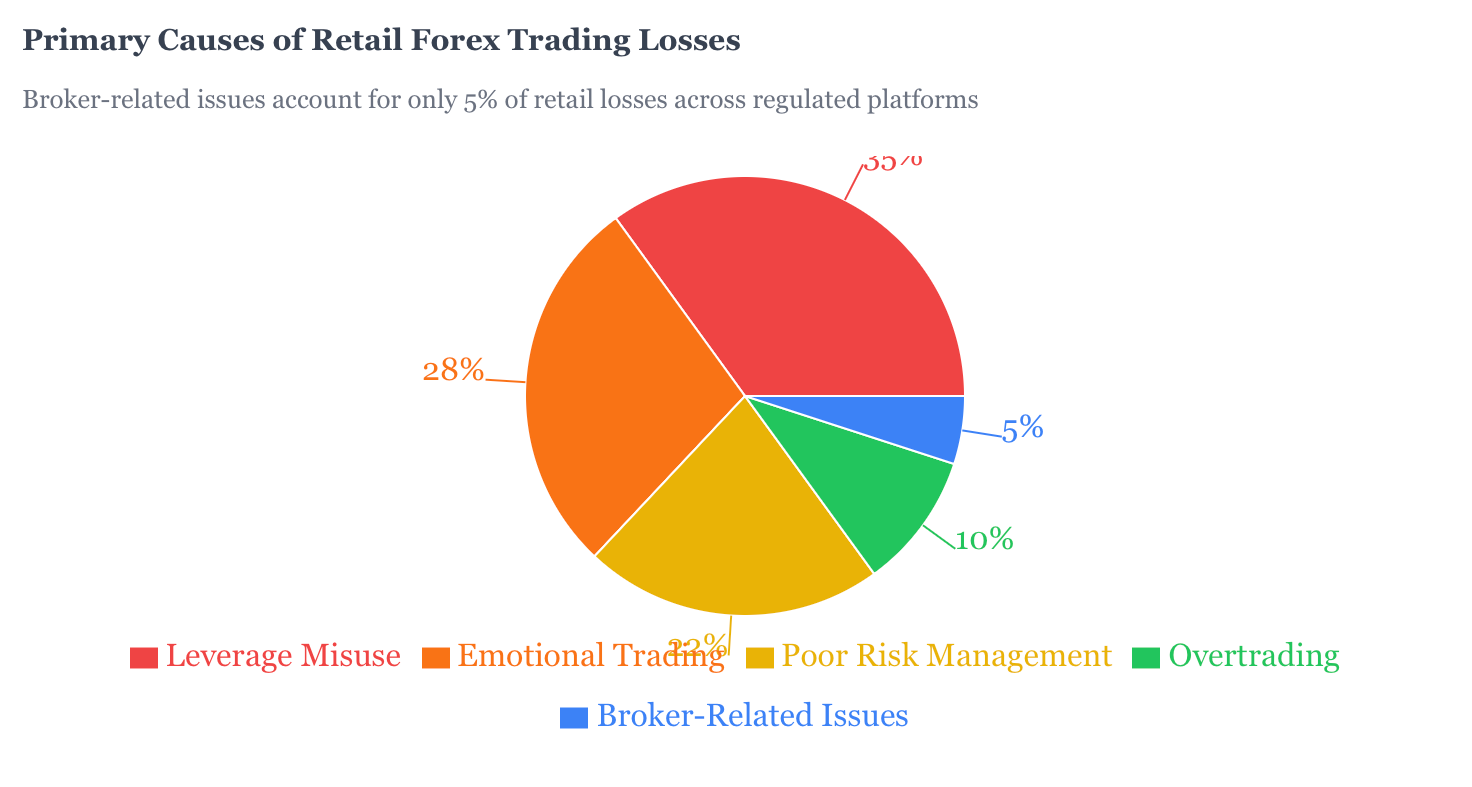
All three major regulatory bodies (FCA, ASIC, and CySEC) require their regulated brokers to publish the percentage of their retail clients who lose money trading CFDs on a regular basis, and this statistic ranges between 70% and 80%, regardless of whether the broker is based offshore or is unregulated, as they are still regulated, reputable, and compliant brokers operating under the strongest regulatory agencies available to retail traders. Therefore, this single figure should remove any remaining doubt that broker regulation has a material effect on the outcomes of their trading activities.
The reasons why so many retail traders lose money are primarily due to factors related to behavior and strategy rather than to the infrastructure supporting their trading. The most common of these behavioral issues is that they misuse the leverage available to them and open positions that result in tiny price changes leading to catastrophic losses to their trading accounts through the multiplying effects of taking on additional risk by using borrowed money to trade. The breakeven point guide offers a set of calculative framework whereby leverage and risk-adjusted position sizing can be assessed collectively, and therefore the calculations in that guide can be applied uniformly among brokers.
Other factors that explain why retail trader loss rates are so consistent across all regulatory jurisdictions include emotional trading during high-volatility periods, over-trading based on recency bias after many consecutive winning trades, and the complete lack of an established risk management framework.
Regulations cannot assist you with making wise decisions; therefore, you may still enter trades without a stop loss, double down on a losing position, and believe that the market will turn around. Additionally, regulation cannot help correct the psychological issues that cause most retail accounts to lose value over time. If you trade improperly, all the safeguards provided through the regulations surrounding your account will be of no effect; in other words, even the most rigorous evaluation of your broker will not change the fact that an undisciplined trader will lose money while using a fully regulated trading platform and real leverage.
6. Safety vs Trading Freedom: The Trade-Off Nobody Talks About
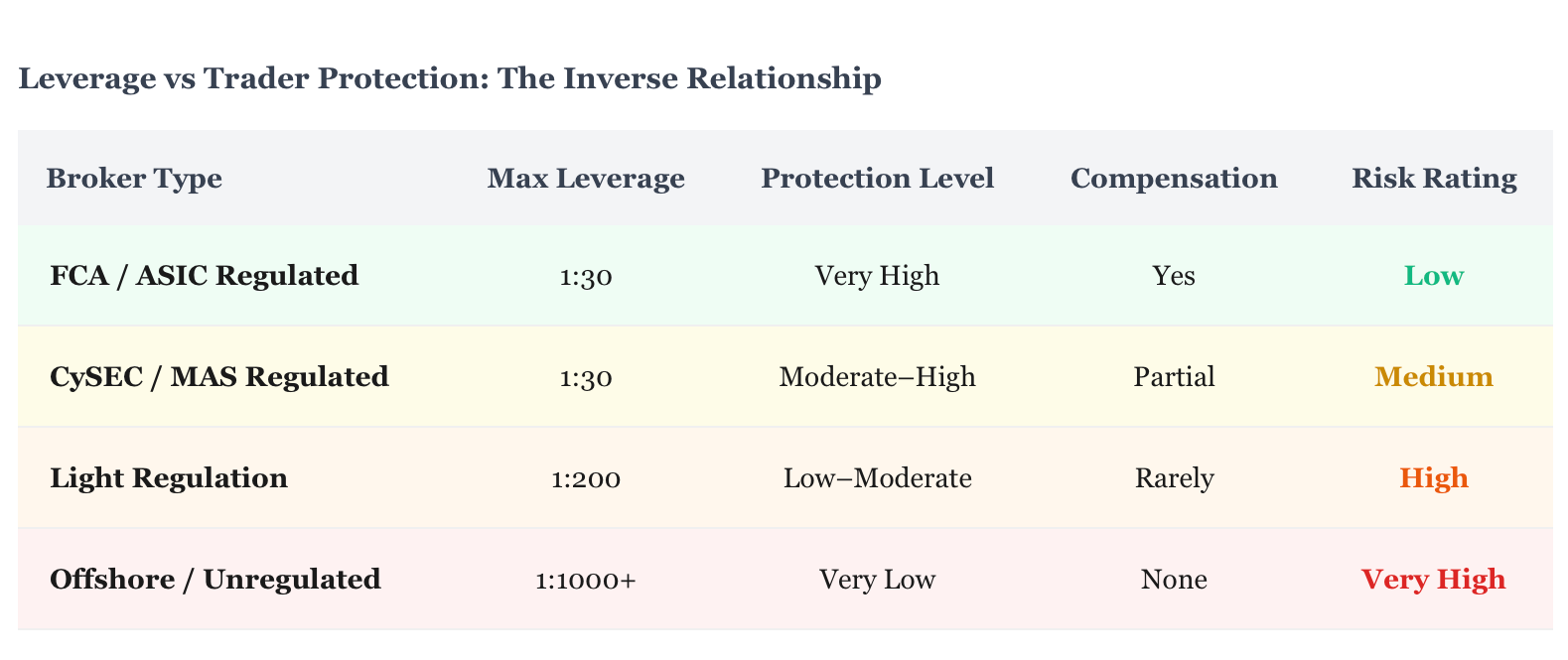
Regulatory protection and trading flexibility are inversely related to one another, not just a compromise between smarter regulations and broker models. Leverage limits, instrument availability, and onboarding requirements all tighten the regulatory authority's rules on the trader, thus reducing the trader's ability to operate with that same authority, while increasing the protection available to the trader. This is not a design defect in the regulatory system; it is the primary means by which regulatory authorities reduce risk.
For traders whose strategies depend on instruments or leverage levels restricted by Tier 1 regulations, this creates an actual decision point. They can either choose to trade within an FCA or ASIC regulated environment (and therefore not have access to all of the strategies available at a retail level), or they can trade from an offshore entity and accept the subsequent and real reduction in their total protection. No regulator has the ability to maintain total protection at the same time as offering maximum flexibility to traders; therefore, any broker who suggests that they have a regulatory environment that meets both criteria is not providing an accurate description of how regulations function.
If you are a trader using advanced tools, such as Bollinger Bands for volatility analysis and VWAP for confirming institutional order flow, you can expect that these tools will help you execute your strategies effectively within the regulatory limits on leverage, as they relate more to timing your trades than to helping you select the trades themselves. For traders using maximum leverage or high-frequency scalpers trading at very high frequencies, a completely different set of factors will determine what constitutes a suitable regulatory regime and broker. The truth is that, in evaluating the trade-offs associated with this account type, you are not just choosing a broker; you are selecting a particular type of trading environment with its own specific risk and flexibility characteristics, one that should be chosen based on your strategy rather than the marketing literature of the broker.
7. How to Actually Choose a Regulated Forex Broker
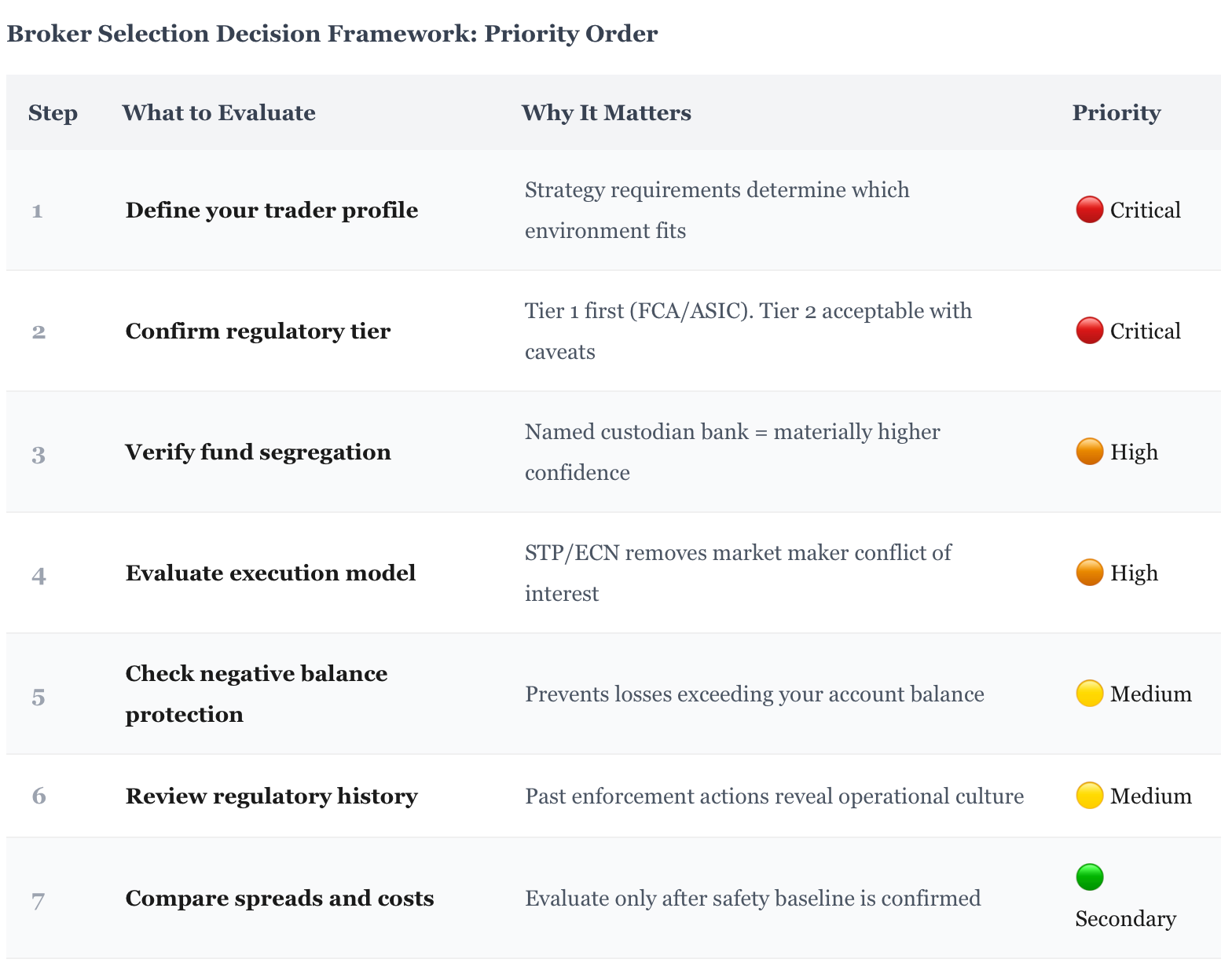
Traders with experience do not begin the evaluation process of their broker by examining spreads, platform design, or even the size of a promotional welcome bonus. Their first priority when evaluating brokers is to examine the broker's regulation because the regulatory environment defines the structural foundation for all other aspects of one's trading relationship with a broker. While spreads can be negotiated and platform features can be replicated by other brokers, the jurisdiction under which your funds are held and the applicable legal framework governing your relationship are not interchangeable variables; therefore, they should be the first filter you apply when evaluating brokers rather than the last check after everything else has already been been determined.
Your starting point for evaluating brokers should be to define your trading profile accurately. For example, a conservative position trader will have fundamentally different requirements from those of an active scalper who trades multiple currency pairs using momentum-based strategies on a daily basis. The profile that you choose should dictate the appropriate regulatory tier that you are willing to accept, as different strategies will interact with leverage caps, instrument restrictions, and execution speed requirements in very different ways. When you read forex day trading strategy framework materials while simultaneously educating yourself about broker evaluation criteria, you will come to understand the exact execution environment that you require before deploying any of your capital to a particular platform.
After you establish your regulatory floor (for most retail traders, FCA and ASIC will be the appropriate starting point), you must make an assessment of the execution model that is used by the broker you are considering and whether there is a structural conflict of interest. If a broker uses an STP or ECN execution model, the order is sent directly to an interbank market for execution without the broker taking the opposite side of the order; therefore, there will be no time in trade/market as a result of either.
After evaluating the execution model, assess the specific safety features with similar rigor: Is your funds segregated with a named custodian? Does the broker provide negative balance protection? What is the dispute resolution process like in practice? Based upon the broker's history, has it faced regulatory action or incurred fines? An understanding of how decisions made by central banks impact currency volatility will assist in determining what execution models will be appropriate for each of the currency volatility regimes you will trade through; for more information about the decision-making process of central banks see the central bank trading strategy guide.
8. Final Reality: There Is No Safe Broker, Only Safer Risk Structures
When assessing Forex brokers, the ultimate objective is not to identify the level of security provided, but rather to limit exposure to irrecoverable risks; this differs from traditional methods of evaluating a broker. All forms of trading, whether under Tier 1 regulation or otherwise, carry some degree of risk; determining a broker's perfect level of security is an implausible task.
Irrecoverable risks include the loss of trading capital as a result of broker insolvency and a lack of insured funds, the inability to withdraw funds from a regulatory jurisdiction with no available recourse, and the absence of a structural mechanism for obtaining recourse in cases of operational failure. Trading with a reliable Forex broker that operates under strict Tier 1 regulations significantly reduces the likelihood of any of these irrecoverable events occurring.
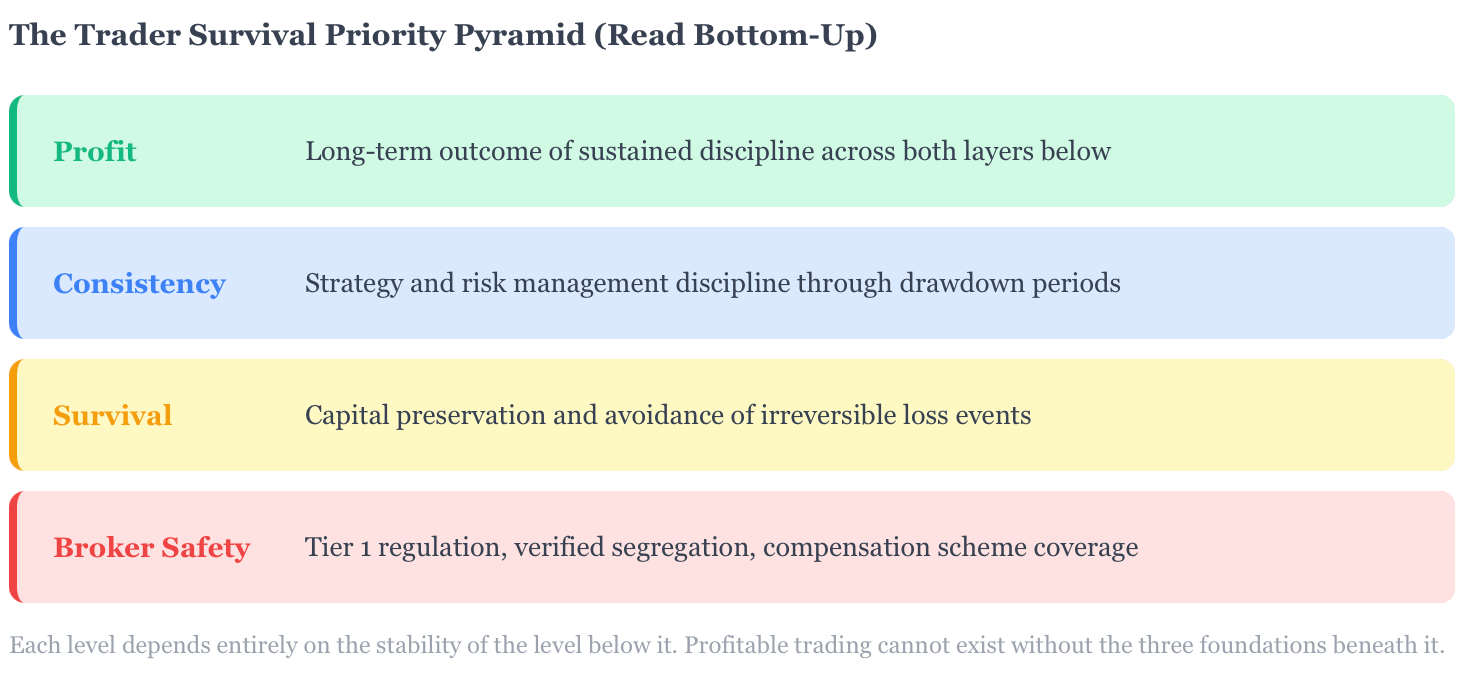
Seasoned traders will typically rank their trading objectives as follows: survival first, consistency second, and profits third. Protection of trading capital from irrecoverable loss events at both the broker and trading decision levels is directly related to the first objective of survival. Consistency is achieved through the use of an established trading strategy and risk management structure that prevents drawdown-related incidents from having a catastrophic impact on an active trader's financial condition.
In order to build an overall understanding of risk management, you need to be aware of the macroeconomic factors that affect currency (forex) trading. A quantitative easing guide, analysis of FOMC meeting minutes, and a broader perspective on the effects of fiscal and monetary policy effects on forex markets provide macroeconomic context that directly facilitates your decision-making process with respect to the size of each position you hold and the amount of risk you take with each transaction you place. Regulation represents one layer of a broader risk management structure. Regulations form an important and necessary layer; however, by considering regulation to be the only level of risk management, you leave yourself exposed in ways that are unrelated to your broker's license number and entirely related to how well you have prepared yourself to trade.
TradeWill.com gives you transparent broker analysis grounded in regulatory tiers and real risk frameworks, so your first capital decision is built on facts, not marketing claims.
Disclaimer: The content of the blog does not represent any position of Trade W, does not serve as any trading-related decision advice, and does not endorse any third-party.