

 Trade W
Introduction: Why CFDs? (Capturing Attention and Introducing the Topic)
Contracts for Difference (CFDs) have become a go-to choice for traders all over the globe because they're flexible and easy to access in different markets. Unlike regular trading, CFDs let you bet on how the prices of things like stocks, commodities, currency, and cryptocurrencies will move without needing to own them.
Introduction to CFD trading often begins with understanding its key advantage. This form of trading provides opportunities to make money whether the market is going up or down, which is why a lot of investors are attracted to it. The ability to trade on margin (using leverage) enables traders to control larger positions with a smaller capital outlay, but that also means there's more risk involved.
So, why trade CFDs? A big reason is the wide range of markets traders can access and the ease of trading online. In fact, the CFD market has grown by over 20% in the last five years, pulling in younger, tech-savvy traders who enjoy fast and flexible trading options.
What Exactly is CFD Trading? (Understanding CFDs and How They Work)
CFD trading is all about making a deal with a broker, where you agree to swap the difference in the price of an asset from when you start the trade to when you finish it. Unlike regular investing, where you buy and hold an asset, CFD trading lets you guess how prices will move without actually owning the asset. This is the core of how CFDs work: trading on the price changes rather than the asset itself.
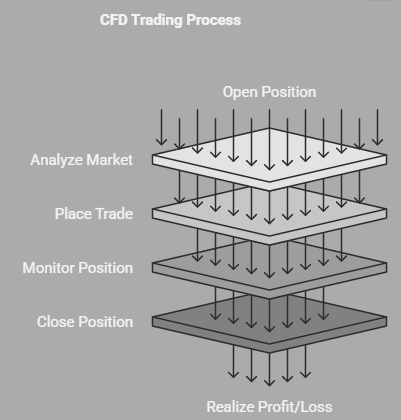
Key Features of CFD Trading:
-
Leverage: Traders can use leverage to control a bigger position with less money. What is leveraged trading? It’s when a trader borrows money (usually from a broker) to get more exposure in the market. For instance, with 10:1 leverage, you can control a $10,000 position with just $1,000.
-
Short Selling: CFDs let traders make money when markets go down by selling an asset they don’t own, planning to buy it back later at a lower price.
-
Diverse Markets: CFDs offer access to a wide variety of markets, including forex, commodities, stocks, and cryptocurrencies.
Example of CFD Trading Process:
Let’s say a trader thinks gold prices will go up. They open a long CFD position at $1,500 per ounce. If the price goes up to $1,550, they make a $50 profit per ounce (excluding fees and commissions).
How to Start Trading CFDs (Getting Started with CFD Trading)
Getting started with CFD trading involves a few important steps to make sure everything goes smoothly:
-
Choose a Reliable Broker:
Select one of the best CFD brokers that is regulated by reputable authorities such as the FCA (UK) or ASIC (Australia). Some well-known brokers are eToro, IG, and Plus500, which have competitive fees, easy-to-use platforms, and helpful resources. These platforms are particularly well-suited for CFD trading for beginners.
-
Open an Account:
Once you’ve picked your broker, you need to set up a trading account and go through the KYC (Know Your Customer) process, which means showing some ID to verify who you are.
-
Deposit Funds:
After your account is verified, you can put money in using different payment methods like credit cards, bank transfers, or PayPal. Some brokers even let you use demo accounts to practice without risking real cash.
-
Select a Market:
Decide which market you want to trade in. Whether it’s forex, stocks, or commodities, CFD trading gives you access to lots of global markets.
-
Start Trading:
Start with smaller trades or use a demo account until you feel ready for real money trading. Begin by analyzing the market, finding entry points, and using your trading strategy.
IG vs eToro vs Plus500 – Cost Comparison
CFD Fees Explained: Hidden Costs You Should Know (Understanding CFD Costs)
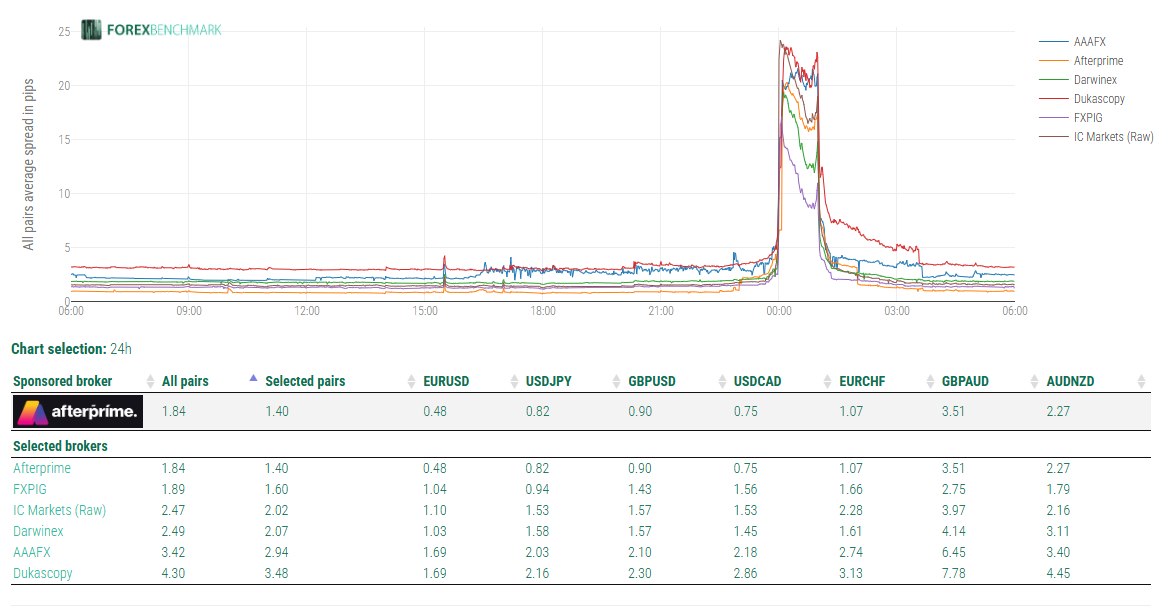
Knowing the CFD trading costs is important in protecting your profit. Such charges may vary greatly between different brokers; hence, it is essential to compare spreads, commissions, and any other costs.
Types of Fees:
-
Spreads: The difference between a buy and a sell price. This is the primary fee for most brokers.
-
Commissions: In addition to commissions charged by some brokers on each trade, others offer commission-free trading and make money on wider spreads.
-
Overnight Financing: Brokers charge interest on a position that is held overnight.
-
Inactivity Fees: Some brokers charge for the period if your account has been inactive.
CFD Spread and Commission comparison:
Common Beginner Mistakes to Avoid (Beginner Mistakes to Avoid)
CFD trading can be tricky, especially for beginners. Here are some common CFD trading mistakes to avoid:
Common Questions (FAQ Section)
Here are answers to some common CFD trading questions:
Q1: Who is suitable for CFD trading?
A: CFD trading is for persons with a sound knowledge of the financial market, risk management, and who can withstand the possible volatility and leverage risks that may be attached to CFDs.
Q2: Is CFD trading legal?
A: CFD trading is legal in many countries, although regulations differ. It is important to check whether CFD trading is legal in your country and to make sure that your broker is registered with a recognized authority
Q3: CFD vs futures, spot trading, and ETFs?
A: Unlike futures contracts, CFDs have no expiration. Spot trading is settled immediately, while ETFs are pooled investment funds traded on an exchange. CFDs are flexible in that they allow traders to go long or short on asset price movements without taking ownership.
Q4: Are taxes applied to CFD trading?
A: Yes, CFD trading profits are taxable in most countries; however, CFD taxes and regulations do vary from jurisdiction to jurisdiction. It is prudent to seek guidance from a tax professional.
Legal and Regulatory Aspects of CFD Trading (Understanding CFD Trading Regulations)
You may find yourself asking, “Is CFD trading legal?” In several countries, CFD trading is legalized to ensure the protection of the trader and maintain fairness in the market. Some nations, like the USA, have outlawed CFD trading, while others have tough regulations. Always check the CFD legal status by country by a strong authority like the FCA or ASIC.
CFD Regulations and Compliance:
7. How to Minimize Risk While Trading CFDs (Risk Management for CFDs)
Overview:
CFD risk management is an essential aspect of trading. Traders are expected to cut losses through stop-loss orders, set realistic risk-to-reward ratios, and refrain from using too much leverage. Another useful technique for managing risk in CFD trading would be to diversify their positions across various markets or instruments to minimize exposure.
Establishing a trading plan on how to use stop-loss in CFDs and controlling emotions such as fear and greed prevents hasty decisions that are often detrimental.
Example:
Assume you go long on gold CFDs. To protect your capital, you place a stop-loss 2% below your entry in case the market goes down on you.
Trading Strategies for CFDs (Effective CFD Trading Strategies)
Overview:
To trade successfully in CFDs, a trader must adopt a strategy that keeps pace with market behaviour. Usually, the following are some of the best CFD strategies:
-
Seek a Trend - Very suitable for high and highly directional markets.
-
Range Trading - Useful in the sideways and consolidating market.
-
Day Trading - Used in a highly volatile market where positions are opened and closed within a single-day period.
How to trade CFDs Profitably:
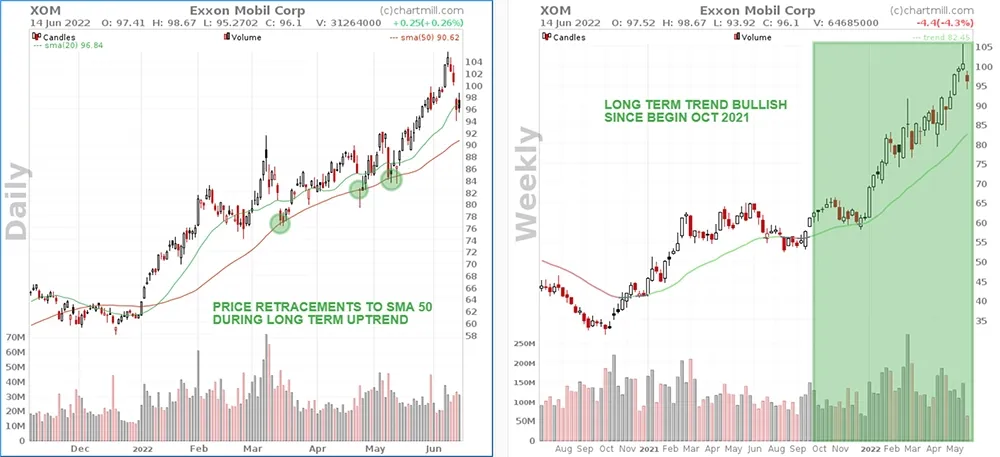
To trace the trend, use it during sustained market rallies or major economic announcement events. Range trade when there is consolidation in the market and prices are trading between support and resistance. Day trading is optimal at times when volatility is high due to peak trading hours.
In addition to day trading, another approach that traders often consider is swing trading. Swing trading involves holding positions for a few days or weeks, aiming to capture price swings within a trend. This strategy contrasts with day trading, which seeks to capitalize on short-term price movements within the same trading day. Understanding the key differences between day trading vs swing trading is important in determining which strategy fits your trading style and risk tolerance.
Example:
A trader might use a trend following strategy when a particular NASDAQ index experiences a very long bullish run, and use tight trailing stops to ride the trend in profit.
Conclusion: Are You Ready to Start Trading CFDs?
So, are you ready to trade CFDs? Just to sum it up, trading CFDs gives you access to flexible world markets; that is, through stocks or commodities, indices, and now cryptos. With the right risk management, the right strategy, and a concise trading plan, one can trade with much more confidence and control.
When getting started with CFD trading, make sure you start small, create the habit, and let data-driven decisions guide your journey. The more you do it, the better and easier mastering the ABC of CFD trading becomes. Learn to trade CFDs and rule the market.
Call-to-Action (CTA):
Want to develop those CFD trading skills without drowning in the complexity and join CFD trading community? Well, get ready to embark on your trade journey using expert-backed tools and insights from Tradewill.com. Start CFD trading now!
Bonus Module (Interactive Tools and Resource Links)
Interactive Quiz: Find Your Perfect CFD Market
-
Finance Brokerage Trading Quizzes: A collection of quizzes covering Forex, Crypto, Commodities, Stocks, and CFDs.
-
IG Academy CFD Quiz: A structured quiz to test your CFD trading knowledge.
Downloadable Resources
-
Free CFD Guide Download:
-
CFD Glossary:
-
Risk Management Checklist:
Disclaimer: The content of the blog does not represent any position of Trade W, does not serve as any trading-related decision advice, and does not endorse any third-party.