

 Trade W
Introduction: Why Spread and Slippage Matter in CFD Trading
All CFD traders need to know about two major cost drivers: spread and slippage. These are more than just terms; they are hidden CFD trading costs that quietly chew through your profits.
So what is spread in CFD, and what does slippage in trading actually mean?
-
The spread is the difference between the bid (sell) price and the ask (buy) price.
-
Slippage is the difference between the expected execution price and the price you actually get filled at.
Although each of them only costs you a pip or two, when you trade often or at high volumes, these costs can add up quickly. For example, a trader places a buy order on EUR/USD at 1.1000, but it is filled at 1.1005. That is a negative slippage of 0.5 pips.
Key Insight: Understanding the difference between slippage and spread will help you better manage your entries, exits, and your total CFD trading cost.
What Is Spread in CFD Trading?
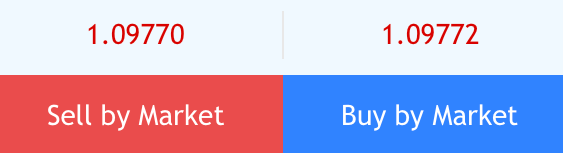
First of all, let's look at the CFD trading spread, otherwise known as the bid-ask spread, which is how brokers, especially market makers, make money.
For instance, if EUR/USD is quoted at 1.2000 (buy) / 1.1998 (sell), the spread is 2 pips (1.2000 - 1.1998). When you enter a trade, you're already down 2 pips.
Fixed Spreads Vs Variable Spreads:
-
Fixed spreads remain fixed in a volatile market.
-
Variable spreads are based on market conditions. They will often be lower when the market is calm, but can widen significantly in a fast-moving market.
Example Scenarios:
-
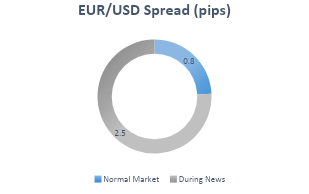
Broker A has a fixed spread of 0.8 pips for EUR/USD.
-
Broker B has a variable spread with quoted spreads from 0.2–2.0 pips.
Table 1: Spread Comparison Table (Pips)
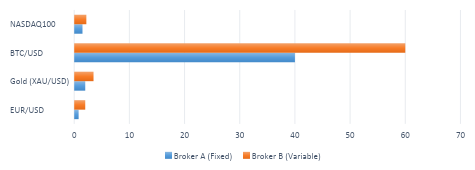
Key Insight: If you want consistency, pick low spread CFD brokers with historically reliable executions. Understanding the CFD fixed versus variable spread dynamic helps find a partner that aligns with your trading style.
What Is Slippage in CFD Trading?
Now let's address slippage in CFD trading, which is generally when the price changes between the time the order is placed and the time it is filled.
You are more likely to experience slippage during:
-
News events
-
High volatility
-
Periods of low liquidity
Slippage can be:
-
Positive: you get a better price than you expected
-
Negative: you get a worse price than you expected
Market Orders versus Limit Orders:
-
Market order gets filled immediately at the best market price, which is less likely to slip.
-
Limit orders only execute at the price being ordered or better. Limit may be safer in terms of not slipping, but it may not get filled.
Example: A trader puts in a market sell order on NASDAQ at 18,000 during a Fed rate decision. Interestingly, with the markets going wild, his order filled at 17,970. That is a slippage loss of $30.
Table 2: Average Slippage Table (in pips or points)
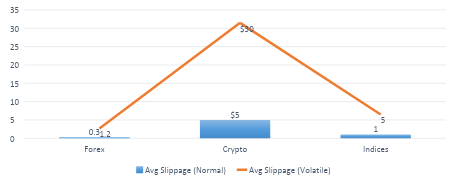
Key Takeaway: By understanding how slippage affects trading, you can set up your entries and exits with more accuracy.
When Do Spread and Slippage Widen the Most?
In trading, timing is everything! Here is when slippage and spread get worse:
Spread will widen during:
- Low liquidity (weekend, overnight)
- News events (NFP, CPI, interest rate decisions)
- Holiday sessions or rollover times
Slippage will be worse during:
- Rapid price movement (e.g., after news)
- Thin order books (low market depth)
- Poor internet connection or latency
Example:
The BTC/USD spread increased from $20 to $150 on a Sunday evening. The gold spread widened by 1.5 points just before the FOMC press conference.
Key Takeaway: Widening spreads in volatile markets and order slippage are measurable risks. Don't place your larger trades in front of major economic announcements without considering these risks.
How to Minimize Slippage and Spread Costs?
You won't be able to eliminate spread or slippage, but you can reduce them by using smart techniques.
Actionable Techniques:
-
Use limit orders instead of market orders as much as possible
-
Don't trade during times of high-impact news (check Forex Factory calendar)
-
Choose the best low spread brokers for CFDs 2025
-
Use a VPS or low-latency internet connection to ensure the fastest execution
-
Stay with high liquidity instruments (e.g., EUR/USD, NASDAQ100)
Example Comparison:
-
Trader A trades news with market orders → incurs $200/month in slippage/spread costs
-
Trader B trades off-peak with limit orders → incurs only $40/month on similar volume
Table 3:Cost Comparison
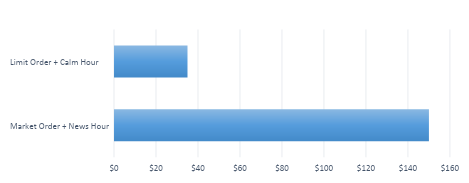
Key Insight: Knowing how to reduce slippage in trading or how to reduce CFD trading costs gives you a huge advantage, especially if you are frequently trading at high volumes.
Conclusion and Summary
Spread and slippage are not simply technical aspects of trading; they are actual costs of trading that you need to manage, or they will diminish your profit.
Let’s recap:
-
Spread is the cost between buy and sell prices – manage it by finding low spread brokers and trading when it's not highly volatile.
-
Slippage is the difference between your expected execution and what actually executed – manage this with good order types and timing.
Even a small difference of 1 to 2 pips can translate to hundreds of dollars in costs over a month. If you're serious about being profitable, it's crucial to start understanding how to calculate pip slippage, avoid bad executions, and find the best CFD brokers with low spreads.
As one trader said, “Managing execution cost was the easiest way that I increased my bottom line without having to change my trading strategy.”
Follow these recommendations and first test them out in a demo account. Get a feel for how your broker measures spread and slippage in real-time conditions, and then make what you've learned work to your advantage in your trading process.
Disclaimer: The content of the blog does not represent any position of Trade W, does not serve as any trading-related decision advice, and does not endorse any third-party.