

 Trade W

Vivek Bajaj is an expert in trading who teaches finance and is the co-founder of StockEdge. He created a video series called "Face2Face," in which he interviews traders about building long-term success by using data to make trades, maintaining a disciplined approach to risk management while trading, and systematically analysing the financial markets.
Why do some successful traders think that it is more important to use data than intuition? If you ask anyone who has spent any time in India's retail trading community, one name constantly comes up: Vivek Bajaj. Not because he is an analyst on a cable television channel, but rather because he has established an unusual reputation for explaining how the financial markets work.
Bajaj is a professional trader and educator and is the co-founder of StockEdge.com, which is utilised by hundreds of thousands of Indian retail traders. He is most frequently referred to for his long-running interview segment called "Face2Face", where he interviews some of the most knowledgeable market participants, such as professional traders, fund managers, and technical analysts, and gives you a glimpse into their respective trading strategies.
The key takeaway from Bajaj's work is that trading is not gambling. It is a probabilistic game based on data, discipline, and risk management. This article will describe precisely what this means, what traders can learn from his trading education, and how those lessons can be translated into a working system that traders can implement in their daily routine.
The Data-Driven Mind Behind Modern Retail Trading
Bajaj is not the usual background you think of when trying to find a market educator. He has an MBA, CA, & CS, which are more focused on how business & money work, than how charts move. This background is the basis of his teaching style.
Bajaj entered education after becoming frustrated with how retail investors create their portfolios. He observed that many investors treat stock picking like it is lottery tickets by chasing after tips & reacting to headlines. However, Bajaj feels it should be viewed from a probabilistic perspective. Any individual willing to systematically study the markets can improve the probability of making a profit.
"Investing is a life skill, not a speculative activity."
StockEdge was designed under this premise. The application is designed to provide you with the tools necessary to analyse sectors, locate technical set-ups and monitor institutions instead of providing a "hot stock tip" as so many other applications do.
In other words, if you are a trader who has access to the best data available and uses a repeatable process to trade, you will consistently outperform a trader who relies on instinct, regardless of whether or not your "instinct" has worked before.
Why Data Beats Intuition in Trading
Most trading courses will not tell you this hard truth: your intuitive judgment in the markets is usually wrong. It is not because you are not intelligent. Rather, due to our evolutionary design, we are wired to recognise patterns among randomness and can misjudge a stock movement as it goes up three days consecutively and is certain it will continue to go up another day. This certainty is due to cognitive bias rather than funds.
In contrast to that way of viewing the market, Bajaj's viewpoint begins with historical statistical findings of price-based patterns and starts with the history of prices in the market, which he believes determines a price. "Price is the slave of value" is often quoted by Bajaj as he believes that prices can fluctuate drastically in the short term due to various factors, but will eventually follow fundamental values of a marketplace,e and all prices will be based on identifiable market dynamics.
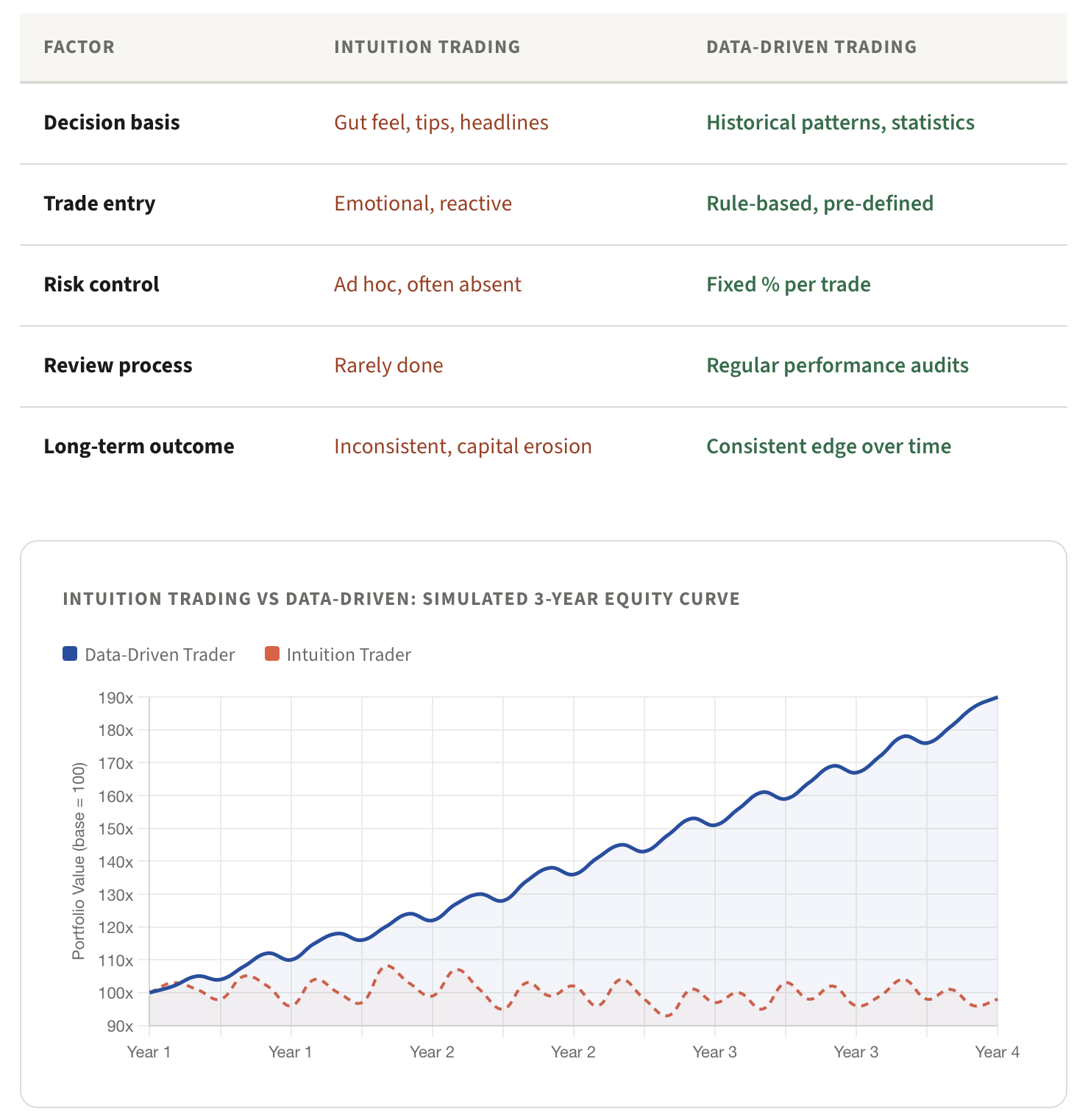
The difference can be compounded. A data-led trader who cuts their losses in a timely manner and rides their winners consistently will have a vastly different equity curve than someone who holds onto losing trades in the hope of making a recovery. Running your system against prior trading data to validate if your system actually works, before risking any real capital, could be accomplished through backtesting.
5 Trading Principles from the Face2Face Series
Face2Face is not an interview show for motivational purposes, but it is a trade-specific show where Bajaj gets into the nitty-gritty of how a trader identifies set-ups, manages their position size and makes decisions on best exit points. Across hundreds of interviews, 5 common principles emerge as being the most important.
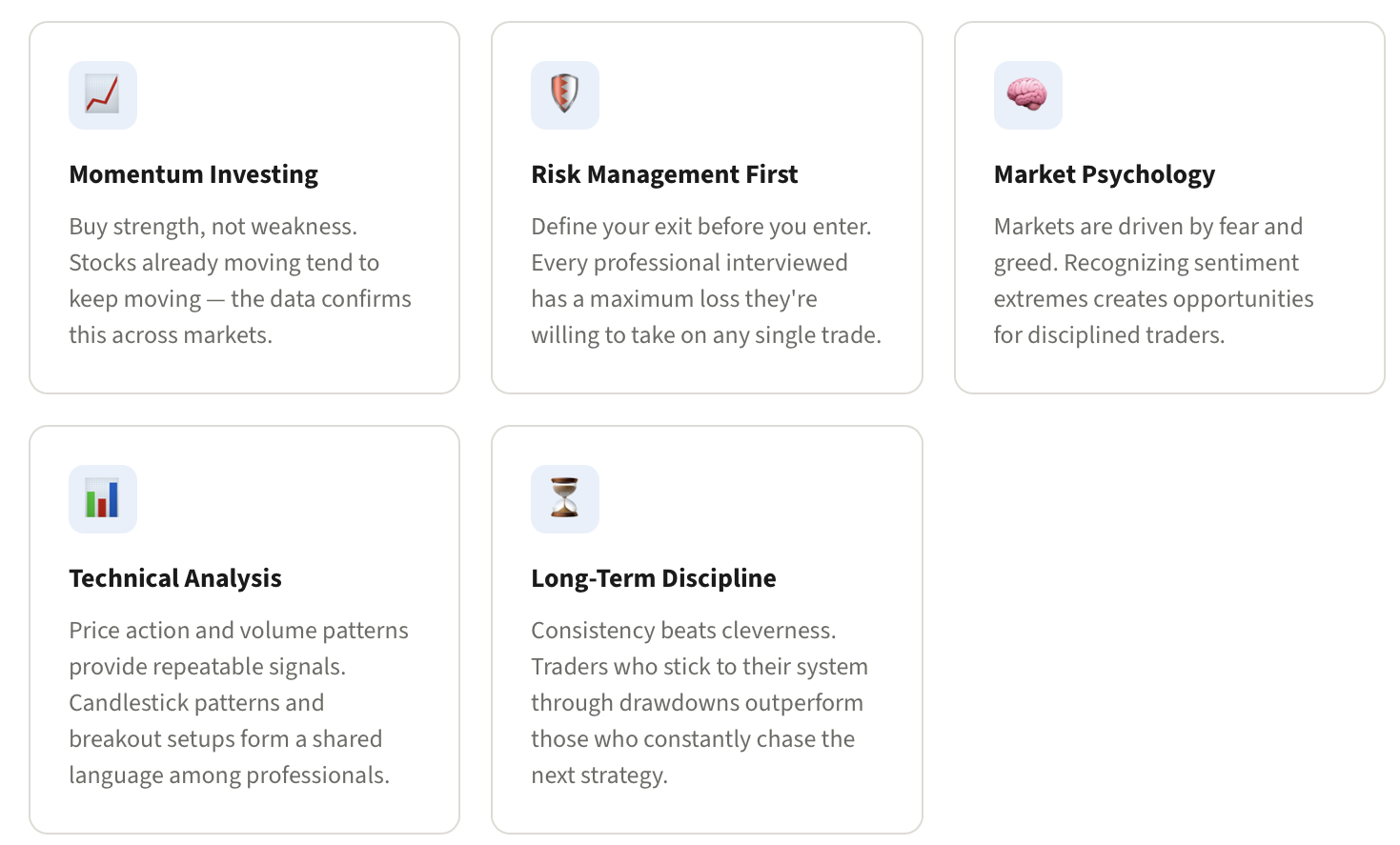
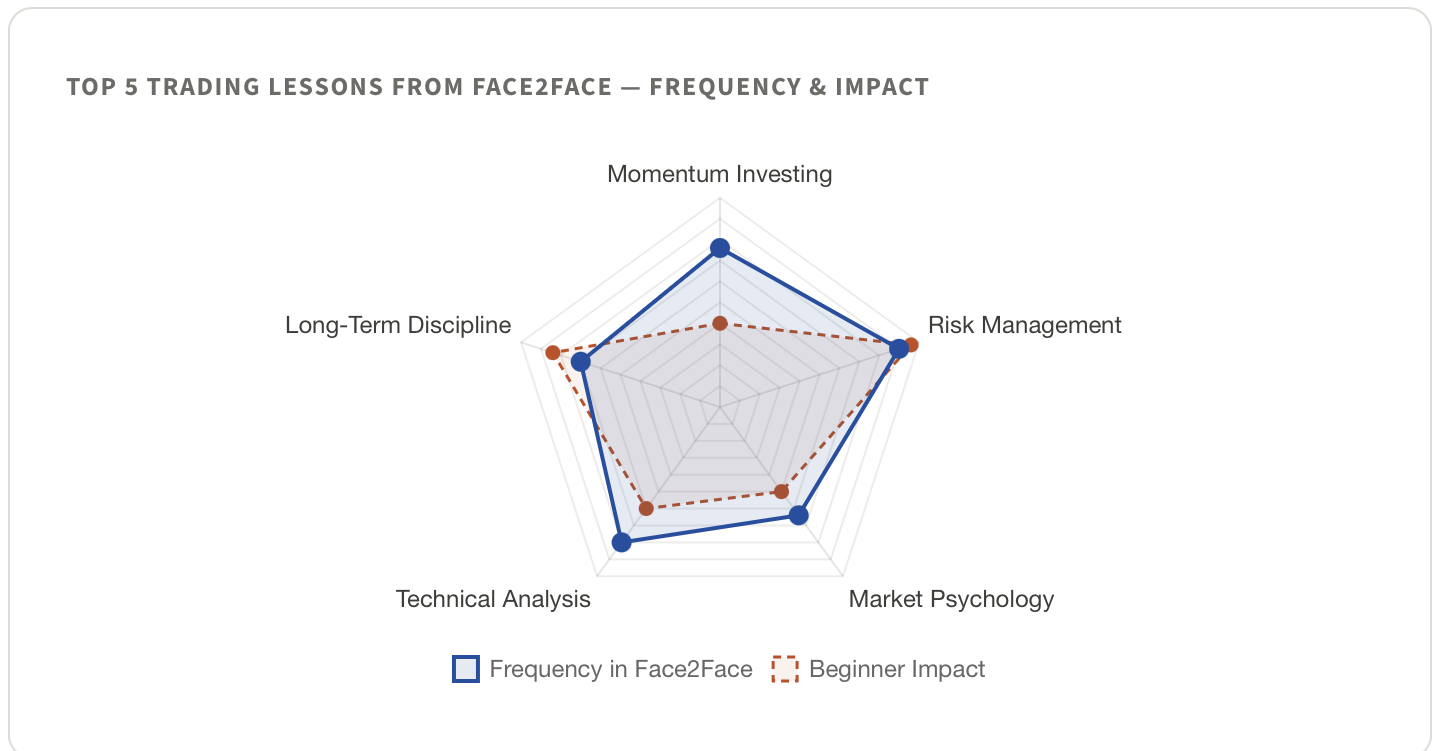
The consistency of message throughout all of the conversations, whether Bajaj is discussing with a momentum trader or a value investor, is a consistent theme. The commitment to fundamentals, it seems, to be unchanged by either style of investing is to understand your edge, manage your risk, and allow your data to work for you.
The 7 Most Common Beginner Trading Mistakes
Retail traders lose money for predictable reasons. Bajaj documents them extensively, and the patterns are consistent enough to be treated as a checklist, things to avoid before anything else.
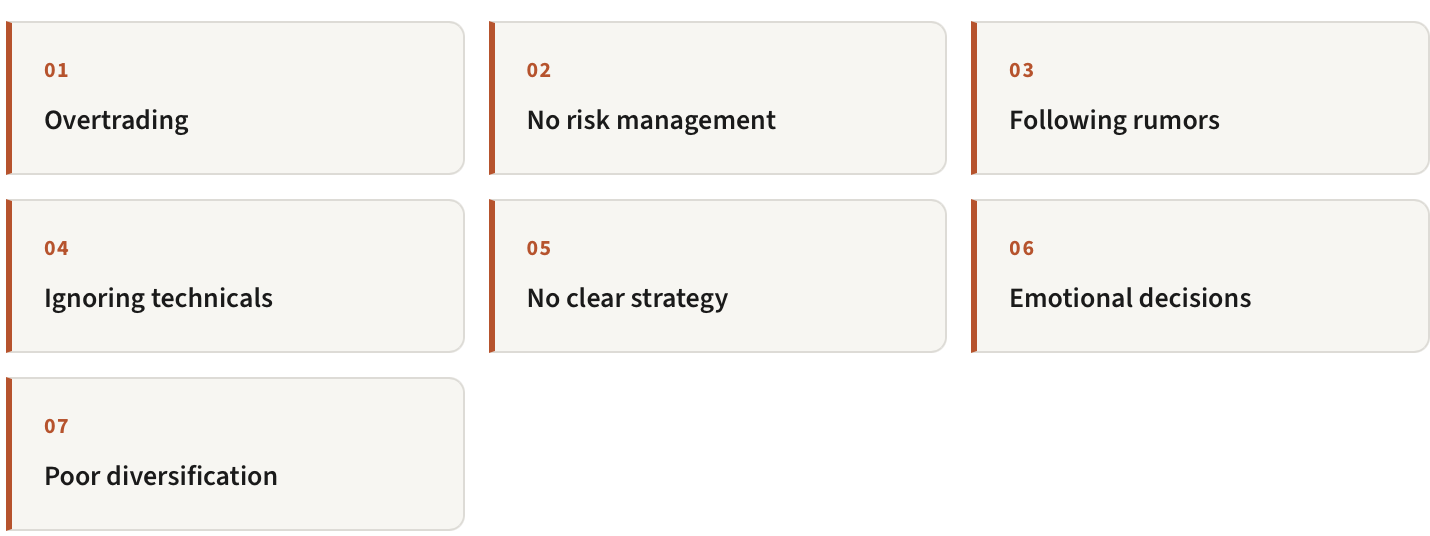
The majority of losses from beginners can be attributed to either having no strategy whatsoever or abandoning their strategies when they no longer feel comfortable with them. Overtrading is one way that a retail trader can significantly lose their capital too quickly because of high transaction costs and slippage, as well as poor timing on trades.
According to Bajaj's advice, the fundamental principle of trading is to survive. If your capital has disappeared, you cannot learn and grow or compound your returns, so cutting losses quickly and trading at a size less than feels right to you will enable you to stay in the game long enough to develop your ability.
Real Strategies from Face2Face Experts
In addition to discussing theoretical concepts, the hosts of Face2Face encourage their guests to show real-world examples from their own trading experiences that demonstrate similar market behaviour between multiple experts using different market approaches.
One commonality between experts, and across different markets, is that stocks tend to break out following a period of tight price consolidation with decreasing volume, so that when a major catalyst drives price above the resistance with substantial volume, institutions (i.e. “smart money”) have begun to buy shares. Once the stock breaks out above the resistance level, a stop loss is placed just below the breakout level, and the target price is calculated based on the length of the previous price range.
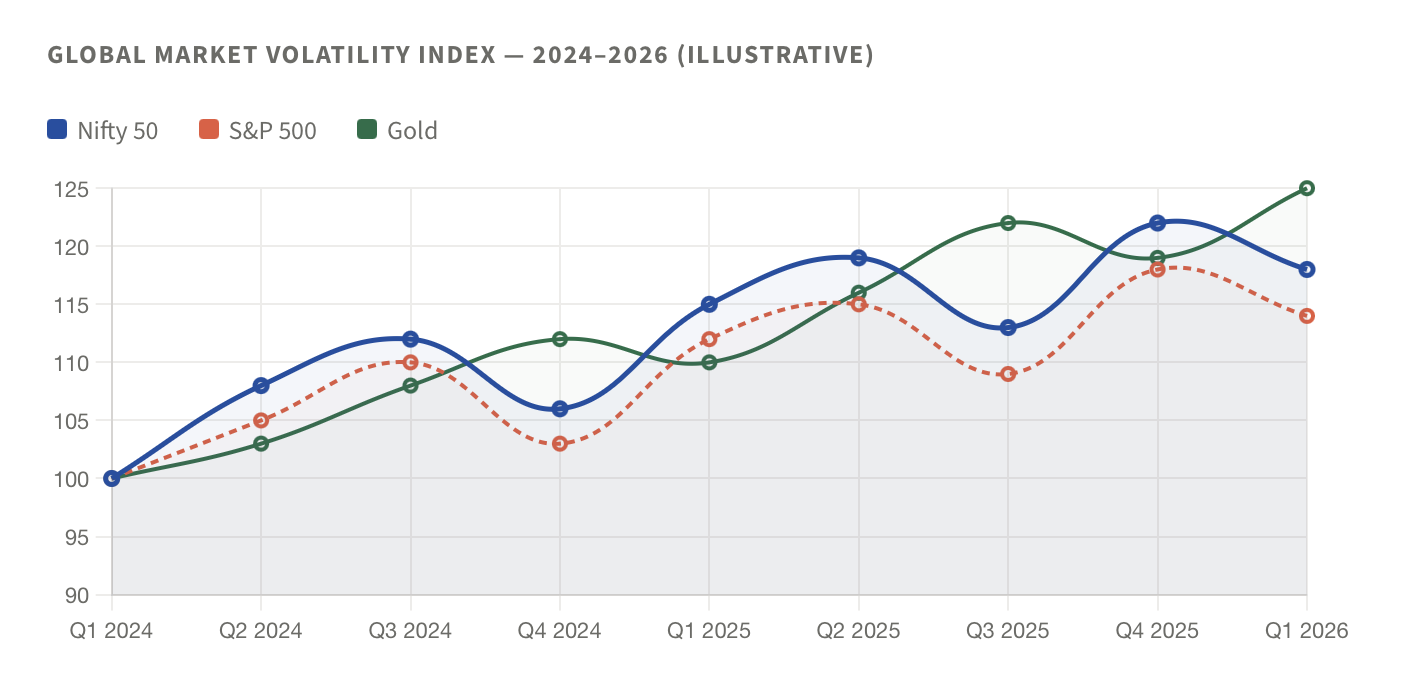
Another frequent method of analysis used by many of the experts on Face2Face is to look for hints from one asset class when trading in another. When gold begins to break out while equities are posting losses, it is often viewed as a signal from the market indicating a “risk-off” environment.
When the Dow Jones futures are up sharply overnight, Asian equities will often follow. Professional traders do not trade solely in their respective markets; they constantly monitor the global macroeconomic picture to adjust their bias towards pending price movement.
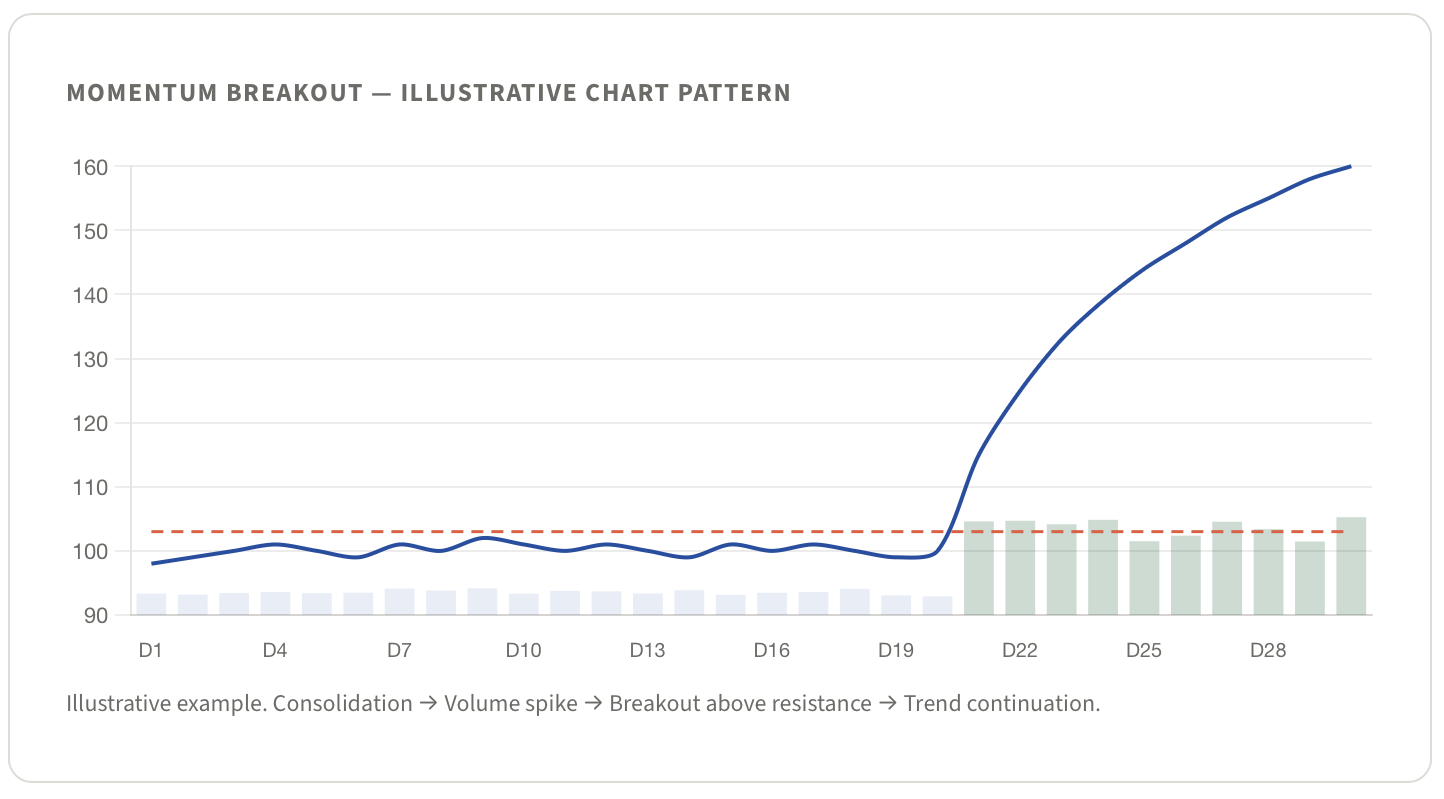
Bullish engulfing patterns, flags, and cup and handle are technical analysis tools to determine whether or not a trade will be successful before it happens. According to Bajaj's guests, one of the keys to this process is having enough confidence in a setup to take action on it, but also having the discipline to leave when the setup fails instead of trying to find the "perfect entry".
Building Your Trading Workflow:
Workflow is more important than tools. The best scanner isn't good at all if you don't have a method of handling items that it flags. Below is a 5-step approach based on the way that Bajaj does this:

StockEdge managed the scanning and fundamental data layers. The backtesting of your trading strategy validates the historical edges created from the identified patterns.
TradeWill provides the environment to execute these setups across multiple global markets in one interface.
No trader should skip the review phase. It also happens to be the most important step in developing as a trader. With a trading journal, you can track not only your profit & loss level but also your thought process, your mental state, and whether you followed your own rules; and that's where the majority of your improvement takes place.
Risk Management: The Foundation of Professional Trading
Throughout every Face2Face interview, a consistent theme emerges: Successful people focus on what they may lose rather than what they will gain. Thu,s the distinguishing factor is the difference between managing risk exposure and experiencing either a slight inconvenience or a huge disaster.
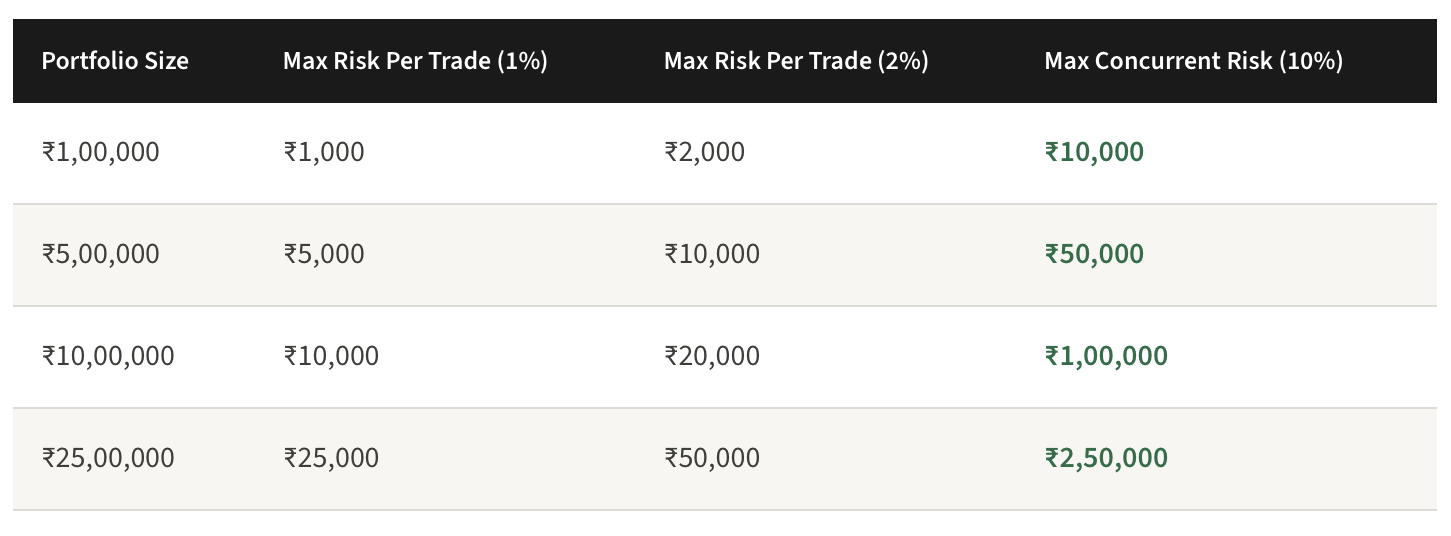
The 1-2% risk rule is based on rational statistics. A trader who has quality trading setups will statistically have 10 total losing trades in a row, which will only cost them between 10-20% of their capital, and this amount can be easily recovered. If a trader is risking 10% of their account on each trade and loses 3 straight trades, they will be completely wiped out.
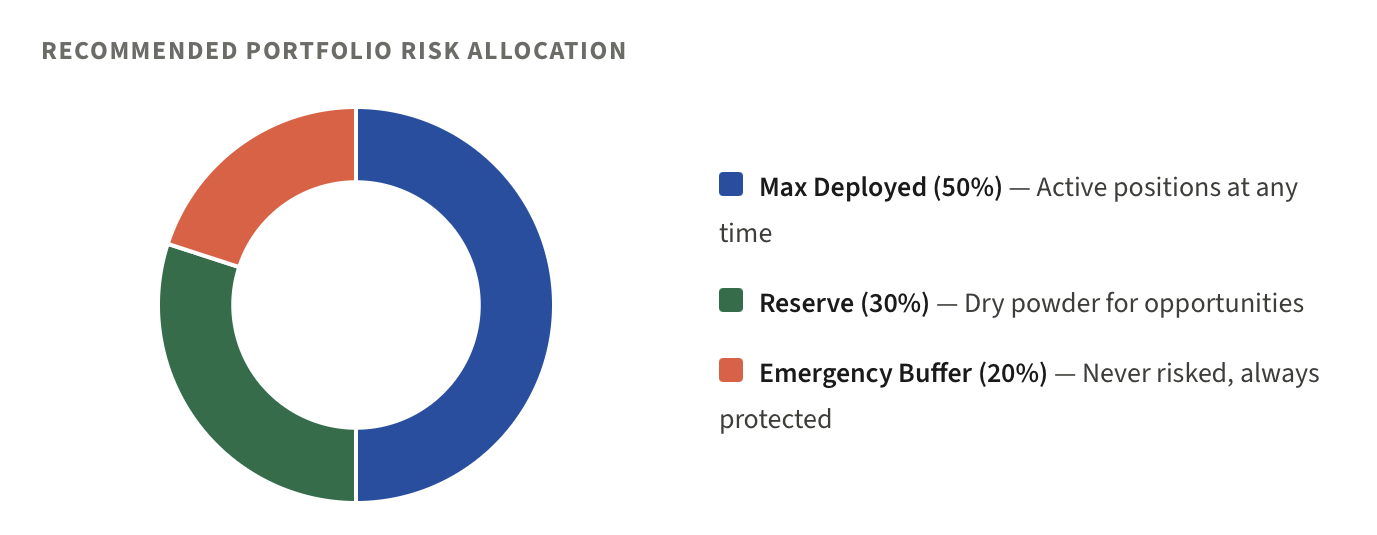
Position size also influences how many trades a trader can have open at the same time; by using risk across 5 positions of 2% eac,h the total amount of risk in your accounts would equal the amount of risk you would lose in a volatile market.
Trading in 2026: Applying Bajaj's Philosophy in Volatile Markets
As the markets in 2026 have given traders more uncertainty than they have experienced in most years, persistent inflation in several economies, changing expectations regarding interest rates, and geopolitical stress have created environments where prior correlations to movements no longer hold. What worked in 2021 does not necessarily apply here now.
Bajaj’s data-driven methodology works for this reason: it does not rely on conditions being consistent. As volatility increases, defined risk traders simply decrease size. If a sector breaks down, a systematic scanner finds out which sectors continue to perform, as they rotate into what is actually working best. The process of adaptation; the discipline remains the same.
When it comes to trading in volatile markets, cash will serve as a trader’s best friend, according to those who participated in Trade Vault’s Face2Face interviews. Sometimes, it’s better to wait for high-probability setups using technical analysis and only then put your money to work than to be trading in choppy, volatile market conditions.
Volatility also increases the importance of cross-market signals from various asset classes. The performance of gold relative to equities, the dollar index, and bond yields reveals a great deal about the current risk appetite of institutions. The difference between traders who react to market moves as they happen and traders who are prepared by doing their homework before making trades is the ability to incorporate multiple market signals into their own analysis.
The Long-Term Goal: Financial Freedom Through Disciplined Investing
A driving principle of Bajaj is not to simply outperform the market but rather to establish an orderly procedure for generating and managing through the consistent compounding of investments through time. The process allows for compounding of small incremental gains over the long term, not only from negative returns but from positive returns as well, thus adding to the overall performance of the investor.
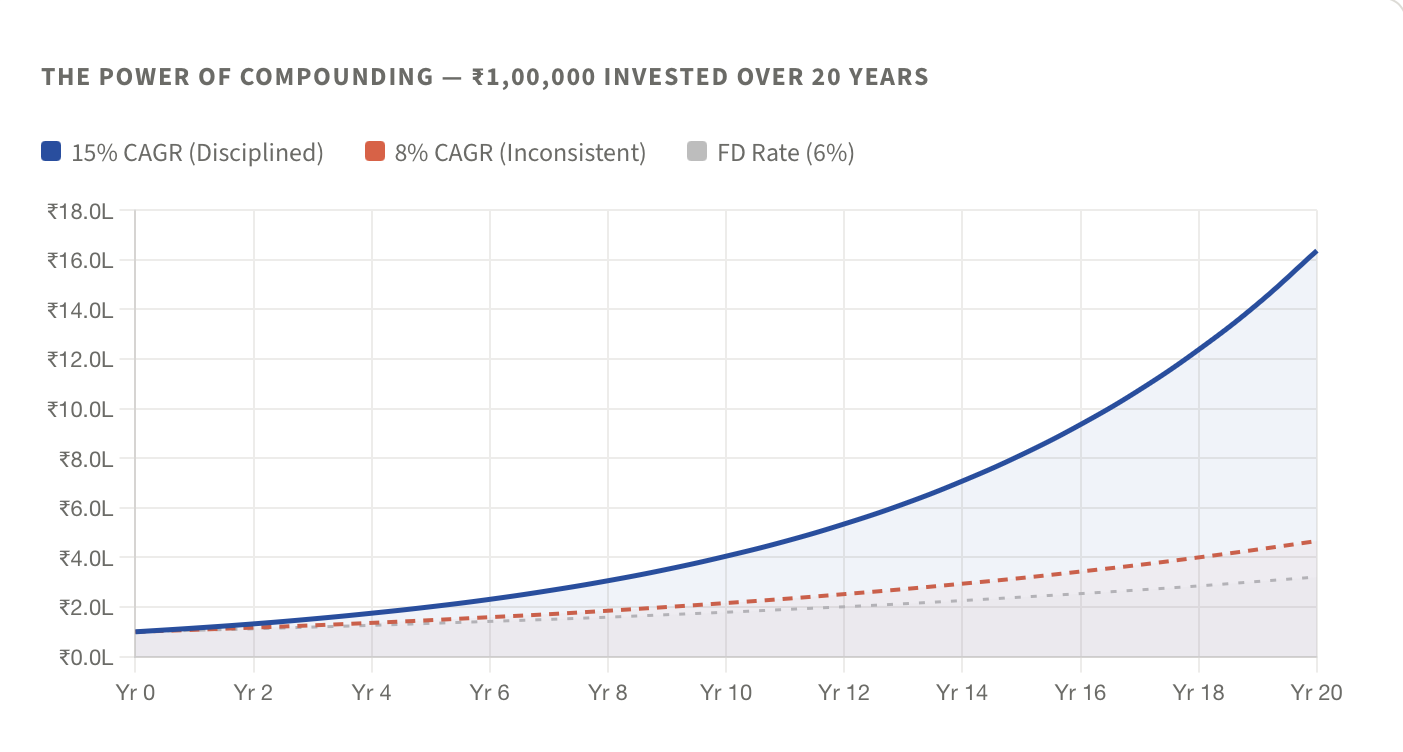
A 15% annual return, which is possible from employing a consistent method of using data and sound risk management, gives you the potential to turn ₹1 lakh into ₹16 lakhs after 20 years. Mathematics is not at fault, but it does require consistency in your application of this principle.
The traders that achieve this do not do it by utilising some secret trading technique but rather through avoiding major losses and continuously improving their edge; then they stay in the market, utilising compounding. This is the methodology that Mr Bajaj has devoted his entire career to documenting and teaching.
Frequently Asked Questions
Who is Vivek Bajaj?
Vivek Bajaj is a professional trader and financial educator based in India. He co-founded StockEdge, a market analysis platform, and is the host of Face2Face, an interview series featuring experienced traders sharing real strategies and market insights.
What is Vivek Bajaj's trading philosophy?
He advocates data-driven trading over intuition-based decisions. His approach emphasises backtesting strategies, using statistical patterns, applying strict risk management, and thinking in probabilities rather than certainties.
What is the Face2Face series?
Face2Face is an interview program where Bajaj sits down with professional traders, fund managers, and technical analysts to discuss their actual trading strategies, risk frameworks, and market experiences. It's one of the most substantive trading education resources in the Indian market.
Can beginners use Vivek Bajaj's methods?
Yes. His approach is structured specifically to help beginners avoid the most common mistakes. Starting with small position sizes, focusing on learning the process before optimising for returns, and using tools to scan markets systematically, these principles apply regardless of experience level.
How does TradeWill complement Bajaj's trading framework?
TradeWill provides the execution environment where data-driven strategies come to life. You can apply the scanning and validation workflow Bajaj teaches, screening for setups, backtesting signals, sizing positions, and executing across global markets; all within a single platform built for systematic traders.
Stop studying the market. Start trading it.
Bajaj's philosophy gives you the framework. TradeWill gives you the global arena to apply it with the tools, data, and execution environment that disciplined traders actually need.
Disclaimer: The content of the blog does not represent any position of Trade W, does not serve as any trading-related decision advice, and does not endorse any third-party.