

 Trade W

Iron Condor Explained: What This Options Strategy Really Means for Traders
The Iron Condor is an options trading strategy.The Iron Condor is what you will use to make money if you expect that the price of an asset will be within a certain range in the future but would prefer not to take the risk that the price will rise or fall significantly over that period of time. An Iron Condor makes money when there is little movement in the market, and there is no directional bias.
Put simply, this is an iron condor that has both a short put and a short call. Your maximum risk is limited by two options you will buy (one at the upper boundary of the range, and one at the lower boundary of the range). Therefore, the maximum risk of an iron condor is very low. An iron condor is typically set up with a net credit to your account, and you want the underlying asset to remain within the range you established.
An Iron Condor is best suited for a low-volatility environment. A good example is a typical "quiet" week in EUR/USD, a steady moving S&P 500, or gold prices trading within a narrow band (not making large price fluctuations). If you set up an Iron Condor in these markets, you will continue to receive consistent returns on your investment.
Consider this analogy: Betting on the temperature to remain between 65° and 75°. This would be the ideal temperature; therefore, if it remains in this range, you would earn a profit from your bet. If the temperature went past the extreme ends of either side (65 or 75), you would have to pay out on your bet. However, since your bet had already been made, you would know how much you would have to pay if it went outside those limits.
Practical example: If you set up an Iron Condor for the S&P 500 expected to stay between 4900 and 5100 over the next 30 days, then as long as it stays between that range, you keep the full amount you collected in premiums (which, in this case, was $200). If it didn’t stay within that range, then, depending upon how far away it goes, your maximum loss would be limited by your long options to a maximum of, for example, $800. You should note that this profit and loss structure is one of the key advantages of a defined-risk defined-reward trading strategy.
For traders interested in the ability to know what they stand to lose versus what they will stand to gain before making the investment – Iron Condors provide traders with an opportunity to take advantage of periods of lower volatility.
The Four Legs of the Iron Condor: Complete Breakdown for Beginners
An Iron Condor consists of four separate components that are often referenced as "legs." Therefore, the understanding of each of these legs is important, as losing or confusing just one of the legs can dramatically alter your risk profile.
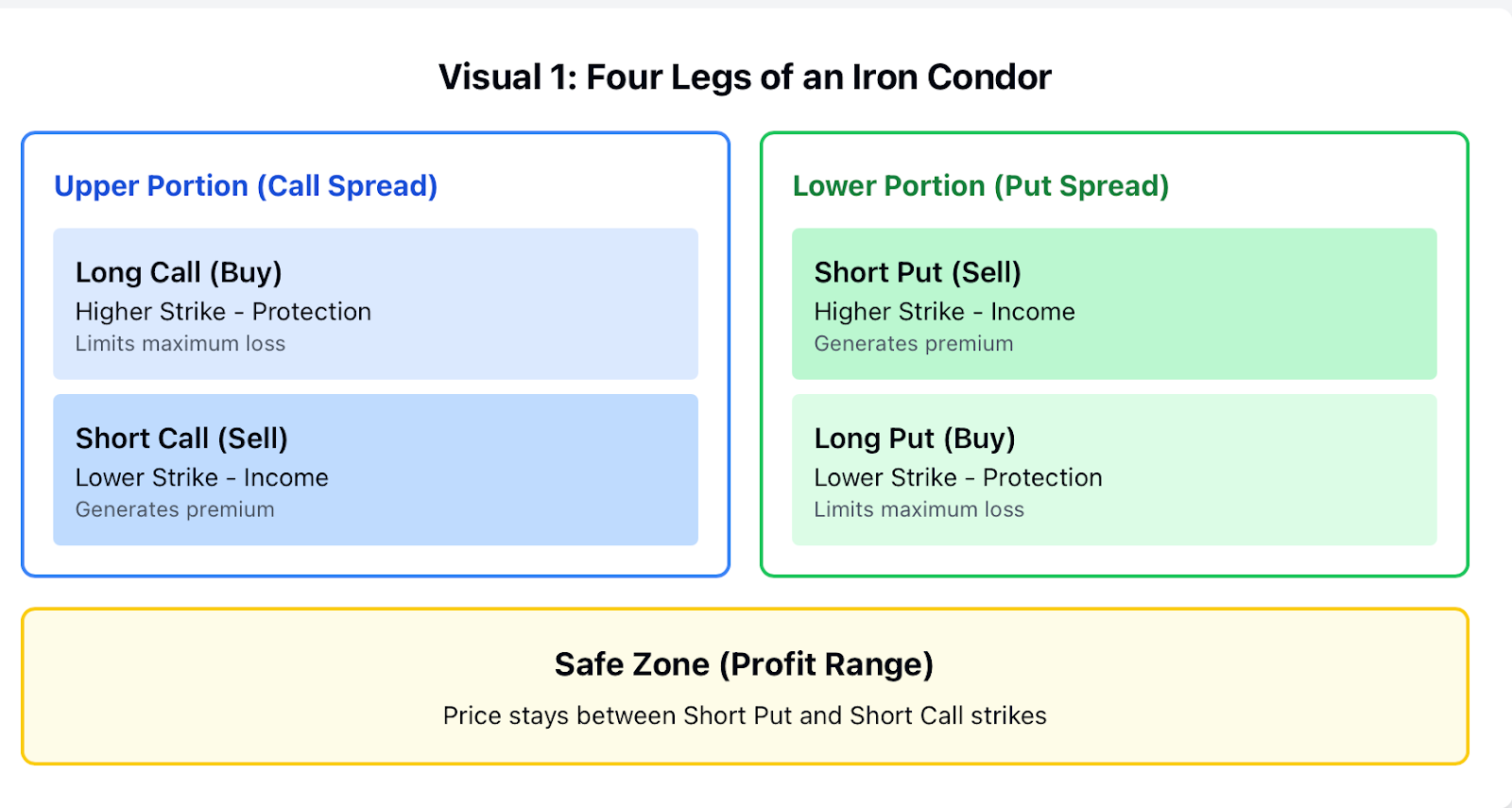
Upper Portion (Call Spread).
-
Short Call: This is the sale of a call option at a strike price greater than the current market price.
-
Long Call: This is the purchase of a call option at a strike price greater than your short call.
Lower Portion (Put Spread).
-
Short Put: This is the sale of a put option at a strike price lower than the current market price.
-
Long Put: This is the purchase of a put option at a strike price lower than your short put.
Why do you do the sell and the buy?
The two short positions (both the call to be sold and the put to be sold) provide income for you and thus produce your profits. The two long positions are designed to provide you with some "insurance," and they limit your potential loss should the market go very strongly against you.
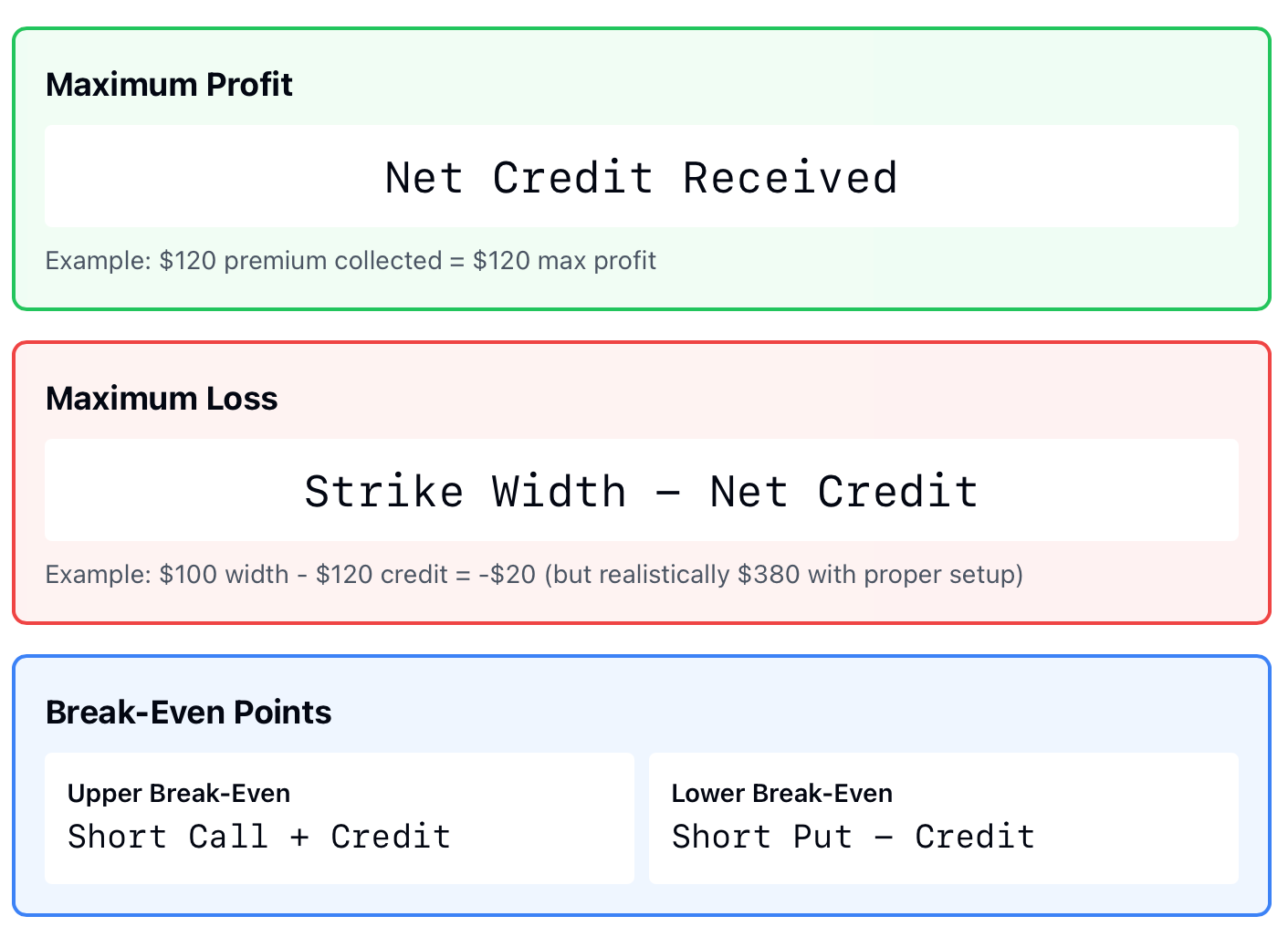
The Maximum Profit Formula is: Maximum Profit = Net Credit Received (the premium received for writing the options in a pair i.e., when executed).
The Maximum Loss Formula is: Maximum Loss = Strike Width - Net Credit Received (the maximum risk associated with an Iron Condor strategy).
Let's break this down with numbers. Say you're trading Gold options when Gold is at $2,300/oz:
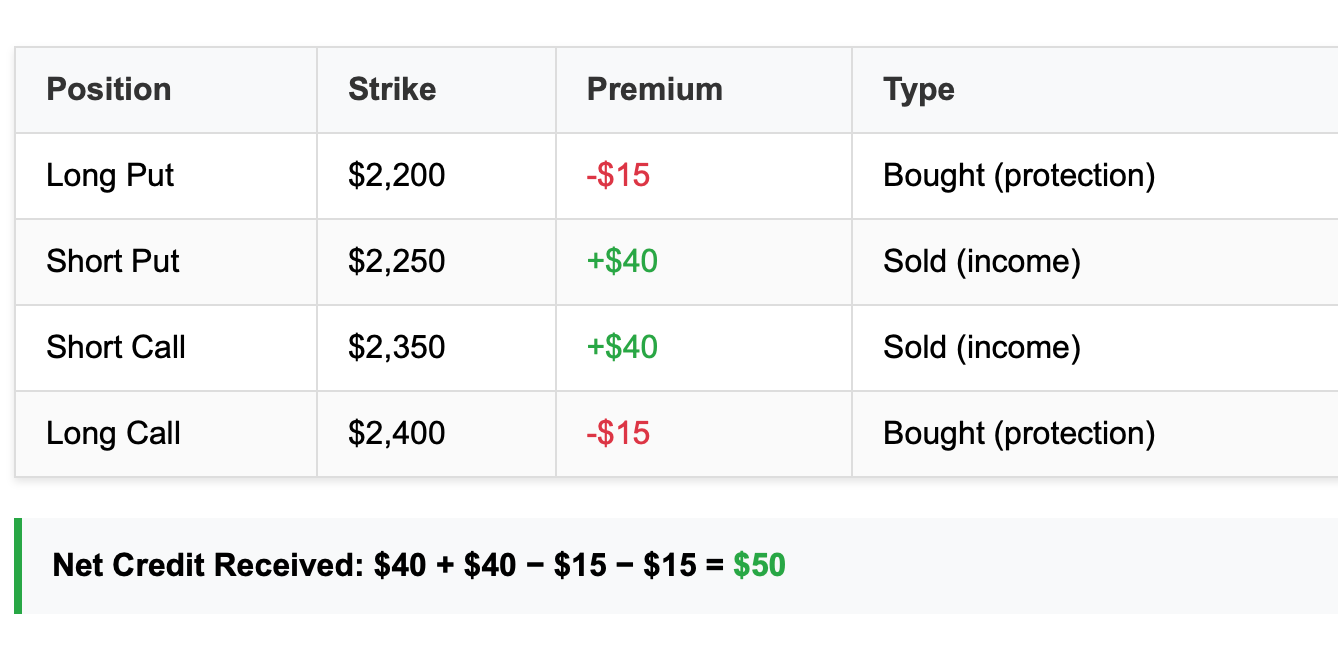
If Gold remains between $2,250 and $2,350 until the expiration date of your options, the maximum amount of profit you can make is equal to $50 per contract. Your total maximum loss is equal to the spread width minus your maximum profit, or ($2,350 - $2,250) - $50 = $50 per spread width = $450 total.
A good analogy would be if you were renting out parking spaces. You would rent two spaces to generate income but also rent backup parking spaces a little farther away as a form of insurance against large losses. If cars only park in your designated parking zone, you will be making money on your rentals. If people park far outside your zone, you still have your backup parking spaces to protect you from unlimited loss.
Your selection of the strike prices on your options ultimately creates your "safe zone," meaning a wider spread gives you greater flexibility for the market to move and therefore a higher probability of making a profit, but also creates the potential for larger losses. On the contrary, tighter spreads provide for less flexibility yet create less potential for loss. Finding the right balance of strike prices (the trade-off) is the crux of designing an Iron Condor.
Break-even Points
-
Upper Break-even = Short Call Strike + Net Credit.
-
Lower Break-even = Short Put Strike - Net Credit.
Without one of these four legs, you've completely changed the strategy. You must have the long position to eliminate risk and the short to generate income. Without the long and short legs together, you no longer have an Iron Condor.
How Iron Condors Make (and Lose) Money: Real-World Profit Scenarios
Understanding the outcomes of profit and loss will help you form realistic expectations and outline exit strategies. We’ll go through the three key outcomes:
Scenario 1: Optimal Situation (Greatest Gain)
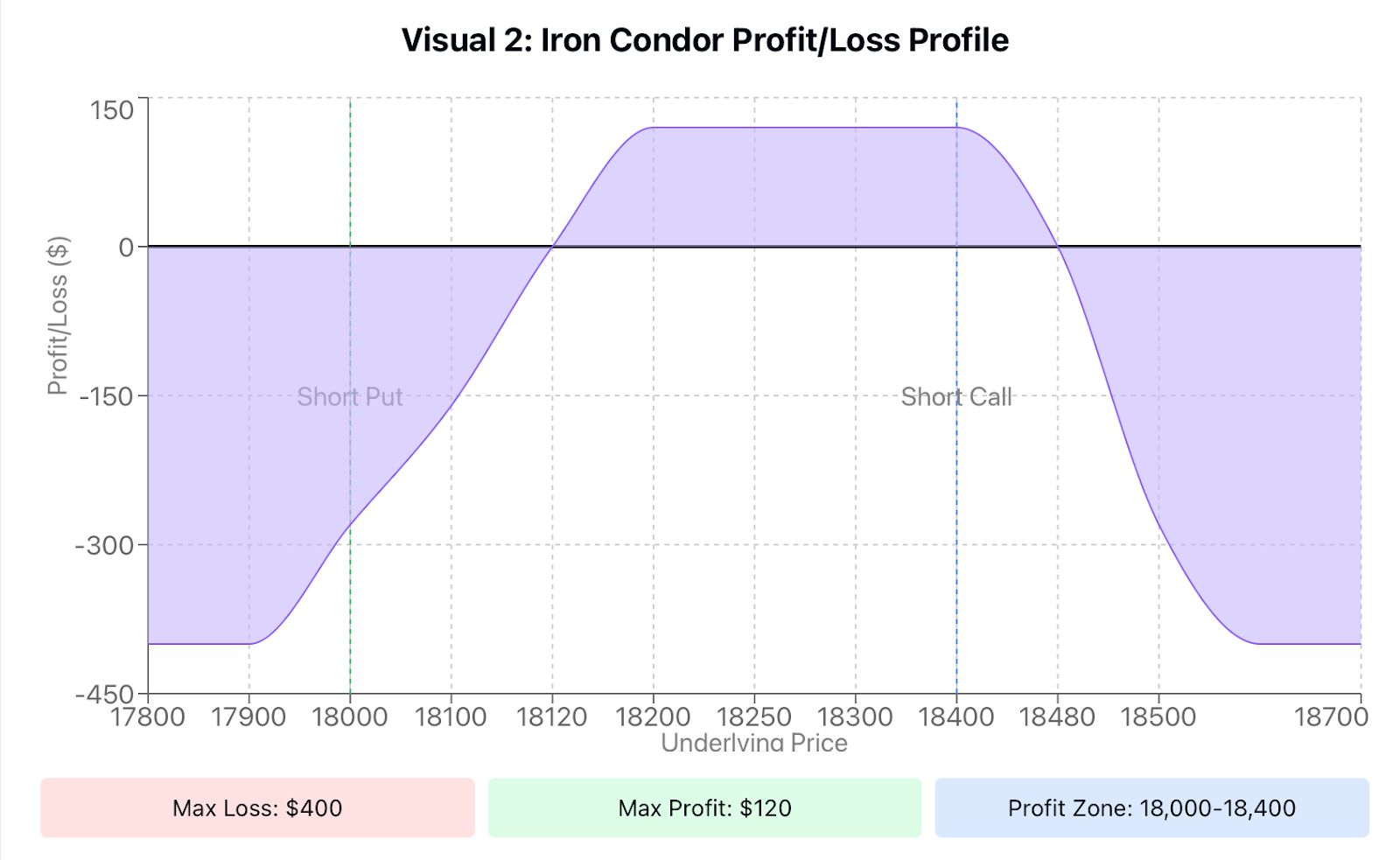
The underlying asset will remain within the two sold strike prices until the expiration date. Therefore, every option has a $0 expiration value and you will retain the complete net premium that you acquired at the time of purchase.
For instance, in creating an Iron Condor strategy with the NASDAQ 100 Index when the index is trading at 18,200.
-
Put Option Sold: 18,000
-
Put Option Bought: 17,900
-
Call Option Sold: 18,400
-
Call Option Bought: 18,500
-
Net Buying Price: 120.00
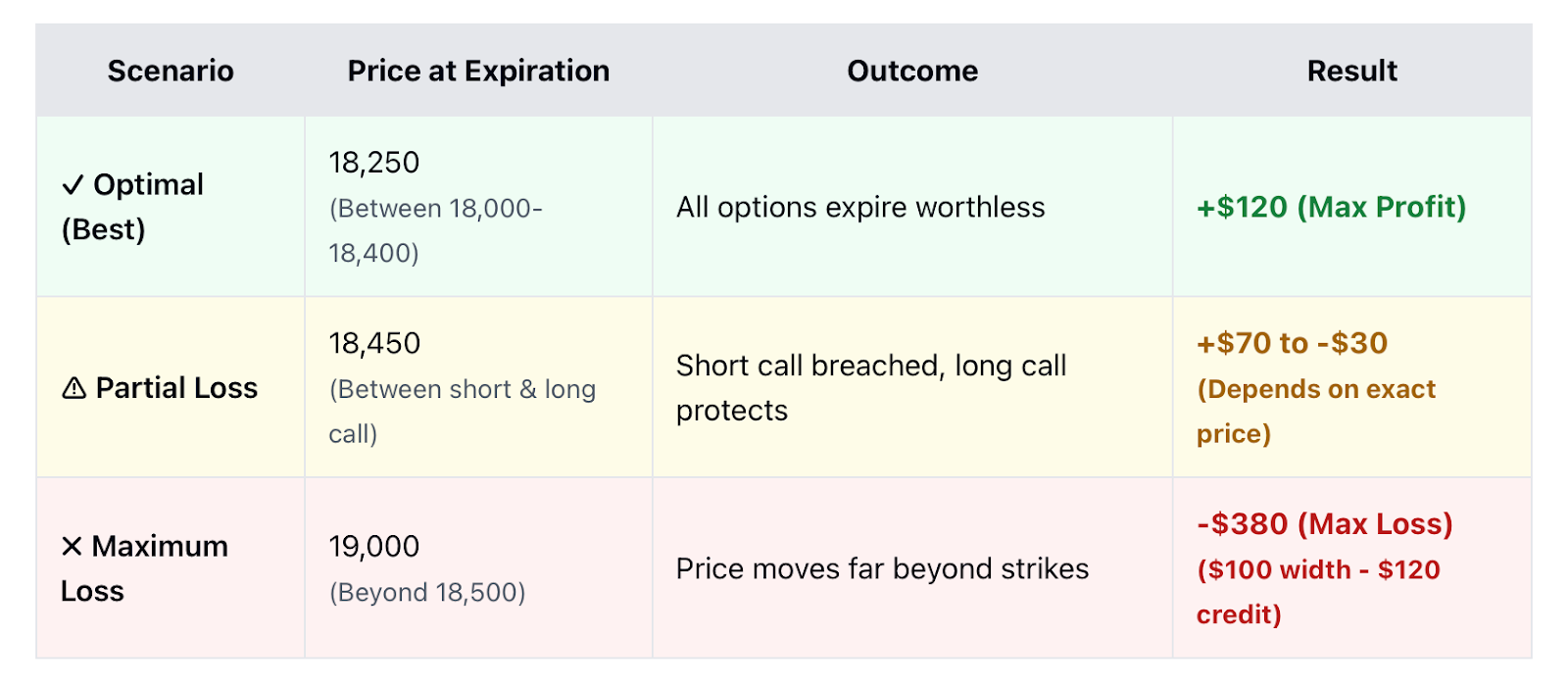
By expiration date, if the NASDAQ 100 Index is at 18,250, this is in between the 18,000 and 18,400 strike prices as illustrated above. All options become worthless, thus resulting in you keeping the 120.00 per position.
Scenario 2: Partial Loss (Middle Ground)
If the market price of an asset fluctuates and crosses one of your short option expirations but fails to cross your long options expiration at the same time, then you will incur a loss that is less than the amount of the maximum possible loss.
Using the NASDAQ-100 as an example, your short call had a strike of 18,400 and your long call had a strike of 18,500 at expiration date; therefore the market price at expiration was 18,450.
In this case you have incurred a net loss equal to $50 (the in-the-money amount of your short call) minus the credit you received ($120) so the total net loss is $0 (you broke even). If the market closed at 18,550 then you would have financially benefited from losing $50 (the difference between your strikes) minus the credit you received ($120) for a net profit of $70.
Scenario 3: Maximum loss
The price of an asset moves above both your short and long call expirations therefore incurring a total loss.
Using the NASDAQ-100 example again, if the market were to increase to 19,000 (a significant increase above 18,500) both your short and long expiration call options would be in-the-money.
In this scenario, the maximum amount of loss you would incur would be $100 (18,500 - 18,400) minus the credit you received equaling $120, therefore your maximum loss would actually be a net loss of zero in this case, but therefore in general, (Strike Width - Credit Received = Maximum Loss).
Adjusting to a more realistic situation:
-
Strike width=100
-
Credit collected=$40
-
Maximum loss=$100-$40=$60 per contract
To illustrate this concept, picture yourself as a security guard collecting fees from individuals who agree to remain within a defined area (in this case, represented by "the playground boundary").
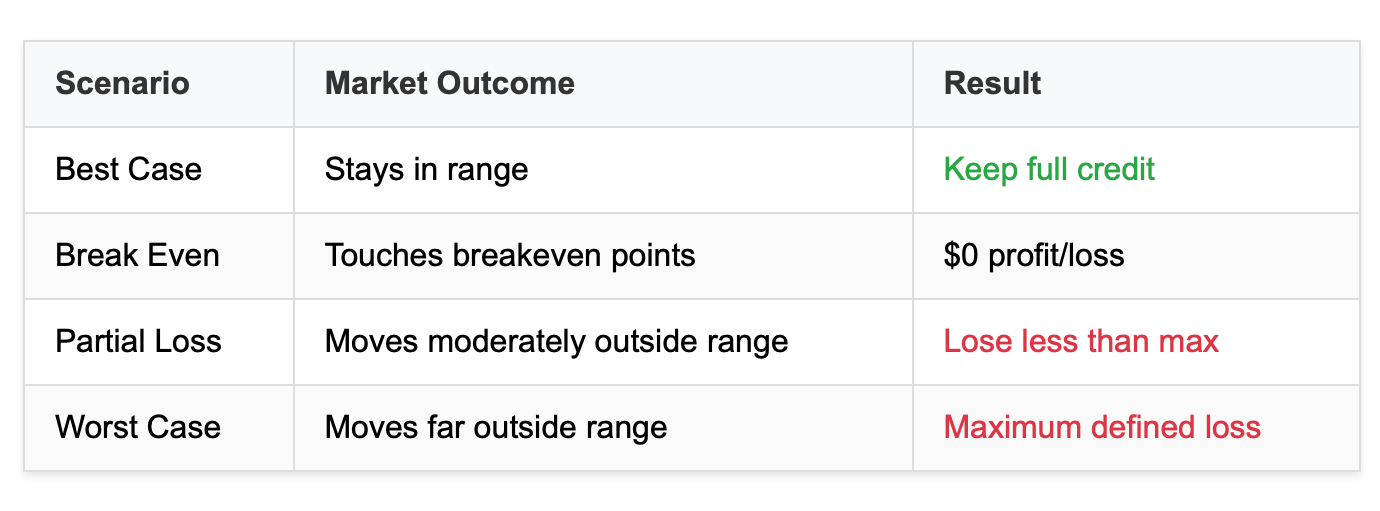
If every individual remained within the limits of the playground, you would retain all collected fees (which represents the highest profit). If even just several individuals wander outside the boundary, you'll lose a portion of what you collected as it results in additional costs to you as a security guard (partial loss).
If any of the individuals disregard the boundaries completely and run away into an unknown area, you will incur a maximum loss based on the worst-case scenario (you will be out an amount that you have already calculated). However, you can never lose more than what you have figured out based on your calculations.The fully defined risk makes Iron Condors attractive for traders who want to avoid unlimited loss potential. You always know your worst-case scenario before entering the trade.
Best Markets for Iron Condor Trading: Forex, Indices, Stocks, and More
Iron Condors, a popular investing strategy, can be used for many types of investments across different asset classes. While many markets have good potential to be traded as Iron Condors, some markets are more predictable and reliable for this type of trading than others.
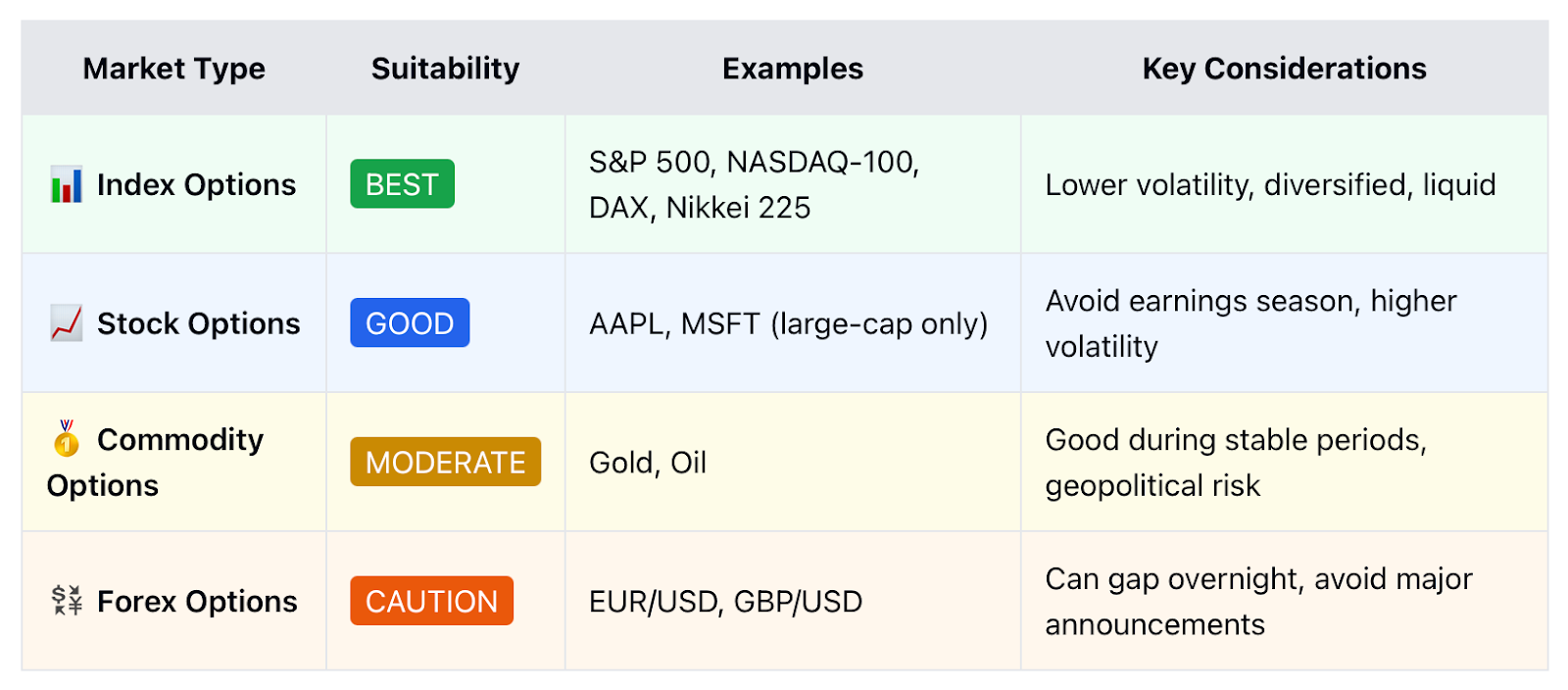
Typically speaking, index options (e.g., S&P 500 options) have been found to produce the greatest success for Iron Condor traders. The volatility of index prices is usually lower than the volatility of prices of individual stocks. This lower volatility exists because indices are aggregates of many stock prices, and stocks typically have greater price volatility than the indices themselves.
Some examples of popular indices include:
-
S&P 500 (SPX) - The benchmark used by most Iron Condor investors.
-
NASDAQ-100 (NDX) - An equity index that is composed primarily of technology stocks but is still fairly stable.
-
DAX (Germany) - Offers investors an opportunity to invest in the European stock markets.
-
Nikkei 225 (Japan) - Allows investors to benefit from the opportunities within the Asian stock markets.
Stock Options can work, but require more careful selection. Large-cap, stable companies like Apple (AAPL) or Microsoft (MSFT) tend to move less dramatically than smaller, volatile stocks. Avoid earnings season for individual stocks, as earnings announcements can trigger massive price swings that blow through your Iron Condor ranges.
Commodity Options like Gold and Oil offer opportunities during stable periods. Gold, in particular, can trade in well-defined ranges for weeks or months. However, commodities can also experience sudden volatility due to geopolitical events, so timing matters.
Forex Options (EUR/USD, GBP/USD) provide another venue for Iron Condors. Currency pairs often range-trade during periods without major central bank announcements or economic data releases. The challenge is that forex can gap overnight due to international news.
Factors Affecting Volatility: The Baseline Volatility Levels of Each Market Will Vary
The Volatility Index (VIX), which measures the volatility of S&P 500 stocks, reads between 12 and 15 to signify a relatively low level of volatility. The chances of large price movements are lower in this environment, which makes it an excellent time to utilize Iron Condor strategies. When the VIX exceeds 25-30, the potential for greater price fluctuations increases and therefore increases the risk associated with this strategy.Examples from Around the World: A trader located in Europe can utilize the Iron Condor strategy using the DAX index during the relatively calm months of summer. An Asian trader could implement the strategy using the Nikkei 225 index when the local markets are experiencing low volatility. A trader based in the United States would typically favour using the S&P 500 index during months with a lower level of volatility.
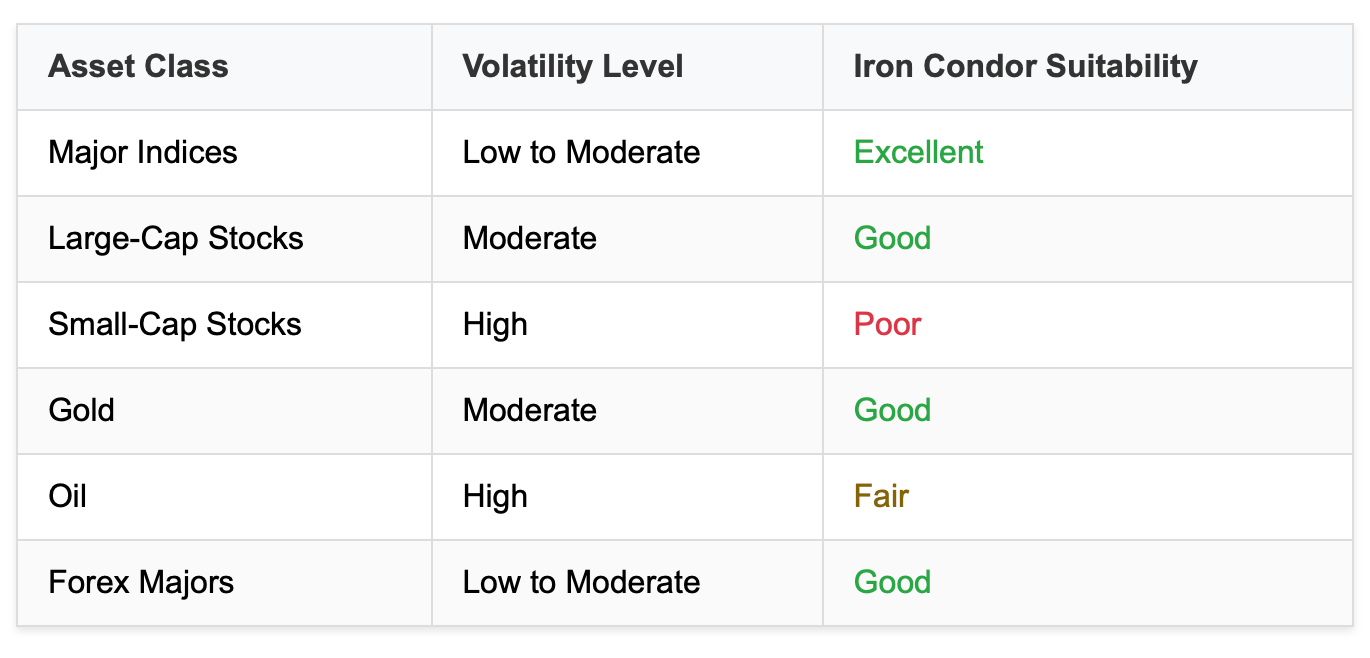
Overall, an Index Market offers the greatest opportunity for an Iron Condor Strategy due to its diversification, providing less volatility than individual stocks or commodities. An Iron Condor Trader must conduct thorough research on individual stocks and keep up-to-date with commodity market fundamentals and supply/demand conditions affecting these products.
Step-by-Step Guide: How to Build Your First Iron Condor (Beginner Friendly)
If you're interested in implementing an Iron Condor Strategy for your Trades, this section provides practical guidance for selecting an underlying asset and selling price and an expiration date. This guide describes a simple, step-by-step process to help you execute your Iron Condor Trades with confidence.
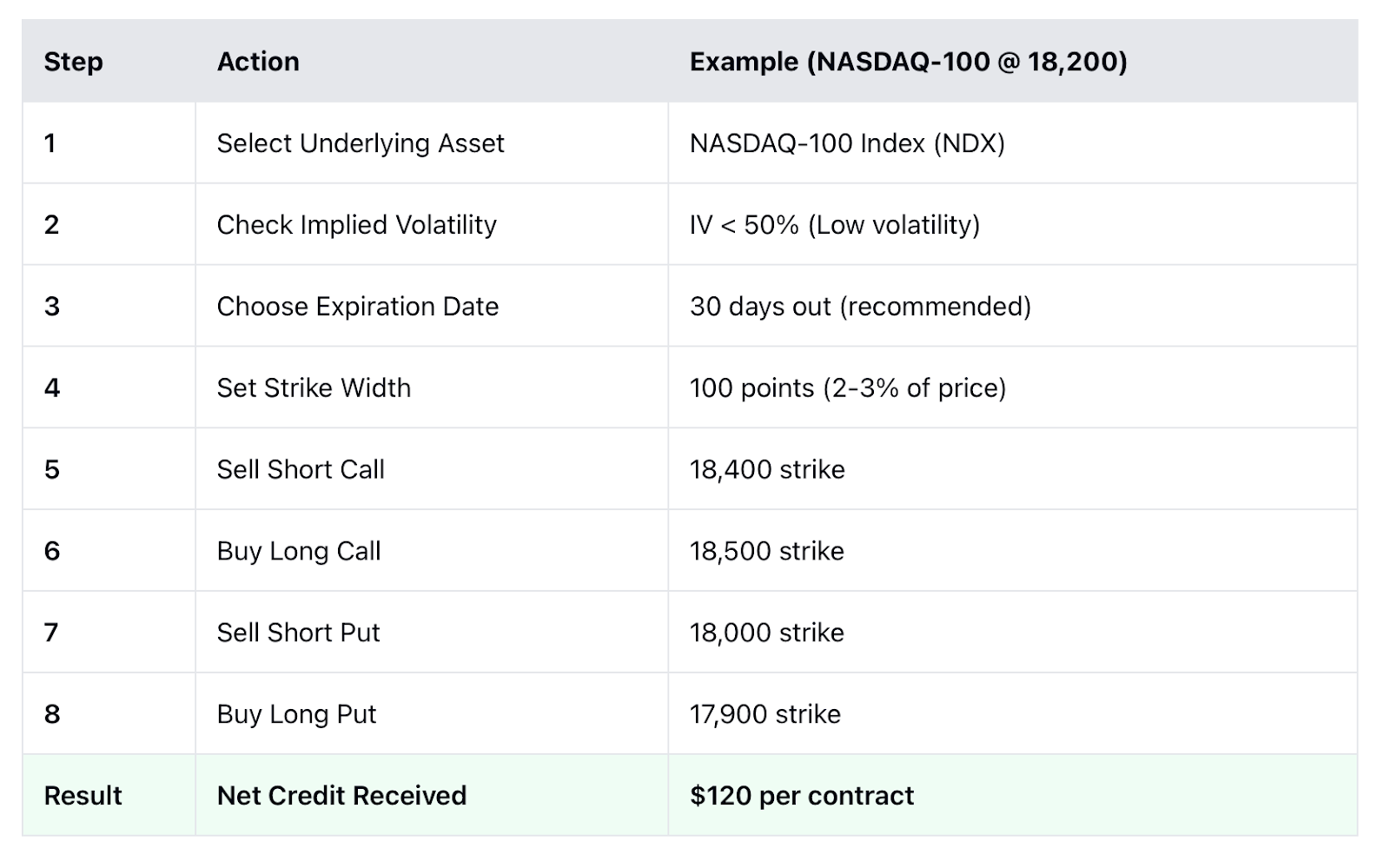
Step 1: Underlying Asset Selection
The first step to creating your own Iron Condor is to identify an underlying asset with a liquid market and tight spread between the bid and ask price. For beginner Iron Condors, we recommend using either the S&P 500 Index or the NASDAQ 100 Index. It is important to avoid the less-known stocks or the less frequently traded stocks because the size of the spread will cost you extra money to close out your position.
Step 2: Check the Implied Volatility (IV)
The second step is to evaluate the implied volatility of the underlying asset. Most brokers have a method for you to evaluate the IV's percentile rank for each underlying asset. Ideally, you want the underlying asset's IV to be below 50%, meaning that the stock is expected to move less. If the IV% is above 50%, then there is more risk associated with placing an Iron Condor because a substantial movement in the stock may cause a loss.
Ways to Evaluate Implied Volatility:
1. Review the IV for each option at your broker's platform; or
2. Use the Volatility Index (VIX) for the S&P 500, target IV below 20; or
3. Use historical volatility for reference.
Step 3: Choose an Expiration Date
Iron Condors can utilize expiration dates that are between 7 days and 45 days. The shorter expiration (7-14 days) will decay faster than the longer expiration (30-45 days), however, the shorter expiration will introduce a higher level of gamma risk (the risk of a rapid price change near expiration).
If you are new to Iron Condors, we recommend that you use an expiration date of approximately 30 days out. A 30-day expiration gives you enough time to adjust/manage your Iron Condor without excessive gamma risk.
Step 4: Strike Width Decision
When trading index options, selecting strike widths of 50–200 points is ideal depending on the underlying index’s price level and your risk appetite.
Example: 18,200 NASDAQ-100
-
Narrow spread (50 pt): Lower risk, Lower reward
-
Wide spread (200 pt): Higher risk, Higher reward
-
A good starting point is to set strike widths to approximately 2–3% of the underlying price.
Step 5: Setting Your Short Strike (Make Money Position)
Set your Short Call Strike above the underlying index’s current price and your Short Put strike below it. They must both be levels you believe the market will not be able to reach.
Example:
-
Index Price = 18,200 NASDAQ-100
-
Short Call Strike = 18,400 (200 pts above the current index price)
-
Short Put Strike = 18,000 (200 pts below the current index price)
Step 6: Adding Long Protection Legs
Set your Long Call leg one strike above your Short Call leg and your Long Put leg one strike below your Short Put leg. Both sides of the trade must use the same strike width (i.e., exactly equal distance apart).
Example (continuing from step 5):
-
Long Call: 18,500 (100 pts above your short call)
-
Long Put: 17,900 (100 pts below your short put)
Step 7: Determine the Optimal Risk and Potential Profit
Confirm your calculations after all steps are complete:
-
The amount you will receive from selling the option(s) is referred to as the "Maximum Profit".
-
The amount you would lose should the underlying asset price close above or below the strike price on expiration is called "Maximum Loss".
For example, assume:
Net Credit of $150 per contract; Strike width of 100 pts.; and Contracts Multiplier of 100 (Standard for index options).
-
Maximum Profit = $150
-
Maximum Loss = (Strike Width of $100 x Multiplier)=($100.00) or approximately $9,850.
-
However, this is a high number. Let's recalculate.
The formula to determine the Maximum Loss is:
(Minimum amount that can be lost): ($100 - $1.50)*100
An example of using real numbers for the Iron Condor is:
-
Using a net credit of $1.50 per share and a 5-point wide spread;
-
The Maximum Profit = $150.00 per contract; and the Maximum Loss = ($5.00-$1.50)*100 = $350.00 per contract.
Step 8: To Place your Order
You can enter Iron Condors into many trading platforms as a single order. Check your trading platform under Strategy to find "Iron Condors" or enter the four legs of the condor together.
Order Details:
-
Quantity: Start with 1 Contract.
-
Order Type: Limit Order at Credit Amount Desired.
-
Order's Validity: Day, Good 'Til Canceled (G.G.C.).
Step 9: Create a Risk Management Strategy
Determine before you enter the trade when you are going to exit if the trade does not perform as you anticipate. Examples of common exit points include:
-
Leave the trade if a loss equals 50% of the maximum loss you've established;
-
Leave the trade when the loss on the account equals two times what you received in premium when the trade was opened;
-
Leave the trade once the underlying closes beyond the breakeven point for two days in a row.
Step 10: Monitor Your Position Before Expiration
You do not just enter a trade and then leave it alone (that is a very bad habit!). You must be aware of what is happening with your position during the life of the trade, particularly:
-
Rolling: If your position is in bad shape near the end of the expiration cycle, you may want to close your current Iron Condor and establish a new one with different strike prices and/or expiration dates.
-
Early exits: If the position has generated between 50% and 75% of the maximum profit with a significant amount of time remaining before expiration, you may want to take advantage of that profit and sell it early.
-
Partial adjustments: Sometimes your position is not in dire straits and you may only want to close one side of the trade while leaving the other side of the trade open.
For a simple analogy, let's say you predicted that the weather would continue to be in a range of 65°F to 75°F for the next week. If your predictions come true, you will win the bet; however, if the temperatures increase to 80°F or decrease to 60°F, you will want to change the sensors to a different location or cancel the bet altogether.
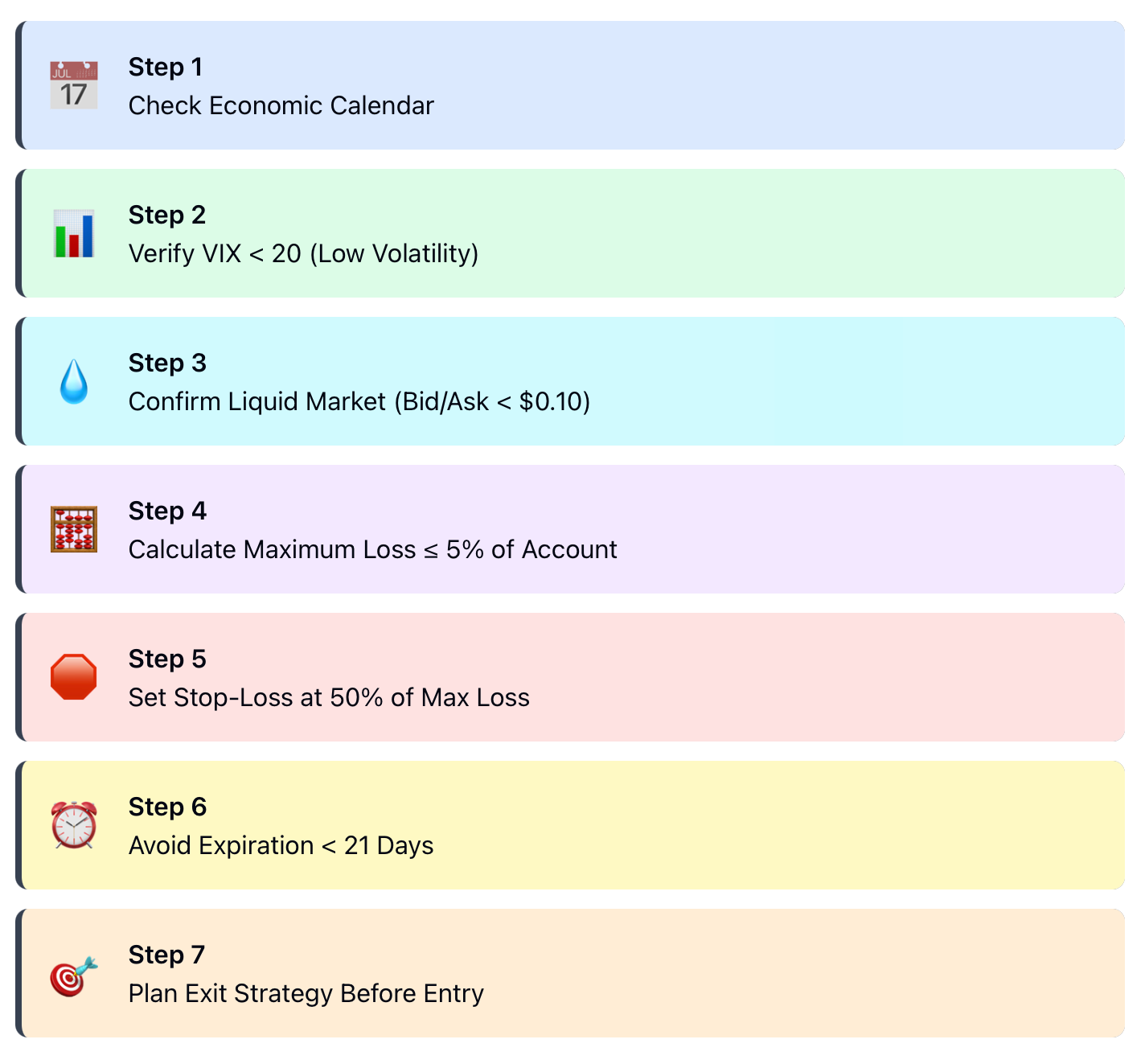
Check List to Manage Risk on Iron Condors:
Risk (position) size: The risk per Iron Condor (position) should not exceed 2-5% of your total account.
Breakeven Points: Know your breakeven points before placing the trade.
Stop-Loss: Have a stop-loss plan in place based on dollars or percentage amount.
Volatility: Keep an eye on volatility spikes (VIX) and avoid placing trades during times of increased volatility.
Trade Small : If you are new to options trading, start with one contract and paper trade your option(s) before risking real money. The mechanics of options trading might seem challenging to get the hang of at first, but will become second nature with practice.
Overall Risk: Only use an amount you are comfortable with on each trade.
Risk Management: Common Mistakes to Avoid with Iron Condor Trading
Even experienced traders make costly errors with Iron Condors. Recognizing these pitfalls helps you protect your capital and improve your win rate.
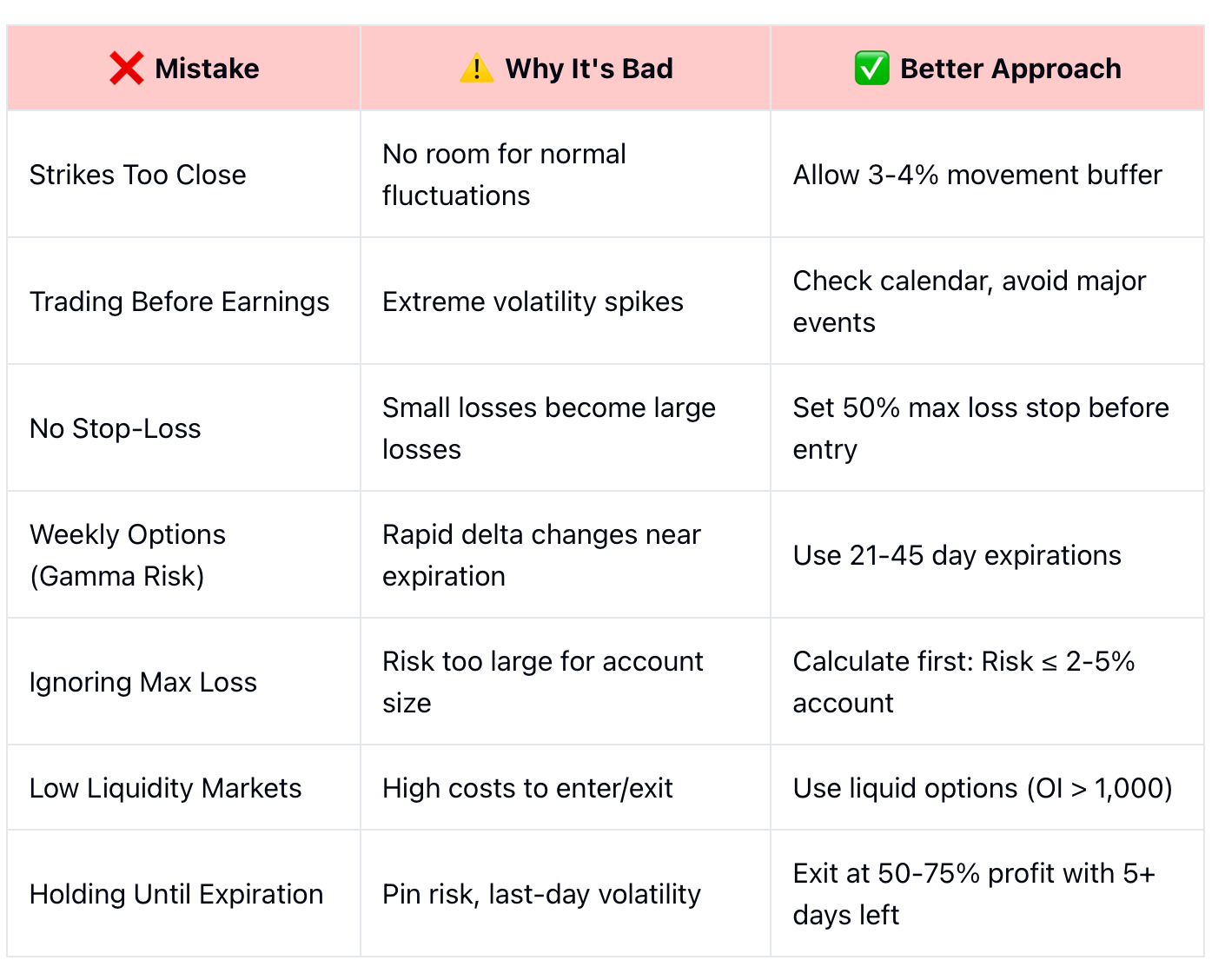
Mistake 1: Strikes Too Close (Tight Ranges)
Beginners often choose strikes very close to the current price, thinking tighter ranges mean easier profits. The problem? You're barely giving the market room to breathe. Even normal daily fluctuations can breach your strikes.
Better approach: Give yourself breathing room. If the underlying typically moves 1-2% daily, your strikes should accommodate at least 3-4% movement to account for occasional larger swings.
Mistake 2- Selling Iron Condors Prior To An Earnings Announcement
Selling an Iron Condor prior to a high-effect market volatility event is similar to sailing into a known storm. Events which are typically preceded by large increases in market volatility include:
-
Federal Reserve meetings (FOMC)
-
Customer Price Index (CPI)
-
Non-Farm Payroll (NFP)
-
Earnings Announcements (for stock options)
-
Central Bank Policy Decisions (ECB, Bank of Japan, etc)
-
Geopolitical Crisis
Better Practice- Check the Economic Calendar prior to setting up your Iron Condor. Avoid expiry dates that occur within three calendar days of any major market volatility events. If you are holding a live position at the time of an event, you may want to close the position in advance of the event, typically at a loss.
Mistake 3 - No Stop-Loss Plan
Some traders set up their Iron Condors with the expectation of a market reversal, thereby hoping they can avoid or minimise the loss on their position. However, this type of trading is detrimental to the trader's account balance. Without a predetermined exit strategy, emotions eventually take over and as a result, minor losses escalate to major losses.
Better Practice- Set a stop-loss plan of 50% of the maximum loss on your trade prior to entering into the Iron Condor. If you collect $100 and your maximum loss is $400, when your loss reaches $200, you need to exit your position, regardless of how you feel about it. Do not give yourself time to make a decision.
Mistake 4: Utilizing Extremely Short Dated Options (Gamma Risk)
Weekly options (0 - 7 days) have many appealing credits attached, but they also carry large amounts of Gamma Risk. Gamma represents how rapidly the delta (the rate of change) of your position will shift. As expiration nears (very close to expiration), even relatively small price movements can yield large profit and loss shifts.
Instead, utilize 21 through 45-day expiration cycles until you achieve significant experience. The longer the time decay, the less stress associated with attempting to day trade these cycles while allowing for a more moderate level of risk.
Mistake 5: Not Calculating the Maximum Loss
Many traders focus strictly on the credit received from a transaction without determining the actual maximum loss associated with the position. Traders initiate positions without understanding whether the potential loss fits within the trader's acceptable level of risk.
Instead, calculate your potential maximum loss before initiating a position and compare that value to your account size. Under standard trading risk management, a trader should not risk more than 2-5% of their account value on any single trade or position.
Mistake 6: Disregarding Liquidity
Trading Iron Condor positions on stocks or options with wide bid/ask spreads means that traders are spending money at both the entry and exit of their trades. In addition, liquidity deficient options mean that adjusting positions is much costlier, and a trader has fewer opportunities for flexibility in the market.
Instead, use liquid underlying stocks with narrow bid/ask spreads. When trading options, select options with open interest greater than 1,000 contracts and a bid/ask spread of less than $0.10 for lower price options.
Mistake 7: Waiting Until Expiration
Traders typically expect to receive max profit on Iron Condors (IC) by holding them until expiration, which exposes them to several risks, including "pin risk" (when the underlying asset settles at the same price as (or very close) to a strike price) and large volatility on the expiration date.
It is a better strategy to close the IC once 50%-75% of maximum profit is captured and still more than five days to go. This way, you are locking in your gains and finishing with a winning trade.
Example of a Real-Life Blown IC:
You set up an example IC in early January with S&P 500 options at 4750, 4800, 5000, and 5050. You received $50 in credit for this trade. The market was calm (the VIX was at 13) and everything seemed fine.
However, the day before expiration is when the CPI report comes out which indicates very high inflation. The market increased by 100 points in one day, to close at 5080. Your 5000 short call was well in the money and your max loss ($200) has been realized due to you failing to check the economic calendar.
Beginner Analogy: Sales of Umbrella Rentals
Assume that you have forecasted good weather, and therefore, you offer umbrellas for rent, planning to keep the profits from your rentals. You do not check any weather forecasts and find out the next day that a tornado is coming. Now, everyone wants their umbrellas back, and you will lose money because you did not expect the tornado.
Risk Management Checklist
-
Always check the economic calendar before making any trades.
-
Choose your trades' strikes based on a minimum of 1 standard deviation from the current price.
-
Set up automated alerts for either stop-loss orders or stop-limit orders.
-
Avoid trades with less than 21 days remaining until expiration when you first enter the trade.
-
Only trade using underlying assets with liquid markets and very tight spreads between bid and ask prices.
-
Determine the maximum amount of loss you would accept and ensure that it does not exceed 5% of your total trading account.
-
Establish your plan before entering the trade as to how you would exit the trade.
Should You Trade Iron Condors? Final Thoughts and Next Steps
Iron Condors are an ideal way for investors who prefer stable markets and use a disciplined, risk-defined approach to trade equities. In an Iron Condor trade, traders utilize three characteristics to achieve success: A limited amount of risk, a limited amount of profit, and optimal performance when prices remain within a specific range over the life of the trade.
So Who Would Benefit Most From Iron Condors?
Iron Condors are a good strategy for traders who prefer to participate in options trading using methodical, risk-defined strategies. If you are okay with the time needed to manage an investment through expiration, would like to collect premiums over the course of time, and have the discipline needed to properly manage your risk, then Iron Condors would likely be a good fit for your style.
Who Should Look for Other Options?
If you're looking for big win trades that offer high profit potential, you won't find success with Iron Condors. This is because the profit potential is limited, and you can't take advantage of large price moves in either direction. If you're having difficulty taking small losses or continually overriding your trading rules, Iron Condors will likely be difficult for you because of the requirement for consistency in discipline.
Key Advantages Of Iron Condors:
-
Defined maximum loss from the outset
-
Ability to generate profit in neutral range-bound markets
-
Ability to trade across a variety of products, including equities, indices, commodities, and foreign currency
-
Time decay will benefit your position
-
You do not have to predict the direction of the market
Key Disadvantages Of Iron Condors:
-
A defined maximum loss
-
Requires continuous monitoring and management
-
Exposed to unexpected volatility spikes
-
Will lose money in strongly trending markets
-
Requires multiple commission payments (four legs per trade)
Iron condors are one of the best options trading strategies during periods of low volatility in the financial markets. They won't make you wealthy overnight, but if you use them correctly with proper risk management discipline, they can produce steady income.
The next step is to practice implementing an iron condor. Use a demo trading account until you learn how to use the mechanics of iron condors. Study the historical price ranges of your chosen underlying asset to see how volatility affects option premium pricing. Start with small positions until you gain experience, then you may begin to add size.
Disclaimer: The content of the blog does not represent any position of Trade W, does not serve as any trading-related decision advice, and does not endorse any third-party.