

 Trade W

Why Did Nvidia Stock Drop Today? What Is the Market Actually Panicking About?
Rather than speculating, we should understand what actually happened.
The concept of "time value of money" can be illustrated by the example of $100, which you receive in three years. If you were to receive $100 three years from now, you would prefer an interest rate of 2% today versus 5% because the "cost of waiting" has changed.
This also means that Nvidia's announcement of strong earnings may create additional selling pressure on NVDA: the Fed's announcement of extended higher rates has created an entirely different valuation model for future NVDA earnings. Although NVDA's earnings were unchanged, the reduced discount rate on the higher rates changes the valuation of future NVDA earnings.
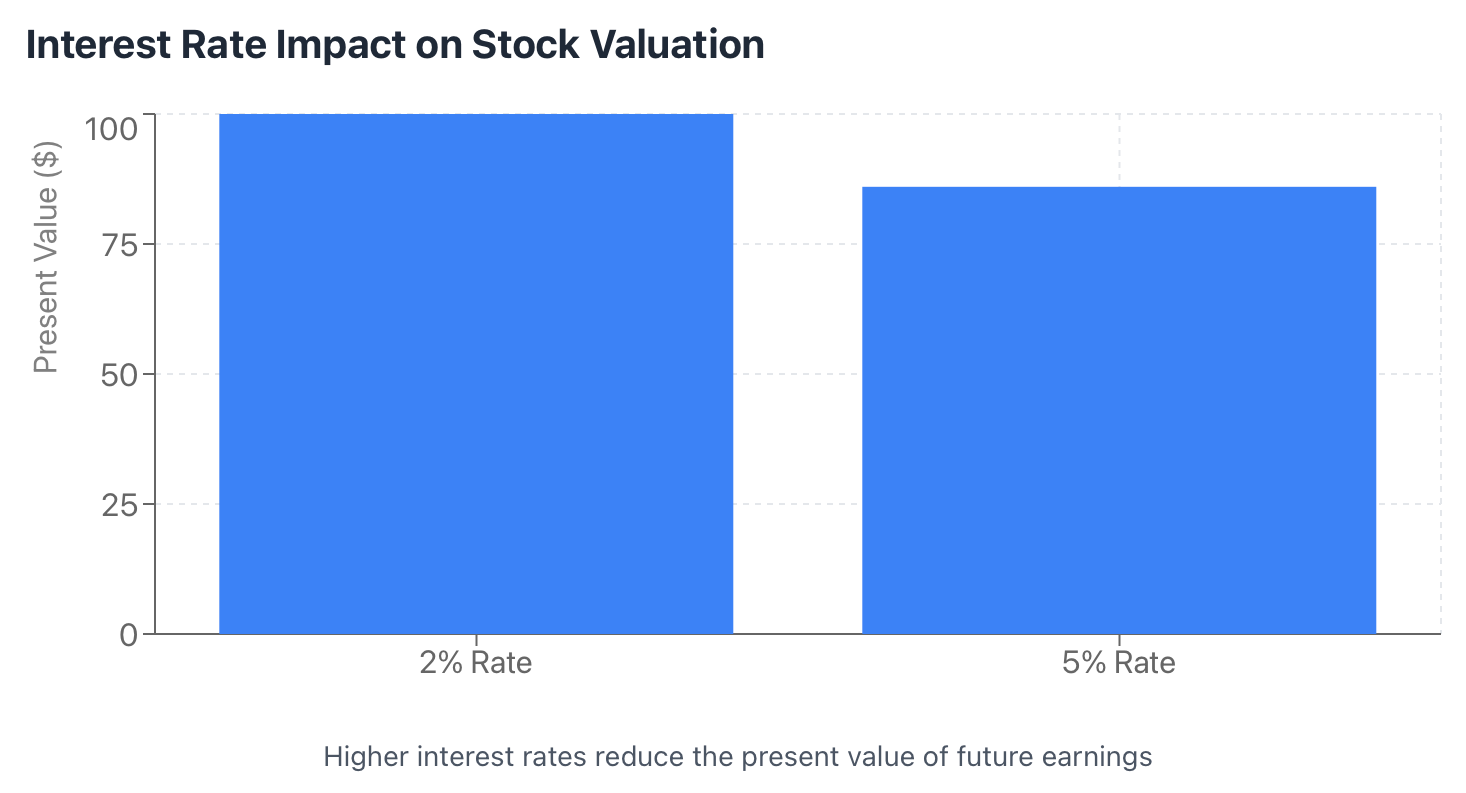
Investors who are new to investing should look at interest rates as the "cost of doing business with money." Therefore, as the cost of doing business with money increases, investments that provide cash flow further into the future will also become relatively less attractive as the present valuation of those future cash flows declines. The fact that NVDA continues to operate at an extremely high level in its business operations may create additional downward pressure on its current stock price.
Decreased stock prices do not always reflect a decrease in company performance. The current day-to-day nature of the stock market enables it to price itself based on the most recently available information. This ability to price the market based on newly available information creates the potential for both over-reaction and under-reaction on the part of the investor community to new information.
The current market environment can be considered a ballot box with respect to pricing. While the stock market will ultimately measure the performance of individual companies over time in terms of relative valuation to all companies, the stock market currently is functioning as a ballot box.
While prices broke below the 50-day moving average, we saw algorithmic selling driven by momentum funds and stop-loss orders creating a vicious cycle of selling as the price began to decline. Additionally, we continue to see large volume days with institutional distributions.
The market has little effect from NVDA's performance. The market is changing the risk pricing across all growth stocks. In a rising interest rate environment, valuation changes in technology stocks with high valuations are much more sensitive to interest rates. As the Treasury yield increases as the risk-free rate, the bar or hurdle for investors to invest in equity rises as well. Therefore, investors are currently asking themselves why they would take on equity risk when they may earn risk-free rates of 4.5%.
This issue of falling prices is actually a liquidity issue masquerading as an issue of fundamentals. As the liquidity available for speculative growth investments decreases, prices for companies that continue to report strong performance will decline.
Is the AI Supercycle Really Slowing Down, or Is the Market Misjudging the Pace?
The AI Supercycle isn’t just a new product being launched; it’s like the building of the infrastructure to create the power grid across America, or building the internet backbone; it’s a multi-year, capital-intensive process where all the computing chips, servers and data centres are being created from scratch to support Artificial Intelligence workloads.
But right now, the market is questioning how fast it’s all going to happen. There are three specific areas of concern.
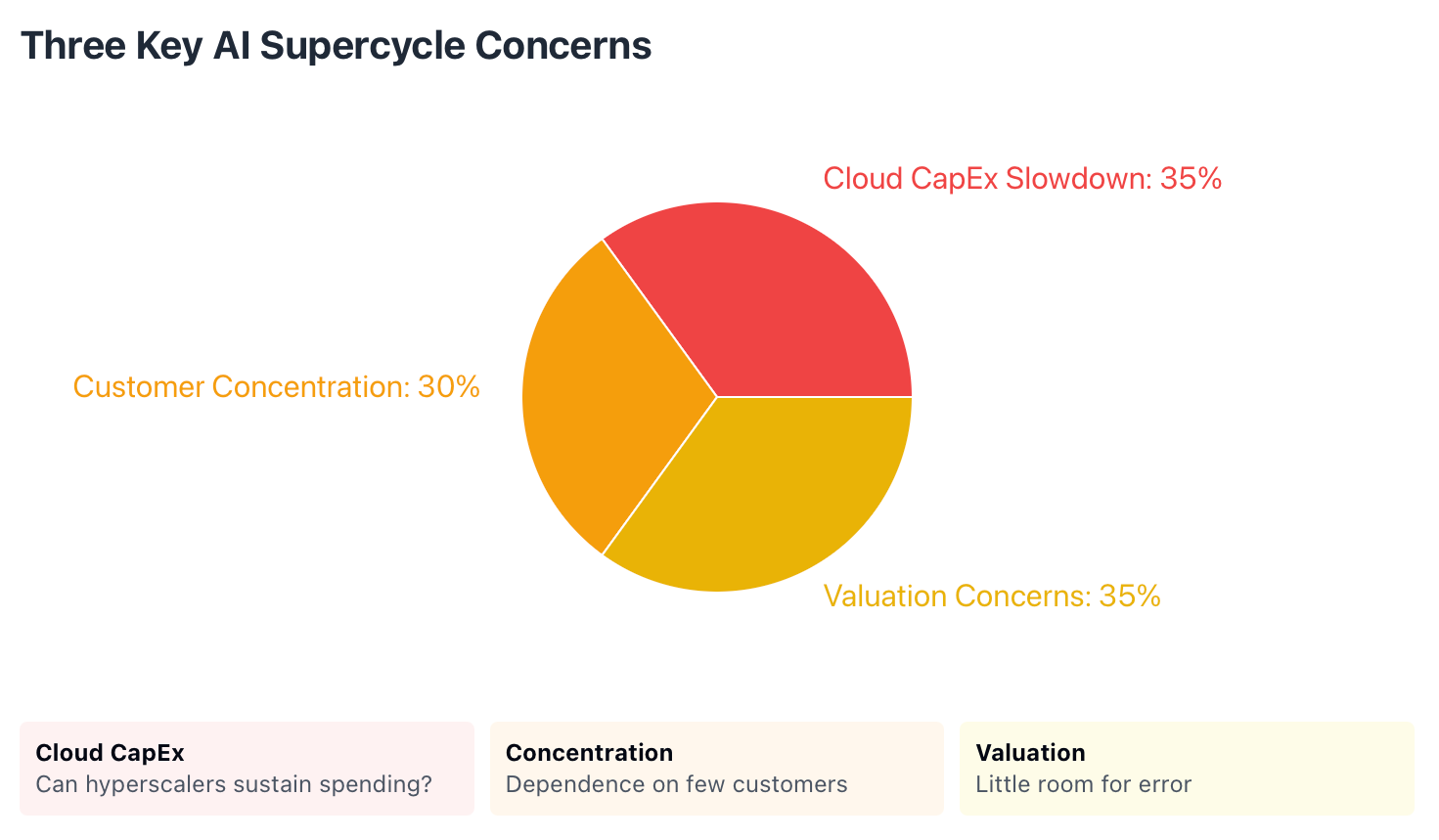
Cloud revenue from cloud providers (Amazon, Microsoft and Google): Is the Capital Expenditure growth of these companies going to start to slow down? They have invested heavily in their AI infrastructure, but there is a lot of talk about whether this level of growth can be sustained at this level.
NVIDIA's Revenue Concentration: This has people worried. A few Hyperscale Customers generate the majority of revenue generated by Data Centres for Nvidia. If one of these Customers were to slow down, what would happen?
Valuation Concerns: The current price of NVDA appears to assume that the company can execute flawlessly and continue to grow at hyper levels for years. Any deviation from that plan will impact the Price negatively.
Furthermore, the core disagreement between “bulls” vs “bears” lies in how each party is interpreting the “Cycle”. The “Bears’” argument is that the level of exponential growth can’t be sustained. Their reasoning is based on experience; every Technology Cycle matures, there is more Competition, and margins decrease over time; with the current boom in spending on AI infrastructure, they see that Customers continue to invest in infrastructure before having a solid revenue model to support their investment; after determining that infrastructure was successfully built, the pace of future AI CapEx will be slowed significantly.
However, the “Bulls” are convinced that we are still in the “Infrastructure Phase”. AI technology still has a long way to go. But how do we get there? We need to support AI development to allow businesses to fully utilise AI technology.
The analogy of the early 2010s cloud computing era is a good comparison to where AI will be in a few years. Companies questioned whether businesses would actually implement their workloads on the cloud, and now cloud computing has become the backbone of the business world today, and AI could have the same trajectory.
Another way to look at this would be to compare it to the dot-com boom and bust. The companies that survived the bust, such as Amazon and Google, did so because they had the correct infrastructure to support their business plans and were simply mispriced at the time of the bust. Initially, there was a lot of scepticism surrounding cloud computing for the same reason. Companies wondered, "Why should we trust a third-party provider with our data and applications?" However, once the value of the cloud was proven, the major players in the space built their businesses very quickly.
It is often easy to misunderstand the relationship between the construction of infrastructure and the underlying demand for the infrastructure. The first highway may remain very underutilised for a long time, but as soon as that network reaches a critical mass, there will be a dramatic increase in use. AI infrastructure is still in the same infant stage of development as highways. There will be many revenue models and a great deal of applications for AI, but the infrastructure is what will allow for these things to develop in the future.
It is critical for investors to take note of the major differences between "slower than expected" and "not happening." Market trends frequently change due to incorrect timing, especially in the technology sector, and should be viewed as such.
In fact, looking at the revenue mix across the data centre segment tells a very interesting story. Once, a very significant portion of Nvidia's revenue came from gaming and was classed as the core business; now it only represents a very small percentage of total revenue.
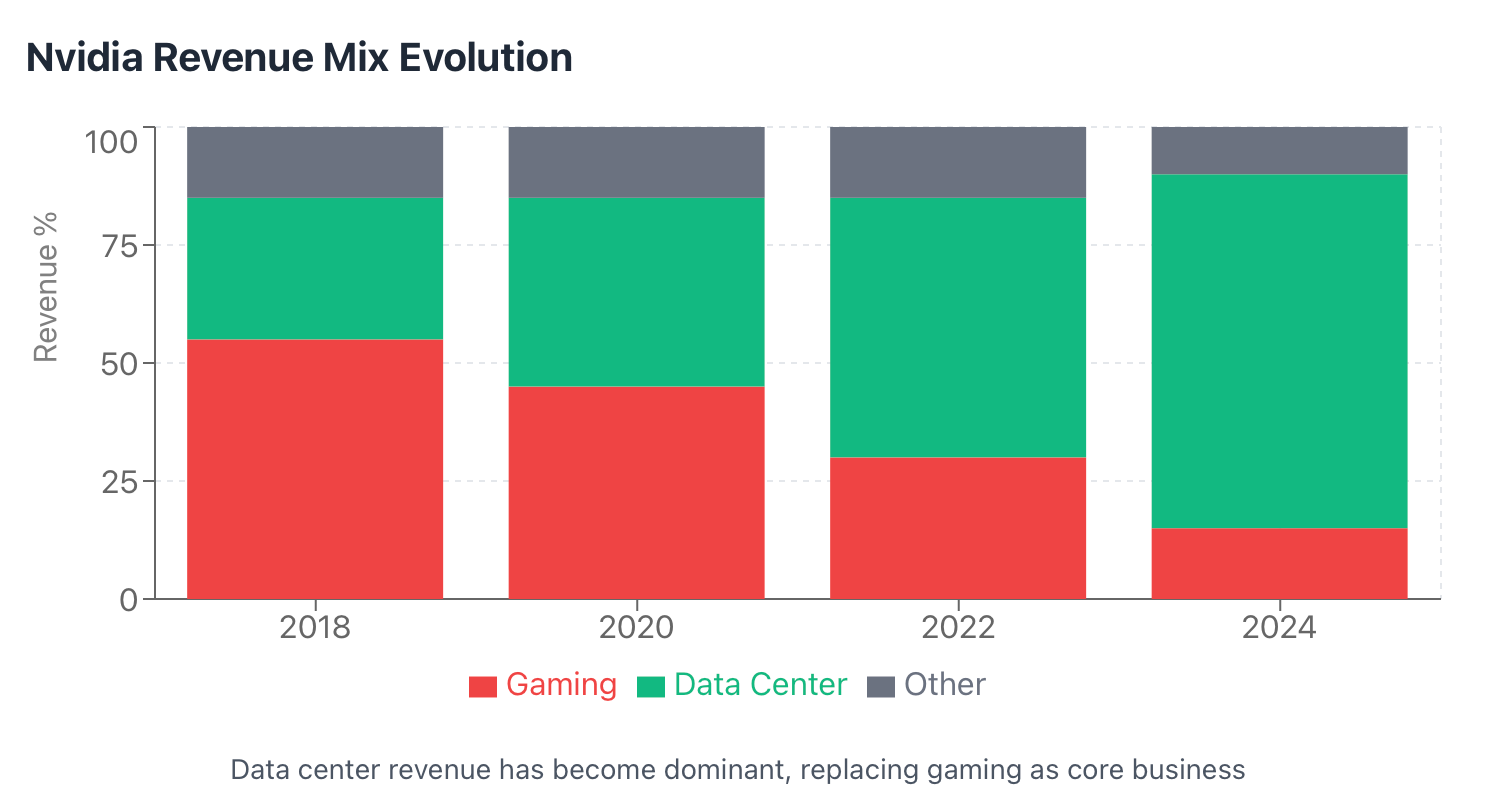
Data centre revenues have become the largest segment of Nvidia's total revenues, while within the data centre segment, the fastest growing portion of commercial revenues is from AI-related computing. This growth cannot revert to gaming revenue levels. Even if Nvidia were to experience a decline in growth from 100% YOY to 40%, that growth would continue to be exceptional in comparison to historical standards.
The Macro Liquidity Trap: Why "Good Companies" Can Keep Falling
When investors say "macro liquidity," they mean two things that are broadly understood and closely related: macro liquidity refers specifically to how much available capital is preparing to risk on stocks, including growth companies (e.g., Nvidia), and macro liquidity refers to the total amount of liquidity in the market (the cost of capital) that creates value the return on capital, that's attributable to investors' investment horizon. Thus, there is a disconnect between how macro liquidity (rate of return) and fundamentals (profitability) relate to one another; their values and their influences.
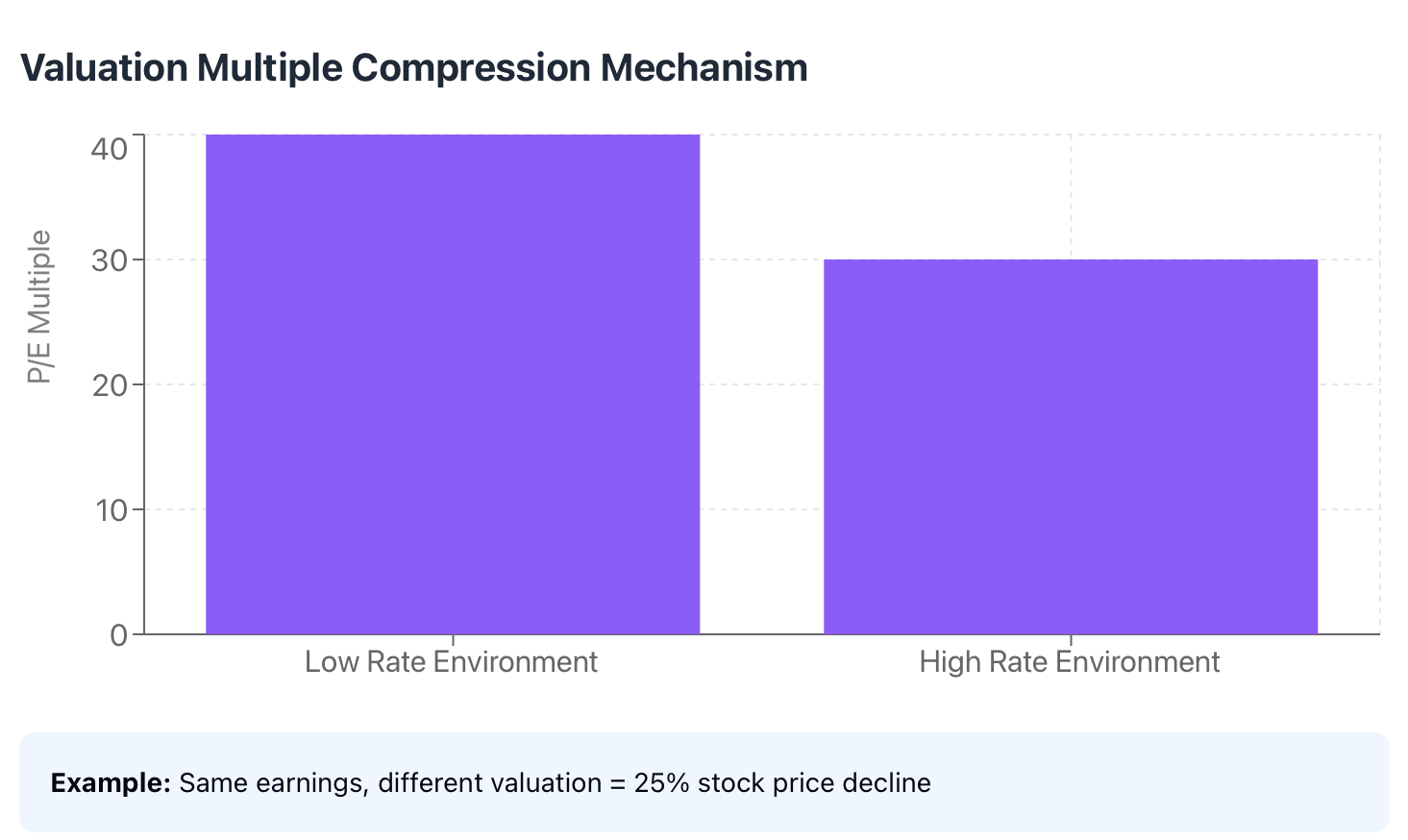
In a high-interest-rate environment, Nvidia's stock price is affected in three different ways. Valuation multiple compression occurs when the risk-free rate of return (interest rates) is greater than the rate of return for stocks (returns for an equivalent risk). Because of this increased risk, investors require a greater return on their investment than in a low-interest-rate environment, thus creating a lower price-to-earnings ratio (valuation multiple) than before. An example illustrates this effect on Nvidia's stock: In a good economic climate, a stock trading 40x forward earnings might only get 30x in a poor economic climate, even if there are no changes in forward earnings estimates; thus, a decline of at least 25% in valuation multiple occurs.
Additionally, leverage creates a temporary increase in the capital value of funds being used to invest in growth stocks. For many large institutional investors, like hedge funds and other large investment firms, using leveraged capital to invest in Navi has resulted in creating inflated values due to the ability of the investor to increase fund values through the use of borrowed money. When investors incur a higher cost of borrowing, which occurs when interest rates rise, they are forced to reduce their leveraged positions to maintain profitability. Thus, as investors exit these stocks due to decreased profitability, NASDAQ has incurred an increased risk of decreasing share values.
Finally, systematic flows of ETF cash into stocks create automatic rebalancing of trading activity from stocks to fixed-return investments (i.e., bonds and cash). Because of the manner in which these funds make investment decisions by following predetermined algorithms and becoming "triggers" for one-way directional pricing they create downward pricing pressure on stocks when the price dips below a given threshold. Thus, the sales of these funds create real pressure on stocks below the price of rebalancing; therefore, they can create downward spirals of stock prices.
The decrease in licensed investors is called a liquidity trap. Liquidity means there are fewer people able to afford to buy stock at the previous high multiple pricing than at the current lower pricing based on fundamentals. A liquidity trap creates a downward spiral of stock prices due to the absence of buying power. In contrast, if a liquidity trap occurs, while the fundamentals of the business and its earnings are still strong and positive (and, therefore, the likelihood of revenue and profit growth), there is no reason for fear of buying the stock at the present valuation; i.e., investors are afraid of losing money on higher multiple-priced stocks.
In addition, the correlation between changes in prices on Treasury yields and changes in prices on stocks is quite pronounced; therefore, trading fluctuations between Treasury yields and stock prices indicate an inverse correlation. That is, if the 10-year Treasury yield increases, NVDA will typically decrease in price, or vice versa. Moreover, there are costs associated with holding U.S. stock (the same as with holding U.S. dollar-denominated assets). For investors outside of the U.S., costs of equity are determined by a combination of the rate of return on capital from U.S. stocks and the cost of purchasing U.S. dollars. Thus, when the dollar is strong, foreign capital becomes less likely to invest in U.S. stocks; rather, they are less likely to take the cost of converting their currency to purchase U.S. stocks into consideration.
Macro liquidity is an indication of short- to medium-term volatility, and can drive investor decisions based on technical indicators and momentum-based trades. For long-term investors, macro liquidity can provide entry points for investors for long-term investments rather than threats. However, an increasing concern is that macro liquidity conditions can remain longer than it takes for the fundamentals to recover and therefore remain in the "liquidity" phase. Investors may experience losses in stock prices (as evidenced by the performance of NVDA stock before earnings) while prices are still below the intrinsic value of the stock.
NVDA vs AMD vs SMCI vs SOXX: Is This a Stock-Specific Issue or an Industry-Wide Problem?
One of the best methods to diagnose what is going on is through horizontal comparisons; therefore, let's examine the four key assets regarding their roles within semiconductors and AI:
Nvidia is primarily responsible for providing AI compute power through its GPUs that have been optimised for training and inference workloads.
Nvidia's primary competitor is AMD, which has also gained market share within the data centre CPU space while increasing their presence within AI accelerators. Super Micro Computer (SMCI) serves as the physical layer of the server infrastructure that builds the physical boxes that contain these chips. The SOXX ETF provides a benchmark for the semiconductor industry as a whole, allowing us to track the overall industry trend.
A collective decline of all four indicates that there is an industry or macro-level issue affecting investors who are de-risking all across the entire sector, generally caused by fears of slowing economic growth, higher interest rates or a slowdown in technology-related spending. A significant decline in NVDA compared to its peer group implies a crowded trade unwind because NVDA had become so popular that all sellers react to any incentive to take profits by selling a disproportionate number of shares. A decline in NVDA while the peers do not decline indicates that the issue is company-specific, either due to earnings disappointment, a delay in product releases or customer concentration issues.
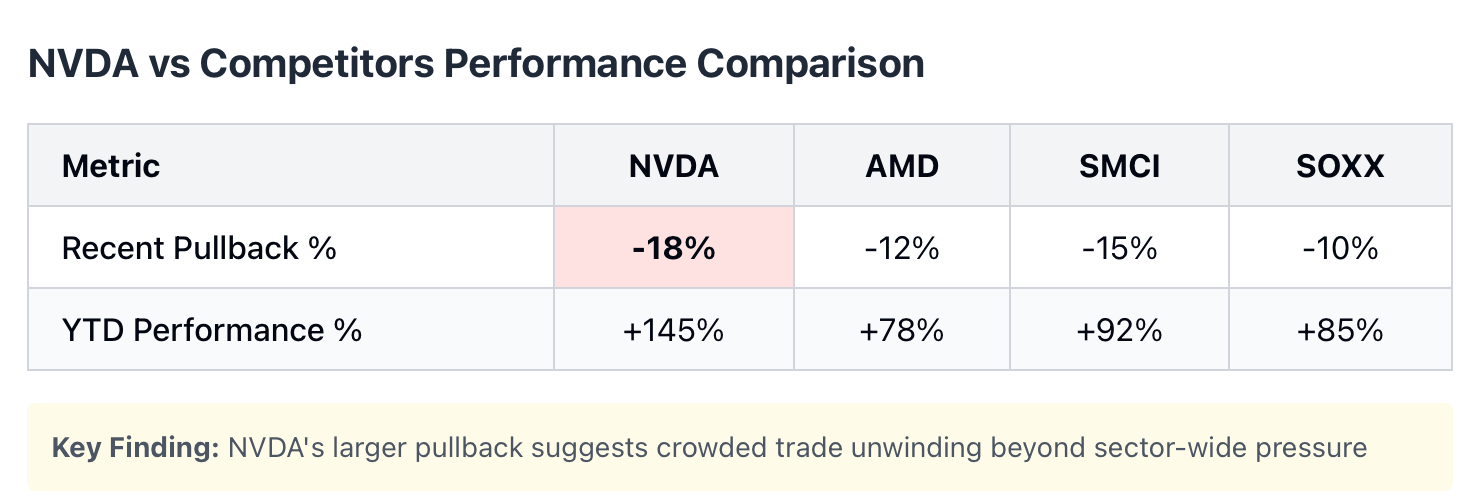
Recent price movements indicate that NVDA has performed significantly worse than AMD and the SOXX ETF during the recent pullback, suggesting that there are still elements of the crowded trade to unwind. Upon becoming the consensus pick for AI investments, NVDA shares were experiencing high levels of ownership within many growth-oriented funds. Therefore, as positioning along with short positions becomes more skewed, volatility will increase, and minor negative catalysts have a greater potential to induce major unwinding.
Additionally, SMCI's performance provides another perspective on the data used within this comparative analysis. As a provider of server infrastructure, SMCI's business relies on the continued growth of the data centre market. Thus, should SMCI strengthen while NVDA weakens, it would demonstrate that the weakness from NVDA's pricing power is company-specific and related to competition within the GPU segment rather than softness in the AI infrastructure market as a whole.
You could compare this to having another store within a mall; if all stores on this street are running promotions/sales, it is indicative of foot traffic/economic strength in the street vicinity as opposed to an individual store running a promotion/sale, which relates specifically to the overall operation of that store. Overall, the data suggests that there is a significant slowdown in momentum at a sector level; however, with NVDA, there is additional pressure due to their incredible popularity and high valuation.
Next, there exists an emotional construct of how to interpret NVDA; therefore, the correct wording to help interpret it would be "Nvidia is falling because AI is dead" becomes "high-beta AI stocks are correcting after strong rallies, while the sector is still experiencing mild economic pressure from a macro perspective", which is a preferable interpretation of the data.
What Wall Street Is Really Saying About NVDA's Sell-Off
The priority of retail investors lies in observing stock prices and social media input as to how to invest. On the other hand, investment banks operate differently. These institutions build cash flow models that have been discounted by using analysis of probabilities to create differing scenarios to allocate monetary assets over longer periods.
It is very important to get the thoughts of the top analysts at each bank to understand what they are thinking about the bank's outlook.
Goldman Sachs released a report indicating that volatility can be expected in the short term but that there will still be a strong, structural demand for AI infrastructure going forward. Based on this, Goldman has projected that the spending within the capital expenditure area for the cloud service providers will continue to increase, but will likely be at a slower rate than what has occurred from 2023 to 2024. The key takeaway on Goldman's report was the fact that they did not change their target price; rather, they acknowledged that the way forward may be bumpier than they originally expected.
J.P. Morgan has taken the opposite position from Goldman. The main concern for JPM is not the destruction of demand; it is actually the concentration of customers and valuation. If Nvidia sells 40-50% of their products to a limited number of hyperscale customers, then what happens if one of those top consumers starts using their own internal pieces of hardware or stops purchasing Nvidia products? Furthermore, JPM also noted that currently Nvidia's valuation reflects a large amount of anticipated growth, which leaves little room for error.
What would ultimately invalidate the bullish outlook that JPM has on Nvidia? JPM stated: There would have to be sustained evidence that AI workloads can be run efficiently on non-specialised hardware, or a significant number of customers switching their purchases to competitors, or that companies making large capital expenditures on AI infrastructure are actually slowing down in their adoption of enterprise AI. Currently, all of these preconditions have been satisfied, so, therefore, the bullish outlook on Nvidia remains.
The thought process of the investment banks does not rely strictly on whether they will make a bull or bear call on a given stock; these banks gauge the probabilities of scenarios. Goldman is likely to provide a 70% probability for continued good growth and a 30% probability for a meaningful slowdown over the next two years. J.P. Morgan would have a different distribution of weightings on these scenarios, but both firms would arrive at their assessments through means of scenario analysis instead of taking a position on which side to bet on.
Thinking of the bank as a coach, rather than betting on whether a team will lose or win, the coach will consider everything from the strength of the competition and whether there are any injuries or impacts, to game flow. Investment banking analysts also consider and weigh multiple scenarios and modify their probabilities accordingly as new information comes in.
When looking at how the rating and target price have changed for Nvidia, the overwhelming majority of analysts from the major banks have maintained a positive outlook on Nvidia, even though short-term volatility is very possible. The range for target pricing has increased by about 15-25% from the current pricing, but from six months ago, the increased possibility range has also increased greatly. This shows that the major banks are assessing the rate of growth and making modifications to their forecast without changing the underlying investment premise.
Trading vs Investing NVDA: Three Different Playbooks for Three Different Mindsets
Many traders are short-term traders. They focus on volatility, volume and technical support when deciding whether to enter or exit a trade. They may also look at the 50-day and 100-day moving averages, bull and bear signals and whether the volume confirms the move in price action. They don't consider long-term trade stories.
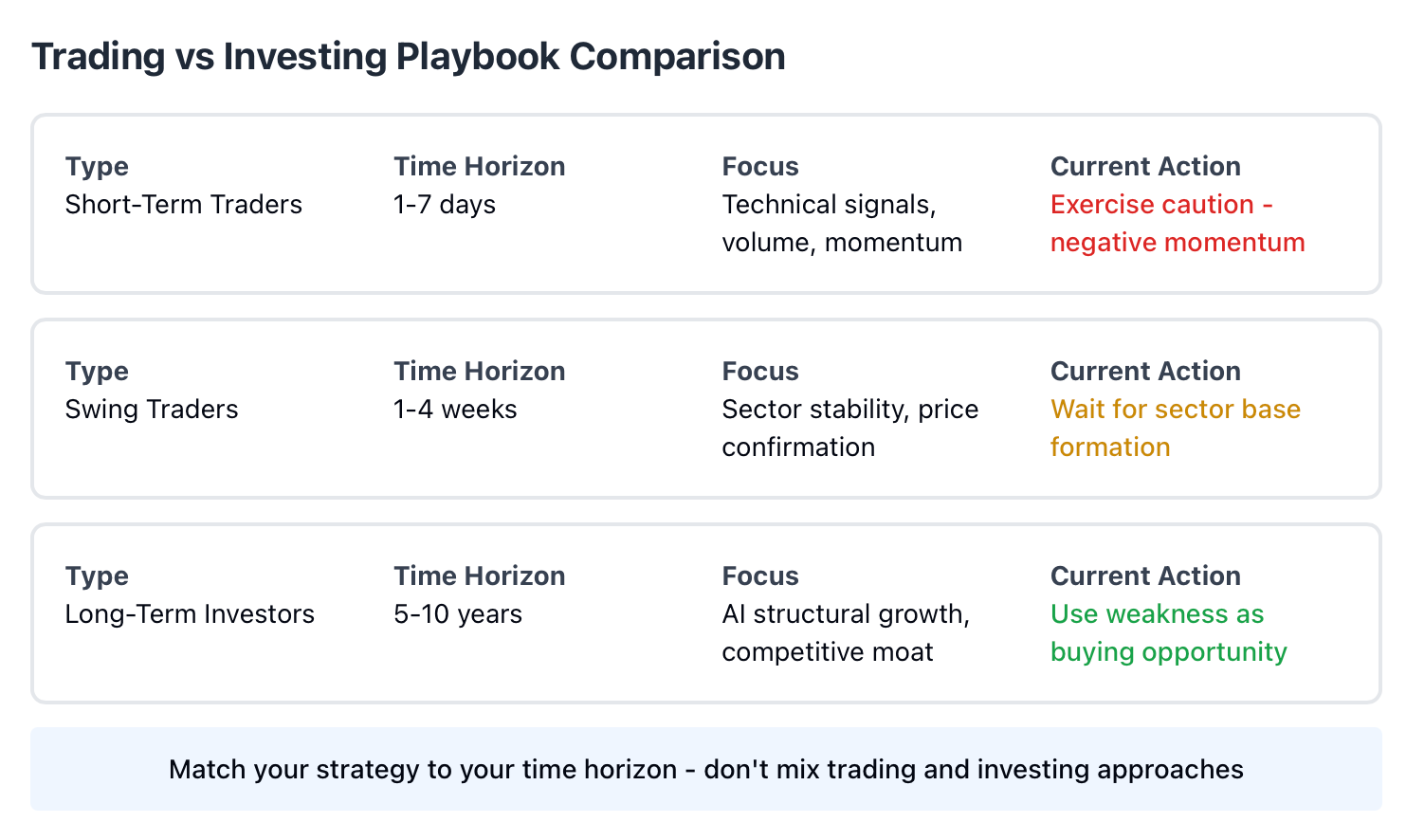
The biggest mistake that many short-term traders make is to continue to hold a losing trade as an excuse because "It's a great company". If you are trading based on technicals, then follow technicals. Do not suddenly decide to become a long-term investor because you are losing money on the trade.
Swing traders exist somewhere in the middle of this: They are typically holding trades for one to four weeks or even months and are trying to determine whether or not they will get support in their sectors before they deploy capital into their trades. For example, they might ask themselves, "Is SOXX forming a base?" "Is NVDA starting to outperform the sector?" Their position-building approach includes scaling into the position at a slow, deliberate pace and waiting for confirmation of price. Buying the entire position up front would expose the trader to being too early, which means that the trader would have to admit that they had a bad trade.
Long-term investors are much more focused on the question, "Is AI going to be the dominant trend in technology for the next five to ten years?" If the answer is yes, then any price volatility that might occur in the short term would be considered noise and not indicative of a change to the fundamental basis for the investment strategy. The fundamental strategy shifts from one of capital deployment to that of using weakness as an opportunity to build one's position at a better price.
Price volatility is not a sign that the original thesis of the trade has been proven incorrect. Long-term investors will consider Nvidia's competitive advantage (whether it can continue to dominate the AI infrastructure space), the sustainability of the company's software platform (CUDA) and whether hyperscalers (such as AWS, Microsoft Azure and Google) will continue to prioritise investments in AI infrastructure.
An analogy can be made here to this example: "Sprinting, running a marathon and taking a stroll daily all require different training plans." The opposite would be true if someone were trying to run a marathon. This analogy and scenario will apply to the stock market as well as other asset classes. The stock market will move up, down and sideways (even sideways is a form of movement) as all asset classes do. Therefore, be sure to develop an investment strategy that matches your timing and your risk threshold, not the strategy of another investor.
Current technical indicators suggest that short-term traders should exercise caution at this time, due to the technical damage that has occurred, a negative momentum as a result of the technical damage and an increase in volatility. Swing traders are generally in a better position. They should be waiting for some level of stability to develop within the sector before they commit any capital into the transaction.
If you are a long-term investor, the answer to your question should be simple. If AI continues to serve as a primary technology in 5-10 years, there will remain good buying opportunities related to the weakness created by the price volatility.
Key Risks That Could Turn a Pullback into a Trend Reversal
The evaluation of any company from various angles requires an understanding of the risks associated with that company. Omitting risk from any discussion or publication, therefore, will only reduce the credibility of that discussion/publication and add a layer of bias to the intent of the author in trying to persuade you.
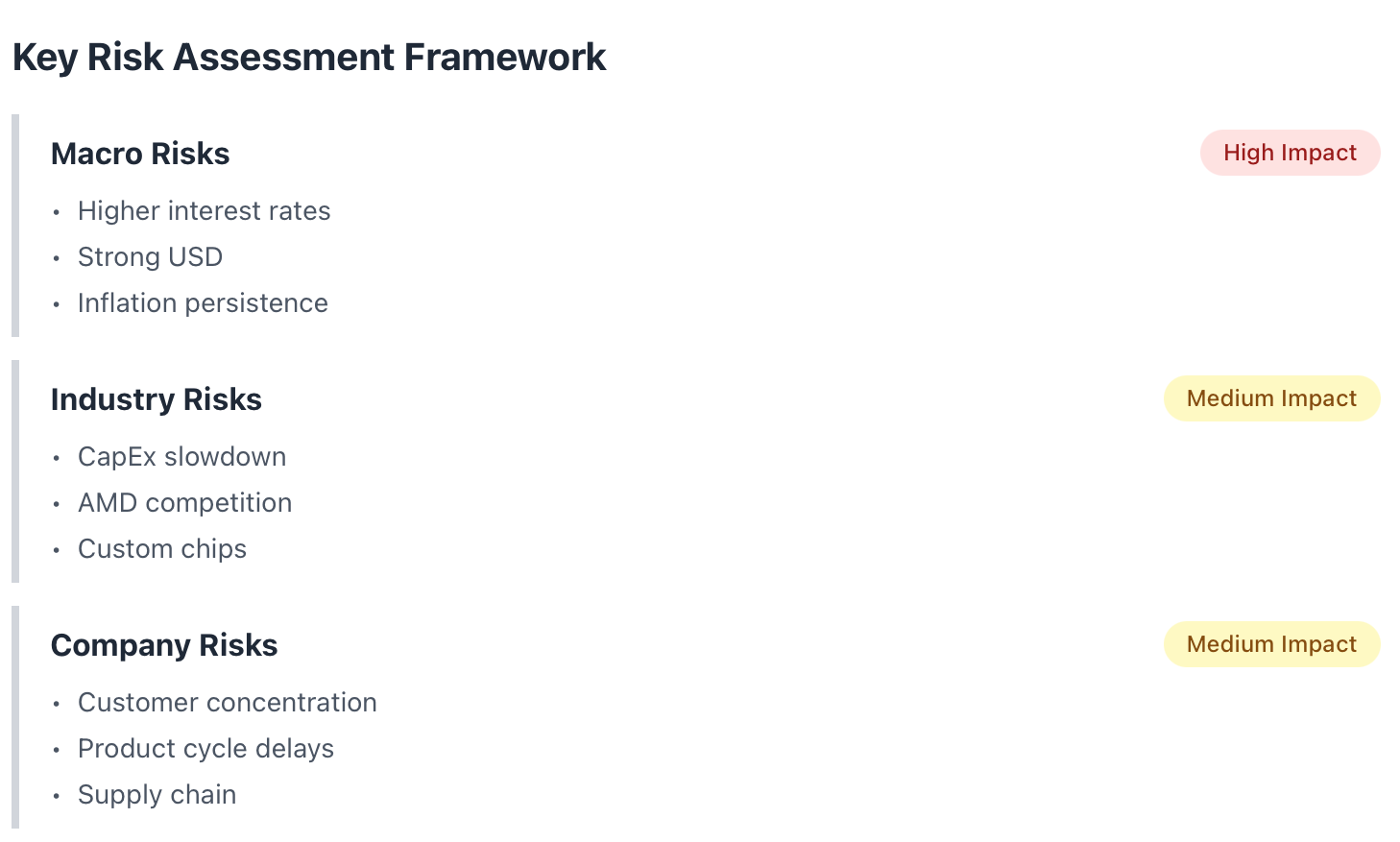
The macro-risk for everyone is the current economic environment characterised by continued high interest rates or a "higher for longer" interest rate environment. High multiple growth stocks are going to continue to have headwinds as long as inflation persists; therefore, with upper limits on interest rates being imposed by the U.S. Federal Reserve, the high multiple growth stocks will continue to be pressured until 2026. Additionally, a strong U.S. dollar creates an additional risk for U.S. equity owners, as it makes U.S. equity less appealing for investors outside of the U.S., which creates a potential for indicators of a slowing worldwide economy.
Institutional risks from a structural standpoint include a reduction in capital expenditure levels from all customers in all industry segments. For example, if Amazon, Microsoft, Google and Meta all simultaneously reduce their capital expenditures related to AI, there is the potential for a substantial drop-off in demand for Nvidia's products. Furthermore, AMD is generating additional competition, plus the hyperscale suppliers are producing custom chips, which represents another structural risk. Finally, with the national governments' nationalistic attempts to create significant domestic semiconductor manufacturing capacities, this too will impact and compress Nvidia's margins over time.
Nvidia has a high dependence on data centre-based GPUs; therefore, risks will arise from only having a small number of product lines and corresponding supply chain vulnerabilities. For example, Nvidia's revenue growth is heavily tied to data centre-based GPUs. If there is ever a major disruption in this product cycle, caused by problems such as production delays, increased competition, or customer resistance to increased prices, this will significantly tie any revenue diversification potential.
Lastly, Nvidia's total revenue potential can be significantly impacted by geopolitical events associated with Taiwan and semiconductor manufacturers in general.
From a professional standpoint, all the risks laid out above, and their corresponding levels of uncertainty, would increase the equity risk premium for investors planning to invest in Nvidia. Thus, the uncertainty associated with investing in Nvidia creates a need for higher anticipated returns on investment for potential investors, thereby potentially lowering the asserted stock price at this time.
In summary, even if a company is an excellent business, the current stock price levels can dramatically change the return on investment. The fact that the company is an excellent business does not correlate with an equally high value. Evaluating significant risks is not about being afraid of selling, but rather sizing the position and clearly defining all the events that can dramatically change your investment thesis.
Final Take: Is NVDA's Pullback a Warning Sign or a Strategic Opportunity?
What is the cause of Nvidia's decline?
The Nvidia decline is a result of three overlapping events: the recent tightening of monetary liquidity due to increasing interest rates, the loss of momentum within the artificial intelligence sector as a whole, and concerns about the number of customers that Nvidia has concentrated in one location.
None of these issues indicates a fundamental breakdown within Nvidia's business model or its long-term plans for expanding the AI infrastructure.
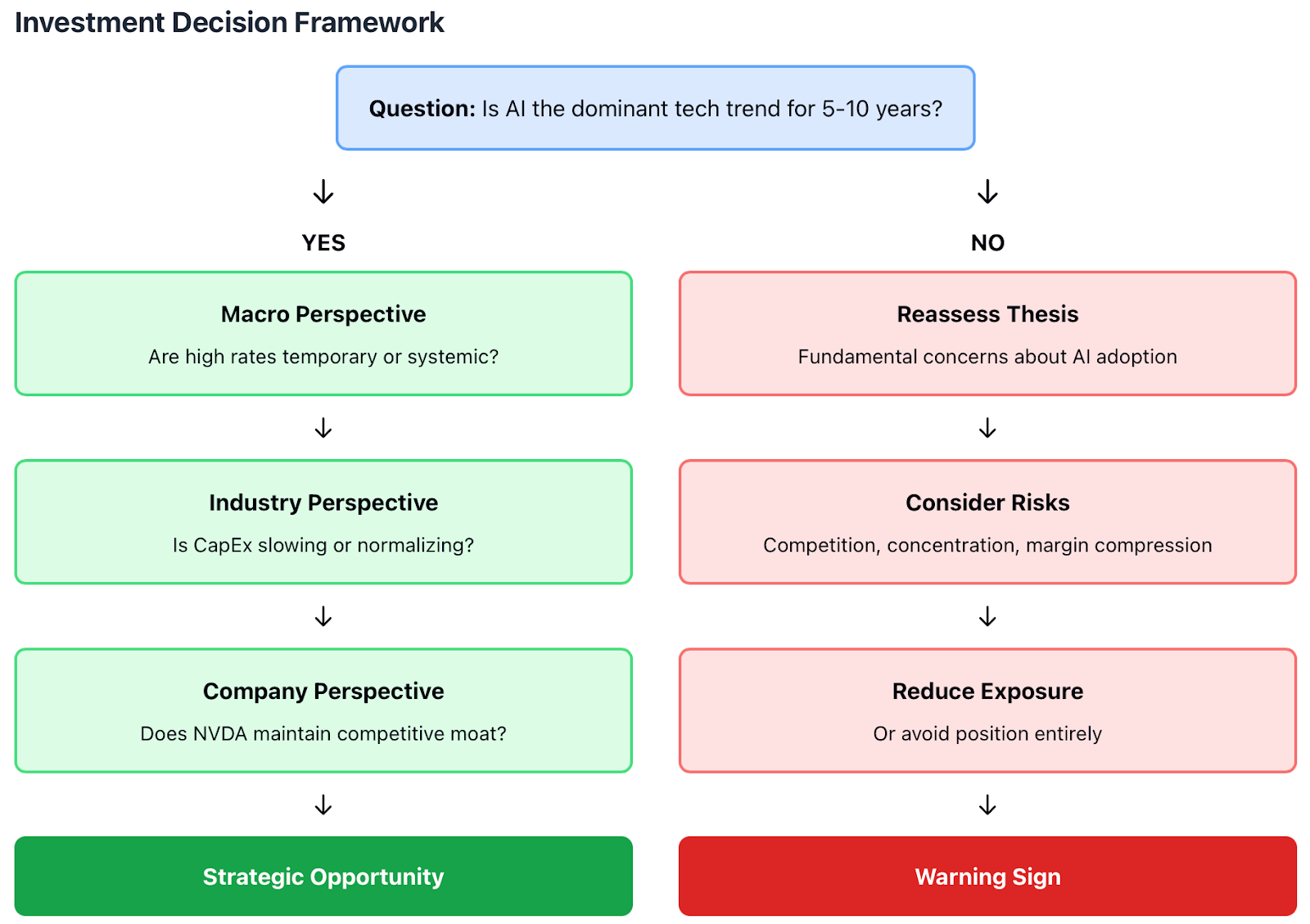
Three frameworks can help clarify the Nvidia situation. From a macro perspective, are rising interest rates and the strength of the US dollar acting as temporary headwinds to Nvidia, or are they signalling a deeper economic problem? From an industry perspective, is the capital spending of cloud service providers genuinely slowing down, or is it just normalising after a surge in capital spending? From a company perspective, does Nvidia still have a strong competitive position and access to future product offerings?
For short-term traders, Nvidia's setup is considered to be challenging until both the technical damage is repaired and the market shifts momentum. For swing traders, exercising patience while waiting for sector stabilisation makes sense. For long-term investors focused on the extended growth cycle of AI, periods of volatility will provide opportunities if long-term investors adequately position themselves to benefit from it.
The markets will typically punish those investors who fail to exercise patience, while rewarding those who exercise conviction. The gap between a stock's price and its value may persist for several quarters, possibly testing the grit and determination of all investors involved. What is most important is matching your strategic investing plan to your actual time horizon and maintaining intellectual integrity regarding both opportunity and risk.
As such, the AI supercycle is not over; however, the market is simply re-evaluating the pace and the direction of AI growth going forward; this is by no means the beginning of the end. Instead, this is simply a normal occurrence within the world of investing.
If you want to navigate through market volatility with greater confidence, visit TradeWill.com. At TradeWill.com, we provide real-time investment analysis, along with actionable insights to assist you in making more informed investment decisions, whether trading the short term or making long-term investments.
Disclaimer: The content of the blog does not represent any position of Trade W, does not serve as any trading-related decision advice, and does not endorse any third-party.