

 Trade W
Introduction: Why Understanding Forex Terms Matters
If you are getting into forex trading, you'll soon see that there is a terminology system. You'll see terms like "pip", "spread", or "leverage" spread around the conversation, but there is one symbol that stands out for both beginners and seasoned traders: XAU/USD.
So what is XAU/USD? To put it simply, it is the price of gold in U.S. dollars. XAU is the ISO code for gold (from the Latin word meaning gold, "aurum"), and USD is the dollar. Together, they create one of the most viewed symbols in the world of finance.
Unlike traditional currency pairs like EUR/USD or GBP/USD, XAU/USD is a commodity-currency pair. It tells you the price of one troy ounce of gold in U.S. dollars at a specific time. So it's a unique animal in the trading world.
So why is this relevant? Gold has been a store of value for thousands of years. When the markets are in turmoil, the currencies are jittery, or inflation eats away at purchasing power, investors turn to gold. That's why XAU/USD is more than just a trading opportunity. It is also a trading barometer of global risk feelings.
Recall the COVID-19 pandemic in March of 2020. When entire economies locked down and uncertainty swirled, gold prices rose above $2,000 per ounce. Institutional traders often used XAU/USD positions to hedge against the chaos of the marketplace. But XAU/USD is not only used by Wall Street brokers. If you own gold jewellery, for example, you may have also noticed that its value rises when the dollar weakens. That is XAU/USD influencing your everyday life.
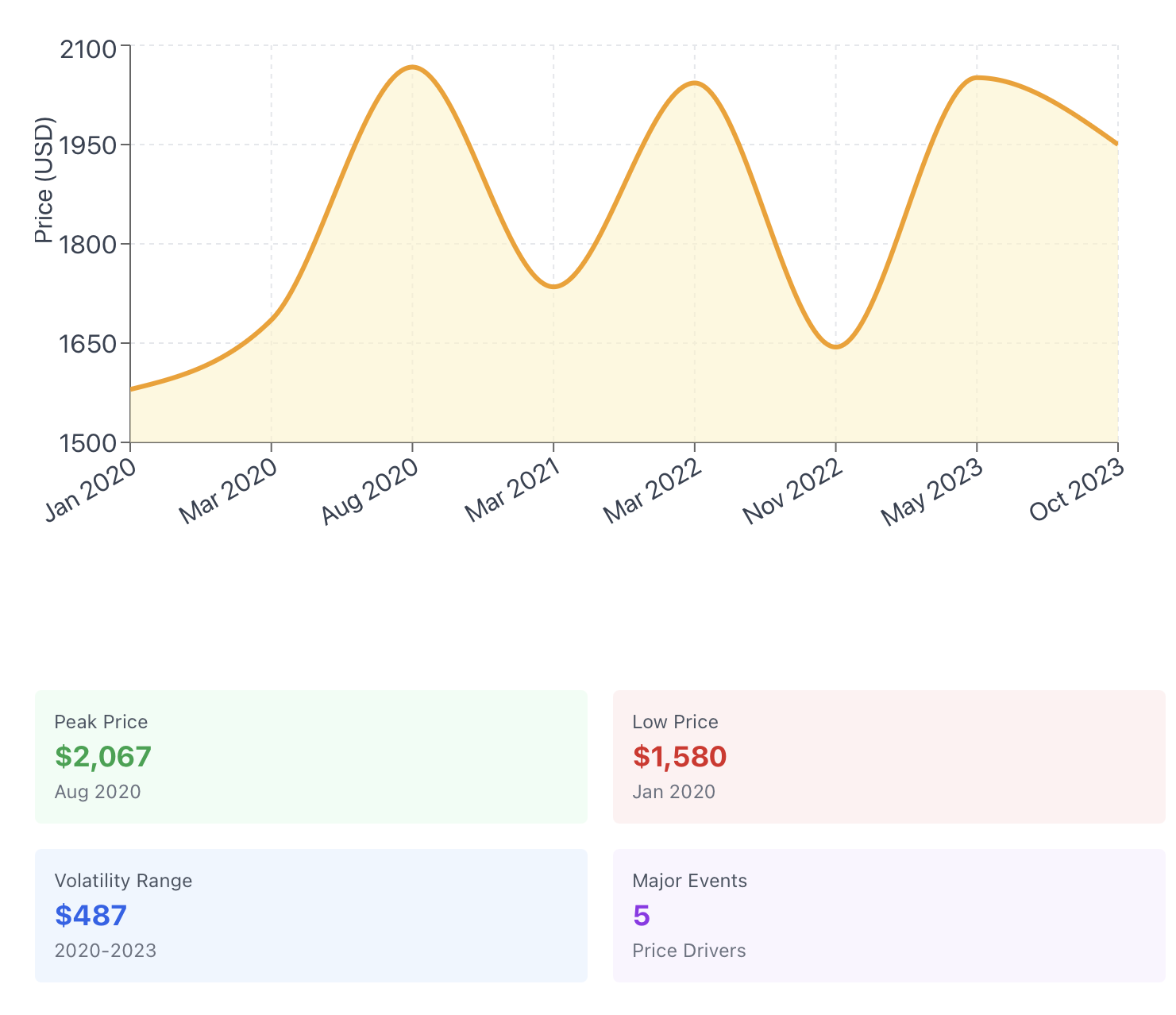
Understanding XAU/USD will provide insight into what is happening beneath the financial markets in real-time. Are investors getting nervous? Is inflation increasing? Is the dollar getting weaker? To dollar price relationship can provide insight into these answers in real-time.
If you are trying to diversify a portfolio, hedge against uncertainty, or simply capitalise on price movement, consider understanding the XAU/USD trading pair. Let’s break down some basics of what moves the XAU/USD pair, along with how to approach a trade.
What is XAU/USD? The Gold–Dollar Pair Explained
Essentially, when you see XAU/USD, you are looking at the price of one troy ounce of gold priced in U.S. dollars. For example, if XAU/USD is trading at 1,950, then one ounce of gold costs $1,950.
The "XAU" refers to gold's placement on the periodic table (symbol: Au) and its Latin name (aurum), while "USD" is simply the U.S. dollar, which is the quote currency in the pair. In forex, the XAU is the base (what you are buying or selling) and the USD is the quote (what you are using to pay for it).
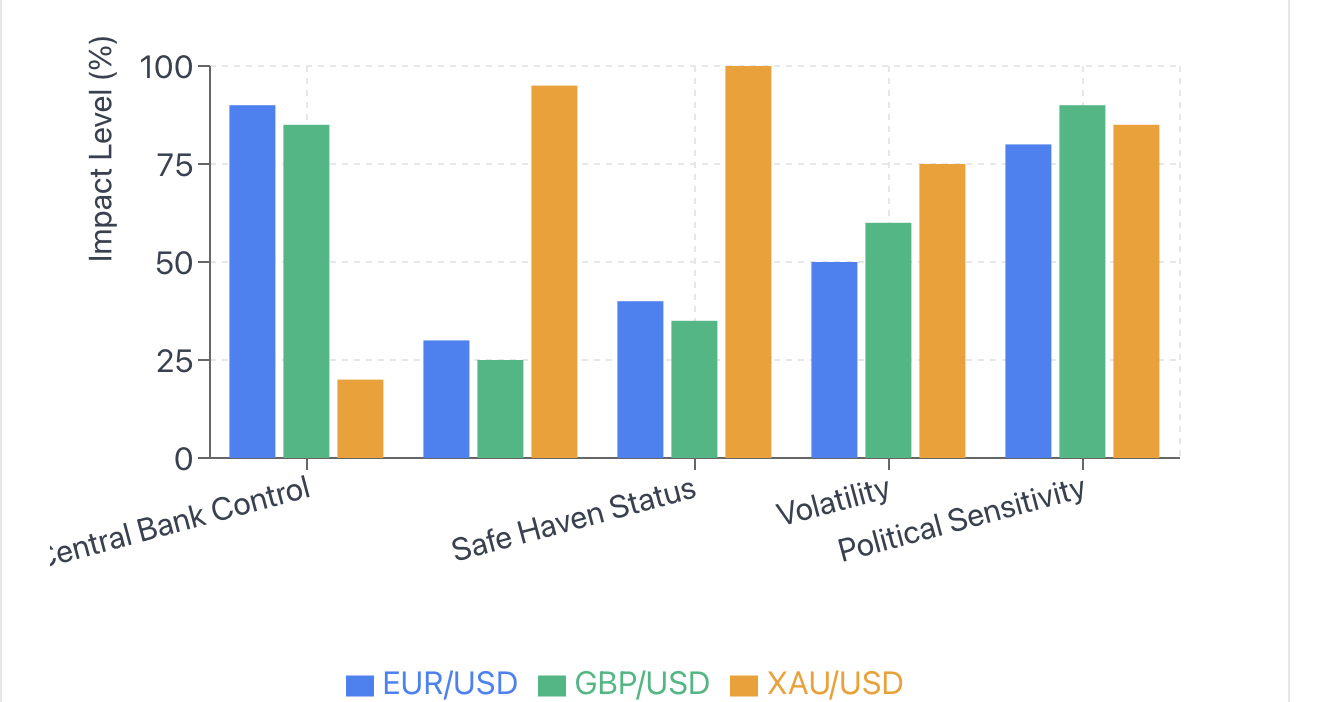
So, here is where XAU/USD departs from the traditional forex pairs. When trading pairs like EUR/USD, you are exchanging two fiat currencies against one another. In the case of XAU/USD, you have a physical commodity being exchanged for a currency. This means that it will behave differently from a traditional forex pair. Gold is not controlled by a central bank that sets interest rates or that can print as much currency into circulation as it wants to meet demand. Gold has value due to its scarcity, its demand for industrial purposes, and the fact that it acts as a safe.
Central banks & hedge funds use XAU/USD as a portfolio diversifier. When stock markets crash or there is world tension, they purchase gold to safeguard their wealth. For the retail investor, logic is simpler. When the news focuses on headlines like inflation rate or the state of the economy, the price of gold is going up. This is the price of XAU/USD increasing.
Gold tends to shine its brightest during uncertain times. For example, inflation decreases the buying power of paper money, whereas gold stays constant. A political crisis shakes people’s confidence in their governmental and economic systems, so investors will flock to anything with an intrinsic value. The 2008 Global Financial Crisis, for example. The dollar was falling again, and panic set in; XAU/USD soared during this economic scenario. People wanted to feel secure,, and gold provided that form of security.
A quick comparison of relative performance:
-
EUR/USD: Currency pair example. Influenced by both the eurozone & US economic policies.
-
GBP/USD: Currency pair example. Primarily driven by UK and US data, and impacted by Brexit.
-
XAU/USD: Commodity-currency pair example. Influenced by US dollar strength, inflation, risk sentiment and supply/demand for gold.
SEO Title: XAU/USD Explained: Gold Trading for Beginners & Pros
SEO Description: What is XAU/USD? Learn how to trade the gold-dollar pair, its key price drivers (Fed rates, inflation), and top strategies for beginners and advanced forex traders.
Meta URL / Slug: /xau-usd-gold-trading-explained-strategies
XAU/USD represents more than just numbers on a chart. It provides a real-time snapshot of how the globe is valuing stability variants to risk. When uncertainty creeps in, gold rises. When confidence returns and the dollar strengthens, gold eases lower. This will put you ahead of the game.
How XAU/USD Works in Forex and CFD Trading
Trading the XAU/USD pair isn't the same as purchasing gold bars and stowing them away in a safe. Most traders are accessing through CFDs, or contracts for difference, provided by brokers like Tradewill, which allows you to speculate on the price of gold without actually owning any of the metal. You are essentially betting on whether the XAU/USD price goes up or down.
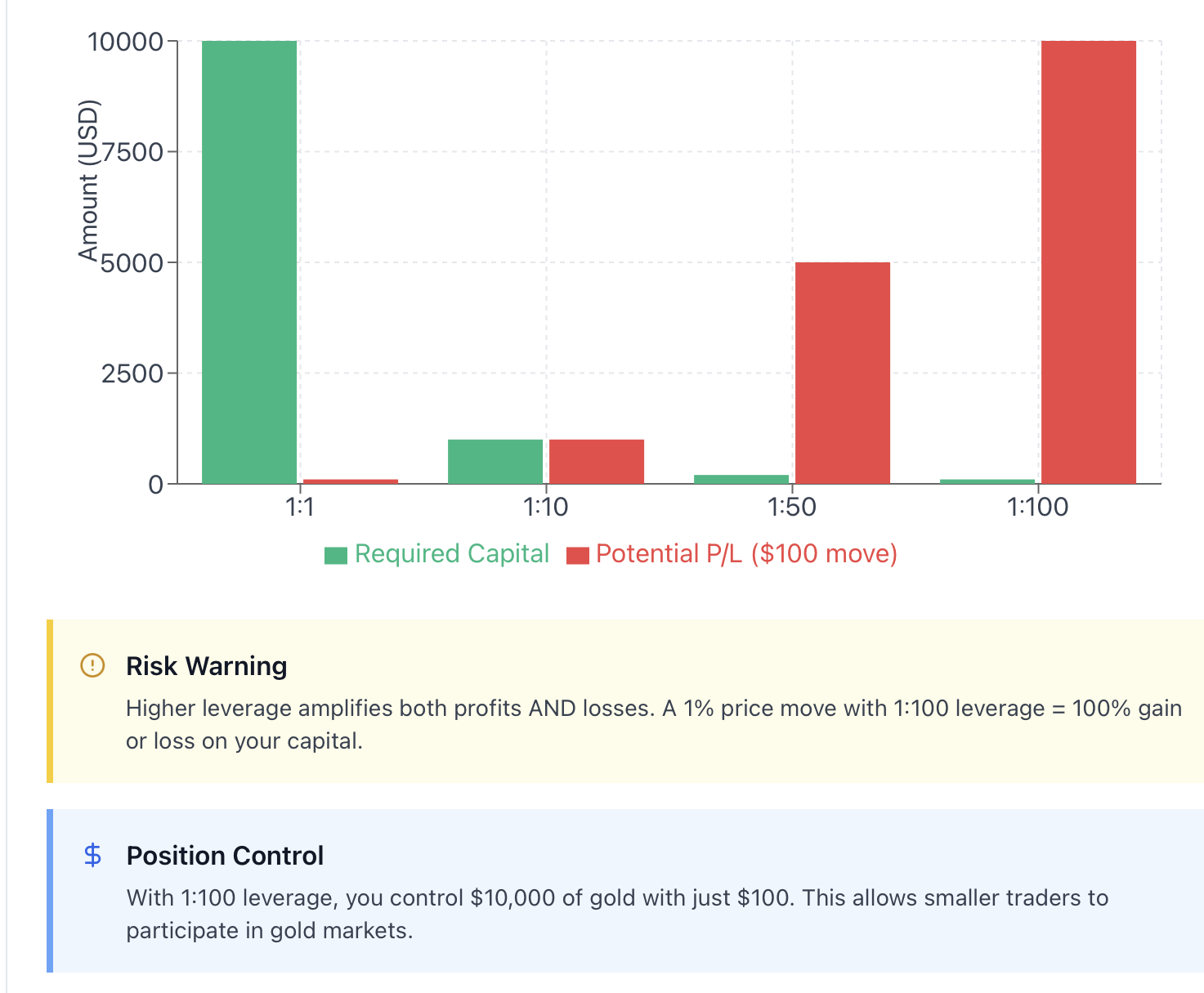
The biggest advantage (and risk) for trading XAU/USD is the leverage that you have with trading. Leverage allows you to hold on to a large position with a relatively small amount of capital. For example, with 1:100 leverage, you can control a $10,000 position in gold with $100 worth of margin. That sounds good, right? While you are able to produce bigger profits due to leverage, you can also amplify your losses. That is why risk management is so important.
Every broker has a different contract size, but typically, a standard lot in XAU/USD would be for 100 ounces of gold. Most retail traders use mini or micro lots to keep their risk manageable.
So what actually moves the price of the XAU/USD? These are the key factors:
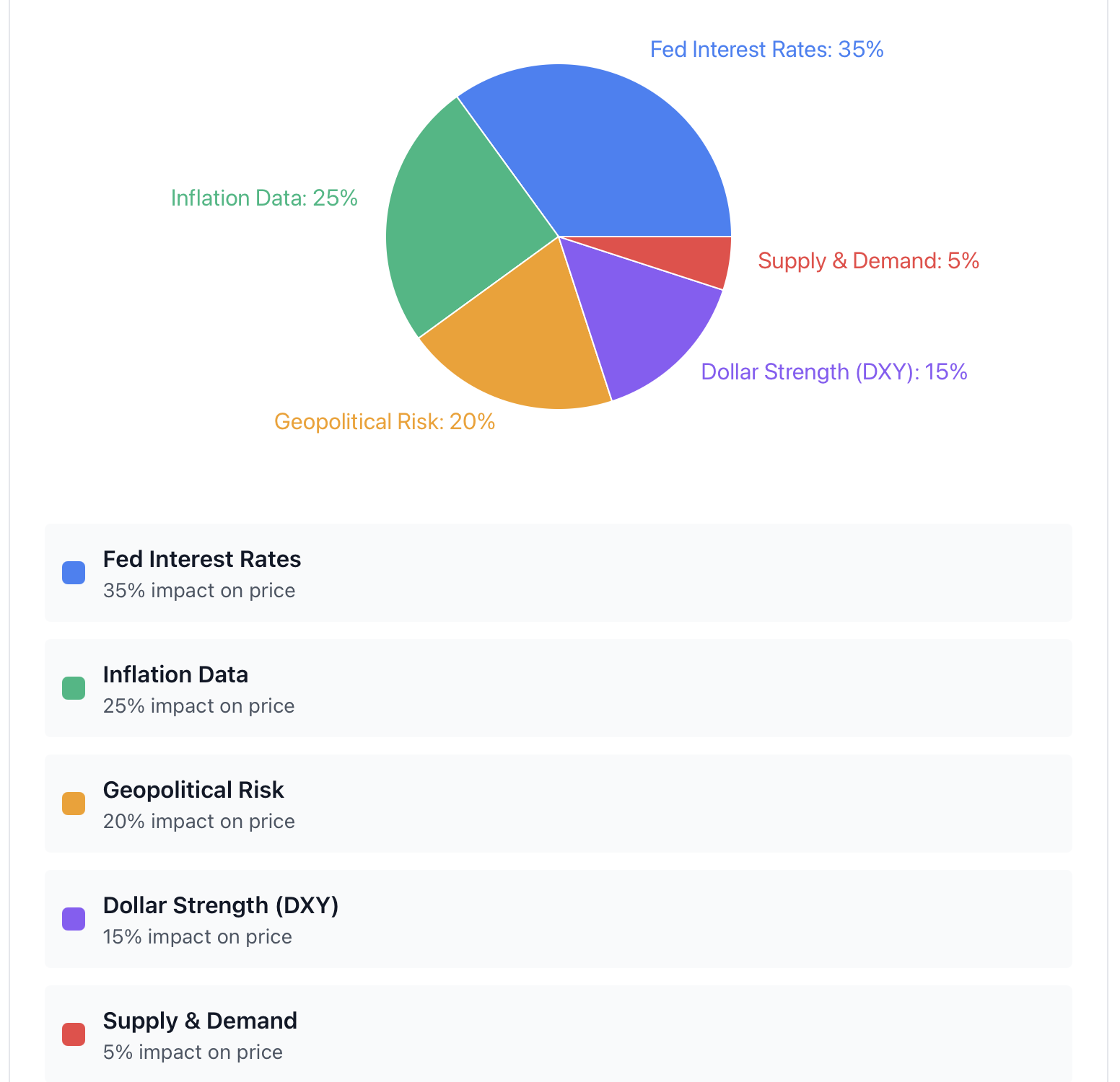
1. Interest Rates of the U.S. Federal Reserve
When the Federal Reserve raises interest rates, the value of the dollar tends to increase. A stronger dollar makes it more expensive for other nations to buy gold, and this leads to a lower XAU/USD price. Conversely, if rates decrease, the effect is opposite and prices will rise. FOMC meetings are closely watched by traders, as even the slightest hint of a change in policy can influence gold prices.
2. Inflation Numbers
Gold is often described as an inflation hedge. When consumer prices increase, the purchasing power of the dollar weakens, and gold usually maintains or its value increases. If inflation data comes in "hotter" than expectations, that typically leads XAU/USD to rally.
3. Geopolitical Risk
War, political instability, trade tensions, etc., can lead investors into safe-haven assets. Fear overcomes everything else. When markets panic, XAU/USD will increase.
4. U.S. Dollar Index (DXY)
The relationship between XAU/USD and the DXY is generally inverse. When DXY rises (which indicates the dollar appreciates against other major currencies), gold prices typically decrease, while if DXY declines, gold prices typically increase.
5. Global Gold Supply and Demand
Physical demand from jewellery, electronics, and central bank purchases can push prices higher or lower. There is a limited supply, ongoing demand, and a relatively inelastic gold price.
Consider a scenario where the Fed announces that it will keep interest rates lower to support the economy. The result is a weaker dollar, an increase in inflation fears, and investors buy gold. Consequently, XAU/USD soars in response to this news. Conversely, if the Fed indicates its intention for aggressive rate hikes to tame inflation, the dollar strengthens, and XAU/USD may experience a pullback.
A great example of an inflation spike was in 2022. Consumer prices were surging, and the Fed began its aggressive rate hikes. XAU/USD was particularly volatile and would swing hundreds of dollars in the short term. Traders who understood how to navigate these dynamic changes could take advantage of the increased volatility. Traders who did not understand why volatility was moving markets often got burned.
Although gold trading is often more volatile than many currency pairs, that volatility is an opportunity. Bigger price swings create larger potential profits (and yes, larger potential losses too) for the traders who navigate that volatility effectively and manage expectations effectively. Successful XAU/USD traders combine technical analysis with a modest appreciation of macroeconomics. In other words, a trader cannot just look at charts; instead, they need to know what is moving markets.
Trading Strategies for XAU/USD
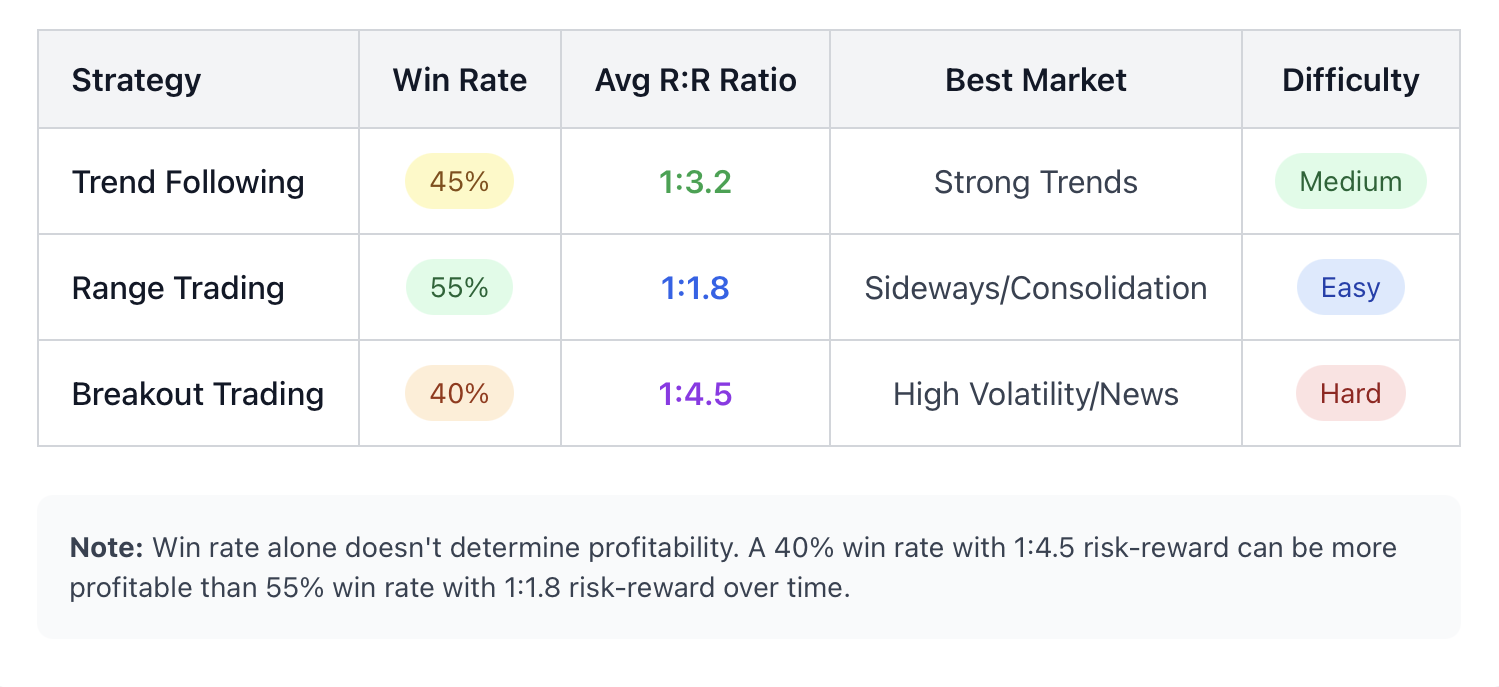
Having established what moves XAU/USD, let's look at your strategy for trading it. There is no single perfect way to trade gold, but some strategies may work better than others depending on market conditions and your personal trading style.
Trend Following
Gold usually trends in longer-term, sustained trends, which explains the popularity of trend following strategies. The idea is simple: benefit from the trend. If there is a clear uptrend in XAU/USD (higher highs, higher lows), you look to make new purchases when it pulls back. If it is trending down, you sell the rallies. Moving averages (50-day, 200-day) can help to determine the direction of the gold trend during any time frame. If the 50-day crosses above the 200-day (often called a "golden cross"), it is sometimes considered a bullish signal. The opposite would (opposite "death cross") indicate downward momentum or trend.
Institutional traders also take a technical trend approach combined with macro fundamentals. If the institutional trader sees a gold trend upward, they may wait for supportive fundamentals (weak dollar, high inflation) to justify their entry.
Range Trading
Not every market trend. Sometimes XAU/USD becomes range-bound, bouncing back and forth between support and resistance price levels. A range trader will buy near the support level and sell near the resistance level. For example, let's say that gold is making a series of highs and lows between $1,900 and $2,000. A range trader will buy about $1,905 (with a stop loss below $1,890), and look to sell part or all of the position for a reward somewhere between $1,990 and $2,000. Range trader strategies work best in a low-volatility type of environment when there is no important catalyst affecting the price.
As a beginner, you might even notice when the price is range-bound. For example, if you have been watching the price of gold bounce back and forth between two levels for a number of weeks, you now have evidence that the asset is range-bound.
Breakout Trading
On the other hand, major news or economic releases can break through both support and resistance price levels, opening up a breakout trading opportunity. A breakout trader will wait for prices to break above resistance (there is bullish momentum) or below support (there is bearish pressure), and then immediately enter the market. An example in 2023 was the uncertainty surrounding the U.S. debt ceiling. Gold broke above $2,000 as investors feared the government would default on its debt. Traders who recognised the breakout opportunity rode gold higher.
Breakout trading requires some discipline on the trader's part as well. There are often false breakouts; traders can use confirmation as a guide, but it can be tricky. Many traders wait for a candle close above resistance (not just the wick).
Key Indicators to Monitor
-
RSI (Relative Strength Index): An indicator that shows whether gold is overbought (over 70) or oversold (under 30). These readings often indicate reversals.
-
Moving Averages: This indicator smooths out price action, and it can signal trends.
-
Fibonacci Retracement Levels: These are levels traders are watching for where retracements may stop, and a trend may continue.
-
Support and Resistance Zones: These are areas where price has bounced or hesitated in the past.
Risk Management is Key
No trading strategy is worth its weight without proper risk management. Apply stop losses to limit your downside risk. If you're buying XAU/USD (gold/dollar) at $1,950 with a stop placed at $1,930, you are risking $20. If your take-profit target is $1,990, you're aiming for $40 in profit, and you have achieved a 1:2 risk-reward ratio, which is a good trade.
Many professional traders will look for a risk-reward ratio of around 1:2 to 1:3, which would mean they are willing to risk 1 dollar to make 2 or 3 dollars. Position-sizing also counts, so don't risk more than 1-2% of your account on a trade. If you have a $10,000 account and take a $200 risk on a trade, then you can sustain several losses in a row and still be in the game.
Intraday: Scalpers and day traders are focused on 5-minute to 1-hour charts to take advantage of minor price movements.
Swing traders: hold positions for a few days to a few weeks using 4-hour to daily charts.
Long-term holders: treat gold as an inflation hedge, with positions for weeks to years using weekly and monthly charts.
A professional trader might incorporate all three measures, including trade setups (like RSI, moving averages, and Fibonacci), macro-analysis (including Fed policy and inflation data), and strict risk management (involving stop-loss orders and position sizes). A beginner may restrict themselves to just the trade setups by spotting obvious support and resistance levels and only using stop losses on trades to manage risk exposure.
It is important to be patient. Don't push trades. Wait for your setup before triggering a trade based on your strategy, and don't chase moves you already missed. Gold will offer you another opportunity.
Key Takeaways: Why XAU/USD Belongs in Every Trader's Watchlist
To summarise, XAU/USD isn't just a ticker symbol. It is a representation of global risk sentiment, economic conditions, and the strength of currencies. Once you understand the relationship between gold and the U.S. Dollar, you will understand what is happening in the market.
We have gone over the essentials. Simply put, XAU/USD represents the price of one ounce of gold priced in U.S. dollars. In the market, it is referred to as a commodity-currency pair representing the interplay of Fed policy, inflation, geopolitical risk, dollar strength, and supply/demand for gold. Unlike the standard currency pairs we typically see, gold value is based on its constrained tangible supply (scarcity), which promotes its safe-haven status.
We have gone over a review of the operation of XAU/USD when trading it in a CFD way. The use of leverage magnifies your risk and reward. Volatility works as a driver for your profit.
Knowing the drivers of price movement for any asset is fundamental for success. We have considered pragmatic strategies to utilise in a retail trading methodology by using the strategies of trend following for continued price movement in one direction, range trading for the sideways market, breakout trading for major changes in direction, and using indicators such as the RSI, moving averages, and Fibonacci levels.
XAU/USD serves two functions: it represents a financial indicator and is also a trading opportunity. When gold rises, it signals that investors are getting anxious. If gold pulls back, this is a signal that investor confidence is returning. Gold's historical tenure in the financial markets makes it a convenient asset for portfolio diversification and hedging.
Whether you are learning the ropes or you are an experienced trader creating your edge, XAU/USD should be on your watch list. XAU/USD can react the same way as we have seen in its correlation with all markets, driven by the same macro forces we see driving every other market, but with this pairing, a deeper historical context of thousands of years has been placed in it.
Next time you see the release of CPI (consumer price index), a Federal Reserve official speaks, or geopolitical tensions escalate, pay close attention to XAU/USD, as that will display the market's intended reaction in real time.
Ready to put this knowledge into action? Open your Tradewill account and start tracking XAU/USD movements today because understanding gold isn't just about trading, it's about reading the market's mood when it matters most.
Disclaimer: The content of the blog does not represent any position of Trade W, does not serve as any trading-related decision advice, and does not endorse any third-party.