
 Trade W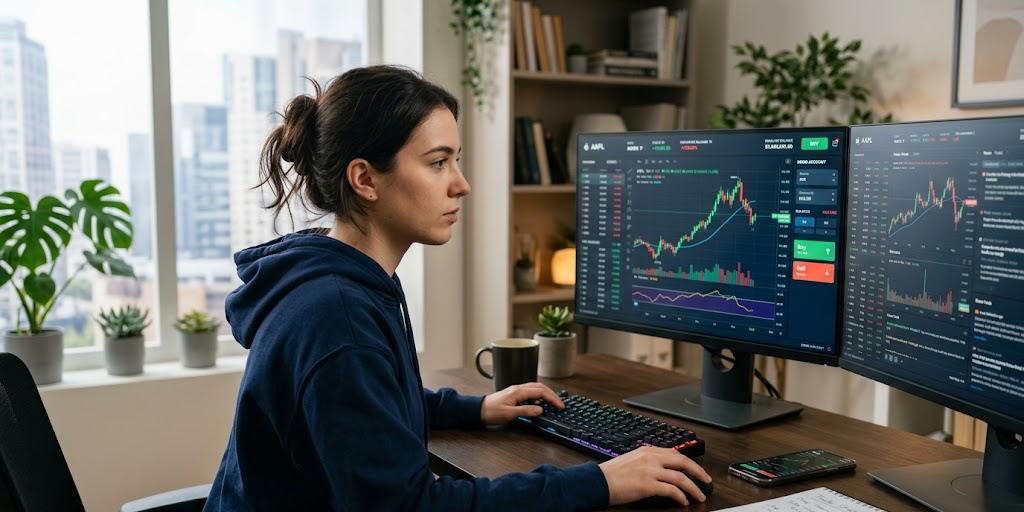
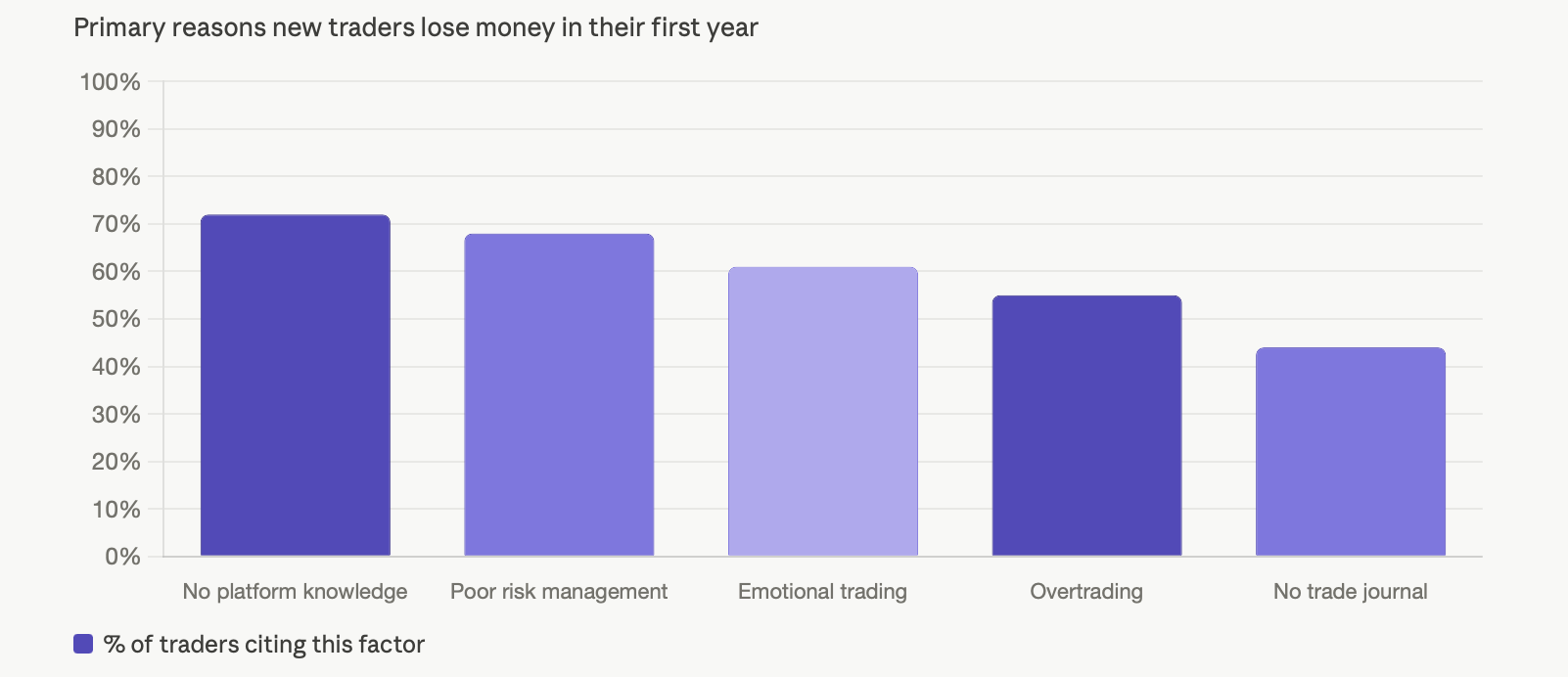
The majority of traders who fail in their first year share one detail that rarely makes it into the post-mortem: they never practised before they put real money on the line. They opened a brokerage account, deposited funds, and started trading before they understood how platforms work, how different order types behave in live markets, or how to protect capital when a trade moves against them. A demo account for stock trading exists precisely to prevent that kind of expensive education.
This guide takes you through everything a beginner needs to know about trading demo accounts, from understanding the mechanics of how they simulate real markets to building the structured habits that actually transfer when you go live. Whether you're completely new to trading, making the jump from crypto into equities, or learning a new platform after years with another broker, the information here applies to you.
Open a demo account on TradeWill today and start practising with real market data, professional-grade tools, and zero capital at risk. Your learning journey starts here, not with a loss.
Why Every Beginner Should Start With a Demo Account Before Trading Real Money
Beginner traders generally make very similar mistakes when they first enter the markets. When an inexperienced trader enters the market for the first time, they often do not know how to use their trading platform properly. As a result, they trade based on gut feeling instead of having a clearly defined trading plan, and they place too much capital at risk in any given trade before they learn how to manage risk. Ultimately, they continue to repeat the same mistakes until their trading account is depleted. There is no element of luck in this process; it is simply the result of not taking the time to learn before jumping into a live market as if it were a classroom.
When you open a demo account with your broker to practice trading stocks in a virtual environment, you will typically receive a cash balance of between $10,000 and $100,000, depending on the broker you choose. This cash balance allows you to practice trading in a real market without risking any of your own money. You can place market orders, set stop losses, research watchlists, read charts, and manage a simulated portfolio using the same tools that a live trader would use daily.
The main reason brokers offer demo trading accounts is to facilitate the onboarding process for new traders and build confidence in trading. However, this is not the only reason demo accounts have value. Repeating the same types of trades over and over helps develop execution habits, and demo trading provides new traders with the opportunity to develop these execution habits without having to worry about losing any money. In addition to becoming familiar with the trading platform, demo trading allows new traders to learn how orders are filled under various market conditions, which is a very difficult thing to learn just by reading.
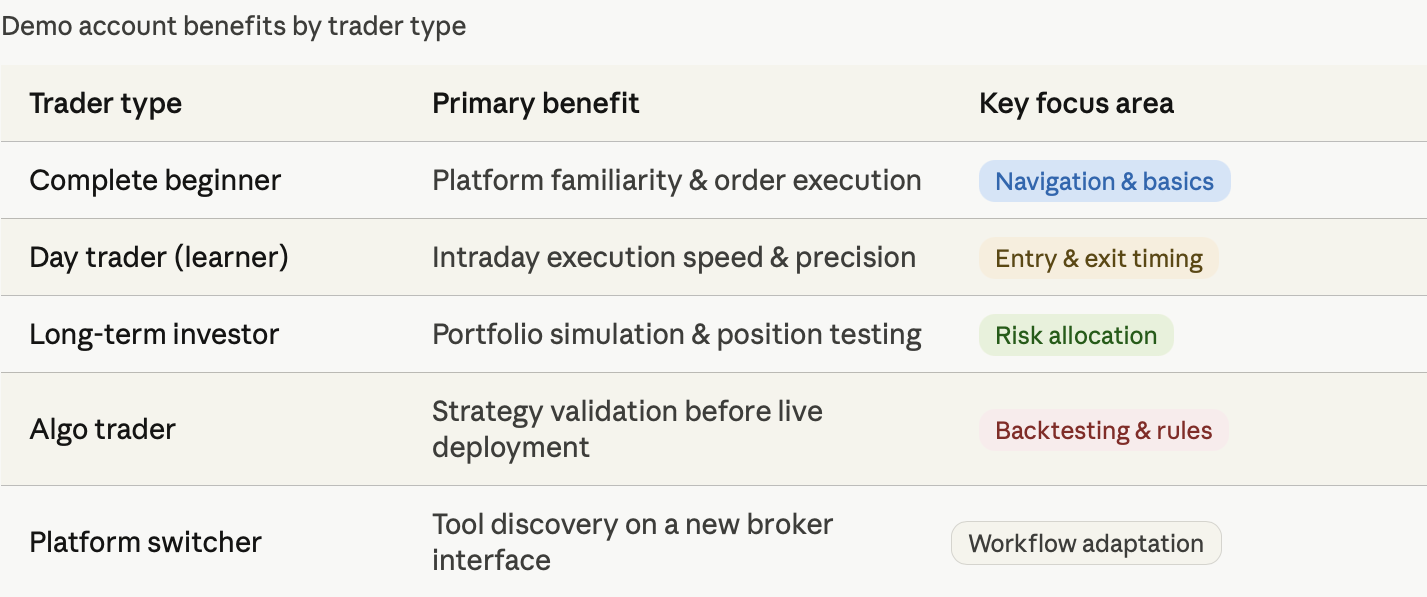
Although demo trading accounts are primarily marketed to complete beginners, they are used by many other types of traders. Day traders can practice intraday execution, long-term investors can test new broker platforms before transferring real money, and algorithmic traders can verify their trading strategies using demo accounts.
What Is a Demo Trading Account and How Does It Actually Work?
Demo accounts are mock trading accounts that function similarly to real accounts in a real market but use no actual funds. Orders that you place in a demo account are sent through a simulated execution engine that uses current market prices to fill your orders at or near the posted bid and ask prices. You will see updates to your demo account just as you would on a real account. Each time you enter an order, your virtual portfolio is updated in real time to show open profits and losses.
Most demo accounts include virtual cash, an online portfolio tracker, customizable watchlists, technical analysis charts (including add-ons), and account management tools for placing and tracking market, limit, stop, and stop-limit orders. As you experiment with different price action trading and customise your charts with candlestick patterns, you will have access to live data to practice your trading skills without investing real dollars.
Live or delayed quotations are another major point to consider when working with demo accounts. Many demo accounts provide live Level 1 quotes (current bid, ask, and last price), while others use a delayed market feed of 15 to 20 minutes. For intraday day trading, live data is critical because setups can appear and disappear within seconds. If you use a delayed data feed, you should account for that when reviewing your test results.
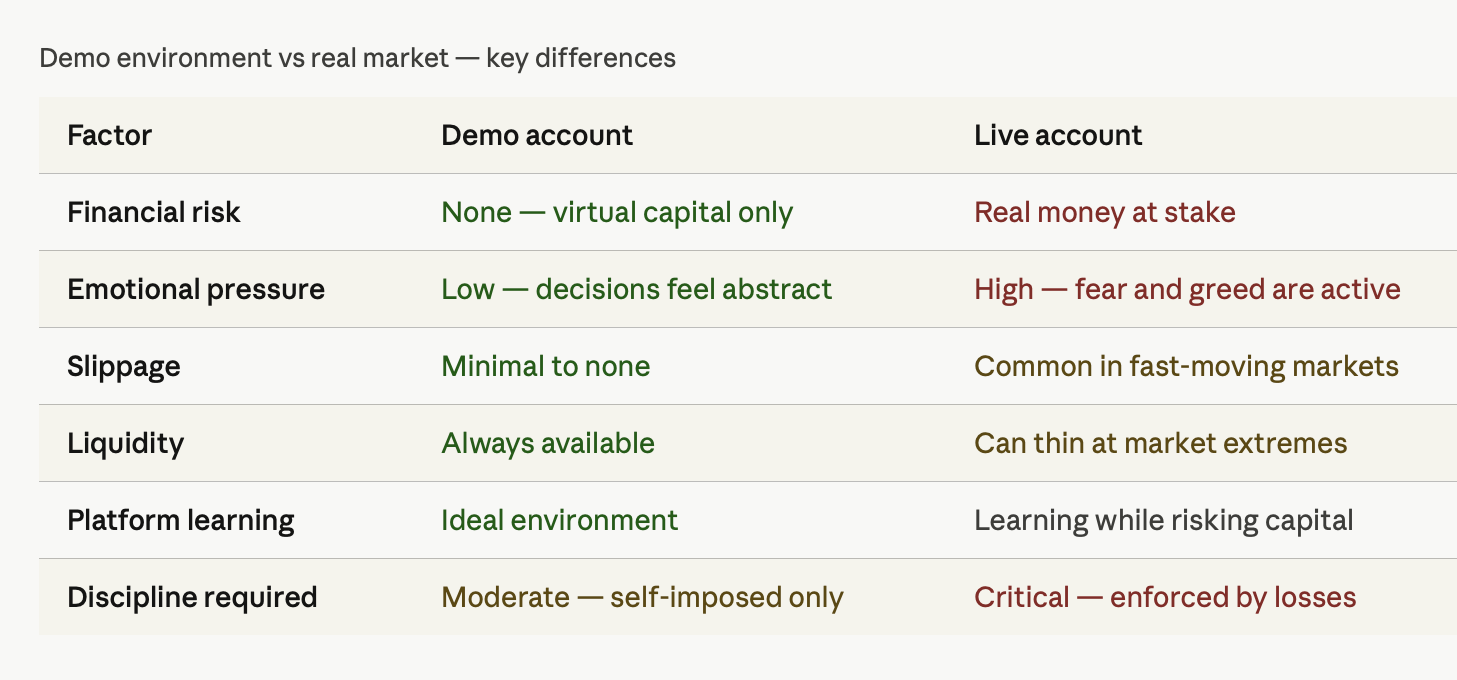
Demo accounts excel at simulating the mechanical aspects of trading: entering and exiting trades, order queuing and execution, and the different types of orders and how the platform executes them as the market moves. What demo accounts do not simulate are the psychological pressures of seeing real money fluctuate in value, the slippage caused by rapid price changes, and the issues related to liquidity and position size when making large trades.
How Stock Trading Demo Accounts Help You Learn Faster
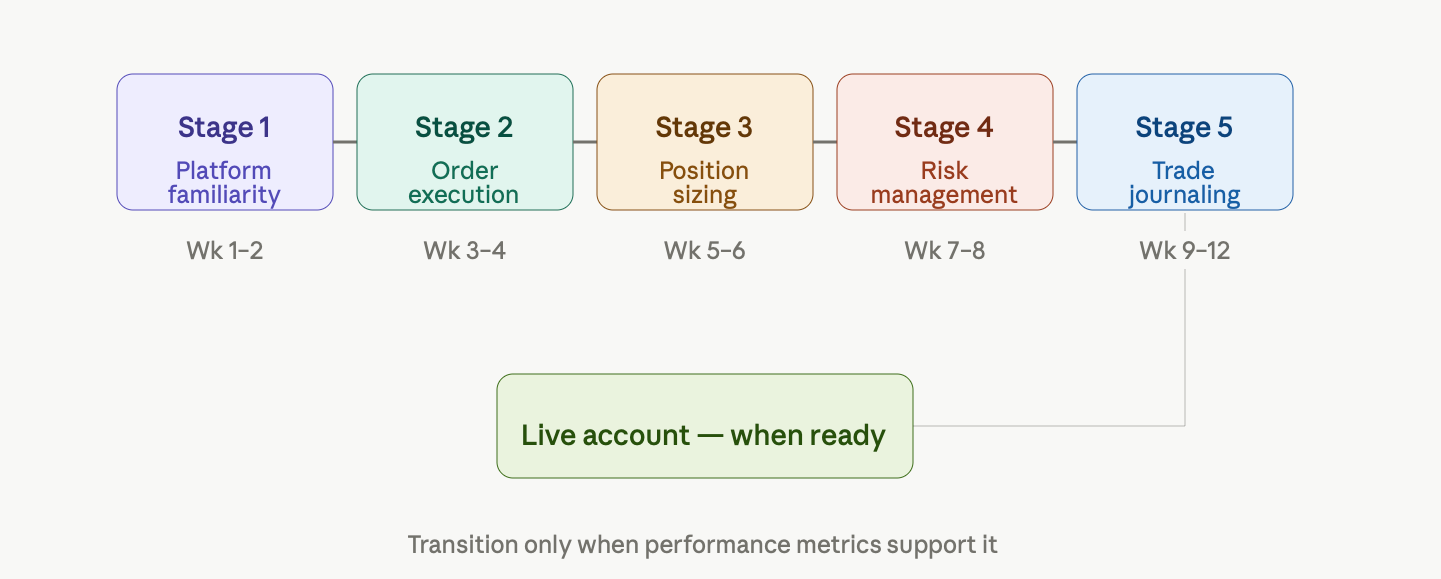
How a trader makes productive use of demo time versus wasting it all comes down to structure. Simply putting in screen time does not create trading skills. Structured, purposeful practice develops those skills, and a good learning plan will guide a trader sequentially through the stages without allowing them to skip straight to simulating complex trading methods.
The first stage in building a trader's skills is to gain an understanding of, and comfort with, the trading platform (i.e., charting, watchlists, and knowing the location of all tools and order-entry windows) before doing any trading. The next stage is to practice entering orders, with the goal being precise trade execution without hesitation. Through this process, many new traders learn that they have not truly understood the difference between a market order and a limit order. This new knowledge may very well save them a lot of money when they begin trading live.
Next, traders need to learn how to calculate position size in relation to their account size and the distance to their stop-loss level. Generally, if a trader has not learned how to calculate position size based on their account size and stop-loss distance before trading live, they will probably over-leverage their trading account once they begin trading with real money. Practicing position size calculations in a demo environment, before introducing the emotional aspects of live trading, allows the process to become automatic rather than something they must figure out under pressure.
Learning risk management through currency and position correlation is also an important skill that applies to demo trading in both stocks and forex.
The habit of using a trading journal to record all simulated trades separates traders who improve from those who continue to make the same mistakes repeatedly. Every simulated trade should be documented, including the entry rationale, stop-loss, target, and outcome, and reviewed at the end of each trading session to identify patterns and opportunities for improvement in both winning and losing trades.
Demo Account Day Trading: How to Practice Intraday Trading Without Risk
Day trading is among the most complex forms of trading because it requires rapid decision-making, accurate trade execution, and continuous risk management throughout the trading day. Attempting to perform even part of the above in a live account without any previous experience can be costly for a trader due to trial and error. However, using a demo account for day trading can dramatically change this dynamic.
When you practice day trading using a demo account, you can create a structured workflow for your intraday practice sessions that replicates what a professional trader does each day before they begin trading.
Measuring your progress means looking at metrics rather than raw profit and loss numbers. Track your win rate, your average risk-reward ratio on completed trades, your maximum drawdown across any 10-trade window, and whether your results are trending toward consistency over time.
Demo Account Day Trading: Practising Intraday Skills Without the Risk
Day traders require fast reflexes, a clearly defined risk management plan, and an organized pre-market preparation process compared to long-term position traders. All of these characteristics are developed through practice and repetition over time; therefore, using a demo account gives you the opportunity to build them before risking any money.
If you use a demo account for day trading, you should focus on creating a routine or method to follow rather than trading impulsively whenever something looks appealing. Review overnight news that may impact stocks you are interested in buying, use a gap scanner to identify stocks that have made significant moves since the previous trading day's close, and create a watchlist of 5 to 8 stocks rather than trying to monitor every stock available.
To gain a solid understanding of how day traders approach trade preparation and execution, read Step-By-Step Day Trading Strategies to Maximise Your Profits in 2026. This book outlines the professional level of discipline required by traders who consistently prepare for and execute trades successfully, rather than chasing every price movement.
There are three specific strategies to consider practicing in your stock trading demo account: breakout trading (entering trades when a stock moves beyond a major resistance level on heavy volume), momentum trading (trading stocks that maintain a high level of strength relative to the rest of the market), and pullback trading (waiting for a short-term decline in price before entering a position at a lower price in the direction of the prevailing trend). Learning to identify these setups accurately takes time and requires developing pattern recognition skills through practice. Reading The Ultimate Guide to Forex Candlestick Patterns can help you understand what to look for from a visual perspective on both stock and forex charts.
When you're trying to simulate trading with realistic capital, an important factor is ensuring that the account size in your simulator matches the size of the account you plan to trade with when you open a live account. If you practice on a demo account with a $100,000 balance and then move to a live account with only $2,000, you are not learning how to size positions properly or manage trades effectively because the vast majority of the habits you develop while using the simulator will not translate to real trading.
Demo Trading vs Real Trading: The Differences That Catch Beginners Off Guard
Demo trading is useful for teaching you the mechanics of trading, but it does not teach you about the psychology involved. This difference can be crucial during your transition from demo trading to live trading. One of the biggest differences between demo trading and live trading is the emotional pressure you experience. Losing a trade with virtual money is not as painful as losing a trade with real money. A real loss triggers a strong fear response, which can eliminate rational thought from the decision-making process. Because losses are difficult to accept, traders often leave losing positions open for too long. At the same time, because the fear of losing gains is so strong, they frequently exit winning positions too early.
The opposite dynamic can occur in both demo and live trading due to greed. Many demo traders achieve impressive virtual returns and subsequently begin increasing their position sizes without experiencing any real consequences. When those traders move to live trading and continue increasing their position sizes at the same rate, it is very likely that their accounts will be wiped out within days.
Slippage is another major difference that confuses many traders. Most traders using demo accounts have their orders filled at or near the displayed price. In live markets, particularly during economic reports, major news events, or in thinly traded stocks, orders may not be filled anywhere near the intended entry price. This can create a significant difference in the overall performance of a strategy that appears highly profitable in the frictionless demo environment compared to live markets, where execution costs and slippage must be factored into the results.
Understanding Price Action Trading helps you create strategies that are more realistic in their execution rather than idealized for a demo market. Because price action methods do not depend on exact entry points to be successful, they also tend to be more resilient in live market conditions than many other approaches.
The traders who transition most successfully from demo trading to live trading are not necessarily those who produce the most impressive virtual returns. Instead, they are the traders who approach the demo environment with the same level of discipline they intend to maintain when trading a live account.
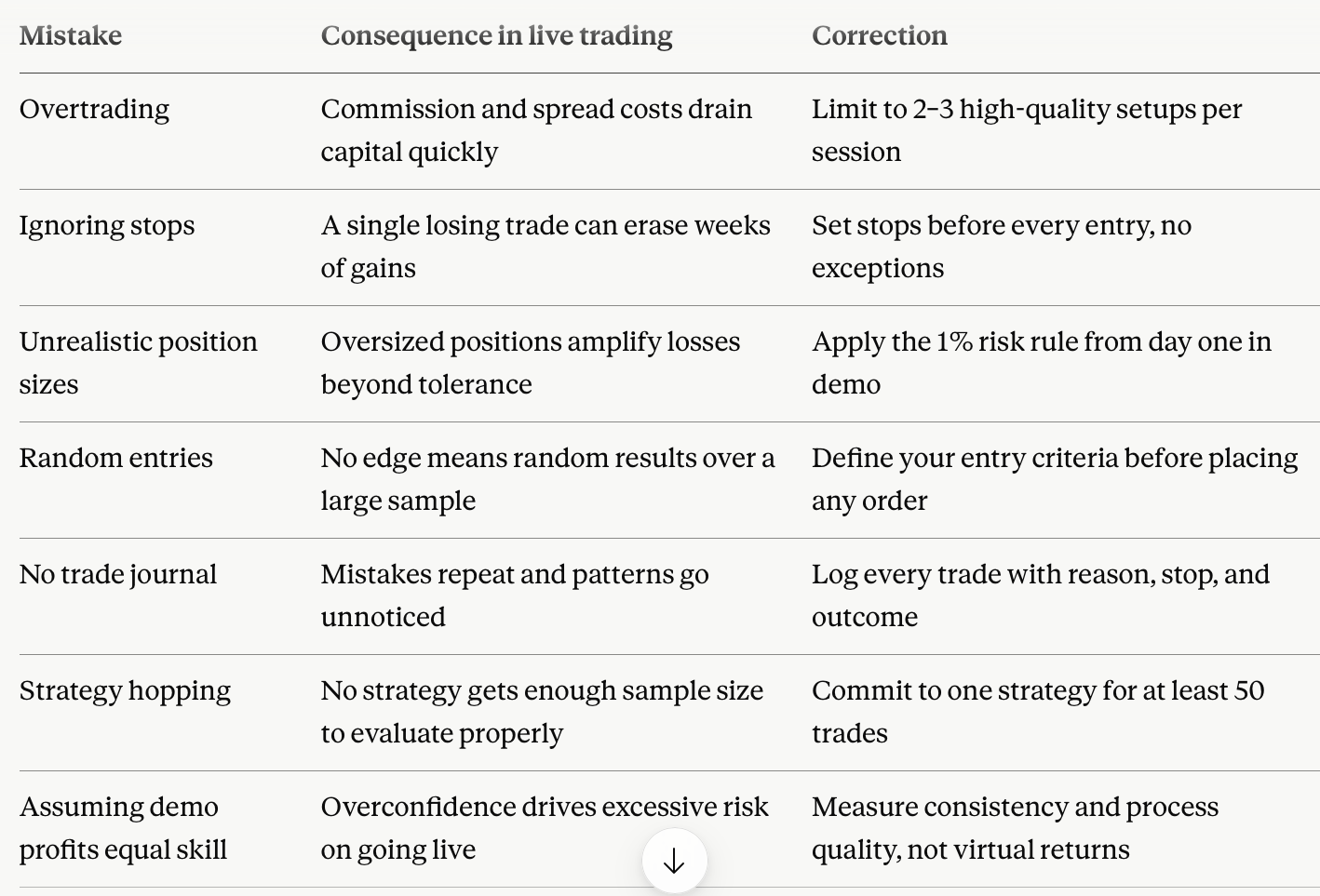
7 Demo Trading Mistakes That Create Habits You'll Pay for Later
The biggest risk in demo trading isn't that it's too easy. It's that the ease creates a false sense of competence and allows genuinely harmful habits to form before you even open a live account.
For a broader understanding of how risk frameworks apply across different instruments, Using Currency Pair Correlations to Hedge Risk covers risk management principles that transfer cleanly from forex into equities and other asset classes.
When Should You Move From a Demo Account to a Live Account?
Your performance data show whether you have a defined, consistent edge that will allow you to trade live.
To determine if you are truly ready, look for:
-
Consistently profitable results across at least 50 to 100 demo trades, where each trade was based on a clearly documented edge.
-
A positive risk-to-reward ratio across all trades, not just a handful of trades with large wins.
-
Maximum drawdown that remains controlled at all times within your predefined risk parameters.
-
An accurate and complete trading journal that allows you to identify specifically why some trades worked and others did not.
-
A disciplined and even-keeled approach to trading, without acting on impulse or frustration.
If you decide to move to a live account after you believe you are ready, start with a smaller account than the one you ultimately intend to trade. The difference between trading $1,000 of real money and trading the same amount in a demo account can significantly affect your behavior. Therefore, you need controlled exposure to this difference rather than being forced to adapt to it all at once.
A better transition plan is to trade a live account with $500 to $1,000 while continuing to use your demo account at the same time. This allows you to compare your behavior and consistency across both environments.
The proper progression for a successful transition to live trading is to spend sufficient time in a demo account developing the necessary skills, then trade a small live account to adapt to the psychological realities of real-money trading, and finally, as your live performance confirms your demo results, gradually increase your account size.
Final Thoughts: Demo Trading Builds Skills, Not False Confidence
Demo accounts are primarily intended for learning, not as a benchmark for measuring trading performance. Just because you have generated large amounts of virtual profit in a demo account does not provide an accurate assessment of your abilities. The process that produced those returns may have involved position sizes that you would never use in real trading, ignored risk management rules that you would be expected to follow with real money, or lacked the emotional pressures that accompany live market trading.
The traders who use demo accounts effectively to improve their skills are those who apply the same trading rules from day one, maintain a trading journal from the beginning, evaluate their performance based on the quality of their decision-making process rather than profits and losses, and transition gradually to real-money trading instead of making an abrupt switch.
Traders who develop their skills before focusing on profits tend to perform far better over the long term than those who generate profits before developing a solid foundation of trading skills. The Breakeven Point Guide provides an effective framework for understanding position sizing, risk management, and how these concepts affect long-term performance in both demo and live accounts.
The discipline you develop through simulated trading can help ensure that your first losses in a live account do not become your largest losses.
Create your free TradeWill demo account now — professional charting tools, real market data, and zero financial risk. Build the process, then let the profits follow.
Disclaimer: The content of the blog does not represent any position of Trade W, does not serve as any trading-related decision advice, and does not endorse any third-party.