
 Trade W
Why Currency Pair Selection Is Critical in 2026 Forex Markets
Many retail traders devote months or years to developing their entry and exit rules, refining their indicators, and testing the risks inherent in their trading strategies, only to find that they continue to lose trades. In some cases, the problem may not lie with the trading strategy itself, but with the currency pair being traded.
The forex market is now operating within a macroeconomic regime that differs significantly from the one seen over the past two to three years. The U.S. dollar remains the primary influence on the global forex market. However, the level of volatility and uncertainty surrounding the dollar today is considerably higher than it has been in recent years, largely because of the significant divergence in interest rates between the Federal Reserve, the Bank of Japan, and the European Central Bank. Inflation across many major economies has proven far more persistent than policymakers originally expected, while geopolitical fragmentation continues to alter capital flows across borders in ways that can reduce the effectiveness of traditional trend-following models used by many forex traders. To understand how decisions made by central banks directly affect the currency pairs you trade, this breakdown of central bank roles in forex strategy can provide valuable context for understanding the macroeconomic forces currently shaping the market.
On a practical level, this means that forex trading is less trend-driven and more event-driven than it has been in the past, and volatility no longer behaves consistently across different currency pairs. A scalping strategy that produces steady profits trading EUR/USD may generate significant drawdowns when applied to USD/TRY, even under market conditions that previously produced profitable results. As traders evaluate the best currency pairs to trade in the current market environment, they must stop viewing pair selection as an arbitrary decision and instead recognise it as one of the most important factors in determining their overall trading edge.
When viewed through this framework, pair selection can be compared to deploying the same group of soldiers on two different battlefields and expecting identical outcomes. In this analogy, the soldiers represent your trading strategy, while the battlefields represent the currency pairs on which the strategy is executed. Choosing the wrong currency pair does not necessarily mean your strategy is flawed. Rather, it may indicate a lack of appropriate context and perspective within a macro-driven forex market such as the one traders face in 2026.
The process of selecting currency pairs involves three interconnected layers, all of which must align with your trading strategy to produce favorable outcomes. The first layer, the execution layer, includes factors such as spread size and order execution quality. The second layer, the market structure layer, includes considerations such as liquidity and the historical frequency of volatility spikes. The third layer, the macro layer, includes interest rates, inflation expectations, and overall market risk sentiment. Only when all three layers are aligned with your strategy can you fully realize your trading edge. Conversely, when these layers are not aligned, you may find yourself trading against both the underlying market structure and the broader direction of price movement.
The 4 Core Factors That Define Tradable Currency Pairs
Before you begin evaluating which forex pairs to trade in 2026, it is essential to have a structured process for determining whether a currency pair is worth trading. There are four main dimensions that influence whether a currency pair is tradable. By assessing each of these dimensions, you can move away from guesswork and adopt a repeatable analytical process.
The first and most important dimension is liquidity. Liquidity consists of three components: interbank liquidity, which represents the level of institutional depth in the global foreign exchange market; retail liquidity, which is determined by how effectively your broker's execution infrastructure aggregates pricing from multiple providers, thereby offering better pricing to clients; and session-based liquidity, which varies depending on the active trading session. Many retail traders overlook the fact that liquidity changes significantly throughout the 24-hour trading day as different regional markets open and close. Higher liquidity generally results in tighter spreads and more accurate order execution, while lower liquidity increases the risk of slippage. Over hundreds of trades, poor liquidity can gradually erode profitability by thousands of dollars, even when your directional analysis is consistently correct.
The Volatility, can be measured objectively using the Average True Range (ATR) indicator to assess daily price movement. High volatility provides larger pip opportunities per trade but also requires proportionally wider stop-loss placements to avoid being stopped out by normal market fluctuations. Low-volatility environments are generally more predictable; however, they also limit the profit potential available within a given trading session. Another factor to consider is that the volatility generated by major macroeconomic announcements can persist longer than expected, influencing price behavior well beyond the initial release. This effect is particularly noticeable in news-sensitive currency pairs that institutions actively trade across multiple market sessions.
The impact of spreads on profitability is another important consideration that affects trading performance over time. Spread costs accumulate invisibly with every transaction and can significantly reduce overall profitability. For scalpers who trade on shorter timeframes, liquidity and spread costs are among the most important variables. For example, if you plan to trade EUR/USD, a spread of 1 to 2 pips may be compatible with a profitable scalping strategy. However, a spread of 5 to 10 pips could eliminate profitability altogether, regardless of the accuracy of your entries, because transaction costs would consume too much of the available reward relative to the risk taken. If you want a comprehensive breakdown of how bid-ask spread mechanics affect your actual trading returns, that guide covers every layer of the calculation.
Macro sensitivity, is likely to remain the most significant long-term driver of currency direction in 2026. Interest rate differentials between major central banks often create sustained momentum trends in rate-sensitive pairs such as USD/JPY and AUD/USD. Traders who understand how carry trade dynamics amplify these rate-driven moves can gain a structural advantage when establishing positions. CPI surprises can generate substantial short-term volatility in currencies linked to economies experiencing inflation pressures. Likewise, risk-on and risk-off sentiment frequently drive predictable price movements in JPY and CHF pairs, making them useful instruments for traders employing macro-driven strategies.
Major, Minor, and Exotic Forex Pairs Explained in Trading Context
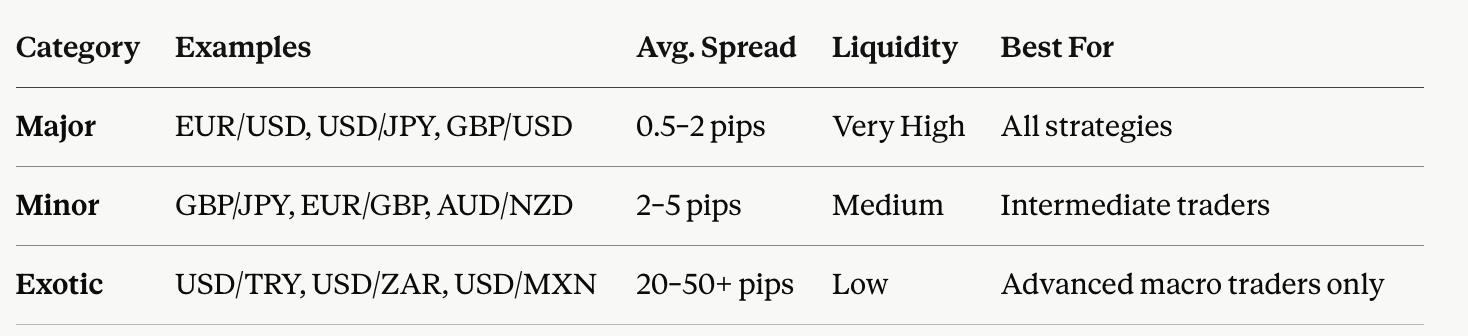
There is an almost infinite variety of currency pairs available for trading. However, trading a major, minor, or exotic currency pair involves more than simply selecting a symbol on a trading platform. These different categories of currency pairs have distinct liquidity structures, risk profiles, and behavioral characteristics, all of which should influence your pair selection process.
Major currency pairs such as EUR/USD, GBP/USD, USD/JPY, and USD/CHF account for more than 70% of global forex trading volume. Spreads on major pairs are generally the tightest available to retail traders, major institutions participate throughout the most active trading hours, and price action in major pairs tends to react more to macroeconomic events than to distortions caused by thin liquidity. As a result, understanding how floating exchange rate regimes affect major currency pairs can help traders approach these markets in a more systematic manner.
Minor currency pairs such as EUR/GBP, AUD/NZD, and GBP/JPY generally have lower liquidity than major pairs but can produce cleaner directional trends under certain macroeconomic conditions. GBP/JPY, in particular, is often viewed as a semi-major, high-volatility hybrid because it combines the macroeconomic sensitivity of the Japanese yen with the political and economic volatility of the British pound. This combination frequently creates a larger intraday trading range than that seen in many other currency pairs. Consequently, minor currency pairs are often better suited to intermediate traders who have some experience managing volatility.
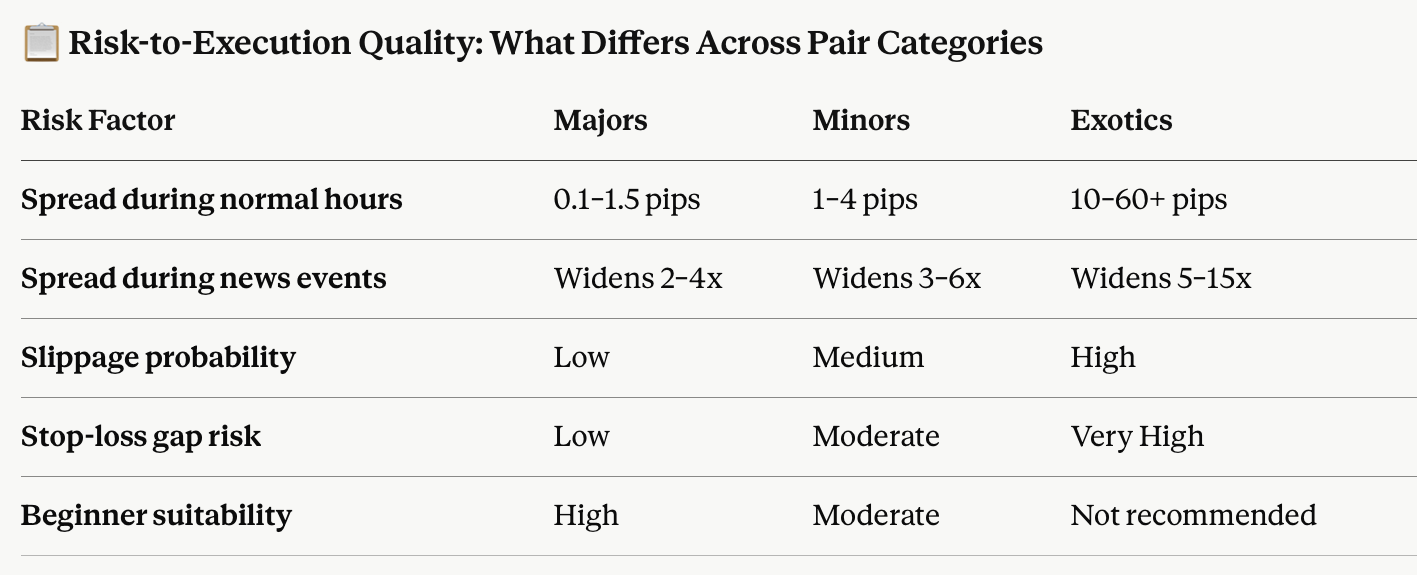
Exotic currency pairs such as USD/TRY (U.S. dollar/Turkish lira), USD/ZAR (U.S. dollar/South African rand), and USD/MXN (U.S. dollar/Mexican peso) follow a very different set of trading dynamics. Because of lower liquidity, exotic pairs typically have much wider spreads. Political and economic risk premiums are often embedded in their pricing, which can lead to significant fluctuations in execution quality during periods of market stress. Although the potential returns offered by exotic pairs may be attractive, those returns are generally less predictable and come with substantially higher risk. For this reason, day traders should generally avoid exotic currency pairs unless they have a specific macro-driven trading plan and have sized their positions appropriately to account for the unique execution environment.
Best Currency Pairs to Trade Right Now in 2026 — Ranked and Explained
When analyzing the decision-making matrix for your forex trades, you must remember that your analysis must ultimately be translated into an actionable trading decision. This is where the rankings of the major currency pairs become relevant. In the rankings below, each major pair is evaluated across five dimensions: liquidity depth, daily volatility, spread efficiency, trend consistency in 2026, and macro sensitivity.
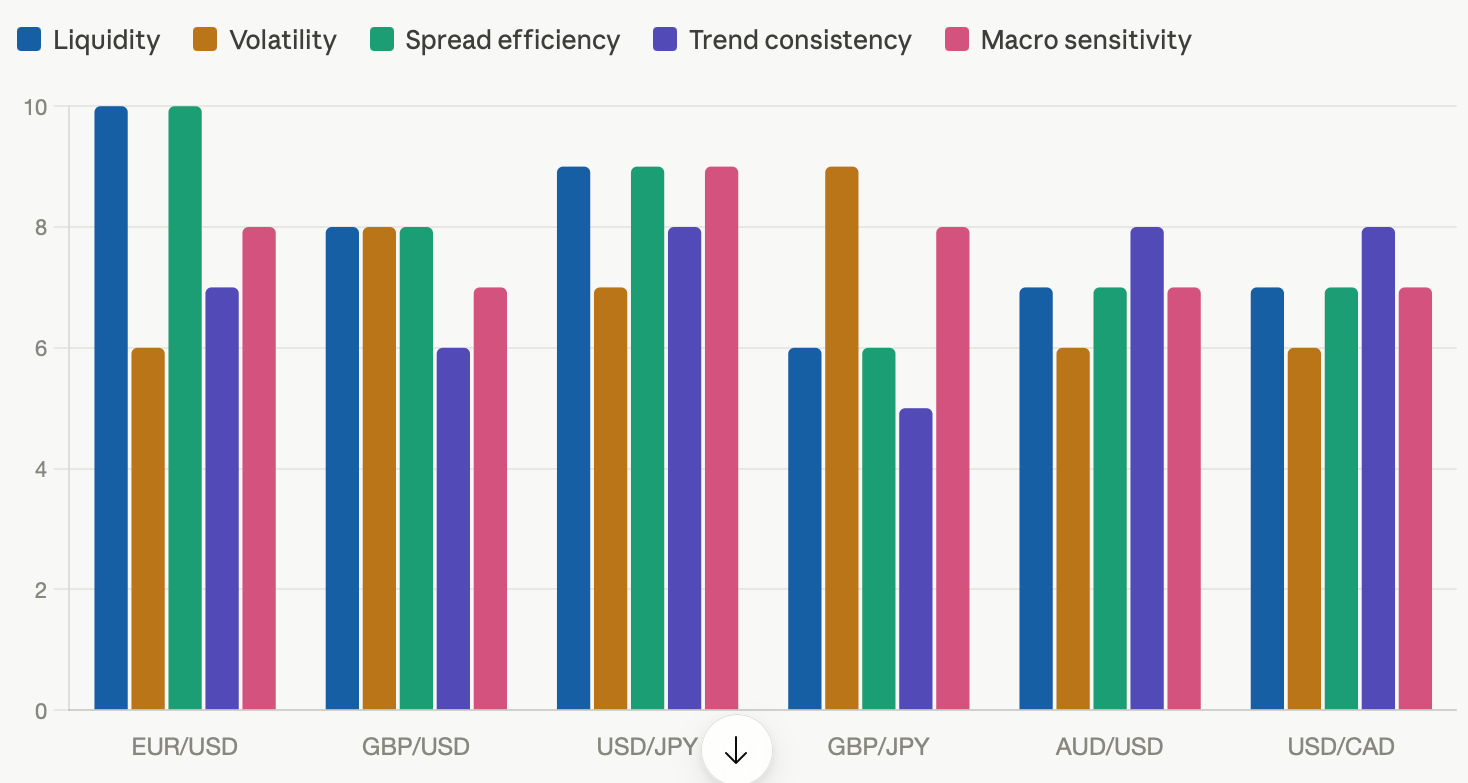
Each pair scores differently across these dimensions; therefore, no single currency pair ranks highest in every category. As a result, optimal pair selection depends on the specific requirements of your trading strategy.
EUR/USD continues to lead the forex market in terms of liquidity and institutional participation, making it the default benchmark currency pair for most traders in 2026. Throughout the year, EUR/USD is expected to be influenced by interest rate divergence between the Federal Reserve and the European Central Bank (ECB), creating both bullish and bearish long-term trends, as well as periods of consolidation and range-bound trading. This environment provides opportunities for a variety of trading styles, including scalping, intraday news trading, and trend-following strategies that seek to align with institutional capital flows.
Because EUR/USD trades with exceptionally high volume, traders can also incorporate volume analysis tools on EUR/USD to gain additional confirmation of directional bias beyond what price action alone can provide.
By comparison, GBP/USD typically offers greater volatility and larger intraday price movements, making it attractive to traders seeking higher pip potential. However, this increased volatility also creates a greater frequency of false breakouts. The British pound remains highly sensitive to both economic and political developments, which means GBP/USD often reacts strongly to shifts in market sentiment. As a result, traders should place significant emphasis on how to identify and trade trend reversals, which occur more frequently in GBP/USD than in many other major currency pairs.
USD/JPY is heavily influenced by Japanese government policy, monetary policy decisions from the Bank of Japan (BoJ), and interest rate differentials between Japan and the United States. Changes in BoJ forward guidance and movements in U.S. Treasury yields often serve as key directional drivers for this pair. During periods of risk aversion, USD/JPY frequently exhibits predictable behavior, allowing traders to capitalize on macroeconomic capital flows rather than relying solely on technical analysis. This guide to QE effects on forex markets is particularly relevant when analyzing the long-term behavior of USD/JPY.
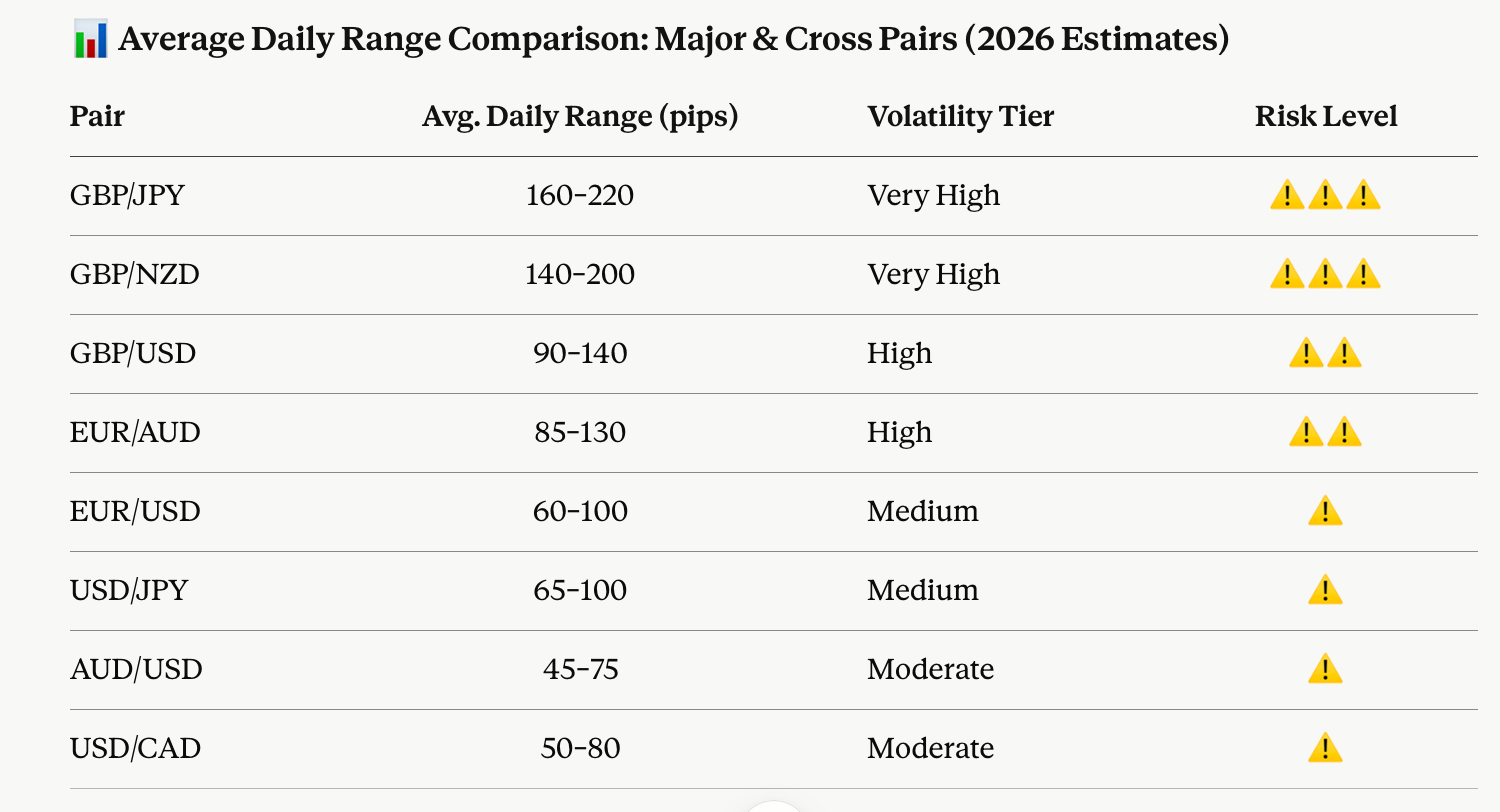
GBP/JPY is widely recognized as one of the most volatile major and semi-major currency pairs, often producing daily price swings exceeding 120 pips during active market conditions. Many experienced traders favor this pair for short-term trading and scalping opportunities. However, the elevated volatility requires strict discipline regarding position sizing and stop-loss placement because significant adverse movements can occur rapidly when both the British pound and Japanese yen are simultaneously affected by different macroeconomic developments. Candlestick pattern analysis can be particularly effective on GBP/JPY because breaks in market structure tend to be more pronounced than on lower-volatility pairs.
AUD/USD remains the primary commodity-linked currency pair among the majors. Its price behavior is closely tied to global risk sentiment, Chinese demand for industrial commodities, and fluctuations in iron ore prices. During periods of expanding global risk appetite, AUD/USD often trends upward in clearly identifiable waves, making it well suited to swing-trading strategies. Conversely, when risk sentiment deteriorates, AUD/USD tends to weaken in a relatively predictable manner, creating opportunities for traders with a bearish macroeconomic outlook.
USD/CAD is strongly influenced by movements in crude oil prices and often exhibits an inverse relationship with the energy market. As a result, traders frequently use USD/CAD as a vehicle for expressing views on both oil fundamentals and broader macroeconomic conditions. The pair commonly develops sustained directional trends across daily and weekly timeframes, and its sensitivity to crude oil prices provides a durable macroeconomic framework that is generally less susceptible to short-term market noise than many other currency pairs.
Most Volatile Forex Pairs in 2026: High Opportunity, High Risk
People interested in high-volatility currencies are often attracted to them because of their larger daily trading ranges and the potential for faster returns. However, it is essential that traders understand how and why the currencies they trade behave the way they do before risking any capital.
GBP/JPY is one of the most volatile currency pairs because it combines two macroeconomically active currencies. The monetary policies of the United Kingdom and Japan often create substantial price movements independently, as both countries pursue their own economic and interest rate objectives.
For example, GBP/NZD can experience greater volatility than many other currency pairs during risk-off events because the New Zealand dollar is highly sensitive to commodity markets and changes in global risk sentiment. At the same time, the British pound may be reacting to domestic political or economic developments, creating an additional layer of volatility within the pair.
Both GBP/JPY and GBP/NZD are closely linked to global risk appetite and commodity-cycle dynamics. As a result, they tend to react strongly to major macroeconomic regime shifts and significant changes in market sentiment.
USD/TRY presents a different type of volatility. Political and inflation-related risk premiums remain elevated, often producing extremely large daily trading ranges compared with major currency pairs such as EUR/USD. However, these same factors can also create highly unpredictable price behaviour. Experienced traders who trade USD/TRY typically exercise considerable caution when entering and exiting positions because execution conditions can deteriorate rapidly during periods of market stress.
Periods of high volatility generally create more opportunities for scalpers and short-term traders. At the same time, they also increase the risks associated with slippage, particularly during major news releases and fast-moving market conditions. Leverage amplifies this risk. While leverage can accelerate gains when trades move in your favour, it can also magnify losses and drawdowns when trades move against you. A single poorly managed trade in a highly volatile market can erase months of accumulated profits, making disciplined risk management essential for long-term success. Before trading high-volatility pairs regularly, understanding black swan events and how to protect positions against extreme tail-risk scenarios is a practically valuable investment of time.
Best Forex Pairs for Day Trading vs Swing Trading
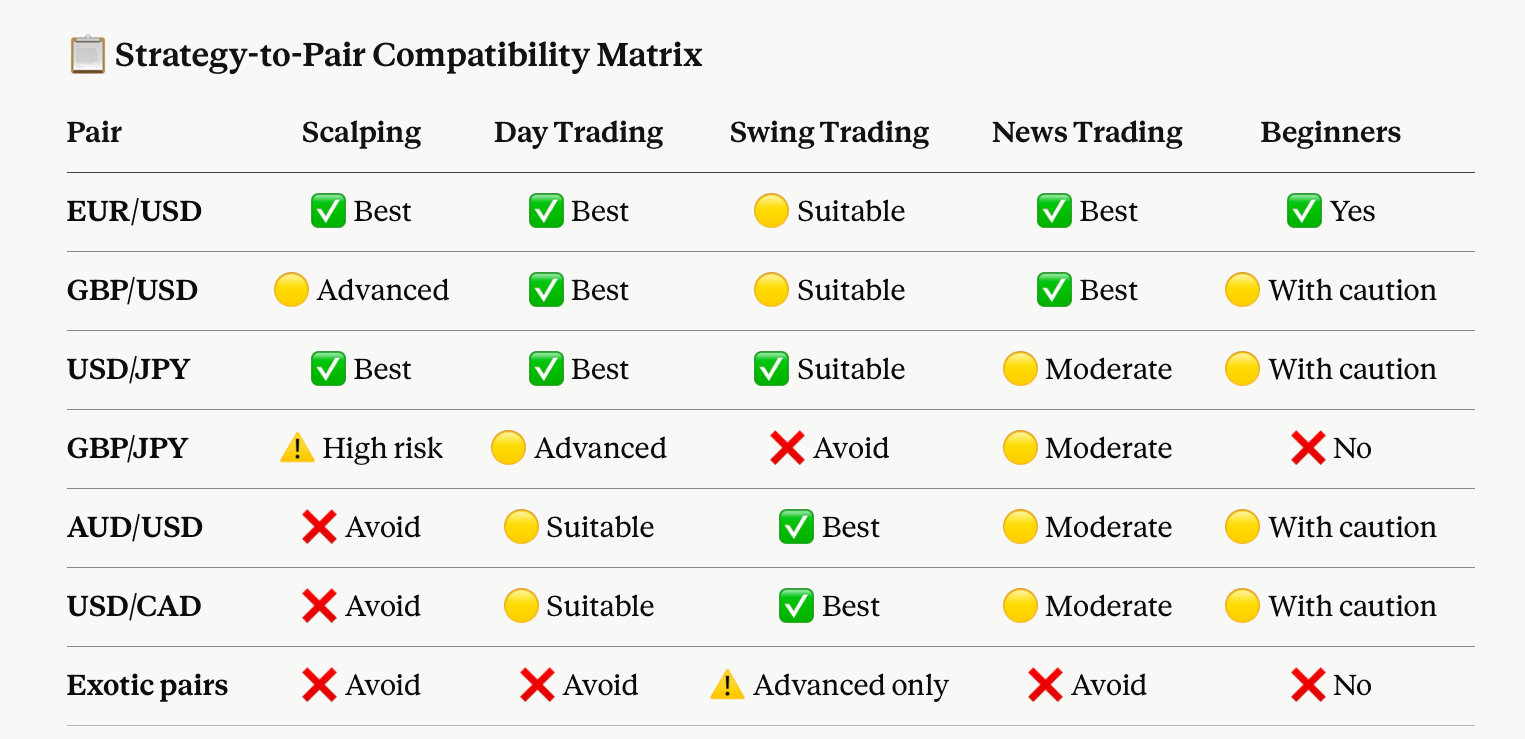
In retail trading, one of the most common and costly structural mismatches occurs when traders apply swing-trading strategies to currency pairs that are better suited to intraday trading, or attempt to use scalping strategies on instruments whose spread and liquidity characteristics create a negative expected value for that trading approach. When discussing strategy alignment with a currency pair, the key distinction is between a strategy that performs in line with its back-tested results and one that consistently underperforms without any obvious explanation.
When it comes specifically to day trading, traders must consider four primary requirements: sufficient liquidity during the trading session, spreads that are tight enough to support profitability from relatively modest pip targets, a high degree of intraday price structure consistency, and strong institutional participation during the London and New York trading sessions. Among major currency pairs, EUR/USD meets these requirements better than any other. As a result, EUR/USD remains the dominant focus for day traders seeking to develop their skills on a currency pair that consistently responds well to technical analysis and exhibits price action that can be analysed with a relatively high degree of confidence.
GBP/USD generally offers greater volatility than EUR/USD and, therefore, creates more trading opportunities for experienced and active day traders. However, this increased volatility also comes with additional challenges. GBP/USD has a greater tendency to produce false breakouts and sudden changes in direction, requiring traders to exercise greater discipline in trade selection, risk management, and execution. You can explore a comprehensive breakdown of forex day trading strategies and how they apply to specific pairs to understand how session behavior differs across instruments.
The most important component of a scalping strategy's profitability equation is spread, not volatility. Scalping becomes highly effective when spreads remain consistently tight over time, which is why EUR/USD and USD/JPY are among the best currency pairs for scalping. Both pairs routinely maintain narrow spreads, even during periods of moderate volatility. This allows traders to preserve the mathematical edge upon which scalping strategies depend across dozens of trades each day.
For swing trading, the focus shifts away from spread efficiency and toward sustained directional movement over multiple days, combined with a clear relationship to broader macroeconomic trends. AUD/USD is a good example. Commodity supply and demand dynamics, along with economic developments in China, often generate extended directional moves in this pair. These conditions allow traders to capitalize on the macroeconomic forces driving price action and maintain positions over a longer time horizon. USD/CAD is another strong swing-trading candidate because of its close relationship with crude oil prices. When oil markets establish a clear trend, USD/CAD often provides one of the most reliable macro-driven trading opportunities in the forex market.
Some currency pairs are poorly suited to scalping. GBP/JPY is a notable example. Scalping this pair without disciplined risk management can result in substantial drawdowns because its large daily trading range frequently triggers stop-loss orders before a meaningful directional move develops. Likewise, swing trading EUR/USD during periods of macroeconomic uncertainty, when neither the European Central Bank nor the Federal Reserve is providing a clear directional catalyst, often leads to false breakouts and choppy price action. Swing trading exotic currency pairs can also be problematic because wide spreads create a significant cost burden, reducing profitability before the market has even had an opportunity to move in your favor.
Best Time to Trade Forex Pairs: Sessions Explained
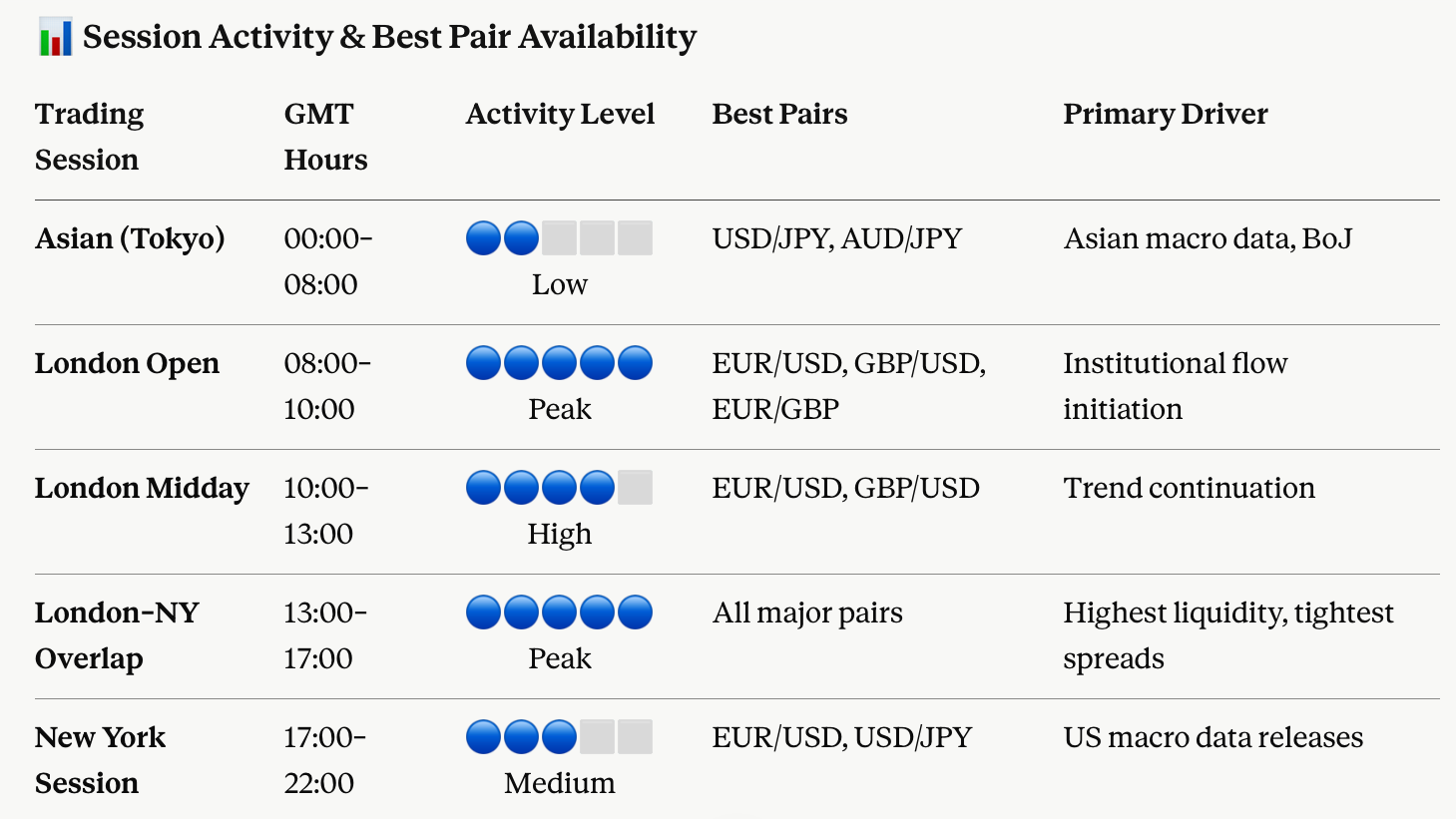
The forex market operates 24 hours a day, but trading volume and price activity are not consistent throughout the day. The time at which traders place orders has a significant impact on available liquidity because market activity tends to concentrate around the periods when major institutions are most active.
The Asian trading session, which runs from 12:00 a.m. to 8:00 a.m. (GMT), is generally characterized by lower volatility and more range-bound price action for most currency pairs. The primary pairs of interest during this session are USD/JPY and AUD/JPY because of their direct connection to economic activity and capital flows within the Asia-Pacific region. As a result, traders attempting to find strong momentum trends in EUR/USD or GBP/USD during the Asian session are often disappointed, as these pairs frequently trade within established ranges and lack sustained directional movement. However, range-trading and mean-reversion strategies can perform well during this period, provided there is sufficient liquidity to keep spreads reasonably tight.
The London trading session, which runs from 8:00 a.m. to 5:00 p.m. (GMT), is widely regarded as the most important part of the trading day for forex market participants. During this session, major banks, institutional investors, hedge funds, and retail traders are all actively engaged in the market, creating the highest levels of liquidity available globally. In addition to offering peak liquidity, the London session is often the period during which the largest directional price movements develop, as institutional orders are executed and broader market themes gain momentum.
Currency pairs such as EUR/USD, GBP/USD, and EUR/GBP typically become much more active during London trading hours. Breakout patterns that emerge around the London open frequently provide valuable clues regarding the likely direction of major currency pairs for the remainder of the trading day, making this period particularly important for momentum and trend-following traders. Understanding how forex volume signals the entry of institutional participants is particularly valuable during the London open.
U.S. macroeconomic data releases, including CPI inflation reports, nonfarm payroll (NFP) data, and communications from Federal Reserve officials, drive much of the price action during the New York trading session (13:00–22:00 GMT). The New York session often serves as either a continuation or a reversal of trends established during the London session and remains active through the close of the trading day. It is typically characterised by significant volatility before and after major economic releases. As a result, traders should apply a structured technical analysis framework while considering how forex derivatives can be used to manage exposure during high-impact events.
The London and New York overlap period (13:00–17:00 GMT) represents the most active segment of the global forex trading day. During this window, traders benefit from the tightest spreads, the highest level of institutional participation, and the greatest likelihood of clean, technically driven price action. For traders with limited time available to trade forex, the London-New York overlap generally offers the highest probability of finding favourable trading opportunities.
Key Risks in Forex Trading You Cannot Afford to Ignore
Selecting the right forex pairs is only one component of successful trading. To understand what it takes to succeed in the forex market, it is equally important to understand the risks that can undermine even the most carefully designed trading strategies. Forex trading involves structural risks that can escalate rapidly when they are not managed properly.
The single greatest source of risk in forex trading is leverage. For this reason, beginning traders should view leverage as a powerful trading tool rather than something to be used casually. For example, if a trader uses 100:1 leverage and the market moves just 1% against their position, the entire margin allocation can be wiped out.
Many traders experience catastrophic drawdowns because they use excessive leverage relative to the distance between their entry price and stop-loss level. As a result, losses that should be manageable become account-threatening events. Professional traders avoid this problem by limiting their risk on each trade to approximately 1% to 2% of their account balance. Regardless of how strong a trader's conviction may be, exceeding these risk limits significantly increases the probability of substantial losses over time.
Spread costs also have a cumulative effect on trading performance. For traders who execute 30 to 50 trades per week, the total cost of spreads over the course of a month can consume a meaningful portion of overall profitability. This is why precise trade execution, including effective entry and exit placement, creates a competitive advantage and helps reduce unnecessary transaction costs.
Slippage is one of the most difficult risks for forex traders to manage because it typically occurs during major news events and periods of extreme volatility. In GBP-related currency pairs, prices can sometimes move 50 to 80 pips within seconds following significant announcements. Since stop-loss orders are not always guaranteed to execute at the specified price, slippage creates a form of gap risk that traders must account for when sizing positions and planning trades. Effective risk management requires preparing for adverse execution scenarios before they occur.
Overtrading represents a behavioral risk that often becomes most apparent during periods of high volatility. Fast-moving markets can encourage traders to increase their trading frequency, which may lead to impulsive decisions and revenge trading. In many cases, this behavior can damage a trading account more quickly than the losses from any individual trade. One practical way to reduce this risk is to use a structured decision-making framework, such as candlestick analysis, which can help provide objective criteria for discretionary trading decisions and improve overall discipline. Recognizing how candlestick analysis adds structure to discretionary decision-making helps counteract this tendency by keeping your entries rule-based rather than emotionally reactive.
Final Takeaways: How to Choose the Best Currency Pairs to Trade Right Now
There is no single best currency pair that can deliver consistent results across every trading strategy and market condition. Any resource that prioritizes simplicity over accuracy is unlikely to provide a complete picture of how forex markets actually work.
For beginning traders, EUR/USD is generally the best currency pair to start with because it offers an ideal combination of deep liquidity, tight spreads, and a clear technical structure. These characteristics allow traders to develop analytical skills and trading discipline without facing the additional challenges associated with extreme volatility or complex macroeconomic influences.
Active day traders may find some of the best opportunities in GBP/USD, as its higher volatility creates the larger intraday price movements necessary for generating meaningful profit potential within a single trading session. Swing traders often achieve consistent results with AUD/USD and USD/CAD because both pairs offer logical macroeconomic frameworks that support holding positions over multiple days. Their price movements are frequently influenced by commodity cycles and broader economic trends, making them well suited to macro-oriented trading approaches.
More experienced traders who are comfortable managing higher levels of risk may choose to trade GBP/JPY. However, doing so requires a thorough understanding of the pair's behavioral characteristics and a strong commitment to disciplined position sizing and risk management.
The broker you choose, the trading session in which you operate, and the spread costs you pay are all part of the same profitability equation as your trading strategy. The key difference between traders who consistently compound their returns and those who produce technically sound analysis without achieving meaningful account growth is their ability to optimize all of these variables simultaneously rather than treating them as separate concerns.
Before committing to a specific currency pair, use a demo account to test multiple pairs across different trading sessions and market environments. Your final pair selection should be based on objective performance data and trading results rather than personal preference alone.
Tradewill.com gives you tight spreads on EUR/USD, GBP/JPY, XAU/USD, and 300+ instruments built for the way active traders actually execute. Open your Tradewill account today and trade the pairs that match your strategy, not just your broker's default offering.
ข้อจำกัดความรับผิดชอบ : เนื้อหาในบทความไม่ได้แสดงจุดยืน หรือ ความคิดเห็นของ Trade W ไม่ได้เป็นการแนะนำการลงทุน และ ไมได้เป็นการรับรองบุคคลที่สามแต่อย่างใด